North and South of the Yin Mountains: A Thousand Years in a Glance
The National Day holiday is a perfect time for travel. Unable to go far, we headed north, crossed the Daqing Mountains of the Yin Mountain range, climbed the Qin Great Wall at Guyang, followed the grassland road to Darhan Muminggan United Banner, then went east from the Bailin Nadam Fairground through Siziwang Banner, turned south to Hohhot, and finally returned via Laoniuwan, covering a total of 1,200 kilometers. This journey deeply immersed us in the profound history and vast territory of Inner Mongolia.
Day 1: Shenmu – Baotou
Departed at 8:30, arrived at Baotou's Northern Weapons City at 12:30. This place displays retired anti-aircraft guns, armored vehicles, and fighter jets, all tangible exhibits worth seeing.
Second stop: Baotou Museum. Though the building is grand, there are few artifacts on display, but a few eaves tiles are quite rare. The he luo (a type of noodle) near the museum is quite good.
Third stop: Grassland in the City. Actually an urban park covering 712 hectares, it is claimed to be the largest urban grassland in Asia.
Fourth stop: Zou Xikou Cultural District. This is a newly built ancient town tourist area with high construction standards. Not crowded, the lights are beautiful after dark, evoking memories of "the long road to the west, the prosperous city of Baotou."
Fifth stop: Qiao Family Gold Street, also an ancient town tourist area. During the holiday, a live-streamed "Gold Street Good Voice" competition attracted many visitors.
Day 2: Baotou – Guyang Qin Great Wall – Darhan Muminggan United Banner Performance Center – Siziwang Banner – Hohhot
Departed from Baotou heading north, crossed the Yin Mountains (Daqing Mountains) to reach the heartland of the Xiongnu during the Qin and Han dynasties. The first-class highway through the Yin Mountains is now a smooth road, no longer a barrier dividing north and south. Guyang County, under Baotou's jurisdiction, has an altitude of about 1,300 meters, stretches about 80 km east-west and 66 km north-south. Surprisingly, it is a vast agricultural area resembling the Guanzhong Plain, with no sign of grassland.
From the outskirts, we reached the Qin Great Wall on the northern slope of the Daqing Mountains north of Guyang. Entering through the north gate and exiting through the south, we could enjoy the magnificent view of the Qin Great Wall, as if transported back to ancient Qin and Han times. Images of countless heroes and heroines resisting the Xiongnu came to mind. The scenic area offers electric carts, but walking the trail allows a panoramic view of the Qin Great Wall on the opposite mountain, giving a deeper appreciation of the Qin people's unyielding spirit.
After leaving the Qin Great Wall, we returned to Guyang county town for buckwheat noodles, then headed north along the grassland road (first-class highway) straight to Darhan Muminggan United Banner, reaching an altitude of 1,600 meters. The performance center in the banner is grand and spectacular. Beside it is the Bailin Nadam Fairground. We wanted to visit Baiyunebo and Mandula Port but had no time, so we turned east to Siziwang Banner, taking the northernmost route possible. Though the grass had turned yellow, the prairie scenery was still boundless, and we witnessed the spectacular sight of wild geese flying south.
In the evening, we arrived at the Saishang Old Street near the Dazhao Temple in Hohhot. Again, there were performances, large crowds, and the roasted meat on the old street was delicious.
Day 3: Hohhot – Museum – Laoniuwan – Shenmu
Breakfast: tasted Hohhot's specialty shaomai. Went to the Inner Mongolia Museum. The new building is very grand, but we couldn't get tickets. After taking a photo at the entrance, we headed straight to Laoniuwan.
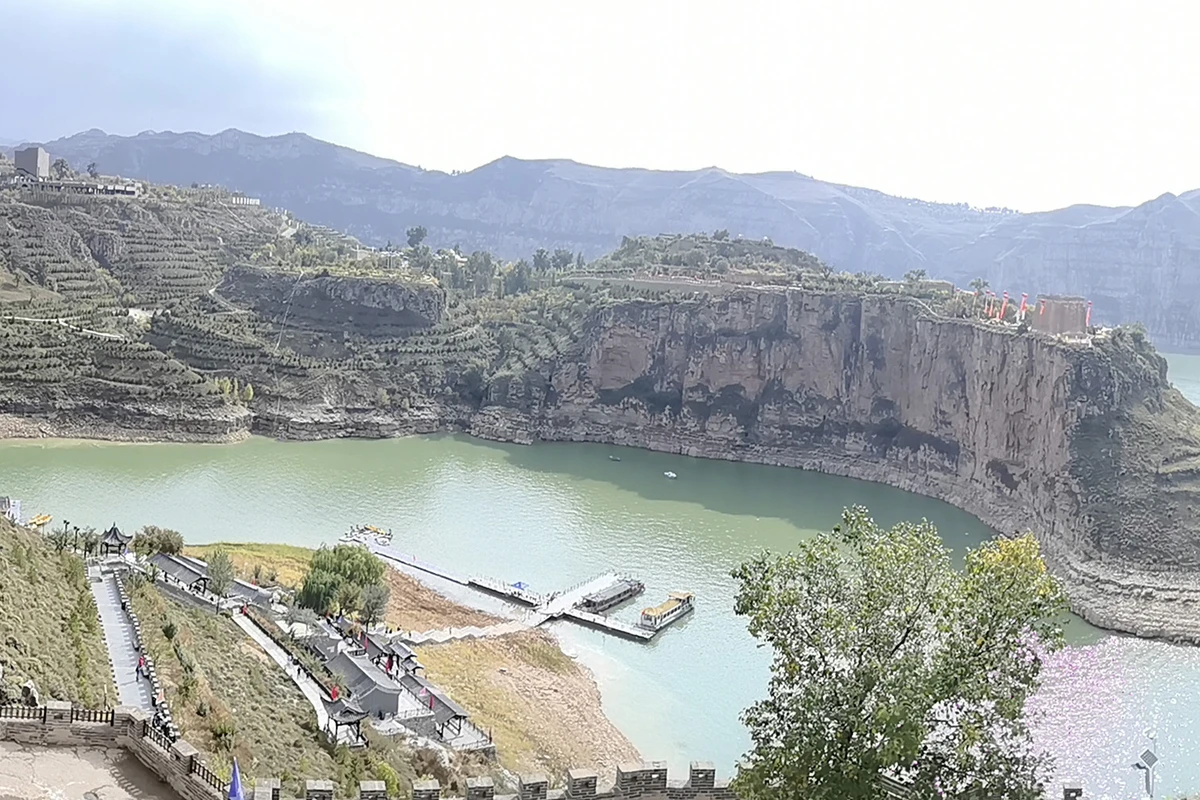
From Inner Mongolia, the view of Laoniuwan was really beautiful, though it seems Shanxi's Laoniuwan might be missing out. The scenic area is very well-equipped and developed. Local residents run farm stays inside the area, adding a lively atmosphere. Tickets are not expensive. You can go down the mountain to enjoy the scenery, take a speedboat, and there are free elevators going up the mountain – quite rare!
After leaving Laoniuwan, we started the return journey via Rongwu Expressway and Huzhun Expressway to Hequ. The section from Hequ to Baode has only two lanes in both directions, heavy traffic, many large trucks, and too many reckless drivers. The entire section is limited to 40 km/h with continuous speed cameras. I don't know what algorithm Amap used to recommend this route. Arrived home at 8:30 PM.


