![[By Yozuki] Meeting You, Heart Fluttering | 8 Days in Enchanting Bali](/img/9b57833f876419a3_l.webp?src=https%3A%2F%2Fdimg04.c-ctrip.com%2Fimages%2F10031g000001hlmf785EA_W_320_0_Q80.jpg)
[By Yozuki] Meeting You, Heart Fluttering | 8 Days in Enchanting Bali
Have you ever seen the sea of Bali? Sometimes wildly surging, sometimes gently serene, the ever-changing blue, the elusive clearness—these are the ways I've seen Bali's sea. I have imprinted each of its forms in my heart.
▼ Text and photos are original by me. If you need to repost, please let me know. Thank you.
My couple — Fanfan, a Scorpio, and I, a Libra—either attract or repel. He's a medical sales guy, occasionally envious of my office life, and I occasionally envy his freedom. We currently keep at least one trip per year, since other travels are with family, girlfriends, friends, etc. He loves islands, preferably ones where you can just stay in the hotel without moving around, while I like visiting attractions, so he has to follow me on the go. He handles all the heavy labor during the trip except for the heavy camera. He wasn't good at taking photos before, but now with my 'guidance,' he's improved a lot! As Q3 was about to end, he was clamoring for a beach vacation. Thailand is too close, the Maldives too expensive, so let's fly to Bali! Besides sun and sand, Bali has jungles, rice terraces, volcanoes, and temples—totally different from other flashy islands!
At 8° South Latitude, the Enchanting Island
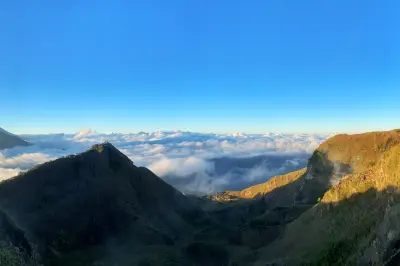
Unlike other islands, Bali is full of charm. Perhaps due to the influence of the 16th century, when Islam spread to Java, causing many nobles, artisans, and artists to flee to Bali. The Ubud area in the central part is filled with artistic vibes—art galleries and museums showcase beautiful paintings, while elsewhere you can see exquisite woodcarvings and reliefs. A popular souvenir is a small wooden plaque with a name engraved on it, turned into a keychain or fridge magnet. Most islanders are Hindus, so there is a strong religious atmosphere, with many temples. When visiting, you must wear a sarong. On the roadside in Bali, you often see small square boxes with burning incense, containing leaves and flowers—these are offerings for worship; just don't step on them. The 'Split Gate' is another major feature: the middle part of the gates at temples and homes is split open. Locals believe that good and evil always exist; when passing through this gate, evil is left behind and good remains, reminding everyone to do more good deeds. Bali is not just about the sea—even the sea itself is diverse. I love the rice terrace scenery in Ubud; when the wind blows, the rice plants sway in unison, as if playing a melody of sunlight. The roads are narrow, and if you veer off, you might not be able to turn around, not knowing which house you'd end up at. Further northeast, there are volcanoes—Mount Batur and Mount Agung are very famous, with beautiful scenery at their foothills.
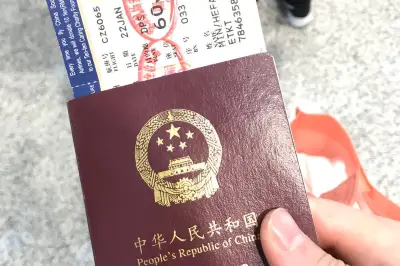
Visa-free! Visa-free! Visa-free! Important things said three times! Since July 2015, visa on arrival has been canceled; you can enter easily with just your passport.
1 CNY = 1954.6147 IDR. 1000 IDR = 0.5116 CNY. When paying, just remove three zeros from the rupiah and divide by two! How to exchange rupiah? Can you withdraw cash in Bali? It seems you can't exchange rupiah in China unless you exchange for USD and then exchange for rupiah in Bali, which would cost you a lot in exchange rates. At this point, holding a 'Huaxia Bank' card, you can travel the world! Huaxia Bank card: the first withdrawal per day from foreign ATMs is free of service fee—super! After arriving at Ngurah Rai Airport, take the elevator down, and there is an ATM on the left. You can withdraw up to 2 million IDR at once, close to 1k CNY. But ATMs in the city may not allow that much—some allow 1.5 million, and some only 500,000! Also, not all ATMs support UnionPay, Visa, or Mastercard; check the signs outside. In Ubud, our driver took us to several before finding an ATM that could withdraw with Visa. Common ATMs: BCA Bank, BRI Bank. In Kuta and Jimbaran, there are many money changers with exchange rates posted outside. Almost every shop has a different rate. If you find a good rate like 1:1900, that's quite high; some are as low as 1:1500.
▲ Flights
Shanghai, Beijing, Guangzhou, Xiamen, Hong Kong, etc., have direct flights to Bali, but flights are few. I bought a flight from Shanghai with a transfer in Xiamen to Bali, costing 2700+, which felt quite cheap, of course it's a red-eye flight.
▲ Car Charter
The attractions in Bali are scattered; it might take half a day from the south to the north. Chartering a car is necessary. Depending on the number of people, different types of cars are available. Generally, a 5-seater car costs 30-50 USD per day, depending on distance and itinerary.
▲ Taxi
The most reliable taxi company is Blue Bird. Most cars are blue with 'Blue Bird' written on them. They are honest drivers who use the meter, wearing light blue uniforms with a light blue bird pattern. Other cars might overcharge.
▲ Speedboat
The transportation between Bali and the islands. For Lembongan Island, we booked the MARLIN Cruiser speedboat. It was actually arranged by our accommodation on Lembongan. They picked us up and took us to Sanur Harbor. One speedboat carried about 30-40 people. We took off our shoes to board, and luggage was stored on the roof. I felt the boat was quite stable, bobbing with the waves but not dizzying. The person next to me seemed a bit seasick though. Departure from Sanur Harbor: 10:00, 13:00, 16:00. Departure from Lembongan Harbor: 8:30, 11:30, 15:00. Price: round trip about 500 RMB/person.
▲ 'Crab Boat' (Outrigger Boat)
These small boats are cute, with rods on both sides like crab legs, designed for balance. When snorkeling, those rods become my handholds! The boat has an engine and goes quite fast. It sways a bit in the waves but nothing serious. On the day of snorkeling, after finishing the first spot, I got back on the boat and saw my partner's face turn pale, holding a plastic bag with an unknown liquid inside... Don't eat a big breakfast before going out to sea!
Bali has a tropical island climate with warm temperatures year-round, making it a great place for a vacation. After October, flying over for a warm winter is a perfect way to make friends jealous! Unlike some Southeast Asian countries, the rainy season in Bali is from November to March, but it doesn't rain all day. The dry season is from May to September, the best time to visit.
The power plug is the two-round-pin type. If your plug is flat or three-pronged, you need a converter. The island of honeymoons—many hotel rooms can arrange honeymoon setups. Basic ones might fold a towel into a swan or place some roses; upscale ones might give cake or chocolate. Inform them in advance via email. Most hotels have pools. Can a non-swimmer not enjoy them? No! This time I brought inflatable arm bands and got in the water right away. You can also bring a float board or the popular giant flamingo floatie. Security is okay; most people are simple and honest, except for some tempted by money who will try to make more. It can be called a tipping country. If service is satisfactory, give a tip to the driver or porter—20,000–50,000 IDR is about right. There are many monkeys. At the Sacred Monkey Forest and Uluwatu Cliff, be careful of theft: put hats, sunglasses, and phones in your bag.
Bali has beautiful natural scenery but also some 'not-so-beautiful' aspects. There are always some people who like to 'cheat, lie, and steal.' Being cheated can affect your travel mood. For example, I made a mistake right after landing, but I quickly adjusted my mood, and the rest of the trip was still very happy. Let me share a few scenarios where you might be cheated or 'ripped off,' and how to deal with them. Be vigilant!
The Bali airport is small. After withdrawing money in the airport, I planned to take a taxi to the Kuta hotel. Actually, there is a Blue Bird taxi counter at the exit where you can register and wait for a car. At that moment, several overly friendly Balinese ran over to help us with our luggage. I don't know why—maybe because it was almost midnight—I didn't think much and gave them our luggage, thinking it was only 15 minutes to Kuta, how much could it be? Later, I regretted it! While driving, before the seat was even warm, we arrived at a toll-like spot, and... we got 'ripped off.' I won't tell you how much, but for just a few kilometers, they charged us 200 RMB—enough for a great seafood meal in Bali. Prevention tactic: Have an iron heart; don't engage! Insist on using Blue Bird taxi!
In Indonesia, tipping is rampant. Don't just bash Vietnam; Bali is also often heard about bribes at immigration. We are visa-free, so there's no reason to give! Don't encourage this bad practice. Prevention tactic: 'Play dumb'—'What did you say?' Just show that you don't need to pay; stall for a while and they won't hassle you.
Bali is not wealthy; many rely on the service industry. According to our Airbnb host, Balinese people are humble and usually provide good service. However, they often overcharge. To us, it might not be much, but for them, it's a big gain. In Ubud, we chartered a car for half a day. The driver initially asked for nearly 500 RMB. The Airbnb host immediately called and said the price was too high and unfair. Eventually, we agreed on nearly half the price! Prevention tactic: Never judge prices based on domestic standards; ask other travelers for price references.
Whether in Kuta's Legian Street or the commercial street in front of Tanah Lot, there are many stalls selling souvenirs and local beautiful clothes. Prices vary, especially for wood carvings; bargaining is better. Prevention tactic: Either compare prices or haggle.
Lembongan Cliff Villas
Jln. Selambung Beach, Coconut Bay, Lembongan
Excellent cliff villa, cooperative with MARLIN Cruiser speedboat. After arriving at the dock, we transferred to a tuk-tuk that dropped off other guests first, then took us to the villa. The road was a bit bumpy. The surroundings are quiet; the villas are on different slopes, with higher ones offering better views. Ours was halfway up. The room was spacious, with roses and a towel swan decoration. The bathroom was semi-open; when showering, you could see stars overhead! There are two pools; I loved the top infinity pool overlooking the Lembongan sea view. At night, there was a poolside seafood barbecue buffet with lights around the pool—very romantic.
Airbnb in Ubud
Jalan Sri Wedari No.99 Widi Aung villa, Abud
Four villas around a pool. The host Yoyo, her best friend, and a cat live here too. Surrounded by rice paddies. Only we were staying that night, very quiet. In the evening, the adjacent villa was very lively, apparently having a party. Yoyo came back late; we communicated via WeChat during the day. The hostess is also Chinese. The villa is cleaned daily; there were some ants on the floor but everything else was great. About 15 minutes to the Sacred Monkey Forest.
Grand Inna Kuta
Jl. Pantai Kuta no. 1 Br Pande Mas Kuta 80361
Through the hotel pool, you can see Kuta Beach. Great location; only 15 minutes from the airport. The rooms are nothing special. I liked the two pools: one with a sunken pool bar, where foreigners like to swim over for a cocktail; it's shaded, not too hot. The other pool is larger with landscaping, open even after 9 PM. Breakfast was great, served by Kuta Beach; the omelets were particularly delicious, and they serve until 11 AM.
Keraton Jimbaran Beach Resort Bali
Jl. Mrajapati P.O.Box 2023 Jimbaran
Several rooms form villas set in garden scenery. The green lawns are covered with fallen frangipani flowers. There is a large pool leading to the beach. Weddings often take place here. At night on the beach, small lights are hung on big trees, with a cello playing soothing music. You can have an open-air dinner here. A few steps from the hotel's beach to the right are several lively seafood restaurants. We had dinner there two days in a row, watching the sunset. The room has a large living room with old photos on the walls, giving a vintage feel. Welcome fruit is provided. You can order room service; the pizza was good.
Day 1: Arrive in Bali at night – Check into Kuta
Day 2: Mother Temple – Bamboo Corner Restaurant – Kuta Beach sunset – Stay in Kuta
Day 3: Kuta Beach – Sanur Beach – Speedboat to Lembongan – Infinity poolside seafood BBQ buffet – Stay in Lembongan
Day 4: Yellow Bridge – Dream Beach – Devil's Tears sunset – Stay in Lembongan, chartered car
Day 5: Snorkeling at 3 spots in Lembongan – Speedboat back from Lembongan – Check into Ubud Airbnb – Bebek Bengil (Dirty Duck Diner) – Sacred Monkey Forest – Warung d'Carik dinner – Stay in Ubud, chartered car
Day 6: Tegallalang Rice Terrace – Teras Padi Cafe – Tirta Empul Temple – Kopi Luwak coffee factory – Check into Jimbaran
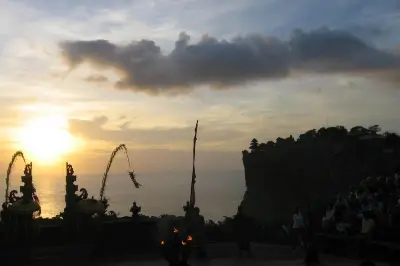
Day 7: Jimbaran Beach – Tanah Lot – Uluwatu Cliff sunset – Lia Cafe beachside dinner – Stay in Jimbaran, chartered car
Day 8: Cuca Restaurant – ZEN SPA – Jimbaran Beach sunset – Jimbaran Beach Cafe beachside dinner – Departure to airport late night
Previous day recap: Arrived in Bali at around 11 PM. Got into a shady taxi after confusion, reached the hotel around midnight. While counting how many rupiah notes we had paid, we comforted ourselves: 'Loss of money, ward off disaster.' We couldn't let a small incident ruin the rest of the trip. Self-comfort worked, and we soon forgot about it. That late, we were ready to sleep with a good mood. My partner nervously asked me: 'Do we have to wake up early tomorrow?' I: 'Yes, the schedule tomorrow is full.' (smirk) He: Shocked. I: 'Just kidding. Sleep in, but not later than 10.' He: 'Oh... you scared me!' He asked me this every day about whether to wake up early; he already knew my travel tricks. But to stick with island relaxation, we usually woke up naturally and then went out, leaving plenty of time in the hotel.
? Strolling in Kuta, accompanied by sunset
So starting from the second day: In the morning, we exchanged some cash at the ATM near the hotel. Many Blue Bird taxis were on the streets; we hailed one. Before getting in, we confirmed with the driver that he would use the meter. He indicated yes, and off we went. The drive was quite long to the Mother Temple in central Bali, about an hour one way. Don't be fooled by the small size of the island on the map; it's not like a big city with many roads; some attractions have only one road leading to them. We went from the coastal main road to roads with rice terrace views. The sunlight streaming through the window, the passing people, the swaying tree shadows—all set the stage for each travel goal.
When we got out, I thought we'd just walk, but the driver said, 'I'll wait for you; it's hard to get a taxi here.' We were touched. Then he said, '5 USD per hour waiting time.' We thought that was reasonable and agreed to meet again in an hour. This was the Mother Temple, or Pura Taman Ayun. I was attracted by the large green lawn with a Split Gate straight ahead. After walking a long tree-lined path, you enter. Inside are several temples, surrounded by a moat, enclosing this UNESCO World Heritage site.
Built in 1634, the Mother Temple is the second largest temple on the island. The temple gate is made of red brick, covered in rust, telling centuries of history. There are many carvings on the gate, hard to make out at a glance. The gate was closed, hiding everything inside—mysterious and solemn. It is usually not open except during important local festivals. Look how big this gate is, and how small I am. Few tourists, which made the temple even quieter.
The square walls enclose many sacrificial towers, with 29 ancestral shrines inside. The walls are not high, so you can see these towers, their dark thatched roofs layered one above another. At some point, a cat ran in, strolling leisurely. The contrast of movement and stillness was beautiful. The cat liked walking slowly in the shadows of the towers; when out of the shadows, it quickened its pace, then slowed down again under the next shadow. A smart cat.
I took a couple of random shots with frangipani flowers in the foreground.
The temple complex is quite small. Behind it is a jungle, and I wonder what lies beyond. We circled back to the main gate, where there was a small shop selling local paintings. Someone was painting there. The paintings reflected local religious themes or scenes of daily life.
The famous 'Split Gate'—perfectly symmetrical left and right, the split in the middle looking like it's been Photoshopped. You see it everywhere, with variations in detail, but the general shape is the same.
Entrance fee: 30,000 IDR, about 15 RMB. Half an hour is enough to see it. The site is small. We still had half an hour before meeting our driver, so we rested in a pavilion at the entrance. A local guide was showing a few foreign tourists around, so I eavesdropped. The content was pretty standard. The big shed used to be a cockfighting arena, with steps around it for spectators. Now there are cockfighting statues, but the excitement of those days is gone.
Indonesian workers carrying bricks.
In the afternoon, we planned to hang around Kuta Beach and play in the hotel pool. We returned to Kuta, paid the driver the agreed amount, and said goodbye. The Legian Street area is very lively, not far from the beach. Surfboard-carrying youths walked past us, smelling of seawater. They were bare-chested, often with tattoos. This triggered my partner to think about getting a tattoo. He: 'Should I get a tattoo? You said tattoos are famous here?' Me: 'Up to you.' He: 'Can I go swimming with it? What pattern should I get? Will it get infected? Hmm, should I?' This conversation lasted several days without conclusion. My Libra indecisiveness might be contagious!
There are many restaurants in the alleys of Kuta. The famous 'Bamboo Corner' requires walking a muddy path, with motorcycles passing by. You must navigate to find it; otherwise, you might miss it—it's a very ordinary-looking storefront. It was very hot; I thought about going inside for air conditioning, but they didn't have any, and the lights were off inside—very casual. So we sat outside. The menu was limited, and a tattered menu had TripAdvisor recommendations. We ordered the recommended lobster set. The presentation was nice, but the taste was mediocre; nothing exceptional. The fries were more to my liking. I think people recommend it because it's cheap, not worth a special trip, but if you're nearby, give it a try. There are many other restaurants around; you can use a search app to find nearby ones by distance and average cost. I won't go into detail.
After eating, we walked along the beach back to the hotel. Kuta Beach is a famous surfing spot, full of energy. Brave surfers ride the waves. At sunset, they gradually return to shore, and together we watch the southern hemisphere sunset slowly gild the sea gold—very warm.
Children playing by the sea, girlfriends slowly strolling along the shoreline, people coming out of the water after swimming, and owners walking dogs while watching the sunset—beautiful scenes. The sunset magically outlines people in gold; beautiful light and shadow move with them, leaving long footprints on the sand.
Every day, many people gather on the beach at this time to witness the most beautiful moment. Watching the sky, sea, and sand change colors is wonderful. As it darkens, the surfers still in the water try to enjoy their last moments, while people on the beach gradually leave, leaving only those still savoring the sunset and those packing up.
Even after the sun sets, the sky remains flame-colored, then turns deep purple, taking a long time to go completely dark. By then, we were looking for a dinner spot.
Fat Chow
Rating: ★★★★
Hours: Mon-Sun 9:00-23:00
Address: Jalan Poppies II, Pantai Kuta, Kuta, Kabupaten Badung, Bali 80361, Indonesia
Website: http://fatchowbali.com/
Actually, when I first saw the name, I wondered if it had anything to do with Jay Chou. But no, no connection. This restaurant offers Asian-flavored cuisine, a mix of Indonesian, Thai, Vietnamese, and Chinese dishes. It's tucked away in an alley not far from Kuta Beach, easy to find because it's recommended everywhere, so there's always a long queue. Semi-open dining area with melodious music playing. The American industrial style furniture looks a bit aged. On the walls, there are yellowed Chinese newspapers. The menu item 'Try them all' is actually one dish where you can choose four appetizers—small portions but more variety. They also serve Vietnamese salad, burgers, pork ribs, Thai rice noodles, etc.
'Thousand Strands Noodles' (Pad Thai) — a classic Thai dish. High-quality rice noodles stir-fried with bean sprouts, shrimp, scrambled egg, and Thai spices, topped with crushed peanuts and chili powder. Not greasy, smooth and refreshing.
Vietnamese salad: Vietnamese people like raw vegetables; this salad includes cucumber, carrot slices, and various leafy greens—all uncooked, original flavor. Just mix a bit and dig in. But when I was in Vietnam, I don't think I had this dish.
Pork ribs: Served bone-in with meat on the table, looked tempting. The knife cut easily along the grain. The ribs had a sweet-salty sauce, the cartilage was chewy, and the potato wedges were a great side.
? By boat to Lembongan for an island life
Pulling back the curtain, the weather was perfect. The pool downstairs was already lively—kids splashing, parents watching lovingly. Quickly changed, washed up, applied light makeup, and bounced to the restaurant for breakfast.
The restaurant was stylish—industrial modern, facing Kuta Beach, you could hear the waves. Many people in colorful dresses and shorts were already eating. It was a buffet; the best part was the omelets and scrambled eggs! Later, at many places, we ordered scrambled eggs, and they were all superb. After breakfast, it was still early; we were heading to Lembongan at noon. Someone would pick us up around 12 to take us to Sanur Harbor. We packed our bags and decided to walk along Kuta Beach.
Daytime Kuta Beach looks like this: people of all ages with surfboards treat it as a natural water park. There are also surf schools where beginners can learn. Walking on the beach, you can feel the hot wind from the Indian Ocean; the patches of shade are great for cooling off. Many people like sunbathing here; tanned skin is common.
Wow, look how they sell hats like this—very eye-catching. The woven straw hats were pretty. If I hadn't brought two, I'd have definitely bought one, just for the display! They also sold straw mats for spreading on the sand; all the shady spots were already occupied.
Let me just watch the sea quietly. Surfboard-carrying kids walked by, full of energy and fearlessness, the word 'youth' written on their faces. Even if they get tanned, they can get pale again, but you can't get younger when you're old.
Close-up: from this angle, you can tell I was kneeling. Next time, when taking photos, squat down to make me look taller with longer legs!
After a while on the beach, I felt hot. It was about time to head back to the hotel to organize. The hotel is just a small road away from the beach. Many people rested there because of the tall trees providing shade. I noticed my outfit matched the surroundings perfectly.
The driver arrived punctually at the hotel lobby, helped us with luggage, and headed to Sanur Harbor. In half an hour, we crossed the narrower southern part of the island. The weather was so sunny I felt like singing. The coconut trees along the way exuded Southeast Asian charm.
At Sanur Harbor, the area also includes Sanur Beach, which is quieter than Kuta. The water is blue, some people were snorkeling. There are curved piers leading into the sea, with small pavilions at the end for resting in the shade while watching the sea. Since this is also a departure point for boats, many speedboats from different companies were docked. Passengers waited in a shed. You can buy tickets directly here, paying with cash or card.
Large luggage, like suitcases, can be handed to the crew, who load them onto the boat's roof. Everyone then removes shoes and places them in a basket, wading through the water to board. The sand and shells underfoot are a bit sharp—need to bear it. On the boat, there seemed to be few Chinese; mostly foreigners on vacation, many staying on Lembongan for a long time. What a long holiday!
During the boat ride, we could see Lembongan Island ahead. Riding the waves and wind, we arrived in about half an hour. The sea was indeed more beautiful than the main island—not just blue, but a clear green, very soothing. Many small boats were bobbing in the bright sunshine. Near the dock, there were small waves, which locals considered perfect for surfing.
After landing, we waited for the crew to unload the luggage and place it on the steps. Service was good; no need to handle it ourselves. Then they arranged people going the same direction or staying nearby into the same songthaew (shared truck), dropping them off one by one at their villas. Since the island is hilly, with dusty dirt roads, and branches often lying in the middle of the road, only such vehicles can navigate. If you tried to walk, you'd definitely get lost. Only the coastal roads are good; the interior roads seem like 'paths made by many feet'—overgrown with weeds, occasional chickens, dogs, cows, and sheep. Villas are mostly self-built; some enclose a plot of land with a wall and build an infinity pool—quite nice. Better accommodations are mostly on cliffs or by the beach; thatched-roof bungalows are considered premium. Those on Dream Beach looked nice. Riding in this truck, I felt like I'd be thrown off any second, so I clung to the side bars. But despite securing myself, my hat flew off as the driver accelerated—it rolled to the back and was carried away by the wind. I thought, forget it, but one of the kind foreigners on board shouted for the driver to stop! He ran after my hat—so touching.
We and another foreign couple were the last to get off. By the time we got off, we were dusty. A cold tropical juice cured us. The villa owner showed us a dinner menu, mentioning there was a poolside seafood BBQ buffet that night at the top infinity pool. There were no restaurants nearby, except maybe at the main beach. I immediately imagined being out in the dark on the island at 6 PM looking for food—too miserable. So we gladly agreed.
The small villas are on different levels; you climb the long steps to reach the top infinity pool.
The room was already cleaned and made up. Simple, no fuss. The bathroom was big, semi-open. Every time I showered, I could hear the guests from the villa above us laughing—a bit awkward.
There are two pools. The lower one was noisy with kids. We went to the top pool, which I loved. It faced the beautiful sea, with views of long sandy beaches, lush jungles, rolling hills, and different small houses. Even though it was sunny, dipping into the pool made it bearable.
Non-swimmers just splash around and pose for photos.
The sea, with its patches of deep and light blue, looked like God's palette. The small boats moving were like a brushstroke. You could watch it all afternoon and not get bored. When tired, I climbed out and rested on a lounge chair. Sometimes, wasting time is a way to respect life.
It was still early for dinner; our snacks were gone. We left the villa, took a small path on the left that led to a tiny beach. Here you can take small boats out for snorkeling or surfing. There was a small supermarket where we bought two bags of chips to fill the gap.
After dark, we climbed back to the top. The lounge chairs had been replaced by dinner tables with candles—very romantic. Everything was quiet except for the waves. Lights were neatly arranged around the pool to illuminate the path. We sat down first while the locals grilled seafood—the aroma was irresistible! Then we lined up for food: squid, grilled shrimp, beef, potatoes, cauliflower... really tasty.
Dessert was offered after the meal: a few choices of ice cream and a local coconut dessert—satisfying. After eating, we rested a bit, then I went for another non-swimmer's swim. Everyone slept early; by 9 PM, the sound of frogs filled the air, but I was still splashing in the pool. The stars in Lembongan were nice. I had brought a tripod, planning to take star photos later. Back at the room, a stray dog was guarding our door all night! Too scared to open the door, so I gave up on the star photography.
? Touring Lembongan, watching the sunset at Devil's Tears
Many people come to Lembongan for a day trip—rush in, rush out. How can you fully appreciate this neighboring island that way? In the morning, we arranged with the villa owner for a half-day island tour and half-day snorkeling. The island tour cost about 500 RMB for two, snorkeling about 300 RMB—not cheap but acceptable. For the island tour, there were several attractions to choose from. They showed us a map and marked some spots. We chose Yellow Bridge, Dream Beach, and Devil's Tears. There was one more place I didn't understand; they said something like 'house,' I thought it might be a farm, but it turned out to be Gala-Gala Underground House—an old underground tunnel. You had to climb down steep stairs. We hesitated and didn't go down; the ticket seller looked unhappy, haha. Later he offered a discount, but we still didn't think it was worth it.
This colorful small bridge connects Lembongan and Nusa Ceningan. It's not long; crossing by scooter takes under a minute. The wooden floorboards make noise. When you stand on the bridge, scooters whiz by without slowing down, making the whole bridge shake. This little spot is just for photos; I think the locals must be used to people taking pictures of a tiny bridge.
I wanted to go to Nusa Ceningan; its ecology seems good and not much developed, but we had no time—just a distant look. The water under the bridge was very clear, with some boats moored. Tragically, in October, news said this bridge collapsed! It happened during an event with too many people on it, causing a beam to break, with casualties. Unbelievable!
Before reaching Dream Beach, we stopped at a small spot. Approaching sunset, a few children happily played with a small boat in the water, pushing each other in circles—their little joy.
The tide was rising; the already narrow path was nearly submerged. Seeing it was unsafe, we quickly retreated.
Along the way, the tuk-tuk driver also recommended we buy Bali t-shirts—plain-colored with 'I Love BALI' printed—they looked nice. A few minutes later, we arrived at Dream Beach, said to have the best sand on the island, close to Devil's Tears, both great for sunset. There's a famous resort with thatched-roof villas right on the beach; mostly foreigners in bikinis sunbathing.
The sand was really fine and soft; you sink in. Waves rolled in one after another. The footprints we left were soon smoothed over like dough rolled by a rolling pin, haha.
Couples always come here to watch the sunset and sea. I saw a beautiful couple; the woman placed a GoPro on a selfie stick behind them on the beach and took romantic selfies—very pleasing to the eye.
This is our driver, also a staff member of our villa. You can see the villa name on his shirt. Great driving skills—he navigated bumpy hills smoothly, though we were jostled in the back; he was very calm. At that moment, the golden sunset fell on the hilltop, shining through the car window onto his cheek. This beautiful scene made me imagine being on a highway in the African savanna—I will go there someday. We got in the car and headed to Devil's Tears, just a few minutes away.
I think Devil's Tears is the best spot on Lembongan. Compared to the relatively gentle beaches, it is very dramatic. The waves crash against the reef, forming a circular gap. Every time water hits the reef, a mist rises; I clicked away whenever it got misty. If lucky, the mist reflects a rainbow—very beautiful.
On the other side, you can settle in to watch the sunset. Huge waves come one after another, the mist bringing coolness. Couples from various places cuddled together, creating a simple but sweet romantic scene. The sunset was a bit disappointing; the sun hid behind layers of clouds most of the time, showing only faint colors.
? Diving into Lembongan's sea!
Early that morning, the guy who would take us snorkeling came to the villa early. Here, you can hire an Indonesian guy to take you out on a 'crab boat' for snorkeling. Of course, at the dock, there are more formal dive shops. The starting point was the small beach left of the villa. We changed into swimsuits and went light, leaving cameras behind except for an underwater camera. This time, we didn't bring our own snorkel set (snorkel, mask, mouthpiece); it's recommended to bring your own mouthpiece for hygiene. They provided equipment, but it might not be new. Before departing, we communicated with the Indonesian guy. There are many snorkeling spots around Lembongan, Nusa Ceningan, and even Lombok. We chose three closer ones: one about 10 minutes north from the dock, another further north, and the last one on the way around the northern tip towards Nusa Ceningan.
The first spot was average, probably because it was close to the dock. You could clearly see the seabed. Sunlight penetrated the water, illuminating the bottom; the shimmering underwater world was ever-changing. Tiny fish swam around. The 'crab boat' engine was turned off. Our boatman had some breadcrumbs; when he scattered them on the water, he signaled for us to put our heads down and look at the fish.
Although I had snorkeling experience, as a water-fearing non-swimmer, I was still nervous. The Indonesian guy threw me a life ring, but the waves were a bit high, and it took a while to grab it. Before that, I kept holding onto the boat's ladder. Once I got used to it, I wasn't scared anymore.
Each spot lasted about half an hour. I was happily watching underwater, but my partner climbed back onto the boat early. When I got on, he looked off—his face pale. What's wrong? Then he slowly raised a plastic bag with an unknown liquid—he was seasick! He muttered, 'Maybe we shouldn't go out to sea anymore.' I concluded it was because he ate too much breakfast; he had a lot of scrambled eggs! Of course he felt sick! So, advice: before snorkeling or diving, eat a light breakfast—light!
So for the next two spots, I went snorkeling alone. Each spot had more small fish than the previous one, because they were farther from the dock, with better water quality and more coral reefs. They seemed close enough to touch. Many small boats were on the water, as well as large recreation boats with various water activities; everyone seemed to be having fun. Heading to the third spot, the Indonesian guy kept pointing to the left. Looking over, we saw dolphins! They quickly leaped out of the water and dove back in the next second; I couldn't catch a photo—only an 'ahh' of regret. So please imagine the dolphins.
Look! A heart shape! At noon, we left Lembongan for Ubud!
Ubud doesn't have wide roads. It's in central Bali, away from the coast, with rice terrace scenery. Somebody's green pants and green suitcase matched Ubud perfectly.
In Ubud, except for the main town where restaurants are concentrated, it's not convenient to eat if you stay in a homestay or a remote resort. We found a well-rated restaurant nearby and asked Airbnb host Yoyo; she said the food was delicious! It was just 100 meters left from our place. Indonesian plus western casual dining; a small family kitchen producing homestyle food that suited our taste. While eating, it suddenly poured rain—the first rain in Indonesia, totally unexpected. The owner was worried because the awning was old and began dripping. Later, water seeped above our seats, so we had to move. The rain didn't stop. The owner kindly lent us an umbrella, asking us to return it the next morning. When paying, we gave him a few extra USD in gratitude for the timely help.
? Ubud, the Eden of the Central Region
Waking up, we found host Yoyo and her friend already busy. We greeted them—two lovely girls who have lived in Bali for a long time. They also stay at the Airbnb sometimes to interact with guests. Yoyo is very hospitable and chatty; she has hosted guests from many countries. I saw a photo with guests from India on the Airbnb page. The cat in the villa was adopted from outside when it was a kitten.
The villa faces a rice paddy. It was cloudy yesterday, but today it cleared up, so we started taking small couple photos. Yoyo praised our creativity!
This is our driver, arranged by Yoyo. We had already agreed on a price with him when he picked us up for dinner the previous day. But Yoyo said the price was too high! She quickly called and eventually got us a half-day car at nearly half the price. The driver was actually very nice; he arrived early in the morning and waited outside. Seeing us taking photos, he even helped take a few—and he was a good photographer!
Today we wanted to see Tirta Empul (Holy Water Temple), one of the most famous temples in Bali. The car headed north, passing Tegallalang Rice Terrace on the way. It wasn't on our itinerary, but it was a nice bonus. As you can see, the terrace is quite small, not as grand as those in Yunnan or Guilin, but unique—with a volcano backdrop and coconut trees interspersed, creating a tropical terrace landscape.
There is a small viewing platform with colorful 'Love Bali' letters, popular for photos. Along the road are many cafes with scenic views, allowing you to drink coffee while enjoying the terrace. We hadn't had breakfast, so we were hungry. We discussed with the driver and decided to have lunch here.
We chose Teras Padi Cafe for its nice environment. Facing the rice terrace, it was better to rest here than walk in the sun. I ordered a green honeydew juice—cool and refreshing.
Colorful food always boosts my appetite. Bali's fried rice is really good—not as heavily spiced as Thai fried rice, but the grains are a bit hard and dry. Plain white rice goes best with a nice curry.
Ta-da! The curry chicken made a grand entrance. The fried rice portion was large, but the side dishes were small—just enough for one.
After a half-hour drive, we arrived at Tirta Empul. This temple has holy water that has been flowing for thousands of years. People can enjoy a thorough cleansing from head to toe. We tied on sarongs at the entrance and followed a small crowd into the temple. We happened to meet a group of elementary school students walking toward us, probably just after the purification ceremony. They all carried backpacks, wore white shirts, and had white cloths tied on their heads. Despite their young age, their eyes showed determination and strength. They were probably used to tourists with cameras; no one avoided them. Within a minute, the local students were gone, and the temple returned to its usual quiet.
Look at that determined little gaze!
There were many sarong styles. I got my favorite red one, matching my white shirt perfectly.
After passing through the gate, we could receive the holy water. The springs lined up from left to right, with water flowing continuously. Locals approached, lowered their heads under the springs, letting the water flow from head to toe, then prayed with their hands together. Each spring has a different power: to cure disease, eliminate misfortune, cleanse the soul... They move from the leftmost spring to the right in order. The stone shrines were rusty, covered with offerings. In Bali, you see these small offering boxes everywhere—on beaches, at shop entrances, or at home doors. They contain incense, small flowers, and leaves—don't step on them.
Some young children were held by adults as they approached the springs. This country's faith starts from childhood. The adults first pat the child's head with water, then the body. The child may not understand that it's for divine protection; they just think it's fun to play with water! Foreign tourists also try the purification, imitating the locals, praying with the same gestures.
There are many rules in such places. Our guide tied the sarong for us and shyly asked if I was on my period, because women on their period cannot enter the water. The left row of springs is for washing; the right side might have other purposes. People cup water to drink three sips, or splash their faces and necks to wash away illness and bring health.
Every magical place seems to have an ancient legend. During the battle between the god Indra and the demon, to revive villagers poisoned by the demon, Indra used his staff to create a spring of immortality, helping the villagers revive and capture the demon. The water comes from a pool in the temple. At first glance, it looks like an ordinary pool, but if you look closely, you see bubbles continuously rising from the bottom, stirring up black sand, yet the water remains crystal clear, even reflecting the blue sky and clouds. Observers find it amazing!
Temples and Split Gates are everywhere. Balinese believe in heaven and hell. Past the bathing area is a space for religious activities. To enter, you must tie up long hair; ponytail holders are provided at the entrance. Basically, the architectural style of Bali is embodied in Tirta Empul. Although some parts show age, with peeling corners and uneven colors, the craftsmanship of the past is still evident.
A mini fashion show, haha!
Someone photobombed!
Behind the temple is a large koi pond. You can buy food to feed them. The koi are the biggest I've ever seen! They eat with 'storm inhalation.' A local gestured for us to squat down and touch them. First time touching live koi—smooth and cool.
Tirta Empul (Pura Tirta Empul)
Hours: 9:00-17:00
Ticket: 150,000 IDR for adults (about 8 RMB)
Tips: When entering, you must follow local customs: wear no skirts or shorts above the knee. Free sarongs are available at the entrance; you can choose from many styles. Return them when leaving. For bathing, it's recommended to bring swimwear suitable for water. Women on their period cannot enter the water. When visiting the religious activity area, tie up long hair; small ponytail holders are available. Tirta Empul is north of Ubud; it's best to charter a car and visit the rice terraces on the way.
Bebek Bengil
Rating: ★★★★★
Hours: Mon-Sun 10:00-23:00
Address: Jalan Hanoman, Padang Tegal, Ubud, Bali 80571, Indonesia
Website: http://bebekbengil.com/
Not having eaten Bebek Bengil (Dirty Duck) is like never having been to Bali. This iconic Indonesian dish is very popular with locals. As the most famous duck restaurant in Ubud, it has branches in Bali, Jakarta, etc., but the Ubud branch has the best setting.
The restaurant corridor overlooks a rice paddy. While eating, you can see locals planting rice. The main dish of the duck set is half a roasted duck with slightly charred skin—very tempting. It comes with Indonesian satay and some side dishes. The duck meat is not dry; it's flavorful with the dipping sauce. The servers wear traditional attire and walk lightly between pavilions. The one serving us was especially good-looking—I couldn't help but glance a few times!
Grilled chicken set is also popular; just replace the duck with golden half chicken. Rich curry flavor, tender chicken that can be easily separated with a fork and knife.
Roast duck set uses ducks less than half a year old to ensure tenderness, marinated for 45 minutes in a secret sauce. The set also includes white rice, cucumber, and pickled vegetables.
After taking photos of the environment and food, I got playful. 'Smile for me, miss!'
On the way back, the driver kept talking about Bali's famous coffee: Kopi Luwak (civet coffee). It comes from the feces of the Indonesian civet cat. Sounds unappetizing? Actually, this animal only appears in coffee-growing areas of Southeast Asia. They love to eat the best coffee cherries, digesting only the outer skin, leaving the coffee beans intact. This way, locals don't need to pick the beans themselves—they get the best beans! He offered to take us to a coffee plantation. Although I usually refuse mid-tour shopping stops, I was curious this time.
It was a large coffee experience center, surrounded by lush greenery. We walked along a winding path through the trees. Locals introduced the various coffee plants and even let us taste the fruit—bitter! Unprocessed coffee beans are extremely bitter. Then they took us to see the civets in glass enclosures with their feces—intact coffee beans.
The civets were sleeping. But raising them in cages seemed a bit cruel?
Civet coffee isn't directly edible; it goes through several processing steps. Further on, there was a large stove where locals were roasting the beans, producing a wonderful aroma.
Soon we were led to a pavilion where many people were already tasting freshly brewed coffee. I must say, it was very generous: they brought 12 cups of drinks for free tasting. How to tell them apart? The secret was on the coasters below each cup, listing the contents. I tried almost all of them; I especially liked mangosteen juice, orange juice, and rose tea. The coffee was good too. My partner had been coughing continuously, so they had ginger tea, which he drank. The famous civet coffee required payment: about 20-30 RMB per cup, a reasonable price.
While drinking coffee, I played with the cat. Every time I travel, I encounter local cats and can't help but play with them—such cuteness. After tasting, we passed through a shop—no obligation to buy. All the sampled items were available for purchase, either for personal use or gifts.
Locals consider monkeys sacred; they are not to be disturbed. Here, you won't see monkeys in cages; they roam freely. There are many monkeys in the Sacred Monkey Forest and also at Uluwatu. They walk on the same paths as tourists; you can hand them a banana.
They never refuse bananas. They peel them skillfully, eat the fruit, and savor it on the spot. If another monkey approaches, they grab the food and dash into the forest.
A little animated gif of the elegant eating posture—little hands open, so cute!
The park sells bananas. The ranger tells you to balance a banana on your head, and a monkey will climb up your arm and sit on your shoulder to eat. Later, we went to a less crowded area, but there were many monkeys. A larger monkey seemed interested in my boyfriend—it stood in front of him. My boyfriend said, 'Uh-oh, it's going to pounce.' Before he finished, the monkey did pounce—scared us both!
A lonely monkey's back view.
Outside the gate, some locals were beating drums and gongs, seemingly fundraising—common in Bali.
By evening, we switched to a hotel in Jimbaran. Reviews had said the hotel was a bit retro and slightly aged, but the room was clean and spacious with a separate living area. The hotel grounds were expansive—individual or row villas set in a tropical garden. It was dark, so we couldn't see clearly, but the next morning we saw the beautiful surroundings.
We ordered room service since my partner claimed a headache and didn't want to go out. Pizza and spring rolls, plus the welcome tropical fruits, filled us up.
? Heading south: Tanah Lot sea, Uluwatu sunset
Hotel breakfast was also generous. These days, we always had scrambled or fried eggs in the morning. The restaurant was by the beach and pool, with the sound of waves.
The garden was full of frangipani trees. When the wind blew, yellow flowers fell onto the grass and into the small ponds. They weren't swept away; people stepped around them or picked one up and tucked it behind their ear.
Leaving the restaurant, we saw the white sandy beach. Since it was private, it was very quiet. Many lounge chairs were under the big trees, occupied by sunbathers. To the left, the beach leads to other hotel's private beaches; to the right is a row of seafood restaurants where we ate two consecutive nights.
After a short stroll on the beach, we returned to the room. We had booked a chartered car for the day. The hotel's garden was beautifully detailed with various small monk statues, standing in the grass or by water features, giving a peaceful and calm feeling.
The driver arrived on time and took us to Tanah Lot first. I originally wanted to go at sunset, but the driver said it would be too crowded. Along the way, the same old opening: 'Are you on your honeymoon?' 'How many days are you staying?' At the start of the trip, we'd engage in these topics, but nearing the end, we just brushed them off. However, my boyfriend got into a discussion about housing prices with the driver—Bali's real estate is really cheap. Soon we arrived at the entrance to Tanah Lot; here's the parking fee notice.
We had to walk through a long commercial street to reach Tanah Lot. The street sells various Balinese clothes, bags, souvenirs—all negotiable. Tanah Lot is one of the few paid attractions: 30,000 IDR. I heard that if you stay at the nearby Pacific Hotel, you can access it via a small path for free.
Tanah Lot is the most famous of the seven coastal temples. From a distance, it looks like it's standing on the sea—very impressive. However, unless it's high tide, there's a path leading to the temple. After sunset, the tide rises and covers the path, so you can only view it from afar. The terrain is rough, with pitted rocks; wear comfortable sandals, as you may step in puddles.
Local children sometimes ask for photos—they're friendly. I couldn't tell where they were from, but I posed for many photos. My partner muttered, 'Why don't they ask me?'
Many people sit on the grass near Tanah Lot, enjoying the afternoon and waiting for sunset.
Tanah Lot is an attraction that relies on weather. On cloudy days, it looks dull—dark rocks make the photos gloomy. But when the weather is good, it's a completely different scene, especially at sunset when the sun is near the horizon, golden light radiates as if the temple itself is glowing.
From above, even after 4 or 5 PM, people start to leave.
![[By Yozuki] Meeting You, Heart Fluttering | 8 Days in Enchanting Bali image 1](/img/0d0b183f3619a65f_l.webp?src=https%3A%2F%2Fdimg04.c-ctrip.com%2Fimages%2F10031g000001hlmf785EA_W_640_400_Q90.jpg%3Fproc%3Dautoorient)
![[By Yozuki] Meeting You, Heart Fluttering | 8 Days in Enchanting Bali image 2](/img/54524fde2b12b7fa_l.webp?src=https%3A%2F%2Fdimg04.c-ctrip.com%2Fimages%2F10051g000001hmeew5955_W_671_0_Q90.jpg%3Fproc%3Dautoorient)
![[By Yozuki] Meeting You, Heart Fluttering | 8 Days in Enchanting Bali image 3](/img/db05eae57784aaf1_l.webp?src=https%3A%2F%2Fdimg04.c-ctrip.com%2Fimages%2F100c1g000001hmjfbB5B7_W_671_0_Q90.jpg%3Fproc%3Dautoorient)
![[By Yozuki] Meeting You, Heart Fluttering | 8 Days in Enchanting Bali image 4](/img/7935a410d3bdba01_l.webp?src=https%3A%2F%2Fdimg04.c-ctrip.com%2Fimages%2F10081g000001hk37hD64B_W_671_0_Q90.jpg%3Fproc%3Dautoorient)
![[By Yozuki] Meeting You, Heart Fluttering | 8 Days in Enchanting Bali image 5](/img/20d8434644f50ba2_l.webp?src=https%3A%2F%2Fdimg04.c-ctrip.com%2Fimages%2F10091g000001hmap6A8F5_W_671_0_Q90.jpg%3Fproc%3Dautoorient)
![[By Yozuki] Meeting You, Heart Fluttering | 8 Days in Enchanting Bali image 6](/img/e7267289c12c0f5f_l.webp?src=https%3A%2F%2Fdimg04.c-ctrip.com%2Fimages%2F100m1g000001hta477F1B_W_671_0_Q90.jpg%3Fproc%3Dautoorient)
![[By Yozuki] Meeting You, Heart Fluttering | 8 Days in Enchanting Bali image 7](/img/5691d843bf2d307e_l.webp?src=https%3A%2F%2Fdimg04.c-ctrip.com%2Fimages%2F100n1g000001hiydn3DA6_W_671_0_Q90.jpg%3Fproc%3Dautoorient)
![[By Yozuki] Meeting You, Heart Fluttering | 8 Days in Enchanting Bali image 8](/img/194c6d885e073ff5_l.webp?src=https%3A%2F%2Fdimg04.c-ctrip.com%2Fimages%2F100s1g000001hqrusBCC0.gif%3Fproc%3Dautoorient)
![[By Yozuki] Meeting You, Heart Fluttering | 8 Days in Enchanting Bali image 9](/img/5a33ef49971ae5ab_l.webp?src=https%3A%2F%2Fdimg04.c-ctrip.com%2Fimages%2F100a1g000001hl7sl5C29.gif%3Fproc%3Dautoorient)
![[By Yozuki] Meeting You, Heart Fluttering | 8 Days in Enchanting Bali image 10](/img/1e3a5d56dcf931b5_l.webp?src=https%3A%2F%2Fdimg04.c-ctrip.com%2Fimages%2F100g1g000001hkl40DC46.gif%3Fproc%3Dautoorient)
![[By Yozuki] Meeting You, Heart Fluttering | 8 Days in Enchanting Bali image 11](/img/052ddc14d7580f49_l.webp?src=https%3A%2F%2Fdimg04.c-ctrip.com%2Fimages%2F100u1g000001hjv90CB70_W_671_0_Q90.jpg%3Fproc%3Dautoorient)
![[By Yozuki] Meeting You, Heart Fluttering | 8 Days in Enchanting Bali image 12](/img/8c27bcf4b631cdfa_l.webp?src=https%3A%2F%2Fdimg04.c-ctrip.com%2Fimages%2F100b1g000001hma7u9CCF_W_671_0_Q90.jpg%3Fproc%3Dautoorient)