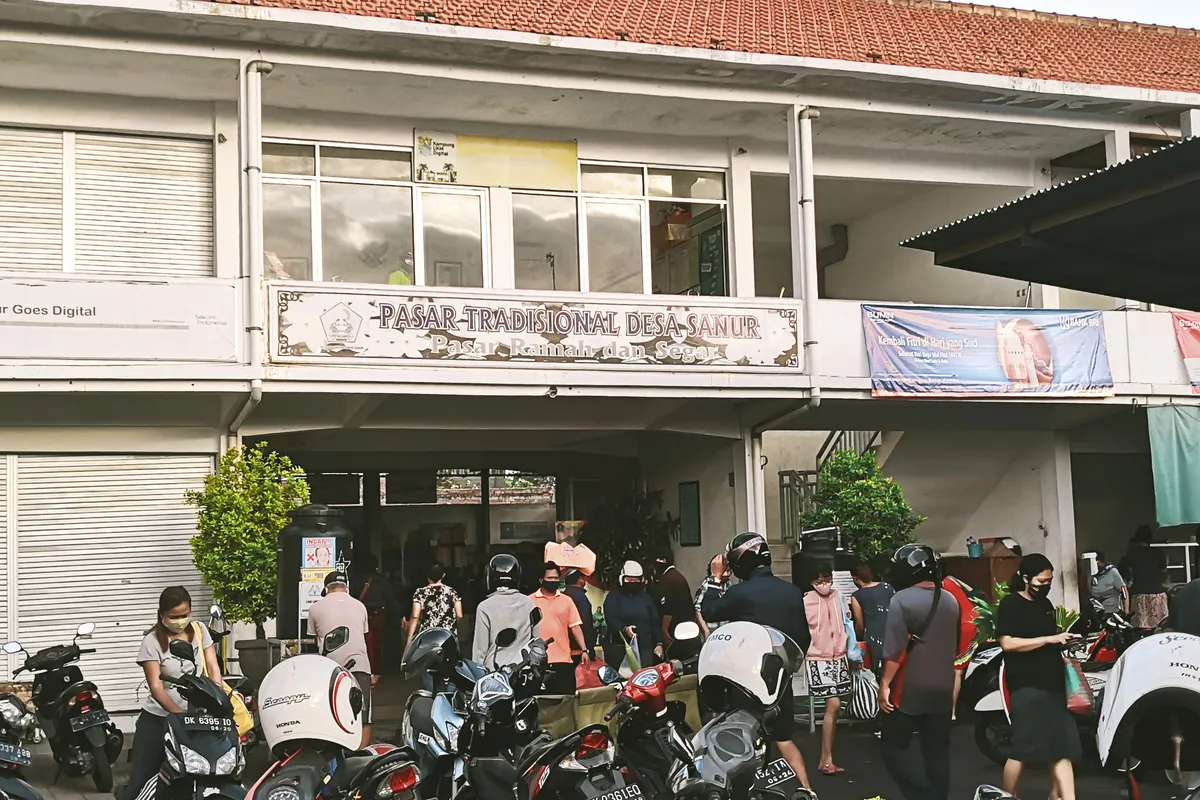
Bali | The Scent of Everyday Life Soothes the Soul (Sanur Traditional Market)
No matter where you travel in the world, if you want to experience local life, taste local food culture, and understand the character of the people, the traditional market is the fastest and most down-to-earth way. The lively atmosphere, the bargaining back and forth, is full of the strong flavor of daily life.
Most of Bali's traditional markets are hidden deep in the most local residential areas, and most tourists rarely get a chance to see them after arriving. This article takes you to the largest traditional market near my home—Pasar Sindu—to experience the daily life and ordinary routines of Bali, and to see the most authentic side of the island.
In Indonesian, 'Pasar' means market or bazaar, and 'Sindu' is the name of the area where this market is located. However, this name is mostly used by tourists; locals prefer to call it Pasar Tradisional Desa Sanur, meaning the traditional market in Sanur village. Of course, Sanur today is no longer the small fishing village it once was.
In 1906, the northern part of Sanur Beach was used as a landing point for the Dutch invasion troops during their invasion of Bali. During World War II, Sanur once again became an entry point for Japanese forces landing to occupy Bali. After the war ended, and more than a decade after Indonesia's independence, in 1963, Indonesian President Sukarno built the Bali Beach Hotel in Sanur, which directly boosted the development of tourism in Bali. Before this, there were only three major hotels on the entire island. With the completion of the Bali Beach Hotel, more and more inns and restaurants began to spring up across Bali. Today, Sanur has many hotels and resorts and is also a popular villa destination.
As one of the earliest areas in Bali to receive foreign tourists, compared with other emerging tourist areas like Seminyak or Canggu, Sanur feels more like an old town, especially favored by retired Westerners. Every afternoon, the local bars along the street are filled with long-term expat Western retirees, sipping cold beer, chatting about gossip and current events, watching the pedestrians pass by—time seems to stand still here.
As the traditional market of old Sanur, it comes alive before sunrise. The main area of the market is filled with stalls, all covered by a large warehouse-like structure. Despite its 'traditional' label, the market is modern and clean. Tiled floors host about a hundred stalls. Most sell fresh fruit, vegetables, meat, a small amount of seafood and spices, while other stalls offer daily Balinese Hindu offerings such as flowers and young coconut leaves.
Surrounding the stall area is a ring of independent storefronts, most of which sell everyday items, household tools, and traditional textiles. Several warungs (food stalls) offer nasi lemak, rice wrapped in banana leaf, tea, snacks, and drinks at low prices.
The fresh produce stalls usually quiet down after 8:00 a.m., while the surrounding storefronts remain open all day.
In the evening, the parking area outside the market begins to get busy as locally run food stalls gradually open. It transforms into what tourists call the Sanur Night Market, Sindu Night Market, or Pasar Malam Sindu. They cook and grill a variety of local foods: from lamb satay, bakso (meatball soup) to nasi goreng (Indonesian fried rice), as well as halal Muslim dishes, fresh fruit juices, and more—all at affordable prices.
? Detailed address:
Jl. Ps. Sindu No. 5, Sanur, Kec. Denpasar Sel., Kota Denpasar, Bali 80288
? Business hours:
The morning market starts as early as 4:00 a.m. and is mostly over by 8:00 a.m.
The night market usually starts around 6:00 p.m.
? Special recommendations:
If you go in the morning, try the nasi lemak. However, ready-to-eat food in the morning is limited to just two or three stalls, located on the north side of the parking lot (not inside the market).
At the night market, there are many choices. You can find common Indonesian home-style foods such as meatball soup, fried rice and noodles, all sorts of fried items, and local fast food at good prices.