Bali | There’s Always a Holiday That Belongs to Bali
I never imagined that when I started writing down my memories of this Bali trip, it would be under such circumstances.
Back in 2019, I was living on Lombok for a long time, and to go to Bali, all I needed was a flight ticket costing just over 100 yuan – less than an hour to reach that lively little island.
At the time, it always felt so easy to pop over to a nearby island, so I kept putting it off until I finally made the trip.
Looking back now, those ordinary days seem like a luxury today; the sea breeze of the Southern Hemisphere feels so far away.
People are like that, aren’t they? Back then, I was dying for Chinese food and complained about wanting to go home, yet now I occasionally catch myself saying, “I miss Lombok.”
When I hear people discussing how long it will take for international travel to resume, I often feel a pang I can’t quite put into words. Honestly, I start worrying that my twenties and thirties are slipping by too fast – year after year passing, yet my feet still can’t reach the places I long to go.
It’s not aging I’m afraid of; it’s failing to fulfill my dreams.
Under these external circumstances, it’s easy to overthink – anxiety, worry – but after all the pondering, the only thing I can really do is focus on what’s in front of me right now.
Speaking of Bali, it was never my first choice for an Indonesia trip. Actually, I only visited this crazy-hot island on my fourth trip to Indonesia.
But after seeing quite a bit of Indonesia’s scenery and then looking at Bali, I genuinely want to set the record straight. That saying, “world-class hotels, second-rate beaches, third-rate sights” – I absolutely disagree.
Beyond the world-class hotels, Bali also boasts equally wonderful beaches and attractions. With just a little effort to explore, you’ll be amazed.
Bali is abundant: here you’ll find sandy shores and coastlines, lush rice paddies and lakes, plus a few offshore islands with jaw-dropping scenery.
There’s both natural beauty and cultural landscapes. You can snap iconic photos or go on a treasure hunt for incredible hotels.
Of course, Bali is indeed super popular, with tons of tourists. If you only stick to the places tour groups swarm, it’s easy to feel let down.
But if you do your homework, you can enjoy your own Balinese moments – no queues, no crowds.
Our first stop in Bali was Kuta, probably most visitors’ first stop too, because it’s close to the airport and the beach, with a huge choice of hotels.
Kuta wasn’t our main focus this trip, so we only planned a very off-the-beaten-path beach: Pantai Tegal Beach. It’s near Jimbaran, but much quieter compared to the bustle of Jimbaran Beach.
Getting around in Kuta was pretty convenient – you could take a taxi, a ride-hailing car (Grab), or hire a private driver.
For ease, we pre-booked a full-day car. The price in Bali really isn’t bad at all: 200 yuan for up to 10 hours within the non-surcharge zone. With two of us, that’s about 100 yuan per person.
We just planned our itinerary, set the date and time, and the driver came to pick us up right on time.
The morning was brilliantly sunny, with huge fluffy clouds drifting freely across the sky – the kind of weather that lifts your spirits.
Pantai Tegal Beach sits beneath a cliff. Standing high and looking out, you can see the coastline stretching endlessly. Like Lombok, southern Bali also features many unique landforms.
We walked down a path to the beach: on one side, rocks; on the other, surging waves. The sea breeze blew strong, making it feel a bit cooler.
Pantai Tegal Beach wasn’t just a monotonous stretch of sand. Boulders were scattered around, and the large rock backdrop offered welcome shade. With a towel, you could lie there, feeling the sea breeze – pure bliss.
It was also a fantastic spot for portraits. The big rocks added depth and texture to the shoreline, yielding beautiful photo angles no matter where you turned. With few tourists around, we had a blast taking pictures.
The experience here depends a lot on the tide. When the tide comes in, seawater submerges the reef, leaving hardly any dry ground to walk on. In that case, it’s basically impossible to explore.
But when the tide is out, the hollows among the rocks turn into natural bathtubs, making for really fun photos.
Because the tidal pattern changes by time of day, it’s wise to check a tide table beforehand if you want a good experience.
A heads-up: sometimes the waves here are huge and fierce, so be extra careful when photographing and playing. If you bring kids, never take your eyes off them.
Island travel is different from city or highland trips. You don’t need to spend tons of time getting from place to place. Once you reach a beach or a viewpoint, the thing to do is slow down, stroll, or just sit or lie down, watching clouds and feeling the breeze.
I think that’s one of the reasons many people love island getaways. Facing the blue sky, white clouds, and boundless sea, just looking at it can lift your mood. Even if you do nothing, it doesn’t feel like a waste of time.
After a brief day in Kuta, we set off for Ubud, the part I was most excited about. And it’s a bit funny – who would have guessed that the thing I looked forward to most on an island was rice terraces?
Sure, China has plenty of terrace landscapes, but as a northerner, I rarely see rice paddies.
And those tropical terraces dotted with coconut palms and traditional local houses – a scene you can’t miss on a Bali trip.
Ubud lies in central Bali, a little over an hour from Kuta. The whole drive was lined with lush green rice fields; just gazing at the scenery along the way was uplifting.
The streets of Ubud were still bustling, but if you only stay among the shops, you’d miss out. The outskirts are hiding many offbeat, gem-worthy vistas.
Our first stop in Ubud was Jatiluwih Rice Terraces (Jatiluwih Rice Terraces in English – searchable on Google Maps).
Since we’d heard that restaurants inside the scenic area were overpriced, we grabbed lunch at a place along the way.
Lucky for us, it turned out to be a view restaurant. Eating while facing vast rice fields was so relaxing. The buffet-style food was surprisingly good, beyond my expectations, and cost about 60 yuan per person – quite a deal.
After the meal, we drove on to Jatiluwih. The entrance fee was 60,000 Indonesian rupiah per person, roughly 30 yuan.
These terraces are among the largest in Bali. Driving through, you see no end to them; everywhere you look, vast expanses of green. Some places, the moment you lay eyes on them, you know you made the right choice. We couldn’t wait to explore this emerald world.
Jatiluwih is huge, with many entry points for walking. It’s impossible to cover all areas in a short time. Just walk and look, pick the most inviting path, and wander in deep.
Unlike the “grand, majestic” impression of terraces in China, Bali’s terraces are graceful. Amid the orderly rows of rice, dense coconut palms, little huts, and occasionally a few ducklings hide among the paddies. Footpaths crisscross the fields for visitors to walk.
Walking there, I felt utterly carefree. Beyond the big scenes, there were countless lovely details – beautiful from every angle.
A visit to the rice terraces also needs a bit of luck, because these are actual crops. The landscape changes depending on the rice’s growth stage.
We were there in mid-September, when the rice had just grown twenty-something centimeters tall – tender, fresh, and so endearing.
I’d prepared a set of Hanfu to wear in the terraces. The pink dress, against the fresh green and pale blue sky, made a perfectly harmonious picture. And so, my Hanfu travel photo map gained one more tiny dot!
Walking among the terraces, you needn’t worry about trampling the rice, because between each terrace layer there’s a grassy footpath. Just be careful of slippery muddy patches – Qi Qi actually took a comical tumble here = =
He was carrying two cameras, seriously hunting for photo angles, when suddenly he slipped into the mud. But our first thought both darted to the cameras! Haha
Luckily, neither the cameras nor anyone got hurt, just a muddy mess. The camera straps were caked in mud, so there we were – two people washing clothes at a field faucet.
Besides coconut trees, many tropical plants grew among the rice, adding variety without feeling cluttered. We met travelers from all over; the site wasn’t deserted, but because the area is so vast, visitors were well spread out. Compared to many famous Ubud spots, this truly felt like a hidden paradise.
One thing I noticed wearing Hanfu inside the area: I received warm looks almost everywhere. People passed by with smiling eyes; some even came up to say, “You are beautiful.” It’s always a delight to be liked.
Surrounded by such scenery, I suddenly felt a “return to nature” sensation. Every living thing growing freely has its own unique beauty, even the rice, which is just a crop.
In the afternoon, the clear sky turned overcast. Under the grey, the rice fields glowed a dark, serene green. The temperature was just right – not hot, not glaring. We sat among the fields, taking photos and chatting, truly savoring the present.
I’ve come to realize more and more that such days are rare. The weather was just right, the mood just right, no trivial worries disturbing our peace.
Simply being present was already precious.
Leaving Jatiluwih, we drove to our next destination: Wanagiri Hidden Hills.
In recent years, the hottest photo props in Bali have been giant nests and swings. I love taking pictures but can’t stand queuing up at crowded spots – that totally kills the experience.
So I chose a very offbeat shooting location at Wanagiri Hidden Hills.
It’s in northern Bali, not too far from the Water Temple and the Gates of Heaven (Pura Lempuyang), making it easy to combine visits.
Honestly, this place probably shouldn’t be counted as Ubud area, but since I wasn’t sure what region it falls under, I’m lumping it in with Ubud!
The drive from Jatiluwih to Wanagiri Hidden Hills took nearly an hour. As the altitude rose along the way, the rain cleared into sunny skies.
The blue was incredibly clean, with massive cloud puffs gathering on the horizon. Distant mountains and homes were bathed in golden sunset rays.
It was quiet – that kind of crisp, refreshing quiet. I fell in love at first sight.
Wanagiri Hidden Hills isn’t really an “attraction” per se. It’s a photo spot that combines various elements: swings, bird nests, and similar props. Entrance fee: 50 yuan per person.
When I researched, I’d seen others report a price of 25 yuan. Coming here to find it had doubled, I realized many places really are better the earlier you go.
The location is fantastic: it overlooks the twin lakes, distant mountains, and villages, offering a vast panorama.
So even though those nests and bamboo weavings are common, against this backdrop they become truly beautiful.
Very few tourists were around – just us and one other couple taking pictures. So we posed freely, having great fun. My Hanfu unexpectedly matched these bamboo props perfectly.
If you go alone, don’t worry; the staff here are friendly and helpful. You can ask them to take photos and give a small tip afterwards.
Truly, beyond the photo props, I honestly loved the scenery here. I even regretted only allocating a short time and not having enough to shoot a time-lapse of the sunset or something.
If I get another chance, I hope to meet this place again. (Once again, I pray the pandemic ends soon!)
The most stunning feature here is the swing hanging from a tree, with the lake as its backdrop.
When you get on the swing, a staff member ensures safety. Once you’re seated, they remove the stool so you can take photos. The result looks like you’re blended into a painting – so ethereal!
Just a reminder: safety first when taking photos. Don’t get things reversed. Of course, multiple attendants watch over you. If they help, tipping a little is fine.
For girls who love photography, Wanagiri Hidden Hills is a treasure. But for those who only want to see sights without taking photos, it may not be worth the trip. Different people, different evaluations.
It’s still quite a distance from Ubud’s busy center. Coming all this way just for this spot isn’t cost-effective, but if you combine it with the Water Temple and Gates of Heaven, it’s a can’t-miss stop.
Leaving Wanagiri Hidden Hills wrapped up this day’s adventure – a truly full one.
We set off from Kuta in the morning, crawled through traffic to Ubud, met up with Xiao Meng, explored the terraces and Wanagiri Hidden Hills together. The weather swung from sunny to rainy, then back to sunny, and then thick fog on our way down the mountain.
Behind every fulfilling journey is a fulfilling heart. Those spots I’d once researched and mapped out finally unfolded before my eyes.
That night we stayed in Ubud. Ubud is bursting with wonderful B&Bs. We checked into a super dreamy bubble house called Alien Bubble Bali, run by Qi Qi’s friend Ali.
Ali is a Chinese girl who married and settled in Bali. This bubble-house plot is on her husband’s family land (cue envious looks!)
Surrounded by forested hills with a river flowing nearby, it truly felt like sleeping inside nature.
By the time we arrived, it was already dark. The bubble house glowed softly at night. After dropping our bags, we stepped out to admire the moon. That night happened to be Mid-Autumn Festival – the full moon of the eighth lunar month hung overhead. As they say, raising my head, I saw the bright moon; lowering my head, I missed my hometown (and its hotpot) haha!
A funny thing happened here, too.
While Qi Qi and I were sitting outside, two guests from another bubble house came over and asked in English if they could photograph our place, because their bubble was blocked by bamboo and hard to frame. We said of course they could.
Then the four of us chatted in English for a bit, until they asked, “Where are you from?” We answered, “China,” and they froze: “Isn’t that the same as us!” Then we all burst out laughing. Four Chinese people having a whole conversation in English – so embarrassing.
I’ll remember this story for a long time.
The bubble’s material is rubber-like, filled with air. Staff taught us how to use the door and such.
Inside, a machine steadily blew air – likely supplying fresh air, so you wouldn’t suffocate.
The bathroom was in a neighboring bamboo hut. Outside the bubble were a table, lounge chairs, a swing, etc.
Lying in the bubble at night, listening to the sound of flowing water, the feeling was truly unique. However, sleeping here still felt a bit humid.
Morning brought another fine day. The temperature at eight or nine was still cool. After making sure we were up, the staff delivered breakfast. We ate on the outdoor wooden table: fried rice, omelette, fruit, tea, and more.
Such service was so relaxing.
After breakfast and packing, I switched into photo mode again. It would’ve been a shame not to capture more of this beautiful scene.
Sometimes people say that travelers like us only go to take photos and don’t truly experience the joy of the journey. I’ll just say: yes, I travel to take photos, haha! Capturing all the scenes I love along the way is where my joy lies.
If I couldn’t take photos on a trip, that would genuinely make me very unhappy.
So you see, everyone has their own interests and pleasures. Never use your own standards to judge others’ ways of living.
We lounged on the chairs outside the bubble, swung on the swing, lay in the hammock, and hopped along the stone paths on the lawn. Here, time was spent on everything we loved.
The days felt so beautiful it was almost unreal.
Right as we were having fun outside, I went back into the bubble to grab my phone and discovered everything inside had been baked by the sun – scorching hot!! Even though it was still cool outside, the bubble had become a greenhouse, absorbing sunlight and turning stiflingly hot. We scrambled to move our luggage out.
So yes, the bubble house is only suitable for a one-night experience. The daytime heat can literally cause your phone to auto-shutdown.
Apart from the bubble itself, there was a large area provided for guests and visitors to take photos, with bird nests, swings, and other setups. Non-guests could pay to photograph here, too.
The big swing here, like the famous Bali Swing, faces lush mountains. Staff helped put on a safety harness and push the swing.
I only figured out later: other girls went on swings to take photos, while I, a total goofball, genuinely played. The staff, seeing how much fun I was having, pushed even harder, giving me my first-ever motion-sickness feeling (that queasy, stomach-churning sensation). I’m probably one of the rare people who got carsick from swinging = =
Right outside the B&B lay a big stretch of rice fields. Arriving at night, I hadn’t seen the surroundings clearly. Heading out in the morning, I finally took in the scenery.
Everywhere, layers of green, with houses tucked among the paddies. I truly love Ubud. One day, I’d love to bring my parents here to stay for several days.
After thoroughly enjoying our photo session at the bubble house that day, we headed to our next stop: Campuhan Ridge Walk. It’s a scenic footpath with no entrance fee.
This place was a bit tricky to find; we circled around following the map several times without luck. Finally, after asking locals, we found the trailhead.
We strolled forward. The entire path was flanked by clusters of green trees, the air incredibly fresh.
Along the way, the sound of trickling water accompanied us. Everyone we passed was walking the trail. It’s very popular with Westerners, who were chatting in small groups as they hiked.
Unlike their carefree sun-worshipping style, though, Qi Qi kept reminding me to hold my parasol.
Since it was late in the dry season (September) and the rainy season hadn’t arrived yet, the island was relatively dry and the plants were beginning to turn yellow. On Campuhan Ridge Walk, some leaves and branches weren’t deep green but showed a gradation of yellowish-green.
The ridge path is quite unique: it undulates with the hills, with valleys dropping away on both sides. In the valleys, dense, towering plants grow, and on the slopes beyond, several villas in traditional local style perch.
So whichever way you look, the scenery has a lovely layered depth.
The shot in the photos above is one of the classic photo spots on Campuhan Ridge Walk. The stone-paved path forms a gentle curve right here, and because of the rising terrain, you can see the path stretching far behind. A coconut tree stands right at the curve, making the whole frame wonderfully balanced.
Standing there, you look great without even trying.
Along the way, I saw this tree. The instant I saw the scene, I thought: if someone stands under that tree, the picture would be even better.
But we didn’t take that shot, because by then Qi Qi and I had started to disagree.
I was still gung-ho walking along, but he was already fed up. He thought the place wasn’t interesting and there was no need to go further. Me, once I start something, I have to finish exploring.
One wanted to continue, the other to turn back. As we argued, all my interest evaporated, and I said fine, let’s go back. So we didn’t press on.
Of course, even though he got his wish not to walk anymore, he didn’t get off easy either. I was in a foul mood the rest of the way and stayed upset until the next morning. Now I find it baffling that I could let one thing ruin my mood for so long.
Now, over a year later, I’m more clear-headed about it. Back then, I just couldn’t understand why we’d come here but not finish the walk. Now I see that sometimes girls need to tolerate a boy’s little moods and help defuse them.
Whether there’s a good reason or not, the important thing isn’t to argue who’s right, but to try to understand the other’s feelings. When one person isn’t speaking nicely, the other shouldn’t add fuel to the fire. Arguing to the bitter end really leaves both sides wounded.
Looking back, there’s another funny thing: Qi Qi fumed, “Your face is so sunburnt red, and you still insist on walking and baking in the sun!” I was puzzled – I didn’t feel any heat on my face, so how could it already be red?
Later we realized the “red” was actually my blush! (hahahaha)
What can you do with them?
So, in summary, this isn’t a place everyone will love. I personally liked it, but Qi Qi’s experience probably reflects some people’s opinions. So when planning your trip, be sure to look at lots of photos to make sure it’s truly where you want to go.
Leaving Campuhan Ridge Walk, we grabbed our luggage from the bubble house and hailed a car to that night’s accommodation, still in a relatively offbeat part of Ubud.
The hotel we checked into was called Kubu Bali Baik Villa & Resort, tucked among rice fields and coconut palms. The property has several cottages; open a window, and you see endless rice paddies.
We stayed in a second-floor room, with balconies on both sides offering stunning paddy views. Lying in bed and watching the leaves gently sway outside felt incredibly peaceful.
The room was spacious and, thanks to glass sliding doors on both sides, flooded with natural light. This kind of landscape and atmosphere delighted me more than a five-star city hotel.
Downstairs, the courtyard had a reading nook, a pool, and other shared facilities. With few guests, it was wonderfully quiet.
The yard was planted with all sorts of tropical greenery; every building was hugged by plants and flowers. I roamed the garden with my camera, snapping photos and filming videos.
It was sunset, and the golden light cast tree shadows on the walls. Everything was dipped in gold. I felt a deeply personal moment of awe.
I’m always grateful for my ability to appreciate natural beauty – everything beautiful in nature fills me with deep joy.
The next morning, we woke up naturally. With no specific plans, we simply strolled through the surrounding village and rice fields. It was pure happiness.
Stepping out of the hotel gate and turning right a few steps led to a path winding into the paddies. This wasn’t a tourist spot but local cropland. Unlike the tender green shoots at Jatiluwih, the rice here was already turning golden, ready to bear grain.
The only passersby were local farmers at work; in the distance, the typical towering coconut groves of the tropics.
Walking here, I felt so at ease, and suddenly the melody of Jay Chou’s “Rice Fragrance” came to mind:
Remember, you said home is the only castle
Following the rice scent, the river keeps running
Smile a little, I know my childhood dreams well
Don’t cry, let the fireflies lead you away
Country songs, forever a support
Go home, return to the original beauty
I didn’t grow up beside rice paddies, but every summer vacation returning to my hometown and running with friends by the wheat fields echoed the scenes in the lyrics.
The carefreeness of childhood seemed so natural then; only now do I realize how precious it was.
Gradually, I’ve understood that the worry-free days of childhood and youth were built on my parents’ efforts. Now, how I wish to grow enough to let them be carefree.
I don’t know whether, compared to most people, my growth is fast or slow, but that feeling of me isn’t just talk.
I flew the drone. From the aerial view, a girl in a white dress running through the rice fields – that was exactly the image I wanted.
As the drone climbed higher, the paddies turned into little squares, like a painting on paper. And it was time to say goodbye to the freshness and tranquility here and continue our journey.
Our next stop was long-anticipated Nusa Penida. One great thing about many boat companies in Bali is they offer pickup and drop-off. We arranged a time, and a driver came to the hotel to collect us, taking us all the way to the ticket office.
From Ubud to the harbour took just over an hour; from the harbour to Nusa Penida by speedboat, about half an hour.
Nusa Penida is one of Bali’s offshore islands, only gaining popularity in recent years. Many facilities are still basic, but the scenery can only be described as breathtaking.
Wandering between the sights on Nusa Penida, you truly understand the phrase “the uncanny workmanship of nature.”
Because the island is quite raw, there’s no public transport. Options are renting a motorbike or hiring a car. Knowing the roads are bad, we opted for a private car. At the harbour, after negotiating with the driver, we finally agreed on 500 yuan for one day to cover both the eastern and western routes. (Maybe the price could have been lower, but we’re really not good at bargaining.)
On Nusa Penida, we stayed in the hills. Sitting on the outdoor chairs, we could watch the sunset. That night, we squeezed together at one table, each on our laptops. The night was incredibly quiet, so quiet our world seemed to shrink to just the two of us.
Honestly, looking back, over the years Qi Qi and I have been in many romantic settings, but in those moments I was usually frantically taking photos while he waited, or we’d both be on our laptops. But perhaps that’s the truth of life – being able to comfortably be together is the most romantic thing.
The next morning, the driver we’d booked was right on time to pick us up.
Nusa Penida has two classic touring routes: the eastern route and the western route. Here’s a quick rundown of the photo spots on each:
▪︎ Western Route – the most commonly visited itinerary, with these points:
📍1/ Kelingking Beach: nicknamed the T-Rex or dinosaur bay because of its shape.
This has become the icon of Nusa Penida – a must-visit.
📍2/ Broken Beach: features a natural rock arch, truly beautiful and magical from a distance.
📍3/ Angel’s Billabong: very close to Broken Beach, walking distance. A natural infinity pool, but big waves often crash here; always be careful.
▪︎ Eastern Route – farther from the harbour, longer drive, but fewer tourists than the west.
📍1/ Rumah Pohon “Tree House”: a tiny hotel with three tree houses. A 25-yuan photo fee is charged.
📍2/ Thousand Island Viewpoint: a cluster of islets of various sizes, arranged beautifully.
We started with the eastern route, first heading to the Tree House (Rumah Pohon).
You can book a stay in advance – search Rumah Pohon “Tree House” on booking apps; the price isn’t steep.
But I don’t highly recommend staying there, as the facilities aren’t great. Also, if you stay in the best-view tree house, tourists will be snapping photos all day, so privacy is limited.
While I wouldn’t suggest overnighting there, it’s a superb place to see the view and take photos.
The wooden house suspended in a tree faces the vast, blue sea. Just sitting or standing there, you instantly look dreamy.
There’s a queue for photos, and a private person charges a fee: 50k per person, about 25 yuan.
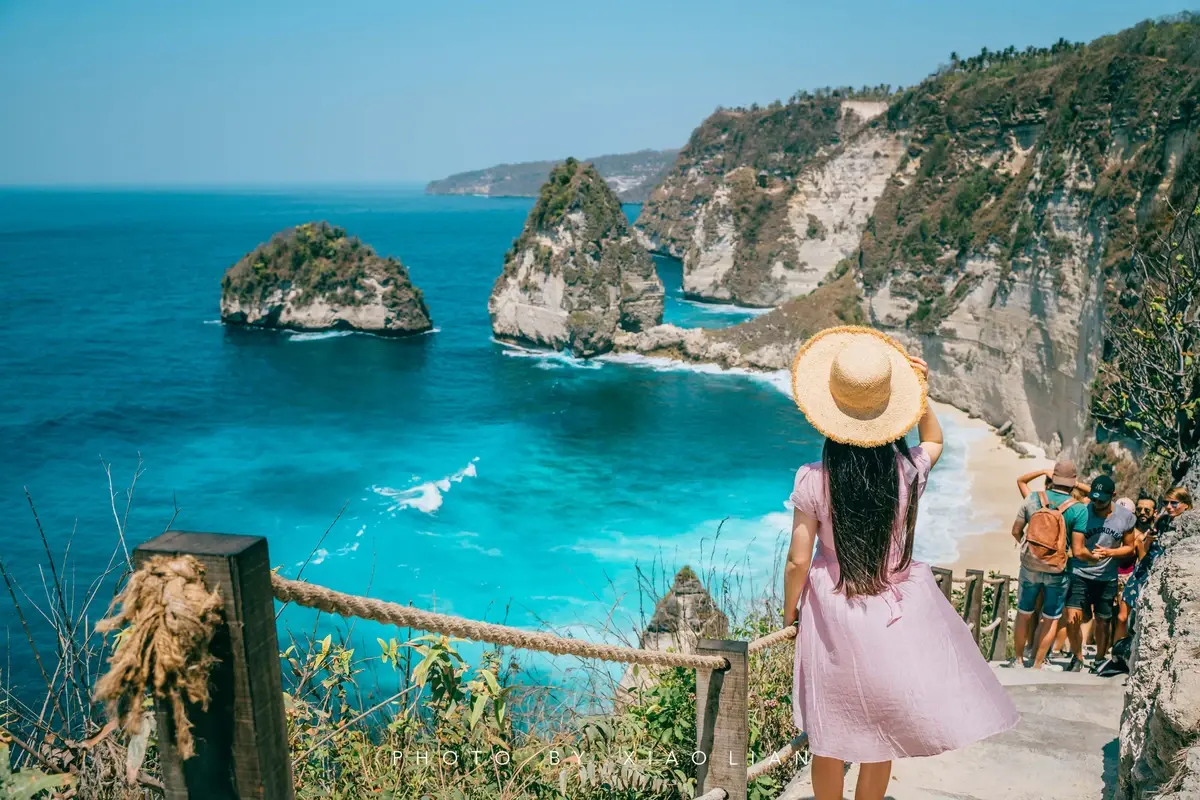
Continuing up from the tree house path, there are a few more lookout points worth visiting and photographing. The coastline here is lined with majestic cliffs. Several tiny rocky islets dot the sea, and below the cliffs, the sea shines translucent blue with rolling waves.
You don’t even need to search for designated photo spots – the beauty from every angle is unique.
Our driver-cum-guide not only drove but also led us to each attraction, then waited quietly while we shot photos.
Actually, even though Bali is a super-touristy destination and locals try to earn a bit extra from tourists, they never slack on service. They always open the car door, discuss the route beforehand, help with queues, and carry luggage. I suppose that’s one reason we love traveling in Southeast Asia.
I recall standing at the spot in the photo above, looking across at the mountaintop opposite, and saying to Qi Qi, “Look, is that a little pavilion over there?” And sure enough, our upcoming route actually led to that very pavilion.
The spot visible from the tree house is actually our second stop on the eastern route: Thousand Island Viewpoint. The sun was getting hot, but the stunning views kept our energy up as we walked.
After about 20 minutes, we reached the first viewpoint. There’s a staircase leading down to the beach, all the way to the shore where you can watch the waves. The steps here are actually a bit easier than those at Kelingking Beach, but due to time, we only snapped a few shots at the entrance.
Anyone who’s used an iPhone has seen that iconic default wallpaper – the wave. The waves here, both in shape and colour, were strikingly similar.
And here, the 70-200mm lens we’d carried all that way finally came into its own (thanks, Qi Qi!).
With the 70-200, I just couldn’t stop shooting. Each wave, from its start to its end, had so many moments to capture. Those waves looked like flowing jade – pure, without a speck of impurity, mesmerizing me so I couldn’t tear my eyes away.
We climbed further and finally made it to the highest pavilion. Standing before such an immense landscape in person feels completely different from just looking at photos. It’s a double whammy of sensory and spiritual awe.
You feel the damp sea breeze, the scorching tropical sun, hear the thundering surf, and your companion’s exclamations. You see the scene you’d long dreamed of finally in front of your eyes.
And you think to yourself: Finally, I made it! This place truly lives up to all expectations.
After leaving Thousand Island Viewpoint and having lunch along the way, we started our western route. The first stop was Kelingking Beach – the reason I’d first fallen for Nusa Penida.
The road near Kelingking Beach was indeed rough, all dirt and gravel. But personally, I felt it was okay; just hold tight inside the car. The bumpy ride wasn’t that long.
Finally arriving at Kelingking Beach, we saw its peculiar shape jutting into the sea. Below lay fine sand and surging surf; beyond, boundless blue ocean. The viewing platform was packed – this place has clearly become super popular.
Because we were at the tail end of the dry season with little rain, the island’s vegetation was turning yellow and the whole island looked a bit barren. Actually, if you come during or right after the rainy season, all the plants would be more lush and deep green. But personally, I see advantages to every season. In the dry season, your chance of good weather is much higher.
You can probably see in the photos the path snaking down the cliff to the beach at the bottom. The steps are incredibly steep, just wide enough for one person. It takes a few dozen minutes to an hour to get down to the shore. We only went halfway down to photograph the waves.
The surf here is just too photogenic. If time were no issue, I could have spent two hours shooting there, haha.
If you’re a photography enthusiast, definitely bring a 70-200mm to Nusa Penida – the waves are so worth it!
Angel’s Billabong and Broken Beach were our last destinations of the day. They’re close to each other, walking distance.
We first reached Angel’s Billabong, also called the Heavenly Bath. It’s a natural pool formed between two rock formations, resembling a natural infinity pool.
When waves are calm, people swim and take photos in the water. But on the day we visited, the waves were huge, huge, HUGE, so going in was completely out of the question.
At the time, Qi Qi and I were sitting comfortably quite far from the pool, watching the massive waves crash. Then, unexpectedly, a gigantic wave came sweeping toward our spot! We scrambled up to the highest point. Staff had already cordoned off the area.
So, when the waves are big, you really, really must prioritize safety. Never take risks for a photo. Nature is merciless – never assume you’ll be lucky.
A few minutes’ walk from Angel’s Billabong brought us to Broken Beach, with its amazing natural rock bridge. It’s truly astonishing.
Visitors can walk across the arch. Although it’s wide, there are no railings, so caution is needed.
If you do an aerial shoot here, you’ll get a uniquely spectacular view – a fact I only discovered later. At the time, I lazily left the drone in the car, which I regretted so much afterward.
So, I urge myself: never be lazy on the road, because some places you may only visit once in your life.
We drove back from Broken Beach.
That day on Nusa Penida was incredibly full, and Qi Qi and I were in constant amazement. Those unique and magical sights are etched deeply in my heart.
This island truly deserves to be called the Island of Sea Cliffs. Those peculiar cliffs created so many stunning views. Nature – it moves the human heart so effortlessly.
And beyond the cliffs, the beaches and seawater here are superb. This place completely shatters the nonsense that Bali only has “world-class hotels, second-rate beaches, and third-rate sights.”
If you go to Bali, don’t miss Nusa Penida!
Lembongan – the name itself is beautifully translated: Lembongan, a blue dream.
From Nusa Penida, we took an early boat to Lembongan, which took just a little over ten minutes. After dropping our bags at the accommodation, we rented a motorbike at the hotel to get around. Most roads on Lembongan are pretty good, so riding a motorbike was no problem.
Because it was still early, there were only a few tourists around – not bustling at all.
But below the rocks, the tide was bustling plenty. Wave after wave surged onto the shore, spraying fine mist. With the right angle, you could see rainbows in the mist from the sunlight’s refraction.
Just a few days before we arrived at Devil’s Tears, a person had been swept away by huge waves. So, valuing our lives, we only viewed the place from a distance, never getting too close.
Yet, even after that tragedy, some people were still standing right at the edge taking photos. Truly, they see the lesson but don’t learn from it, causing others to mourn them in turn.
From a drone’s perspective, the sea around Devil’s Tears is stunning.
The water grades from white to light blue to deep blue, beautifully layered. Near the shore, that pale blue sea was as transparent as glass. That day, I fell for that blue.
Also from the drone, you could see why it’s called “Devil’s Tears.” Two indentations in the rocks, as the waves rush in and recede, they resemble an eye socket endlessly weeping. Looking closely, it really does seem so.
If you have enough time, I highly recommend coming to Devil’s Tears at sunset. It faces west, making it a perfect sunset spot.
We returned there in the evening. Walking a little further in, we found a small shop selling beer, packed with Westerners. Passing through the shop and going a bit farther brought us to seaside rocks. There, with no big waves, we sat, chatted, and waited for sunset – a fitting end to our last night in Bali this trip.
Compared to joining a day tour, I always prefer to spend more time researching transport and accommodation myself when circumstances allow. That way, I can leisurely watch a sunset, and then stroll to find a restaurant that catches my eye for dinner.
To encounter the world I love, unhurried and undisturbed – that’s the meaning of travel for me.
Leaving Devil’s Tears that morning, we rode our motorbike across the Yellow Bridge to Nusa Ceningan.
Connected to Lembongan by this yellow bridge, Nusa Ceningan is the smallest of the three islands and unknown to most visitors.
Riding up a slope, we reached the place that amazed me most this entire trip: Blue Lagoon. Actually, it’s a hotel, and the most beautiful part is the sea outside its restaurant.
That sea – no photo could fully capture its beauty. It wasn’t light blue or dark blue, but a rich, warm, deep blue. Standing before it, even the colour of the sky seemed dull.
I gazed at that sea for a long time. How lucky I was to encounter such a scene.
Besides hotel guests, this cliffside restaurant welcomes walk-in diners. And you’ll be pleasantly surprised to find that such a stunning viewpoint restaurant isn’t crowded at all – a little secret joy!
The whole restaurant is built in Bali’s signature bamboo-weaving style. The natural bamboo colour fits perfectly with the sea, creating a very harmonious scene. I couldn’t help but take more photos here.
And what deserves extra praise: not only was the view beautiful, but the food was really delicious. Finding food in Indonesia that we’d unhesitatingly call “delicious” is truly rare.
Although it’s part of a high-end hotel, the restaurant prices were friendly. A meal of mains, drinks, and dessert for two came out to about 60+ yuan per person.
There were many photogenic designs around the restaurant. We explored every photo spot by the sea – everything was so beautiful no matter how we shot it.
These photos barely needed editing; just slight adjustments to exposure and saturation made them look gorgeous. That natural, built-in filter effect is the magic of nature.
Sometimes, when encountering extreme beauty, words seem to fail. It needs no flowery description; its beauty is unadorned by artifice. Only those who have seen it will understand.
Right outside Blue Lagoon, there’s an open patch of land offering another angle to view this sea. I imagine that as Nusa Ceningan develops, this plot will likely be sold and turned into a hotel or something eventually.
Many places really are best visited early – fewer people and not overly commercialized, giving a far more pleasant travel experience.
And it’s not just about travel; it’s the same with everything. When conditions allow, be a little impulsive and do what you want to do. Your age, the things you yearn for – they won’t wait for you.
Places you want to go, things you want to learn, people you want to love – don’t wait until you turn back and sigh with regret, then grow numb under the weight of those repeated regrets. Please, don’t.
Blue Lagoon is in the higher part of Nusa Ceningan; you need a motorbike to get there. Walking would be quite a hike.
If you’re on foot, it’s better to take a car to the Yellow Bridge from Lembongan, cross it on foot, and then walk a while to reach the seaside. The sea there, while not as stunning as Blue Lagoon’s, is still unique – a very light, milky blue. There are also cafés and restaurants where you can sit.
I had originally planned to go down to the seaside after Blue Lagoon, but my period suddenly hit, leaving me wiped out in bed at the hotel. Haha, luckily I’d already captured the most essential shots!
Of course, Nusa Ceningan is a place I’ll definitely return to. I silently promised myself that.
With that, our Bali journey came to a perfect end. Honestly, in my heart, this trip was truly complete.
We’d seen an ultra-offbeat beach near Jimbaran, wandered Ubud’s rice terraces and hidden-gem hotels, marveled at nature’s artistry on Nusa Penida and Nusa Ceningan, and fallen for the blue of Lembongan.
And along the way, we never encountered overwhelmingly crowded spots, enjoying a relaxed travel experience.
As I said early on, Bali is a rich place that needs to be explored in detail, and its beauty reveals itself to those willing to know it.
Through Qi Qi’s local friends, I know that because of the ongoing pandemic, Bali has long since lost its former bustle. An island that flourished on tourism is going through hard times. I honestly, sincerely wish it could be lively again, that everything could return to normal.
I look forward to the day I set foot on that island again.
▪︎ Itinerary
D1: Lombok – Bali (Kuta)
D2: Kuta [Pantai Tegal Beach – Seminyak]
D3: Kuta – Ubud [Jatiluwih Rice Terraces – Wanagiri Hidden Hills photo shoot – overnight in bubble house]
D4: Ubud [bubble house photos – Campuhan Ridge Walk – overnight in rice field hotel]
D5: Ubud [rice field photos] – Nusa Penida
D6: Nusa Penida [Eastern Route (Tree House – Thousand Island Viewpoint) – Western Route (Kelingking Beach – Angel’s Billabong – Broken Beach)]
D7: Nusa Penida – Lembongan [Devil’s Tears] – Nusa Ceningan [Blue Lagoon] – Lembongan [Devil’s Tears sunset]
D8: Lembongan – Lombok
From China, there are direct flights to Bali, but the prices are relatively high. For convenience and comfort, you can choose Garuda Indonesia; for lower prices, consider AirAsia, Lion Air, etc. Note that budget airlines don’t include checked luggage; you can only bring a 20-inch carry-on on board. Larger luggage requires purchasing a separate luggage allowance.
Within Indonesia, flights from Java, Lombok, Komodo, etc. to Bali are frequent and cheap. Besides flying, options between islands include speedboats, ferries, and liveaboards. Choose based on your actual situation.
▪︎ Getting Around Bali
Transportation conditions vary by area. Below I break it down by places I visited:
▪︎ Kuta, Jimbaran, etc.: Taxis are available; look for the “Blue Bird” company. However, beware that even official taxi drivers at the airport may try to rip you off. Before taking a taxi, check the distance on your phone and estimate the fare. Indonesia’s cost of living is lower than China’s, so it should never be pricier than an equivalent-distance taxi ride in China.
Besides taxis, Bali has ride-hailing apps, like Grab (and you can also order food via Grab). The app estimates the fare based on distance; you pay the driver in cash at the destination.
If your day has many planned stops, you can also hire a private car. Within the non-surcharge zone, a car costs just over 200 yuan per day; outside the zone, about 300–400.
▪︎ Ubud area: Since I didn’t go to downtown Ubud, I’m not sure if there are taxis there. I didn’t see any where I went, but ride-hailing cars were available.
Of course, if you have many places to go, you can also hire a private car or rent a motorbike.
▪︎ Nusa Penida: No public transport; only private car rental or motorbike rental. Car rental is more expensive on this island.
▪︎ Lembongan: There are songthaew-like shared taxis (like in Chiang Mai, Thailand). You can negotiate the price with the driver.
Otherwise, only private car rental or motorbike rental are available.
▪︎ Nusa Ceningan: Walk or rent a motorbike.
From Bali to Nusa Penida and Lembongan, there are public speedboats. Boats also run between the two islands. Tickets can be bought through online agents or directly at the harbour.
Bali is near the equator and has a tropical rainforest climate with an average annual temperature around 28°C. There’s no extreme cold or heat.
April to October is the dry season with less rainfall, ideal for travel. November to March is the rainy season, with most of the annual precipitation falling in these months, and heavy rain is possible.
▪︎ Visa, Currency, and Power Plug
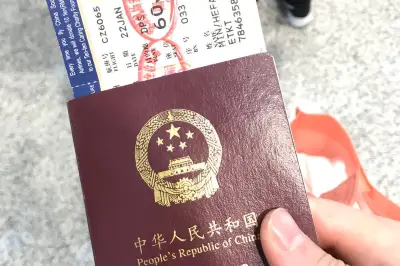
1. Bali offers visa-free entry. No fee, no tip required at immigration.
2. The current exchange rate of RMB to Indonesian Rupiah is about 1:2044.6, meaning 1 yuan buys roughly 2,000 rupiah.
At first glance, the many zeros make the rupiah seem hard to calculate. Actually, to convert, remove the last three zeros, then divide the remaining number by two to get roughly the amount in yuan.
For example, 40,000 rupiah: remove three zeros → 40, divide by two → 20, so about 20 yuan.
Rupiah banknote denominations: 1,000 (~0.5 yuan), 2,000 (~1 yuan), 5,000 (~2.5 yuan), 10,000 (~5 yuan), 20,000 (~10 yuan), 50,000 (~25 yuan), 100,000 (~50 yuan) (yuan amounts are approximate).
3. Power plug: Use German-type (Schuko) plugs.
Accommodation:
Kuta: Yulia Beach Inn
We only had a brief stay in Kuta, so we picked a hotel not far from the beach. It was small, but the rooms were very spacious, offering great value.
Price: around 300 yuan/night.
Ubud: Alien Bubble Bali
A gem of a bubble B&B, perfect for photos. See the Ubud section above for details.
Price: 600–700 yuan/night.
Ubud: Kubu Bali Baik Villa & Resort
A hotel surrounded by rice fields; staying here felt like living in a hidden paradise. From the room, you can see vast paddies. Detailed in the Ubud section above.
Price: around 250 yuan/night.
Nusa Penida: Ampel Hill Homestay
Because Nusa Penida is more rustic, most accommodation facilities are fairly basic. Our place was up in the hills with great views overlooking the sea and sunset.
But the conditions and amenities were indeed average. There was no restaurant; we had to eat at the neighboring hotel (which, ironically, was the one I hadn’t managed to book – and I forgot its name, haha).
Still, you can’t expect too much from hotels on this island!
Price: around 260 yuan/night.
Lembongan: Kencana Garden
A very nice hotel on Lembongan, with good overall environment and rooms. However, because my period started right when we stayed, I didn’t take many exterior photos. The hotel has an in-house restaurant with decent food.
They also offer motorbike rental.
Price: 270 yuan/night.
▪︎ Photography gear
For this trip, I brought a Sony A7R3 with a Tamron 28-75mm f/2.8, a Nikon D800 with a 70-200mm, and a DJI Mavic Air.
As ever, gear is relatively important, but what matters more is passion and ideas for photography, plus seeing more, shooting more, and learning more.
May we all keep getting better!
Writing the tips section, I couldn’t help but wonder when this guide will come in handy for others.
Even though we can’t travel abroad now, I still put my heart into this travelogue. It’s part of my own memory, and I hope it provides some inspiration for future travelers to these places.
Both during the trip and now recalling it, I absolutely loved this journey. It felt like everything was so perfect, even though my life in 2019 and now in 2021 is still full of unknowns, pressures, and confusion.
So I also think: beautiful things can always heal the heart, and the beautiful things we love are a tonic that helps us perk up and move forward.
Maybe the present is unclear, but the future will surely be good. Don’t stop moving forward, because everything you love is waiting for you in the future.
Perhaps it’s blind optimism, and sometimes I feel down, but I must keep picking myself up and taking those steps.
May we both strive on.
Travelogue contents:
1. Kuta | Seek Out a Hidden Beach, Watch Rocks and Waves
2. Ubud | Visit the Giant Rice Terraces, Soak in That Fresh Green
3. Ubud | There Are Unique Bird Nests and Swings Here
4. Ubud | Admire the Moon by the Water, Sleeping in a Bubble House
5. Ubud | Return to a Natural Oxygen Bar, Stroll a Literary Walkway
6. Ubud | Living Among the Rice Fields
7. Nusa Penida | Sea Cliffs, Infinite Vistas
8. Lembongan | Today, I Fell for That Blue
9. Nusa Ceningan | Encountering a Milky Blue Sea
10. —— Practical Guide ——
Travel Information Hotel Index Guide Index Flight Index Website Navigation Travel Index Cruise Index Corporate Travel Index Partnership Distribution Alliance Friendly Links Corporate Gift Cards Insurance Agent Partner Cooperation Hotel Partnership Destination & Scenic Area Cooperation More Partnerships About Ctrip About Ctrip Ctrip Hot Topics Contact Us Join Us User Agreement Privacy Policy Business License Security Center Content Center Intellectual Property Trip.com Group Algorithm Disclosure