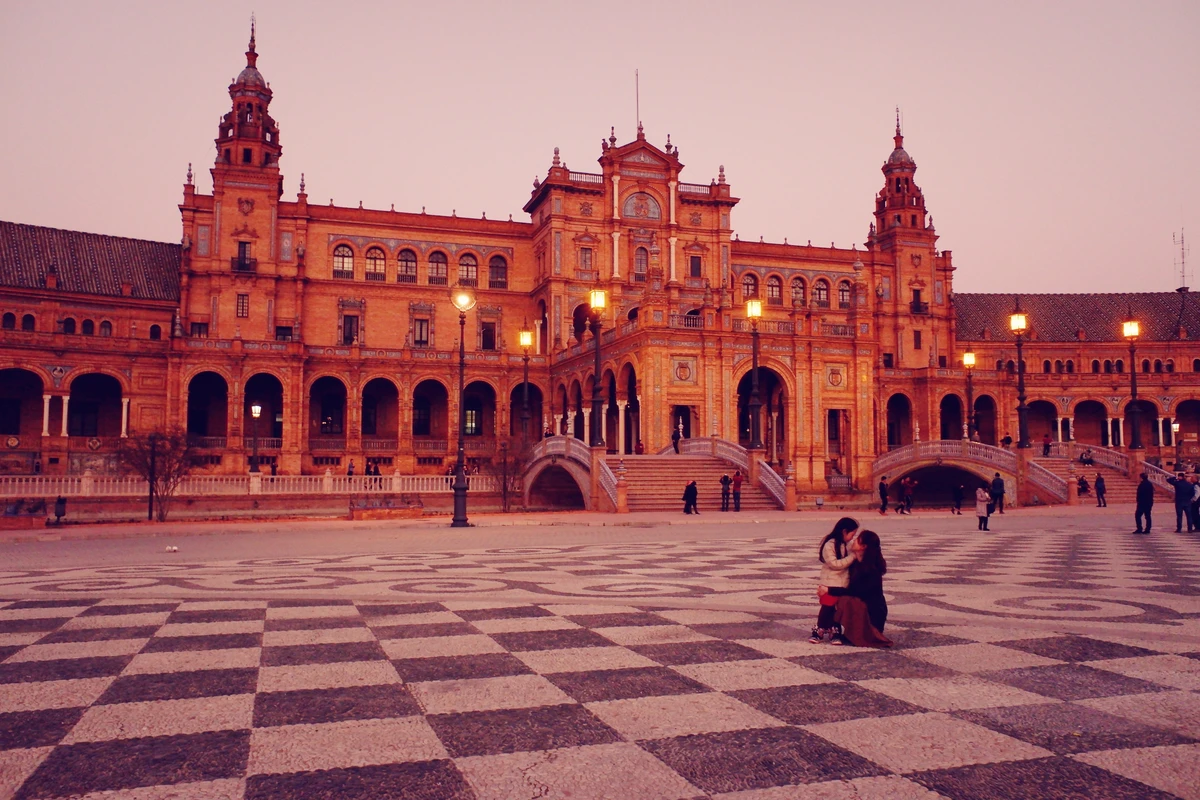
【Super Spain】12 Days in 8 Places, Beautiful and Heartwarming
【To the beautiful, heartwarming people】
Read ten thousand books, travel ten thousand miles. Among words, before ancient buildings, on city streets, in the soft words of locals—that is the right way to open a history and understand a city. This is the journey I hope to give you: see more, think more, and let your spiritual world grow—both through the silent influence of gentle rain and through the awakening of thought like a butterfly breaking from its cocoon. A single sentence from a book, a single street in a city—perhaps these are the catalysts.
Taking you to measure the world, the books we read, the roads we walk, the people and events we encounter, the stories of the years we perceive—all are small seeds planted in the heart. When, in the future, you again touch certain figures, places, pieces of history, or flavors, you can smile lightly and say, “Oh, these old friends...”
Flights: Enter through Barcelona, exit through Madrid. The overall itinerary covers three of the six regions on the Spanish coat of arms—also the most storied and directly influential regions: Castile, Aragon, and Granada.
Itinerary design: The choice of cities was carefully considered. Lisbon was removed, meaning the trip was adjusted from Spain-Portugal to Spain only, mainly because Lisbon, whether by car or flight, is a bit troublesome and not suitable for traveling with small children. Lisbon, Sintra, and Cabo da Roca are temporarily out of the plan. “The land ends here, the sea begins here.” Leaving a small regret as an opportunity to return.
The main route is Barcelona - Granada - Ronda - Seville - Córdoba - Toledo - Madrid.
The reason for this choice: first, the smoothness of the itinerary—after one flight, the rest is all by car, making luggage handling and accommodation changes not too tiring. Second, the importance of these cities in Spanish history—more or less, each once influenced the changes of the Iberian Peninsula.
【Beijing, Departure】
The children prepared carefully for this trip, packing their own luggage with full sets of pretend-play toys, electronic devices, and school supplies.
On the evening of the second day of the Chinese New Year, we arrived early at Beijing Airport, full of anticipation for the trip to Spain.
Flying from Beijing, the journey is 12 hours, with a 7-hour time difference. Departing from Beijing in the early morning, we land in Barcelona on the same day in the early morning.
The terminal was empty, not many tourists.
【Barcelona】(Day 1 to Day 3)
Day 1: After landing, find the hotel from the airport and check in. Today is mainly for adjustment and transition, wandering around the city and scattered sights. The focus was the Old Town and Columbus Square, originally planning to walk all the way to the seaside port, but the companions were quite tired on the first day, so we ultimately didn’t go to the port or the market for a big meal. We returned to the hotel to cook dinner and rested early.
Main check-ins: Plaça de Catalunya, Gothic Quarter, Barcelona Cathedral, Plaça Reial, Columbus Monument
Day 2: The highlight—Gaudí’s architecture: Sagrada Familia, Casa Milà and Casa Batlló on the Block of Discord.
Main check-ins: Casa Milà, Casa Batlló, Sagrada Familia
Day 3: In the morning, we first went to Park Güell, then to La Boqueria Market, followed by a pretend-artistic visit to Els Quatre Gats. The originally planned Plaça d’Espanya was skipped, as the Spanish Square in Seville later in the trip was already enough to look forward to.
Main check-ins: Park Güell, La Boqueria Market, Els Quatre Gats café
【Granada】(Day 4 to Day 5)
Day 4: Arrived in Granada by plane at noon. In the afternoon, we wandered the Albaicín district and the old town, looking, eating, feeling the atmosphere of the thousand-year-old city, tracing the historical marks of the Moors.
Main check-ins: Albaicín district, Granada Cathedral
Day 5: In the morning, the Alhambra—the pinnacle of Spain’s tourist attractions, experiencing the end of 800 years of Moorish rule over the Iberian Peninsula.
Main check-ins: Alhambra
【Ronda】(Day 5 to Day 6)
Day 5: In the afternoon, we rented a car and arrived in Ronda around evening. We stayed overnight in Ronda, experiencing the “most suitable for elopement” town on the cliff edge.
Main check-ins: New Bridge
【Seville】(Day 6 to Day 7)
Day 6: From Ronda to Seville, after lunch we wandered the city, enjoying the vibe of this most suitable tourist city. The highlight: watching a Flamenco show in the evening, joining the rhythm with a shout of “¡Olé!”
Main check-ins: Seville old town, Plaza de España, Flamenco Museum
Day 7: Explore Seville in detail, then in the afternoon head to Córdoba for accommodation.
Main check-ins: Old town, Seville Cathedral and Alcázar area, carriage ride
【Córdoba】(Day 7 to Day 8)
Day 7: Arrived in Córdoba in the evening, went to the old town to find a good restaurant for the famous oxtail stew.
Day 8: The Great Mosque–Cathedral of Córdoba. After lunch, depart for Toledo.
Main check-ins: Great Mosque–Cathedral
【To Madrid】(Day 8)
Day 8: Consuegra to see the windmills of Don Quixote. Arrive in Toledo in the evening, stay in a castle hotel.
Main check-ins: Consuegra windmills, Parador de Toledo
【Toledo】(Day 8 to Day 9)
Day 9: In the morning, explore the ancient city of Toledo. In the afternoon, visit the outlet mall on the outskirts of Madrid. Check into Madrid in the evening.
Main check-ins: Toledo ancient city, Las Rozas Village outlet
【Madrid】(Day 10 to Day 11)
Day 10: Madrid—visit museums and squares.
Main check-ins: Prado Museum, Puerta del Sol
Day 11: Madrid—visit markets and the Royal Palace (too much architectural fatigue, didn’t enter the palace), rest in the square, watch street performers.
Main check-ins: Plaza Mayor, El Rastro flea market, Royal Palace area
Return, Madrid (Day 12)
Five people, two large suitcases. To avoid hassle, we booked a private car through a travel website. We got up early, the street of Passeig de Gràcia was silent.
At the airport, we queued until 7:00 to start processing tax refunds. First, we needed to have the tax forms verified outside security, at counter 197.
After security, we took the tax refund forms to the bank counter to get cash. A moment of admiration for Tencent’s power!
Read ten thousand books, travel ten thousand miles—no mistake. 12 days, ten thousand miles by air, a thousand miles by car, and the children have clearly grown.
The days of traveling together are truly wonderful.
The arc roof uses a Latin-style dawn. Color ambiguous seduction, I’m already tipsy. / A fiery red dance skirt spins on a green path. Even footsteps are the sound of Flamenco. / Hanging on the window lattice, a small wine bottle sways gently. Responding softly to the wind, love can be silent.
Barcelona is located in the northeastern part of the Iberian Peninsula, bordering the Mediterranean Sea. Legend has it that over two thousand years ago, an ancient Roman fleet reached the present-day coast of Barcelona. Those on the ninth ship came ashore and settled, and the place name evolved from the ancient Roman “Barca Novena” (ninth ship). Through evolution, today’s “Barcelona” is composed of the Catalan words “Bar” (bar), “Cel” (sky), and “Ona” (wave).
The main theme of this Barcelona journey is “style.”
Yu Qiuyu, in “The Traveler Without Borders,” gives Barcelona the spiritual temperament of wandering, describing Gaudí and Columbus as wanderers—a rather forced interpretation. First, Gaudí was not a wanderer but rooted in Barcelona. Second, Barcelona does not belong to Columbus but to Gaudí, Picasso, Dalí... At first glance, you may not understand, but you’ll never forget. It doesn’t compromise, doesn’t conform, and has its own style. The whole city is imbued with the strong personal flair of the people of Barcelona, so intense that they must define themselves as “Catalan” rather than just being part of Iberian Spain. (I looked into the background, but I find it hard to agree. Many things in the world don’t need understanding, only respect.)
I like the “passionate Latin” persona of Spain: singing and dancing are compulsory subjects for Spaniards, and a drink at the bar is their usual way of relaxing.
For tourists, Barcelona has another well-known label: “architecture.”
Every city has its crucial moments. Barcelona’s crucial moment was the first and second World Expos in the late 19th century. Taking this opportunity, Barcelona completely transformed from an old, dilapidated town into a proud, modern city. To attract tourists, grand monuments, hotels, and cultural centers were built, and the people of Barcelona became more cosmopolitan and ambitious.
A direct flight of about 12+ hours. We boarded the plane in Beijing at 2 a.m. Due to the time difference, we arrived in Spain at 7 a.m. local time. We cleared customs quickly, waited for our luggage at the airport, and had some bread, biscuits, and fruit for breakfast.
During the Spring Festival, it is winter across Europe. Although Spain is on the southernmost Iberian Peninsula, relatively warm, it is still the low season for Spanish tourism.
There were not many tourists at the airport.
From the airport, we took the shuttle to the R2 line to downtown Barcelona.
The distance was not far, and the map was clear. We carefully noted the route and stops because three days later we would take the R2 line again to fly to Granada.
The train station was not crowded, and trains were frequent. We could sit together comfortably.
Sunshine accompanied us all the way. The 12-day beautiful journey started on a bright, sunny morning.
Sunny weather, sunny mood.
The beautiful and heartwarming Spain trip officially began.
We got off the train/metro at Passeig de Gràcia station. Exit the metro station, and across the street was Casa Batlló.
First arrival at this place—take photos, check in.
Although we would visit it thoroughly later.
I love the layout of Barcelona’s streets so much. Even today, many days after returning home, if I were to summarize the Barcelona itinerary, I would put Passeig de Gràcia first, even before all of Gaudí’s buildings.
Barcelona’s urban planner was named Ildefons Cerdà, a former bridge and road engineer. He advocated for a city with openness and inclusiveness, breaking class and wealth boundaries so citizens could share urban resources and facilities. To achieve this, the primary goal was to create a radial pattern for urban planning. Like our cities—first ring, second ring... ah, fifth ring, you are one less than sixth ring. A ring implies a center, and a center implies distance.
People compare class and wealth by naming their ring number. They turn the entire city into a target on a pillar, everyone aiming for the exact center.
Reposting an aerial view of Barcelona: from my perspective as an IT engineer, it looks like modular, decentralized design. From a god’s-eye view, each small eight-trigram array forms its own space, even with plazas. Plus the small shops and supermarkets scattered in each array—a microservices design philosophy.
Brother Cerdà, if he were alive today, would definitely be a top-notch programmer.
My love for Passeig de Gràcia is purely personal preference. With hindsight, I think Barcelona’s architecture as a whole tends to be exaggerated and pretentious—more on that later.
But Passeig de Gràcia made me fall in love from the first day. The very wide pedestrian walkway in the middle, with two lanes of one-way traffic on each side, creates a city artery completely centered on people.
The pedestrian walkway is several times wider than the vehicular lanes. Benches are standard, but even sidewalk cafes line up in a row. The whole street, though not flashy, is bustling. And because the street is extremely long and the city center is spread out, shops don’t need to compete for one spot, so there are naturally no traffic bottlenecks.
In the sunshine, even five people walking side by side don’t bother other pedestrians.
The side roads are for vehicles, and beyond them are rows of shops.
Dragging our luggage, we encountered a Starbucks and refueled to lift our spirits.
Following the navigation, we easily found the hotel, located at a corner of one eight-trigram block.
Since we could only check in at noon, we stored our luggage and went out to find lunch first.
Considering the need to adapt to local food, we conservatively chose McDonald’s for our first Spanish meal.
Barcelona, first day at noon—check into the hotel.
After lunch, we returned to the hotel. Honestly, as the first stop in Spain, the hotel pleasantly surprised us.
Historic building: stone walls, solid wood doors, ironwork decorations.
The apartment had an old elevator, the kind with a lattice gate often seen in old movies.
If we took the stairs, we noticed the apartment’s interior was quite refined, with details showing the former owners’ love for life.
The courtyard stretched all the way up to the top, which was a bit dangerous for the children.
The front desk gave us a warm and cozy feeling—more like a tasteful café and dining room than a hotel lobby.
As for the hotel rooms, they continued the style of the front desk: spacious, with a home-like layout, a huge living room providing ample shared space.
Drawing the curtains, sunlight streamed onto the sofa, making us too lazy to move.
From the balcony, we could see the streets of Barcelona.
After a short rest, recharged, we started our day’s sightseeing along Passeig de Gràcia.
On the pedestrian walkway, sidewalk cafes were starting to open, livelier than before.
Barcelona’s streets, though all very neat and pretty, have low recognizability. Most buildings look similar in layout and appearance, making it hard to tell our location at a glance.
In travel guides, Barcelona is primarily tagged with architecture and design.
But from the street statues, it is indeed modernist, even a bit flamboyant.
Although we occasionally saw Mobike bikes in Spanish cities, Barcelona has its own well-established local bike-sharing system.
On the pedestrian walkway,
We turned it into a square, watching the children feed pigeons, unable to move.
This 12-day Spain trip formed a habit of feeding pigeons everywhere anytime.
Continue, continue, heading in the general direction of Columbus Square along Passeig de Gràcia. According to the plan, we would pass Plaça de Catalunya, Barcelona Cathedral, and the Gothic Quarter in sequence.
A wide intersection, truly attracting us were the shops on the four corners. We had previously read about this intersection in a cultural series we subscribe to: “The Commercial War of the World’s Top Three Fast-Fashion Brands at the Corner of Barcelona.”
The four corner shops were: H&M, ZARA, Dutti, and Uniqlo + MANGO.
We chose the most architecturally beautiful H&M to browse and get a feel for shopping in Spain.
【Plaça de Catalunya】
Not far ahead is Plaça de Catalunya. Truly worthy of being called Pigeon Square. The children were completely immersed among the pigeons.
Plaça de Catalunya sits in the heart of Barcelona, a large square in the old city. Also known as Pigeon Square, it’s famous for its flocks of pigeons, sculptures, and fountains. It’s also a crucial transport hub, close to most of Barcelona’s popular attractions, like La Rambla and Casa Milà. Plaça de Catalunya is the starting point of La Rambla, with the old town on the left and the new city on the right, leading straight to the port.
The centerpiece of the square is a large fountain area, with the Apple store serving as a visual background in the distance.
Although it was winter in Spain, the temperature stayed around 15°C, enough for flowers and plants to survive the winter.
On one side was a small pond, not very distinctive.
Beside the pond was a statue of a woman riding a horse, carrying a ship—the symbol of Barcelona’s administrative region.
Continuing from the square, we entered a lively commercial street, completely pedestrian, wide and tidy, with many clothing shops on both sides.
The street gradually narrowed, shops became smaller but closely packed, with plenty of customers.
Walking deeper, the buildings became older and more chaotic—basically entering the old town, or Gothic Quarter.
This area is the most original part of Barcelona.
The tiled images on street corners made us chuckle a little.
In Barcelona, shopping is quite enjoyable. Not to mention the good value for money, but the colors and styles alone are pleasing to the eye.
【Barcelona Cathedral】
We happened to catch the weekend flea market in Barcelona—similar to Chinese second-hand markets, but less noisy.
Items were like collectibles, not really selling used goods, but rather old collectibles for resale.
Barcelona Cathedral is the seat of the Archbishop of Barcelona, built from the 13th to 15th centuries, taking about 150 years.
The most pleasant thing was not visiting the cathedral, but sitting on its steps like locals, idling away time.
The cathedral is mainly Gothic, characterized by slender lines, while the dome and interior have Neo-Gothic elements. Take the elevator near the dome to the top for a panoramic view of old Barcelona.
The cathedral’s overall layout is large, surrounded by cathedral grounds.
We didn’t go inside.
At the entrance, there is a bronze sculpture of the letters of Barcelona, said to be the work of the successor builder of Sagrada Familia, Subirachs, called “Poem of Barcelona.”
Seven letters made of pure copper, each with a different shape: the letter A is a pyramid with an accent; C is a crescent moon; N resembles a sailboat pointing north; O is a sun symbolizing the Mediterranean. This represents Barcelona’s welcome to tourists.
The Generalitat de Catalunya government building is on Plaça de Sant Jaume, an important venue for Catalan political activities. There seemed to be some political activity, but we weren’t interested and didn’t pay much attention.
The Gothic Quarter is the center of Barcelona’s old city. Apart from some changes in the 19th and early 20th centuries, many buildings date from the Middle Ages, some even from Roman times. The Gothic Quarter retains a complex street plan, full of narrow streets and squares. Most of the area is closed to ordinary vehicles, only service vehicles and taxis. Walking through, you can directly feel the old age. A casual stroll will bring you to Barcelona Cathedral, Plaça Reial, or the ruins of the Temple of Augustus.
This small square with a memorial statue is actually a famous work, commemorating five heroes who resisted the French invasion. The above relief of the winged victory is also by another famous artist.
It’s hard to imagine that this street was once Barcelona’s main street, its axis.
A Gothic bridge across the street; many tourists gather here for photos, and this spot appears in many travel photos of the Gothic Quarter.
Actually, you walk through it in just a few steps.
The sunshine was wonderful, stretching our shadows long and warm. Our mood was the same—calm, not impatient.
We slowly advanced toward our destination: Columbus Square.
We encountered a square and unexpectedly liked it. Checking the map, it was Plaça Reial, one of Barcelona’s attractions.
A square, perfectly square, surrounded by three-story buildings on all sides.
I strongly suspect that the Xiannong Courtyard and the renovated Minyuan Stadium in Tianjin’s Five Great Avenues were inspired by this design.
This lamppost is very famous—designed by Gaudí. I don’t understand it; it’s a strange thing.
Better looking than the unnamed buildings along the street.
[From source] Early work of master architect Gaudí. The helmet with wings on the lamppost symbolizes Hermes in Greek mythology (Mercury in Roman). Legend has it that he threw his wand between two fighting snakes, and they immediately reconciled, so he is also the god of commerce. Below the helmet, you can see two wide-mouthed snakes coiled around the lamppost.
【La Rambla】
The word “Rambla” comes from Arabic, meaning “riverbed.” La Rambla runs about 2 kilometers long, divided into five sections: La Rambla de Canaletes, La Rambla de les Estudis, La Rambla de les Flors, La Rambla de les Caputxins, and La Rambla de Santa Mònica. These streets are collectively called “Ramblas.”
La Rambla is a bustling pedestrian boulevard in central Barcelona. Spanish poet Federico García Lorca once said it was the only street in the world he wished would never end. It starts at Plaça de Catalunya and ends at the Columbus Monument.
[From source] Connecting Plaça de Catalunya in the city center and the Columbus Monument at the old port, it is a famous street often compared to Paris’s Champs-Élysées. Passeig de Gràcia (also known as Carrer de Gràcia) is the most bustling street in Barcelona, equivalent to New York’s Fifth Avenue or Paris’s Champs-Élysées. During the day, it’s crowded with tourists and street artists; at night, it sheds its commercial tourist aura, and you see swaying shadows and glasses through the trees—dizzying and enchanting.
Looking at the map, after passing the intersection with the Customs building, we reached Columbus Square.
Actually, beyond Columbus Square, there is a short stretch leading to the port.
【Columbus Square】
La Rambla ends at the Columbus Watchtower. From here, looking east, you can see the port buildings of Port Vell. To the southwest is the Barcelona Customs building. The Columbus Watchtower was built for the Barcelona World’s Fair, a tall cylindrical monument made of brown marble, 60 meters high, with inscriptions: “Glory to Columbus” and “Tribute to Columbus.”
The watchtower is a composite Roman column. At the top, a statue of Columbus points with his right hand to the port (the direction of Barcelona’s old port where the Catholic Monarchs waited for his return in 1493 after his first voyage), holding a navigation chart in his left.
Above the base, a winged victory goddess sits, and four statues at the base represent the four kingdoms of Spain: Catalonia, León, Aragon, and Castile.
The shields, heads, and surrounding statues record important figures in Columbus’s discovery of the Americas.
The reliefs below record important events of Columbus’s voyage.
On April 17, 1492, the Catholic Monarchs signed the Capitulations of Santa Fe with Columbus after receiving him.
On August 3, 1492, Columbus’s fleet set sail from the port of Palos in southern Spain, bidding farewell to the crowd.
On October 12, 1492, Columbus set foot on the American continent, kneeling with a Spanish flag in one hand and a sword in the other, thanking Christ’s protection, before him were indigenous people.
We compiled the cities and places where Columbus intersects with our trip.
Spain is the country that most worships and positively glorifies Columbus, but many American countries see him as a plunderer and devil. Looking at his life, he possessed many vices of a successful man. At least I deeply dislike him. The Age of Discovery was started by Portugal’s Prince Henry and Vasco da Gama, after the Cape of Good Hope, the call of the mysterious East; the practice of the earth being round was done by Magellan, whose westward journey ended at the starting point of the East. Columbus’s contribution was the discovery of the Americas, followed by the opening of a bloody curtain of looting American wealth and destroying gentle civilizations, building the Spanish Empire with American gold. It was selfish, hardly contributing to human civilization, instead causing the Aztec and Inca civilizations to disappear from the long river of history.
Actually, the part of Columbus’s story that I greatly admire is Queen Isabella’s vision and boldness. The era of the Catholic Monarchs, reconquering the peninsula, expelling the Moors, funding Columbus, worldwide colonization—without a doubt, Isabella’s era was the brilliant start and also the peak of Spanish glory. Columbus, a speculator, was refused funding three times for global voyages, but a woman, alone, convinced Spain to finance his westward voyage, accidentally opening the discovery of the Americas. Also, for us modern people in a society ruled by law, the Capitulations of Santa Fe are the greatest practice and respect for the spirit of contract.
History flows for thousands of years, irrelevant to our brief passage as tourists in Spain. Success or failure is just our street-side gossip.
Sunshine bright, smiles as bright as sunshine, mood as bright as smiles.
A strange city, a foreign building, sitting on the steps, watching the bustling crowd—this is our travel story.
Barcelona, first evening
Tired, though the distance wasn’t far, we chose the metro to return to the hotel.
(Some people looking like homeless might enthusiastically help you use the self-service ticket machine, but of course, a tip is unavoidable.)
After getting off the metro, we did some supermarket shopping. After a tiring day, we didn’t want to eat out for dinner, but preferred to return to the hotel, relax, eat hot food, and chat.
Pizza, wontons, fruit, eggs, corn...
About daily schedule: Spaniards work from 9 a.m. to 2 p.m., then have a siesta from 2 to 4 p.m., work again until 8 p.m., and have dinner at 9 p.m.
At 10 p.m., many chefs in other countries have already taken off their aprons to close, but in Spain, people are enjoying delicious dinners with garlic shrimp and Madrid stew (chickpeas, pork, sausages, etc.), with restaurants busy and lively, glasses clinking. Most tourists think the late dining habit is due to the Mediterranean country’s leisurely lifestyle, but the real reason is not that romantic. It’s because Spain has been living in the wrong time zone for over 70 years. Looking at a world map, Spain is on the same meridian as the UK, that is, the zero meridian of Greenwich Mean Time (GMT), but Spain uses Central European Time (CET). So Spaniards live one hour later than their geographic time zone.
【Impression of Gaudí】
Barcelona cannot avoid Gaudí. One could even say it’s Gaudí’s Barcelona.
Gaudí (1852–1926), the great modernist architect of Spain, a representative of the Art Nouveau movement, known for his complex, novel, unique, and strongly personal architectural works, called “God’s architect.”
Gaudí lived in the same era as Spain’s “Generation of ’98,” but forcing a connection is far-fetched (I disagree with Linda’s “Spain Travel Notes” on this point). The “Generation of ’98” was more like a cultural reflection between the Sino-Japanese War and the May Fourth Movement, while Gaudí was solitary, an individual detached from social life. I see his architecture more as an outlet for his emotions, a dialogue with nature, a love letter to himself, an equal exchange with another spiritual soul outside his body. If I could project into him, looking at each completed building, with my Eastern romanticism, I would sigh, “I see the mountains so charming; the mountains should see me the same way.” He believed “only madmen try to depict things that don’t exist in the world,” yet his faithful description of nature gave birth to his great creations. This made “Gaudí’s Barcelona.”
It can be said that Gaudí shaped Barcelona’s temperament. Seven of Gaudí’s works are listed as World Heritage sites, six of which are in Barcelona.
Gaudí was not dull as Linda described; he had passion. He was shy, introverted, or solitary, but once you see his architecture, you deeply understand where his passion lies—it’s fused into his works, into his nostalgia for his hometown Barcelona. As Liang Xiaosheng said, there are people who live calm lives but have a turbulent inner sea, as if they have traveled thousands of mountains and rivers.
As a classic tour guide author, Dan Brown’s “The Da Vinci Code” features the Louvre, “Angels & Demons” the Vatican, “Inferno” Florence and Istanbul, and his recent “Origin” includes extensive descriptions of Gaudí’s architecture in Barcelona. (See “Spain Tour Guide: Dan Brown’s Origin.”)
In the early morning, despite the chill, we pretentiously set out tea and coffee on the balcony, pretending to be locals watching the city slowly wake up.
Casa Milà, Casa Batlló, Sagrada Familia, Park Güell—we had already bought tickets in advance, made reservations, and printed them out.
We had also watched some video materials beforehand.
On the road, we saw locals in a hurry. Like the Spanish football team, Spanish men generally have good looks, and most notably, they manage their bodies well.
We rarely saw overweight locals.
【Casa Milà】
The keyword for Casa Milà is “sculptural quality.” A boring, dull apartment building became sculptural under Gaudí’s hands, with undulating walls.
Casa Milà has no right angles; the roof rises and falls, and the whole building resembles a surging sea, full of dynamism. The roof is filled with oddly shaped chimneys and ventilation ducts. Casa Milà is bizarre inside and out, even somewhat absurd. Yet many consider it the most representative and original building of all modern architecture, one of the most important buildings of the 20th century.
Our hotel was very close to Casa Milà, about 300 meters. Soon, across the intersection, we saw Casa Milà.
Excerpt from “Spain Travel Notes” about Casa Milà: People see it from the outside in, from below to above, even up to the roof. The chimneys and vents on the roof are turned into a twisting group of spirit statues, rough yet delicate. Casa Milà was the last private residence designed by Gaudí. The weight of the building is entirely borne by columns, so no interior or exterior wall supports the weight, allowing free internal remodeling. The light wells of Casa Milà allow dual lighting for each unit, and rooms are almost all round. The rooftop is one of the biggest highlights, with fantastic chimneys against the blue sky, creating great photo opportunities. On rainy days, the rooftop may close, so plan for a sunny day.
[From source] The façade, like an architectural sculpture, is famous for its beautiful stone face. Like a huge wave rising on Passeig de Gràcia, a 30-meter-high, 84-meter-wide giant sculpture appears. Gaudí based on renewable elements, giving full play to artistic freedom, creating abstract sculptural ironwork for the balcony railings, making us feel like in a plant paradise, while in the distance, perhaps seaweed floating on water.
Dan Brown’s “Origin” has a lengthy description of Casa Milà. In the novel, the top floor of the building is the residence of Edmond Kirsch, and Professor Langdon later finds clues to decrypt Kirsch’s code there.
“Origin”: Casa Milà is one of the most famous buildings designed by Gaudí, a dizzyingly creative “house” with layered façades and undulating stone balconies that look like a hollowed-out mountain. Hence its popular nickname “La Pedrera,” meaning “the quarry.” Although the neighboring community originally laughed at Gaudí’s stunning modernist design, the art world widely praised it, making it a shining pearl of Barcelona’s architecture. The wealthy businessman Pere Milà, who commissioned the building, lived with his wife in the irregular main apartment for thirty years, renting out the remaining twenty units. Today, Casa Milà is still considered Spain’s most unique and desirable apartment building.
Approaching Casa Milà, right in front of the main entrance, there was a billboard.
Alipay, “Fu”; Alibaba, “Fu!”
We marveled at China’s influence and also at how our internet companies have gone global and are strong in international competition.
Since we had reserved a time slot, the queue moved quickly. Most of Spain’s relatively enclosed tourist attractions use a reservation system, with a specific entry time on the ticket. But how long you stay inside is completely free.
This mechanism effectively regulates queues and crowds, especially inside the attractions, avoiding overcrowding.
[From source] The courtyards are like colorful, vibrant nature. At Casa Milà, the courtyard is a space where everything becomes lively. The walls are a scene of shapes, light, and color, in stark contrast to the plain façade. The murals decorating them feature mainly floral patterns, also seen on the ceilings and side walls of the two entrance halls and the main staircase, with mythological references and nature scenes. Don’t miss the spectacular staircase leading to the main floor.
“Origin”: In the next thirty seconds, Langdon saw waves carve the mountain into Casa Milà, its unique façade like a living organism. Then waves poured into Casa Milà, carving out rooms like caves and grottoes. In these rooms, waterfalls carved stairs, vines began to spread. Below the vines, moss grew, covering the floor, while vines twisted into iron railings. Finally, the camera pulled back to the vast sea, a panoramic view of “La Pedrera” carved into a majestic mountain.
“Origin”: The entire exterior of Casa Milà looks like a mathematical infinity sign—a looped line joining end to end, forming two wavy light wells that cut through the entire building. Both open light wells are about a hundred feet deep, with wrinkled walls that look like partially collapsed tunnels, appearing like two huge drains when viewed from above. Standing at the bottom of the narrower light well looking up, the visual effect is unsettling—like standing in the throat of a giant beast.
Taking the elevator up, we directly reached the “Gaudí Space.” The promotional material says “Explore Gaudí in a magical space.” Indeed, and it was this space that made me feel Casa Milà surpassed Casa Batlló later.
[From source] The attic of Casa Milà is the most distinctive space in Gaudí’s architecture. Entering it is like entering a giant creature that breathes and welcomes us. Once again, natural elements appear, manifested in its 270 catenary arches resembling a whale skeleton. But more than that, in this magical space, there is also an exhibition dedicated to Gaudí and all his works; through audio-visuals, models, plans, exhibits, and designs, you will recognize the most special lines of his architecture and the key to his genius.
At the entrance, a projector introduced the architectural concept and interpretation of Casa Milà via video.
Catenary arches are a very frequent structural feature in Gaudí’s architecture. They were an interesting experience-based architectural theory in an era without computer simulation.
“Origin”: Langdon turned his gaze to the curving ribbed arches, feeling once again as if standing inside a living organism.
At the far end was a video introducing not only Casa Milà but all of Gaudí’s architectural concepts and works.
I strongly recommend watching the entire video patiently—it’s stunning.
I felt that Casa Milà subconsciously regarded itself as Gaudí’s eldest son, with the duty to introduce its father to tourists and show off its siblings. So visiting Casa Milà first, then Casa Batlló, Sagrada Familia, and Park Güell, is wise and correct.
The Gaudí Space contains models, structural drawings, and design elements from Gaudí’s various works.
Here you can see the bones and veins of Sagrada Familia, Park Güell, and Casa Batlló after removing the bricks and tiles.
Gaudí’s works are stripped bare for you.
Some small model details are cute.
There is a mirror and a hanging chain to explain the principle and method of Gaudí’s catenary arch: a freely hanging chain forms a curve called a catenary, which resembles a parabola so much that Galileo initially mistook it for one. When weights are hung at equal intervals, the chain becomes a parabolic curve.
Gaudí used chains with weights at equal intervals to create suspended models, thereby calculating the shape and strength of the arches. He used mirrors or photos to invert the shape, thereby designing balanced arches. This type of arch can be seen in the model of the Sagrada Familia’s nave.
From the Gaudí Space, we went up to the rooftop terrace. For most visitors, this is the soul of Casa Milà.
No need to say much—first, a panoramic view.
[From source] The rooftop terrace is a unique, extraordinary work. Casa Milà’s terrace is a symbol of Barcelona, where you can enjoy a magnificent view of the city. It is an unusual space full of artistic power, completely different from the architecture of its time. The stairwells appear as the Earth’s forces: earth, water, fire, air... And the chimneys, like guardians from ancient times, come to life and tell us the origins of architecture. All these elements have dynamic and symbolic representations, open to free interpretation, but always reflecting a planned practical function.
This helmeted warrior figure is often described as an alien. Many travel magazines and guidebooks love to use this image on their covers.
In Barcelona, at newsstands and souvenir shops, postcards, fridge magnets, and small models featuring this figure are the most popular.
We lingered on the terrace for a long time, then went down. According to the guide, we should visit the “Period Apartment.”
[From source] Life a hundred years ago. This apartment on the fourth floor is like a journey through time. As you walk through, you get an intimate look at the lifestyle of Barcelona's upper-middle-class families in the first half of the 20th century, with period furniture and household items recreating the atmosphere. The apartment also shows the internal layout and decorative elements designed by Gaudí (knobs, handles, moldings, doors, floors, etc.). The tour is accompanied by an audio-visual presentation showing Barcelona's rapid transformation and modernization in the early 20th century.
[From source] The exhibition hall was the former residence of the Milà family. On the main floor was the home of the Milà family, the first owners who commissioned the project from Antoni Gaudí. Although few original elements remain in this floor (since Mrs. Milà replaced most of the decoration after Gaudí’s death), you can still see some sculpted stone columns with reliefs of waves and inscriptions, as well as fragments of the impressive ceiling, which Gaudí intended to continue the rhythm of the façade.
Then, estimating that we still had some time before our reservation at Casa Batlló, we leisurely browsed the souvenir shop.
From this spot, looking down, we could see the intersection we had crossed earlier, with tourists taking photos on the street.
My own photos couldn’t capture the beauty of Casa Milà, so I included a reproduction of a souvenir wallpaper image.
[From source] The Block of Discord
Casa Milà and Casa Batlló are about 500 meters apart, located in a famous area.
On Passeig de Gràcia is Barcelona’s famous “Illa de la Discòrdia” (Block of Discord). Why is it called that? Because in this short section, three buildings designed by three master architects stand side by side in distinctly different styles: the dreamy Casa Batlló, the dignified Casa Amatller, and the graceful Casa Lleó Morera. These three buildings are neighbors, and the stark contrast creates a powerful visual impact. Even the street lamps on this street are exquisite ironwork pieces, filling the whole street with an artistic atmosphere.
Speaking of Casa Amatller, we must mention its first floor, because it hides a beautiful coffee shop. (We didn’t go in.)
Entering the lobby, you see century-old Catalan-style floor tiles, and at the end is the bling-bling Faborit café. Faborit is a Spanish coffee chain, known for 100% healthy coffee and food, with great attention to ambiance. Their motto: “Drinking coffee is a pleasure.”
【Casa Batlló】
If Casa Milà represents strength and roughness, Casa Batlló is extreme refinement.
Excerpt from “Spain Travel Notes” about Casa Batlló: We couldn’t help but look up—a familiar dotted wall, like Impressionist pointillism, with exquisite windows, balconies, a roof shaped like a fish spine, and decorative turrets. Casa Batlló is astonishing. Gaudí had the ability to preserve the masculine energy and solidity of the artistic soul while achieving the utmost refinement of craftsmanship. Today, if architectural decoration uses curves, they are usually two-dimensional planar flows. But Casa Batlló, inside and out, is three-dimensional twisting. A tension, a soul trying to break through the wall, exists in every corner. Casa Batlló took 2 years, Casa Milà 6 years, Park Güell 14 years. Apart from his dedication to Sagrada Familia, where did Gaudí’s time go? As an architect, Gaudí also designed the furniture and interior decoration of his buildings. Inside Casa Batlló and Park Güell, the flat ceilings are designed as swirling shapes. From chandeliers combining shells and corals to ceramic plates shaped like disks and sea urchins, Gaudí’s use of lines is unexpected yet traceable. You can see where his curves come from, but you never expect them to be used here, in this way.
Of course, a good designer knows how to play with concepts and tell stories. Gaudí was no exception. With this six-story apartment building, he told a fairytale-like story: a beautiful princess trapped in a castle by a dragon, the Catalan hero Saint George slays the dragon with a sword to save the princess, and the dragon’s blood turns into a red rose, which Saint George presents to the princess. Every detail of this house pursues symbolic meaning and stylistic elements.
The bubble-like stained glass windows, like an underwater world, give visitors a sense of looking out from underwater, even from inside the dragon. Not obvious, but perceptible with a hint.
The lobby was quite empty, with more tourists than before, but we couldn’t find a stunning angle to photograph the lobby.
The façade was under renovation; the skull-shaped balconies couldn’t be seen from outside, and looking out from inside, the scaffolding spoiled the view.
Let me repost a picture of the lobby and balcony from the internet.
Casa Batlló’s audio guide is very interesting—it uses AR technology. When you view Casa Batlló through the screen, it superimposes period furniture or analyzes Gaudí’s biomimetic elements.
For example, a simple window grille, through the guide, you learn that its opening and closing for ventilation is modeled on fish gills.
Visitors write their feelings and moods in the guestbook.
The garden, in my opinion, is nothing special.
Walking up the stairs to the top floor, the glass on both sides, railings, and wall tiles all try to imitate the feeling of an underwater world.
With the play of light and shadow, visitors get immersed.
The tiles of the light well gradually change from light to deep, like a deep blue pool.
Again, catenary arches.
The terrace of Casa Batlló is much smaller than that of Casa Milà, with far less space and functionality.
Its most famous feature is the dragon’s spine design.
Choosing a good angle can capture both the dragon and the holy sword in one frame—the typical strategy for travel photos.
When going down, you can see scenes of life in the apartment.
Downstairs, there was a video: a documentary about Casa Batlló.
Barcelona, second day, lunch. Following recommendations from guide websites, we went to a highly rated Spanish restaurant in the Block of Discord. The restaurant was large, and most customers seemed local, at least no tour groups.
Based on our previous impressions of Spanish cuisine, we ordered typical Spanish specialties.
Actually, the taste was so-so...
But at least we ate enough.
However, it happened to be dinner time during the Chinese Spring Festival back home. As we ate Spanish food, we saw various dinner posts on WeChat Moments...
You know our mood.
There is too much to say, it’s hard to cover it all. See “Barcelona Sagrada Familia” for details.
Because Sagrada Familia is so beautiful, “knowing” and “feeling” both require separate chapters. So the knowledge and interpretation of Sagrada Familia will be in a separate chapter, “Barcelona Sagrada Familia.” In this travelogue, I’ll provide as many pictures as possible for you to experience.
Before coming to Spain, I had seen quite a few churches.
St. Peter’s Basilica—regardless of the building itself, square layout, historical status—I think it is the undisputed first, since the Pope resides there.
Italy, Florence, Santa Maria del Fiore—beautiful.
Italy, Venice, St. Mark’s Basilica—dignified, but I prefer St. Mark’s Square.
Germany, Cologne, Cologne Cathedral—majestic.
France, Paris, Notre-Dame—famous for its story.
UK, London, Westminster Abbey—famous for the people buried there; the building itself is not special, but the British souls within make it extraordinary.
Spain, Barcelona, Sagrada Familia—splendid! Regardless of Gaudí’s contribution, its light and shadow effects alone are stunning.
------------------------------------------------
Before the trip, my frivolous impression of Sagrada Familia was it was an illegal building, an unfinished construction that had spanned three centuries.
After learning the background in advance, I deeply felt it was a prayer left to God by Gaudí, a love letter to Barcelona.
Sagrada Familia is a must-visit for every tourist in Barcelona. Excerpt from “Spain Travel Notes”: We visited this church on a winter morning and evening. Especially on a cold, dark night, the church looked like a sleeping giant, you feel it is profound, with a thousand years of religious foundation; yet it is modern, with the most peculiar shapes, topped with Gaudí’s colorful mosaics that shine in sunlight and moonlight alike.
Too much to say, I’ll compile it separately—see appendix “Barcelona Sagrada Familia.”
Similarly, Dan Brown’s “Origin” also writes about Barcelona’s Sagrada Familia. A mysterious exhibit containing Edmond Kirsch’s secret code is to be displayed there, and the climax of the story also happens there.
“Origin”: Sagrada Familia occupies an entire block in the center of Barcelona. Despite its large footprint, the church seems to float weightlessly above the earth, with a group of delicately designed ventilation spires soaring effortlessly into the sky. These complex, porous spires of varying heights give the church the bizarre appearance of a sandcastle built by a giant playing pranks.
“Origin”: Besides decorating the church with traditional religious sculptures, Gaudí also used countless surprising forms to reflect his reverence for nature—turtles bearing columns, trees growing out of the façade, and giant stone snails and frogs in proportion to the church.
“Origin”: Once completed, the tallest of the eighteen spires will reach an astounding 560 feet (taller than the Washington Monument). Sagrada Familia will then become the tallest church in the world, a hundred feet taller than St. Peter’s Basilica.
“Origin”: The church’s main body is veiled by three huge façades. Facing east is the colorful “Nativity” façade, like a hanging garden climbing upward, decorated with a profusion of plants, animals, fruits, and figures.
“Origin”: Despite its strange exterior, the true surprise comes only when you step inside the church. Once inside the nave, visitors will stand stunned: their eyes following the crooked, tree-like columns upward to the suspended vaults two hundred feet above, where bizarre geometric shapes merge like crystal canopies floating in the air. Gaudí claimed he created the “forest of columns” to encourage people to spiritually revisit the thoughts of early hermits, for whom the forest was God’s church.
We entered through the Nativity façade, which is the door of Saint Joseph.
Above the door on the opposite Passion façade is a statue of the Virgin Mary.
The sunlight comes through stained glass windows. On Saint Joseph’s side, the tones lean toward blue-green; on Saint Mary’s side, toward orange-red.
The Glory façade is not yet finished; above its door is a statue of Saint George, Barcelona’s patron. On the back, instead of stained glass, there are large panes of clear glass.
The interior is so overwhelming that we planned to stay inside for a long time. So we first crossed to see the Passion façade.
The door of the Passion façade is called the Gospel Door.
“Origin”: Langdon thoughtfully studied the raised printed letters on a polished metal monolith. The monolith had over eight thousand 3D bronze relief letters arranged horizontally, forming a large area of text with almost no spaces between words. Although Langdon knew the text described Christ’s Passion in Catalan, it looked more like a NSA key.
“Origin”: Langdon’s gaze slowly moved upward along the shadowy Passion façade. Designed by artist Josep Maria Subirachs, the entire façade consists of a group of gaunt, angular, downward-looking sculptures that are unforgettable. The main sculpture is the emaciated Jesus on the cross leaning forward, creating a terrifying effect as if it will fall on the viewer.
“Origin”: As they approached the door, Langdon frowned at the most macabre decoration inside the church—a huge statue of Jesus being scourged while tied to a column. Then he quickly looked up at the carvings above the door—two Greek letters, alpha and omega.
“Origin”: In stark contrast to the Nativity façade, the west-facing Passion façade is simple, made of bare stone skulls imitating muscles and bones.
Subirachs, Gaudí’s successor, faced much criticism for the completely different style of the two façades. He once responded: “Personally, I don’t like the Nativity façade. Gaudí, like other great artists, was extraordinary but born in the wrong era. I don’t think this is his best work.” I agree with that statement. At least the Nativity façade he built shouldn’t be his best work.
Such a view does not diminish Gaudí’s greatness; it is not about belittling the predecessor to show individuality.
First, the finished appearance of the Passion façade closely follows Gaudí’s original sketches; Subirachs did not arbitrarily guess or expand Gaudí’s design.
Second, Gaudí wanted to give too much to Sagrada Familia, to convey too much, which made the Nativity façade overly complex and cluttered with elements. It has individual beauty but overall messiness. It is not as good as the Passion façade, which highlights the story without overwhelming the overall façade effect. On the Nativity façade, describing one biblical story after another actually limited his imagination; the exterior was always unfolding with refined detail.
Instead, once inside the church, without considering more symbols and appearances, the simple catenary arch hall and the colorful stained glass light are already breathtaking creations—unique Sagrada Familia, unique Gaudí. The first glance of anyone entering is captivated by the brilliant colors. Compared to the extremely intricate Nativity façade, the interior feels simple and pure. The strong contrast creates a sense of dislocation across time and space.
Traditional Latin cross layout, with a figure of Christ in the center of the cross. Above the altar, the ceiling has a round opening. Sunlight enters through this hole, creating a golden halo floating in the air, mysterious and holy. Two large pipe organs stand at one end of the church. Light passes through the stained glass windows, illuminating the organs in flowing colors.
“Origin”: Most baldachins today use solid structures, but Sagrada Familia chose a cloth canopy. This umbrella-like canopy seems to float miraculously above the altar, with a crucified Jesus statue suspended by ropes underneath, like a parachutist.
“Origin”: The parachuting Jesus. Langdon had heard people describe it this way. Because this statue is one of the most controversial details of the church, Langdon was not surprised to see it again.
Near the statue of Christ, there was a section cordoned off with seats, and religious staff maintained order; no wandering or loud talking was allowed.
We also sat on the chairs, quietly listening to the audio guide, feeling the atmosphere of Sagrada Familia.
The Nativity façade faces east, representing birth. The glass uses cool tones.
The Passion façade faces west, using warm tones. Especially in the afternoon, sunlight through the glass makes the warmth even stronger.
No words can fully describe the beauty of the colors. For the first time, I was deeply shocked not by the architecture itself, but solely by the colors, feeling the sacredness.
Inside Sagrada Familia, the high nave vault, colorful light, and lavish decoration everywhere constantly convey the sacredness and solemnity of God, with a sense of splendor and depth. Gaudí once said that color is the moving quality of life, and this is the unique characteristic of Sagrada Familia.
“Gaudí specially designed a new type of stained glass window, overlapping three primary color glass pieces to mix and create a new hue.”
No more description—just look at the pictures and experience it for yourself. Any deficiency is due to my photography skills.
Standing in the center of the church feels like being in a huge forest, creating a strong religious atmosphere. To allow visitors entering from the main door to directly see the nave, transept, and apse vaults, the heights of the vaults increase gradually with a 15-meter difference. The church is in the shape of a Latin cross. The interior doesn’t use flat surfaces; abstract shapes consist of smooth curves and jagged nodes. You can faintly see the influence of traditional Gothic architecture: pointed rib vaults, flying buttresses, large windows with stained glass depicting Bible stories, cross layout, and tall slender columns.
This cathedral, with “nature” as its theme, is supported by many tall columns that mimic trees, tilting at an angle and twisting spirally, avoiding the mechanical rigidity of straight lines. Gaudí turned the nave of Sagrada Familia into a huge forest, with the column “branches” spreading precisely, showing the thriving posture of trees and natural curves. This unique and clever architectural structure creates a spectacular aesthetic. The entire interior looks like a vast tropical rainforest, with rays of light streaming through the vault and colorful stained glass windows, casting mottled shadows on the floor, creating a magical light that leaves people in awe.
In terms of architectural mechanics, Gaudí’s design for Sagrada Familia is the most special in the history of cathedral construction. Catenary arches and cable arches, along with tree-like columns, provide sufficient support, so Sagrada Familia doesn’t need the buttresses or flying buttresses of Romanesque or Gothic churches, yet still achieves the height and bright light of Gothic cathedrals.
Inside Sagrada Familia, the top is decorated with symmetrical geometric shapes—circles, triangles, diamonds—on both sides of the central axis. Tiny elements made of Venetian glass mosaics.
In an underexposed photo, I accidentally saw the starburst design of the top lights.
The elevators to climb the towers are located in the side halls of the Latin cross transept. There are two, one for the Nativity façade and one for the Passion façade, not connected.
You must strictly follow the reservation time to climb. The platforms cannot bear too many tourists.
The platform is covered with protective netting to prevent accidents. The Christ statue faces away from the platform, overlooking the city of Barcelona.
You need to stick your phone out of the platform to barely capture the side of Jesus.
The platform is small, with not much to see, and it’s windy. You can’t stay long.
Going down the tower has no elevator; you have to walk. You can see the symbolic decorations on the top spires: ears of wheat represent the body, grapes represent the blood, seasonal fruits represent the Holy Spirit: spring and summer fruits like almonds, peaches, plums, cherries, loquats, pears; autumn and winter fruits like pomegranates, chestnuts, apples, persimmons, oranges, figs.
In my opinion, this view perfectly looks like Tmall’s brand image.
Sagrada Familia’s dizzying spiral staircase once made National Geographic’s list of “the world’s twenty deadliest stairs.” On the list, Sagrada Familia ranked third, after the precarious stairs of Cambodia’s Angkor Wat and the moss-covered stone steps of Ecuador’s Devil’s Castle waterfall. The stairs have no railing, only an inner lip wall ankle-high.
The real highlight is the spiral staircase installed in the hall. It looks like a natural masterpiece, like a huge spiraling nautilus. Spiral architecture also appeared in Casa Batlló.
“Origin”: Sagrada Familia’s dangerous spiral staircase is famous. The stairwell is dizzying—a narrow hole dropping sharply, like a huge spiraling nautilus. Actually, there is no railing, only an inner lip wall ankle-high, which provides no protection.
Back inside Sagrada Familia’s nave, we sat chatting, the constant flow of tourists irrelevant to us.
We look forward to Sagrada Familia’s completion, and we will return then.
------------------------------------------
Exiting the Passion façade of Sagrada Familia, we encountered a park. Let’s call it Sagrada Familia Park for now. Unlike the park opposite the Nativity façade, it has no water but has children’s play space.
Many local children were playing there.
In the distance is the stunning Sagrada Familia; up close, mothers watch their children playing games.
You are playing, I am smiling—this is what childhood should be.
Not only pigeons, but also many large parrots. They are not afraid of tourists; they come up to beg for food like pigeons.
By the road, there was a Barcelona FC store.
Barcelona, second evening
No suitable bus or metro line, so we walked back to the hotel.
The buildings along the way had some features, but we were already tired of them.
When we got back near Casa Milà, it was already a bit dark.
Back near the hotel, especially on Passeig de Gràcia, the pedestrian walkway was brightly lit and lively, lasting until after 11 p.m.
After lunch, we had learned about Spanish cuisine; we chose to buy groceries and cook for ourselves at the hotel.
A simple meal was fine.
We had basically adjusted to the time difference, so we went to bed early and woke up relatively early. There were almost no pedestrians on the street.
Park Güell is relatively far; we took the metro there.
After getting off the metro, there was a long uphill road. The park was originally designed as an upscale residential area with a beautiful environment, but due to its remote location and lack of facilities, no one bought the houses, so it was eventually turned into Park Güell.
Park Güell (also known as Parc Güell) is located in the northern part of Barcelona, covering 20 hectares. It was originally a high-end residential community planned by Eusebi Güell and designed by Gaudí. Only two houses were built; one of them, which wasn’t sold, was bought by Gaudí himself, who lived there from 1906 to 1926. Although it was unpopular at the time, this World Heritage site is now a must-see for tourists worldwide. The gingerbread houses, serpentine fountain, mosaic lizard, Hypostyle Hall, and the world’s longest curved bench are popular check-in spots.
The place we entered was probably the back gate of the park. Both sides were half-carved, half-natural, with dirt paths, a bit dusty and dry.
We entered according to the reservation time, arriving at a square—the one with the ceramic bench gallery. It was under construction, dusty, and not beautiful.
The central square of the park is above the Hypostyle Hall, extending out like a platform, from which you can see the “gingerbread house” and “tile tower.” From here, you can overlook the city of Barcelona.
The surrounding mosaic bench is continuous, seemingly randomly curved but actually meticulously designed. It is the world’s longest bench, actually the roof edge of the Hypostyle Hall. Gaudí combined the wall and bench to create a lace-like winding seat, decorated with colorful tiles, creating a rich visual effect and a lively atmosphere. When chatting on the bench, the different curvatures create small private spaces.
Excerpt from “Spain Travel Notes” about Park Güell: The building at the entrance, like a small chapel with a cross on top, you can feel Gaudí’s giant hand lightly and appropriately kneading the walls. Then, in the almost fingerprint-like curves, like a naughty child, using his special sense of color, he pressed in those shiny, colorful mosaic pieces one by one.
“Origin”: Tonight, looking at Gaudí’s famous Park Güell on the satellite image in the car, Langdon recalled his first visit as a student—the crooked tree-like columns under the walkways, the bizarre starfish-shaped benches, the dragon- and fish-shaped grotto fountains, and the undulating white walls. The whole wall has a distinct flowing design, looking like a giant single-celled organism swaying its head and tail. Walking through it feels like being in a dream world.
Passing this strange corridor, we basically reached the main entrance, where the gingerbread houses we saw from the platform are located.
Facing the park entrance, there are two peculiar three-dimensional fountains: one is a chameleon, the guardian of Catalonia; the other is a giant lizard, the emblem of Catalonia. Both are covered with colorful mosaic tiles, vibrant and vivid.
Climbing the steps after the fountains, we reach the Hypostyle Hall, supported by 86 stone columns. The ceiling, undulating like clouds and waves, is entirely decorated with mosaic patterns.
Following the custom, we made the star hand gesture.
The gingerbread house is actually an archive and souvenir shop.
Speaking of Park Güell, naturally one thinks of Güell. Geniuses are not good at socializing; Gaudí was no exception. Besides work, he had no hobbies, and was even a bit simple-minded and crazy. Güell was his only friend, his protector and ally. Güell firmly believed Gaudí was a genius: “Normal people often lack talent, while geniuses often act like madmen.” With Güell, Gaudí could fully express himself without worrying about finances. Just like any beautiful story: a peerless genius and a powerful admirer, combined, leaving a name in history. Gaudí and Güell, like Marx and Engels.
Overall, I was puzzled. Sagrada Familia deserves its World Heritage status; Casa Milà’s architectural pioneering and ingenuity can barely count; Casa Batlló is rather small-minded; as for Park Güell, it is shabby and almost ugly. I don’t understand how it received World Heritage status.
【La Boqueria Market】
After leaving Park Güell, we took the metro to Passeig de Gràcia.
About two-thirds of the way from Plaça de Catalunya to Columbus Square is the bustling La Boqueria Market.
La Boqueria is Barcelona’s oldest and most authentic food market. It is a paradise for local foodies and a sensory feast for tourists worldwide. Especially in the morning, various vegetables, fruits, seafood, meat, and cheese are fresh and abundant, attracting crowds of eaters. Visitors to Barcelona should not miss the local Iberian ham, sheep’s milk cheese, and the famous seafood paella.
The taste of raw ham... well... I didn’t finish it.
High-saturation photos impact visitors’ visual senses.
【La Rambla】
After leaving La Boqueria, we leisurely strolled along La Rambla. This is the Barcelona atmosphere I love.
On both sides, we occasionally saw some buildings; I knew “Palau Güell” was among them, but I was too lazy to investigate.
Instead, the stalls on the walkway were more appealing.
Haha, a greasy, heavily made-up man stood on a windowsill imitating Marilyn Monroe, even lifting his skirt to tease tourists. Below, the building entrance had a sign saying “Adult Museum.”
Around here, we found a well-reviewed buffet restaurant.
Surprisingly, the taste was more delicious than the famous delicacies we had sought out. It seems our taste clearly doesn’t match Spanish cuisine.
We ate until we were full and stuffed.
We sat by the window, drinking beverages, watching the hustle and bustle of Passeig de Gràcia.
Across the street was an ice cream shop (right at the entrance of La Boqueria).
We ordered ice cream and slowly enjoyed it.
【Els Quatre Gats Café】
After discussing the itinerary, we decisively gave up Palau Güell and the Palau de la Música Catalana, choosing to go to Els Quatre Gats Café.
Famous worldwide because of Picasso, “Els Quatre Gats” opened in 1897 and was the center of Barcelona’s modernist movement, a famous salon for local bohemians. When Picasso was young and unknown, he not only held his first solo exhibition at Els Quatre Gats but also designed a promotional poster that later became the cover of the menu.
According to the guide, the café is on the first floor of Casa Martí, with a Baroque-style carved entrance and a menu on display with the old poster of four cats.
Although it was afternoon, the café was deep in an alley, a bit dim, so the hall light was on.
[From source] “4 Gats” is Catalan for “four cats.” It is located on a very inconspicuous small street off the Carrer de les Àngels, with the attitude of “good wine needs no bush.” The reason it is said to be an artistic encounter is not only that the shop itself is a work of art, but also that it is also known as the “Picasso Café.”
We saw few tourists; occasional customers seemed like regular locals.
Entering the café, the yellowish but not dim lights allowed us to see the walls clearly. The decorations are said to be manuscripts and works by masters from here.
The interior decoration is artistic, with warm lights and works by artists hanging on the walls.
The outdoor seating area was not crowded, very quiet. Going deeper inside, there was a large dining area, fully occupied.
We ordered some coffee, and the children got some free coffee biscuits from the counter.
Customers, like us, were well-dressed, with neat hair and refined looks. What was rare was that they wore matching outfits.
[From source] The café represents the Barcelona of the late 19th century, a golden age many yearn for, Picasso’s “Blue Period,” and a place where architects Gaudí, musicians Isaac Albéniz, and others spent time, daydreaming, creating, and debating. The café is not just an architectural space; it also retains the spirits of those golden-age figures.
[From source] That was 1900. The young Picasso often spent time in this café, drawing exaggerated and strange portraits of his friends and hanging them on the walls. He hung around here for about three years, eventually gaining recognition from the artists and radicals here, holding his first exhibition, and creating a promotional poster for the café: a dandy in an overcoat drinking coffee.
【A Leisurely Afternoon】
Leaving the café, we entered the shopping street connecting the Gothic Quarter and Plaça de Catalunya.
A Disney store successfully captivated the children. The father stayed to watch them, while the two mothers took the opportunity to go to ZARA to pick clothes.
There were also many small souvenir shops, not very distinctive, with the same brands as in China.
We encountered pickpockets: a group of 2 or 3, using the pretense of looking at souvenirs, getting closer to tourists and then striking. When they opened my bag, I discovered them in time. They were not flustered; they simply stopped and walked away as if nothing happened.
Back at Plaça de Catalunya, we continued feeding the pigeons, lingering for a long time.
By the time we returned to the hotel, the streetlights were on, it was evening.
Our flight was relatively early. When we left the hotel, the city was still half asleep.
The R2 line took us smoothly to the airport.
On the wall, there was a message in various languages: “We hope to see you again soon!”
Goodbye, Barcelona!
Luggage: we had to use self-check-in.
At the airport, there was a Barcelona FC store; its main poster featured Coutinho, not Messi!
The plane took off and landed; the southern Iberian Peninsula was in sight.
Goodbye, Barcelona.
【Granada】
“Granada” means “pomegranate” in Spanish.
The theme of this Granada journey is “memory.” Not only because of the guitar master Francisco Tárrega’s “Recuerdos de la Alhambra,” nor only because of Washington Irving’s “Tales of the Alhambra” and “The Conquest of Granada,” but because of the real historical entanglement between Iberians and Moors over centuries, the Moors’ sighing retreat and the Catholic Monarchs’ triumphant takeover of the Alhambra’s keys... Looking back at Granada, its value lies not only in the exquisite Alhambra but also in being a key node of great transformation, representing the diversity and coexistence of cultures and civilizations.
To understand Granada, one must first understand the Moors. The term “Moor” originated from Catholic Spain, referring to the Islamic conquerors in Europe.
In the 7th century, the full-fledged Arab Empire crossed Asia, swept through North Africa, and faced Spain across the narrow Strait of Gibraltar. The indigenous North Africans took Arabic as their mother tongue and together with Arabs gave birth to the “Moors.” The Visigoths, due to a struggle for the throne, invited the Umayyad Moors to help (cf. Wu Sangui opening Shanhaiguan to let the Qing army enter to suppress Li Zicheng’s rebellion). The Moors crossed the sea, burned their ships, showing determination and ambition even greater than the Qing. Within 10 years, they occupied the Spanish lands south of the Pyrenees. Fortunately, under Moorish rule, Islamic Spain, centered on Al-Andalus, became more like Europe’s cultural center compared to the mainland in the Middle Ages, blooming brilliantly and lasting for 800 years of Muslim rule, greatly reducing the darkness of medieval religious domination over the Iberian Peninsula.
Christianity gradually revived. During the Reconquista, Saint Ferdinand once besieged Granada. The Moorish king alone went to the Christian camp and appeared before Ferdinand, frankly declaring himself the king of Granada: “Trusting in your good reputation, I place myself under your protection. Take everything I have, accept me as your servant.” He knelt and kissed the king’s hand as a sign of loyalty. Ferdinand accepted his allegiance and granted him an autonomous fief. This is why Granada, though ultimately conquered by the Catholic Monarchs as the last Moorish stronghold, still retains the pomegranate on the Spanish coat of arms.
Granada is our first stop in Andalusia (region/province). Here, God meets Allah. Moorish culture and Mudéjar architecture are authentically represented. It is an area where Eastern and Western cultures, especially Arab and Christian civilizations, collided and merged, creating a unique cultural temperament.
Andalusia, at the southernmost tip of Spain and continental Europe, was once a melting pot of Christians, Arabs, Jews, and other civilizations. With its warm climate, gentle coasts, fertile land, and snowy mountains, it attracted ancient empires to establish capitals, giving birth to a brilliant exotic culture different from mainland Europe. Bordering the Atlantic to the west, the Strait of Gibraltar to the south, and the Mediterranean to the east, just 17 nautical miles from Africa, it is a bridge connecting Europe and Africa. As Spain’s second largest autonomous region, its special geographic location attracted ancient civilizations to settle. During Muslim rule, it was Europe’s largest gold distribution center, political, economic, and religious center. Even after the Moors eventually left Spain, Islamic culture deeply rooted itself in Spanish traditional culture. The Moors brought their architectural art and aesthetics from their homeland to Spain, leaving many precious architectural legacies.
From the airport, we took the airport bus, which took about 50 minutes to reach downtown Granada. The stop, we later realized, was midway between the Albaicín district and the old town, just a stone’s throw from Granada Cathedral. This bus stop was not large, but many routes seemed to stop here.
A few dozen meters ahead was Plaza Isabel la Católica, with a statue of Columbus paying homage to Queen Isabella. This square seems to be the geographic center of Granada.
The statue likely depicts Columbus meeting the queen. I imagine from that moment, Columbus had a knightly complex toward Queen Isabella. In his travel logs, he always called Spain “Castile.” Castile was just one of several kingdoms, but the queen inherited that kingdom.
Before the trip, I read background materials and found that the story of the queen and Columbus has been repeatedly dramatized, even spawning many famous paintings (for a long time, Europe was largely illiterate; the main carriers of knowledge, culture, and religion were not text but painting and sculpture). In one such painting, the focus is on Columbus, while the queen looks down shyly, which is often exaggeratedly romanticized.
People: Ferdinand II of Aragon and Isabella I of Castile, the Catholic Monarchs who united Spain, established central authority, expelled non-Christians including Moors and Jews, funded Columbus’s discovery of the Americas, and began the Age of Discovery and global colonization.
From Plaza Isabel la Católica, to the right is Plaza Nueva.
Straight ahead leads to the Albaicín district. Walking along the riverside path recommended by the taxi driver, I almost had the illusion of being back in China, if not for the buildings on the left. Spanish cities like Granada, with streams and leafy trees, are rare!
The Albaicín district is like a maze. Before us was the entire city of Granada; opposite was the Alhambra on the hill; beneath our feet were white-walled Moorish buildings, layered and mesmerizing. On the stone streets, white-walled small courtyards were carefully arranged with blooming flowers, dogs barking in the alleys, full of tranquility. We lingered, reluctant to leave.
Granada is situated among three hills, each facing the other. The Alhambra sits on the highest point of one hill. The area we were in—narrow, winding, like medieval Moorish streets—is the Albaicín district (Albayzín), another World Heritage site along with the Alhambra. From the Alhambra, you can clearly see these beautiful white houses; and from our side, looking up, we can see the Alhambra complex on the hill.
The streets of Albaicín are extremely narrow, yet somehow buses pass through.
Pedestrians have to stand against the walls to give way to vehicles. Both pedestrians and vehicles seem calm, not flustered, coexisting naturally.
Near the end of the path, following the navigation, we quickly found our reserved hotel.
It felt similar to the hotel in the Korean drama “Memories of the Alhambra.”
We booked an apartment-style hotel located in an 18th-century historic building. As we dragged our luggage into the front lobby, we were amazed—it was like the home of a former Granada family, refined and tasteful.
The guest room did not disappoint either: spacious and bright.
The best part was the hotel’s location. Opening the window, below was the street of Albaicín.
We joked that it was perfect for a scene like Pan Jinlian and Ximen Qing meeting at the window.
Directly opposite was the Alhambra. Whether opening the window in the living room or stepping onto the balcony, we had a direct view, facing each other.
[From source] During the 800 years of Moorish rule in Spain, they mostly fought among themselves. The Alhambra and Albaicín, like two hills facing each other, staged a brilliant duel in 15th-century Granada. The Moorish kingdom of Granada, reduced to just the area near the city, was like a candle in the wind, faltering under the Christian Reconquista led by Ferdinand and Isabella. Yet the Moors continued to waste their limited strength in internal strife. The Moorish sultan Abu al-Hasan’s son, Boabdil, was born under a prophecy: “This prince will ascend the throne of Granada, and the kingdom will fall during his reign.” From then on, the prince was hated by his father and called “El Zogoybi” (the unlucky one). At the instigation of a concubine, the sultan planned to kill the unfortunate prince. But the prince’s clever and brave mother sent a trusted servant to wait under the Alhambra with a horse at night, tied her own and the maid’s shawls and scarves together to lower the young prince from the tower. The prince gathered his army, drove the king out of Granada, and the sultan later recaptured the Alhambra. Eventually, the prince and his mother held the Albaicín district, while the sultan garrisoned the Alhambra. Within one city, father and son were enemies, while Christian Spanish forces nibbled away at the fertile lands of the Kingdom of Granada.
The little girl, as girls do, put on the new coat bought in Barcelona and applied the child’s lipstick just purchased on the plane.
She looked serious about it.
We originally planned to head toward the old town, but as soon as we stepped out, we were attracted by the noise in the opposite direction. We took the children to check it out.
A street performer was doing a bubble show. Two long slender sticks with several strings of varying lengths tied between them. When he swung them in the wind, large and small bubbles floated out.
Under the sun, the bubbles drifted lightly. Not only the children, but even the adults enjoyed the atmosphere.
The bubble performer moved with the grace of a dancer, elegant and beautiful. Of course, the children focused on chasing bubbles, competing to pop them, especially when a big bubble burst—they would cheer in unison.
Many tourists voluntarily gave tips. We did too, feeling it was worth it—it brought warm and bright memories to our journey.
I imagine many years later, we will still smile at this sunny afternoon.
[From source] Here, you can see a completely different Spain. The Albaicín district (Albayzín) is Granada’s oldest Islamic neighborhood. After the Alhambra was built, this area became a mixed residential zone for various classes. The Moors established the great Kingdom of Granada here.
Walking along the riverside path, we soon reached Plaza de Santa Ana. It wasn’t particularly special, but in contrast to the narrow streets of Albaicín, it seemed wide and spacious.
There was a faint impression of the Korean drama “Memories of the Alhambra.”
Tired, the children rested a bit in the square.
The adults took the chance to stroll. Honestly, the row of Nike, Adidas... were the same as back home.
The street vendors selling knockoffs were all black.
The artists of Granada were the best I encountered in Spain. Perhaps the city, which blends Catholic and Moorish cultures, gives locals a warm and cheerful personality.
Both performers and audience were relaxed, enjoying themselves, exchanging happy moods. Tips were the medium.
Our main goal now was to find lunch near the square. Many restaurants lined both sides, prices not too high.
Hungry... so hungry...
Objectively speaking, this meal was the most delicious of our entire trip, even though we later ate at a Michelin-starred restaurant.
It was the weekend; behind us, a TV was showing highlights and interviews from La Liga. We tried to think what team Granada has—I don’t recall any.
It was only after returning home that I started noticing Granada’s football team, and surprisingly, it has decent results.
On the way to the old town, the road was relatively wide, and the buildings looked more modern.
Of course, there were many craft shops along the way, both in Albaicín and on the road to the old town, as well as in the old town itself.
Walking from the bus stop area, we soon saw the distant Granada Cathedral. Though different from Albaicín, the surrounding buildings were old but not dilapidated, with a sense of historical weight.
Holding hands, we walked on the stone streets. The setting sun came directly in front of us, casting long shadows. The environment was bright but not hot, very pleasant.
A street artist was selling CDs, neither soliciting customers nor interacting with the watching crowd, not even making eye contact—just absorbed in playing his instrument, nonstop.
I don’t know what instrument it was, but its deep tone matched the old city perfectly.
Behind the artist was the Royal Chapel of Granada.
Here lie the Catholic Monarchs, Queen Isabella I of Castile (1451–1504) and King Ferdinand II of Aragon (1452–1516). It is one of Spain’s most important royal tombs. The chapel’s Sacristy-Museum exhibits holy relics, portraits, tapestries, Baroque sculptures, paintings, and other valuable artifacts.
Queen Isabella was Queen of Castile, and Ferdinand King of Aragon. Why are they buried in Granada? On second thought, it makes sense. The reconquest of Granada marked the end of the Christian crusade; 1492 was a year celebrated across Europe, the greatest achievement of the Catholic Monarchs.
I always felt the street decorations and patterns around were not Catholic but more Islamic.
No need for a map or destination; we wandered deeper into the old town. Turning a corner, we suddenly encountered Granada Cathedral.
The contrast between the cathedral’s mass and the surrounding space was striking. It seemed huddled in the alleys, unable to stretch out, so it’s hard to get a full view at once.
[From source] Granada Cathedral was built on the site of a former mosque, construction starting in 1523 and finishing in 1704. Originally planned as a Gothic cathedral, it was changed to Renaissance style during construction—a common fate for European cathedrals that took centuries to build. The cathedral consists of three huge arches, the central chapel dome is 45 meters high, with stained glass windows in the top, lavishly decorated.
The square in front of the cathedral, called Plaza de las Pasiegas in guides, had many tourists sitting leisurely on the steps. The square is surrounded by square residential buildings.
It’s not big; you can cross it in a short run.
The two little girls sat intimately on the marble bench, chatting and laughing.
The children’s smiling faces are the brightest light in our eyes.
The entire old town is essentially paved with stone, occasionally with patterns made from small pebbles.
The old town had many tourists; we followed the crowd deeper.
The streets were winding and long; we wandered aimlessly, imagining the daily life of former Granada residents.
The streets have a strong Moorish character, from the horseshoe arches to the decorative patterns on both sides.
There were many small shops. The quality of souvenirs aside, the intense colors alone made us want to browse.
Tired, we returned to the hotel via small alleys.
We bought some peanuts at a Spanish grocery store to go with beer.
Clinking glasses, for our fun journey together.
I drank a big gulp—one finger!
You can take your time...
After dinner, we looked up at the Alhambra outside the window; the lights were already on.
Looking down from the window, streetlights were lit, and there were still many tourists—prosperity at night, not a desolate sunset.
Looking up, the Alhambra seemed to be overlooking the Albaicín district from above.
On a whim, we went out from the hotel back to the street and wandered aimlessly under the streetlights.
The riverside path we had walked during the day felt different: fewer tourists in a hurry, more leisurely lingerers.
Buses, as during the day, slowly, slowly forced their way through the crowd.
The deeper we went into the alleys, the stronger the Islamic style became.
The fabric decorations hanging in shops had intricate geometric patterns—clearly Arab characteristics. I suddenly felt a twinge: in 1492, Christianity retook Granada, and later the edict to expel non-Christians made many Moors and Jews exiles and strangers in their own homeland. Yet centuries later, cultural habits and details remained like moss on the steps—impossible to erase, they were preserved, fused, assimilated, and ultimately became unique Granada characteristics.
A church, a cross, a Christian thematic relief—just opposite the Moorish Alhambra, creating a stark cultural contrast.
Such contrasts deeply touch anyone interested in history.
Tired, I go back to rest.
The hotel is in the direction the bronze statue is looking.
Before the Spain trip, I did some background research.
The guitar piece “Recuerdos de la Alhambra” is an unavoidable symbol. It was inspired by the composer’s visit to the Alhambra; at night, he expressed his feelings using guitar tremolo: “Gazing affectionately at the Alhambra, facing the magnificent architecture and mottled ruins, he felt the vicissitudes of time and the helplessness of passing years.” The piece is said to have a misty, melancholy, sorrowful atmosphere, perfectly matching the Alhambra’s delicate, indulgent, gorgeous, and melancholic artistic style.
Washington Irving, who stayed in the palace to study history, lamented the Moors “casting the light of Eastern civilization on the ignorant Western land of Europe” and wrote his famous “Tales of the Alhambra,” detailing historical stories from the Muslim period, including both the openness and brilliance of Arab rule and the decline and fall of Arab civilization there. Spain rightly respects Washington Irving for removing the rough veil from the beautiful face, allowing the world to see the Alhambra’s peerless beauty. Irving, obsessed with the palace, sought historical truth, restoring the Moors and their stories.
Victor Hugo praised Granada: “No city like Granada, with grace and a smile, with a flashing oriental charm, spreads out under the clear sky.” Having seen some historical materials on Granada and the Alhambra, I find Hugo’s description a bit proud and inaccurate. To me, the most precise description is: “meticulous carving in desperate calm,” “a life’s outpouring without practical purpose, an aesthetic creation disregarding the logic of time.”
[From source] The Alhambra is Spain’s famous palace, the former residence of the Nasrid dynasty Emirate of Granada in Spain. It is the essence of all Moorish monuments left in Spain, known as the “City of Palaces” and “World Wonder.” In Arabic, it means “Red Fort.” Granada is an ancient city that witnessed various cultural conflicts and fusions. Originally built by the Celtiberians, later operated by the Visigoths as an important religious and military town. The Moors occupied Granada and made it an independent sultanate, using the Alhambra as both palace and fortress. Later, the Catholic Monarchs expelled the Moors and reconquered the Iberian Peninsula, becoming new owners of the Alhambra. The last Moorish monarch handed over the palace keys and sword, meaning Muslims withdrew from Europe, and Europe once again became Christian Europe. That day, all Catholic church bells in Europe rang in unison.
Civilization and reason are important forces that allow civilization to continue. I am moved by the last Moorish monarch’s concession and the new monarch Isabella’s tolerance. The loser did not madly self-destruct and cause mutual loss, and the winner did not arrogantly erase the other to proclaim victory. Legend says that the ruler defending Granada surrendered sovereignty to avoid destroying the magnificent Alhambra; Queen Isabella, marveling at the Alhambra’s splendor, did not destroy Islamic traces to show her power but instead maximally protected these non-Christian treasures and instructed future generations not to damage the Alhambra. As conquerors, they modestly carved patterns with Y and F on the walls.
Spanish film and television materials describe it this way.
The most famous depiction of the Alhambra in film is the Korean drama “Memories of the Alhambra.”
Set off, target: the Alhambra
Early in the morning, we got up early (9:30). Since the Alhambra was within sight from the hotel, we didn’t need a map; we followed our instincts along a small uphill path.
Luckily, even the small paths had signposts, so we wouldn’t get lost.
It was late morning, with warm sunlight.
The path was very secluded, very remote, with gravel, no tourists or residents around. If not for the palace becoming more visible ahead, I would have thought we were lost.
On both sides of the old road, there were some abandoned platforms. From there, we could clearly see the Albaicín district where our hotel was.
Continuing, the rubble and rammed earth walls on both sides grew higher, gradually taking on a military fortress feel. We didn’t see tourists, but encountered schoolchildren—maybe going to class, finishing morning exercise, or on an outing.
Passing a tall stone city gate arch, we entered one of the Alhambra’s entrances.
There were many tourists, and the Nasrid Palaces required reservations.
Through this entrance, we first entered the garden area.
The Alhambra complex has many gardens; the largest is the Jardines del Paraíso, occupying the eastern part of the site, full of plants, pools, and flowers.
Honestly, it’s not as spiritual as Eastern gardens, nor as formal and grand as French gardens.
It’s like regular script: clear and neat, nothing more.
We went directly to the Nasrid Palaces. It was not yet the reservation time, but the line was already long.
Fortunately, we had purchased tickets and reserved in advance. If we had just shown up, we definitely wouldn’t have gotten in.
Our overall experience proved that Spain’s widespread reservation queuing system not only protects historical sites but also visitors’ rights. The reservation is only for entry time; how long you stay inside is unrestricted. This system avoids the most common problem in domestic attractions: crowds of people.
While queuing, the children weren’t bored. Near the battlements, they played pretend games with their toys.
In the distance was the Albaicín district.
To the side was the Alcazaba fortress, which seemed to be the entrance indicated by navigation.
The Nasrid architecture represents the end of the Umayyad era that began in Córdoba in the 8th century, and is the essence of the Alhambra.
The Court of the Golden Room (Patio de la Cuarto Dorado) did have a golden, magnificent feel. A square courtyard, with intricate carvings as far as the eye can see, and blue sky above.



![Global Stroll [12] the Walk of the World Season 1 Episode 8 Spain](/img/d04fbd8776bb7ee8_s.webp?src=https%3A%2F%2Fdimg04.c-ctrip.com%2Fimages%2F01059120009be1xfy2D06_W_320_0_Q80.jpg)