A 3-Day Trip to Chengdu: An Unforgettable Experience
Chengdu's cuisine is profound and extensive.
To be honest, my main purpose in coming to Chengdu was to eat all kinds of specialty foods. Even if I couldn't try every delicacy here, I wanted a chance to visit the must-eat spots. I was lucky to come here. Although I dare not say I fully achieved my ambitious goal, I indeed gained a lot.
339 has long been a gathering place for Chengdu's nightlife and has become a new symbol of it. Many bars and entertainment venues here are very attractive, but one stood out and drew us in—Bie Yuan Li, a small tavern full of literary and artistic atmosphere.
It is located near the 339 TV Tower, at No. 96 Mengzhui Bay. The environment is quite good. The tavern is spacious, with two floors, good ventilation, and it doesn't feel stuffy inside.
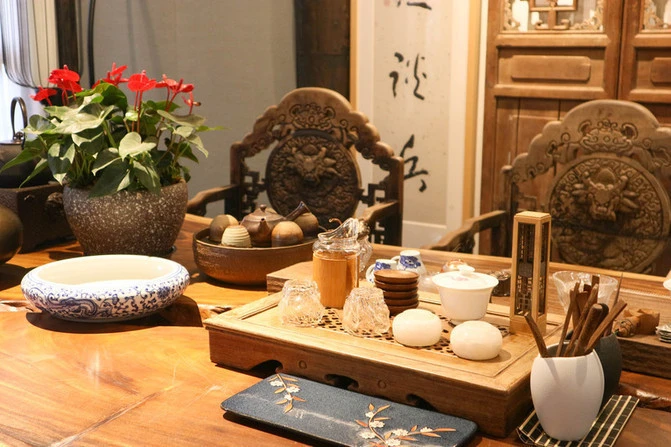
The interior design features a Chinese courtyard style, blending a living atmosphere with modern flair. The wooden tables and leather chairs are comfortable, and the two floors are spacious.
Recommended by the young waiter, we chose a type of wine. This hot pot wine was especially fragrant and rich. It tasted like a mix of various fruit aromas, sweet and smooth. The alcohol content was very low, not intoxicating, making it very suitable for women.
The snack, lemongrass grilled fish, was also particularly delicious. The fish was grilled until crispy on the outside and tender on the inside, incredibly tasty. Although it looked covered in chili, it wasn't very spicy. The fragrant fish paired well with the wine.
Unexpectedly, they also served famous Chengdu snacks, like San Da Pao (Three Big Cannons). The glutinous fried small tangyuan were really chewy and addictive.
The freshly fried French fries were crispy and delicious. I have to say the shop was very thoughtful, providing two dips: salad dressing and ketchup. I personally preferred the tomato flavor, as the classic can never be surpassed in my heart!
The fruit platter had super fresh fruits, with a sweet taste that was intoxicating. Not only did it taste good, but it also looked nice, accidentally revealing my hidden girlish heart.
The barbecue platter, in Dai-style, had a generous amount of skewers, both meat and vegetables. The taste was good; the meat and offal were grilled tender and easily slipped off the skewers with a gentle bite.
I liked this small tavern. Though called a small tavern, it felt more like a typical quiet bar. It wasn't too noisy nor too quiet. The decoration was nice, with lighting in the lobby creating a great atmosphere, plus live singing, which added to the vibe.
Perhaps in life, we need such spontaneous travel. So I came to a must-visit place in Chengdu—Wenshu Monastery.
Wenshu Monastery is located in Qingyang District, Chengdu, with a very long history. It is one of the national key Buddhist monasteries designated by the State Council. It's a place you must visit when in Chengdu.
As I turned the street corner, the red wall with green tiles came into view. Looking over the antique wall, I saw towering trees inside, and I silently exclaimed: what a peaceful spot amidst the bustle.
Stepping into the courtyard, I was greeted by a tea house and a vegetarian restaurant. In the tea house, I could see many people leisurely drinking tea and chatting. The scene of tea drinkers and tourists seemed to freeze at that moment. The beautiful scene made me sigh—what a contented view!
Since we arrived in the afternoon and had just started exploring, it wasn't time for tea, so we passed through. To avoid the crowd, we headed towards less crowded areas. Soon we came to a small courtyard, crowded with visitors and bustling. But to me, it presented a warm and peaceful scene, like a flowing freehand painting, dynamic yet still.
Following a small path, we reached the back hall, where we encountered some participants of a monastery life experience camp, dressed in loose white casual clothes, sitting in a circle, discussing their feelings and experiences of meditation.
Further ahead, we arrived at Wenshu Pavilion, which houses the Sutra Library. The door was not open, but we saw several monks sweeping fallen leaves in the yard. Later, I learned that the Sutra Library is not normally open to visitors, only on specific days. It is said to contain tens of thousands of Buddhist scriptures, including the "Medicine Buddha Sutra" and "Diamond Sutra" bestowed by Emperor Kangxi, as well as calligraphy and paintings from the Ming and Qing dynasties. The most famous is the ink trace "Kong Lin" (Empty Forest) bestowed by Emperor Kangxi to Wenshu Monastery. Since we couldn't enter, I had to leave with that regret. Perhaps a little regret makes life more interesting.
Following a small path, we reached the central area of Wenshu Monastery. The halls were magnificent, towering and solemn, inspiring awe. Pavilions with upturned eaves, carved openwork windows with exquisite patterns, all exuded classical beauty.
Wenshu Monastery is a typical traditional Chinese building. There are many antique structures to admire. Due to time constraints, we couldn't finish touring the entire monastery. But life, after all, needs some regrets—it seems more interesting that way.
As the saying goes, "Don't enter Sichuan when young, don't leave Shu when old." Chengdu is known as a city where people don't want to leave once they come. The rich Sichuan culture is displayed in every street and alley. Whether it's food, scenery, or Sichuan girls, everything is dazzling and overwhelming.
In Chengdu, eating, drinking, and having fun are essential. And with that, accommodation is also necessary. Speaking of accommodation, you must visit this homestay hotel—Jiaoliao Renwen Boutique Hotel. The moment you enter, it will absolutely impress you as a Chengdu homestay.
Location: The hotel is located in Kuanzhai Alley, known as "Chengdu's Living Room."
Metro: Exit of Kuanzhai Alley is Metro Line 4.
Geographical location: The location is really great! Right in the Kuanzhai Alley scenic area. You can go out and stroll, eat, and shop very conveniently. It is not far from Chunxi Road, Taikoo Li, Tianfu Square, etc. You can take the metro or taxi. A taxi ride costs about 10 yuan.
Hotel style: I really like the overall style of this homestay. The room design is Japanese-style, made of pure wood. The room has a unique fragrance that is very comforting. There are handmade Shu embroidery and specially painted jiaoliao birds (wrens) by famous painters.
The hotel has many calligraphy, paintings, and antiques, which the owner worked hard to collect. Every detail is thoughtfully crafted and impeccable.
Room: The door uses an electronic lock, ensuring safety. The entire room, including decorations and bed, is made of phoenix tree wood, giving off a faint woody scent that is very relaxing.
The room has a dedicated dining area, and lunch and dinner are quite good.
Bathroom: Whenever I go out, whether staying in a hotel or homestay, the most important thing is the bathroom. Its cleanliness can definitely affect my mood. I give full marks to Jiaoliao's bathroom! The details show understated luxury. It has a super five-star豪华配置: Carnation brand linens, King Koil mattress, Kohler bathroom products, TOTO smart toilet. Even turning on the faucet, you can feel the owner's care.
Washing area: Worth mentioning is the wet-dry separation. You can take a shower or lie in the bathtub. The hotel also provides bath salts.
The toiletries set is from June Jacobs (a high-end spa skincare brand from New York, USA). I used this brand before at a Sheraton in Guangdong and really liked it. I didn't expect to use it again in Chengdu. According to the butler, June Jacobs customized a special technique for the hotel, combining local culture, environment, climate, and some traditional Chinese medicine therapies to create the hotel's unique "Jiaoliao Chao Lin" (Wren Nestling in the Woods).
Bedding: Lying down was extremely comfortable—I fell asleep in minutes. The quilt and mattress were soft and skin-friendly. I like buckwheat pillows, and the hotel thoughtfully provided one.
The biggest highlight is the hotel butlers, a group of very enthusiastic people. When I was about to arrive at Kuanzhai Alley, the butler contacted me in advance and even came to the alley entrance to pick me up, introducing the culture of Kuanzhai Alley along the way. This alone made me feel very positive about the hotel. After arriving at the hotel, the butler learned that I couldn't eat spicy food, so the breakfast specially prepared non-spicy wontons for me.
Life's journey is not only accompanied by delicious food and beautiful scenery, but also requires the marks of hard work. On the long road of life, we need to work a little harder.


