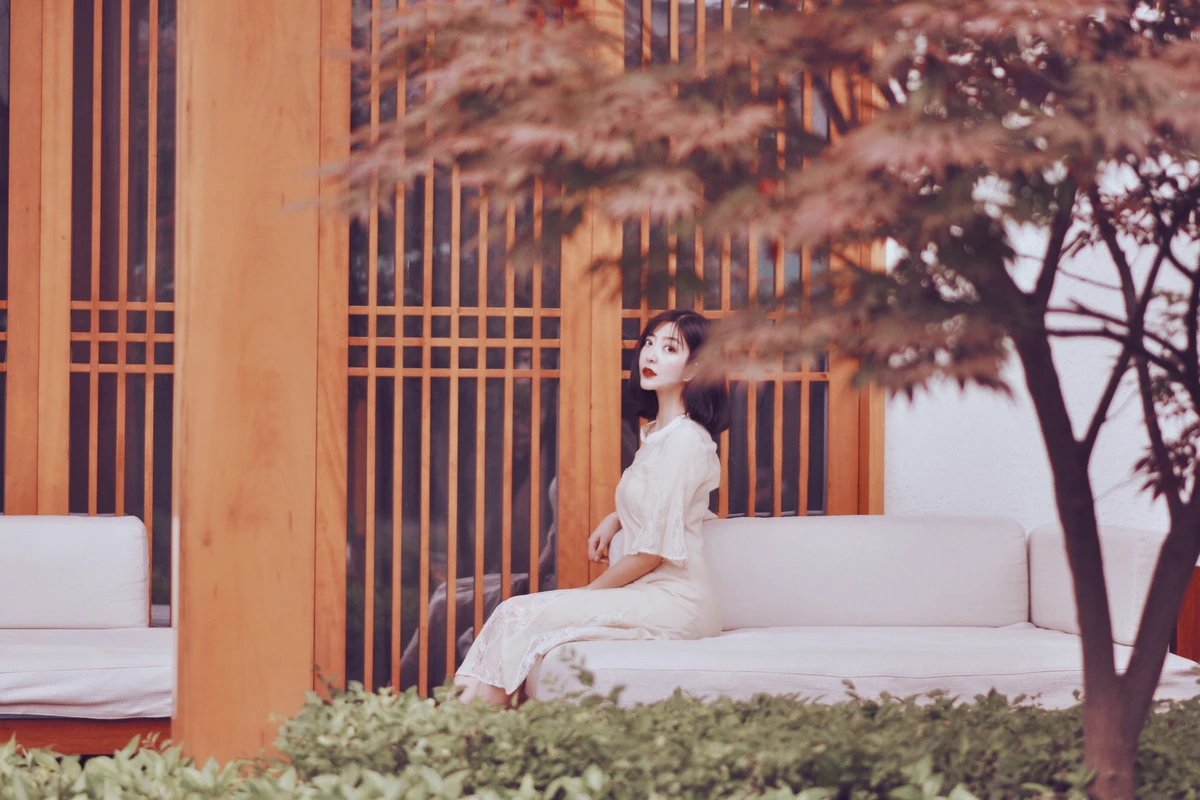
July's Rain Cannot Wash Away the Lively Atmosphere (A Most Authentic Chengdu Cultural Journey: Unveiling Super Niche Activities)
When crystal beads of sweat begin to rest uninvited on the brow, when afternoon hours always leave one feeling drowsy, when the night breeze starts to warm and loses its coolness, midsummer has truly arrived. July in Chengdu is indeed the image of summer, but at some point, Chengdu has also ushered in a frequent rainy season. It turns out that besides being spicy, Chengdu can also be gentle and tender. The air gets soaked by the rain, quietly carrying away the summer's stuffiness, but for this leisurely and content city of Chengdu, rain can take away everything except its unique lively atmosphere. In Chengdu, it seems nobody is hesitant to adore this place—lingering over the fragrance of flowers and grass, indulging in the flavors of Chengdu cuisine, and now, perhaps even developing a fondness for its drizzling rain. "Free-flying flowers drift lightly like dreams, boundless rain threads fine as sorrow." For the ancients, appreciating rain was a quite romantic affair. So, why not, during this rare rainy season, encounter a cultural journey belonging to Chengdu? Amidst the deep courtyards of bustling spring dreams, take a stroll down quiet winding alleys. Many people coming to Chengdu will visit Kuanzhai Alley. Everyone says Chengdu is a leisurely city experienced in Kuanzhai Alley and spent in teahouses. Leisurely is correct, but Chengdu's quiet winding alleys are far more than just Kuanzhai. Shizi Alley, a five-minute walk from Kuan Alley, is yet another great place full of Chengdu's character. Walking in the alley, the air is moist, the mood joyful; a gentle breeze for miles is much more lovable than a sea of flowers. Old houses of bluish-gray brick and tile exude a damp, timeworn atmosphere in the rain. All kinds of music drift from small shops, along with the chatter of passersby, the jingling of bicycles, and the cries of vendors, piecing together a simple yet soft marketplace aura. Although everything in the alley is simple and ordinary, it makes one linger and forget to leave, even wanting to earnestly remember those tastes, sounds, scents, and the joy in one's heart, seeping through time like raindrops, slowly merging drop by drop into history. At such a moment, you may find yourself momentarily at a loss for words, not wanting to describe those beauties. Perhaps only by being there can you understand these indescribable and inexplicable soft tones, which no words or flowery language can capture. I think every alley has its own story, and every story has something touching. I enjoy savoring the nuanced ambiance in such alleys, like the mood of walking on the literary path on tiptoe. Even on rainy days, I only want to slowly get to know and fall in love with such alleys. An indie cafe in a nameless alley—Piccolo. Finding a corner in the bustling city, quietly sipping coffee and watching people come and go, one feels an inexplicable emotion: accustomed to a city, one also comes to love everything about it. People who enjoy coffee should all be lovers of life. Coffee: The barista here is a pretty young lady—beautiful and her coffee is beautiful too. Ordered the signature coffee and a flat white. Both tasted great, but comparing the two, the signature Piccolo seemed better. Highly recommended! The service is very attentive; when ordering, the lady carefully asks about your preferences and allows you to choose beans according to your taste. If you don't know how to choose, she will recommend some. The desserts here are also good, like the tiramisu which is very popular, but that day it was already sold out. We settled for homemade cookies. Environment: Simple industrial style, clean and bright colors, every detail revealing careful thought. I liked the blackboard area and the old barn door, giving a museum-like feel. Transportation: Dongsheng Street, 300m walk from Exit D1 of Metro Line 2 (no parking; be cautious if driving). A secluded paradise in the midst of noise—Jiao Liao. If you are visiting Chengdu for the first time and also "earthy" enough to love the old-time culture of Kuanzhai Alley, then you must go and truly experience this hotel—Jiao Liao Boutique Cultural Hotel. The hotel's name comes from Zhuangzi's "Free and Easy Wandering": "The jiaoliao bird builds its nest in the deep forest, using no more than a single branch." Though situated in a bustling area, it stays secluded, hidden from the world while still allowing you to enjoy a moment of peace and comfort. There are many cultural hotels that hide historical stories, but few are as heartfelt as Jiao Liao. The knowledge here begins as soon as you enter; every detail has its own little story, making you admire the designer while also marveling at the hotel owner's unique vision. What kind of literary youth is this tasteful owner? I instantly became very curious. The mahogany gate of Jiao Liao has never been restored. Zhuangzi advocates revering nature and valuing authenticity, letting each thing follow its nature, so everything here retains its original state. The human figures on the door, the exquisite hollow carvings, and the bronze door knockers all carry auspicious wishes for the guests' good fortune. Upon entering the gate, two carps made of grey sculpture come into view, leaping upward. On both sides ahead are walls made of green tiles, complemented by golden lights, vividly presenting a scene of "The Carp Leaping Over the Dragon Gate." Passing through the treasure vase door, you encounter "Wind and Rain in Harmony." This corridor is my favorite part of Jiao Liao. Especially on rainy days like this, leaning on the "Meiren Kao" (beauty bench), watching the rippling stream, now and then raindrops sliding along the eaves, holding a cup of tea in hand, with flowers and birds idly by, I too am idly lost in the scenery. Who says it's hard to be a truly idle Chengdu person? Here at Jiao Liao, you can waste some time luxuriously in the rain. At the end of the corridor hangs a plaque inscribed with "Ride on things to roam the mind," from Zhuangzi's "Transcend the mundane world, ride on things to roam the mind." Zhuangzi advocates rising above worldly affairs, discarding material desires and fame to cultivate mind and body, and quieting the mind to nourish the spirit. At Jiao Liao, you can truly enjoy rare freedom. I love the Japanese-style guest rooms with paulownia wood walls and linen curtains, the oversized vanity and exquisite bathrobes, and the comfortable bedding that makes you want to stay in bed all day. The overall natural wood tones make our time in the room incredibly relaxing. I enjoy leaning on the tatami to quietly read a book, occasionally gazing out the window. Having seen many oil paintings and murals in major hotels, at Jiao Liao, the rooms are tastefully decorated with handcrafted Shu embroidery and charcoal drawings. It again makes one feel how thoughtful this learned hotel truly is. It's been a long time since I've leisurely enjoyed breakfast time. Today, I'll treat myself well at Jiao Liao. Since it's raining and I can't go anywhere, I'll just stay in the room to shelter from the rain and read. As long as I push open the terrace door, I can instantly merge with the bustling of Kuanzhai Alley. Enjoying an undisturbed afternoon tea in this unique courtyard is also quite pleasant. On one side is Jiao Liao's tranquility and elegance, on the other is the street's liveliness and prosperity. Drinking tea here, listening to a song, content and refined, evokes a mix of envy, admiration, and longing. This is Chengdu's Jiao Liao, steeped in profound culture, brimming with vitality, intoxicating and captivating. If time could linger a little longer, I would wish for a moment to transform into a jiaoliao bird, nesting in the deep forest. A splendid feast for the taste buds—Petite bourgeois flair on Shiyi Street. Those who have visited Chengdu fall in love with its old flavors, lingering in the alleys' prosperity and idleness. Those who haven't yet come yearn for its slow time, the breadth and depth of days, and the irresistible dance of food on the tongue. Shiyi Street is truly full of Chengdu flavor. Every small shop has many years of history and is very low-key, not heavily advertised, yet their business remains enduring. Old Street Scale Malatang (spicy hot pot): A nostalgic little shop. The big scale is the container for serving dishes; the owner went to great lengths to let people experience the flavor of past times. The decoration and furnishings all reveal the old Chengdu taste. Though worn out, it doesn't hinder people's love. Whenever people come here, they always raise their phones to take photos. You pick your own ingredients, and the shop cooks them uniformly, handing out number plates in turn. During meal times, business is booming. The dishes look very appetizing when served. Besides the base seasoning, they add the shop's secret chili oil and dried chilies, then sprinkle some cilantro and chopped green onions. It looks quite tempting. My friend said that although the flavor isn't particularly amazing, it's a taste that evokes nostalgia. Eating it brings back memories of the past, reminding one of carefree childhood days. Shiyi Street Yaoji Noodles: As a culinary capital, Chengdu's good flavors are not limited to spicy and numbing. Though not a noodle-centric city, Chengdu people have deep feelings for noodles. Sweet water noodles, cold noodles, chicken soup noodles, beef noodles, zhajiang noodles... all hold an indispensable place on Chengdu's food list. Shiyi Street is home to one of Chengdu's top 50 noodle shops—Yaoji Noodles on this old street. The bamboo shoot beef noodles have very large pieces of beef, stewed until tender and flavorful; the red oil dumplings are salty and savory with a hint of sweet aftertaste; the crispy noodle and sweet water noodles are also very popular. If you want to eat non-spicy Chengdu cuisine, this shop is definitely the right choice. Drink tea, chat, and play mahjong in an old teahouse, enjoying natural coolness. In Chengdu, teahouses are livelier in summer than ever. Some play mahjong, some watch Sichuan opera, some discuss elegant matters, and some simply sit and enjoy the view. Everyone can find their own place in different spots. Thus, teahouses become the most down-to-earth "Little Chengdu." No matter how hot and stuffy it is outside, the teahouse buzzes with laughter and conversation. People chat and joke; when tired or sleepy, they can call over a professional ear-cleaner and close their eyes in enjoyment. Watch the uncles and aunties play mahjong, listen to the most primal sounds of the streets, drink from covered teacups—the old Chengdu flavor is truly fascinating. Old Chengdu residents love to drink from "covered teacups" (gaiwan tea). The gaiwan tea set consists of three pieces: the lid, the bowl, and the saucer (tea boat). According to legend, during the Tang Dynasty, people used the lid and bowl for drinking tea. The daughter of the Xichuan military governor, Cui Ning, found the bowl too hot to hold and designed the saucer underneath to insulate heat. Over time, it evolved into the functional and beautiful saucer. As time passes, many old Chengdu streets have gradually disappeared from people's sight, but the memory of old streets, like Shiyi Street which still looks the same today, continues to deeply influence everyone who encounters it. So, to experience the memory of Chengdu, you must come and take a walk on Shiyi Street, taste the good flavors here, sample the gaiwan tea, watch the mahjong games, and chat about the feelings and romance of old Chengdu. This light and shadow are about you—Visit A4 Art Museum. A cultural Chengdu wouldn't be complete without A4. However, many people think visiting exhibitions is a profound matter, only for artists, not appreciable by others. Actually, that's not true. Everyone has their own insights into life. Viewing an exhibition is just about seeking the beauty of life from different angles, like the songs you enjoy, the food you like, the scenery you love, and the people you adore. I recall a Weibo post that said: "Young people should visit art galleries and museums more often, not for showing off or conversation topics, but because when things reach a certain level, what matters is no longer background, intelligence, or diligence, but vision and perspective." Visiting exhibitions calms the mind, enjoys life, generates inspiration, acquires knowledge, explores learning... Art should be part of one's lifestyle. There's no need to view it as a paradise isolated from the anxious world, or a utopia to draw inspiration from. There's no need to question its meaning, because art, like breathing, is indispensable in life. So when everyday life gets a bit tedious, going to an exhibition is a good pastime. Artistic thinking is always different from the masses; artists are always mavericks. So no matter which you encounter, it should be an interesting day. Actually, I've always wished there were message boards under each artwork in exhibitions, like comments on social media or bullet comments on series, conversing with countless different minds, different logics sparking various fireworks. That would surely be more interesting than everyone staring at obscure artwork labels and pondering alone. We all have expectations for a beautiful life. There's no need to be fearful of art. Maintain self-confidence and self-appreciation, live each day earnestly, neither arrogant nor impatient, and never forget your original intention. This is the simplest way to gain happiness, peace, and even joy. A Midsummer Night's Dream—How about watching an outdoor movie under the stars? I don't know when I started to increasingly love looking up at the starry sky. For me, the night is always lonely, but luckily accompanied by stars. I once saw a sentence: "When a girl looks up at the sky, she isn't necessarily looking for something; she might just be a little lonely." I think I might really be a little lonely. Living long in the city, I've gradually grown tired of the honking and busy work. Ask yourself: How long has it been since you quietly listened to music? How long since you comfortably watched a movie? An outdoor movie under the stars—at this moment, I unreservedly fell in love with the night of Luxelakes. I never knew there was such a romantic island in the outskirts of Chengdu. Summer's temper is not very gentle, but here, you will enjoy this restless and passionate season, having a few more drinks with friends, leisurely viewing the scenery by the lake. If you arrive here when it's still early, you can rest in the nearby cafe. By evening, the night scenery here will surely give you a huge surprise. As night falls, under the ink-blue sky, the small forest reveals uneven lights, like a fairy tale world in a crystal ball, so beautiful it seems unreal. The wooden cabin surrounded by lights begins to glow at night; the little windmill on the roof turns slowly in the gentle evening breeze. Adorned by night lights, it feels like strolling through a night market by the seaside—a second of time travel, perhaps. When night deepens, the beach by the lake becomes more lively; rhythmic music, somewhat dreamy light and shadow. Chengdu's sky is often thick with clouds; to make up for the regret of not seeing stars, why not give it a try here? Friends are attracted by the twinkling lights; I am attracted by their silhouettes. People always like to watch the scenery, but you inadvertently decorate others' eyes. This is Chengdu's humanistic journey full of lively atmosphere. This is a city that makes it impossible not to love. Learn to navigate this unhurried pace with ease; learn to be a Chengdu person who enjoys life but is not restless; learn to be a Chengdu person with both spicy flavor and tea flavor; learn, like this lovely city Chengdu, to brew time into a uniquely charming color, both vigorously and quietly. ~~~~~~~~ Practical Tips Section ~~~~~~~~~~~~~~ Summary of Cultural Chengdu Travel Tips Collection below. Feel free to keep them. Selection of homestays and hotels can be divided according to the areas you plan to visit. You can choose from the following districts: - Kuanzhai Alley area: If Kuanzhai Alley is too expensive, nearby alleys like Xiaotong Alley and Paulownia Tree Street also have nice homestays, just a few minutes' walk from Kuanzhai Alley. - Taikoo Li area: This is the busiest part of the city center. Hotels are not cheap. If you don't mind a few minutes' walk, nearby Langyu, Tianxianqiao North Road, etc., have good homestays, affordable and of good quality; some cost less than 100 yuan per person. - Hi-tech South District: The south gate of Chengdu is now a wealthy area, with good environment and facilities. However, for travel, I still recommend the old city. You can stay one night in the south. Choose accommodation near Tianfu Third Street; it's closer to the airport and Luxelakes. The most culturally rich hotel in Chengdu: Jiao Liao Boutique Cultural Hotel Address: No. 28 Kuanzhai Alley Transportation: Metro Kuanzhai Alley Station, Exit B, 300m walk Room types: Jiao Liao Hotel emphasizes quality and customer experience. It has only 10 guest rooms, each with its own character. You can call in advance to inquire and book. We stayed in a suite with a terrace. The terrace was warmly decorated, with a view of the bustling Kuanzhai Alley. But don't worry; the soundproofing is good. If you want quiet solitude, just close the door. The butler prepares fruits for guests, and the tea in the room is high-quality small can tea. Going up the stairs, corridors, steps, all are decorated with different ornaments. According to the introduction, both the ornaments and paintings are quite valuable. Additionally, there is a tea room on the top floor, decorated with many antique furniture pieces collected by the owner from various places. One armchair costs tens of thousands—very exquisite! Service: Butler: One-on-one attentive butler service provides an excellent stay experience. SPA: Introduces the US famous spa skincare brand June Jacobs, pure natural plant essential oils, no additives. Massage technique is very professional, instantly relaxing. Meals: Both in appearance and taste are excellent. Even if not staying, you can try the exquisite afternoon tea. Address: No. 7 Shizi Alley Transportation: Metro Line 2, Tonghuimen Station Exit C, 400m walk; also from Kuanzhai Alley Station, 800m walk Featured shops: Mido Store, Cao Yu Dong Xi, Gout & Co Coffee, etc. Other tips: Shizi Alley is short, the shops are close together. The neighboring alleys like Dongsheng Street, Fangchi Street are also good, all near Kuanzhai, with many retro shops and indie cafes to visit. Authentic local food: Shiyi Street Address: No. 11 Zhimin Road Transportation: Metro Line 3, Xin'nanmen Station Exit B, 600m walk Recommended food: Old Street Scale Malatang, Shiyi Street Canteen, Shiyi Street Yaoji Noodles, Picking One Chopstick (Yibin local dishes). Besides these small eateries, there are also snacks like sweet-skin duck, crispy pork, ice jelly, mung bean soup, etc., all very tasty and affordable. There are also teahouses and mahjong parlors on the old street, full of old Chengdu living atmosphere. It's nice to have tea here and observe life in all its forms. Address: Luxelakes Eco-city Art Exhibition Center, Tianfu New District Transportation: Metro Line 1, Luxelake Station Exit A, then 1.5km walk; you can bike or taxi if not willing to walk. Exhibition info: Wang Yuyang Solo Exhibition Oblivion; Dutch Persons Brouwer & Marjit Lucas's Non-Truth Exhibition period: June 14 - September 6 Ticket: 60 yuan, free on Tuesdays Opening hours: 10:00-18:00, closed on Mondays Tips: After the exhibition, don't forget to take a photo with light and shadow on the rooftop; the light there is super beautiful! Play info: Summer water play season special: water guns, water balloons, and water-splashing games, suitable for family interaction, every weekend 14:00-18:00, South Slope Lawn, 49.9 yuan/person. Lakeside Star Cinema: every weekend 18:00-22:00, Wine Tree Lawn, free (free snacks included). Other activities on the island are free. This place is truly a treasure. Parking: Parking lot available with sufficient spaces, free for the first 30 minutes, 15 yuan/time after 30 minutes. About Cultural Chengdu, I will continue to supplement travel notes in the future. Thank you for your likes and attention. Any questions are welcome to comment.


