Six Days Five Nights: Roaming from Chengdu to Chongqing, Leisurely Strolling, Eating, and Drinking
It's not my first time in Chengdu. This southwestern city always has many reasons to attract me. In the local Chengdu dialect, it's called 'bashi' (comfortable and enjoyable). Here, boiling a small hot pot or ordering a covered-bowl tea under a plane tree, watching a Sichuan opera in a teahouse – these are the small joys of visiting this city.
Flying from Guangzhou to Chengdu, from the Pearl River Delta plain to the Chengdu plain, it takes very little time. Stepping off the plane, the air seems filled with a different kind of relaxed feeling.
Day 1: Chengdu Airport – Jinli Ancient Street – Chunxi Road – Niuhua Bapo Malatang (Spicy Hot Pot)
Day 2: Taikoo Li – Kuanzhai Alley – Zhou Xiaoyu Lengguo Yu (Cold Pot Fish)
Day 3: Shangri-La Chengdu – Shuijin Street
Day 4: Huashengyuan Golden Cake Dream Kingdom – Hongya Cave
Day 5: Zhongshuge Bookstore – Liziba – Yikeshu (One Tree)
Day 6: Jiefangbei – Chongqing / Chengdu Airport
A two-hour flight is very quick; we arrived in Chengdu just after 12 o'clock. After dropping off our luggage, our first stop was Jinli Ancient Street.
Jinli Ancient Street – An Old Street with Ancient Charm
There are many ancient-style old streets in Chengdu, and Jinli Ancient Street is one of the most famous.
Legend has it that Jinli Ancient Street dates back to the Qin Dynasty and is considered by some scholars to be the earliest commercial street in China.
More importantly, the Wuhou Shrine, dedicated to Zhuge Liang (the Marquis Wu), a man admired by literati throughout history for his integrity and wisdom, is located here. So this is a must-visit place when coming to Chengdu.
The Jinli Ancient Street we see today was built in 2004, using a retro design to faithfully recreate the flavor of the old days.
The architecture in Jinli Ancient Street retains an antique style: black-tiled roofs and stone-paved paths. Walking on it feels like traveling back in time.
Since Jinli was once a bustling commercial street, today it is naturally full of various shops. Whether it's exquisite food or interesting souvenirs, they all become another scenic spot within Jinli Ancient Street.
Actually, I don't dislike the commercial goods in tourist spots; these shops and vendors inject vitality into a place.
Jinli Ancient Street also displays many intangible cultural heritage items. Whether it's the interesting shadow puppetry or the childlike sugar-blown figurines, those traditional crafts that have become rare over time can be seen here.
There are also many tranquil scenes in Jinli Ancient Street. Small streams and stone arch bridges, narrow alleys and red lanterns, and still verdant ginkgo trees all witness the history of Jinli Ancient Street, remaining quiet as ever.
Chunxi Road – Bustling Amidst Haze
The pedestrian street in every city is bound to be the most prosperous area. Chengdu's Chunxi Road is that pedestrian street.
By the time we reached Chunxi Road, it was already late. Outside Chunxi Road, there was a cultural and creative night market. The stalls here offered many interesting small items, and with the hazy lights, it became a beautiful spot.
Stepping into Chunxi Road, the first feeling is its prosperity.
Whether tourists drawn by its fame or locals shopping, they all fill Chunxi Road pedestrian street with lively energy. The stores of various brands always have bustling customers.
Moreover, there are many interesting sights on the pedestrian street. Numerous bronze statues are placed here, from figures in Republic-era clothing to a statue of Dr. Sun Yat-sen. The bronze statues create a nostalgic atmosphere, and the bronze plates embedded in the floor, bearing traces of age and weathering, have a historical feel.
Niuhua Bapo Malatang – Seeking the Root of Mala Flavor in the City
For our first meal in Chengdu, we chose malatang (spicy hot pot).
On the plains of Sichuan and Chongqing, even the air seems filled with mala flavor. The taste of mala is rooted in this city and flows in the blood of its people.
Niuhua Bapo Malatang is a well-known local spot. It has appeared on many TV programs, showing its popularity.
Niuhua Bapo Malatang was first established in Leshan, not far from Chengdu. Hence, the restaurant's logo uses a cute Q-version of the Leshan Giant Buddha, which is very adorable.
Inside, the decor is quite antique. The restaurant uses many traditional decorations: red window grilles, wooden tables – all with a classic feel.
Perhaps to suit different tastes, besides the mala broth, many other broth options are available.
I chose a dual-flavor pot: one side spicy mala, the other tomato broth. The tomatoes are from Xinjiang, known for their thick flesh and sweetness. Simmered with stock, the broth is rich and fragrant.
As for the mala broth, aside from the numbing and spicy kick, the stock flavor is also very rich – it's not just about intense spiciness.
All the ingredients are displayed in open, large refrigerated cabinets, and diners can take whatever they like.
No need to call a waiter to order; you just pick what you want to eat, which is more convenient and free.
There is a wide variety of ingredients. Laid out in the coolers, their fresh colors already whet the appetite.
Beef skewers are the most popular ingredient in malatang. People in Chengdu always grab large handfuls of beef skewers.
Here, beef skewers come in different styles. There are pure beef skewers, and also beef wrapped around finger chilies, houttuynia cordata, celery, and other ingredients.
The beef absorbs the flavors of different fillings, enriching the taste. When you bite in, you get the smooth, tender, and chewy beef, plus the texture of other fillings – layers of different textures that are wonderfully combined.
Besides skewers, many other ingredients are available. The braised pork intestines have a rich, fragrant fat part and a crispy texture. Other ingredients are also fresh and delicious. Cook them in the broth, then slide the cooked meat off the skewer into a dipping sauce, coat it well, and pop it into your mouth while it's still hot – that's pure delight.
Apart from skewers, the other ingredients here are very fresh. Tripe and goose intestines are crunchy, pig brain is silky smooth. Watching the various delicious ingredients you've chosen roll in the bubbling broth is also a kind of happiness.
Day 2: Taikoo Li – Kuanzhai Alley – Zhou Xiaoyu Lengguo Yu
Taikoo Li – A Collision of Fashion and Leisure
The first stop on our second day was Taikoo Li. When mentioning the most fashionable places in Chengdu, Taikoo Li always comes to mind. Almost all international first-tier brands can be found here.
Find a café here, sit by the street, and the trendy people passing by become a beautiful part of Taikoo Li's scenery.
Besides fashion, Taikoo Li also has many artistic spots. The Fangsuo Bookstore is one of them.
At Fangsuo Bookstore, wander among the huge bookshelves, pick a book that interests you, find a quiet corner to sit, and time seems to slow down and become beautiful.
Apart from books, many exquisite handicrafts are worth carefully admiring.
Kuanzhai Alley – Deep Courtyards, How Deep?
Kuanzhai Alley is also a very famous tourist spot in Chengdu. It consists of Kuan Alley and Zhai Alley (Wide Alley and Narrow Alley). Two parallel alleys, one wide and one narrow, create a unique landscape.
Kuanzhai Alley was first built in the Qing Dynasty and has a history of over a hundred years. The buildings in the alley are mostly grey-brick quadrangle dwellings (siheyuan). The courtyards are deep, and various green trees are planted inside, giving Kuanzhai Alley an elegant atmosphere.
Walking along the alleys, the grey bricks and tiles are full of ancient charm. Add the bamboo trees planted in the courtyards, and it's very graceful.
Actually, there are no must-see spots in Kuanzhai Alley; the two alleys themselves are captivating enough. Just wander around, see the traces time has left on the grey bricks, watch the wind rustle the bamboo leaves – that's the leisurely time here.
There are many teahouses in Kuanzhai Alley. In the life of Chengdu people, drinking tea always seems indispensable. A bowl of covered-bowl tea, chatting about everything – that's the 'bashi' (comfortable) life Chengdu people love.
Many teahouses also offer Sichuan opera performances, face-changing shows, and other entertainment, making sitting there even more interesting.
Or you can lie down on a bamboo lounge chair under a tree, let an ear-cleaning master clean your ears, and enjoy the leisure in the shade – that's a sensation worth experiencing here.
Zhou Xiaoyu Lengguo Yu – Experiencing the Charm of Food
For dinner, we chose Zhou Xiaoyu Lengguo Yu (Cold Pot Fish). Lengguo Yu is a famous dish in the Bashu region. It uses a hot-pot-like cooking method to prepare fresh fish, retaining both the aroma of hot pot and the tenderness of the fish.
If you cook fish directly in a hot pot, the delicate fish tends to break apart. Lengguo Yu cooks the fish and broth separately first, then turns off the heat and puts the fish in the pot. After eating the fish, you reheat the pot and cook other ingredients.
Legend has it that this dish was invented by Su Dongpo (Su Shi). I've always thought Su Dongpo was not only a great literary figure but also a true gourmet; otherwise, the Dongpo Pork wouldn't be found everywhere. From the Song Dynasty to the present, Lengguo Yu has remained extremely popular, showing its appeal.
When we entered Zhou Xiaoyu Lengguo Yu, there were already many diners. What attracts customers is not only the taste but also the value.
Here, fish ranges from over 20 yuan to 50 yuan per catty (500g), which is quite reasonable. What makes customers even happier is that vegetables, cold dishes, and fruits are free and self-serve – a great deal.
The decor is quite comfortable: simple design with light colors, making the space feel bright.
Details are pleasantly surprising: light fixtures and other elements use simple retro designs, very unique.
I ordered mullet, pufferfish (haor yu?), and pork intestines. For a meat lover like me, various meats are extremely satisfying. For the broth, I chose a pickled cabbage base. The slightly sour pickled cabbage is particularly suitable for summer, very appetizing. The pickled cabbage also contains a little Sichuan pepper and chili – not heavily numbing or spicy, but a light, refreshing taste.
The mullet meat is tender, and the restaurant's timing is excellent. The fish, just cooked, has the best texture. Dipped in the broth, the soft, smooth fish almost melts in your mouth.
Haor yu is a fish that grows in the Yangtze River basin. Its flesh is firm and sweet, with a slight natural saltiness, making it even more delicious.
The meat is firm, sweet, and has a slight fibrous texture that's most enjoyable.
Especially the legs, with their firm texture, are most delightful. The meat absorbs the flavor of the pickled cabbage, remaining very refreshing.
The rich, fatty pork intestine is also a popular ingredient. It's chewy, with a good balance of fat and lean. The small amount of fat is the essence, making it especially fragrant.
The chewy casing plus the rich, smooth fat create a unique texture that's utterly addictive.
After finishing the meat, we re-boiled the hot pot and added various fresh vegetables. All vegetables are kept in open coolers and are self-serve. Whether crunchy green bamboo shoots or sweet white radish, they all go perfectly with the broth. Finally, a free serving of watermelon is a small happiness after the meal.
Day 3: Shangri-La Chengdu – Shuijin Street
On the third day in Chengdu, I didn't plan too many activities. Just wandered around the hotel, daydreamed a bit, and enjoyed some idle time in Chengdu.
Shangri-La Chengdu – Enjoyment in a Star-Rated Hotel
Every time I come to Chengdu, I choose the Shangri-La Hotel as my base. Located in the city center, it's right next to the nightlife hub of Lan Kwai Fong and Jiuyan Bridge.
The hotel also offers excellent views, overlooking the flowing Jinjiang River.
For lunch, I dined at Shang Palace, the hotel's Chinese restaurant. The quality at Shang Palace has always been reliable and convincing. The Shang Palace at Shangri-La Chengdu is no exception.
Here, the menu focuses on Sichuan cuisine, but with many innovative twists. Unlike traditional Sichuan dishes that are heavy on numbing and spicy flavors, these dishes retain the mala characteristics but are slightly lighter, better highlighting the original taste of the ingredients.
The sour-cabbage fish uses Sichuan green pepper (tengjiao), making it more refreshing. It also includes udon noodles, which absorb the broth and are very delicious.
The husband-and-wife lung slices (fuqi feipian) are full of aroma. The maoxuewang (blood curd and tripe in chili sauce) hides tender and delicious ingredients under the red oil.
The beef guokui (baked flatbread) is a signature here. When President Obama visited Chengdu, this beef guokui from Shangri-La left a lasting impression on him, despite his experience with all kinds of cuisine. The guokui has a crispy, flaky crust enclosing savory beef, each bite offering different textures. It's served with a small bowl of tender tofu pudding (douhua), a perfect pairing.
Other dishes were also delightful.
Back at the Shangri-La, since it was still early, I ordered afternoon tea in the lobby lounge and just daydreamed. The lobby lounge uses large floor-to-ceiling glass windows, offering direct views of the Jinjiang River and Jiuyan Bridge.
The afternoon tea set was very generous, with various exquisite pastries arranged on branch-like stands, impressive on the table. Paired with a fragrant coffee or a pot of refreshing tea, watching the sunlight outside, just daydreaming was a happy thing.
For dinner, I had the buffet at Rong Cafe in the Shangri-La. The buffet had a wide variety, definitely catering to different tastes.
Meat: A rich selection of meats. High-end ingredients like steak and foie gras could be chosen and cooked on the spot by the chef. Fragrant and tender foie gras, fresh steak – all excellent.
Seafood: The most popular section is always seafood. There was a huge variety, from sashimi to cold platters to tempura. Different cooking methods, but all seafood was very fresh. Whether it's fatty salmon or sweet, crunchy prawns, all kinds of seafood were available. Paired with a crisp white wine, it enhanced the natural sweetness.
Finally, desserts: a wide range of sweets. Various cakes and ice cream, not overly sweet, perfectly rounded off the sumptuous meal.
Shuijin Street – A Different Kind of Tranquil Flavor
Next to the Shangri-La is Chengdu's famous bar street, Lan Kwai Fong.
Coming to Lan Kwai Fong in the morning, of course, wasn't for drinking. Many people associate Lan Kwai Fong with nightlife, but in the morning, the quiet Lan Kwai Fong has a different charm.
Few places are open in the morning; the few cafes that are open have a special quiet atmosphere. Ordering a coffee here and watching the quiet side of this noisy bar street is a very unique experience.
Next to Lan Kwai Fong is Shuijin Street. When talking about Sichuan and Chongqing liquor, Shuijingfang (Water Well Street) comes to mind for many. Shuijingfang is a famous baijiu (white spirit) in the region, known for its rich aroma and loved by countless people. On Shuijin Street, there is the Shuijingfang Museum. Here, you can also experience Chengdu's strong liquor culture.
Shuijin Street features retro architectural designs. The buildings here are full of antique charm. Even the shop doors are made of wooden planks, very traditional.
Day 4: Huashengyuan Golden Cake Dream Kingdom – Hongya Cave
On the fourth day, I moved from Chengdu to Chongqing. Although both are the most prosperous cities in the west, Chengdu on the plain and the mountain city of Chongqing have completely different flavors. A high-speed rail connects Chengdu and Chongqing, taking about three hours.
Huashengyuan Golden Cake Dream Kingdom
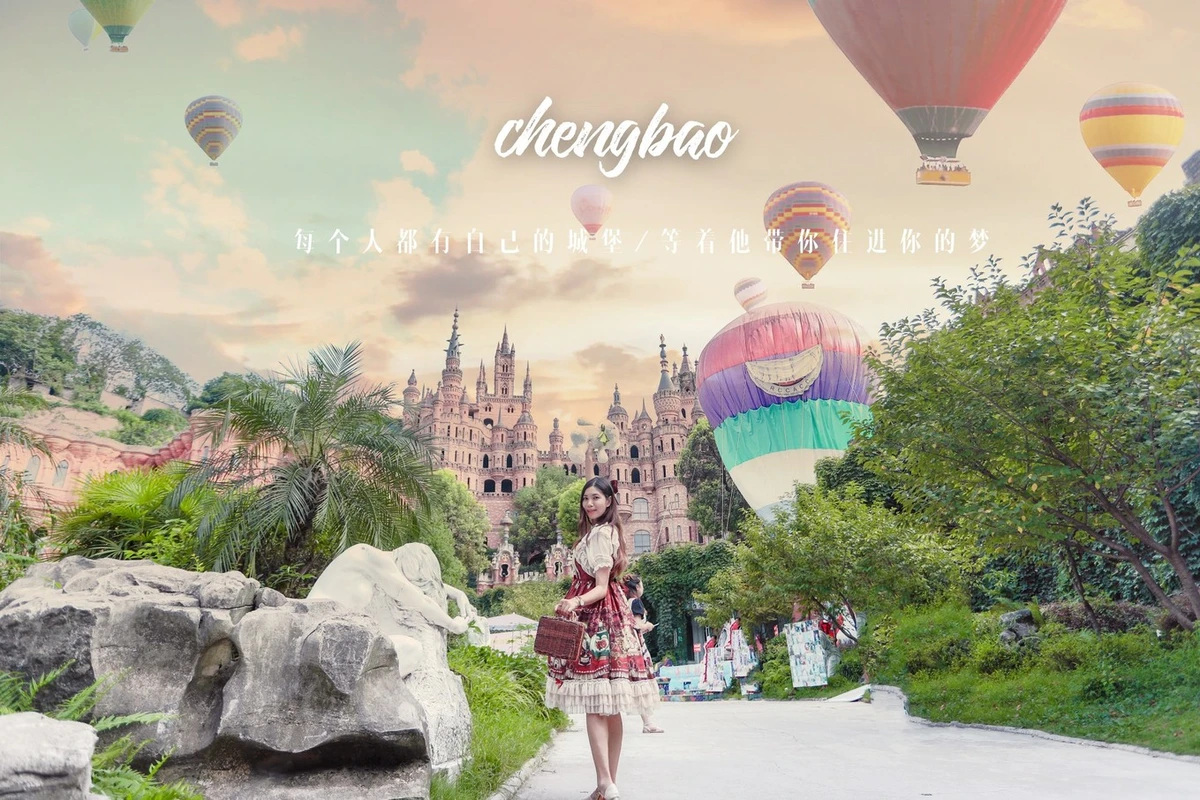
My first stop in Chongqing was Huashengyuan Golden Cake Dream Kingdom.
Every girl has a princess dream in her heart.
In a princess's world, a dreamy castle is always an indispensable element.
And Huashengyuan Golden Cake Dream Kingdom can fulfill a girl's expectations and fantasies about castles.
In the park, you can see castles of various styles.
The colors are very bright, like fairy tale worlds, very dreamlike.
Each castle has a different theme. Some castles allow you to participate in making cakes yourself; others display various wonderful exhibitions, turning the castle into a magical fairy-tale world.
The gardens between the castles are also full of fairy tale elements. Whether sculptures or giant hot air balloons, they make you feel like walking into a fairy-tale world – very magical and fun.
Hongya Cave – Stepping into a World Like Spirited Away
Along the banks of the Yangtze River and Jialing River in Chongqing, many stilted buildings (diaojiaolou) used to be built. These buildings were cheap and easy to construct, so they were favored by the poor. Hongya Cave was once a gathering place for such stilted buildings.
Hongya Cave was rebuilt after 2000, following the design concept of stilted buildings. It has now become a must-see attraction in Chongqing. Its history can be traced back to the Qin Dynasty, and it was once a city gate of Chongqing, holding countless stories and memories of Chongqing.
Hongya Cave has 11 floors. The first floor is beside the Jialing River. Floor by floor ascending, each level has different scenery.
The most famous aspect of Hongya Cave is its night view. The cave is decorated with brilliant lights, making it an important part of Chongqing's status as the 'city that never sleeps.'
At the top floor, you can see the beautiful scenery of the Yangtze and Jialing Rivers. At night, the flowing lights on the river surface create an extremely beautiful scene. Passing cruise ships, adorned with lights, break the river's surface, also forming a lovely landscape.
Inside Hongya Cave, each floor has various specialty shops. Exquisite souvenirs and delicious local snacks can be found everywhere. Walking inside, the hustle and bustle of food stalls, the lights of shops, and various hawking cries create a lively, dreamlike world.
Day 5: Zhongshuge Bookstore – Liziba – Yikeshu (One Tree)
Woke up feeling like wandering, so I decided to take the Chongqing light rail.
In Chongqing, the light rail is an important means of transportation. In the mountain city, building rail transit underground is always difficult. So most of the light rail runs above ground, making riding the light rail a special way to view the city.
Zhongshuge Bookstore – Blissful Little Moments of Daydreaming
I always feel that visiting a bookstore is a happy thing. The first stop on the light rail was Zhongshuge Bookstore.
Pick a book in the bookstore, sit or stand in a corner, read or daydream, empty your mind – that's a little moment of happiness.
Zhongshuge's decor is quite distinctive. The bookshelves aren't cramped; they are well-arranged and elegant.
Inside, there is a large hall filled with countless bookshelves. Layer upon layer of shelves create a unique landscape.
Pick a book here, daydream, and let time slip away – that's a kind of happiness.
Liziba – Unique Sight of Light Rail Passing Through a Building
If there's one most famous station on the Chongqing light rail, it's Liziba Station. Here, the light rail passes through a building, creating a unique sight. At Liziba,
Take the light rail to Liziba Station, which is on the sixth floor of the building – very interesting. Down on the first floor, there is a dedicated observation deck. From there, you can clearly see the train entering and leaving the building. On the other side, you see the broad Jialing River.
On one side are the mountains, on the other is the flowing river – this is a unique Chongqing view.
Watching the light rail pass through the building, watching the sunset over the Jialing River tinting the city in a warm yellow – everything feels dreamy and happy.
Nanshan Yikeshu (One Tree) – The Closest Place to Sunset in the City
If you want to see the night view of Chongqing, a high vantage point is a good choice.
Nanshan Yikeshu is the most suitable place to see Chongqing's night scene.
Nanshan Yikeshu was once a botanical garden. On the mountain, you can see various plants, making the hills lush.
But what attracted me here wasn't just the botanical garden, but its viewing platform. The platform has seven floors, and because it's already on the mountainside, it directly overlooks Chongqing's beautiful scenery.
Each floor of the viewing platform uses floor-to-ceiling glass, offering direct views. For a more open view, the top floor is a must.
From the top, you can see the entire Yuzhong District. Watching the sun set in the west and the lights of Yuzhong District turn on, the lights make the city's sky and the river sparkle – very captivating.
Day 6: Jiefangbei – Chengdu Airport
Unconsciously, the six days passed. On the last day in Chongqing, I decided to stroll along Jiefangbei pedestrian street. Let the memories of this trip linger here, and look forward to meeting again next time.
Jiefangbei Pedestrian Street – A Different Historical Memory
On the last day – actually half a day – in Chongqing, I chose to come to Jiefangbei Pedestrian Street.
Jiefangbei (Liberation Monument) is a monument erected to commemorate Chongqing's liberation. The reliefs on it record stories of the War of Liberation and depict the figures of heroes.
Later, the surrounding area developed continuously. Now, the Jiefangbei area is Chongqing's CBD, its most prosperous place.
On Jiefangbei Pedestrian Street, you can see flagship stores of various international brands. For shopping enthusiasts, this is a must-visit.
The street is lined with high-rise buildings, representing the city's development.
Jiefangbei also has a characteristic snack street. The snack street has rather retro decor: red lanterns in front, various sculptures on the walls, giving a traditional feel.
In the snack street, various traditional foods are especially tempting: refreshing ice fen (a jelly-like dessert), various skewers and delicacies that whet the appetite.
Accommodation Recommendations in Chongqing
1. For a five-star hotel, you can choose the Westin Hotel in Jiefangbei.
2. There are many guesthouses (minsu) in Chongqing. You can choose one near the attractions, with a view of the Jialing River night scene – it's super atmospheric and cost-effective.
Food Recommendations in Chongqing
Must-eat in Chongqing: Authentic hot pot – fresh, fragrant, spicy, and numbing.
Coming to Chongqing, of course, you must taste local specialties! The most famous food in Chongqing is definitely its hot pot. The bubbling, fragrant, spicy hot pot already whets the appetite. The rolling thick broth and bright red chilies instantly open up your appetite.
Here are a few delicious restaurants to recommend: 1. Dongzili, 2. Tuhuo Laohuoguo (Local Primeval Hot Pot), 3. Chaojie Huoguo (Sister Hot Pot)
Farewell – Reluctant to Leave
Leaving Chongqing, the mala flavor that seemed to permeate the air of Sichuan and Chongqing gradually faded as the plane flew away. But the feeling of 'bashi' (comfort/ease) and the wonderful memories of the Sichuan-Chongqing region will not be erased.


