Chengdu Food Guide: What to Eat in Chengdu? What If You Can't Handle Spicy Food?
Why go to Chengdu?
Hi everyone, I'm Su Yilu (the '潞' in my name has three water drops ~). In mid-May this year, I started a 100-day writing plan, and I set a reward for completing it—a trip to Chengdu. So in mid-September, after finishing my writing plan, I went to Chengdu with Uncle Li.
Chengdu is most famous for its beef tallow hotpot. As soon as you walk out of Chengdu airport, you can smell the hotpot. The streets and alleys are filled with hotpot restaurants, as if you're immersed in a world of beef tallow hotpot, ready to sit down and enjoy a fiery hotpot anytime. Unfortunately, Uncle Li and I don't have a strong tolerance for spiciness. Last year, after a rushed meal of oily spicy hotpot in Chengdu, both of us had stomach issues that very night. Our fragile digestive systems, not used to spicy food, really couldn't handle it.
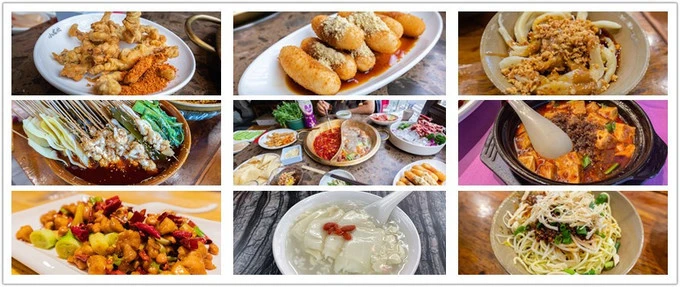
So this time when we visited Chengdu, we prepared ourselves mentally. We could have hotpot, but it had to be a dual-flavor pot (yuanyang guo), or we could find some non-spicy food to enjoy. I'm sure many friends also can't handle spicy food but still want to visit Chengdu. So in this travel guide, I'll share tips on how to choose food in Chengdu if you don't eat spicy food, for your reference. Beef tallow hotpot, small crispy meat, brown sugar glutinous rice cake (ciba), ice jelly (bingfen), boiled chicken skewers in chili oil (bo bo ji), sweet water noodles, cold noodles, egg puff cakes (danhonggao), three cannon (sandapao), sugar-coated fried dough balls (tangyou guozi), mapo tofu, kung pao chicken, fish-fragrant shredded pork (yuxiang rousi), Leshan crispy tofu pockets (kaka tofu), stuffed flatbread (ka bing), Leshan spring rolls, flatbread (guokui), bean curd jelly (douhua), steamed beef with rice flour (fenzheng niurou), bean jelly (liangfen), stuffed tofu (baojiang doufu), etc. There's always something for you!
Chengdu is located in the southwest, where the climate is humid. Locals like to eat spicy food to dispel dampness. The spicy and satisfying hotpot has become an iconic regional dish. As you stroll along Chengdu's streets, you'll see hotpot restaurants with all kinds of signs. Many of these are trendy (wonghong) shops, often open 24 hours and typically requiring queues. For our first meal in Chengdu, we chose hotpot. Although we were a bit worried about our stomachs failing us again, we thought, "When in Rome, do as the Romans do." Everyone says you must have hotpot in Chengdu. Since we were already there, why not give it a try? So after dropping off our luggage at the hotel, we walked out to find a hotpot place. Around 1 PM on a Friday, the streets were busy, but it wasn't mealtime. We found a hotpot restaurant within walking distance that didn't have a queue. This shop was a chain brand, with branches in other cities, and it was quite popular. We didn't picky; we were just hungry, so we went in to eat.
We ordered by scanning a QR code. The staff kindly reminded us that for two people, we only needed to order 6 to 7 hotpot dishes, not too many—presumably to avoid waste. Uncle Li and I took the advice and ordered two servings of meat, a few vegetables, plus small crispy meat, brown sugar ciba, and ice jelly. We also ordered a must-have hotpot drink: Vey (wei yi). The ordering interface even showed how long each item should be cooked, which was very thoughtful.
We chose a dual-flavor pot (yuanyang guo): one side was the spicy beef tallow broth, thick and bubbling with red chili peppers roiling; the other side was a clear broth (though it seemed to be pork rib broth, with large chunks of meat, savory, and some mushrooms). For dipping sauces, we got one with oil (you die) and one with dry chili powder (gan die), with minced garlic and cilantro. The staff also kindly provided aprons. Uncle Li initially didn't want to wear an apron, but after seeing the bubbling red oil, he dutifully put it on. As we chatted over hotpot (no singing), drinking Vey, I remembered an event I attended in Chengdu last year involving Vey. Back then, Uncle Li and I didn't really get to explore Chengdu. This time, we came purely for fun, and it felt different.
We had a dual-flavor pot: one half was a fiery red beef tallow spicy broth, thick and bubbling hot, with red chili peppers constantly tossing; the other half was a clear broth, which seemed to be a pork rib broth with big chunks of meat, meaty flavor, and some mushrooms. Uncle Li cooked beef slices in the spicy broth, but sometimes the many chili peppers made it hard to find the cooked meat; he needed a soup ladle to scoop it out. Perhaps the dual-flavor pot had been modified, as the spicy side wasn't too hot. The meat was very hot when taken out, and the heat on the tongue made it feel spicy. If you dip the meat in the oil sauce, the oil coats the hot meat and reduces the burning sensation. I remembered that the most authentic way to eat Chengdu hotpot is with an oil dip, adding minced garlic and cilantro to help alleviate the spiciness. Uncle Li agreed. I, on the other hand, chose the dry chili dip and mainly ate from the clear broth. The ingredients cooked in the clear broth picked up some saltiness, and dipping them in the dry chili powder gave a more intense, slightly spicy flavor—a bit stimulating but still acceptable.
If you can't handle spicy food, you can choose such a dual-flavor pot. Apart from clear broth, you can also choose tomato broth. If you accidentally cry from the spiciness, drink some Vey to relieve it.
We had small crispy meat (xiao su rou) at the hotpot restaurant. Basically, you can find this dish at any hotpot or skewer restaurant. It's not spicy and is delicious. In fact, there are street stalls in Chengdu that sell only this small crispy meat, indicating it's a relatively famous specialty. Small crispy meat is made of pork strips coated in flour and deep-fried. The outside is crispy, and the inside is tender. Sometimes you can taste Sichuan peppercorns. It can be eaten with chili powder; best hot, as it gets tough when cold. When you bite into it, you can hear the crisp sound, and in your mouth, it's a mix of meat and spicy aroma.
Brown sugar glutinous rice cake (hongtang ciba) is also a standard item in hotpot restaurants, a traditional snack of Sichuan and Chongqing. Steamed glutinous rice is cut into strips, fried, then drizzled with brown sugar syrup and sprinkled with soybean flour. Freshly made, these cakes are crispy on the outside and soft inside. Dipped in brown sugar, it’s sweet enough to melt your heart. The soybean flour on top is not very sweet, slightly cutting the richness. If the flour sticks to the roof of your mouth, just drink some water. I noticed many Chengdu snacks use sugar, not only brown sugar but also white sugar, adding a layer of sweetness to various snacks, enriching the taste experience.
As I mentioned, Chengdu snacks love brown sugar, and ice jelly (bingfen) is one of them. Chengdu bingfen is quite popular among snacks; street stalls and shops selling bingfen are everywhere. It's perfect for summer or after hotpot, cool, smooth, and helps relieve spiciness. Bingfen comes in simple brown sugar version or more luxurious fruit bingfen and rose ciba bingfen. We ate bingfen several times in Chengdu, mainly because Uncle Li loves it; he's particularly fond of cold desserts.
Bingfen itself is transparent and tasteless. With brown sugar syrup, it becomes sweet. Topped with raisins, crushed peanuts, dried hawthorn pieces, red beans, and small cut fruits, it becomes a summer coolant. One bite, and your tongue feels like sliding on a cool, jelly-like treat—refreshing. With all the toppings, it's truly satisfying.
After returning from our Chengdu trip, we even bought bingfen mix to make it ourselves, and it was equally delicious.
Lianggao (cold rice cake) is also a common snack in Chengdu (I checked: lianggao is a specialty of Yibin, Sichuan), but it doesn't seem as popular as bingfen. Bingfen is smoother and more slippery, while lianggao is made from glutinous rice flour, similar to pudding, with a firmer texture and little flavor itself. It's usually served with brown sugar syrup, so you can think of it as brown sugar pudding. That flavor is somewhat monotonous. Although it's also cold, it has fewer toppings, so it's a bit inferior. Street stalls often sell bingfen, but not necessarily lianggao, which shows people prefer bingfen. Similar to lianggao is liangxia (cold shrimp), which is like small shrimp-shaped lianggao, also not very popular.
Continuing with sweet Chengdu snacks: Sweet Water Noodles (tianshui mian). As the name suggests, they are sweet, but not purely sweet; they have a complex flavor. These noodles are thick and handmade, chewy. The sauce is a mixture of chili oil, white sugar, sesame paste, and crushed peanuts, quite thick. Before eating, stir the thick noodles with the sauce thoroughly. You'll first see the red chili oil, smell the sesame paste and peanuts, and then taste a blend of sweet, salty, and slightly spicy, with the sweetness dominant. The sesame paste flavor lingers, giving a sticky feeling in your mouth with a hint of spiciness.
This chili oil isn't very spicy, and if you can't eat spicy, you can ask the shop to omit it. I think the chili oil is the finishing touch, and the spiciness level is acceptable to me. Sweet water noodles are my favorite.
I don't know why Chengdu cold noodles (liang mian) are so delicious. Let me introduce them first. Cold noodles are very thin and chewy. The seasoning typically includes chili oil, soy sauce, and sugar, with toppings like shredded chicken, bean sprouts, peas, or cucumbers. Mix the noodles with the seasonings and toppings thoroughly. Each yellow noodle is coated in oil, shiny and flavorful.
Slurp one mouthful: the chewy noodles explode with a sweet and spicy taste. If the sugar hasn't fully dissolved, you can taste individual sugar granules. Very satisfying; a small bowl of cold noodles awakens the appetite, making you want to eat more. I'm really curious: with such a high-oil, high-sugar diet, why are Chengdu people so slim, fair-skinned, and with great skin? I envy them.
Dan Dan Noodles (dandan mian) look lighter at first glance, like plain boiled noodles topped with minced pork. But stir it with chopsticks to mix the sauce from the bottom, and you get a spicy, numbing flavor. The noodles are coated with the sauce, which is rich in mala flavor. Typically, dan dan noodles come in small portions, just to taste. They're appetizing and not particularly spicy.
Pea noodles (wandou mian) can also be found on Chengdu streets. I once had pea noodles; the peas were very soft and sticky. Press the peas with chopsticks and mix them with the noodles. It was delicious, with a slight sweetness and no spiciness. Worth trying.
Egg puff cakes (danhong gao) are a famous Chengdu snack. Many street stalls or small shops sell them. The name says it all: they're made with eggs and flour, baked quickly on a small pan, then filled with either sweet or savory fillings, folded into a dumpling shape, resembling large shrimp dumplings.
There are many filling options: for savory, pickled long beans, mixed shredded vegetables, pork floss, shredded potatoes, dried radish, or cowpea; for sweet, chocolate sauce, fruit jam, peanut butter, salad dressing, etc.
A single one costs about 3 yuan. I tried both sweet and savory, and both had their merits. The batter itself is slightly sweet, and when combined with savory fillings, it creates an interesting taste. If filled with something sweet like Oreo, it doubles the sweetness and doubles the joy, though high in calories. But sweet things make people happy.
Three Cannon (san da pao) is a special snack of Sichuan. The name sounds cool, and the making is like a performance. After you order, the vendor makes it on the spot. They pinch three small pieces from a large glutinous rice ball, knead them, throw them onto a metal plate on the counter; the rice balls bounce onto a bamboo tray covered with soybean flour, making three loud sounds ("duang, duang, duang"). Then they put them into a paper box with brown sugar syrup (brown sugar again!!) and sprinkle sesame seeds on top. Three Cannon is ready. These three sounds represent "iron cannon," "fire cannon," and "gun cannon," hence the name.
It feels like unfried brown sugar ciba, softer and stickier. The glutinous rice ball itself has no flavor, only the sweetness of brown sugar syrup—a bit greasy. 10 yuan for three.
Sugar-coated fried dough balls (tangyou guozi) are traditional Chengdu snacks, said to be a childhood memory for Chengdu locals. When we strolled around Chengdu, we only saw them fresh at street stalls or some restaurants, looking shiny. I hesitated to try them, perhaps because the brown sugar of three cannon had overwhelmed me. I was resistant to high-oil, high-sugar food. But many travel guides say these balls are a must-eat. So on my last day in Chengdu, I ate them.
Well, sugar-coated fried dough balls are also made from glutinous rice, brown sugar, and sesame, fried in oil. They have a crispy outside and soft inside, lightly sweet, not as cloying as brown sugar syrup. Overall, sweetness dominates with a hint of sesame fragrance. Occasionally trying them is okay. Indeed, we ate many brown sugar-flavored glutinous rice snacks in Chengdu.
On our first evening in Chengdu, we weren't very hungry but still wanted a small bite. So I searched online and found a Leshan snack shop. It was inside a small alley. We arrived at 9 PM following the navigation; the shop was almost closing, and we were the last customers. Previously, friends in my travel group had recommended Leshan snacks as unmissable. So we decided to try Leshan snacks in Chengdu.
Leshan kaka tofu: deep-fried triangular tofu pockets, slit open along one side, filled with shredded radish, crushed peanuts, chili oil, sugar, and cilantro. Inside there is also tangy sweet vinegar juice. It's sweet and sour, appetizing. Be careful when biting, or the juice might squirt. The silky tofu and the tangy filling pair perfectly. I loved it.
Ka bing is a kind of stuffed flatbread, thin outer skin with beef inside. I forgot to take a photo while eating; look at the menu picture. It felt okay, small, just a taste.
Leshan spring rolls are different from the usual spring rolls; they are smaller. The wrapper is very thin, like thin pancakes, filled with shredded radish, lettuce, and houttuynia cordata (zhe'ergen), with a sweet and spicy flavor. They can be dipped in the sweet vinegar provided by the shop. At first, I noticed a strange taste, but I wasn't sure what it was. Later, I realized it was zhe'ergen. This was my first time eating zhe'ergen. It wasn't terrible, but not my favorite. I ate the spring roll piece by piece with sweet vinegar. I thought it would be perfect without zhe'ergen, haha.
We also had cold noodles and bingfen here. The total was just over 30 yuan. Since we were the last table, the boss added a lot of toppings to our bingfen—red beans, fruit pieces, etc., a luxurious version. Uncle Li was extremely happy, feeling this was the ultimate bingfen. Later, when he had ordinary bingfen, he was disappointed.
Flatbread (guokui) is a wheat-based snack from Shaanxi, while Juntun Guokui is a snack from Pengzhou, Chengdu, Sichuan. Legend has it that Zhuge Liang accidentally used soldiers' helmets to make this dough during an expedition, hence the name. Actually, it's a flaky fried bread. It can be eaten plain or stuffed with meat. I didn't have Juntun Guokui in Chengdu, but I had ordinary white flatbread, similar to a sesame seed cake (shaobing), which can be filled with braised dishes or braised beef. I found Chengdu's braised dishes very tasty and flavorful. Some century-old shops are worth trying.
I ate a vegetarian guokui filled with mixed shredded vegetables (cold tossed, with spicy flavor): braised tofu strips, carrot shreds, potato shreds, etc. It was very flavorful. Think of it as a sesame seed cake with filling—very tasty. I had it twice (slightly spicy, a mala type).
I saw others buying beef guokui: braised beef stuffed into white flatbread, then the whole stuffed bread dipped in the braising liquid before serving. It looked so aromatic. (I don't like beef, so I didn't try it.)
Mapo tofu is a classic Sichuan dish. It originated from a small shop at Wanfu Bridge in Chengdu. The owner, a woman with a pockmarked face (hence "Chen Mapo"), made this tofu popular. Her braised tofu came to be called "Chen Mapo Tofu." Chen Mapo tofu has a history of over a hundred years, a century-old brand. We also ate Chen Mapo Tofu in Chengdu. The tofu is very tender, topped with minced beef, with chili and Sichuan peppercorn in the sauce. Eat it with a spoon. The tender tofu, savory beef mince, and spicy numbing sauce blend in the mouth, leaving a numbing sensation. It's a bit spicy, mainly numbing; after eating, you need a while to recover, and even your ears feel numb. If you can't handle spicy, you might want to avoid this dish.
Chongqing-style spicy chicken (lazi ji) looks vivid red with plenty of chili peppers—very stimulating.
Kung Pao Chicken and Fish-Fragrant Shredded Pork (Yuxiang Rousi) are classic Sichuan dishes, sweet and sour in flavor, not spicy, but very good with rice. We also had these two dishes in Chengdu at a century-old restaurant. The taste was okay, perhaps slightly different from other cities, but still decent. To be honest, these two dishes can be found in different restaurants across many cities. Whether they are good depends on personal preference. If you can't eat spicy, these two Sichuan dishes can be a relief.
Bean curd jelly (douhua) in Chengdu can be a main dish or a dessert. As a main dish, you can have it with beef and crispy dough sticks (niurou sazi douhua), or douhua noodles and douhua mian. Even though the bowl looks small, it is filling because of rich toppings and sesame paste. (The staff reminds you to stir before eating.) The douhua at the bottom has a bean fragrance, smooth and tender. Chili can be added or not; the shop will ask ahead.
If you have douhua as a dessert, fermented rice douhua (laozao douhua) is a choice: it has a winey taste, sweetness, and bean flavor. Douhua is more delicate than tofu, more refreshing, almost like eating solid soy milk, with a rich bean flavor. There are also richer douhua desserts with raisins and crushed peanuts. Personally, I prefer bingfen, haha.
Steamed beef with rice flour (fenzheng niurou) we had at the douhua shop. When the shop owner saw us hesitating while ordering, she asked if we ate spicy. We said not too much, and she recommended this dish. It looked a bit red, but that was from fermented broad bean paste (doubanjiang), not chili. The beef slices were steamed until mushy, very tender, with a savory and slightly salty taste from the bean paste, melting in the mouth. Friends who don't eat spicy can have this.
We also had barbecue in Chengdu. Late at night, we found a barbecue restaurant (open until 4 AM), ordered some skewers randomly. The barbecue was quite good, and we could choose the spiciness level. We chose spicy, but it didn't feel too hot.
I also ate grilled frozen rice cake (kao dong ba). It tasted a bit like fermented rice cake (fagao), slightly sweet, with barbecue sauce making it salty-sweet. Just a novelty.
Uncle Li and I found it curious that Chengdu people love late-night snacks. At midnight, they eat hotpot and barbecue. As tourists, we had barbecue around 11 PM; later, more people arrived. When we left at around midnight, the restaurant was full, including a young couple with a toddler eating skewers. We thought it was strange: don't Chengdu people have to go to work the next day? They eat supper so late, seeming to truly enjoy life. Moreover, outside many hotpot and barbecue restaurants, there were small vendor stalls selling fruit, bingfen, and small grilled foods for people waiting in line. There were also some late-night stalls on the street selling barbecue or fried noodles.
We also tried a few spicy snacks, such as boiled chicken skewers in chili oil (bobo ji), xuanzi liangfen (smooth cold jelly with sweet and spicy flavor), and baojiang doufu (stuffed tofu). There are many cold skewer shops on Chengdu streets, many people eating cold skewers late at night, usually dipped in chili powder, slightly spicy.
Xuanzi liangfen was sweet and spicy.
Baojiang doufu is a street snack. I asked the staff if they could not put chili. They said, "Not even a little bit?" I compromised and said just a little. The tofu was crispy outside, tender inside, but the chili powder on top was a bit spicy, making me want a cup of milk tea.
Chengdu streets have many trendy (wonghong) milk tea shops. One street had more than a dozen milk tea shops, each with many customers. We went with the flow and drank quite a bit of milk tea during these days. It was tasty, feeling indulgent. Weight gain was inevitable, but happiness was guaranteed. Travel is about having fun; dieting can wait.
Local milk is also good.
Other dishes like Zhong Shui Jiao (Zhong dumplings), Chao Shou (wontons), spicy rabbit head, Mao Cai (boiled mixed vegetables in spicy broth), Dou Tang Fan (rice with bean soup), Xian Shao Bai (steamed pork belly with pickled vegetables), Shao Zi Zheng Dan (steamed egg with minced meat), Hui Guo Rou (twice-cooked pork), Fu Qi Fei Pian (beef and ox tripe in chili sauce), Ti Hua (pig trotter), Kou Shui Ji (saliva chicken), Guo Ba Rou Pian (crispy rice with fried pork slices), Tian Pi Ya (sweet duck), Shang Xin Liang Fen (sad bean jelly), Ye Er Pa (sticky rice dumpling wrapped in leaves), etc. They were either too spicy, or we couldn't handle them (e.g., rabbit head), or we didn't have time. Saving them for next time.
Of course, Chengdu cuisine is very inclusive; you can find various styles and flavors. No need to worry about not having options! Oh, we even had curry rice.


