2020 Yunnan-Guizhou-Sichuan 51-Day Self-Driving Autumn Trip (2) – Chengdu and Dujiangyan
2020 Yunnan-Guizhou-Sichuan 51-day self-driving autumn trip, divided into 10 parts:
(1) – Zhijiang, Maotai Town, Chishui, Luzhou, Zigong.
This is (2) – Chengdu and Dujiangyan
(3) – Wenchuan, Li County, Barkam, Jinchuan, Danba, Xinduqiao
(4) – Xinduqiao, Yajiang, Litang, Daocheng
(5) – Daocheng Yading
(6) – Shangri-La, Lijiang
(7) – Jianchuan
(8) – Dali, Weishan, Chuxiong, Kunming, Dongchuan
(9) – Panzhou, Southwest Guizhou, Ziyun, Duyun
(10) – Southeast Guizhou, Fuzhou, Quzhou
This self-driving trip lasted from October 9 to November 28, a total of 51 days, covering 8,780 kilometers.
Starting from Shanghai, passing through Quzhou (Zhejiang), Zhuzhou (Jiangxi), Zhijiang (Hunan), Maotai Town and Chishui (Guizhou), Luzhou, Zigong, Chengdu, Dujiangyan, Wenchuan, Li County, Barkam, Jinchuan, Danba, Xinduqiao, Litang, Daocheng (Sichuan), Shangri-La, Lijiang, Jianchuan, Shaxi, Dali, Weishan, Chuxiong, Kunming, Dongchuan (Yunnan), Panzhou, Southwest Guizhou, Ziyun, Duyun, Southeast Guizhou (Guizhou), passing through Loudi (Hunan), Fuzhou (Jiangxi), Quzhou (Zhejiang), and back to Shanghai.
Day 8, October 16, Chengdu
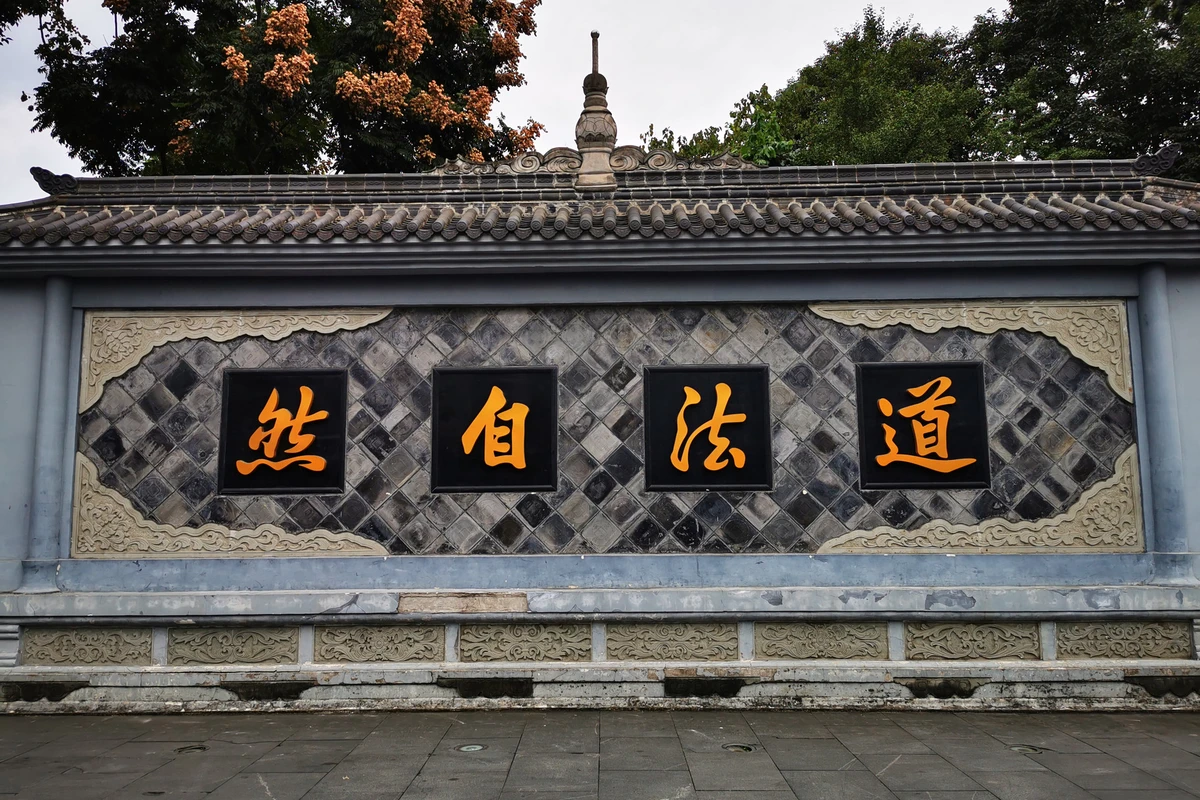
Admission: 10 yuan.
Chengdu's oldest and largest Taoist temple, directly associated with Laozi, the founder of Taoism.
One of the key national Taoist temples.
First built in the 25th year of King Zhao of Zhou.
Below: The leisurely and comfortable life of Chengdu locals – drinking tea, playing cards, chatting (baì lóng mén zhèn):
Below: Longsenyuan on Qintai Road, a long-established high-quality hotpot restaurant. Invited to dinner to taste the spicy and numbing flavors.
Day 9, October 17, Chengdu
1. Wangjianglou Park:
Admission: 20 yuan. Second visit to the park; the first was in 1983.
Built to commemorate Xue Tao, a female poet who lived in Chengdu during the Tang Dynasty.
Looking at the river flow from Wangjiang Tower.
Chongli Pavilion, Xue Tao Well, Xue Tao Tomb.
2. Chunxi Road:
It is said to be a place where “every three steps you see a beautiful woman.”
Still bustling with people coming and going, but the Chengdu girls are all wearing masks.
3. Tianfu Square:
Tianfu Square is surrounded by towering skyscrapers, completely unrecognizable.
Just came to see the statue of the great leader Chairman Mao waving again:
4. Kuanzhai Alley:
Kuan Alley, Zhai Alley, Jing Alley – Qing Dynasty relics.
5. Wuhou Shrine:
Admission: 50 yuan. Third visit to pay homage.
There are over 20 existing Wuhou Shrines across the country, with 9 larger ones: Mianxian Wuhou Shrine, Gulongzhong Wuhou Shrine, Chengdu Wuhou Shrine, Qishanbao Wuhou Shrine, Baidicheng Wuhou Shrine, Wuzhangyuan Wuhou Shrine, Nanyang Wuhou Shrine, Baoshan Wuhou Shrine, and Lanxi Wuhou Shrine.
Chengdu Wuhou Shrine is the only shrine in China that enshrines both a ruler and his subject, consisting of the joint shrine of Liu Bei and Zhuge Liang. Therefore, although not the earliest, Chengdu Wuhou Shrine is the most famous.
The most notable ancient artifact is the “Stele of the Shu Prime Minister Zhuge Liang” in the first courtyard, inscribed by the famous prime minister Pei Du of the “Tang Dynasty Restoration,” calligraphed by Liu Gongchuo (elder brother of calligrapher Liu Gongquan), and engraved by master artisan Lu Jian, known as the “Stele of Three Perfections.”
Famous couplet: “If you can attack the heart, opposition will dissolve on its own; since ancient times, those who understand warfare do not love war. If you fail to assess the situation, both leniency and strictness will be wrong; future rulers of Shu must think deeply.”
This couplet, shortened as the “Attack the Heart Couplet,” was composed by Zhao Fan from Jianchuan, Yunnan, who was the temporary Salt and Tea Commissioner of Sichuan in the 28th year of Guangxu of the late Qing Dynasty. In a few words, it highly affirms Zhuge Liang's talent in military and governance, and summarizes his experience in governing Shu from the dialectical relationship between war and peace, leniency and strictness.
Literal meaning: Those who can use psychological tactics to win over others will naturally eliminate doubts and disloyal opponents; since ancient times, those who truly understand military strategy do not like to solve problems through war. Those who cannot judge the situation will make mistakes whether they govern leniently or strictly; future generations governing Shu should ponder deeply.
Evening: Eating Sichuan cuisine.
Day 10, October 18, Chengdu
1. Sichuan Museum:
Two Han Dynasty pottery and stone art galleries on the first floor, and Zhang Daqian's calligraphy and painting hall on the second floor. Also on the second floor: Ba-Shu Bronze Hall and Ceramics Hall. On the third floor: Tibetan Buddhist Cultural Relics Hall and Ten Thousand Buddha Temple Stone Carving Hall.
The bronze hall on the first floor was not open.


