The Ultimate Chengdu Food Guide: Accommodation Recommendation—Simo Shanju Hotel (Shaanxi Street Branch)
Why go to Chengdu?
Of course, because of the desire to 'eat'!
The most famous thing in Chengdu is the beef tallow hotpot. As soon as you step out of Chengdu airport, you can smell hotpot. Hotpot restaurants are everywhere on the streets and alleys, as if you are immersed in the world of beef tallow hotpot, ready to sit down and enjoy a fiery hotpot at any time. Unfortunately, my friend and I don't have a strong tolerance for spiciness. After hastily eating an oily spicy hotpot in Chengdu last year, we both had diarrhea that very night. Our fragile stomachs, not used to eating spicy food, really couldn't handle it.
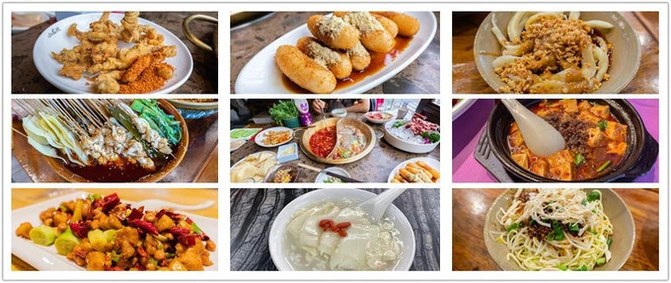
So this time when we traveled to Chengdu, we prepared ourselves mentally. We could eat hotpot, but it had to be a yuanyang (dual-flavor) pot, or we would find some non-spicy food to eat. I believe many of you also can't handle spicy food but still want to travel to Chengdu. So in this travelogue and guide, I'll share with you how to choose food in Chengdu if you don't eat spicy, for your reference. Beef tallow hotpot, crispy fried pork strips (xiaosu rou), brown sugar glutinous rice cake (hongtang ciba), ice jelly (bingfen), bobo chicken (bo bo ji), sweet water noodles (tianshui mian), cold noodles (liangmian), egg puff cakes (danhong gao), three cannons (sandapao), sugar oil fruit (tangyou guozi), mapo tofu, kung pao chicken, yu xiang shredded pork (fish-fragrant pork slivers), Leshan kaka tofu, ka bing, Leshan spring rolls, guokui (Chinese flatbread), douhua (tofu pudding), steamed beef with rice flour (fenzheng niurou), liangfen (starch jelly), baojiang tofu (stuffed tofu), etc. There's always something for you.
Because Chengdu is located in the southwest with a humid climate, locals like to eat spicy food to dispel dampness. The spicy and satisfying hotpot has become a iconic regional cuisine of Chengdu. As you walk the streets of Chengdu, you will see hotpot restaurants with different signs everywhere. Most of these hotpot restaurants are internet-famous, many open 24 hours, and usually require waiting in line. For our first meal in Chengdu, we chose to eat hotpot. Although we were a bit worried that our stomachs might suffer again, we thought, 'When in Rome, do as the Romans do.' Everyone says you must eat hotpot when in Chengdu. Since we were already there, we had to give it a try. So after putting our luggage in the hotel, we walked out to find a hotpot restaurant. Around 1 PM on Friday, there were quite a few people on the street, but it wasn't really meal time. We found a hotpot restaurant within walking distance that didn't require waiting. It was a chain brand with branches in other cities and quite popular. We didn't bother choosing, as we were hungry, so we went straight in.
We ordered by scanning the QR code. The staff kindly reminded us that for two people, ordering 6 to 7 hotpot dishes was enough, to avoid waste and follow the 'clean plate' initiative. My friend and I took the advice and ordered two portions of meat, several vegetables, and also crispy fried pork strips, brown sugar glutinous rice cake, and ice jelly, along with the essential hotpot drink, 'Weiyi' (a soybean milk drink). The order information even showed how long each dish should be cooked, which was thoughtful.
We chose a yuanyang pot, one dipping dish with oil, one with dry chili powder, and the condiments were minced garlic and cilantro. The staff also kindly provided aprons. Mr. Li (Li Shushu) initially didn't want to wear it, but after seeing the bubbling red oil in the yuanyang pot, he obediently put it on. Eating hotpot and chatting (not singing), drinking Weiyi, I recalled the event I attended in Chengdu last year related to Weiyi. Back then, my friend and I didn't really explore Chengdu properly. This time, we came purely for fun, and my mood was different.
The yuanyang pot: one half was a fiery red beef tallow spicy pot, the broth thick and bubbling, with red chilies constantly tumbling; the other half was said to be a clear broth pot, but it seemed to be a pork rib pot, with large chunks of meat visible, giving a meaty flavor, along with some mushrooms. When we put beef slices into the spicy pot, sometimes we couldn't find the cooked meat because of too many chilies, so we had to fish it out with a ladle. Perhaps the yuanyang pot had been modified, as the spicy side wasn't very spicy. The meat was very hot when taken out, and it felt fiery only because it scorched the tongue. If you ate it with an oil dip, wrapping the hot meat in oil before eating, it wouldn't be too hot. I remember that the most authentic way to eat Chengdu hotpot is with an oil dip, adding minced garlic and cilantro to relieve the spiciness. My friend agreed. I chose to use the dry chili dip, mainly eating from the clear broth pot. The dishes themselves, after being cooked in the clear broth, had a slight saltiness. Dipping them in the dry chili gave a more fresh and spicy taste, a bit stimulating but still acceptable.
If you can't eat spicy, you can choose this kind of yuanyang pot. Besides clear broth, you can also choose a tomato pot. If you accidentally get overwhelmed by spiciness, you can drink Weiyi to relieve it.
The crispy fried pork strips we had at the hotpot restaurant are a common dish you can find in almost any hotpot or skewer restaurant. They are not spicy and delicious. In fact, there are small shops on the streets of Chengdu that specialize in this single dish, making it a fairly famous specialty. Crispy fried pork strips are pork strips coated in flour and deep-fried. The outer skin is crispy, and the inside meat is tender. Sometimes you can taste Sichuan peppercorns. They can be eaten with chili powder, and should be eaten hot, as they lose flavor when cold. When you take a bite, you can hear the crispy sound, and in your mouth is the fresh aroma of meat and chili mixed together.
Brown sugar glutinous rice cake is also a standard item in hotpot restaurants, a traditional snack in Sichuan and Chongqing. Steamed glutinous rice is cut into strips, fried in a pan, then drizzled with brown sugar syrup and sprinkled with soybean flour. Freshly made brown sugar glutinous rice cake is crispy on the outside, soft on the inside. Dipped in brown sugar, it can sweeten your heart. The soybean flour on top is not very sweet and can slightly cut the grease. If the soybean flour sticks to the roof of your mouth, you might need a sip of water. I noticed that many snacks in Chengdu use sugar, not just brown sugar but also white sugar. Sprinkling sugar on various snacks adds an extra layer of sweetness, enriching the taste experience.
As mentioned earlier, many Chengdu snacks love to use brown sugar syrup. Ice jelly (bingfen) is one of them. Chengdu ice jelly is a relatively popular snack, with ice jelly shops and stalls everywhere on the streets. It's perfect for summer or after hotpot—cool, smooth, and refreshing, and it relieves spiciness. Ice jelly comes in simple brown sugar versions, as well as more luxurious ones with fruits, rose petals, and glutinous rice cake (ciba). We had ice jelly several times in Chengdu, mainly because my friend loves it; he especially adores this cool snack.
Ice jelly itself is transparent and flavorless. Drizzled with brown sugar syrup adds sweetness, and with raisins, crushed peanuts, crushed hawthorn flakes, red beans, and small fruit pieces, it becomes a summer coolant. One bite, and your tongue feels like it's sliding on a bouncy, cool jelly. Ah, refreshing. And with all the rich toppings—comfortable (bashi).
After returning from our trip to Chengdu, we even bought ingredients to make ice jelly ourselves, and it was equally delicious.
Lianggao (cold rice cake) is similar to ice jelly and is also a common snack in Chengdu (I looked it up: lianggao is a specialty of Yibin, Sichuan), but it feels less popular than ice jelly. Ice jelly is smoother, while lianggao is made from glutinous rice flour, somewhat like pudding, with a firmer texture. It has little flavor on its own and is usually eaten with brown sugar syrup. So you can think of it as a brown sugar pudding, but the flavor is a bit monotonous. Although it's also cool, it has too few toppings, making it a bit inferior. Street stalls sell more ice jelly than lianggao, indicating people prefer ice jelly. Similar to lianggao is liangxia (cold shrimp), which is lianggao shaped like small shrimp strips; it may also be less popular.
Continuing with sweet Chengdu snacks: Sweet water noodles (tianshui mian). As the name suggests, they are sweet, but not purely sweet, with a complex flavor. The noodles are thick, handmade, and chewy. The seasoning is a mixture of red chili oil, white sugar, sesame paste, and crushed peanuts, quite thick. So you need to mix the thick noodles with the seasoning thoroughly before eating. You'll first see the red chili oil, smell the aroma of sesame paste and crushed peanuts, and after eating, you'll taste a combination of sweet, salty, and spicy, with sweetness dominating. The sesame paste flavor lingers in the aftertaste, giving a slightly sticky sensation, with a mild spiciness in your mouth.
The chili oil is not very spicy, and if you can't handle spicy, you can ask the vendor to omit it. I think the chili oil is the finishing touch, and the spiciness is acceptable to me. Sweet water noodles are my absolute favorite.
I don't know why Chengdu's cold noodles (liangmian) are so delicious. I'd like to introduce them first. The noodles are very thin and chewy. The seasoning is typically a mix of chili oil, soy sauce, and white sugar. The accompaniments include shredded chicken, bean sprouts, peas, cucumber, etc. You mix the cold noodles with the seasoning and toppings thoroughly, so each yellow noodle is coated in oil, glossy, and very flavorful.
One slurp, the chewy noodles explode with a sweet and spicy taste in your mouth. If the sugar hasn't fully dissolved, you can still taste the grainy white sugar. Ah, comfortable. A small bowl of cold noodles opens up your appetite, making you feel like eating more. I'm puzzled: with such a high-oil, high-sugar diet, why are Chengdu people still so slim, fair-skinned, and with great skin? I'm envious.
Dan dan noodles look more refreshing. At first glance, they appear to be plain boiled noodles topped with minced meat. But when you stir them with chopsticks, mixing in the sauce underneath, you taste the spicy and numbing flavor, quite rich. The noodles are coated with the sauce, giving a strong numbing and spicy taste. Dan dan noodles are usually served in small portions, just for tasting; they are quite appetizing and not particularly spicy.
Pea noodles (wandou mian) can also be seen on the streets of Chengdu. I tried it once myself. The peas were very soft and sticky. After crushing the peas with chopsticks and mixing them with the noodles, they were delicious, slightly sweet, and not spicy—worth a try.
Egg puff cakes (danhong gao) are quite famous snacks in Chengdu, with many shops or small carts on the streets. As the name suggests, egg puff cakes are made by mixing eggs and flour, baking on a small pan for a moment, then filling with sweet or savory fillings, folding into a dumpling shape, looking like large shrimp dumplings.
There are many filling options: savory ones include pickled long beans, mixed shredded vegetables (liangban sansi), pork floss, shredded potatoes, dried radish, cowpeas, etc. Sweet ones include chocolate sauce, fruit jam, peanut butter, mayonnaise, etc.
The price is around 3 yuan each. I tried both sweet and savory; each has its merits. The outer skin of the egg puff cake is slightly sweet, and when combined with savory fillings, it gives a peculiar but interesting taste. If you fill it with sweet toppings like Oreo, it's double sweetness, double happiness—though I feel the calories are high, but eating sweets makes you happy.
Three cannons (sandapao) is a characteristic snack of Sichuan. The name sounds cool, and the preparation is almost like a live performance. After you order, the vendor will prepare it on the spot. They pinch three small balls from a large piece of glutinous rice cake, knead them, and throw them onto a metal plate on the chopping board. The glutinous rice balls bounce into a dustpan covered with soybean flour, making three loud 'duang duang duang' sounds. Then they are placed in a paper box filled with brown sugar syrup (again, brown sugar!!) and sprinkled with sesame seeds. The three sounds represent 'iron cannon', 'artillery', and 'gun', hence the name 'three cannons'.
I feel it's a bit like unfried brown sugar glutinous rice cake, softer and stickier. The glutinous rice balls have little flavor, just the sweetness of brown sugar syrup, a bit greasy. 10 yuan for three.
Sugar oil fruit (tangyou guozi) is a traditional Chengdu snack, said to be a taste of childhood memories for Chengdu locals. When we strolled around Chengdu, we only saw freshly made sugar oil fruit at roadside stalls or certain restaurants, looking shiny and oily. I hesitated to try it. Perhaps the brown sugar flavor of three cannons had intimidated me, making me resistant to high-oil, high-sugar foods. But many guides say sugar oil fruit is a must-try snack, so on our last day in Chengdu, I had it.
How to describe it? Sugar oil fruit is also made from glutinous rice, brown sugar, and sesame seeds, deep-fried in oil. It tastes crispy on the outside and soft on the inside, with a hint of sweetness—not as cloyingly sweet as brown sugar syrup—but overall still quite sweet, with a slight sesame aroma. It's okay to have occasionally. Well, we ate many glutinous rice snacks with brown sugar in Chengdu.
Leshan snacks: Leshan kaka tofu, ka bing, spring rolls
On the first night in Chengdu, we weren't very hungry but still wanted something to fill our stomachs. So we searched online and found a Leshan snack shop. It was in a small alley. We followed the navigation at 9 PM, and the shop was about to close; we were the last customers. My travel group friends had previously recommended that I try Leshan snacks, saying they are not to be missed. So we decided to taste Leshan snacks in Chengdu.
Leshan kaka tofu: deep-fried triangular tofu is cut open in the middle and filled with shredded radish seasoned with sauce, crushed peanuts, chili oil, white sugar, and cilantro. Inside is a generous amount of sweet vinegar juice, giving a sweet and sour flavor that whets the appetite. Be careful to take small bites, or the sweet vinegar juice might burst out. The tenderness of the fried tofu and the sweet-sourness of the filling perfectly combine. I loved it.
Ka bing is somewhat like a Chinese meat pie (roujiamo). The outer skin is thin, filled with beef. I forgot to take a photo while eating; please refer to the menu picture. It felt okay, a small portion just for tasting.
Leshan spring rolls are different from the usual spring rolls we eat; they are relatively smaller. The skin is very thin, like a thin pancake, filled with shredded radish, lettuce, and houttuynia (zhe'ergen), with a sweet and spicy taste. They can be dipped in the sweet vinegar provided by the shop. At first, I kept tasting a strange flavor, but I wasn't sure what it was. Later I learned it was the houttuynia. It was my first time eating houttuynia; it wasn't that bad, but not to my liking either. I basically finished the spring roll bite by bite dipped in sweet vinegar. I thought it would be perfect without houttuynia, haha.
We also had cold noodles and ice jelly at this shop, spending only over 30 yuan. Since we were the last table, the owner added a lot of toppings to our ice jelly, like red beans and fruit pieces, making it a deluxe version. My friend was extremely happy, thinking this was the ultimate ice jelly. Later, when he had the ordinary version, he felt disappointed.
Guokui is a wheat-flour snack from Shaanxi, while Juntun guokui is a snack from Pengzhou, Chengdu, Sichuan. Legend has it that during an expedition, Zhuge Liang unexpectedly made a pastry using a soldier's helmet, which turned into a thousand-layer crispy oil pastry. Juntun guokui can be eaten plain or with meat filling. It's crispy and can serve as a staple. I didn't have Juntun guokui in Chengdu, but I had ordinary white flour guokui, which is a bit like shaobing (baked flatbread). It can be filled with braised dishes or braised beef. I think the braised flavors in Chengdu are quite good, very flavorful. Some century-old shops' braised items are worth trying.
I ordered a vegetarian guokui, filled with mixed shredded vegetables (cold-tossed three shreds: braised dried tofu, shredded carrot, shredded potato, etc.), with a spicy and numbing flavor, very tasty. Basically, it's like shaobing with vegetables—delicious. I had it twice (a bit spicy, but numbingly spicy).
I saw others ordering beef guokui: braised beef was stuffed into the white flour guokui, then the whole guokui was dipped in the braising broth before being packed. It looked very fragrant (I don't eat beef, so I didn't try it).
Mapo tofu, Laziji (spicy chicken)
Mapo tofu is also a traditional Sichuan dish, originating from a small shop at Wanfu Bridge in Chengdu. The mapo tofu there was very popular because the owner's wife had pockmarks and was called 'Chen Mapo' (Pockmarked Chen). The braised tofu she made became known as 'Chen Mapo Tofu'. Chen Mapo Tofu has a history of over a hundred years and is considered a century-old brand. When we went to Chengdu, we also ate Chen Mapo Tofu. First, the tofu was very tender, topped with minced beef. The sauce contained chili and Sichuan peppercorns. Eating it with a spoon, the tenderness of the tofu, the saltiness of the beef, and the spicy and numbing sauce mixed in the mouth, leaving a lingering numbness. It's a bit spicy, mainly numbing; you need a while to recover, even your ears feel numb. Those who can't eat spicy might want to avoid this dish because it's a bit spicy.
Laziji looks red and is full of chilies—a very stimulating taste.
Kung Pao Chicken, Yu Xiang Shredded Pork
Kung Pao Chicken and Yu Xiang Shredded Pork are also classic Sichuan dishes. They are sweet and sour in taste, not spicy, and go well with rice. We also had these two dishes in Chengdu this time, at a century-old restaurant. The taste was okay, possibly slightly different from the versions in other cities, but still decent. To be honest, these two dishes can be found in restaurants in many cities. Whether they are good depends on personal preference. If you can't eat spicy, you can try these two Sichuan dishes to give your palate a break.
Douhua flour (douhua fen), douhua noodles (douhua mian), ice fermented douhua (bingzui douhua)
In Chengdu, douhua (tofu pudding) can be a main dish or a dessert. As a main dish, you can have beef on the douhua (niurou sazi douhua), or douhua flour and douhua noodles. Although the bowl looks small, it's filling due to the generous toppings and the addition of sesame paste. After mixing, it's quite satisfying (the staff will remind you to mix before eating—thoughtful). The douhua is at the bottom, with a bean aroma, very smooth and tender. Chili can be added or omitted; the vendor will ask if you eat spicy beforehand.
If you treat douhua as a dessert, like fermented rice douhua (laozao douhua), it has a winey flavor, sweetness, and bean flavor. Douhua is much more delicate than tofu, more refreshing to eat. It feels like eating solid soy milk, with a strong bean flavor. There are also richer dessert versions with raisins and peanuts. Personally, I prefer ice jelly, haha.
Steamed beef with rice flour (fenzheng niurou) we had at a douhua shop. When the owner saw us hesitating while ordering, she asked if we ate spicy. We said we couldn't handle much spiciness, so she recommended this dish. It looked a bit red, but that was the color of broad bean paste, giving a savory flavor, not the red of chili. The beef slices were steamed until mushy, very soft and tender. In the mouth, you could taste the savory broad bean paste, melting instantly. Friends who don't eat spicy can try it.
We also had a barbecue meal in Chengdu this time. We found a barbecue restaurant late at night (open until 4 AM), ordered some skewers casually. The barbecue tasted good, and you could choose the spice level. We chose spicy, but it really wasn't very spicy.
I also had roasted frozen rice cake (kao dongba), which tasted a bit like fermented rice cake (fagao), slightly sweet, and the barbecue sauce was salty, giving a sweet-salty taste; it was interesting.
My friend and I found it peculiar that Chengdu people love late-night snacks, eating hotpot and barbecue late at night. As tourists, we had barbecue around 11 PM. Later, more and more people came to the barbecue place. When we left around midnight, the place was full, including a young couple with a few-year-old child eating skewers. We found it strange: don't Chengdu people have to go to work the next day? People were enjoying late-night snacks, truly savoring life. And outside every hotpot and barbecue restaurant, there were many small vendors selling fruits, ice jelly, and small barbecue items, allowing those waiting to have a snack. On the streets, there were also late-night stalls selling barbecue or fried noodles.
We also ate some slightly spicy snacks, such as bobo chicken (bo bo ji), xuanzi liangfen (spiral starch jelly), and baojiang tofu (stuffed tofu). There are many cold skewer shops on the streets of Chengdu; many people eat cold skewers late at night, basically dipping them in chili powder, a bit spicy.
Xuanzi liangfen is sweet and spicy.
Baojiang tofu is a street snack. I asked the vendor if they could make it without chili. The vendor asked, 'Not even a little spicy?' I changed my mind and said mild spicy—I compromised. The tofu was crispy on the outside and tender inside, but the chili powder sprinkled on top was a bit spicy, making me crave a milk tea.
There are many trendy milk tea shops on the streets of Chengdu. On one street, there were even more than a dozen milk tea shops, each with many customers. We followed the local custom and drank quite a lot of milk tea during these days. Ah, so delicious—the taste of indulgence. Gaining weight was inevitable, but happiness was guaranteed. Isn't traveling all about having fun? We'll worry about losing weight later.
The local milk is also good.
Chengdu dishes we didn't eat include Zhong dumplings (zhong shuijiao), wontons (chaoshou), spicy rabbit head (mala tu tou), mao cai (assorted vegetables in spicy broth), bean soup rice (dou tang fan), xian shao bai (steamed pork belly with pickled vegetables), shaozi steamed egg (shaozi zheng dan), twice-cooked pork (huiguo rou), husband and wife lung slices (fuqi feipian), pig trotters (ti hua), saliva chicken (koushui ji), crispy rice with meat slices (guoba rou pian), sweet duck (tian pi ya), sad jelly (shangxin liangfen), ye'er ba (leaf-wrapped glutinous rice cake), etc. Either they were too spicy, or we couldn't accept them (like rabbit head), or we didn't have time—saved for next time.
Of course, Chengdu cuisine is very inclusive; you can eat all kinds of styles and flavors, so don't worry about not having enough to eat. By the way, we also ate curry rice.
Now, accommodation recommendation—Simo Shanju Hotel
I found this hotel in someone else's travelogue, mainly attracted by its location and style.
The hotel is located in the city center with convenient transportation. It's close to Tianfu Square Metro Station (Line 1) and People's Park Metro Station (Line 2), just a few minutes' walk. Moreover, distances to various attractions (Tianfu Square, People's Park, Chunxi Road Taikoo Li, Jinli Wuhou Shrine, Du Fu Thatched Cottage, etc.) are within 2 kilometers. (Attractions will be introduced in the next travelogue.)
The hotel's style resembles the Tang Dynasty style, or a courtyard style. Inside, there is a courtyard facing the Shaanxi Guild Hall, with two centuries-old ginkgo trees. If you come in late November or early December, you can see the yellow ginkgo leaves covering the trees.
Here's a photo the customer service sister sent me of the ginkgo in yellow; I think it's beautiful.
For comparison, I also took a photo at this angle, hahaha...
The room facilities are well-equipped. One thing impressed me deeply. Usually when we travel, we bring our own towels because we worry about hotel towels being unclean. But at this hotel, they provided disposable face towels for free—how thoughtful!
We booked a twin room, but the front desk sister said since it was our first stay, she helped us apply for a room upgrade so we could experience the hotel's DreamCloud zero-pressure twin room. She introduced that the mattress and pillows in this room type are co-developed with DreamCloud, very comfortable, and can improve sleep quality.
The room wasn't big, but sufficient for two people. The beds were standard width 1.2 meters.
Because I'm afraid of noise when sleeping, the front desk specially arranged a room facing the inner courtyard—thank you very much.
In the hotel lobby, there is Tibetan tea and two birds. My friend took many photos of them.
When we checked out, the front desk sister asked about our stay experience in detail and gave us a souvenir.
I highly recommend this hotel! Please support it!


