Heading North—9-Day Inner Mongolia Loop Tour: Arxan, Hailar, Ergun, Shiwei
Arriving in Changchun, with only half a day, I chose to visit the Eight Great Ministries. The old Eight Great Ministries include the eight ministries of Manchukuo (the Ministry of Public Security, Ministry of Justice, Ministry of Finance, Ministry of Transportation, Ministry of Agriculture, Ministry of Education, Ministry of Foreign Affairs, and Ministry of Health), completed in 1936. Each building has a different architectural style, blending Chinese and Western elements. There are both grand, imposing buildings and courtyards with hanging flower arches. The architecture is very distinctive, but unfortunately, they have been occupied by various units and enclosed by fences, making it very difficult to take photos. Transportation is very convenient!
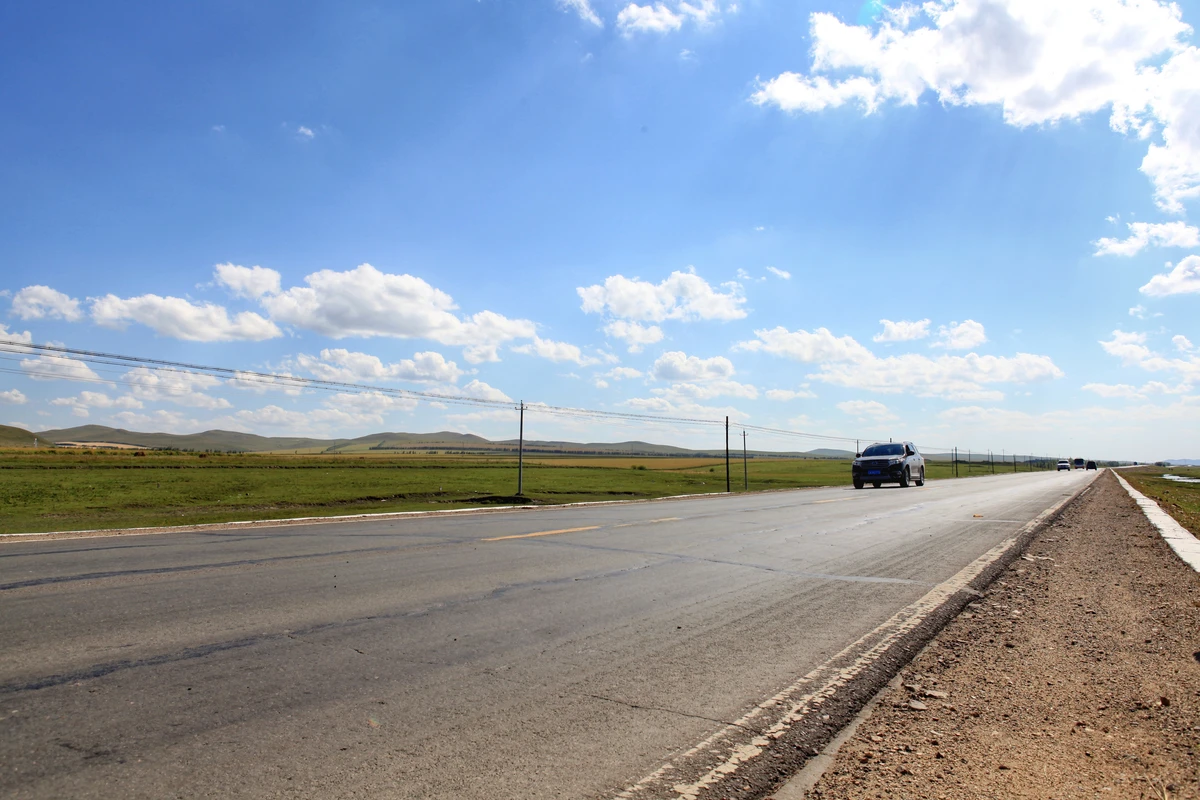
Today, we take a bus to Ulanhot, the capital of Xing'an League in Inner Mongolia, known as the "Red City." This was the first major city liberated in Inner Mongolia. Then we head to the smallest city in China—Arxan City. Beautiful scenery gradually unfolds before our eyes from the afternoon onward. Along the way, we pass through the intersection of the Horqin Grassland and the Hulunbuir Grassland, a transitional zone from plains to mountainous terrain. We also cross more than a dozen rivers of various sizes, including the Guiliu River and the Tao'er River.
The total journey is about 740 kilometers (Changchun - 450 km expressway - Ulanhot - 290 km provincial road - Arxan), arriving at Arxan at 8 p.m. for check-in.
Today, we visit the first major highlight of the trip: Arxan National Forest Park. 40% of the reason I signed up for this tour was to come here. Arxan National Forest Park features the highest peak of the Greater Khingan Range—Mount Termei (1,378 meters above sea level)—and the first lake of the Greater Khingan Range, Dorbin Lake. It also has uniquely Asian volcanic landscapes: Shitang Forest (stone forest formed by lava flow) and Tianchi (Heavenly Lake). Its mineral spring resources are exceptionally rare and world-renowned. The spring clusters serve drinking, bathing, and therapeutic purposes, earning the title "World's Unique Springs." It also possesses the three elements highly sought after in modern tourism: "sunshine, air, and greenery." Known as China's Yellowstone, Arxan has a unique beauty compared to other domestic scenic spots, especially Rhododendron Lake and Shitang Forest, where photos are incredibly stunning.
Rhododendron Lake is located 92 km northeast of Arxan City, within Arxan National Forest Park, covering an area of 128 hectares. It is named for the rhododendrons blooming along its shores. The lake is L-shaped, with the inlet in the southeast and the outlet in the southwest. It connects to Songye Lake upstream and the Halaha River downstream, with an average depth of 2.5 meters and a maximum depth of over 5 meters.
Shitang Forest is located within Arxan National Forest Park, east of Tianchi Forest Farm, 84 km from Arxan's Hot Spring Street. It is one of the wonders of the Greater Khingan Range. This is a geological relic from Quaternary volcanic eruptions and the largest basalt landform of a recent dormant volcano in Asia. The geological structure, soil, vegetation, and biology remain in their original state, with rich biodiversity.
Arxan National Forest Park's Tianchi Scenic Area: This is the Greater Khingan Range Tianchi, one of the six famous Tianchi lakes in China. It is located on Tianchi Ridge, 74 km northeast of Arxan City, within the park. It formed as a volcanic crater during the Late Pleistocene, filled with water, making it a crater lake. Its altitude is third in China, only lower than Tianchi on Changbai Mountain in Jilin and Tianchi on Bogda Peak in the Tianshan Mountains of Xinjiang.
Three Gorges (San Tan Xia) is located 78 km northeast of Arxan City, within the Tianchi Scenic Area. It is the upper reaches of the Halaha River, facing Tianchi Mountain in the distance. The gorge is about 3 km long, with a cross-stream bridge built over it.
Today, we get up close with the grasslands. After breakfast, we take a bus to the Barag Mongol Tribe. The oldest and highest-level welcome ceremony on the grassland—the Horse Team Welcome. The hearty Mongolians ride divine Sanhe horses alongside the bus, holding high their tribal flags, galloping all the way to the tribe's gate. The Mongolian shamanistic religion worships the blue sky. In the hearts of Mongolians, there is indeed a supreme deity—"Eternal Heaven" (Mongke Tengri)—endowed with great divine power. The Oboo (stone cairn) is the place closest to Eternal Heaven. After a ceremony led by a shaman to worship the Oboo, we walk around it three times from left to right, placing our wishes on the prayer flags, and finally tying them to the Oboo to seek blessings from the gods.
We then visit the largest land port in China and the most famous border port on the China-Russia border—the AAAAA-rated China-Russia National Gate Scenic Area. We tour the main national gate and boundary marker, climb the gate to view the Russian town of Zabaykalsk, take photos at the China-Russia No. 41 boundary marker, visit the site of the secret CCP communication line, and the steam locomotive square.
The national gate is located in the western part of Manzhouli. It is a milky-white building 30 meters high and 40 meters wide, with seven bold characters "中华人民共和国" (People's Republic of China) above it. Opposite, not far away, is the Russian national gate, with golden "CCCP" letters that inevitably evoke memories of the Soviet Union.
No. 41 Boundary Marker.
Manzhouli Russian Matryoshka Square is the only tourism and entertainment square themed around the traditional Russian craft—matryoshka dolls. It is a landmark scenic area of Manzhouli, reflecting the region's tri-border junction of China, Russia, and Mongolia, and the blending of their cultures. The main structure is a 30-meter-high giant matryoshka doll, covering 3,200 square meters, currently the largest matryoshka doll in the world.
Horseback riding at Heishan Tou Ranch. Upon arrival, we follow the instructions of the horse handlers, put on professional riding helmets, and under the guidance of the handlers and team leaders, practice riding freely on the grassland. Compared to usual horseback riding, the ranch is much more expansive. Riding on the vast grassland, gazing at the distant blue sky and white clouds, holding the reins feels fantastic. The handlers don't lead the horses from the front; instead, they ride motorcycles behind to herd the horses. Sometimes we stroll leisurely, sometimes we gallop. PS: Two hours of riding is also tiring—my bottom was numb from the bouncing.
Genhe Wetland Reserve covers 126,000 hectares. It is a very large floodplain at the confluence of the Genhe River, Erguna River, Derbugan River, and Hawuer River, forming a delta. It also includes the Genhe River, Derbugan River, Hawuer River, and both sides' floodplains, willow thickets, saline-alkali meadows, ponds, and tributaries. It is the best-preserved and largest wetland in China today, known as "Asia's First Wetland."
Enhe Russian Ethnic Township: Enhe Township is located at about 51° north latitude, a high-altitude cold region. Enhe is a small town of Russian ethnic group in Inner Mongolia, subordinate to Erguna City, located northwest of Hulunbuir City. It is surrounded by mountains and separated from Russia by only one river.
Russian-style bread (Liebiao).
Shiwei: Located in Erguna City, Hulunbuir, Inner Mongolia, Shiwei mainly consists of the Shiwei Mongol ancestral area and the Enhe Russian ethnic village area. It is one of the northernmost townships in the Inner Mongolia Autonomous Region. Shiwei Russian Ethnic Township is the birthplace of the Mongol people.
Accommodation: A log cabin (Muke leng) Russian-style family inn.
Another boundary marker across from Russia.
Horse ranch next to the inn.
Tourists riding horses in the early morning.
Horse handler driving the horses to the ranch.
Waking up at 3:30 a.m. to go to Linjiang to photograph the sunrise, and then visiting a local villager's home to experience milking cows by hand.
In the dawn light, the moon still hangs in the sky.
Jinzhanghan Mongol Tribe: Located in Chen Barag Banner, Hulunbuir City, it is the only tourist attraction in Hulunbuir featuring a nomadic tribe landscape, situated along the Morigele River on the Hulunbuir Grassland. From the late 12th century to the early 13th century, Genghis Khan trained his troops here, contended with various tribes, and ultimately conquered the Hulunbuir Grassland. The layout of the Jinzhanghan tribal site is a miniature representation of Genghis Khan's tent camp. An evening bonfire party. Overnight in a yurt. 5 people per yurt, separate genders, shared bathroom, no shower.
Bonfire party and fireworks show.
Due to weather, I didn't capture the sunrise the previous day. Got up at 4 a.m. to photograph the sunrise again and succeeded. Leave the big grassland for Qiqihar, the second largest city in Heilongjiang Province. Overnight in Qiqihar.
Visit China's largest red-crowned crane reserve—Zhalong Nature Reserve, to watch the crane release show. Then head to Harbin to disband the group. Zhalong is a famous precious waterfowl nature reserve in China, located 30 km southeast of Qiqihar city, covering 210,000 hectares. The area is low-lying, with overflowing rivers, dense reeds, and numerous lakes, making it a natural paradise for waterfowl to inhabit and breed.
Saint Sophia Cathedral: Located on Sophia Square in Daoli District, Harbin, Heilongjiang Province, it is an Eastern Orthodox church built in 1907 in Byzantine style, a landmark of Harbin.


