Not for Romantic Encounters, but for Poetry and the Distant Places! When Spring Flowers Bloom, Stroll through the Land of Colorful Clouds~
Spring City Kunming | Blossoms in profusion, carved beams and painted rafters, any time you want to come is a good time
There are too many legends about Yunnan, some from friends’ whispers and online chatter, others from novels and TV dramas. So many tales swirling around they can dazzle you, even harden into stereotypes. Before this trip, my impressions of Dali and Lijiang were still bars and romantic encounters, while Kunming was merely a convenient “flower market” to pass through.
When I saw a Shenzhen–Kunming flight ticket for just 120 yuan, I immediately started planning the itinerary, eager to explore this city I had only passed through last time. Traveling in extraordinary times meant carefully studying and filling out all kinds of health codes — I’ll attach a travel notice later. Even after the pandemic ends, these little “troubles” on the road will remain a unique experience.
Kunming, nicknamed the “Spring City,” boasts truly wonderful weather, making it incredibly livable. When booking a guesthouse, I noticed many residences don’t even install air conditioning! In fact, most cities in Yunnan rarely use AC; on the plateau, temperatures swing widely between day and night. You can walk around in short sleeves during the day but need a thick quilt to sleep at night. Enviably, it’s like spring all year round, sunny almost every day, with different flowers blooming in each season. As long as you want to come, it’s always a good time.
I used to think of Kunming as a modern metropolis leading a complex minority region, but actually, it’s also a historic cultural capital. Humans settled around Dianchi Lake as early as 30,000 years ago, and the Dian Kingdom emerged in 278 BC — thousands of years of history.
Today, Dianchi Lake has become an urban park on the outskirts of Kunming. Many locals bring their families here to relax, feeding pigeons with the kids, flying kites, spreading cloths on the grass, pitching tents, and enjoying picnics with loved ones. Besides the nearly hundred-yuan one-hour boat ride and the 20-yuan glass walkway, Haigeng Park by Dianchi offers plenty of fun entertainments~
Most of the red-billed gulls that fly from Siberia to winter here have already left, but standing by the windy Dianchi and gazing at the distant Western Hills is still deeply soothing. There’s a beautiful legend about Dianchi’s formation:
A young hunter traveled great distances to the East Sea in search of water, and by chance saved the Dragon King’s third princess. The Dragon King wished to make him his son-in-law and turned him into a little yellow dragon, but the hunter couldn’t forget his wife back home. He drank his fill of the East Sea’s water, secretly flew back to Kunming, only to find his wife had died of longing and turned into the Sleeping Beauty Mountain. Heartbroken, he spat out the East Sea water, forming Dianchi Lake, then crashed into the mountain and perished. From then on, the once barren Kunming became fertile and beautiful, nourished by the waters of Dianchi.
In ancient times, cities and civilizations grew around water sources. Kunming’s urban area is crisscrossed by waterways; the winding Panlong River flows into Dianchi Lake, and the culturally rich Guandu Ancient Town lies nearby. Guandu, originally called “Wodong,” was once a fishing village heaped with piles of spiral shells, later becoming a treasured spot where high officials built villas and celebrities lingered.
Thriving since the Tang and Song dynasties, Guandu Ancient Town is a famous historical and cultural site in Kunming. My first impression was the sheer number of temples: the Tang-era Tuzhu Temple, Song-era Fading Temple, Yuan-era Miaozhan Temple — even a Shaolin Temple! Although the main street and bar strip are still quiet, girls in period costumes are already posing for photos in front of ancient sites, and many shops have opened for business.
Many Kunming delicacies bear the “Guandu” brand, showing how deeply Guandu influenced the entire ancient city. On a friend’s recommendation, I tried Li’s wheat baba, and only then understood that this is what baba tastes like~ The town also houses many intangible cultural heritage workshops: “Yunnan Weiqi,” “Black Copper with Silver Inlay,” “Guandu Erkuai,” and “Yunnan Opera Lantern”... Such a culturally rich place deserves to be savored slowly, offering so much to learn.
Apart from the downtown-distance Guandu, downtown Kunming itself has several “old streets,” all near modern clusters of shopping streets. Almost every city has at least one old street, but some are so neatly refurbished they look brand new, while others fall into the “ancient town template” — noisy bars and cafes mixed with souvenir streets selling identical knickknacks.
Browsing Kunming’s old streets, however, feels wonderful. The buildings aren’t so new that you doubt their historical depth; the gentle patina of age is the real beauty. None of the monotonous mango-grilled-meat-and-fries, either. Yunnan’s diverse local snacks are captivating enough! I honestly believe Kunming’s artistic vibe isn’t contrived; it’s etched deep into its bones.
Nanqiang Pedestrian Street is a relatively well-preserved ancient block in central Kunming, dominated by late-Qing, early-Republic mansions. You’ll find signature architectures like “one-courtyard seal style, three-room with one screen wall, four-horse carriage, four buildings around a single courtyard, four buildings around five courtyards, and six in one harmony.” Many artisan boutiques have moved in, giving it a cultural-creative park feel as you wander.
If you’d rather not trek to Dianchi and want to stay in the city, Cuihu Park is an excellent choice! Here you'll find the same red-billed gulls as Dianchi, plus trees abloom and fresh bamboo groves, fewer crowds, and far less commercialized amusements. Just strolling around is already pure relaxation.
What surprised me was that, though Yunnan lies thousands of kilometers from Beijing, the ancient architectural styles are nearly identical. Wandering in Cuihu Park, I felt a misplaced sense of stepping into an imperial garden — those exquisite carved beams and painted rafters, majestic glazed tiles and red brick walls, all speak of a prosperous southwest frontier and very traditional cultural continuity.
Kunming has produced many famous figures: Zheng He, who voyaged seven times to the Western Seas and visited 39 countries, and Nie Er, the musician who composed our national anthem... While education is valued, the abundance of ethnic minorities and their colorful customs gives Yunnan an inclusiveness toward different cultures that other provinces find hard to match — so don’t be surprised by anything you see here. The old street architecture is an eclectic mix, sometimes traditional, sometimes intensely exotic. The cuisine too can be salty or sweet, strongly seasoned or delicately light. Wherever you’re from, you’ll find your style.
Before leaving Kunming, I revisited Jinma Biji Archway, which I’d seen on my last trip. This famous Kunming landmark’s uniqueness lies in a rare moment when the “Golden Horse and Jade Rooster shine together” in a breathtaking spectacle. Today, the “Golden Horse” and “Jade Rooster” have lost their former glory, encircled by steel-and-concrete forests, merely an urban square where tourists stop to snap photos.
The “ideal state” of the unemployed, the “land of idyllic beauty” in Jin Yong’s novels — stories are still unfolding
Everyone dreams of “facing the sea, with spring flowers blooming”
How many people come to Dali because they’ve read Jin Yong’s novels?
Dali’s landscape, the Nanzhao Kingdom’s past — all blossom under Jin Yong’s pen. I still remember those tales of “Eastern Evil, Western Poison, Southern Emperor, Northern Beggar.” The wuxia world is dazzling, and the Dali I saw with my own eyes is no less impressive. Many may think of Dali as just a little southwestern border town pushed to the spotlight by Instagram-worthy posts, but in fact, it’s one of Yunnan’s oldest cultural cradles. Since the 4th century AD, the Bai people have lived and multiplied here. The Tang-era Nanzhao Kingdom flourished, and the later Dali Kingdom (that’s Duan Yu’s land) ruled the region for over 300 years.
As a mysterious frontier “ideal state,” Dali is also a hotspot for fantasy dramas and games — think Zhao Ling’er from “Chinese Paladin,” the Nanzhao princess. Looking back at her costume design, there’s indeed a touch of exotic ethnic flair.
This southwestern “border town” is actually quite prosperous
Because Yunnan produces tea, Dali was naturally an important stop on the Tea Horse Road. Historically, Dali Ancient Town was long very prosperous. Unlike those “Instagram-famous ancient towns” deliberately preserved to serve tourists, Dali Ancient Town is genuinely the idyllic paradise described in romantic dramas, with mountains, water, and homes. You can tell from Bai traditional houses: beyond white walls and grey tiles, gables and eaves are decorated with ink-wash patterns. Zhaobi walls inscribed with family mottos grow grander from house to house. Main rooms usually face east, spacious and comfortable, with waters flowing by every home and flowers grown in every courtyard... No wonder people say Dali is so livable — the Bai people’s “love-the-home” mindset, carefully tending their lives, is naturally enchanting.
Due to the pandemic, the once-bustling ancient town has quieted down, making it easier for faraway visitors to see its true face. While there are familiar “everyone-knows” trendy shops and plenty of bars and cafes on the commercial street, many local residents really do live here — there are hospitals, supermarkets, schools, and kindergartens. Some tourists might find the less-developed parts “a bit boring,” but I prefer these “off-the-tourist-path” corners. After all, this is the real Dali. I wouldn’t want a living old town to be overdeveloped into a sightseeing spot where people simply carry on drinking and merrymaking in a new place.
A paradise for the fantasies of the “unemployed”
Last time I planned a Yunnan itinerary, I deliberately skipped Dali, afraid it would be too artsy, full of impractical illusions — a “utopia” detached from worldly life, just as literary youths describe. But when I finally gathered the courage to come, I realized I’d overthought it. Dali isn’t that “good,” nor that “bad.” It is indeed artistic, and very down-to-earth. Whether for rebirth or escape, it has welcomed many creative “aspiring youths,” most fleeing the high-pressure lives and jobs of big cities. Once they taste real life in Dali, they can’t help falling in love with Cangshan Mountain and Erhai Lake, and they resolutely quit their jobs to start ventures here.
There are many such stories, and Dali, working hard to develop tourism, gives them ample space and opportunity. Guided by Tina, I visited the cultural-creative park converted from the Dali Bed Sheet Factory, saw ads for x-travel, and the “Dolphin Ade Bookstore,” which reminded me of Tokyo’s Seagull Books. The promotional slogans grab you: “Life can be cooler, set out differently,” “Everyone has a dream in their heart”... And the artisans’ works — many designs and brands feel remarkably “high-end.” Perhaps Dali’s bright sunshine and fresh air give these so-called “unemployed” endless inspiration for life and creation.
Most of these Dali entrepreneurs aren’t real “businesspeople”; there’s a pride in the way they talk. Many invest without counting the cost, truly for a dream. For instance, my old friend “Princess” sold their Xiamen house with her artist husband, quit stable jobs, and ran a guesthouse in Dali for years, eventually developing a practical yet beautiful original brand.
And a new acquaintance this visit: the owner of the Yueshan Yiju Pastoral Guesthouse, who hails from Guangdong. A gap-year trip brought her and her husband together, and they now run this guesthouse blending rustic wood charm with Bai features, radiating homely warmth. The rooms are mostly suites with living rooms, and through the unobstructed floor-to-ceiling windows, beyond the green rice paddies and vegetable gardens, you overlook majestic Cangshan Mountain and the ancient town. They even have a specially designed “starry sky room” — pull back the roof curtain at night to moon-gaze and star-watch. Though it’s a short distance from the ancient town, it’s undoubtedly a top-notch guesthouse that gathers all four Dali charms: wind, flowers, snow, and moon~
Welcoming and bidding farewell, the cultural inclusiveness of tea and flowers
Dali’s huge appeal to outsiders mainly stems from its all-embracing inclusiveness. Many assume minority regions resist other cultures, but Dali’s almost non-selective absorption of diverse cultures truly amazed me. While roaming the ancient town, I strangely felt that Bai dwellings and the town’s waterways resembled those of Huizhou in the Jiangnan region — the same high-walled courtyards, carved beams, painted rafters, small bridges over flowing streams.
At “Rushi” Café in the ancient town, a sip of “osmanthus wine lees” revealed how perfectly “East meets West” can blend. And the mosque and Catholic church prominently located on the main street speak to the ancient town’s long-term acceptance and tolerance of outside cultures.
It’s said that whenever a guest visits, warm-hearted Bai hosts will serve the three-course tea. Dali’s flowers aren’t just for admiring; many locals use flowers as ingredients to create seasonal specialties.
Dali cuisine uses fresh, wild ingredients from mountains and fields, with creative local twists. Milk becomes “rushan,” the native “sea vegetable flower” is cooked into “water water yanghua,” plus seasonal wild mushroom fried rice, beef, and roast duck — all adjusted to local conditions and guest tastes, offering clear, crisp, non-greasy flavors. This time, with Tina guiding me through the alleys to private kitchens, I tasted distinctly delicious Dali specialties.
Happiness means having something to do, someone to love, and hope
It’s about love and reflection on life
Light hiking on Cangshan Mountain | Trekking 20 kilometers, roaming the summit of Cangshan amid wind, flowers, snow, and moon
Once in Dali, you must understand “wind, flowers, snow, and moon” — not the romance and flings sought from afar, but Dali’s real scenery: Xiaguan’s wind, Shangguan’s flowers, Cangshan’s snow, and Erhai’s moon. I’ve often heard people talk about Erhai Lake, in every tone possible, so overly literary. But few mention Cangshan walks. Actually, exploring Cangshan is every bit as wonderful as circling Erhai!
This time I stayed at the Dali Hilton by the foot of Cangshan. They thoughtfully offer guests surrounding tour options, including the “light hiking” Cloud Tour of Cangshan. I put it in quotes because for someone like me who rarely exercises, nearly 20 kilometers of climbing and trekking is a bit tough, though fit folks might see it as a breeze. The vast Cangshan truly welcomes anyone to challenge it~ I’ve heard the wild trails are even more thrilling~
We set out from Gantong Temple near the hotel. This ancient temple, boasting a superb location right by the mountain gate, is currently closed to visitors because of the epidemic but still houses some pilgrims. Flowers cluster, cooking smoke curls, and further up is Jizhao Nunnery, renowned for its vegetarian meals. Most native Bai, beyond worshiping village Benzhu deities, are devout Buddhists, so temples and nunneries are always thronged with incense.
Jin Yong mentioned the “Linglong chess game” in Demi-Gods and Semi-Devils, and there genuinely is such a chessboard on Cangshan. To enhance the visual, weiqi was swapped for Chinese chess, but the three figures — Qiao Feng, Duan Yu, Xuzhu — playing the game, still fulfills martial arts fans’ dreams. Maybe to compensate for the switch, beside the board grow trees planted by weiqi masters; now a grove, they round out the weiqi enthusiasts’ dreams too. At first I was puzzled, then spotted the Linglong chessboard and instantly understood — I’ve just read too few books...
Cangshan has 19 peaks and 18 streams, meaning between every two peaks a stream cascades down. Drinking the pure, clear Cangshan water is a point of pride for Dali people~ Among these streams, Qingbi Stream ranks first and is a main sight on Cangshan’s Jade Belt Road. You don’t need a ticket for spots below Qingbi Stream, likely a courtesy to local pilgrims just coming to pray — which also confirms Qingbi Stream’s importance.
Where streams flow, you’ll find suspension bridges: the simple Immortal Ferry, and one spanning Qingbi Stream covered in blessing ribbons and love locks. Perhaps because tourists are far fewer, the once-fee-charging Instagram spot is now unstaffed, free to photograph~ So timing is everything when traveling~
The hotel prepared a nutritious lunch for guests on the light hiking experience, letting us refuel in time — so considerate! Dali Hilton truly is the best Hilton I’ve ever stayed at~ The hotel sits against Cangshan, faces Erhai Lake, and is near the ancient town and Dali University, a prime location. The rooms are full of distinctive decorative details, well-equipped, with soft, comfortable bedding! In the morning, you can watch a gorgeous sunrise right from the balcony~
Being in a resort area, the hotel has a strong leisure vibe. It not only provides tours but also packages for family trips, such as cooking Bai specialty snacks and crafting local handicrafts. Even if you stay in the hotel all day, the fun won’t stop~ The restaurant’s cuisine varies widely, and every season brings different “chef’s recommended” dishes, guaranteeing surprises each visit!
Learning to make “xidoufen” with the chef — I tried this special snack for the first time~ It’s most authentic with a local guide!
Dali enjoys over 300 sunny days a year. Nourished by the brilliant sunshine, Cangshan bursts with blooming flowers and countless marvelous plants and creatures! As we strolled along the Jade Belt Cloud Tour path, we finally caught our breath and began carefully observing the details around us. Our charming guide Thomas introduced us to many unusual plants; the whole mountain felt like a living encyclopedia of flora and fauna. Traveling a thousand miles truly leaves deeper impressions than reading a thousand books.
Moreover, Cangshan is an encyclopedia of geology, with over two billion years of deposits creating diverse, precious landforms worth studying. After all, the well-known “marble” used in decoration and sculpture genuinely comes from Dali. While on the cloud tour, you can look down on the panoramic view of Dali’s old town and new city. High places offer truly beautiful views, though I really hadn’t climbed so seriously in far too long...
Actually, Cangshan Scenic Area is intelligently designed, offering both uphill and non-uphill options. Multiple cable cars connect the major sights, and the wide-open Jade Belt Road, though at 2,600 meters elevation, is entirely flat — none of that up-and-down “enjoyment,” so you don’t tire easily. Along the way, pretty pavilions appear at intervals for resting, a very thoughtful touch.
Our “light hiking” destination that day was Zhonghe Temple. Unlike Gantong Temple, this is a Daoist temple worshipping the Jade Emperor. The way down via Zhonghe Cable Car is distinctive: no annoying glass compartment separating you from nature, a 360-degree view ideal for photos, though it looks a bit scary. Luckily, the cable car isn’t too high off the ground, so the ride isn’t as frightening — highly recommended! The fare is reasonable, a very worthwhile experience!
Happiness is having mountains, seas, and human presence
It’s holding your hand while spring flowers bloom
Cycling around Erhai Lake | Cast aside those melancholy words and get to know Erhai anew
Whenever I see words tying everything to emotions and dreams, they always feel unreal. People with fragile souls see a fragile world wherever they flee. The same place looks different to everyone. In my eyes, Dali has no sky ladders, rainbow bridges, glass balls, or long tables. The real Dali is rich and interesting enough without embellishment.
Dali is a mature travel destination, keenly attuned to tourists’ love of photo spots. There are arranged Instagram-worthy sets everywhere, charging a fee for portraits. Such backdrops exist anywhere — as long as there’s a river, lake, or sea, and good weather, you’ll get beautiful shots. Traveling all the way to Dali only to use the fairyland Erhai Lake as a photo backdrop seems a terrible waste.
I’ve always been fascinated by folk customs and religions. Since I’m in the Bai Autonomous Prefecture, I want to fully appreciate its unique local culture. Throughout history, the Bai have congregated around Erhai. Xizhou Ancient Town preserves many traditional Bai buildings and is a must-see on any Erhai tour. We started from Zhengyi Gate. If you didn’t know it’s a Bai village, at first glance it really resembles a Jiangnan water town.
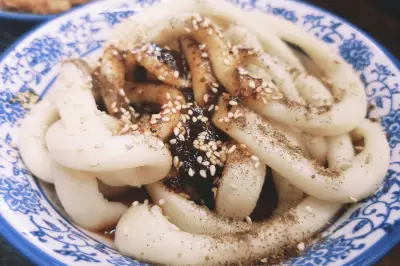
With Tina’s urging, I tried Xizhou’s roasted erkuai. Its shape is somewhat like rushan, but one salty, one sweet, very different tastes. I loved the adorable look of erkuai puffing up as it grills. Locals cook rice-based products like erkuai and ersi in such diverse ways you could eat for days without repeating~
In Xizhou Ancient Town, several compounds built by once-top wealthy merchants remain. Among them, Yan Family Compound, constructed in 1907, is now a ticketed attraction open to visitors. On walls around the central square hang black-and-white historical photos, precious memories of the town’s development from liberation to the present.
This former Instagram hotspot feels extraordinarily tranquil post-epidemic. Only a few shops on the main street are open. Compared to Dali Ancient Town, the shops here have more unique personalities — no ubiquitous souvenirs, but many original design boutiques you won’t find anywhere else.
“Bojizai,” displaying intangible cultural heritage Bai jiama prints and wool felt products, is one such shop. It has three stores only in Xizhou, no online shop, focusing on experiential operation. Come here to sip tea, drink coffee, learn printmaking, and turn Bai jiama — hidden in various villages and full of auspicious meanings — into handmade crafts to take home.
Although the rapeseed flowers have already gone to seed, the vast fields against the red walls in the distance still make a lovely picture. Dali Pessoa Pastoral Café faces the lush, open fields. With an unobstructed front-row view and excellent drinks, it has become a must-check-in Instagram café in Xizhou.
Because of the sharp drop in tourists, spots where people used to queue for photos now have no one — you can shoot to your heart’s content~ And the flower-adorned horse carriages threading the lanes now have to cut prices to operate. Although some town houses have been turned into guesthouses, many locals still live in Xizhou. Seeing aunties striding out with baskets to buy and sell vegetables, the rich flavor of community life is palpable.
Many visitors to Dali choose lakeside guesthouses; Shuanglang is the most seen online, with plenty of choices and gorgeous photos. But when I arrived at Shuanglang Ancient Town, I found a huge gap between ideal and reality. Like some “stories” penned by literary youth, when lies are so beautiful that even the tellers believe them... The tightly packed houses in the town are mostly guesthouses, with cramped activity spaces. Except for a few on the outer edges, most “lake-view guesthouses” can only glimpse the lake from the rooftop...
If you want to stay by Erhai Lake, there are many other options, such as the Dali International Hotel in the city, only 10 minutes’ drive from the train station. Though in a bustling area, it’s secluded and quiet. Through the floor-to-ceiling windows, you can enjoy a 180-degree Erhai view; suites even provide binoculars. The scenery is no less than those “lake-view inns.” The hotel is fully equipped, with understated luxury design, mainly in local Bai style, suitable for both business and vacation. Even during the epidemic, the specially provided meals were abundant, overflowing with rich Dali ethnic flavor~
Now Erhai Lake follows an eco-first principle, so many areas are closed to tourists. But the sections we visited all had decent views — basically seamless sky and water, a blue so pure it lifts the heart. Children could pick up shells and catch tiny fish onshore, and water-purifying equipment was everywhere.
Listening to Yang Xing talk about the Third Month Fair: from the 15th to 21st of the third lunar month every year, it’s a big, lively Bai celebration! Sadly I couldn’t join this grand festival myself, but I’ve always been intensely curious about local Bai beliefs. Seeing Bai ladies (niáng niáng) paddling small boats to Xiaoputuo to worship the village Benzhu, I also wanted to see the Benzhu in different villages.
Thomas took us through South Village, a new socialist countryside covered in hand-painted graffiti. The whole way was full of surprises. In the end, we discovered their Benzhu Temple was set within the village committee office. Even the compound walls beside the temple were painted with Benzhu legends. In fact, the Bai Benzhu is the village’s protective deity; Benzhu Temples are much like our “ancestral halls,” but in addition to ancestors, many deities are enshrined on the altars.
Erhai embraces many stories — not the clichéd melancholy of career and love, but magical tales of the Great Black Deity, Golden Mushroom Maiden, Snow Mountain Prince... Those blessings condensed over centuries help guests from afar appreciate this optimistic people, learn gratitude, and understand awe, truly grasping what a happy life means.
Happiness is hope, blessings, and love
It’s the way you devoutly pray for me