Fourth Journey into Yunnan: Kunming, Tengchong, Mangshi, Ruili, Baoshan, Dali, Wuliangshan, Red Land (Part 1)
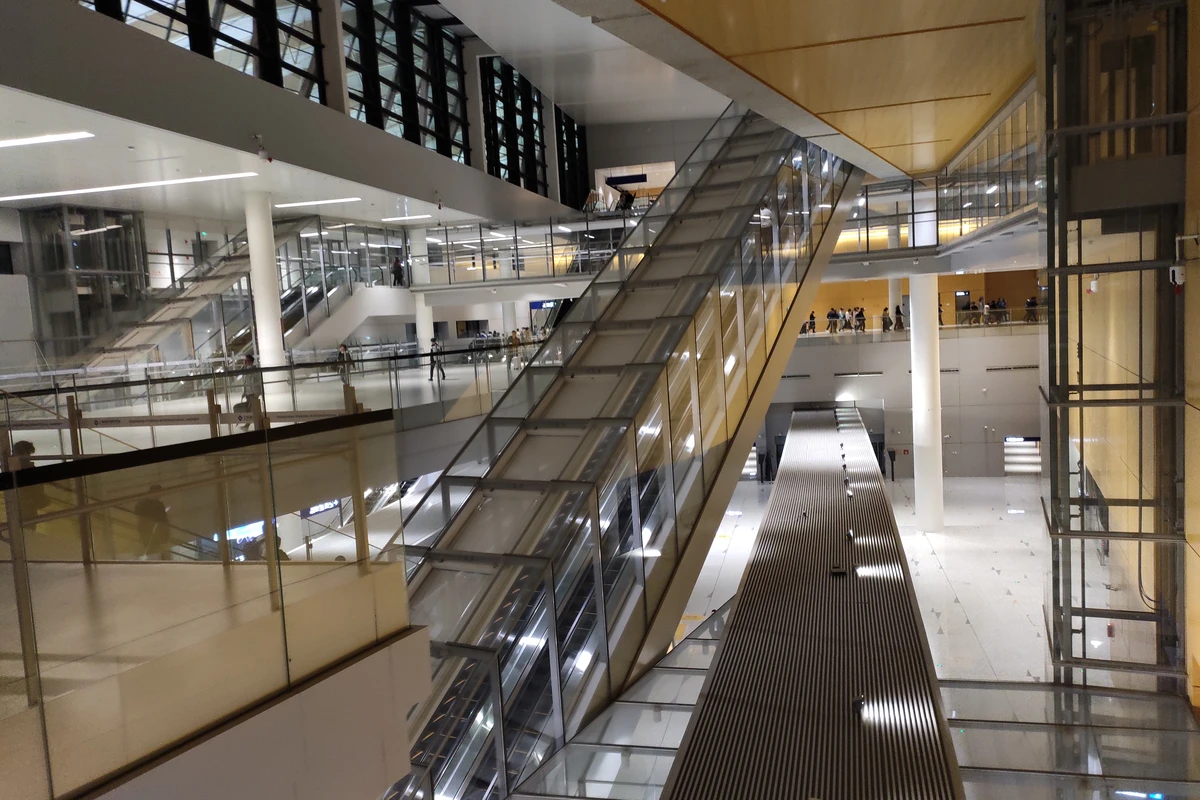
At the end of November 2019, I flew from Shanghai Pudong T2 to Kunming on Sichuan Airlines flight 3U8202, 20:45–00:35, ticket price 680 yuan. Probably because I've been spending a lot of time in southern China in recent years, I always feel that flights to Guiyang, Kunming, Nanning, and Guilin are much cheaper than to Chengdu—it's almost like one Chengdu flight equals a round trip to Guiyang. Pudong Airport now has a satellite terminal, and for most cheaper flights, you need to take a shuttle train to a remote gate, which requires walking at least 2 kilometers. The flight was delayed by 30 minutes, and we landed in Kunming at 1 a.m. That day's accommodation was at the Dachanghang Hotel (Kunming Airport branch) near the airport, 108 yuan per night, and the hotel also offers shuttle service to and from the airport. Waiting outside Kunming Airport in the cold was tough—we waited a full 30 minutes for the hotel's Ford Transit van to finally arrive (the hotel is only 5 km from the airport). Once at the hotel, a dozen or so people got out, showed ID, and checked in. Either they were out of rooms or it was due to the special-rate room I booked on Ctrip, but my room was on the 1st floor next to the elevator, just over 10 meters from the front desk. Fortunately, all the facilities were working properly. I didn't bother to complain; after all, it was only for about 6 hours. By the time I washed up, it was already 2 a.m. (After checkout, the hotel sent a message through Ctrip's internal tool asking for a good review—this hotel is pinned at the top of the airport accommodation list on the hotel channel. I didn't leave a bad review, but I didn't give a 5 either.)
Besides the area where I stayed today, there's also a place near Kunming Airport called Banqiao Town, which clusters many hotels (I visited once before and stayed in Banqiao Town). This reflects the significant transit role of Kunming Airport. In Yunnan, where long-distance bus trips take a long time and high-speed rail lines are underdeveloped, flying to a destination within an hour has become a choice for some.
Pudong Airport (first three photos)
This morning I needed to take Kunming Airlines flight KY8303 from Kunming to Tengchong, 10:55–12:15, ticket 620 yuan. This route is mainly operated by Kunming Airlines and Lucky Air. Since Lucky Air doesn't include checked baggage and their ticket was only a few dozen yuan cheaper, I unhesitatingly chose Kunming Airlines. At 9 a.m., the hotel had a shuttle to take us back to Kunming Airport. The hotel didn't offer breakfast, and the surrounding area, full of hotels, had no breakfast spots either, so I decided to eat at the airport. By 9:10 I was at Kunming Airport and found my designated dining spot before security—Yonghe King (slogan: same price as in the city). I spent 19 yuan on a breakfast of small wontons and a fried dough stick. After security, I met up with the group; there were five of us on this trip. My companion Lan Baobao had an airport VIP card, so we went to the lounge. This flight was also delayed by 30 minutes. Since the Kunming–Tengchong route isn't congested, the plane flew at low to medium altitude the whole way, much like flights to Changbaishan or Xishuangbanna, offering great opportunities to photograph the cityscape and beautiful mountains and rivers. Outside the window, fluffy clouds, clusters of peaks, winding rivers, and layered terraces presented a splendid view of southwestern Yunnan. After flying for a little over half an hour, we heard the announcement that the plane was descending, asking us to straighten our seats and open the window shades. We landed at Tengchong Hump Airport around 12:45 p.m., left the airport around 1 p.m. During this time, I received several calls identified as 'Shanghai real estate agent' and were automatically blocked by the system. At the exit, I called the driver for pickup, and my phone again showed the call as 'Shanghai real estate agent.' When I reached the driver, she was just as puzzled, saying it was her phone's automatic identification and she couldn't help it. It's 20 km from the airport to the entrance of Heshun Ancient Town. I booked a pickup service on Ctrip for just 7 yuan—Li Mengbo found it a very odd price. The driver casually asked about our travel plans afterward but didn't push any sales. After 30 minutes, we arrived at the gate of Heshun Ancient Town. After picking up tickets at the visitor center (ticket 54 yuan, covering Heshun Library, Yuanlong Pavilion, Ai Siqi's Former Residence, Wenchang Palace, Wanlouzi Folk Residence Museum, Yunnan-Burma Anti-Japanese War Museum, and Heshun Alley), we crossed the Double Rainbow Bridge and had to walk 2 km to reach the inn inside the old town. The inn is on a small hillside, and the town's roads are paved with stone slabs, making it hard to drag a suitcase. Using Baidu Maps for navigation, it took 30 minutes to find today's accommodation—Huazhu·Tengchong Big Flower Cat Inn (formerly Heshun Big Flower Cat Inn), at No. San Cheng, Lijia Lane, Heshun Ancient Town, Tengchong (near Heshun Library). This inn belongs to Luyue Group, founded in 2016 with strategic investment from Ctrip. Facilities are fairly standard, but the location is a bit remote (very quiet). Today's room rate is 199 yuan.
Breakfast at Yonghe King
Beautiful Tengchong Airport
The owner of Big Flower Cat Inn
First, we had lunch inside the scenic area: rice noodles for 10 yuan and a cold drink for 4 yuan. Heshun Ancient Town has a history of over 600 years. Central Plains culture, Western culture, Nanzhao culture, and borderland culture blend and collide here, creating a unique culture of overseas Chinese and horse caravans, making Heshun one of Yunnan's four typical eco-cultural villages. Heshun has a fine tradition of valuing education since ancient times. During the Ming and Qing dynasties, over 400 juren and xiucai candidates came from here. My way of touring was to follow the route of tour groups, since the area is large and tour guides let visitors roam freely, so there were no guided explanations at the individual sites. We started walking from Heshun Alley next to the library, visiting in order: the General's Mansion, Bar Street, Wild Duck Lake, Ai Siqi's Former Residence, and Yuanlong Pavilion, then returned along the road to visit the Li clan ancestral hall and Liu clan ancestral hall. After reaching Heshun Library, we continued forward to see the Cun clan ancestral hall, and finally arrived at Mama's Taste—a popular online-famous restaurant for dinner. The whole trip took 4 hours, but we didn't have time to visit several small attractions in the northwest corner; they'll have to wait until next time.
Heshun Library is the closest to the scenic area entrance; just cross the Double Rainbow Bridge. A small river winds past the village, and two stone arch bridges span it like two rainbows resting on the waves, hence the name. Since the library is the first stop for tour groups, it gets crowded. Considering I was staying in the town, I adjusted my visit to 4:30 p.m., when there wouldn't be many visitors, to better enjoy the quiet library atmosphere. To the left of the library is Heshun Alley. Each small attraction inside the old town requires a ticket, so despite online claims that no tickets are checked after 5 p.m. or that staying in an inn means you don't need a ticket, you actually can't visit the interesting spots for free. Heshun Alley is a newly built complex. The couplet at the gate was written for the people of Heshun by Yuan Jiagu, the only top scholar in Yunnan's history: 'Flowers overhang the water along the stream, several houses deep in trees hide their emerald towers.' Heshun Alley houses: the Horse Caravan Museum, Yunnan Merchants Hall, Going Abroad Hall, He Tea House, earthen pot wine, hand-pulled candy, shadow puppet gallery, blacksmith, traditional papermaking workshop, Jade King's hometown, wood carving museum, weaving workshop, and the General's Mansion. The Horse Caravan Museum shows how the Heshun people lived and made a living—by going abroad. Heshun's wealth comes from a road over 2,000 years old, the Southwest Silk Road. Tengchong was a key town on this route, and Heshun a pearl on it. Midway along the alley are some bars; even during the day, people sing and play guitar by the roadside, selling their own music CDs. The General's Mansion is also midway, but hard to find—I missed it despite the signs because it's been converted into an inn, and its entrance is off the main path. This was originally the residence of Zhang Songlin, a first-rank official and General Zhenwei during the Qing dynasty, built in the late Guangxu period. It has historical and cultural value. In 2006, the Bolian Group relocated it intact to Heshun. At the front is the Big Horse Caravan Museum, which, with over 3,000 artifacts collected by renowned collector Jia Zhiwei, showcases the history of the Southwest Silk Road and the life of big horse caravans. The leader of the caravan was called the Ma Guotou. For over two millennia, the Ma Guotou led caravans that brought the world's goods and culture to China and took Chinese goods and culture to the world, contributing to human civilization. One memorable sculpture is of Yin Rong, the state preceptor to four Burmese kings. Yin Rong (1822–1901) was a leader of the Chinese community in Burma. He designed the Mandalay Palace and invited many craftsmen from China to oversee its construction. His contributions to Burma can be summed up as: 'Widely respected, mediating civil wars,' 'Building the royal city, spreading Buddhism,' and 'Never forgetting his hometown, returning with honor in old age.'
At the end of Bar Street, tickets were checked again before reaching Wild Duck Lake. There were indeed ducks on the lake, though I don't know if they're wild. Above the lake is a road where eco-carts run directly to the parking lot by the Big Waterwheel; a round-trip cart ticket costs 20 yuan. Below, the riverside walking path has inspirational words carved along one side, showing the area's deep cultural heritage and wealth. It's a 30-minute walk along the lake to the Big Windmill, a spacious area that's also the terminal for the eco-carts. From here, two paths branch off: one to Yuanlong Pavilion, the other to Ai Siqi's Former Residence. Yuanlong Pavilion was built in the 27th year of Qianlong's reign (1762). Its main structure, Kuixing Pavilion, is a hexagonal pointed-roof wooden building dedicated to the God of Literature. Few visitors were there, so I didn't go in. On the way to Ai Siqi's Former Residence, there are small shops, and you pass the Li Family Jade Mansion, the former home of Li Genyuan, a famous Tengchong figure from the anti-Japanese war. Now it mainly sells jade items, and the whole building is grand and eye-catching.
[Ai Siqi's Former Residence]
From the Big Windmill, it's just a 10-minute walk up a small slope to reach Ai Siqi's Former Residence. Facing the tranquil Yuanlong Pool and backed by Fengshan Hill, this Chinese-Western courtyard house features connecting corridors, carved lattice panels, and the birthplace of the philosopher Ai Siqi. Originally named Li Shengxuan, he was a renowned Chinese Marxist philosopher, educator, and revolutionary, affectionately called 'the people's philosopher.' He devoted his life to researching and spreading philosophy, studied hard, wrote diligently, and fought staunchly for China's revolution and socialist construction, making great contributions to popularizing and Sinicizing Marxist philosophy. His academic career in philosophy was closely linked with his revolutionary work. After liberation, he served as director of the Philosophy Teaching and Research Office and vice-president of the Central Party School. The residence is a brick, stone, and catalpa wood structure, a Chinese-Western courtyard with connecting corridors, carved lattice panels, and a small Western-style balcony, elegantly quaint. The west and main halls display his life story; the visit takes about 20 minutes. Afterward, you can follow the eco-cart road to visit the local Li and Liu clan ancestral halls. The steps have a bit of moss, showing these aren't frequented by many tourists, but staff still check tickets, so they're part of the admission. From here, it's a 20-minute walk back to Heshun Library, passing below the Bar Street and Heshun Alley you walked earlier, then Zhao's and Cun's platforms. At 5:30 p.m., we reached the Double Rainbow Bridge, where the light was soft and tourists had dispersed, leaving just locals and overnight guests. The old town had shed its daytime bustle, leaving a serene simplicity to appreciate. Walking 15 minutes to the right of the library brings you to the Cun Clan Ancestral Hall, a landmark of Heshun and the oldest of the eight major ancestral halls. Its South Asian-style gate was first built in the Jiajing reign of the Ming dynasty and expanded in the Jiaqing reign of the Qing. The first ancestor, Cun Qing, originally lived in Cun Family Bay, Liangtan Village, Ba County, Chongqing Prefecture, Sichuan. In 1391 (23rd year of the Hongwu reign), he was ordered to march south to Yunnan and followed the army to the garrison commands of Yongchang (Baoshan) and Tengyue (Tengchong). Descendants of the Cun surname are mainly distributed in Tengchong, Yingjiang, Baoshan in Yunnan; Zunyi in Guizhou; Xinzhu in Taiwan; and among overseas Chinese in Burma. With 200,000 descendants worldwide, most in business, they return to pay respects to ancestors every Qingming. However, Ctrip reviews mentioned a shopping spot inside, so I just peeked at the gate without entering—though it's much more impressive than the other two ancestral halls. Following Baidu Maps, a few hundred meters further brought us to the popular online restaurant Mama's Taste. We waited 20 minutes. Signature dishes: copper pot beef, lemon fish, and 'Dajiujia,' but the taste was just average, 91 yuan per person. I'll leave it at that. At night, the livelier parts of Heshun are mainly Bar Street in Heshun Alley and the intersection at Dashi Alley, where lights are bright and crowds gather, often visited by overnight guests to buy supplies. With so much walking today, I went back to rest. The inn had good hot water, decent air conditioning, and was quiet at night, so I fell asleep quickly. Online, someone shared a 2-day Heshun itinerary for reference: Day 1: Ai Siqi's Former Residence—Longtan—Yuanlong Pavilion—Twin Cedars—Heshun Library—Wenchang Palace—Yunnan-Burma Anti-Japanese War Museum—Wanlouzi; Day 2: Xianhe Wetland—Hundred-Year-Old Memorial Arch—Laundry Pavilion—Zhongtian Temple—Thousand-Hand Guanyin Ancient Tree Cluster. Due to my tight schedule, I only spent a little over half a day, but overall Heshun Ancient Town was quite nice.
Landmark – Library
Sunset in Heshun Ancient Town
Map of Heshun Ancient Town