Exploring a Hidden Paradise: A Photographic Journey through the Poetic Landscapes and Culture of Yunnan, Guizhou, and Guangxi (July 31 – August 10, 2020)
In August, Puzhehei is in full bloom with lotus flowers, its idyllic scenery of lake and sky having gained immense popularity thanks to shows like “Where Are We Going, Dad?” and “Eternal Love.” With all overseas travel put on hold during the pandemic, in this August of 2020, my longing for Puzhehei led me to choose this photography route through Yunnan, Guizhou, and Guangxi.
D1, 2020.7.31 Shanghai – Kunming
Taking China Eastern Airlines flight MU5804, we departed on time from Hongqiao Airport at 13:10 and arrived in Kunming at 16:35.
Gongxili Xijian Hotel, conveniently located near a metro station, made it easy to get around.
In the evening, we took the metro to the city center to see the Jinma Biji Archway.
The Jinma Biji Archway, standing 12 meters high and 18 meters wide in the heart of Kunming, is a symbol of the city. Its elaborately carved beams and painted rafters are exquisite. The east arch, facing Jinma Mountain, is called Jinma Archway; the west arch, facing Biji Mountain, is the Biji Archway.
Originally built during the Xuande period of the Ming Dynasty, the archway has a history of over 400 years. Unfortunately, the ancient structure was torn down during the ten years of turmoil, and the current one was rebuilt in 1998 on the original site in the same style.
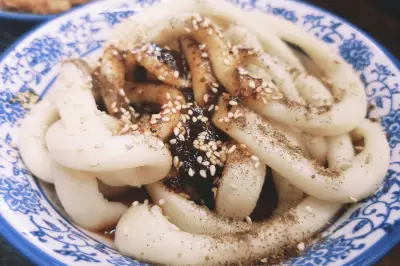
After capturing the Jinma Biji Archway in the blue twilight, we savored a local specialty—crossing-the-bridge rice noodles. Perfect~
D2, 2020.8.1 Kunming – Guandu Ancient Town – Qianwang Street
After breakfast, we took a taxi to Guandu Ancient Town.
With a long history, Guandu Ancient Town lies in the southeastern suburbs of Kunming and is one of the region’s renowned historical and cultural towns. It is rich in cultural relics: within an area of less than 1.5 square kilometers, there are relics from the Tang, Song, Yuan, Ming, and Qing dynasties, including five mountains, six temples, seven pavilions, and eight shrines.
The head of Guandu’s six temples, Miaozhan Temple, was first built in 1290 (the 27th year of the Yuan Dynasty’s Zhiyuan era) and completed in 1295. After being destroyed by flooding, it was moved in 1325 to its current location at the center of the ancient town.
Inside the temple stand east and west 13-story solid square brick pagodas with densely placed eaves, each 13.6 meters high. They were first built in the Yuanzhen period of the Yuan Dynasty. In the 13th year of Daoguang’s reign in the Qing Dynasty (1833), an earthquake destroyed the west pagoda, leaving only the east one. The west pagoda was rebuilt in 2002.
At the top of each pagoda, four corners each hold a garuda, commonly known as “golden rooster,” hence they are also called “Golden Rooster Pagodas.”
Among the religious buildings in Guandu Ancient Town, the most famous and eye-catching is the Vajrasana Pagoda in front of Miaozhan Temple, a nationally protected cultural relic.
The Vajrasana Pagoda was completed in the second year of the Ming Dynasty’s Tianshun era (1458). In the 35th year of Kangxi’s reign in the Qing Dynasty (1696), repairs were made to parts damaged by an earthquake. In 2001, the entire structure was jacked up 2.6 meters on its original site due to groundwater immersion.
Built entirely of sandstone, the Vajrasana Pagoda consists of a base and the main body. The base is a regular square with vaulted passages on all four sides—east, south, west, and north—allowing pedestrians and vehicles to pass through. Five pagodas rise from the base: a central main pagoda 16 meters high and four smaller ones 8.84 meters high at the corners. The main pagoda is imposing, while the smaller ones are exquisite. All feature Sumeru thrones, bodies, necks, and finials, but their forms and styles differ distinctively. The interplay of large and small pagodas resembles bamboo shoots sprouting after rain, light, elegant, and brimming with a sense of motion.
Guandu was the entry point of Tibetan Buddhism into Kunming, and the stone pagodas of Miaozhan Temple bear deep imprints of Tibetan Buddhism, especially in the lama-pagoda-style bodies. This is the only Vajrasana Pagoda with lama-style bodies in all of China, holding great significance for studying the architectural art of Vajrayana Buddhism after the Yuan Dynasty.
Fading Temple was first built during the Song Dynasty and later rebuilt and renovated many times. The existing main hall was reconstructed in the early Qing Dynasty. Facing south, the temple has three courtyards with side rooms and auxiliary halls. The main hall has a single-eave overhanging-gable roof and is not very large, but the structural framework is relatively high. Its most distinctive feature is the interlocking wooden brackets (dougong) with 45-degree wing-shaped arms. The front eaves are lavishly decorated: under the central bay, there is an openwork carving of “Two Phoenixes Facing the Sun,” the tops of the eave pillars bear wooden qilin carvings, and the ends of the corner beams are carved in the shape of phoenix birds, vividly sculpted.
The new Yunnan Provincial Museum is located to the south of Guandu Ancient Town, officially opened on May 18, 2015. The building’s design is inspired by the traditional Yunnan dwelling “a square seal” and its form echoes the weathered karst landscapes of the Stone Forest.
At the museum entrance stands a replica of one of its star treasures—the “Golden-winged Great Peng Bird.”
The Golden-winged Great Peng Bird was unearthed from the Qianxun Pagoda at Chongsheng Temple in Dali. It features a feathered crown, sharp talons, a hollowed-out flame-shaped mandorla inserted between its tail and body, and wings curled inward as if about to take flight. Entirely gilded and adorned with five crystal beads, it radiates splendor and elegance.
The Yunnan Provincial Museum houses over 200,000 artifacts and presents six permanent exhibitions, including “The History and Civilization of Yunnan,” along with various themed displays across three floors, showcasing over 1,000 artifacts. These systematically present Yunnan’s natural history, human evolution, Neolithic Age, ancient Dian bronze civilization, the Nanzhao and Dali kingdoms, and the historical panorama from the Yuan, Ming, and Qing dynasties to modern times.
We focused on the second-floor exhibitions on the Neolithic Age and the Warring States bronze civilization. Unfortunately, the third-floor gallery on the Nanzhao and Dali kingdoms was closed, so we missed seeing the real Golden-winged Great Peng Bird.
“Chicken-shaped Pottery Pot” (Yuan Da 566)
Made of fine sandy grey pottery, with impressed dot-line patterns on the body and applied nipple decorations on the back and tail, this pot resembles a rooster holding its head high and tail cocked. Exquisitely crafted and ingeniously designed, it is one of the most representative Neolithic pottery pieces in Yunnan.
“Bronze Lamp with Three Figures” (Western Han)
Measuring 42 cm tall, it was unearthed at Heimajing in Gejiu. It depicts a nude kneeling male figure with arms extended horizontally, each hand and the head supporting a lamp dish. The lamp is assembled from four parts; the arms and head can be detached from the torso. The joints are neat, the modeling precise, and the lines smooth. Though the theme is in Han style, the kneeling figure shows distinct local ethnic characteristics, making it a fine example of the fusion of Han and local cultures.
“Bronze Ox and Tiger Altar” (Warring States)
Uncovered in 1972 from an ancient tomb group at Lijiashan in Jiangchuan County. An “altar” (zu) is an ancient Chinese ritual vessel for placing meat offerings. The Ox and Tiger Altar was used for presenting sacrificial oxen, the most important offering in ancient rituals. The ox ranks first among the “three sacrificial animals,” and in Dian culture, the tiger holds a lofty position, often perched atop bronze pillars as an object of worship.
The Warring States Ox and Tiger Altar is a masterpiece of Yunnan bronze art and a treasure of the Yunnan Provincial Museum. The main body is a large standing ox with sweeping horns, its back naturally shaped as a flat surface. A scaled-down ferocious tiger clings to the ox’s tail, biting it. Under the ox’s hollow belly, a smaller standing ox is horizontally attached.
The large ox and tiger were cast in a single mold, while the small ox was cast separately and then welded under the belly. As a ritual object of the Dian Kingdom, the Ox and Tiger Altar achieves an almost perfect union of mechanics and aesthetics.
“Bronze Cowrie Container with Four Oxen and a Gilt Knight” (Western Han)
Found in Tomb 10 at Shizhaishan in Jinning County, this is a gem among the museum’s ancient Dian bronzes. The container has tiger-shaped handles on both sides, and the lid features four galloping oxen and a knight riding a tall horse. The design is vivid and distinctly styled.
Cowrie containers are unique to Dian bronze culture, rich in local and ethnic flavor. The fame of Shizhaishan bronze culture owes much to these exquisitely decorated containers, which were used to store cowrie shells as currency. Their lids, cast separately and then welded, are adorned with three-dimensional figures and animals, meticulously crafted and lifelike, like a microcosm of Dian human and natural history.
After the visit, we rested a while at the hotel before heading to Qianwang Street in central Kunming.
Qianwang Street lies within Kunming’s old town and is named after Wang Chi (known as “Qian Wang,” King of Finance), a late-Qing pioneer of Yunnan’s finance and national industry, who opened the “Tongqingfeng” exchange house here. The street is only 400 meters long but boasts heritage sites such as the Ma Family Compound, Fuchunheng Trading Firm, and Fu Family Residence.
The Ma Family Compound, former home of Ma Zhen, the first mayor of Kunming, is the best-preserved classic Bai-style residential building in downtown Kunming.
Built in 1923, facing south on a 1,146-square-meter site, it is a brick-and-wood structure with a “four sections enclosing five courtyards” and a “galloping-horse corridor tower” layout.
The two-story wooden courtyard buildings are interconnected, surrounding a 200-square-meter bluestone central courtyard. The carved beams and painted columns are masterfully crafted, making it a classic example of Bai residential architecture.
The former site of Fuchunheng Trading Firm was built in 1924. Its magnificent splayed entrance gate is wide and imposing, but the original brick carvings and figurines have been destroyed. Unfortunately, the gate was closed, so we couldn’t enter. Fuchunheng was founded in 1876 by Jiang Zonghan, a Qing dynasty general in Tengyue. Its head office was in Xiaguan, with branches in Kunming, Chengdu, Hong Kong, and Burma. It traded in silk, jewelry, medicinal herbs, and local specialties, also operating a money exchange business. In 1928, the head office moved here, and the business closed in 1937.
The Fu Family Residence, built in 1931, is named after the original owner Fu Taizhi, a ham merchant.
Covering 375 square meters and facing south, it follows a layout of “three main rooms, four side rooms, and an inverted eight-chi rear hall,” typical of the “one-seal” courtyard house. Under the eaves, the decorated tie-beams, bracket arms, pendant columns, and lattice doors feature gilded wood carvings of exquisite craftsmanship.
On the third floor, east and west terraces each have a single-eave, four-cornered pointed pavilion, and the pavilions and screen wall are topped with ceramic balustrades and vase-shaped ornaments.
Among modern residences in Kunming, the Fu Family Residence is quite distinctive. On a plot of just 170 square meters, the builder blended classical and modern, traditional and Western, living quarters and pavilions with imagination and skill. In 2006, it was moved 30 meters west from its original site for conservation purposes.
I instantly fell in love with this small, exquisite, and compact courtyard. I ordered a pot of tea and sat quietly on the third-floor terrace for a while, staying until the lights came on, when the night revealed another kind of beauty.
The Tongqingfeng exchange house founded by Qian Wang Wang Chi.
Wang Chi (1836–1903) was born in the Eighteen Villages of Mile (today’s Hongxi Town), the fourth child, known as “Wang Si of Southern Yunnan.” In his youth, he ran horse caravans, trading tea, tobacco, and furs. Later, he opened the “Tianshunxiang” exchange house in Chongqing, which gradually expanded to 15 major provinces, Hong Kong, Southeast Asia, France, and Britain. He then founded Tongqingfeng in Kunming, making it the head office. According to the Times of London, Wang Chi ranked fourth among the world’s top ten richest people at the turn of the 20th century; people respectfully called him “Qian Wang.”
He actively supported national defense against foreign invasion, funded education, built railways and hydropower stations, constructed roads and bridges, and donated for disaster relief. Projects such as the Yunnan-Vietnam Railway, Dongchuan Copper Mine, Gejiu Tin Mine, Shilongba Hydropower Station (China’s earliest hydroelectric plant, still generating power over 100 years later), and the Kunming “Zhuangyuan Tower” were all financed by Wang Chi. For his contributions, in 1893 he was honored with the “First Rank of the Three Dynasties” title, the only red-topped merchant of the first rank in late Qing and China’s feudal era.
Qianwang Street at night.
D3, 2020.8.2 Kunming – Mile – Jianshui Ancient City
After breakfast, we set off for Mile, a two-hour drive, reaching the “Dongfengyun” scenic area, an art town that combines leisure and ecological sightseeing.
The buildings here are mainly made of locally produced red bricks, highly design-driven. It’s said that the structures were built without blueprints, flowing freely from impulse. Such seemingly disordered architecture came from a “genius” born in Mile. He incorporated three local cultures: the bottle-shaped buildings represent Mile’s red wine culture, while others evoke Yi fire culture and a coexisting, upward-growing culture.
It’s fair to say this place is ideal for Instagram-style check-ins and travel photography.
A small, unassuming rice noodle shop served truly delicious free-range chicken rice noodles; the chicken was fragrant, and the broth was flavorful.
After lunch, we continued to Jianshui Ancient City.
China’s earliest self-built railway, the smallest in history, the slowest, the longest construction period, and the only privately run railway—these records belong to the legendary Gebishi Railway, a proud chapter in Yunnan’s railway history.
Construction of the Gebishi Railway began in May 1915. A century later, in 2015, on the 100th anniversary of its opening, the Jianshui Ancient City Tourist Train was launched as a joint project by the Kunming Railway Bureau and Jianshui to preserve and develop Yunnan’s meter-gauge railways. It started running on May 1 on the upgraded meter-gauge track between Jianshui East and Tuanshan along the former Gebishi route.
Initially, the tourist train has four stops: Lin’an Station, Shuanglong Bridge Station, Xianghui Bridge Station, and Tuanshan Station, connecting the numerous historical and scenic spots of Lin’an and Xizhuang towns via a single track.
According to our original plan, we were to take this train to Tuanshan Village the next day. Unexpectedly, a temporary notice announced track maintenance, and the train wouldn’t run. We had to adjust our schedule, rushing to experience the old station before it closed. Unfortunately, we missed the chance to ride the train.
The last train pulled into the station.
The Jianshui Seventeen-Arch Bridge, commonly known as Shuanglong Bridge, spans the confluence of the Lu River and the Tachong River. Built during the Qing dynasty, this ancient bridge has 17 arches and a three-story pavilion on top, appearing both ancient and dignified.
It is the largest multi-arch stone bridge in Yunnan with the highest artistic value. Inheriting China’s bridge-building traditions, it blends structural science with aesthetic form, embodying the superb skill and wisdom of the people of southern Yunnan. It stands as a masterpiece and holds a significant place in Chinese bridge history.
D4, 2020.8.3 Jianshui Ancient City – Tuanshan Village – Puzhehei
The city of Jianshui was originally an earthen fortress built during the Nanzhao period and expanded into a brick city in 1387 (the 20th year of the Ming Hongwu era). In 1994, it was approved as China’s third batch of National Historical and Cultural Cities. After twelve centuries of construction, over 50 ancient buildings remain, earning it the nickname “Museum of Ancient Architecture” and “Museum of Folk Residences.”
Zhu Family Garden is located on the middle section of Hanlin Street in the center of Jianshui Ancient City. Construction began in the Guangxu period of the Qing Dynasty as the residence and ancestral hall for brothers Zhu Weiqing, local gentry of that time.
Covering over 20,000 square meters, with buildings occupying more than 5,000 square meters, the layout follows a “three vertical, four horizontal” pattern. The structures are orderly, courtyards layered, materials of high quality, carvings exquisite, and planning meticulous.
The entire complex features soaring ridgepoles, flying eaves, carved beams, and painted columns, exuding elegance. Courtyard spaces are richly layered with endless variety, forming a labyrinthine architectural ensemble.
With 42 courtyards large and small and 214 rooms, it is dubbed the “Grand View Garden of Southern Yunnan.”
After the visit, we drove to Tuanshan Village.
“Tuanshan” means “a place of gold and silver” in the Yi language. Located 13 kilometers from Jianshui county seat, the village sits on a slope backed by rolling green hills and is inhabited by the Zhang clan.
According to the Zhang family genealogy, during the Hongwu period of the Ming Dynasty, the ancestor Zhang Fu came from Poyang County, Raozhou Prefecture in Jiangxi to trade in Yunnan. Seeing that Tuanshan “rises loftily with surrounding mountains embracing it, superior to the whole region,” he moved here after three relocations. Settled, Zhang Fu lived a diligent farming life and left behind the family motto “endurance.” Guided by this principle, the Zhangs pursued knowledge, lived harmoniously, and produced many talents.
In the Guangxu period of the Qing Dynasty, with the rise of the Gejiu tin industry, Zhang descendants left their hometown to work the mines along the “Lin’an Road.” After amassing capital, they formed the “Tianjichang” trading firm, expanding to Kunming, Shanghai, Hong Kong, and Haiphong in Vietnam, becoming one of southern Yunnan’s most famous firms. Having made their fortune, they transported silver home by horseback and built exquisite grand houses, breathing new life into the ancient village.
Tuanshan now preserves 16 traditional residences, 4 fortified village gates, 3 temples, and 1 ancestral hall, covering 18,384 square meters.
General’s Residence, built in 1905 (the 31st year of the Guangxu era).
The owner, Zhang He, lost his father very young and was raised by his mother. At age six, his mother sent him to work in his cousin’s mine in Gejiu. Growing up, Zhang He was chivalrous, fair, and skilled at mediating disputes, earning high prestige in Lin’an and Gejiu. Later, for suppressing bandits during the “Xinhai Lin’an Uprising,” Yunnan governor Cai E appointed him Commander of the Fourth Battalion of the National Army with inspector duties, and bestowed a plaque inscribed “General’s Residence” for his door—hence the name.
Exquisite carvings above the door lintel: on the left, a lion symbolizes “left thinking”; on the right, an elephant symbolizes “right thinking”—one should think carefully before speaking and acting. Below the elephant, a horse is carved; below the lion, two vivid monkeys imply “immediate promotion to high rank” (a pun on “monkey” and “marquis”).
The house is quite dilapidated, but through the thick dust, the ancient, delicate wood carvings and carefully painted beams and brackets still hint at past prosperity.
Gilt wood carving of five bats (blessings) adorning the door.
Wandering the lanes of old Tuanshan Village, it felt as if time had stood still.
Zhang Family Garden, begun in 1905 (the 31st year of Guangxu), covers 3,495 square meters. It comprises a fortified gate, a first-courtyard house, a third-courtyard house, a garden ancestral hall, and a watchtower, with 21 courtyards and 119 rooms. It is a castle-style private garden, second only to Jianshui’s Zhu Family Garden in scale.
The builders, Zhang Guoyi and Zhang Guomin, began as horse-caravan drivers and later made a fortune in Gejiu mining and trade. They sent money home to build the third-courtyard residence and garden ancestral hall, then added rockeries, garden walls, and a first-courtyard house, creating a “village within a village” complex.
After 1949, the old mansions of Tuanshan’s wealthy families were distributed to the poor, so not all historic houses are open. Even in the famous Zhang Family Garden, we mainly visited the garden ancestral hall.
Passing through a circular archway revealed another enchanting space.
The garden ancestral hall, built in 1905, is a landscaped complex. The hall sits on a high platform, five bays wide, with a rounded roof and open corridor. Flanking “hanging-foot pavilions” with “beauty leaners” along the corridor edges offer a place to relax, cool off, and cultivate tranquility. Below is a pond where lotus flowers bloomed splendidly.
The crossbeams of the ancestral hall are decorated with carved and painted scenes from classic Chinese novels like Romance of the Three Kingdoms and Water Margin, solemn and elegant.
These beam carvings not only showcase the craftsmen’s skill but also attest to the Zhang family’s former wealth.
At the bottom of the colonnade pillars, four stone lions encircle the pillar base, echoing its round shape—a motif known as “lions playing with an embroidered ball.” The lions are vividly sculpted, remarkably lifelike.
Tuanshan’s northern village gate—Suocui Tower.
Perched high and commanding, connected to the main village road, the gate has watch posts and gun holes both upstairs and down, making it easy to defend and hard to attack—a key northern fortification.
Liuyuan (Staying Garden), built around the early Republican period, covers 487 square meters with 567 square meters of floor area, featuring 2 courtyards and 17 rooms. After liberation, it served as a village office and administrative site; now it is renamed “Liuyuan.”
Inside Liuyuan, three old items are worth seeing: a wall clock, a transformer, and a water trough carved from a single stone.
Zhang Family Ancestral Hall, built in 1783 (the 48th year of the Qianlong era).
At the entrance, the Zhang family motto is inscribed: “Speak not of others’ faults; boast not of your own merits. When giving kindness, mention it not; when receiving kindness, forget it not.” These principles remain relevant even today.
The ancestral hall, simple in design, served as a place for clan discussions and periodic ancestor worship. Major village activities and dispute mediations were once held here.
The former supply cooperative, now a small shop.
Huang’en Mansion, built at the end of the Guangxu period and completed in 1909 (the first year of Xuantong). The owner, Zhang Shuyuan’s mother, was held in great esteem by villagers for “raising her orphaned son through hardships, leaving a large family with five generations under one roof.” The imperial court honored her as an “Anren” (Lady of Peace), granted permission for a memorial arch and ancestral entry, and bestowed a plaque inscribed “Imperial Grace and Commendation”—hence the name.
The property consists of two large and six small courtyards with six corridors forming a two-courtyard layout, with 37 rooms—a typical example of a two-courtyard residence in Tuanshan.
The courtyards are spacious and open, the halls exquisitely decorated. Though covered in over a century of dust, the window and door carvings of Huang’en Mansion are still breathtakingly exquisite. The openwork and relief carvings, executed with precise, skilled, and delicate knife work, depict lifelike images with profound symbolism.
Windows are carved with bats, vases of flowers, Buddha’s hands, peaches, and characters for “blessing” and “longevity,” conveying wishes for five blessings, blessings from all directions, and peace throughout the four seasons with both blessings and longevity. Also carved are scenes from the Cowherd and Weaver Girl legend and the Journey to the West.
A carving of a snipe and clam locked in struggle, with the fisherman reaping the reward.
The poetic scene of “Mooring by Maple Bridge at Night”: Hanshan Temple.
Various opera stories, with figures depicted vividly.
Xiucai Mansion, built at the end of the Qing Dynasty and completed in 1907 (the 33rd year of Guangxu). The owners, Zhang Guijin and Zhang Guiming, passed the Lin’an prefectural exams, earning the titles “Tribute Student” (gongsheng) and “County Student” (xiangsheng) respectively. Villagers called them “Big Xiucai” and “Little Xiucai,” hence the name.
The brothers later abandoned scholarly pursuits for business, operating mines and organizing the “Tianjichang” trading firm, reaping substantial profits before returning home to build. Calligraphy and paintings in the mansion are the work of renowned southern Yunnan artists like Wang Chuishi, Wang Xianbin, Tan Jingxuan, and Wang Kemin.
Due to time constraints, we did not enter the Sima Residence.
As we finished touring Tuanshan’s old residences, we were deeply moved. It was an immersion in ancient architectural aesthetics and a unique experience of traditional Chinese culture, enriching our spirit and strengthening cultural confidence—a truly rewarding visit.
At the village entrance, we ate a bowl of rice noodles, then set off for Puzhehei. We arrived in Puzhehei by evening and checked into our hotel.
The guesthouse had a pleasant environment.
Lotus root fish, very tasty.
D5, 2020.8.4 Puzhehei
Puzhehei lies in Qiubei County, Wenshan Zhuang and Miao Autonomous Prefecture. It became widely known after being featured in “Where Are We Going, Dad?” in 2013.
We rose early. Despite the unfavorable weather—it was Yunnan’s rainy season, with conditions shifting unpredictably from downpour to bright sunshine—we still decided to climb Qinglong Mountain, hoping for a panoramic sunrise over Puzhehei.
Qinglong Mountain is one of Puzhehei’s peaks, offering a bird’s-eye view of the scenic area. Not too high, but I climbed out of breath. At the summit viewing platform, many people had already secured the best spots. I finally squeezed in a place for my tripod. Puzhehei in the morning light was serene and beautiful.
The clouds were still thick, with only a faint trace of red on the horizon.
Soon the sky turned grey, and a light drizzle began. No chance of sunrise, so we descended.
Puzhehei Lake is a plateau freshwater lake formed by karst dissolution. “Puzhehei” in the Yi language means “a pond teeming with fish and shrimp.”
It became an instant hit after the TV drama “Eternal Love” filmed scenes here. The karst landscape resembles Guilin’s: viewing the mountains and water on both banks, layered peaks reflected on the calm lake, it felt like being inside a painting.
August in Puzhehei sees lotus flowers in full bloom. In the afternoon, we took a bamboo raft deep into the lotus groves, gliding on the lake, fully enjoying the graceful blooms, lake, and mountain scenery. This paradise-like beauty was captivating.
It’s said that the white lotus is unique to Puzhehei.
At sunset, led by our tour leader, we went to a hidden spot for sunset photography—not a regular viewpoint, no observation deck, no other tourists. After a sudden heavy rain, the sky cleared. The setting sun slanted over distant mountains, gradually illuminating the woods, lake, and small islands.
Finally, fiery clouds appeared, their reflection dyeing the lake water golden—truly breathtaking.
We thoroughly enjoyed our day in Puzhehei, thanks to an itinerary change. Originally, we were to go to Bamei today, but due to recent heavy rain, the karst cave entrance to Bamei was closed because of high water levels. So we stayed two nights in Puzhehei. This gave us ample time for in-depth exploration and a fuller experience of Puzhehei’s beauty. As they say, a blessing in disguise? Heh~
D6, 2020.8.5 Puzhehei – Bama, Guangxi
After breakfast, we left Puzhehei for Bama in Guangxi. Bama Yao Autonomous County is one of the world’s five longevity villages.
It was a long drive today. Upon arrival, we checked into the hotel to rest, then went to film a panoramic sunset at the Bama Ming River.
The Ming River originates in Nashe Township, one of the Panyang River’s headstreams. Viewed from above, its twists and turns closely resemble a giant cursive character “命” (life) set in the vast fields, elegant and otherworldly, a breathtaking sight.
The Ming River has nurtured many centenarians; on its banks, there are over 80 residents aged 100 and above. It is truly the source of life in Bama.
D7, 2020.8.6 Bama – Libo, Guizhou
Xiaoqikong Scenic Area in Libo, Guizhou, is nestled among peaks over 30 kilometers south of the county seat. Stretching 7 kilometers end to end, its landscapes are gracefully exquisite, delicately antique yet refined. Stepping into it inspires poetic and picturesque feelings; it is one of China’s most beautiful places.
Wolong Pond is the outlet of Wolong River, a karst underground stream. Named for the deep green pool and cascading weir formed by a dam, and for the legendary reclining dragon. On the surface, it is just the source of Wolong River; after being diverted for hydroelectric generation, it joins the Xiangshui River and becomes the main water source for both.
Looking upstream, the water appears calm, then suddenly the emerald pool spills over the dam like a silvery beaded curtain, crashing onto boulders with a roar, surging into the distance—both spectacular and graceful.
Mandarin Duck Lake, a rare karst water-forest area at this latitude anywhere in the world, consists of two large and four small lakes forming an intricate water network. Here, trees grow from rocks in the water, their roots reaching through the rock into the riverbed. Water, rocks, and trees intertwine in an astonishing spectacle.
I remember boating here years ago, when a boatman did the rowing and gave brief explanations. This time, probably due to the pandemic, we had to row ourselves. For those of us unused to physical exertion, it was a struggle. That’s why I took very few photos at Mandarin Duck Lake.
The lake water is deep green and unfathomable. At dusk, a thin mist rose over the surface, hazy and dreamy, adding a wild charm as we glided through.
The 68-step waterfall is a natural landscape in a narrow 1.6-kilometer valley upstream of Hantan Green Pool. Along the stepped riverbed, 68 waterfalls and cascades stagger down, layer upon layer, forming an endlessly varied dynamic water scene that dazzles the eye.
Xiaoqikong Ancient Bridge, built in 1836 (the 15th year of the Daoguang reign of the Qing Dynasty), gives the scenic area its name. Despite centuries of flood impacts, it still stands intact, a testament to superb craftsmanship.
Once an important bridge from Libo to Guangxi, Xiaoqikong is constructed of granite blocks, its body draped in vines, exuding antique charm. Below flows the enchanting Hantan Green Pool, flanked by ancient towering trees whose massive branches stretch along the bridge deck like huge umbrellas.
It was getting dark, so we had some fun with light painting.
D8, 2020.8.7 Libo – Basha Miao Village – Zhaoxing Dong Village
Basha Miao Tribe is located 6 kilometers south of Congjiang County, Guizhou Province, distributed over five villages in the vast forest of Moon Mountain’s foothills. To this day, they maintain ancient customs like carrying firearms (with special approval from the public security bureau), shaving heads with sickles, and worshipping ancient trees. Basha Miao Village currently has 505 households and 2,548 residents.
At the village entrance stand tall trees. The Basha people regard trees as life trees, offering sacrifices to ancient trees during festivals and practicing tree burials. When a Basha child is born, the parents plant a tree symbolizing the beginning of life. When the person dies, the community cuts down that same tree, which has grown alongside them, to make a coffin. The body is wrapped and buried deep in the forest, and a new sapling is planted on top. No grave mound, no tombstone, just an evergreen tree representing life’s continuity. In Basha, a tree is a soul; the older the tree, the more sacred it becomes. The Basha revere these spirits, and the spirits bless Basha. Thus, through the ages, the Basha people never indiscriminately fell trees.
Legend has it that the Miao ancestor Chi You had three sons; the Basha are descendants of the third son. When Chi You was defeated by the Yellow Emperor, he led his tribe on a long migration southwest. The Basha Miao’s ancestors were the vanguard of that great exodus—one branch of the Jiuli tribe. Basha men revere martial prowess. Their everyday attire consists of collarless, brass-buttoned indigo jackets and straight, wide-legged trousers, along with waist knives and shouldered firearms. They hunt in the mountains and fish in the rivers, taking all their necessities from the forests and valleys.
The topknot, called “hugun” in the Basha language, is the most important male gender marker. Most of the hair on a man’s head is shaved, leaving only a central patch that is coiled into a bun, a style maintained lifelong. It is said to originate from the time of Chiyou and is the oldest male hairstyle still seen in China today.
Basha women’s attire is equally exquisite. Their clothing and skirts feature antique embroidery patterns, complemented by silver neck rings and bracelets, strikingly eye-catching.
Most young girls in the village learn embroidery from an early age, focused and absorbed.
Zhaoxing Dong Village, located in Liping County, Qiandongnan Miao and Dong Autonomous Prefecture, Guizhou, is the largest Dong settlement in the region. Surrounded by mountains, the village sits in a mountain basin.
The houses are stilted wooden buildings, closely packed and well-arranged, all built of China fir with gabled roofs covered in small grey tiles—rustic and functional.
As night fell and lights came on, we went to the viewing platform at the village entrance. Gradually darkening, the drum towers lit up brilliantly with colorful lights.
D9, 2020.8.8 Zhaoxing Dong Village – Xijiang Miao Village
In the early morning, I wandered the village streets, capturing scenes of small bridges, flowing water, and the villagers’ authentic daily life, savoring the slow pace of the ancient village.
The village lies in a mountain basin, where two streams merge into a small river that runs through it. Zhaoxing Dong Villagers share the surname Lu to outsiders but internally belong to five major clans, living in five natural residential zones called “tuan” (groups): Ren, Yi, Li, Zhi, and Xin.
Zhaoxing is most famous for its drum tower ensemble, unique among Dong villages nationwide and listed in the Guinness World Records. The five tuan each have a drum tower, a flower bridge, and an opera stage. The five drum towers differ in appearance, height, size, and style, creating a spectacular sight.
Elders sitting leisurely on the flower bridge.
Xijiang Qianhu Miao Village is located at the foot of Leigong Mountain, northeast of Leishan County in Qiandongnan Miao and Dong Autonomous Prefecture, Guizhou Province, 35 kilometers from the prefectural capital Kaili. Comprising more than ten naturally formed villages dotting the hillsides, it is the largest Miao settlement in China and the world.
At dusk, the wind-and-rain bridges lit up. As darkness deepened, countless household lights came on, turning Xijiang into a sea of lights.
D10, 2020.8.9 Xijiang Miao Village – Qingyan Ancient Town, Guiyang
The terrain of Xijiang is a typical river valley, with the crystal-clear Baishui River flowing through the village. For thousands of years, Miao people here have farmed by day and rested at dusk.
The village architecture mainly consists of wooden stilted houses with through-tenon, gable-roof structures.
To improve village feng shui and for daily convenience, many Miao villages build wind-and-rain bridges nearby to gather qi, block wind, and shelter from rain. Xijiang once had wooden wind-and-rain bridges, but being made of wood, they were repeatedly repaired then destroyed by floods. In 2008, five new wind-and-rain bridges were built using a mix of concrete and wood, greatly enhancing their sturdiness and flood resistance.
Today, these five bridges have become a scenic highlight and popular photo spots for tourists.
Around 10 a.m., we left Xijiang for Guiyang, where the group tour ended, and our fellow travelers headed home. But our journey was not over. At Guiyang airport, we took a taxi straight to Qingyan Ancient Town.
Qingyan Ancient Town lies in Huaxi District, Guiyang. Perhaps because it was the weekend, traffic started slowing down before we even arrived. After finally parking, our guesthouse host met us and led us to the accommodation.
Our guesthouse was near the North Gate of Qingyan Ancient Town, offering quiet within the hustle and bustle, with a great environment and service.
Qingyan Ancient Town was first built in 1378 (the 11th year of the Ming Hongwu era), over 600 years ago, as a military garrison town. Named after its blue-grey rock, it evolved from a military fortification into a mountain citadel, popularly known as Guiyang’s “South Gate.”
Dingguang Gate (South Gate), first built in the Ming Tianqi era (1621–1624), is the symbol of Qingyan Ancient Town. In 1660, Ban Yinglin’s son, Ban Yingshou, inherited his father’s position (as local chieftain) and added Dingguang Gate. In 1798, military scholar Yuan Dapeng renovated it.
Dingguang Gate’s imposing city walls are majestic, once the most important military defense line south of Guiyang.
The town was extremely crowded today, so we skipped sightseeing and instead had a good dinner. The famous braised pig’s trotters of Qingyan were a must-try.
D11, 2020.8.10 Qingyan Ancient Town – Shanghai
We rose very early today. Before the crowds arrived, the town restored its peaceful, tranquil appearance.
Qingyan Ancient Town holds deep cultural and historical significance. During the War of Resistance, after the Japanese occupied Wuhan, the Guiyang office of the Eighth Route Army transportation station took in a group of anti-Japanese leaders’ family members who had been evacuated via Guilin. Among them were Zhou Enlai’s father, Deng Yingchao’s mother, Bo Gu’s grandmother and young daughter, as well as the righteous activist Jiang Shilian, over 20 people in total. Later, when the Japanese launched massive air raids on Guiyang, the Eighth Route Army station rented several folk houses in Qingyan to shelter these families.
This is where Zhou Enlai’s father, Zhou Maochen, once lived, in a house owned by the Ding family.
Back Street is actually an alley lined with old stone houses, linking Caishen Temple to the east and Ciyun Temple to the west, connecting the town’s South and West streets. The lane rises and falls, winding and twisting, blending rustic charm with urban alley features—a classic example of Guizhou old-town street composition.
The street is paved with slabs, blocks, cobbles, and irregular stones, bonded with glutinous rice paste, tung oil, and lime. The varied stonework and construction methods create rich textural detail, combining freedom with order, and exuding a quiet, timeless length.
During the war, Li Kenong’s and Meng Qingshu’s families lived in courtyards on this lane. The film “The Missing Gun” also left many vivid shots of Back Street.
Ciyun Temple, originally built in the Kangxi era and renovated in 1832 (the 12th year of Daoguang). The gate was closed to visitors.
Wanshou Palace, also known as “Tianzhu Palace” or “Jiangxi Guild Hall,” is a Daoist temple. Built by Jiangxi merchants in 1778 (the 43rd year of Qianlong) and renovated in 1796 and 1832. The complex comprises a main hall, side halls, two flanking theater towers, and living quarters.
Under the theater’s eaves, uniquely crafted wooden pendants (commonly called “hanging flower pillars”) serve as brackets with openwork carving of “Two Lions Competing,” a rare masterpiece among Guizhou’s ancient buildings.
Scenes carved include “Hongmen Banquet,” “Han Xin Drilling Troops,” “Ambush on All Sides,” and “Besieged on All Sides.”
During the War of Resistance, the National Zhejiang University moved west to Qingyan and held classes here, leaving unforgettable memories. This bond between the ancient town and Zheda is passed down in history to this day.
Zhao Lilun Centenarian Archway, just steps from Dingguang Gate, was built in 1843 (the 23rd year of Daoguang). Standing 9.5 meters tall and 9 meters wide, it is a four-pillar, three-bay, three-story, four-slope-roof structure built from local “white cotton stone,” pure white and well-preserved. Stone lions guard the pillars on both sides, each 1.5 meters high, holding treasures in their forepaws and bracing against the columns. The central lintel features openwork “Two Dragons Playing with a Pearl,” and on the north side, the characters “Ascending Peace, Outstanding Age” are carved. The archway has no foundation trench; its four rectangular pillar bases sit directly on the ground—standing for a hundred years.
The archway’s main feature is that the pillar drums are not “drums” but “stone lions.” All eight lions face downward with their tails up, like lions descending a mountain. Art master Liu Haisu deemed them rare artistic treasures. Typically, stone lions squat, which is dignified but stiff. Here, the male lions play with a treasure, females protect their cubs, interacting vividly—a lively departure from convention.
Wenchang Pavilion, at 143 East Street, was built during the Wanli period of the Ming Dynasty and renovated in the Qianlong era. A brick-and-wood structure, it was a place for scholars to study, gather, and worship Wenchang, the god of literature. Currently not open to visitors.
As a military stronghold occupying a strategic position, Qingyan Ancient Town has been expanded and reinforced many times. Its stone city walls, streets paved with stone, and perimeter walls built of massive rocks on cliffs have four gates: east, west, south, and north.
Walking along the long bluestone paths, some shops on both sides had already opened for business, and tourists gradually started to fill the streets.
There is a kind of life called Qingyan life—a slow pace that belongs only here.
After a short rest at the guesthouse, the car our host arranged arrived. We headed to Guiyang airport and boarded flight MU9458, originally scheduled to depart at 16:30. However, due to heavy rain in Shanghai, the flight was delayed nearly five hours before taking off. We finally landed safely at Shanghai Hongqiao Airport, successfully concluding this journey.