I Set Up a Trunk Market at the Southwest Border
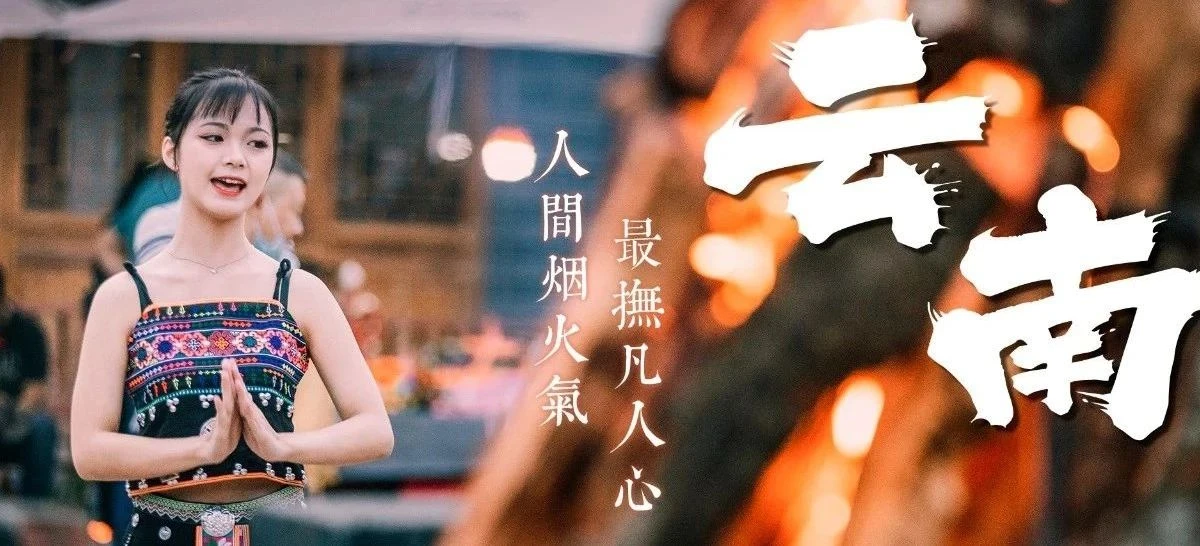
▲3 minutes to feel the passion of Yunnan, the land of colorful clouds
In the evening, the Lancang River is as tranquil as ever. The setting sun pierces through the flirtatious clouds, taking the hands of all living beings by their fingertips. Not far away, the Ganbai Night Market, Starlight Night Market, and Gaozhuang Night Market are already ablaze with lights, letting the enchanting bustle of life rendezvous with the silent night.
Beneath the solemn pagodas, people have long shed the hustle of the day, seeking the meaning of life amidst the tantalizing Dai cuisine.
▼ Long image alert: Please lock screen and rotate to landscape for viewing.
Beyond the city, rivers sing in the rainforests, insects hum around tea plantations, sunlight illuminates the mountains, and ethnic minority folks pick tea leaves in the gardens and work in their villages…
The bleakness of winter, after the baptism of spring breezes and the nourishment of summer rains, has turned into a lush, vibrant green. This lively atmosphere of sunshine and romance was something I had long anticipated before the journey.
Arriving in Yunnan right during the Torch Festival, I joined a multi-ethnic bonfire party and felt the reverence for fire and light. Or perhaps, wandering into a village to soak in that simplicity and leisurely spirit.
Roaming free, setting sail against the wind. To explore this vibrant bustle, one must come to Yunnan. Unlike the big cities inland, Yunnan is home to 25 ethnic minorities. Separated from the central plains by mountains and rivers yet closely connected, it has developed a highly distinctive folk culture.
One day in early August, I set out in my Highlander from Kunming during a torrential rainstorm, crossed the Tropic of Cancer, and reached Xishuangbanna Dai Autonomous Prefecture, the southernmost part of our country. With the flowers, tea, succulents, handicrafts collected along the way, plus Thai cola and Lao beer, I set up a romantic and grand Starlight Trunk Market.
I've been to many southern cities where summer outdoors feels like a sauna, unbearably steamy. But this summer in Kunming was cool and pleasant. A slightly chilly breeze, bright sunshine, and the occasional sudden downpour that washed all the heat out of the air.
On a rainy night, stepping into the Dounan Flower Market, I felt a different side of Kunming. It lacks the languid charm of Cuihu Lake, the vastness of Dianchi Lake, the artistic vibe of Wenlin Street, yet it interprets the meaning of 'Spring City' in its own way.
The Dounan Flower Market is located on the outskirts but is the final stop for many tourists—buses bring them here to buy flowers before heading to the airport. However, the more authentic and unique trading happens at night: daytime flowers are for tourists, nighttime flowers are for wholesalers. The night market is larger and offers more varieties.
At 8:40 p.m., as the market gates opened, hundreds of trolleys loaded with flowers filed in one after another, wafting waves of fragrance. Following the crowd, you could see hundreds of 'stalls' selling thousands upon thousands of blooms. Flowers were sold by the kilo, by the cartload—precious flowers in other cities were like cabbages in a wet market here.
Inside the market, it was bustling with activity. Traders from across the province and the country gathered here, selecting buds that had yet to fully bloom, then shipping them at top speed to chic florists, eventually selling them to smitten customers.
Surrounded by flowers—pale yellow baby’s breath, deep crimson lilies, vibrant sunflowers, neatly wrapped roses—falling in love at the sight of them seemed a matter of course. The shop owners in the market, long accustomed to this riot of blooms, had become an amusing element amidst the blossoms.
'Buy some flowers, the Torch Festival is coming soon,' a shop owner said unhurriedly in Yunnan dialect as he trimmed flower stems, noticing our tourist garb.
'Sure, we can buy them as gifts for our Yi friends.' Sunflowers, fragrant lilies, golden ball flowers, tulips, baby’s breath... we were spoilt for choice. These beautiful blossoms embody a longing for a good life; we wanted to take every kind home.
'Can we fit all these flowers?' my friend asked.
'The Highlander's trunk—no problem!' I said with full confidence.
Four suitcases and three camera bags were essential luggage and gear for this trip. With the delicate flowers, a small trunk wouldn't suffice. The Highlander's 162L super-sized trunk not only swallowed all these items but actually had room to spare. My friend was amazed, but I had expected it.
Travel location: Kunming Dounan Flower Market
Trunk goodies ①: Fresh flowers, succulents
This Kunming rain was truly heartbreaking. The downpour not only trended on Weibo but also left many cars submerged and immobile. I experienced that storm firsthand—from leaving Cuihu Lake to getting on the highway, huge raindrops pelted the car body with loud patters. Honestly, if I hadn't been driving an SUV, I would have been a bit worried.
The Highlander's tall body offers a better view, allowing early judgment of road conditions in heavy rain. With 20cm of ground clearance, it also gives more stability and confidence when passing through waterlogged roads.
Arriving at Fuxian Lake, the dark storm clouds were left behind. Clouds wrapped the mountains, hiding secret realms. The vast lake and mountains faced each other, like footprints left by ancient glaciers when they departed.
The water of Fuxian Lake is deep, worthy of its fame as the second deepest lake in China. Driving along the lakeside road, the clouds gradually parted and the sun smiled out. It was time to slow down and soak in the atmosphere of Yunnan.
Against the deep blue lake, the verdant mountains, white houses, and the lofty sky, time seemed to stand still at Fuxian Lake, as if it were the most natural thing under the sun. We sighed in wonder and kept driving along the lake, tires rhythmically rumbling over the rough flagstone road.
In the afternoon, we reached a village where the surroundings livened up. Small boats lined the shore, waiting to take visitors deep into the lake to explore the beautiful scenery. Yunnan folks are warm and exuberant; if boats meet on the lake, a water fight is almost inevitable. Winning or losing doesn’t matter—the fun is in the spirit and the splashes.
In summer, the waters of Fuxian Lake perfectly counteract the heat of the blazing sun, spreading a cool sensation throughout your body. Those who prefer quiet would rather take a small boat, drift to an empty spot, and plunge in to feel the vastness and embrace of the natural lake.
Travel location: Fuxian Lake
'Stand on this line, spread your arms, and feel if the temperature is the same...' At the Mojiang Tropic of Cancer Marker Park, the guide announced loudly through a megaphone.
A group of uncles and aunties from Northeast China stretched out their arms, murmuring, 'The left side really does feel a bit warmer.'
Huya (the author's nickname) had crossed the Tropic of Cancer in Hualien, Taiwan, with the blue Pacific on one side and majestic coastal mountains on the other. The Tropic of Cancer Marker Park in Mojiang wasn't today's destination. Leaving Mojiang town, we headed to a tea plantation with a unique name—Saci Village.
Just out of town, the rain started to fall, pelting down as if trying to stop us from going further. Fortunately, it came and went quickly. Half an hour later, the rain dwindled, and as the mountain road climbed higher, the clouds above were now beneath our feet, turning into mist drifting through the valleys, moving with the wind like a fairyland.
This is a place you can't find on the internet. Had it not been for Xiaoxin, a Pu'er 'native,' we wouldn't have driven three hours to get here.
Saci lies deep in the longitudinal valleys of the Hengduan Mountains at about 1,900 meters above sea level. The road to Saci winds and twists, sometimes passing through Hani tea mountains, sometimes through virgin forests, driving mostly along ridges and mountainsides with extremely broad views and superb scenery.
The three-kilometer village road connecting Saci Village to the main road was our real destination.
Between two points, a straight line is shortest, so roads built for travelers are made as straight as possible. The bumpy dirt road to Saci Village isn't like that—it twists and turns, creating a serpentine path.
The road surface had been worn into two deep ruts by tractors and farm vehicles. If it weren't for a high-clearance four-wheel-drive SUV like the Highlander, it wouldn't be advisable to take this dirt road, as you could easily slip or bottom out. With the help of HAC (Hill-start Assist Control), we steadily climbed over the mountains.
For passengers, on this muddy dirt road, the Highlander's stability and the comfort of its chassis suspension tuning were excellent.
The dirt road was narrow. Farm vehicles passed by with loud engines, and the locals warmly invited us to their homes for tea, their simple smiles deeply touching.
Not far from Saci Village, the aroma of fried pork ribs stopped us in our tracks. A Hani couple was cooking, their children sitting outside the kitchen.
The kitchen was humble yet the view was luxurious. The house perched on a mountaintop, and the kitchen window opened to an incredibly expansive vista of distant mountains veiled in mist, with no obstructions. Sunlight streamed through the small window, landing right on the wood-fired stove where pieces of chopped ribs were sizzling in oil, while a plate of green broccoli awaited its turn.
Facing the same scenery, different people feel differently. For them, this is daily life, and they've long grown accustomed to it. We, who came from afar, paused for this view, etching this simple yet extraordinary scenery into our hearts.
Travel location: Mojiang Tropic of Cancer Marker Park, Saci
Trunk goodies ②: Mojiang Hani tablecloth
Meanwhile, over 200 kilometers away in Dadugang Township, Xishuangbanna, the weather was warming up, and Dadugang, long shrouded in clouds and mist, finally welcomed the tea-picking season.
It was the Torch Festival, the grandest celebration for Yi people. A Yi sister in traditional attire was picking tea while delighting in this heavenly realm above the clouds. The Yunnan-Guizhou Plateau is the birthplace of tea trees. Over the ages, every season when new buds sprout, the mountain tea farmers work tirelessly to pick their pride—large-leaf tea.
'How do you celebrate the Torch Festival?'
'This year, just a family dinner will do!'
While chatting, she picked tea, and her bamboo basket soon filled up. 'We'll help you carry the tea back!' I opened the Highlander's trunk; even with suitcases and flowers already inside, it could still fit three bamboo baskets of tea. Fully loaded, we drove toward her home.
Her home was an imposing two-story Dai-style building. We delivered the tea to her doorstep and also gave her two bunches of sunflowers. Since the sun and torches share similar symbolism, the Yi sister was very happy.
Not far away, at a tea factory next to the tea mountains, the factory manager had prepared Dai-style barbecue—grilled fish, grilled meat, and roasted tea (can tea be roasted?), all smelling delicious. Coupled with chicken soup stewed with an assortment of seasonal mushrooms, the flavor was unbeatable.
'How come Pu'er tea is produced in Dadugang, Xishuangbanna?'
'Xishuangbanna has been a tea-producing area since ancient times. The climate, humidity, and altitude are all ideal. But because Pu'er was an important hub on the ancient Tea Horse Road, the tea was named after it.'
While savoring the barbecue, I chatted with the manager. In the evening, the vast tea garden was even cooler, with occasional croaks and barks providing nature's music for the feast.
Travel location: Dadugang 10,000-mu Tea Garden, Mutongchan Tea Factory
Trunk goodies ③: Pu'er tea, white tea
The Highlander plunged straight into the green, humid, mist-shrouded mountains of southern Yunnan. Under the sun, among patches of rainforest, people in bright ethnic attire sauntered home, while children ran across the open grounds, leaving peals of happy laughter.
The Yi people worship fire, believing that humans were created from fire and that the world exists because of fire. So during important festivals like the Torch Festival, they dance around bonfires in a circle dance called 'Guozhuang' to celebrate. At the Tea Horse Ancient City in Pu'er, a lively Torch Festival event was underway.
Yunnan is the province with the most indigenous ethnic minorities in China. Each group's traditional festivals offer excellent opportunities for mutual understanding. At the Torch Festival Guozhuang dance, people from different ethnicities—Dai, Wa, Lisu, Yi, Hani—join in, dancing around the bonfire and celebrating together, creating a vibrant scene.
Here, the glitz of big cities is replaced by hearty drinks and dancing. Drinking and dancing together is the most authentic way to celebrate, as done in many villages. Since we were driving, we couldn't partake in the alcohol, so we just soaked in the fervor through the music and steps.
As a Highlander owner, Huya loves this atmosphere. When he chose the Highlander, he intended to drive it across mountains and seas, experiencing diverse cultures and customs.
Travel location: Tea Horse Ancient City
On the map, Yunnan Province looks like a peacock displaying its plumage. To the west, the Lancang and Jinsha Rivers nourish its massive, varied tail feathers; to the south, vast tropical rainforests form the peacock's feet—stretching all the way to neighboring Laos. This is Xishuangbanna.
The Water-Splashing Festival has long made the Dai people famous. Every day, the Dai Garden welcomes visitors from across the country with utmost enthusiasm. At the Water-Splashing Square in the garden, you can experience the joy of the festival daily, letting water bring blessings to all.
If you visit Jinghong during the Water-Splashing Festival, guerrilla water fights, surprise attacks, and blockades break out deep in the streets, with everyone going back and forth relentlessly. In this joyful battle, becoming a drenched chicken is the greatest victory.
In the Dai Village, you'll see an ancient temple full of Dai architectural style—Manchunman Buddhist Temple. For over 1,400 years, despite multiple restorations and reconstructions, it has stood firm through wind and rain.
The Dai people are Buddhists, and the temple's buildings are restored through donations of money and materials from the community and devout followers. The temple blends seamlessly with the dwellings, and Buddhism is closely intertwined with Dai daily life.
Dai 'saoduoli' (girls) are learning the traditional palm-leaf scriptures and weaving techniques, passing down their intangible cultural heritage.
Making final preparations for the Starlight Trunk Market, we bought Lao beer, Thai cola, and Dai handicrafts. Next stop—Jinghong.
Travel location: Xishuangbanna Dai Garden
Trunk goodies ④: Thai cola, Lao beer, Dai handicrafts
Ancient people rode horses across mountains and along the Tea Horse Road to transport tea and goods. This time, Huya followed the Highlander, using its powerful performance, safety, and oversized space to travel far and wide.
Today, the pursuit of speed is endless, but only by slowing down occasionally can we truly savor things. The highway speed reaches 120 km/h, yet in the Starlight Night Market, two hours of walking might not be enough to cover this largest night market in Southeast Asia.
In Jinghong, you often see such scenes: on the streets, Dai girls in long skirts chatting amiably with out-of-town visitors; in temples, tourists of different faiths sharing the wonderful architectural space and solemn atmosphere with devout Buddhists; at the night market, 'saoduoli' and 'maoduoli' (Dai girls and boys) in traditional dress swaying to rock music—a peculiar yet captivating sight.
Standing on the steps beside the pagoda, I watched the market lights—these were lights of the mortal world. Behind the tall pagoda, no matter how big the city is, it’s made up of homes; behind each light is a heartwarming story. These lights carry beautiful hopes into the earthly realm.
As night fell and the lights came on, after two hours of setup, the Highlander Trunk Market was ready. The dual USB ports in the front and rear rows powered warm little lights that illuminated the entire trunk.
At this moment, no one felt lonely anymore. Countless joys and hopes rose up, billowing toward us.
▲30 seconds of the Starlight Night Market / Recommend landscape view
✨Huya's Starlight Night Market✨
- Highlander Super-Sized Trunk
- Fresh flowers & succulents from Kunming Dounan Flower Market
- Dadugang white tea from Xishuangbanna
- Thai cola
- Lao beer
- Handicrafts from the Dai Garden
- Mojiang Hani tablecloth
- 【Huya's Yunnan Journey】 -
Day 1 Kunming - Dounan Flower Market
Day 2 Kunming - Fuxian Lake
Day 3 Fuxian Lake - Mojiang County - Tropic of Cancer Marker Park - Saci - Mojiang County
Day 4 Mojiang County - Pu'er - Tea Horse Ancient Town
Day 5 Pu'er - Dadugang 10,000-mu Tea Garden - Dai Garden
Day 6 Dai Garden - Jinghong Gaozhuang Night Market
Day 7 Jinghong - Kunming
Personnel | 4 people
Distance | 2056 KM
Average fuel consumption | 9.7L/100KM
Travelogue Directory
1、Kunming 'A Night of Rain Brings Winter'
2、Fuxian Lake 'Autumn breeze ripples the lake, leaving ripples in the heart'
3、Mojiang 'The Warmth of the Tropic of Cancer'
4、Dadugang 'Festival in the Ten-Thousand-Mu Tea Mountains'
5、Torch Festival 'Let's All Get High'
6、Xishuangbanna 'Life Under the Pagoda'
7、Starlight Night Market 'Setting Up a Starlight Night Market at the Starlight Night Market'
Travel Information
Hotel Index
Guide Index
Flight Index
Site Map
Tour Index
Cruise Index
Business Travel Index
Franchise Cooperation
Distribution Alliance
Links
Corporate Gift Card Purchase
Insurance Agency
Agency Cooperation
Hotel Franchise
Destination and Scenic Spot Cooperation
More Franchise Cooperation
About Ctrip
About Ctrip
Ctrip Hot Topics
Contact Us
Careers
User Agreement
Privacy Policy
Business License
Security Center
Ctrip Content Center
Intellectual Property
Trip.com Group Algorithm Disclosure