Seven Days in Yunnan, Autumn 2023: A Southeast Yunnan Road Trip through Terraced Fields, Ancient Towns, and Fuxian Lake
This year I still had some annual leave left. I thought I’d just find a warm place to chill for a few days, and then started looking for travel mates. In no time, I had rounded up a full mahjong table of people XDD, so let’s pack up and go! Where to? I remember casually listing five routes—ABCDE—and later my travel pals all said they’d go with whatever I decided. So I picked based on the weather and settled on this general route through Southeast Yunnan. As a die-hard fan of Candle in the Tomb, I’m very familiar with Yunnan’s insect valleys and the Fuxian poison curse. The ancient Dian Kingdom was powerful and mysterious, and I absolutely had to see Fuxian Lake!
——— Prologue and Ramblings ———
Capital Airport Terminal 2, a 9 am flight, a group of four, backpacks slung on, bidding farewell to late-autumn Beijing, we waved our sleeves and didn’t take a single cloud with us....
Arrived at Kunming Airport at noon. The rental car guy drove like crazy to get us to the office, we finished the paperwork, and got our hands on a white four-wheel drive. Without lunch, our first stop was straight to Jianshui Ancient Town. A 200-kilometer drive, about two and a half hours, almost all highway, good road conditions.
Off-season hotels were a steal. I chose the best-located Linhan Yaji Hotel in Jianshui, a lake-view room. The hotel is built by the lake, white walls grey tiles, flying eaves and upturned corners—itself a piece of scenery. Outside the balcony, across the emerald water, stands the imposing Chaoyang Tower; the huge characters ‘Grandly Guarding the Southeast’ were clearly legible. The four of us happily checked in, settled our luggage, and set out to find our first taste of Yunnan cuisine.
A short walk along the lake brought us to a food street. In the spirit of democratic centralism, we chose a mixed mushroom chicken hotpot place. Sitting under an umbrella by the lake, gathered around a pot of delicious fragrance, we each mixed our own dipping sauce and ate to our satisfaction. One funny thing worth noting—’the restaurant owner wouldn’t give us chopsticks.’ It turned out that locals often get mushroom poisoning, so the owner was afraid we’d start eating too soon, and wouldn’t hand over utensils until the mushrooms were fully cooked. Later, chatting with a local, I heard that far fewer people in Jianshui got COVID than those who were poisoned by mushrooms, hahaha. True or not, just treat it as a joke.
The next morning we had the hotel’s buffet breakfast. Here I must praise the grass-sprout rice noodles. ‘Grass sprouts’ are a bit like asparagus—fragrant and slightly bitter—and you can’t get them anywhere else but Jianshui. Really delicious. Today we’re heading to Shiping Ancient Town, and we had to visit several old train stations along the way. First stop: Shuanglong Bridge, also known as the Seventeen-Arch Bridge. There’s the lake, the bridge, and a train station. Against blue skies and white clouds, with silk cotton trees by the roadside, it was simply gorgeous.
At a roadside stall here we bought freshly picked sweet oranges—dirt cheap and delicious. There were also embroidered items and wood-fired cups and pots; quality varied, but it felt like a treasure hunt. About four kilometers away, there’s a Xianghui Bridge (Village Meeting Bridge). Not famous, but extremely photogenic. A quaint old train station, framed by flowers and greenery, had a special vibe. We took many lovely photos on the rails. Next was Tuanshan Station. Besides the station, there’s also an ancient village. We arrived just as a tourist train pulled in, giving us a feeling of having traveled back in time.
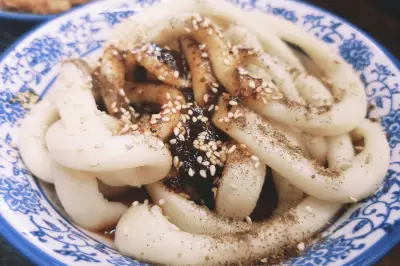
After many stops, we reached Shiping around noon. As the birthplace of tofu, we had to try it. Doing as the locals do, we sat on little stools at a grilled tofu stall—ate some ‘baojiāng’ (bursting-juice) tofu, grilled taro, grilled potatoes, grilled dried jerked pork, mixed noodles, and papaya water. The bill was less than a hundred yuan—what a budget-friendly meal. Strolling through the main street of Shiping, we found a tea house with unique decor. Sitting in the courtyard of an old house, sipping a pot of ripe Pu’er, was pure bliss. I’ll remember Shiping, a place both serene and full of everyday hustle. When I retire, I want to come back and savor it slowly—maybe even join the card-playing circles at the Confucian Temple.
In the evening, back in Jianshui, we had a sour bamboo shoot beef hotpot. The broth got more sour and spicy as it cooked, and before we knew it, we’d gorged on yellow beef until stuffed. We strolled back to the hotel, where the staff had thoughtfully set out lakeside tea snacks, but we couldn’t eat a bite. Fortunately, there was exceptionally smooth Pu’er tea. With the breeze from the lake, we ended the day in a mellow daze.
The next morning we got up early to see the remaining sites in Jianshui. The Zhu Family Garden was beautifully preserved, rivaling those famous Suzhou gardens, and well worth the visit. Before noon we checked out and headed for the Yuanyang rice terraces—the second leg of our journey.
——— Dividing the Ancient Town and the Terraces ———
Jianshui and Yuanyang aren’t far, but half highway and half mountain roads meant it took us three hours to reach Hani Town inside the terrace scenic area. I had booked a view room at the Cloud Terrace Hotel, perched on a hilltop overlooking a valley. Layer after layer of terraced fields dotted with a little village called Qingkou. We decided to grab lunch first, then explore the village.
We ate right at the hotel restaurant, which had a great view and a large terrace surrounded by loquat trees. The loquats were just on the verge of ripening; we picked a few and they tasted pretty good. The owner recommended some local dishes: the cured pork was delicious, and a standout was beef slices stir-fried with mint leaves—everyone agreed it’s an acquired taste. After the meal, a little side adventure: we went to the hotel lobby to rent Yi ethnic costumes. The girls got all dolled up and we followed the ridges of the paddies toward Qingkou. I inadvertently stepped into a flooded paddy right at the start and squelched through the whole walk with water oozing from my shoes. The downhill path offered stunning scenery and lifted our spirits; coming back uphill, we were so exhausted we rested every ten steps. Finally, back at the hotel just before dark, we turned in early to be ready for market day.
Locally, it’s pronounced something like ‘gai’ (first tone). Thanks to the lady boss’s tip at breakfast, today was market day at Niujiaozhai—a slightly smaller market than the one in Xinjie Town, and just a twenty-minute drive from the hotel. Soon after setting off, we unfortunately drove into a fog bank, visibility barely ten meters. Luckily, there were no cars, so we inched forward. As the clouds lifted, we finally reached Niujiaozhai. All around, people wore traditional clothing—not as fancy as the rented costumes in the hotel, but up close you could see exquisite embroidery, beautifully color-coordinated. The market had many embroidered pieces for sale; we were really tempted. The wares were all over the place: what stuck in my mind were whole basins of squirming white bamboo worms, cages of little black piglets, and brightly colored roosters. One path was lined with tofu stalls on both sides.
In the market center, a big shed was still under construction, surrounded by piles of red bricks. A warm-hearted Yi auntie beckoned us over; we bought two jin (one kilo) of local pork, plus potatoes, corn, and chayote. Right next to the brick piles, a row of barbecue stalls had been set up. The auntie ran one. As she deftly prepared the pork and vegetables, we each mixed our own dipping sauce. On the grill, some tofu was already cooked. She spread the seasoned pork chunks evenly across the grate, and amid smoke and sizzle, we started on the tofu. It felt so elemental! But everything was delicious, especially the grilled pork, which left a lingering fragrance. An amazing meal for just 96 yuan.
Before leaving the market, we also bought fermented tofu (moldy tofu). We watched the vendor roll the tofu in chili, pack it into jars, and seal them. Since we couldn’t take it on the plane, we bought extra and sent a package by express delivery to Beijing. I also spotted some red rice jelly that looked so tempting—I had to have it. We bought some and took it back to the hotel restaurant. The owner there wonderfully prepared it for dinner: she chopped it up, mixed it with scallions, garlic, seasonings, and fried peanuts, making it taste like a cold jelly salad. Absolutely delicious, and she didn’t even charge us. In the Yuanyang mountains, it’s quite warm during the day but freezing at night, so we spent a cozy evening in our room drinking tea and chatting.
Up early the next morning, out on the hotel terrace to wait for sunrise—we missed the sunrise but saw a sea of clouds. We watched the mist gradually swallow us up; it was a feast for the eyes. Afterwards, breakfast, checkout, and off we drove to Fuxian Lake.
———— Dividing Yuanyang and Fuxian Lake ————
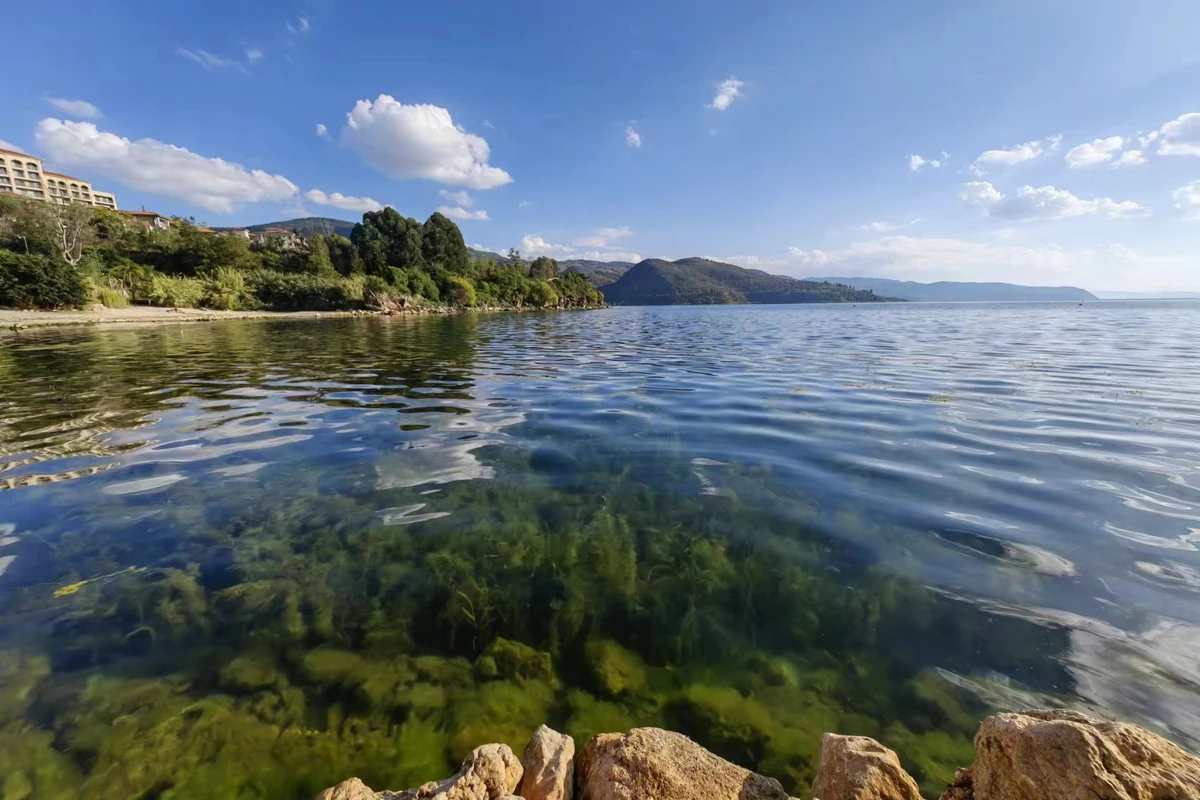
Finally, we’re talking about Fuxian Lake. Locals all call it the sea. I booked a 180-degree full sea-view room, and it’s no exaggeration: standing on the balcony, your eyes are filled with water, vast and boundless. For Fuxian Lake, I wholeheartedly recommend staying at the Hilton near Taiyangshan Town—it occupies the best lakeside spot, offering a first-row view angle. The hotel’s landscape design is exquisite: large swaths of purple sage between the hotel and the green lawns make a gorgeous backdrop; a bamboo-lined path leads down to the lake. In the off-season, Hilton’s beach is practically a private space. The turquoise, serene lake water is so beautiful it leaves you speechless. The lakeside ring road is about 100 kilometers. As we sipped tea, we scrolled through travel guides and reviews on various platforms, roughly figuring out the must-visit spots, which would cover about half the lake.
The next morning, after a hasty breakfast, we set off straight for ‘Starfish Cave’ (‘Mingxing Yudong’), about forty-odd kilometers away. The road was good, and we got there in forty minutes. We were the first visitors of the day. The small white-sand beach was completely empty, the water unbelievably clear, the sound of waves lapping the shore making you feel like you were vacationing on a tropical island. I understand now why reviews here are mixed: if it were packed with tourists, this tiny beach wouldn’t impress, but with nobody around, it truly deserves the nickname ‘mini Maldives’. Walking along the beach, you reach the fish caves. When the tide rises, water pours into these caves—a local fishing wisdom.
Next stop: Lucong Scenic Area. The Bijia Mountain inside was worth climbing; from the summit, the vastness and grandeur of Fuxian Lake unfold, and you can see the famous red sand beach. On the peak, we met visitors from Kunming who highly recommended we visit Moon Bay Park to see the flowers.
Approaching noon, we went for lunch. Relying on the instincts of dedicated foodies, we wound through the roads and finally settled on a restaurant called ‘Eight Bowls of Pig’ in Guanglong Town. The unassuming little shop stood out among all the copper-pot fish joints. Their cold poached pork, pea shoot soup, and fried arrowhead (cigu) were all superb, and the prices very reasonable.
Just outside the town is Fuhai Bay Park. On impulse, we decided to check it out, and it was spot-on. It turned out to be bigger and more beautiful than the Moon Bay Park we later visited—wetlands, beaches, and flower seas. We took loads of pretty photos. If I ever return to Fuxian Lake, I’d choose to stay near this park for a few days.
Originally, we planned to watch the sunset from the hilltop of Taiyangshan Town. But as it was off-season, the town felt a bit desolate, and we were all pretty tired. In the end, we unanimously decided to watch the sunset from our hotel balcony. The balcony did not disappoint: we soaked in the sight of the sun melting into gold, with the sky ablaze in color.
For dinner, we drove just a few minutes to a stone-pot fish restaurant. We had sour soup fish hotpot, pan-fried ‘kanglang’ fish, and copper-pot potato rice. The owner was very kind: not only did he round down the bill and give us free drinks, he also thoughtfully recommended a tasty breakfast spot. We’re straightforward folks, so the next morning after checkout, we navigated straight to that very place—‘Wenshan Sour Broth Rice Noodles’. For twelve yuan per person, you get sour broth with three kinds of meat, unlimited rice noodles, plus free congee and soy milk. The sour broth was so incredibly delicious that we instantly understood why the stone-pot fish owner drives ten kilometers every day for breakfast here.
Today we leave Yunnan for Beijing. The final stop was to try our luck at Haigeng Dam—maybe the seagulls had returned early this year.
———— Dividing Fuxian Lake and Haigeng —————
We were in luck: plenty of red-billed gulls had already arrived at Haigeng Dam. But there were so many tourists that the birds were overfed; we had to wave our arms until they ached before a gull finally deigned to visit us. After feeding the gulls, we felt content and started searching for the last meal before leaving Yunnan. Luck smiled on us again—we walked nearly two kilometers along Haigeng Avenue and found a restaurant called ‘Dai Family Courtyard’. It was wonderful. The waitress kindly warned us that the hand-grabbed platter for two was plenty. We added a pounded chicken feet dish and a shredded bamboo shoot soup. Even so, we couldn’t finish; the platter was extremely generous, with a whole grilled fish, a whole roast chicken, and a dozen other dishes and staples. I really love Dai flavors.
In the afternoon, we rested on the grass in a wetland park by Dianchi Lake. When the time was about right, we headed to return the rental car. Their driver then took the four of us to Kunming Airport, drawing a perfect full stop to our seven-day trip.
This was actually my third time traveling in Yunnan—I’d been to Dali, Lijiang, Lugu Lake, Mangshi, Ruili, and so on. It feels like there’s still so much unseen and so much beauty untasted. Tengchong, Pu’er, Xishuangbanna—I’m already making plans for you!