Kunming Travelogue: January 2024
Day 1: Evening – Watch Dynamic Yunnan
Dynamic Yunnan, a national first large-scale original ecological song and dance collection, is an artistic masterpiece passionately created by China’s renowned dancer Yang Liping, who served as artistic director, chief choreographer and leading performer. It has become another classic born in Yunnan, following “Five Golden Flowers” and “Ashima”.
Performance time: Monday to Sunday (20:00–21:30)
Venue: Yunnan Art Theatre
This large-scale original ecological song and dance collection is a stage production that blends traditional beauty with modern vigour. It reintegrates and reconstructs the essence of most authentic indigenous rural dance and classic ethnic dance, vividly presenting Yunnan’s rich ethnic charm.
Day 2: Morning – Yunnan Nationalities Museum
This is the most concentrated collection and exhibition venue for the history and culture of Yunnan’s various ethnic minorities, and also the largest ethnic museum in Southeast Asia.
Noon – Feed seagulls at Haigeng Dam
Coming here to see the seagulls is a great choice. Winter is the season for watching seagulls, and the spectacle is magnificent. Red-billed gulls fly to Kunming for winter every November and depart for northeast China, Siberia and other places in March or April the following year.
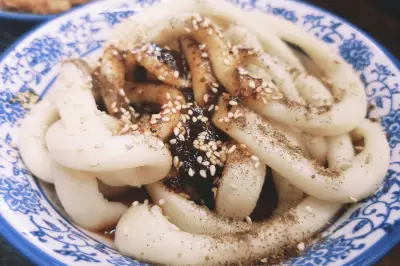
Walk at noon to the nearby Tianshanyuan Mengzi Crossing-the-Bridge Rice Noodles, a bowl costs 38 yuan.
Next door is the Yunnan Cigarette Culture Exhibition Centre; buy two packs of Yuxi cigarettes.
Afternoon – Western Hills Dragon Gate Scenic Area
Walk along Haigeng Dam for about 2 kilometres to the Kunming Tourist Cableway and buy a 60 yuan cable car ticket. The cable car crosses Dianchi Lake, offering views of Dianchi scenery. After descending from this cable car, you are at the foot of the Western Hills.
Then buy a 70 yuan Western Hills combo ticket, which includes admission, cable car, sightseeing vehicle, and a bus back to the city.
Before entering the scenic area, you can deposit large luggage; this is also the exit when you finish. After entering, first take the cable car, climb the Western Hills, pass through the Dragon Gate Grottoes, then take the sightseeing vehicle back to the scenic area entrance. At the entrance is Nie Er’s Tomb. After visiting the Nie Er Memorial Exhibition, take the bus back to the city.
The Western Hills, anciently called Biji Mountain, during the Ming Dynasty known as Taihua Mountain, and commonly called Western Hills since the Yuan Dynasty, resemble a giant reclining Buddha when viewed from a distance, hence also named Sleeping Buddha Mountain. Facing Dianchi Lake to the east and connected to the Hongyan hills in the east of Anning City to the west, it spans 3–4 km from east to west.
The Dragon Gate Scenic Area is the collective name for the ancient architectural complex of Sanqing Pavilion and the Dragon Gate Grottoes. Sanqing Pavilion is built on the sheer cliffs between Luohan Mountain and Guabang Mountain, more than 300 metres above Dianchi Lake. The nine-storey, eleven-pavilion complex of Sanqing Pavilion rises and falls at different heights, comprising Lingguan Hall, Sanqing Hall, Yuhuang Pavilion, Lingxiao Pavilion and other sights.
The Dragon Gate Grottoes, located south of Sanqing Pavilion, encompass the entire grotto and pathway project carved into thousand-ren cliffs, starting from the “Bieyou Dongtian” stone archway at Sanqing Pavilion in the north to Datian Pavilion in the south, and featuring Lanhai Place, Ciyun Cave, Yunhua Cave, Datian Pavilion and other attractions.
Nie Er (1912–1935) was from Yuxi, Yunnan, a famous Chinese composer and author of the “March of the Volunteers”. His tomb is shaped like a plucked string instrument.
Nie Er, original name Shouxin, courtesy name Ziyi (or Ziyi), was born in 1912 to a poor medical family in Kunming, Yunnan. In 1933, he joined the Chinese Communist Party on the introduction of Tian Han. In 1935, he planned to travel to the Soviet Union via Japan. Tragically, on 17 July, he drowned while swimming at Kugenuma Beach in Fujisawa City, Kanagawa Prefecture, Japan.
On 1 November 1954, Japan erected a monument to Nie Er near where he perished at Kugenuma Beach in Fujisawa.
In keeping with the friendly wishes of the two peoples, Kunming and Fujisawa – the places of Nie Er’s birth and death – became sister cities in 1982.
Day 3: Yunnan Provincial Museum
Yunnan is the world’s unique natural museum of religions. From early Tantric Buddhism transmitted from India, to Huayan and Pure Land schools from the Central Plains, from Tibetan Buddhism introduced in the north to the Theravada Buddhism prevalent in Southeast Asia to the south, every school in the history of Buddhist development can be found in Yunnan.
Bronzeware is one of the most important parts of Yunnan’s cultural relics. It holds a significant position not only in Yunnan’s history but also in the world history of bronze. The Yunnan bronze culture centred on Dian bronzes exhibits exceptionally high artistic levels and rich social and cultural connotations.
Silver-gilt gold-inlaid pearl Garuda of the Dali Kingdom (Song Dynasty)
Unearthed in 1978 from the main pagoda of Chongsheng Temple in Dali. The Garuda, Sanskrit name Garuda, is revered as the protector deity of Dali and belongs to the Eight Legions of Heavenly Dragons and Beings in Buddhist guardianship. Legend says the Garuda was originally a fierce giant bird that could subdue dragons. Later, the Garuda took refuge in the Dharma and became a Buddhist guardian deity.
Day 4: Kunming Golden Temple Scenic Area
The Kunming Golden Temple Scenic Area gets its name because the main hall is cast in brass, radiating brilliant golden light under the sun that illuminates the green valleys and dense woods. It is also called Tongwa Temple.
The renowned Golden Temple is part of the Taoist Taihe Palace, first built in the Ming Dynasty (1602). It is one of China’s four great bronze halls and the best preserved.
Re-renovated in the 10th year of the Kangxi reign (1671) by Wu Sangui, the Prince of Pingxi, it has a long history. The Golden Temple boasts beautiful natural scenery, with paths winding through woods, towering verdant trees blocking out the sun, and occasional bird songs, embodying the essence of Taoist culture.
The architecture demonstrates the superb copper-smelting technology of Yunnan 300 years ago. A bronze Seven-Star Banner hangs beside the hall, adding a more ancient and solemn ambience. The exhibition room displays a bronze bell cast in the 21st year of the Ming Yongle reign (1423) and a battle sword used by Wu Sangui. The Golden Temple and its inscribed metal steles carry significant historical, artistic and scientific value, and are now a National Key Cultural Relics Protection Unit.
Leaving your vehicle at the foot of the hill and ascending on foot, cross Yingxian Bridge, enter the “Mingfeng Shengjing” archway, and pass through the “First Heavenly Gate”, “Second Heavenly Gate” and “Third Heavenly Gate”. Climbing through the gates, you see the antique and solemn gate of “Taihe Palace”. A couplet reads: “Painted rafters touch the clouds, occupying only three mu of green mountain land; vermilion towers reflect the sun, opening another realm of green fields.” Enter the temple gate, pass through Lingxing Gate, and you will see a towering brick wall, roughly several dozen zhang long, somewhat resembling a royal Forbidden City. Going up the steps into the “city” and ascending the high staircase right in front, you arrive at the central building of Taihe Palace – the famous Golden Temple.
Above the gate of Taihe Palace in the Golden Temple park hangs a large plaque inscribed with four characters: “Yingwu Chunshen” (Parrot in Deep Spring), suggesting that it is spring here all year round. The temple gate is called “Lingxing Gate”, flanked by couplets praising the scenery and Taoist thought. The Golden Temple is not only one of China’s four great bronze halls, but also the heaviest and best preserved.
Outside the Golden Temple are city walls, gates and battlements, with towers atop. Behind the hall stand a camellia and two crepe myrtle trees, said to have been planted in the Ming Dynasty. Inside Taihe Palace, there is also a 20 kg Seven-Star Sword, a treasured weapon of Zhenwu for subduing demons and monsters, and a 12 kg wooden-handled broadsword, said to be the battle sword used by Wu Sangui.
The Golden Temple is famous at home and abroad for its camellias. The Golden Temple Camellia Garden has thousands of potted camellias. Camellia, also known as shancha, is one of Yunnan’s eight famous flowers with a cultivation history of over 500 years. Yunnan is known as the home of camellias. Camellia is also the city flower of Kunming.
Day 5: Morning – Kunming Municipal Museum
Inside the Kunming Municipal Museum are exhibitions of Bronze Culture Masterpieces, the Dizang Temple Stone Pillar, Dinosaur Fossils, and the Kunming Flying Tigers Memorial Hall.
The World of Eight Legions of Heavenly Dragons and Beings – The Dizang Temple Stone Pillar from the Perspective of Art History
The Dizang Temple Stone Pillar is carved from five sections of red sandstone, standing 6.5 metres tall, with a seven-storey octagonal pagoda shape.
As a pinnacle of Chinese sculpture during the Dali Kingdom (Song Dynasty), the entire pillar gathers a multitude of deities in orderly arrangement, resembling a three-dimensional mandala. The lower part of the mandala features the Iron Wall Mountain, within which lies a vast ocean where eight dragon kings swim. Above is Mount Sumeru, guarded in four directions by the Four Heavenly Kings. Further up, three hundred deities including the Four Directional Buddhas, Four Great Bodhisattvas, Buddhas of the Three Times, Garuda, Four Wisdom Tathagatas and Ushnishavijaya gather in front of Vairocana (who does not manifest physically, replaced by the pillar itself) to listen to teachings and admonishments: “Devas, humans, and sea monsters appear to be shouting or speaking.” Thus, the entire pillar resembles a sea congregation of deities, expressing mankind’s prayer that disasters be dispelled, blessings bestowed, and beings protected, and also reflecting the imagination of different strata in the Dali Kingdom a thousand years ago regarding an ideal world.
Dinosaurs are representative Mesozoic reptiles that lived from 255 million to 65 million years ago. Yunnan is the home of dinosaurs. In 1938, palaeontologists discovered a large early saurischian dinosaur in the Lower Jurassic strata of Lufeng, Yunnan, naming it “Lufengosaurus” after the discovery site. In 1987 and 1993, during archaeological excavations at Xiyang Township in Jinning County, researchers found “Dilophosaurus sinensis” fossils and a large quantity of dinosaur bone and footprint fossils. Among them, Dilophosaurus sinensis was discovered for the first time on the Eurasian continent, and over 20 species belonging to 14 genera of Zheng’s and Yang’s footprints have been identified, which is rare worldwide.
Kunming Flying Tigers Memorial Hall
On 1 August 1941, with the support of the US government and recruitment by the Chinese government, the First American Volunteer Group was formed and committed to combat against Japan in the China-India-Burma theatre. A year later, the US Air Force Task Force and the 14th Air Force successively entered China.
All three air force units were commanded by American Claire Lee Chennault. They were nicknamed the “Flying Tigers” because their unit emblem featured a “flying tiger” design.
Afternoon – Green Lake Park
Running north–south through Green Lake Park is Ruan Causeway, built in 1834 with funds allocated by Yun-Gui Governor-General Ruan Yuan. Crossing east–west is Tang Causeway, built in 1919 with funds approved by Tang Jiyao, then Commander-in-Chief of the Yunnan-Sichuan-Guizhou Tri-Province Nation-Building Coalition Army under Sun Yat-sen. These two long causeways divide the lake into four parts.
Under the warm winter sun, birdwatch by the lakeside with no wind. Many elderly people play cards and take walks at Green Lake, making it a pleasant winter retirement spot. The climate here is dry with a big diurnal temperature difference. With temperatures from 9°C to 20°C, people wear down jackets in the morning and evening, but perhaps just a shirt at noon.
Guandu Ancient Town, with a history of over a thousand years, is both one of the cradles of ancient Dian culture and a renowned ancient ferry and Buddhist sanctuary in Yunnan. It features many sights from the Tang, Song, Yuan, Ming and Qing dynasties, such as the “Five Mountains”, “Six Temples”, “Seven Pavilions” and “Eight Temples”, as well as over a hundred well-preserved “Yikeyin” style folk dwellings, earning the name “Little Yunnan” in ancient times.
Guandu erkuai (grilled rice cakes), Guandu mixian (rice noodles), and Guandu baba (baked pastry) are the “Three Treasures of Guandu”.