A Winter Trip to Lijiang
After a busy year-end at work, everyone started thinking about their unused annual leave, and I began to yearn for the outside world. Scanning the map of China from east to west, north to south, I looked for a place to relax for a few days. The north had already entered winter, not suitable for outdoor activities. The southern water towns of Jiangnan had just hosted the Internet Conference, and the residual buzz probably hadn't faded yet. I had already visited Yangshuo in Guangxi, Xiamen and Quanzhou in Fujian. What about Lijiang in Yunnan? When I mentioned going to Lijiang, my friends naturally assumed I had already been there, given my restless nature and Lijiang's fame. Lijiang's fame comes from two things: First, a quick online search yields countless travelogues and guides, most filled with praise, along with stunning photos that make it seem like paradise on earth. In recent years, it has also gained a reputation for 'romantic encounters,' sparking imaginations. Second, during peak tourist seasons, Lijiang in Yunnan is as famous as Sanya in Hainan, often making headlines in travel news. Though this year it was overshadowed by the 'Qingdao prawn' incident, its long-standing reputation remains unscathed. I usually have little interest in such overly developed, commercialized, and morally eroded tourist spots. But considering it was the off-season and Lijiang enjoyed good sunshine, I thought it wouldn't hurt to temporarily escape the gloomy Guangzhou and bask in some sun.
Without further ado, I asked my husband (LG) to book a flight the next day, checked the weather forecast, packed a few clothes, and dragged my suitcase to the airport bus. When the plane made a stop in Kunming, the sun was already shining brightly. By the time we arrived in Lijiang, the sky was clear without a single cloud. As the plane descended in circles, I could see the famous Jade Dragon Snow Mountain. I had booked a guesthouse in Shuhe Town, which was said to be relatively quiet. The driver picked me up, and the guesthouse owner's first words to me were the same as the driver's: "You're alone?" I was surprised too—hadn't this place earned a reputation as a destination for solo travelers? At least on the same flight, I saw several women traveling alone with their suitcases. Whatever the owner's implied thoughts ( >_< ), I was just here to wander aimlessly. Before coming, I had decided: I was here to rest, not to exhaust myself, and I firmly refused to visit Jade Dragon Snow Mountain. So when the driver asked if I wanted to go to the mountain the next day, I replied firmly, "I have altitude sickness, so I won't go up the mountain." The driver then asked, "Are you feeling unwell now?" Unwell? Lijiang's altitude is only 2,400 meters, right? I replied firmly again, "No, Lijiang's altitude isn't even above 3,000 meters." Later, I realized I had spoken too soon (^0^). I had wanted to visit Blue Moon Valley, but the driver told me it was part of the Jade Dragon Snow Mountain scenic area, and visiting it alone would still require paying the mountain entrance fee, which wasn't cost-effective. Fine, I'd just stay in the town and rest. The guesthouse owner was from the northeast, and probably not used to winter without heating in the south. The room was well-equipped for warmth: the air conditioner had both cooling and heating functions, the toilet was electric with heated seat and bidet, and the hot water was plentiful. Although the nighttime temperature in Lijiang dropped to -4 or -5°C, the Naxi-style courtyard houses were well-sealed, so it wasn't cold. I could sleep comfortably under a thick blanket without turning on the heater.
Lijiang Nayu Lan Boutique Guesthouse
I hadn't yet been to Dayan (the old town), so I didn't know how bustling it was, but Shuhe was indeed quiet. When I went out for dinner in the evening, there were few people on the streets. I found a small restaurant on Dianping (a review app) and ordered a grilled fish and a bowl of rice. While eating, I realized the downside of eating alone: I couldn't finish my food~ The night in Shuhe was really cold; I felt that even the shop owners must want to go home and snuggle in bed. The bluestone streets were sparsely filled with pedestrians, shop doors were half-closed, red lanterns hung high, and the moonlight was tranquil. That atmosphere was perfect.
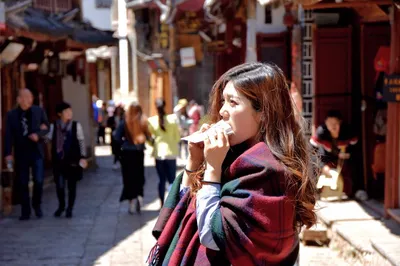
I felt a bit tired (probably starting to get altitude sickness), so I decided to go to bed early. The front desk guy had turned the heater to full blast, sitting in a thin shirt drinking tea. I stood in the courtyard gazing at the moonlight for a while, then went back to my room, washed up briefly, and reported my day's activities—food and lodging—to my husband on WeChat. Then I crawled into bed and went to sleep. The next morning, the sun didn't shine into the courtyard until around 8 or 9. I got up lazily, washed my face, brushed my teeth, wrapped a scarf around me, and went out to find breakfast. Regardless of anything else, Lijiang's sky is truly blue—that pure, high-plateau blue. When photographed, it looks like a solid-color backdrop. Gazing at the pure sky and breathing the fresh air made my appetite soar. Shuhe Ancient Town is said to have a similar layout to Dayan, with winding streams flowing between the scattered houses. Because there weren't too many tourists and the streams were cleaned regularly, the water was still clear. I sat down at a breakfast stall by the stream and ordered a clay-pot rice noodles (migan). Eating the steaming hot noodles on a crisp morning, I watched children going to school and shopkeepers slowly taking down their shutters to open for business. After finishing the noodles, I wandered aimlessly along the stream through the town. Shuhe was also an important town on the Ancient Tea Horse Road, nestled between mountains and water. Apart from everything else, I liked the architecture here: each household had a small courtyard with comfortable tables and chairs, perfect for sunbathing, drinking tea, and enjoying the pure blue sky and colorful flowers. But when I noticed that most buildings had been converted into shops or guesthouses, with artsy signs hanging, and few original residents remained, I felt that this leisurely atmosphere was a bit contrived. I passed through Sifang Street, stood on the Big Stone Bridge for a while watching a couple shivering in their beautiful dresses while taking wedding photos, then followed the stream to visit the Longtan Temple (actually the temple name might be different, but from context it's a temple along the stream). I wanted to hike up the hill to get a panoramic view of the town, but halfway up, I noticed the path was deserted. Remembering my husband's advice before I left—"Be careful since it's close to Chinese New Year"—I hesitated for a moment and then turned back.
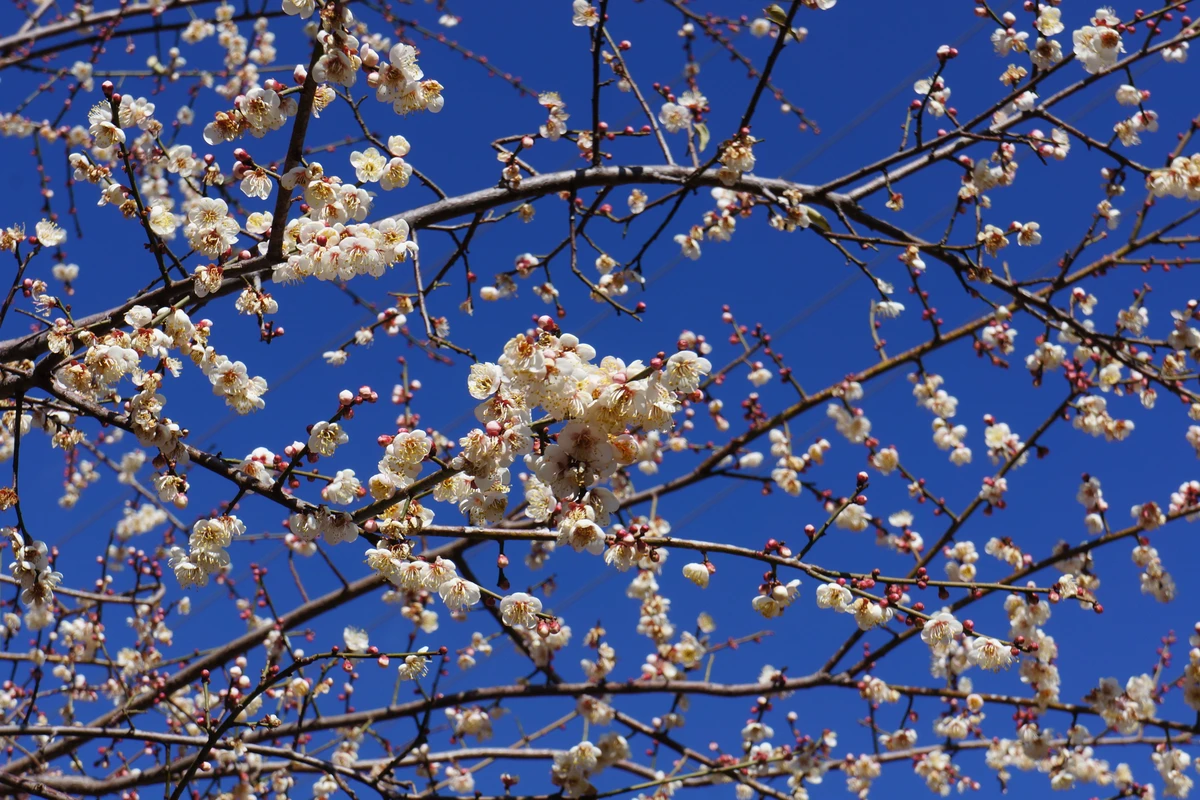
Walking back along another street, I came across the Tea Horse Road Museum. The exhibits inside didn't particularly appeal to me, but a few ancient plum trees in full bloom were a delightful surprise.
Tea Horse Road Museum
Almost every household in the town kept a dog, of various breeds and sizes. There were countless adorable dogs, and many served as living mascots for the shops. The dogs here were as laid-back as the people, not as wary of strangers as city dogs. And they were gluttonous. It's strange that a dog, well-fed and cared for, would still be so greedy, but the dogs here were. If you met them in the morning or if you were holding food (not necessarily a bone), they'd come sniffing around. I saw two well-groomed poodles standing outside a shop, staring longingly at a child eating a snack. They looked both cute and laughable.
After wandering around town for half a day and basking in the sun to my heart's content, I returned to the guesthouse for an afternoon nap. Then it suddenly hit me: I had forgotten to apply sunscreen today! Ah... my face! ( >0< ) As I drifted into a nap, I started to feel some back and shoulder aches—the inevitable altitude sickness had returned. I dozed until the sun began to slant westward, then went out again to find food. Feeling unwell, I wanted some soup, so I ordered a slow-cooked chicken soup. Yunnan cuisine tends to be salty; having visited Yunnan a few times, I had no particular preference for the food here. Cantonese people are spoiled by their rich culinary traditions and are hard to please.
The shop owner's child was running around inside. The local children had the typical highland features: rosy cheeks. Whether for food or general goods, prices here were very commercialized—not necessarily rip-offs, but not cheap either. Tourists eating in groups often gave me a second glance as a solo diner, but I didn't feel uncomfortable—I just felt wasteful leaving food uneaten. If only there were a dog sitting across from me ( >_< ). After finishing my soup, I strolled back to the guesthouse, buying two handmade necklaces on the way. The shopkeepers here all seemed to say the same thing: "We don't haggle. This goes against Chinese tradition—bargaining is one of the joys of shopping. If you want a discount, you have to do your homework first and know the market price. Only then might they relent; haggling blindly won't work. Shuhe isn't big; as long as you have a sense of direction, you can always find your way back to the guesthouse. Walking here feels like walking on a movie set: you can capture any scene you want through the lens, but there's no real substance. If Shuhe is an ancient town gradually losing its essence while keeping its shell, then the famous Lijiang Old Town—Dayan—is thoroughly a bustling market full of vendors. But that's a story for later.
I spent the night half-awake, tossing and turning. Unable to sleep well, I decided to get up and wander around before heading to Dayan. By now I had a better sense of the town's layout. I walked toward Sifang Street again, crossed the Big Stone Bridge, and climbed the hill on the opposite side of the river. On the way back, I stopped by the museum to enjoy the plum blossoms again, and from the town parking lot, I could see the distant Jade Dragon Snow Mountain. The town was filled with nothing but shops and guesthouses. Given the number of tourists I saw, I wondered how they all managed to survive. I also saw many shops and guesthouses with "For Transfer" signs. Business, after all, isn't about leisure; no matter how idealistic, one has to face harsh reality.
As I neared the guesthouse, I saw a taxi passing by. I quickly hailed it and asked the driver to wait. Shuhe town had minibuses that whisked tourists to Jade Dragon Snow Mountain or Lashi Lake, but I heard from the shopkeeper that a minibus from Shuhe to Dayan cost at least 30 yuan, while a taxi was only 20. Taxis usually came from Dayan dropping off passengers. I dashed back to the guesthouse, packed my luggage, and ran out. The front desk guy helped me load my luggage into the taxi and invited me to come again. The driver asked where I was going and started complaining as he drove: "The people of Lijiang have long lost their simplicity, and now even Shuhe is the same." He said he had just dropped off a passenger, and when someone else wanted to get in, the drivers of those minibuses wouldn't let them take his taxi and tried to shoo him away. If he hadn't picked me up, he would have had to drive back empty. He then talked about the peak tourist season in Lijiang—soaring prices and crowds. During Golden Week, he had friends visit, and they went horseback riding at Lashi Lake. There were more people than horses; you had to fight to get a ride. I could imagine that scene, but I couldn't understand why anyone would want to travel like that, just to add stress. Maybe they'd be better off staying home. But perhaps everyone's understanding of travel is different; some people just want to say they "have been there." The driver dropped me off near the entrance of my booked guesthouse, charged me 20 yuan, and kindly warned me: "Don't expect too much from this place." ( @_@ ) Dayan's guesthouses were a dime a dozen online, with similar reviews. I chose one reportedly run by a classmate's relative and paid on Ctrip. But when I called, they told me the business had just changed hands (0_0). What was going on? Fortunately, the new owner agreed to honor the original price. I called Ctrip, and after explaining, the customer service agreed to refund the amount and also credited my Ctrip account with the same amount as compensation. A bit troublesome, but Ctrip's service was commendable. The guesthouse was on the edge of Lijiang Old Town, conveniently located and not too noisy. It had a small courtyard with Lijiang's characteristic delicate decoration. The owner arranged for me to stay on the first floor. That day, my altitude sickness peaked: my shoulders and back ached, and I felt utterly weak. I wanted to take a nap, but the girl at the guesthouse was cleaning outside while playing music, so I just lay in bed, unable to sleep. I began to look forward to my return flight tomorrow. After dozing for a while, I decided to go out. The sun was still shining brightly. I followed the alley toward the old town, and gradually the crowds grew. The hustle and bustle of Chinese tourist attractions is mostly the same: bustling with people of all ages. True to expectations, Dayan was just a marketplace. Streets lined with shops and pedestrians, selling similar things: ethnic costumes, handicrafts, hand drums, and the recently popular flower pies. Looking at these shops, you could feel that the town's original essence had been lost. At best, it was now just a larger, slightly prettier commercial district. My suspicion was confirmed when I climbed the hill to find a vantage point for a panoramic photo. On the way, I passed a temple (or Taoist temple; I couldn't remember which). A stone tablet at the entrance identified it as a protected cultural heritage site. I wandered in and found a nice viewing platform with a few tables and chairs. As I stepped up to take a photo, a woman who had been sitting stood up and greeted me: "We have tea and juice here." Oh, I understood. I didn't want anything; I just wanted to take a photo. But she kept a close eye on me, so I nervously took a couple of quick shots with my phone and came down. I tried to go inside, but just as I reached the entrance, someone at the ticket booth poked his head out and asked, "Tea or juice?" I suddenly felt like I had walked into the wrong place: was this a temple or a shop? After wandering the hill a bit more, I headed back. As I descended and left the old town area, I thought, maybe I should go eat. I found a restaurant on Dianping and realized it was inside the old town. I turned back, but just a few steps in, someone stopped me and asked for my Old Town Conservation Fee ticket. What? No one had asked for a ticket when I entered; I assumed it was free. Then I looked around and noticed that at this hour, every entrance to the old town had a checkpoint. It seemed this was the prime time to enter the old town. Well, I had to call the guesthouse to ask how to get back. The staff sent me directions, so I walked to the main street and took a bus back. As for the highlight of many tourists' Lijiang trip—nighttime bar hopping and romantic encounters—I had no interest. Better to go home and rest, save energy for tomorrow's return. Near the guesthouse, I checked Dianping and found a local restaurant for preserved pork ribs (lapaigu). Of course, I couldn't finish it.
That night, half-asleep, I heard a group of young people returning from drinking, laughing loudly in the courtyard, flirting and having fun. It seemed that tourist spots across the country followed a similar pattern: shops, bars, hotels, and then a crowd of young people with rosy dreams. I guess I'm getting old; I just want a quiet place with mountains and water.
I had most of the day left. Thinking I should visit at least one iconic spot, I decided to go to the Mu Palace (Mufu). The morning in Lijiang was still chilly. Dayan Old Town is a UNESCO World Heritage Site, and though I felt this heritage wasn't very cultural, I couldn't deny that the town's layout had its charm—little bridges and flowing water. The buildings inside had been meticulously decorated by businesses. Wooden doors and windows, courtyards with lounge chairs and tea sets, all carefully adorned—a bit contrived, but comfortably bourgeoisie. That morning, I noticed that there were indeed ticket checkers at the entrances, but because it was early and there were few tourists, they didn't really check. However, entering the Mu Palace required showing the 80-yuan conservation fee ticket. I stood in front of the ticket booth for a long time, thinking: I was reluctant to pay a conservation fee for such a poorly preserved old town, but I probably wouldn't come again, so I reluctantly paid. The current Mu Palace is actually a modern reconstruction, built after the 1997 earthquake. Although a reconstruction, it still serves as a representative building in Lijiang Old Town.
The TV series "The Mu Mansion" and "The King of Money" were filmed here. The character Aleqiu, played by South Korean actress Choo Ja-hyun in "The Mu Mansion," was historically described as a generous, hardworking, and sturdy woman. In those days, Naxi women did all the work while men studied at home, so a strong and capable woman was considered beautiful.
The Mu Palace provides free guided tours, but it's not immune to commercialism: during the tour, they offer tea and promote their products. What's Lijiang without commerce? Still, listening to the guide talk about the palace's history was somewhat interesting, and you could go to the hilltop for a panoramic view of the old town. The memorial archway in front of Mu Palace, inscribed with "Tian Yu Liu Fang" (Heavenly Rain Scents), might seem like a Chinese literary phrase, but it's actually a homophone in the Naxi language meaning "Go study."
After leaving the Mu Palace, I wandered aimlessly through the old town, taking the less crowded paths. Here, every household was either a shop or a guesthouse. I heard that the original residents had mostly moved to the new city. Sometimes I think that one place nurtures one kind of people: not everyone will be driven by profit. This has to do with local government management as well as individual choices.
On the streets, I occasionally saw people processing and drying something that looked like medicinal herbs. Upon asking, I learned it was maca, which had once been hyped but was now less popular. Lijiang is one of the main producing areas of maca, but because many people started cultivating it after the hype, and its effects aren't as miraculous as claimed, prices quickly dropped.
Circling back to the guesthouse, I sat in an armchair in the courtyard, basking in the sun and waiting for time to pass. I chatted with the front desk girl, who said she used to be a doctor in Ya'an but found the work too tiring, so she quit and came to Lijiang. She had just arrived a few days ago and still hadn't recovered from altitude sickness. Her reasoning: "I heard Lijiang was nice..." Another young person with beautiful dreams. Still, it's nice to be young—you can still dream, make mistakes, and be willful. For someone like me, who has reached 'forty without confusion' (a Confucian age), there are fewer chances to make mistakes and less fun in being willful. The owner called a taxi for me—80 yuan to the airport. I dragged my luggage and slowly walked out to get in. Lijiang's sun was still blazing, the sky still a deep blue. It's not that the place isn't beautiful, but beautiful scenery alone isn't enough to make one linger. Time to go home.