Spanish Architecture and Art Tour
Spain is one of my favorite European countries. From Gaudi's city Barcelona to Seville, a Game of Thrones filming location, from Don Quixote to Flamenco, the diverse art always brings new inspiration to the journey.
To explore Spain in depth takes time. Because of my preference for Spanish architecture and art, this time I organized a Spanish architecture and art travel route around the capital Madrid. Come with me to discover a niche architectural art tour! Route: Madrid – Toledo – Consuegra – Córdoba – Salamanca – Segovia.
The entire route takes about five to seven days around Madrid. While enjoying a relaxed trip, I not only appreciated the beauty of Spanish architecture and art but also felt people's love for art and life.
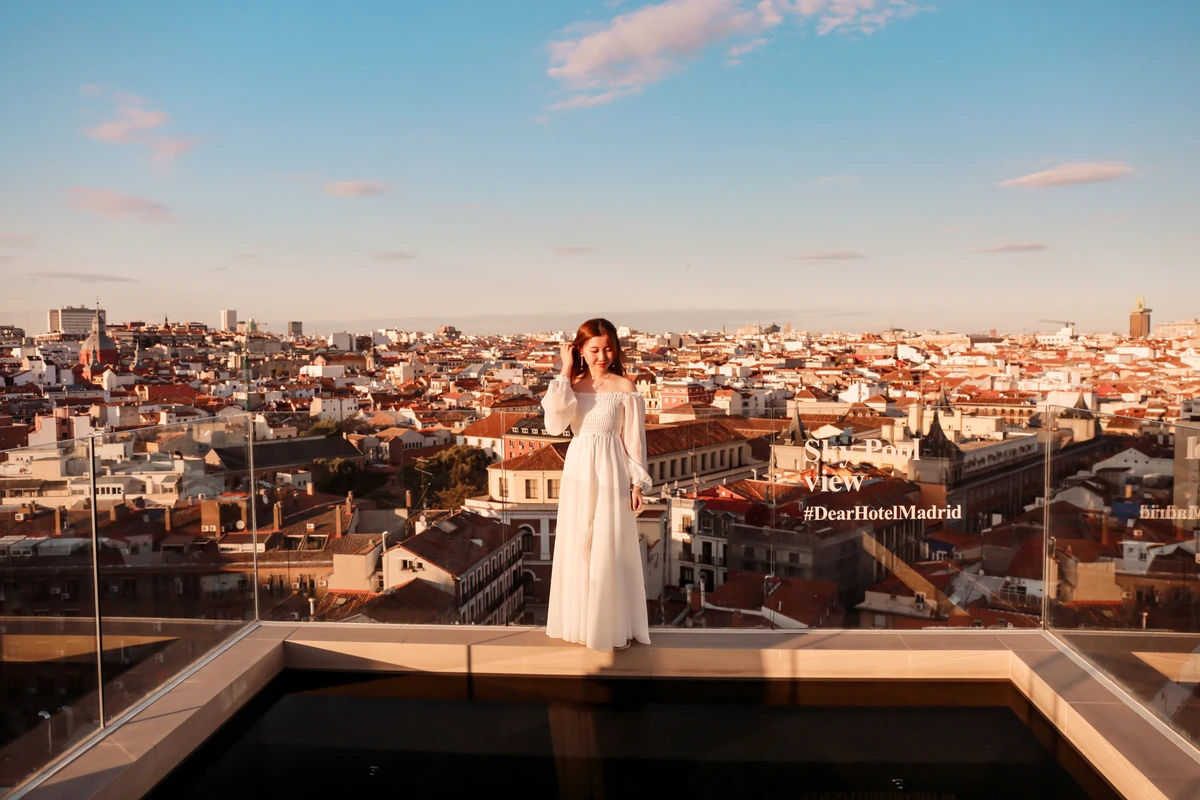
As the capital of Spain, Madrid is not only a transportation hub but also a gathering place for artistic and cultural exchange. Starting our architectural art tour in Madrid is most fitting. When I admired the Madrid skyline from the rooftop at sunset, the red roofs under the pink-blue sky felt like stepping into a fairy tale. Madrid is truly incredible.
When in Madrid, you must visit the iconic Royal Palace of Madrid. Built in 1738, it took 26 years to complete. It is one of the best-preserved and most exquisite palaces in the world, housing countless gold and silver utensils, paintings, and other royal items.
It is best to buy tickets in advance for the Royal Palace of Madrid. It takes about two hours to tour. Coming later in the day means fewer people.
Walking up the entrance steps into the palace, I looked up at the magnificent frescoes on the dome. I could already imagine the luxurious court life that once took place here.
The origin of the Royal Palace of Madrid dates back to the 9th century. It was first built as a fortress on the left bank of the Manzanares River by the Islamic King of Toledo to defend against invasions. The main structure is made entirely of stone and brick, blending Baroque and Neoclassical styles.
The magnificent Royal Palace of Madrid is truly a Spanish artistic gem. There are countless independent buildings within, among which the famous Hall of Alabarderos, the Hall of Mirrors, and the rooms of King Charles III are not to be missed.
After visiting the Royal Palace of Madrid, I went to the Retiro Park to experience the beauty of this royal garden. The day I visited Retiro Park was sunny with a gentle breeze, and the lawns were filled with people picnicking and sunbathing. Spanish sunlight is truly captivating!
Retiro Park was built in the 7th century by order of Philip IV, with over 15,000 plants and many important monuments. In 1632, Philip IV built this palace as a refuge for the royal family.
There is a glass palace made of metal and glass in the park, once used as an entertainment venue for royalty. Today it serves as an exhibition hall. Walking through the gardens, I encountered the Glass Palace surrounded by greenery, contrasting beautifully with the fountain pond. Pigeons were everywhere, unafraid of people. Seeing the harmony between nature and humans, I couldn't help but linger for a long time.
Retiro Park is huge. Besides the Crystal Palace and the lake in the center, there is a small garden near the southeast entrance where peacocks roam freely. If you're lucky, you might even see a peacock spreading its tail!
There are many museums near Retiro Park. I recommend the Museo Nacional Centro de Arte Reina Sofía, where Picasso's most famous painting 'Guernica' is exhibited.
Exiting the Sol metro station brings you to Puerta del Sol. The square is very lively, and Madrid's iconic statue of the Bear and the Strawberry Tree is here. The neoclassical palace-style buildings are worth seeing.
Puerta del Sol is probably one of the liveliest places in Madrid. Here, besides architecture and sculptures, there are many delicious foods and performances. When I was taking photos, many enthusiastic Spanish people jumped into the frame with me. It's easy to be infected by the warm atmosphere.
At sunset, I went to the Temple of Debod to see the most beautiful sunset in Madrid. The Temple of Debod was built in the 2nd century BC and is an ancient Egyptian temple reconstructed in Madrid. Because Spain helped protect the Abu Simbel temples during the construction of the Aswan Dam in Egypt, Egypt gifted this temple to Spain as a token of gratitude.
The temple is located on high ground. From the top of the hill, you can see the palace in the distance, especially beautiful in the sunset glow.
When I arrived at the Temple of Debod, it was already sunset. The slopes and observation decks were filled with people waiting for the sunset. They chatted leisurely, drank beer, and some young people sat around the temple listening to music, waiting for the best moment of the day.
Because of such beautiful scenery, waiting itself became wonderful. The ancient temple, the brilliant sunset, the slow-moving time seemed to remind me not to rush, but to savor every moment of the journey.
When visiting Spain, don't miss the ancient city of Toledo, just an hour's drive from Madrid. Once the capital of the Kingdom of Castile, it is a UNESCO World Heritage site and also known as the City of Blades.
Toledo was occupied by the Romans in 193 BC. In 711 AD, Muslims established the Visigothic Kingdom and ruled Spain for 300 years. Until 1085, Alfonso VI reconquered Toledo, so Toledo is also called 'the city of three cultures,' where Christianity, Islam, and Judaism converged.
On the way into the city, you will pass the Valley Overlook, which offers the best panoramic view of the old city. Be sure to stop and take photos. Crossing the San Martín Bridge over the Tagus River brings you to the old city of Toledo. Wander freely in the old city without a map, as every cobblestone street and alley corner becomes a scenic spot. In the square, various Spanish street musicians play music, and the streets are lined with shops and restaurants. Time seems to stand still here.
Toledo Cathedral
One of the three most magnificent cathedrals in Spain, it stands prominently in the center of the old city. Built on the site of a Muslim mosque, it is also the seat of the Archbishop of Spain.
Toledo Cathedral was built from 1227 to 1493, with interior decoration completed in the 18th century. The main structure is Gothic, with interior decoration incorporating Mudéjar and other styles.
Strolling through the alleys of the old city, you can see the majestic Toledo Cathedral from afar. From different angles, you can feel the grandeur of this Gothic cathedral.
A short walk from Toledo Cathedral brings you to the Alcázar of Toledo, a stone fortress built by the Romans in the 3rd century. It sits on the highest point of Toledo, offering an excellent view.
The castle is square, with four square pointed towers at the corners. Part of it has been converted into a military museum, which is very large and can be explored for a long time. The actual castle ruins can be seen at the entrance, with the broken walls of the base now protected.
Climbing to the observation deck of the castle, I overlooked the river valley around the ancient city and couldn't help but marvel at the stunning scenery of this fertile land.
Consuegra is in the autonomous community of Castilla-La Mancha, a windmill town about 1.5 hours south of Madrid. It is very close from Toledo.
I have always loved the story of Don Quixote by Cervantes, and the actual location where Don Quixote fought the windmills is in Consuegra.
Consuegra has 11 windmills scattered on rolling hills. The white windmills and the small town with orange-red rooftops are charming. Driving along the winding mountain road to the end, I climbed the blue-and-white steps to overlook the endless fields.
These windmills were once used to grind grain. Some have been converted into souvenir shops and bars, sometimes with live music. In the evening, people gather here to watch the sunset, some with children and dogs, looking at the endless fields of La Mancha, sipping a drink. At that moment, I could truly feel the Spanish people's love for life.
Heading south from La Mancha, I arrived at Córdoba in southern Spain, another meeting point of diverse cultures. The Phoenicians, Romans, Visigoths, and Moors all left different marks on this city. Córdoba was once one of the major Islamic cities, with numerous mosques. Diverse cultures interweave here.
The Calleja de las Flores (Alley of Flowers) in the old city is also worth visiting. Looking at the bell tower from the narrow alley full of flowers is a favorite angle for photographers worldwide. Many residential courtyards here have won awards in the Courtyard Festival. During the festival in May each year, they open their doors for public viewing. In the old Jewish quarter, similar beautiful alleys can be seen everywhere, and the Alley of Flowers is a representative example. I wandered among them, seeing every household decorating their courtyards and balconies with fresh flowers, moved by the beauty of everyday life.
The Great Mosque of Córdoba, a UNESCO World Heritage site, is the city's landmark, combining two religious cultures. It was once the second largest mosque in the world. Built in the 8th century, when Muslims occupied Córdoba, they converted half of the Visigothic Christian church. Later, when Christians reconquered the land, they turned the mosque back into a church.
Today it has become the most eclectic religious building. The main structure is Arabian style, a mix of Moorish and Spanish architecture. The minaret was converted into a Baroque bell tower. The dark Islamic-style columns surround the magnificent Catholic church, creating a strong visual impact and spiritual metaphor.
I think everyone who comes here will be touched by the building. The marks left by different religious cultures on the building are so intuitive. Perhaps the beauty of architectural art also includes the history it carries, witnessing the passage of time.
Salamanca, in western Spain, is home to one of Europe's oldest universities, the University of Salamanca, and is also the European Capital of Culture. Strolling through the old city of Salamanca, historical buildings are everywhere, and the singing and playing of street artists create the unique cultural landscape of this city.
Salamanca Cathedral
The Salamanca Cathedral is a perfect fusion of two connected buildings, the New Cathedral and the Old Cathedral. From the top of the tower, you can overlook the entire city. The interior details are also exquisitely beautiful. It is one of my favorite European cathedrals.
The New Cathedral was built from the 16th to the 18th century, incorporating Gothic, Renaissance, and Baroque styles. The Old Cathedral is a Romanesque ancient building.
On the day I visited Salamanca Cathedral, I happened to encounter a wedding. The church entrance was filled with guests chatting warmly. I climbed to the roof of the cathedral to get a close-up view of the unique beauty of this building, which radiates new vitality after integrating diverse cultures.
Plaza Mayor is the essence of the entire city, a unique Baroque-style square in a quadrilateral shape.
Built in 1619, it was once the venue for royal ceremonies and various commemorative events. I came to Plaza Mayor at sunset, had a drink, watched the people coming and going, and felt the leisurely atmosphere of Salamanca.
On the way back from Salamanca to Madrid, you will pass through Segovia. Don't miss this old, exquisite, slow-paced town. Segovia is famous for its Roman aqueduct.
The Roman aqueduct, with a history of 2,000 years, is one of the best-preserved Roman monuments in the world and a UNESCO World Heritage site. It is 728 meters long with 166 arches, built entirely of massive stones without any mortar or cement. Seeing such a magnificent ancient Roman building in the city is incredible.
I especially love Segovia at night. In the darkness, the warm yellow streetlights illuminate the Roman aqueduct, giving it a greater sense of historical depth. Walking through the quiet old city, every brick and tile tells a story.
Finally, I returned to Madrid, ending this short but pleasant trip to Spain. As I left, I thought I would definitely come again. What attracts me is not only the diverse architectural art here but also the warm and inclusive cultural atmosphere and the deep love for life—a legacy more enduring than architectural art itself.
Travelogue Directory
1. First Stop: Madrid
2. Second Stop: Toledo
3. Third Stop: Consuegra
4. Fourth Stop: Córdoba
5. Fifth Stop: Salamanca
6. Sixth Stop: Segovia
Travel Information
Hotel Index
Guide Index
Flight Index
Website Navigation
Travel Index
Cruise Index
Corporate Travel Index
Franchise Cooperation
Distribution Alliance
Friendship Links
Corporate Gift Card Procurement
Insurance Agency
Agency Cooperation
Hotel Franchise
Destination and Attraction Cooperation
More Cooperation
About Ctrip
Ctrip Hot Topics
Contact Us
Careers
User Agreement
Privacy Policy
Business License
Safety Center
Ctrip Content Center
Intellectual Property
Trip.com Group Algorithm Publicity