A Family Reunion Trip to Spain During the 2023 Christmas Season: No Art, No Barcelona
December 28
Barcelona’s metro and buses have a unified ticketing system called TMB, and tickets can be purchased at self-service machines in metro stations. The first time we bought tickets, we made a mistake: the three of us bought one T-Casual 10-trip ticket for €11.85, which is for single-person use, and then we bought an 8-trip family card for €10.50. During our days in Barcelona, we relied heavily on buses and the metro, using them up quickly, and later we bought another family card. This card can be used by several people together and is much cheaper than buying single tickets, as a single bus ticket costs €2.40. When using the metro or bus, after inserting the card, a usage record is printed, and once the trips are used up, the card is automatically invalidated. Metro tickets are zoned; you can buy a ticket for one zone or one that covers multiple zones. But if you are only going to Park Güell, the Sagrada Família, Casa Batlló, Casa Milà, and La Boqueria Market, a single zone is enough.
Barcelona is Gaudí’s city. Tickets are expensive, and you can use passes: GoCity All-Inclusive Pass (2 days €119, 3 days €149) or GoCity Explorer Pass (2 attractions €62, 3 attractions €84, 4 attractions €104). We bought all our tickets separately on each attraction’s official website and confirmed the entry times in advance.
The Sagrada Família is the most worthwhile attraction in Barcelona, and it is highly recommended to buy tickets in advance. Ticket + audio guide: adults €26, students €24. The ticket includes an app guide. I visited the Sagrada Família ten years ago, but this time I listened carefully to the introductions of the three façades: the Nativity Façade, the Passion Façade, and the Glory Façade. The church’s exterior is unique. Gaudí did something very disruptive: he brought what is usually inside the church to the outside. All the altarpieces, images, etc., that are normally inside a cathedral were moved to the outer walls by Gaudí, creating a Bible carved in stone.
Online it is said that it is better to visit the Sagrada Família in the afternoon because the light passing through the stained glass is beautiful. Actually, I think the morning light is already very beautiful. The windows facing the sunrise use cool tones—blue and green—which match the colder early hours of the day. Then, as the sun moves forward, the windows that the light enters through are red and orange, gradually warming over time. This provides a very symbolic passage of time, changing as the day goes on. The Sagrada Família has a loop playing this beauty of time, and I recommend stopping to enjoy it.
Finally, go to the Sagrada Família Museum located under the southern transept. It first shows photos and brief introductions of the Sagrada Família from different periods. There is also a model workshop where, through a glass wall, you can see staff working on church models. In Gaudí’s time there were no computers, but the church he designed was extraordinarily complex. We could not help but marvel at his precise control over the structural support and forces; in fact, he had his own methods of research and testing. One model shows how Gaudí used parabolic structural functions to elegantly support the church’s vaults. The museum also displays the candlesticks and furniture Gaudí designed for the church liturgy, as well as some small design elements.
On our way out of the church to the metro, we turned back to look at the unfinished façade. Even the drainage gargoyles are vividly carved—frogs, lizards, and long snakes climbing on the walls. Not only are they not frightening, but they also transport us to an ancient world full of nature and innocence.
Taking the metro was very convenient to reach La Boqueria Market, which is the largest and most diverse market in Europe. I heard its history goes back several hundred years, when the market was very simple—just a small open space with a few tables to start selling, mainly fish and meat, nowhere near as colorful and complete as today. If you are a foodie, you will not be disappointed here. Fresh seafood, cheese, ham, drinks, cold beverages... Under the warm yellow lighting, everything firmly captures the gaze and appetite of gourmands. This market is much larger than the San Miguel Market we visited in Madrid. The arrangement of food and lighting makes the already dazzling products shine, looking appetizing just by looking at them, full of beauty and temptation. We spotted a seafood stall in the market, and the staff led us to a restaurant on the edge of the market. We rested there and enjoyed a delicious seafood lunch.
Barcelona is Gaudí’s city. Gaudí is known as “God’s architect,” with 17 of his works listed as national monuments by Spain and 7 listed as UNESCO World Heritage sites. The biggest feature of his works is that he drew inspiration from nature and believed that curves are the most beautiful. There are almost no straight lines in his works; every line is full of vitality. The great and fantastic architectural curves are both colorful and full of fun, making people unconsciously want to indulge.
We first arrived at Casa Milà. The building has no sharp edges or corners; the large wavy shape of the exterior and the strangely shaped chimneys and ventilation ducts on the roof give a sense of fluidity in time and space.
Finally, we came to Casa Batlló. A fairy-tale-style Gaudí building, as dreamy as the ocean. Many people come here, so you must buy tickets in advance. Even with a reservation, you still have to queue outside to enter, waiting about half an hour.
Both of these houses are very interesting in design, full of imagination inside and out, with dreamy curved lines and colors. We held the handrails and sat on chairs that were both beautiful and ergonomically designed. We could only sigh as poor people: the rich really live a comfortable life! Not only is it comfortable to live in, but it is also artistic.
The souvenir shops at Casa Batlló and Casa Milà are worth visiting. All souvenirs use Gaudí’s design elements—colored tiles, the sea, stained glass, etc.—and all sorts of small items are exceptionally exquisite.
Following the bustling Passeig de Gràcia, we arrived at El Corte Inglés, a large Spanish department store chain in Plaça de Catalunya, to buy some gifts. It was packed with people. During our days strolling along the commercial streets of Spain, we were surprised to find that there really are a lot of people in Spain!!!!
In the evening we dined at a Japanese restaurant near the hotel; it was not impressive.
December 29
Early this morning we encountered an embarrassing incident on our trip. Our original plan was to go to Park Güell. I visited it ten years ago, and the lively scene in the evening—including the architecture and people—left a deep impression, so it was worth revisiting. Unexpectedly, when we arrived at the park, tickets were sold out. Who would have thought a large park would have no tickets? I thought only venues with limited space would have capacity restrictions. It was a bit of a regret, so we turned around and went to our second stop. Remember to buy tickets in advance.
In Barcelona, there is a street that cuts through the city center, mixing a dazzling array of elements: historic buildings, a flower and bird market, street performances... The southern end of La Rambla leads to the Plaça del Portal de la Pau, and in front of the square is the sparkling Mediterranean Sea. In the center of the square stands the majestic Columbus Monument. Built of dark red marble, the monument is 60 meters tall, inscribed with the words “Glory to Columbus” and “Tribute to Columbus.” In the middle part of the monument are five flying goddesses. At the base are eight large black lions and a seated statue of Queen Isabella of Spain. At the top, Columbus holds a copy of Marco Polo’s travels, pointing one finger toward the vast misty sea, his gaze piercing the fog over the Mediterranean, looking east. In 1492, Columbus set sail. A year later, Columbus returned triumphantly with news of discovering the Spice Islands, and the King of Spain personally welcomed the returning maritime hero here. We carefully looked at the carvings at the base of the monument depicting several historical moments, sighing at Columbus’s life chapter.
Today’s weather forecast said it would be cloudy, but at that moment, sunlight pierced through the clouds and spilled onto the sea, making the masts of a fleet of yachts gleam. We sat on a bench by the sea, watching the cold waves gently rise and white birds leisurely descend. I, who had woken up at 7 o’clock to attend a video conference, slowly relaxed. After we were contentedly feeding the birds by the sea, we walked along La Rambla to the old Gothic Quarter. Street performers and vendors brought the whole street to life! Families and tourists alike were enjoying the winter sun and the leisurely holiday atmosphere; even the fastest-working brains would relax at such a time.
The best way to experience a city is on foot—a city walk that more and more people love. The Gothic Quarter is an important part of Barcelona’s old town and the heart of the city. It was once a Roman village, so traces of its glorious past remain everywhere. Naturally, it is a place tourists do not miss.
Following the winding, narrow alleys of the Gothic Quarter, we arrived at the famous Plaça de Sant Jaume, where the Government of Catalonia and Barcelona City Hall are located. A few more steps brought us to the Barcelona Cathedral, the center of the old city, spreading out in all directions, full of the bustling life of the locals. We enjoyed strolling and stopping, temporarily forgetting the attractions we were heading to, lingering outside various small shops. Continuing north, we came to The Kiss of Freedom, a wall made of thousands of red and pink ceramic photos, each one collected from citizens online, which from a distance looks like a couple kissing.
The old town was filled with a festive atmosphere; every corner could bring surprises: performances, jugglers, unique small shops with crowds of people, which made us, who are used to online shopping, quite envious.
This was the last dinner in Spain. We had been eating indoors all these days, and everyone agreed we should eat outside like foreigners, experiencing the power of the nearby heater. We were surrounded by warm coziness, and the delicious pizza and pasta certainly did not disappoint us. The three of us cherished our final moments together.
December 30, 2023
It was time to say goodbye. Our daughter’s flight back to the UK was at Terminal 2, departing a bit later. My husband and I were to transfer from Terminal 1 to Frankfurt and then back to Shanghai. After checking out, we took a taxi together to the airport. Our daughter first escorted us to the security checkpoint. We hugged each other tightly; the next time we meet might be half a year later. Life is a journey; the most important thing is not to miss any wonderful moments!
Tax refund at Barcelona Airport was very convenient. Upon entering Terminal 1, on the far left side, you can see the tax refund point in the corner. Now the Spanish customs use machines to scan the barcodes on shopping tax refund forms, then go to Global Blue, hand the forms to the staff, and tell them you want cash in euros. That’s it! Shopping in Spain is very cost-effective because luxury brands are priced the same across Europe; the comparison is between each country’s tax refund threshold and refund rate. Spain has the lowest tax refund threshold and the highest refund rate in Europe. Although we didn’t buy any luxury brands, the tax refund was enough for us to buy two bottles of wine at the airport.
On the return flight, there was WiFi; the speed was not very fast, but it was fine for sending WeChat messages.
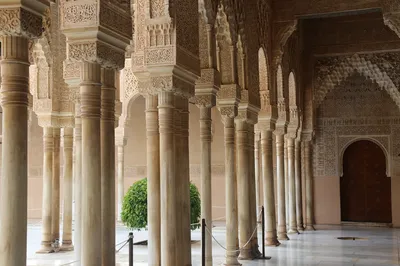
Before the trip to Spain, I had been curious about how these different religious elements could coexist harmoniously. During the trip, we could not help but sigh: it is precisely the complex history that allows us to see such a magical scene today. Even without flipping through history books (which some might find boring), when we step into Spain, we still feel that it is very different from other European countries. But this difference is not abrupt; it is more like a fusion: the imprints of different cultures overlap, cover, assimilate, and finally form a new unique mark.
Tips for independent travel:
1. Schengen Visa
Previously, it was very difficult to get an appointment for a Spanish visa; it was said that scalpers controlled the system. Our daughter had been following updates from Xiaohongshu about the Spanish visa system being updated. Suddenly one day she said the system was fine, and visa appointment dates were almost freely selectable. So we also applied immediately from China. The system had just been upgraded and still had some bugs, so I specifically emailed the information center, and they quickly replied that it was fine as long as there was an appointment QR code.
Our daughter applied in the UK, which was easier, and she got a visa valid for six months with multiple entries. My husband booked an appointment a day later than I did, so the normal channel (€875) that I chose was no longer available. He had to pay more for the premier visa channel (€1,180) on the same day we submitted our applications. I processed in the main hall while he was in a small hall. The visa’s validity started exactly on the day we arrived in Spain—not a day more—and it gave us one and a half months with multiple entries, which was quite funny.
2. 15-day Overseas Data Package
There are several ways to get overseas data: one is to rent a portable WiFi device, which our family used when we went to Japan. The second is to buy a local SIM card and swap it upon arrival. The third option, which we chose, was China Mobile’s 30-yuan-per-day unlimited data package. It was quite expensive for a 15-day trip per person. When I went to the UK in September, I used this option, and it was very convenient—just turn on the phone and use data upon arrival. This time, China Mobile happened to have a buy-one-get-one-free promotion, and since both of us are China Mobile customers, it was essentially a 50% discount. I suggest checking and comparing prices before purchasing.
3. Safety. Many people have seen online that Spain has rampant pickpockets, with theft methods that are difficult to prevent and come in all kinds. In Spain and even Europe, thieves know that Asian tourists, especially Chinese tourists, are very profitable! During our half-month trip, we witnessed several theft incidents. I recommend carrying a bag with zippers, and the less valuable and more low-key it looks, the better. We also bought small waist bags for carrying documents, cash, and cards, and only kept small change in the outer pockets.
4. Traveling by Train and Coach. Traveling by train in Spain is an excellent way to explore the country; you can relax and enjoy the scenery along the way. Spain has a well-developed railway network, the largest in Europe and the second largest in the world. Spanish trains are modern and very clean. Ticket prices are quite high, but if you plan ahead and buy tickets early, you can get discounted fares. I compared omio and the Spanish version of Trainline; both show prices and times for trains and buses, and have apps for easy inquiry. The trains and buses we took on this trip were very punctual, in good condition, and the seats were comfortable. If you choose to drive, there are two things to consider: first, parking in the old town is inconvenient, and the roads are very narrow with many restrictions; second, there are reports of parked vehicles being broken into, resulting in significant losses.