The Third Largest Palace in Europe – Madrid's Royal Palace in Spain
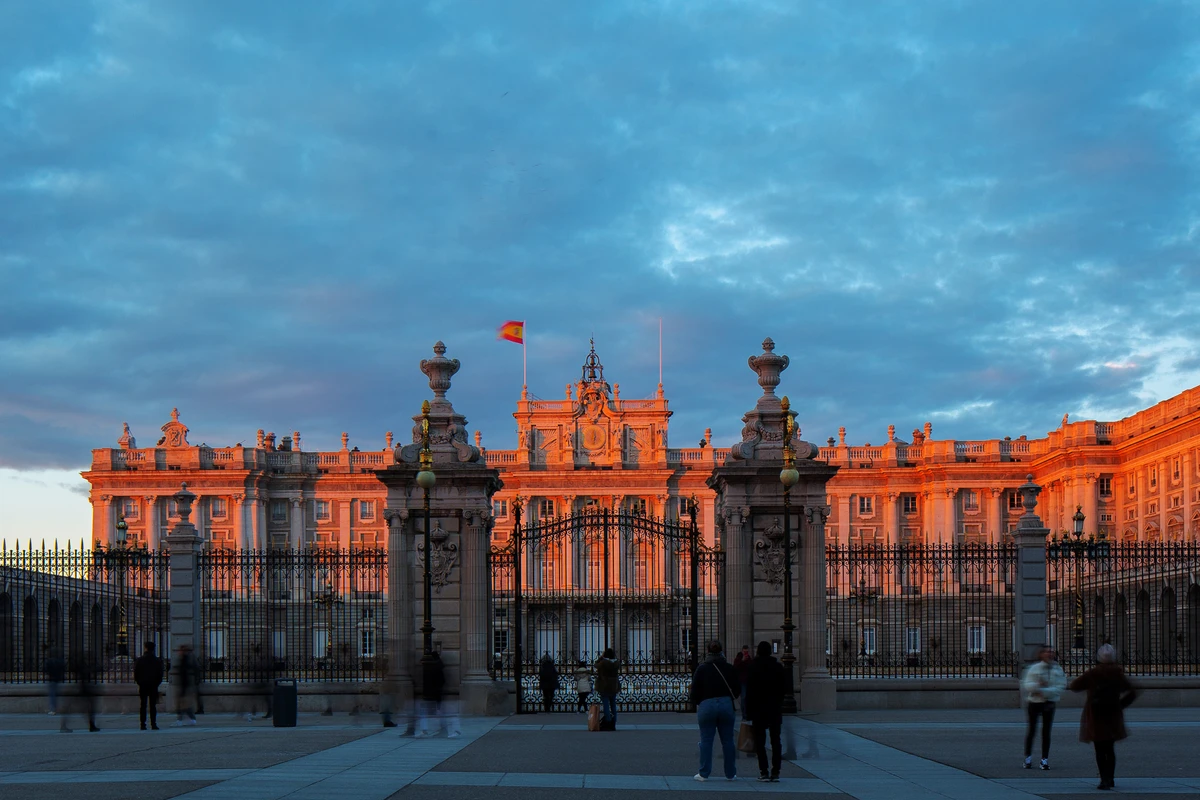
The Royal Palace of Madrid (Palacio Real de Madrid) is the third largest palace in Europe, after the Palace of Versailles and the Schönbrunn Palace in Vienna. Construction began in 1738 and took 26 years to complete. It is one of the best-preserved and most exquisite palaces in the world. The palace has a square exterior structure, similar to the Louvre in France; the interior decoration is in the Italian style, magnificent and splendid. Inside, it houses countless gold and silver utensils, paintings, porcelain, tapestries, and other royal items. The palace has been converted into a museum. It's advisable to buy tickets online in advance; standing in a long line in the cold wind is truly a torment.
The origin of the Royal Palace of Madrid dates back to the 9th century, when it was first built as a fortress on the left bank of the Manzanares River by the Islamic king of Toledo to defend against invaders. Later, it was taken over by the Kingdom of Castile (ancient northern Spain). In the 16th century, it became the Alcázar. On Christmas Eve 1734, the Alcázar was destroyed by a great fire. Thus, Philip V decided to build a new palace on the site. The main structure of this rebuilt palace was made entirely of stone and brick, without any wood, ensuring it would never be destroyed by fire again. Photography is mostly prohibited inside the palace, and visitors can only take photos on the staircase at the entrance as a memento.
The most notable parts of the Royal Palace of Madrid are the Hall of Kings and the Painting Gallery. The Hall of Kings was built during the reign of Charles II. The ceiling frescoes in the Hall of Kings depict stories of the Spanish monarchy in a unique painting style of the time. The overall style of the hall was completed in the royal workshops, with embellishments of expensive imported items, such as Roman bronze lion statues, Venetian crystal chandeliers, and Neapolitan velvet embroidery.
The Painting Gallery is one of the most striking parts of the palace because it houses a large collection of works by famous artists, including masterpieces by Velázquez, Goya, and Rubens. These works not only showcase the glory of Spanish art but also reflect the royal family's appreciation of art. Among them, Velázquez's 'Las Meninas' is the most famous, and it is not allowed to leave Spain. 'Las Meninas' is considered Velázquez's declaration of the status of art. In 17th-century Spain, artists were often regarded as craftsmen, with a lower status than other professions. Through this painting, Velázquez skillfully demonstrates the nobility of art and the dignity of painting. Through complex composition, light and shadow effects, and the relationships between figures, he expresses that painting is not just a manual skill but a noble creative activity.
The Hall of Mirrors, once the king's dressing room, is located in the southeast corner of the palace. Its design was inspired by the Hall of Mirrors at Versailles. The large mirrors on the walls reflect each other, creating an illusion of infinite space. The floor of the Hall of Mirrors retains the original marble from the time of Philip V, adding to its splendor.
Gasparini's dressing room is one of the most luxurious rooms in the palace, with extremely exquisite interior decoration. Gold, silver, and velvet embroidery cover the entire walls. It is said that these decorations took 40 years to complete. In addition, Goya's portraits of King Charles IV and Queen Maria Luisa are hung here.
The ceiling of the Column Hall is painted with a fresco by Jacinto, depicting an allegory of the sun god Apollo, showing the sun awakening the forces of nature, presenting a vibrant and thriving scene. The hall houses a bronze sculpture created by Ferdinand Barbedienne in 1878, depicting 'Charles V Conquering Fury.' Additionally, the copper chandelier in the hall was custom-made in Paris in 1846. The Column Hall is often used for grand balls and many important evening events are held here.
The large number of marble statues with Greek mythology themes placed in the palace showcase the royal family's love for classical art. The exquisite tapestries and embroideries found everywhere on the walls mostly come from 18th-century royal factories, and their attention to detail amazes visitors from around the world. The various crystal chandeliers from Venice are also important decorations inside the palace, adding infinite luxury to the rooms. The interior decoration of the Royal Palace of Madrid not only displays the luxury and power of the Spanish monarchy but is also a crystallization of art and craftsmanship.