Escape the Summer Heat with a Cool, Slow Life in Gaochun, the Slow City
Nanjing has always been a city steeped in history — capital of six dynasties and an imperial center for ten, brimming with ancient monuments and a long, storied past. Yet the people here are unfailingly upbeat and generous. Having lived in Nanjing for over 20 years, my love for this city has become bone-deep and unbreakable. During the Dragon Boat Festival holiday, my friend and I set out to uncover some of Nanjing’s off-the-beaten-track treasures.
Gaochun is known as Nanjing’s backyard and southern gateway, and it’s also the first 'International Slow City' in China, accredited by the World Slow City Alliance. We missed the rapeseed blossom season at Dragon Boat Festival, but at the end of June, lotus flowers are in full bloom — I couldn’t wait to see what a spectacle that would be.
The train on the S9 metro line (between Mingjue Station and Tuanjiewei Station) glides over Shijiu Lake like a scene straight out of a comic book.
The little train at Gucheng Lake Water Slow City
Bamboo rafts in the Hundred Lotus Garden at Gucheng Lake Water Slow City
DAY 1: Gucheng Lake Water Slow City → Gaochun Old Street
DAY 2: Yaxi International Slow City → Longshang Village → Ten-li Ancient Boat Plank Road & Confucian Clean Culture Trail → Qingcha Space Tea Culture Experience Hall → Xiaomaoshanjiao: Huazhu She · Zhengfu Caotang (boutique stay)
Gucheng Lake Water Slow City: Relish the Slow Life
Gaochun is a place brimming with memories for me. As a local, I’ve been here many times — especially during school outings in spring and autumn. Just an hour’s drive from downtown, it’s perfect for a countryside escape. Gaochun Old Street remains just as it always was, but Yaxi Slow City and Gucheng Lake Water Slow City have breathed new life into the area. Gaochun used to appear in my school essays; now I’m recording it in travel journals to share with more people. Come, let me take you on a virtual tour of Gaochun.
(I’ll share some tips on tickets, transport, and accommodation at the end.)
It coincided with the Lotus Festival, which runs until the end of August. Gucheng Lake Water Slow City is a destination that combines water sports, leisure, and vacation experiences. There are plenty of things to do — Lakeside Flower Sea, Hundred Lotus Garden, Wetland Zoo, Fishing Fun Valley, and more.
There’s a summer-only water park, with a 50-meter water obstacle course. Winners get prizes, and lifeguards accompany you through the challenges, so even kids can play without worry.
For smaller children, the pink swimming pool is perfect for a splash or a proper swim, letting them cool off and have fun.
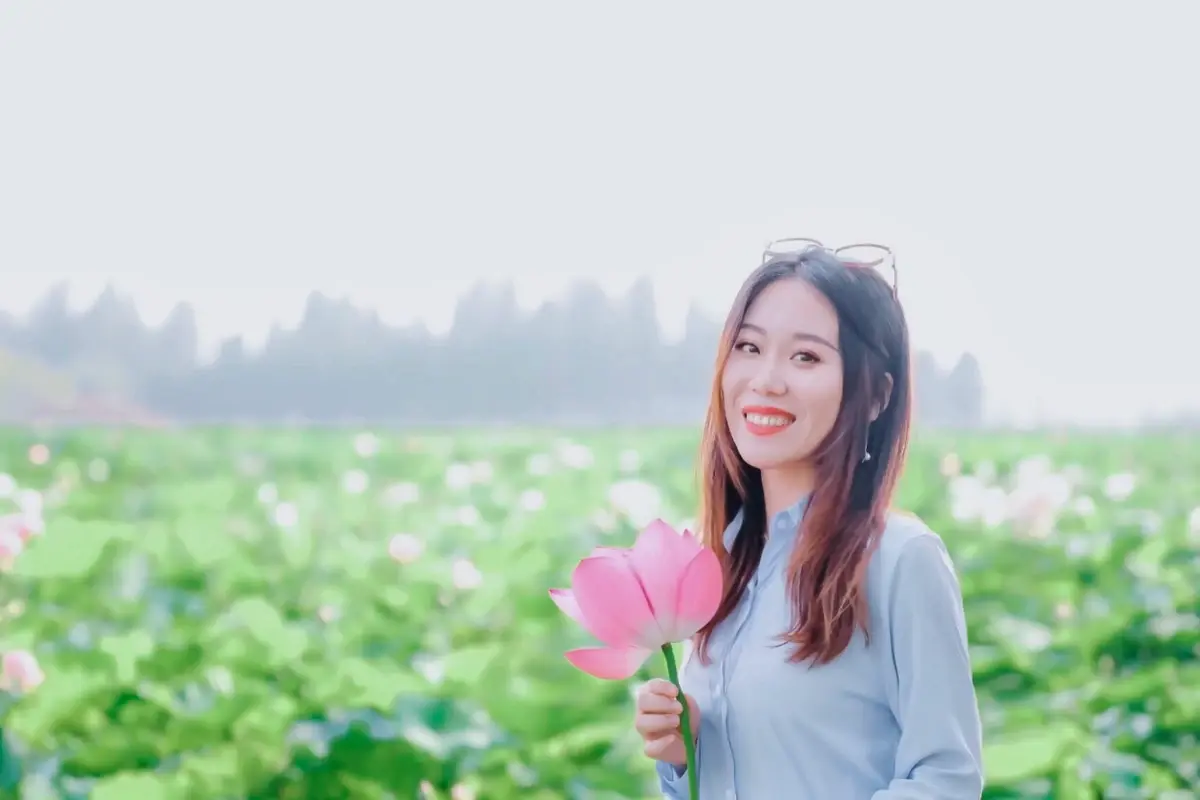
Nothing says summer better than lotus flowers. The nearly one thousand mu (about 165 acres) of lotus ponds are a feast for the eyes, and you can even explore them on bamboo rafts or black-awning boats.
You can let a boatman pole you along, or you can try it yourself. But be careful — if you lose your way among the channels, you could end up paddling for hours. Even an experienced boatman takes about an hour for a round trip.
Of course, going solo has its perks: you can linger wherever you like, drifting deep into the lotus fields and breathing in their fragrance.
The classic poem praises the lotus of West Lake in June, but in my eyes, they are no match for this sprawling lotus kingdom. Emerald green leaves stretch to the horizon, making you feel lost in an endless sea of green, while the delicate blooms glow an especially vivid red under the blazing sun.
Where else can visitors get so close to lotus flowers and witness such a magnificent lotus pond? The garden boasts a wide variety of lotus species, with peak bloom lasting from June all the way to September.
Drifting in a small boat through the lotus fields, laughter echoes around you, and even strangers exchange cheerful greetings — it’s pure, carefree bliss.
By the lotus pond, there are shady spots where children hide from the sun while splashing water, a lotus leaf perched on their heads. Perhaps the pond is hiding little fish and shrimp, too.
Opening hours: weekdays 9:00–17:00, holidays 8:30–17:30.
Tickets: 80 yuan/person, parking 20 yuan/time.
Getting there: Take tourist bus You 2 directly from Gaochun Long-Distance Bus Station.
Gucheng Lake Happy Fishing Hotel
This is where we ate dinner, and it doubles as a really interesting fishing competition venue.
There’s the Ziquan Cup fishing league. We saw people practicing for the next day’s competition. It was my first time watching professional anglers, and they were truly impressive — within five seconds of the bait hitting the water, a fish would bite. They’d quickly pull it up, put it in a tank, and repeat. They could catch two or three fish in a minute. The one with the heaviest total catch wins.
Hotel guests can also fish here, and they can take their catch home or have the hotel cook it — all for free.
Dinner that evening was a wonderful surprise, especially the dish 'Flowers Bloom with Prosperity.' It was my first time tasting lotus flowers in a dish. The method was simple: open the thin membrane, wrap the lotus petal with the filling, and eat it in one bite. The lotus flavor wasn’t overpowering, just a subtle, refreshing fragrance. If you visit, make sure to order this creative dish — I bet you’ll love it.
The lotus leaf chicken was tender, infused with the leaf’s distinct aroma, with just a hint of salt to bring out the chicken’s natural sweetness — excellent.
The shrimp paste steamed with clams was another dish I loved. I’d never had it before, but the combination was unexpectedly delicious. Stuffing shrimp paste into the clams meant you got a bite of both at once — double goodness, a multifaceted treat for the taste buds.
Savoring Slow Life at Gaochun Old Street
Gaochun Old Street, located in Chunxi Subdistrict and also called Chunxi Old Street, is the best-preserved ancient architectural complex in Jiangsu Province, and the most intact Ming and Qing dynasty street in East China. It’s known as 'Nanjing’s second Confucius Temple' and 'Nanjing’s top ancient street,' with a history of over 900 years.
When I posted about visiting Gaochun Old Street during Dragon Boat Festival on social media, it stirred up memories among my junior high school friends. Many things have changed, but many haven’t. Most of the shops here have been passed down through generations, so you won’t find the typical commercial sameness — that’s what I love most. Local specialties include Chunxi Old Liquor, Gucheng Lake hairy crabs, Old Street cloth shoes, feather tribute fans, pearl jewelry, dried tofu, and local pastries. The liquor, crabs, and feather fans are the most famous.
Most buildings along the street follow a shop-in-front, residence-behind layout, with two-story brick-and-wood structures featuring upturned eaves, bracket sets, wooden shutter doors, lattice windows, horse-head firewalls, and small butterfly tiles. They embody typical Jiangnan elegance fused with Huizhou-style influences, giving the architecture depth, charm, and timeless dignity.
Old Wu’s steamed cakes are quite famous here. Between the steamed cakes and green rice balls, I prefer the steamed cakes. Everyone who tries them sings their praises — a delicious result of traditional craftsmanship.
Gaochun Old Street is renowned for its classical architecture. Shops along the street are generally double-story brick-and-wood structures, complete with overhanging eaves, dougong brackets, parapet walls, crossbeams, and lattice windows — elegant and ornate in a vividly ancient style.
The street comes alive with a bustling night economy. Even after dark, crowds continue to stroll through, starting their own evenings.
At night, the ancient buildings adorned with festive red lanterns create a scene that seems to transport you back to the prosperity of the Ming and Qing dynasties.
Getting there: Metro Line S9 to Gaochun Station, then bus 101, 105, 802 or You 1, alight at Panchiyuan Station.
Opening hours: 08:30–17:00
Tickets: The street itself is free. Sightseeing tickets: adults 70 yuan/person; children, seniors aged 60–69, active military, students half price at 35 yuan; medical workers free.
Liuzhouhui is a boutique hotel about 10 minutes from Gaochun Old Street. Weekends book up fast, so reserve in advance. As a newly opened hotel, both its decor and service feel refreshingly bright.
The room has a large bathtub — perfect for a relaxing soak after a day out. The bathroom has separate wet and dry zones, and the room itself is spacious and airy.
Breakfast even comes with rose petals — how romantic!
Zhensong Resort Hotel: Romance of Light and Shadows
I was struck by the verse 'In deep woods where no one knows, only the bright moon shines to keep me company.' If I hadn’t been told, I’d hardly believe this was a hotel.
The hotel sits among serene pine woods on a hill, with lake views by day and moonlight by night. Along the 50-kilometer eco-road around the hotel, you’ll pass apricot groves, bamboo forests, rolling hills, streams, vineyards, and lakes like scattered pearls. Self-sufficient farming keeps the landscape wonderfully quiet, preserving a rare tranquility typical of Jiangnan water towns — a true forest paradise.
The hotel’s logo is cleverly designed: the Chinese characters for 'pillow' (枕) and 'pine' (松) share the 'wood' radical. One person makes a tree (木), two make a grove (林), and three make a forest (森).
Thus, the 'Wood' suite is a single room, 'Grove' a double, and 'Forest' a triple. They share a living room but with separate bedrooms, giving you privacy and a spacious common area.
Facilities are excellent. Lakeside wooden cabins house a small restaurant and a yoga/fitness center as shared spaces, while guest rooms are tucked away in the secluded pine forest. To preserve the native masson pines, each cabin was precisely positioned, forming a relaxed, flexible cluster. The intimate relationship between the buildings and the towering pines adds a subtle sense of age and history.
The interior decor is quite European. Imagine waking up in a dreamy room, pulling back the curtains, and finding yourself deep in the woods — how magical is that?
Gaochun Yaxi International Slow City
Slowing down to match the wind — 'slow' is a kind of ease, a quality.
The jungle crossing is thrilling and exciting, requiring both courage and care — a real test of self. With just a safety rope, you feel utterly free as you climb and swing through the treetops, like a genuine jungle explorer.
Slow Paradise Glass Walkway
To get there, you first cross a small suspension bridge — best to keep to no more than three people per section. Then you step onto the glass walkway suspended over a river. If you’re afraid of heights, don’t look down! Toward the end, there’s a fun special effect of glass shattering.
Yaxi Slow City really makes you feel enveloped by the forest at every turn. That sensation is wonderful. Escaping the city for the countryside is already good, but plunging deep into the woods is where you truly feel free and relaxed.
I absolutely loved this place. Each rainbow slide has lots of little rollers, so you pick up speed as you go — super fun, with a bit of thrill but never losing that grounded sensation. Even slightly older kids can ride down on their own.
After the first go, I went again several times. It’s a bit like surfing, with multiple small bumps that make it more exciting than typical slides.
The snail is Yaxi Slow City’s unique symbol. In 2010, it was awarded the title of China’s first 'International Slow City' by the World Slow City organization. It’s also Nanjing’s longest self-driving scenic route, where you can slowly sightsee, unwind, and enjoy a vacation.
Tickets: Free. Rainbow slide: 50 yuan for two rides. Glass walkway: 50 yuan for two people.
Opening hours: 8:30–17:00
Getting there: From Nanjing South Station, take a bus to Gaochun, get off at Shuangpaishi, transfer to bus 03, and alight at International Slow City intersection.
Longshang Village — My Poetic Idyll
This is a distinctive rural village at the foot of Youzi Mountain, where you can also visit the Youzi Mountain National Forest Park.
If Yaxi Slow City still feels a bit too lively, then this place is perfect. There are guesthouses specially for visitors.
The visitor center houses a fascinating folk culture exhibition, showcasing the village’s history and customs, as well as old farming tools — many of which I remember from my childhood.
Wuwai isn’t just a coffee shop; it’s more than that.
There’s the owner’s homemade bayberry wine, still aging — you might have to come back to try it. They also keep a fat cat and a chubby rabbit, both dozing in their cages. The café occupies an old house, so it naturally has an aged, nostalgic feel that invites you to reminisce, unwind, and find a moment of peace.
There’s a design studio waiting for its designer to return from being stuck away due to the pandemic — hoping for their early return.
Ten-li Ancient Boat Plank Road and Confucian Clean Culture Trail
Located in the Longshang scenic area of Youzi Mountain National Forest Park, this plank road stretches over ten li (about 5 km). It’s built from more than 10,000 discarded, anti-corrosion treated old boat planks, symbolizing resistance to decay. At each end stands a three-ton ship anchor.
Chunqing Tea Plantation produces Biluochun, Yuhua, and other teas. It was also a filming location for the TV drama 'In the Name of the People,' and has even been named China’s Most Beautiful Tea Garden.
Qingcha Space Tea Culture Experience Hall
When you’re tired, stop by the tea house to rest and taste some tea. You can learn tea ceremony and tasting skills from the owner, and find out which teas best suit your constitution.
Address: No. 6 Huanshan Road, Youzi Mountain, Dongba Town, Gaochun District, Nanjing.
Getting there: Take bus Gaochun 209 to Youzi Mountain Station, then walk 1,300 meters to the scenic area.
Hours: 08:30–17:00 (January 1–December 31, daily).
Huazhu She · Zhengfu Caotang at Xiaomaoshanjiao
This is a guesthouse, but it feels more like a scenic spot, blending classical garden design with modern minimalist elements in pleasing harmony. It’s a refreshing visual experience. The Huazhu brand emphasizes integrating local culture into spatial design, while providing top modern amenities. Staying here is a treat for both the eyes and the body.
'One flower, one world; one abode, one way of life' is the brand philosophy of Huazhu Hotels. They strive to offer a 'seven-sense service' (sight, hearing, taste, touch, smell, participation, and memory), letting guests experience local culture within the hotel.
The guesthouse is very photogenic — the white walls and grey tiles give photos a wonderful texture.
The rooms are spacious, with two bedrooms sharing a common area that includes a kitchen and a large dining space. The courtyard is elegant, the bedding comfortable, and they even provide fruit for guests — very thoughtful.
Imagine leaving work on Friday and coming here for a cozy weekend — what a joy! In Gaochun, you’re always in close touch with nature, and it has a way of gently calming a restless heart.
And that’s the whole trip!
My love for Nanjing and Gaochun goes far beyond what words can express. Having witnessed its four seasons, all kinds of weather, every blade of grass and leaf, and the locals’ zest for life — not to mention their love for ducks — I believe you’ll come to love it just as much as I do.
In the old days, travel was slow, and a lifetime was enough to love only one person. We’ve missed out on so much — why not slow down? Feel the sunshine, the breeze, everything that nature offers, and rediscover your original innocence and wonder in this slow city.


