In Gaochun Slow City, Escaping the Urban Bustle, Just to ‘Lotus’ Meet You
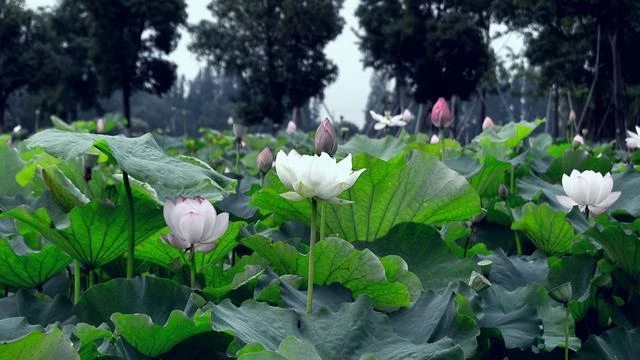
In the sweltering summer heat, at Gucheng Lake Water Slow City in Gaochun, Nanjing, a thousand-mu lotus pond comes into full bloom—I’ve never seen such a vast lotus pond.
Each bloom is exceptionally stunning, and here time seems to slow down.
Rowing a boat through the lotus pond is incredibly relaxing and enjoyable. You can paddle yourself, plunging into the thickets of lotus leaves, drifting among thousands of leaves, and forget all the worries of the city.
Getting from Nanjing to Gaochun is also very convenient, with a direct subway line. It takes just over an hour to reach Gaochun from downtown Nanjing.
Explore the ten-thousand-mu lotus pond and get up close with the lotuses.
As the sun sets, the lotuses glow in extraordinary crimson. At Water Slow City in Gaochun, the lotus flowers are especially vivid, some white, some red, each one uniquely beautiful.
A city of Nanjing and a thousand-mu lotus pond—I never expected to find such a Jiangnan waterside charm right here in Nanjing. Everything feels so gentle and harmonious.
Breathe in the pure air, bask in the warm sunlight, and seek that last touch of coolness in summer. At Gucheng Water Slow City, rediscover the simple joys of childhood.
With such beautiful surroundings, let’s take a wave of gorgeous photos!
A sea of flowers over a thousand mu, with boats gliding through—it feels like being in a landscape painting.
Wandering through the lotus pond, it feels dreamlike and surreal.
Gucheng Lake Joyful Fishing Hotel, where you can not only enjoy the fun of fishing but also savor countless local delicacies.
The hotel’s environment is wonderful—fresh and elegant. Many people are fishing here, and they catch fish incredibly fast!
Fishing enthusiasts absolutely must not miss this hotel; you can even take the fish you catch home with you!
The super delicious secret-recipe tofu pudding is silky and mouthwatering.
Lotus leaf chicken—the delicate fragrance of lotus leaves has been steamed right into the chicken. Super tasty!
Pickled mustard greens with angzi fish—the tender fish meat is spicy and goes perfectly with rice!
Flowers of Prosperity: this dish is so visually appealing! You can even eat the lotus leaf along with it; just superb.
Gaochun Old Street in Nanjing is praised by many as the 'Second Confucius Temple of Jinling'.
With a history of over 900 years, walking along Gaochun Old Street feels like traveling back in time. The buildings on both sides exude a profound sense of history.
The mottled walls bear witness to the marks of history. Since it opened as a market in the Song Dynasty, this place has endured countless storms and hardships, and is often called a microcosm of Eastern civilization. The architecture here blends the Hui-style characteristics of southern Anhui with local features, and every building is very charming.
Free from the noise of mass tourism, it feels more authentic and rustic. Many residents live nearby, allowing you to experience local life. Even more praiseworthy, unlike Wuzhen, there’s no entrance fee—which makes it all the more precious.
All kinds of snacks take the stage; here you can sample a wide range of Gaochun’s local specialties, all at reasonable prices. Every shop is delicious, and from one end of the street to the other, I was already full before reaching the halfway point.
Gaochun Old Street is bordered by blue flagstones on both sides. The entire street is brightly colored, neat and beautiful. After eight centuries of wind and rain, foot traffic, and cart wheels, it remains sturdy and durable—a testament to the boundless wisdom of the ancients.
Zhensong Resort Hotel—this is a hotel where you sleep in the forest, surrounded by a beautiful environment.
Address: No. 99 Yagao Road, Yaxi Town, Nanjing, 900 meters from Yaxi International Slow City.
Transport tips: After arriving at Yaxi International Slow City, you can take a taxi; it’s very close.
Highlights: Zhensong, as the name suggests, means 'sleeping on pine trees.' It’s a cluster of forest cabins set in an extremely elegant environment, surrounded by towering pine trees that reach into the clouds. Far from the city’s hustle, here you can find profound tranquility.
With lush greenery all around, many tourists come here specifically from Nanjing to escape the summer heat. The harmony between humans and nature is evident; human structures blend beautifully into the forest. With oversized floor-to-ceiling windows and even glass ceilings, you can breathe freely and enjoy the beauty of nature.
Average cost per person: around 1,000 yuan. Tip: It’s best to book in advance, because it’s incredibly popular—almost fully booked every day!
Yaxi International Slow City in Nanjing is China’s first Cittaslow (Slow City). What is a Slow City?
'Slow City' is an urban model that advocates a slower pace of life, opposes pollution and noise, and supports urban greening, green energy, and traditional handicrafts, all in a town with a population of under 50,000. It’s like a utopia within the city.
Leaving behind the bustling crowds and the restless city, here you’ll find green shade, birdsong, and fragrant flowers. Without the noise of cars or urban pollution, this place is truly an oasis.
Time seems to slow down here. The Slow City also offers many recreational facilities: you can stroll through the tree canopy, ride an exciting rafting course, pick tea leaves, or encounter vast lawns where people and nature coexist in harmony.
Everywhere you look is green. The Slow City exists precisely to encourage people to slow down—to decelerate the pace of time, quietly savor life, shed the chaos of the city, and find that serenity.
In this restless society, everyone seeks inner peace. At Yaxi International Slow City, perhaps you can grasp the true meaning of life—that the aimlessness of life isn’t just about making money, but about attaining the genuine happiness you truly desire.
So, do you like this place? Would you like to come to the International Slow City and slow down your pace?
Longshang Village in Gaochun District, Nanjing, is like a hidden paradise, surrounded by ponds and tea gardens, lush with greenery. Its abundant crop yields provide a significant source of income for the local villagers.
Longshang Village has 51 families. Every March and April, the air is filled with the fragrance of tea. Everyone is busy picking tea leaves to sell. This drives the local economy, making each household very prosperous, while also protecting the environment and creating economic value.
Moreover, the village boasts cafés and guesthouses, adding a vibrant artistic atmosphere, and attracting more and more tourists. The beautiful environment has turned this rural village into Nanjing’s urban backyard garden, where many people come seeking the peace of childhood.
Ancient bluestone paths link quaint courtyards, with lovely flower beds at the gates, bursting with greenery. Flowers adorn the entire village, adding a touch of antique charm to the slate-blue paths.
Far from the urban hustle, you can pause here, slow down, and appreciate the rural scenery. Gray walls and black tiles evoke hints of Hui-style architecture, and scenes from childhood unfold before your eyes.
It has protected the environment while bringing in substantial income for the villagers. The tea gardens deserve immense credit. As they developed, tourism has also grown to drive the local economy.
At the foot of Xiaomao Mountain in Dongba Town, Nanjing, there is a very stylish guesthouse named Huazhushe · Zhengfu Thatched Cottage.
It is incredibly tranquil, far from the city’s noise, with gray walls and black tiles.
Mr. Lu began building Zhengfu Thatched Cottage in the Xinsi year, creating a guesthouse that leads the way in Chinese-style hotels—it has now been 16 years. 'Zheng' means constancy; 'Fu' means auspiciousness. Zhengfu also carries the meaning of the 'Five Blessings'.
In ancient times, there were Du Fu’s Thatched Cottage and the Lushan Thatched Cottage; inspired by their noble spirit, he named it Zhengfu Thatched Cottage.
The guesthouse is equipped with central air conditioning and LCD TVs. The staff prepare electric kettles, bottled water, and tea sets in advance, so after a busy day, you can truly relax in your room.
Surrounded by green trees, with blooming water lilies at the doorstep, it’s extremely beautiful. When tired from work, one always longs for a quiet place to rest. In this serene spot, you can find a cozy corner.
For this very reason, this guesthouse is fully booked almost every day, so be sure to reserve in advance if you wish to stay.
Chunqing Tea Garden is hailed as 'China’s Most Beautiful Tea Garden.' Youzi Mountain is named after Confucius, who once traveled here. The Southern Song poet Fan Chengda also visited and praised it in a poem: 'Rain returns to the ridge tops, clouds congeal like dark brows; sunlight leaks through the mountainside, stones seep with gold.'
Many Nanjing tourists make a special trip here to check in, and the road here is known as the most beautiful highway in Nanjing, perfect for a road trip.
Within this ten-thousand-mu tea garden, there is also a wooden boardwalk built from ancient ship planks, called the 'Ten-Li Ancient Ship Plank Confucian Integrity Culture Boardwalk.' It’s steeped in history. Walking here, breathing in the fragrance of the tea garden, is utterly refreshing!
Having traveled across the mountains and rivers of our country, Gaochun never fails to surprise me.
I’m here, 'lotus' meeting you~


