2020 Dragon Boat Festival – Self-driving Trip to Chuzhou
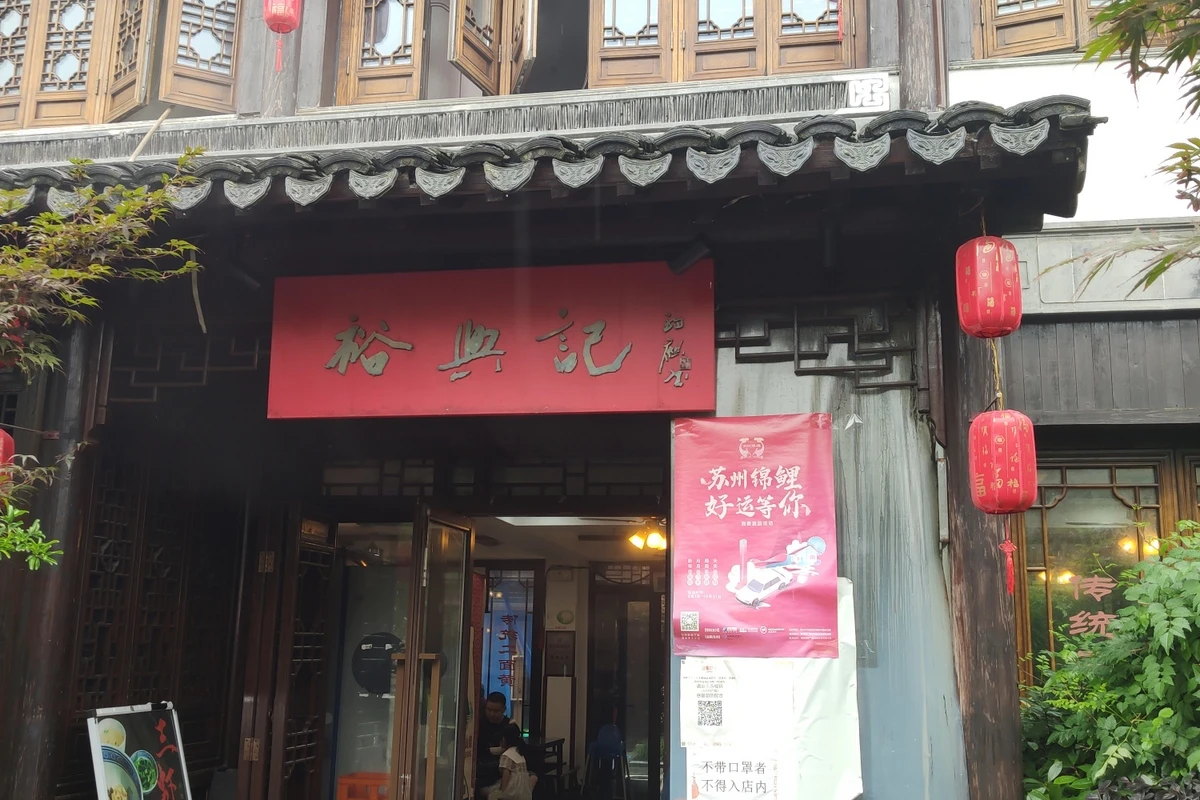
On Dragon Boat Festival day, we left Shanghai. Thinking about the journey ahead, we first drove to Yuxingji on Xietang Old Street in Suzhou for a seasonal bowl of Three Shrimp Noodles. It took just over an hour to arrive, parking was easy, and there weren’t many people. The noodle prices were certainly steep, but they really tasted better than in Shanghai. We had Three Shrimp Noodles, Sesame Shrimp Noodles, and Big Pork Noodles – three bowls, very satisfying, and then we set off again. We continued toward Nanjing, making a stop at the Southern Tang Two Mausoleums at Niushou Mountain for a casual look. The Southern Tang, from the Five Dynasties and Ten Kingdoms period, had three emperors in total, the most famous being Li Yu. This site holds the tombs of Li Yu’s father and grandfather. Located at the southern foot of Niushou Mountain, during Dragon Boat Festival there were very few visitors. My little one wanted to show off a bubble wand to other kids but had no chance, so we ended up hunting for wild mushrooms in the grass. The area isn’t large; it’s built into the mountain. The east one is Qinling and the west one is Shunling. Both are multi-chamber brick tombs. They were looted many times in the past, but the underground palace structures remain intact. You can go inside, though they aren’t huge – said to be the largest underground palaces in the south, but naturally they can’t compare with famous imperial tombs in the north. After all, it was just a small southern kingdom. After walking around, we drove on. An hour later, we arrived smoothly in Chuzhou. The roads were wide, there was little traffic, but nothing special. We checked into the hotel, ate at the hotel – that’s all we could do. The next day, it was scorching hot. In the morning, we drove 100 kilometers to Xiaogang Village, the landmark of China’s reform and opening-up. The road leading into the village, Reform Avenue, already had a grand name. We parked at the visitor center, bought tickets (20 yuan), a guided tour (200 yuan), and an electric cart (10 yuan). The cart took us directly into the village. There were three sights. The first stop was the Dagangan Memorial, a truly national-level exhibition, where you learn about the history of Xiaogang Village and the story of the 18 red fingerprints. After the memorial, we went to the birthplace of the Dagangan – the thatched hut where they pressed those fingerprints. This was more interesting; we listened to local Fengyang flower drum songs, my little one chased white geese, and the whole setting with its farm atmosphere was great for playing. We stood where Grandpa Tao once stood and took a photo, a mark of our visit. Leaving the hut, we walked along the village’s main street. There was no one around. Now Xiaogang Village has one main road lined with shops on both sides, neat and clean. We randomly picked a restaurant for lunch; the taste was just average, but it was a chance to rest. At 1:30 pm, we had a guide for a visit to the Shen Hao Memorial Hall. Shen Hao’s outstanding deeds exhibition hall is located north of the village office building, opened on July 1, 2010. It was converted from Shen Hao’s former residence. Before coming, I had no idea who he was; only after arriving did I learn that after the red fingerprints, Xiaogang only solved the problem of getting enough food. Real development came after Shen Hao arrived as first secretary in 2004. He was like a Jiao Yulu or Kong Fansen figure, one of the ‘Ten People Who Moved China.’ He worked for six years until he literally died on the job. The villagers twice petitioned for him to stay, using their fingerprints again. Later party secretaries never reached his level, usually leaving after two years. Leaving Xiaogang, we drove not far to the Ming Imperial Tomb, Zhu Yuanzhang’s hometown, where his parents and elders are buried. The Ming Imperial Tomb follows the same system as the Ming Xiaoling Mausoleum in Nanjing and the Ming Tombs in Beijing. It started as the grave of Zhu’s parents, and after he became emperor, a grand mausoleum was built around it. Though not an imperial burial with an underground palace, it’s still majestic. The most worthwhile sights are the stone carvings along the Sacred Way. The Sacred Way is 257 meters long with 32 pairs of stone statues. The craftsmanship is said to be the finest among all imperial tombs, with a superb artistic style that bridges the Song-Yuan and Ming-Qing periods. These carvings are part of the second batch of National Protected Cultural Relics (1982), and the epitaph was written by Zhu Yuanzhang himself. Apart from the heat, it was well worth seeing. Afterward, we went back to the hotel for dinner and rest. On the third day, the weather was nice; the forecasted heavy rain didn’t appear, and it cooled down. We went for a walk at nearby Langya Mountain, the most famous sight in Chuzhou. The most famous spot on the mountain is Zuiweng Pavilion. Langya Mountain is praised as ‘Unrivaled after Penglai’ and ‘the Pearl of Eastern Anhui.’ A 20-minute drive got us straight to the gate. Once inside, the environment was beautiful: green trees, lawns, a lake with carp. My little one had great fun feeding the fish. It’s like a big local park. A short walk brought us to Zuiweng Pavilion. The pavilion is part of a compact, charming architectural complex with pavilions, a small lake, and ancient trees, all very pretty. We climbed up and down and enjoyed it. Then we took a casual stroll through history. Not far from Zuiweng Pavilion is Tongleyuan, where Langya Mountain’s cliff carvings and inscriptions are. These are also very famous. The mountain is covered with carvings from the Tang Dynasty to the early Republic, by famous figures of each era. Highlights include the portrait stele of Wu Daozi from the Tang and the Diamond Sutra stele from the Ming. They are precious materials for studying the mountain’s history, culture, and calligraphy. After viewing the carvings, we started climbing. The trail had no sights and no people. We reached the Southern Heavenly Gate before realizing we had taken the exercise route instead of the sightseeing route. It was still an experience, and the mountain isn’t high – about 40 minutes to the top. Descending from the archway of the Southern Heavenly Gate, we went down steps not far to Langya Temple. The temple grounds are large, with many more cliff carvings. The incense offerings were plentiful. Nestled on the mountainside, the setting was very pleasant. We strolled around, finished our day at Langya Mountain, and then took an electric cart back to the entrance. A heavy rainstorm hit just then, and we got back to the hotel safely to rest. Day four, heading home. It poured rain heavily, but the highway drive went smoothly. We passed Fangmaoshan Service Area in Changzhou, a dinosaur-themed rest stop. We took our little one there for the second time. This time, the kid wasn’t scared like the first time. We had a meal, rested, and in the afternoon arrived home safely.


