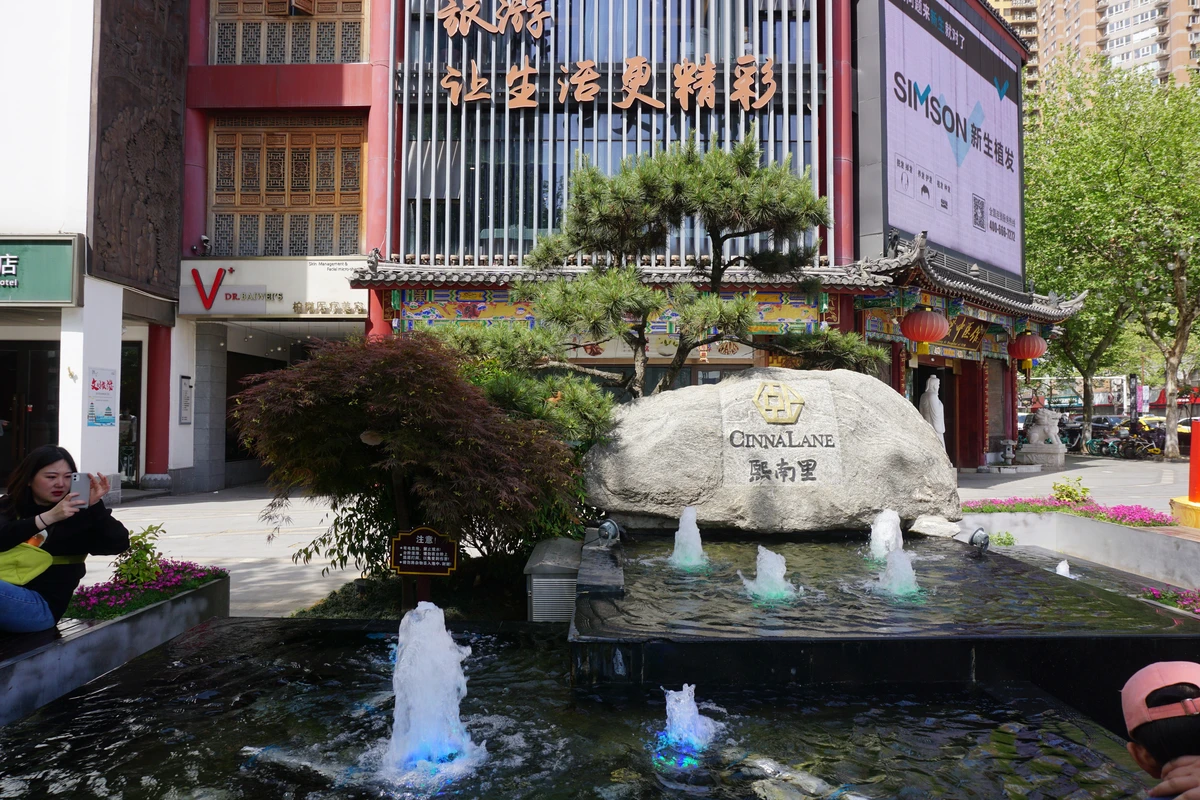
A Nanjing Local's View of Nanjing: A Stroll Around Xinanli
Time of visit: April 2021
How I got there: Metro Line 1 to Sanshanjie
Location: Xinanli Historic District
Walking route: Pingshi Street — Nima Alley — Xinanli — Ganxi Residence
After a haircut at a salon on Shengzhou Road, I had some free time and decided to visit the nearby Ganxi Residence. Following the navigation on foot, I turned off Shengzhou Road into Pingshi Street. A street with over a thousand years of history, Pingshi Street was once one of Nanjing’s most prosperous areas. Today it’s more a narrow lane than a main street, lined with modest, weathered buildings. Yet even in its simplicity, Pingshi Street holds a firm place in Nanjing’s cultural and historical landscape.
Most of the buildings are two-storey wooden houses, many boarded up for renovation or demolition. There are also plenty of humble single-storey dwellings. Don’t underestimate these cottages — many are historic residences of old Nanjing. Take, for example, the folk house at No. 25 Pingshi Street, or the Qing Dynasty-era dwelling at No. 136. The surrounding Qijiawan area has long been a hub for Nanjing’s Hui community. Local Hui chef Li Rongxing created his famed “Four Uniques” of beef soup, along with dry-sliced beef, beef noodles, and potstickers — authentic, mouthwatering Jinling flavours that endure to this day. Sitting near the top of Nanjing’s food pyramid, Liji Halal Restaurant is right here on Pingshi Street. I’d hoped to sample that old-Nanjing taste, but one look at the queue and I — never a fussy eater nor a big food enthusiast — immediately abandoned the idea.
Seeing the line snaking around the corner made me wonder about the people standing there. Waiting for dozens of minutes under the sun just for a bowl of beef noodles or a couple of potstickers was something I truly couldn’t understand.
Running perpendicular to the north-south Pingshi Street are many small alleys. To reach Ganxi Residence, I needed to head east along one of them. This alley has a curious name: Nima Alley. At its entrance, a historical plaque tells the story. The name dates back to the Ming Dynasty. Legend claims this was the site of the “Mud Horse Ferrying the Prince” episode: Emperor Gaozong of Song, fleeing south, crossed the river on a horse, only to discover upon arrival that it was a mud horse. Now, at the mouth of the alley, a man pops rice in a traditional puffed-rice maker — a scene straight from my childhood memories.
It’s said that descendants of Weng Tonghe, tutor to the Guangxu Emperor, once lived in an alley called Nima Alley. Besides Nima Alley, you’ll find Qincang Alley, Lingzhuang Alley, Ganzhang Alley, Dading Alley… Together with Pingshi Street, these interwoven lanes create a distinct old-Nanjing tapestry.
With a destination in mind, I didn’t wander through the other alleys but pressed on towards my goal.
Soon I came to the old residence at No. 3 Lingzhuang Alley. Intersecting Lingzhuang Alley is Daban Alley, which I introduced in my previous travelogue “A Nanjing Local's View of Nanjing: A Quick Walk through Daban Alley.” This time, I chose not to continue along Daban Alley.
At the corner of Daban Alley and Lingzhuang Alley, I refuelled at a douhua (soft tofu pudding) shop, took a short rest, then continued east into Nanbuting.
At the entrance to Nanbuting, there’s a map of Xinanli. The map clearly shows how Xinanli sits at the junction of Zhongshan South Road and Shengzhou Road. Anchored by the largest and best-preserved Qing Dynasty private residence in Nanjing — “Ganxi Residence” — and complemented by elegant leisure boutiques, trendy dining, and personalised services, the area forms an urban fashion and commercial district that carries the distinctive historical look of Jinling.
The name Nanbuting originates from the Southern Arrest Bureau set here in the Qing Dynasty. Before that, during the early Qing Shunzhi reign, it was the Jiangnan Salt Law Administration. Ganxi Residence occupies the south side of the lane; on the north side once stood the Republic-era Zhongying Middle School and the mansion of famous lawyer Wang Bingjun.
Numbers 15, 17, and 19 Nanbuting, along with No. 42 Daban Alley, all belong to the Gan family. Built during the Jiaqing reign of the Qing Dynasty (1796–1820), the sprawling compound is colloquially known as “Ninety-nine and a Half Bays” for its immense size.
On the Nanbuting side, there are identification plaques beside the residence gates, though none of the gates were open. One side of the lane is lined with the high white walls and grey tiles of the Gan family compound, stretching far enough that you can sense the vast scale within.
Xinanli Historic District was developed around this fabled “Ninety-nine and a Half Bays” — Ganxi Residence. With the residence as its cultural anchor and a positioning as a “Jinling Culture and Lifestyle District,” Xinanli has introduced all kinds of leisure, retail, and dining businesses, along with refined teahouses, high-end clubs, serene music bars, exotic-style pubs, distinctive antique shops, lifestyle boutiques… making it a distinctive neighbourhood in the south of the city.
Here you’ll find the graceful Jiangnan residential architecture of “grey brick, small tile, horse-head gables, fretwork hanging eaves and lattice windows.”
I walked all the way to the eastern end of Nanbuting but still couldn’t find the entrance to the main residence. I kept searching, venturing deeper into the district, until I reached the south gate of Ganxi Residence. Probably due to pandemic control measures, this was the only gate for entering and exiting the entire complex.
Inside are the Nanjing Folk Museum and the Nanjing Intangible Cultural Heritage Museum, which through this grand mansion let us glimpse many stories of Nanjing. The mansion itself is so rich that I’ve devoted another travelogue to it. After visiting the residence, I returned to the surrounding streets for a stroll!
The district offers abundant dining options, in various forms, scales, and classes. I didn’t try Pingzi Restaurant, but from the decor details alone, it was full of Nanjing flavour. One wall hung with lanterns exuded a strong Qinhuai atmosphere. Around a corner stood a brick-and-concrete Republic-era building, three storeys in the main block with a single-storey section, featuring a small grey-tile pitched roof and a facade of clean, untreated grey bricks.
Beyond white-washed walls and horse-head gables, Xinanli is adorned with rockeries, bamboo groves, pavilions, terraces, and water features designed as classical gardens. Walking here feels like strolling through a Jiangnan garden. Hanfu enthusiasts are a common sight in Xinanli, dressed in traditional clothing to savour the feeling of time travel.
Having toured Ganxi Residence, I wandered aimlessly through the district before heading towards the metro. On the east side, I happened upon a bookshop. Outside, there’s a wooden deck embraced by greenery. “Winter is the year’s spare time; night is the day’s spare time; rainy overcast days are the spare time within time.” Use those spare moments for reading and learning! The shop is called “Sanyu Bookshop” — “Three Leisures.”
The interior is spacious, divided into several zones. Warm yellow lighting softens the heart. Here, there’s also a “Lei Feng Charity Courier Station.” The large space is partitioned by bookshelves into functional areas. Light spills lazily over the spines; the generous use of wood block elements makes it elegant and natural. Under the comfort of the wood tones, a reader’s restless mind can calm down.
The long bookshelf is not traditionally enclosed but features windows cut into the middle. The windowsills are cushioned, so you can lean there, book in hand, reading at ease. Besides being practical, the windows serve as charming frames for views. On a sill, a sleepy little bear keeps company with a young woman reading at a desk — a heartwarming tableau. There’s also a space for small salon events.
Today’s bookshops are multifaceted. This one offers various packaged coffees and loose-leaf teas, as well as lovely tea ware to choose from. Tucked here and there, a potted plant or a small vase of flowers catches your eye. Little details, warm and adorable.
Leaving the bookshop, the entrance to Metro Line 1 is at the southeast corner of the district. Getting here is really easy.


