That Year, a 10,000-Li Self-Drive Journey through Hunan, Guizhou, Guangxi, and Jiangsu: I Saw the Yangtze River in Nanjing, Jiangsu | Practical Self-Drive Guide to Nanjing, Jiangsu | June 2021
10,000-Li Self-Drive Journey through Hunan, Guizhou, Guangxi, Hubei, Anhui, and Jiangsu: I Saw the Yangtze River in Nanjing, Jiangsu | Practical Self-Drive Guide to Nanjing, Jiangsu | [Nanjing, Jiangsu Chapter] [34th Stop] [June 9, 2021]
Jiming Temple in Nanjing
Qinhuai River in Nanjing
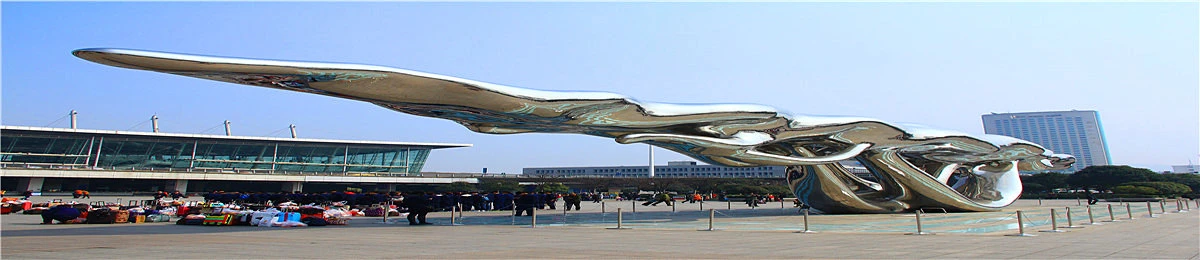
Olympic Square in Nanjing
Nanjing Massacre Memorial Hall
Night view of Zhonghua Gate in Nanjing
Foreword: Starting the self-drive from Chuzhou, Anhui, 40 km, 1 hour to reach Nanjing, Jiangsu, beginning a 4-day tour of Nanjing, Jiangsu | Yuejiang Tower | Nanjing Yangtze River Bridge Park | Bailuzhou Park | Mochou Lake Park | Xuanwu Lake Scenic Area | Tiansheng Bridge | Gaochun Old Street | Jiming Temple | Sun Yat-sen Mausoleum in Zhongshan Scenic Area | Presidential Palace | Meiyuan New Village Memorial Hall | Memorial Hall of the Victims in Nanjing Massacre by Japanese Invaders | Yuhuatai |
May 1, 2021, started self-driving from Qingdao, lasting 40 days, covering 10,200 km, passing through 6 provinces and 30 cities, successfully completing the 10,000-Li self-drive journey through Hunan, Guizhou, Guangxi, Hubei, Anhui, and Jiangsu.
About this trip:
I don't chase waves or take any boat; I have my own sea.
Departure is my eternal theme; even though I've been to many places, I'm still full of anticipation for unknown journeys. Someone asked me, 'Is there anywhere you haven't been yet?' I often joked, 'Yes, Mars.' Unexpectedly, the opportunity came so quickly.
At 7:00 am on June 9, 2021, I departed from Chuzhou, Anhui by self-drive. Imagine this scene: a morning breeze drifts into the woods. Where it passes, mist flows gently. The roads were smooth, accompanied by the stunning scenery of Jiangsu. After driving 40 km for one hour, I arrived in Nanjing, Jiangsu at 8:00 am.
4-day Nanjing, Jiangsu tour route:
Day1: Nanjing street scenes, Nanjing 1912 Block, Nanjing Lion Bridge, Nanjing Olympic Sports Center
Day2: Nanjing Yuejiang Tower, Nanjing Yangtze River Bridge Park, Nanjing Bailuzhou Park, Nanjing Mochou Lake Park, Nanjing Xuanwu Lake Scenic Area, Nanjing City Wall Scenic Area, Nanjing Tiansheng Bridge Scenic Area
Day3: Nanjing Gaochun Old Street, Nanjing Ming Palace Ruins Park, Nanjing Jiming Temple, Nanjing Ming Xiaoling Mausoleum Scenic Area, Nanjing Confucius Temple, Nanjing Zhan Garden (the First Garden of Jinling)
Day4: Sun Yat-sen Mausoleum in Zhongshan Scenic Area, Meiling Palace in Zhongshan Scenic Area, Nanjing Presidential Palace, Meiyuan New Village Memorial Hall, Memorial Hall of the Victims in Nanjing Massacre by Japanese Invaders, Nanjing Yuhuatai
[About Attractions]
Entrance tickets: adult ticket for Yuejiang Tower Scenic Area in Nanjing, Jiangsu is 40 yuan, [10 yuan cheaper if booked on Ctrip], parking 10 yuan. There are many tourist attractions in Nanjing, Jiangsu, most of which are free.
[About Accommodation]
Ctrip booking: Home Inns series---standard room at Nanjing Home Inn, Jiangsu, 120 yuan per night, including breakfast for two [clean and tidy room, good breakfast]
[About Dining]
On the self-drive journey, we experienced local cuisines from various places, all kinds of rice noodles and recommendations from certain websites, each with its own merits! Because some scenic spots are far apart during the drive, it's wise to bring some drinks and snacks. At night, after parking the car, enjoy a little drink, savor some local food you like, and truly relish the joy of life.
[Travel Equipment Preparation]
I brought my own photography gear:
Canon 60D kit (18-135mm IS)
For a travel enthusiast, Nanjing, Jiangsu is a must-visit place. If you are tired of crowded scenic spots and rows of shops and want to find a place where your mind can relax and unwind, the hidden gem of Nanjing, Jiangsu is worth considering.
Travel needs no reason, because the scenery is there!
Another meaning of travel: to discover beauty in places others have grown tired of!
After retirement, travel has become an important part of my life, a habit. If I don't go out for a while, I feel like something is missing, my heart itches like weeds growing, sleep is poor, and appetite is low. Strangely, once I set out, everything gets better. During the journey, climbing mountains, crossing rivers, entering ancient villages, paying homage to revolutionary classics, my mood is cheerful, and I deeply feel the grandeur and beauty of the motherland.
Nanjing, Jiangsu:
Nanjing is located in southeastern China, along the middle and lower reaches of the Yangtze River, and is the capital of Jiangsu Province. The historical baptism as the 'Ancient Capital of Ten Dynasties' and the splendid civilization of a modern metropolis give Nanjing, a historic city nestled by mountains and rivers, its unique charm.
A bit of Nanjing, Jiangsu history:
Dr. Sun Yat-sen once commented on Nanjing: 'Nanjing was an ancient capital of China, even before Beijing. Its location is in a beautiful area. It has high mountains, deep waters, and plains. These three natural gifts converge in one place, and it is truly difficult to find such a fine location among the world's great cities.'
In AD 229, Sun Quan, the Great Emperor of Wu, established his capital here, renaming Moling to Jianye (changed to Jianye in 282). Thereafter, the Eastern Jin dynasty and the Southern dynasties of Song, Qi, Liang, and Chen all successively based their capitals here, thus Nanjing is known as the 'Ancient Capital of Six Dynasties.' Today, the Nanjing Library preserves the ruins of Jiankang City from the Six Dynasties. During the Six Dynasties period, Jiankang City was the largest city in the world at that time, with a population reaching one million, making it the world's first city to surpass a million people. It was economically developed and culturally prosperous, preserving the orthodox Chinese culture in the Jiangnan region. The Nanjing of the Six Dynasties was known alongside Rome as the 'Two Great Centers of Classical World Civilization,' and the Southern Dynasties culture represented by Jiankang had a profound impact on human history. Therefore, Nanjing holds distinct characteristics among the 'Four Great Ancient Capitals' of China.
On April 23, 1949, the People's Liberation Army captured Nanjing, and it became one of the 13 direct-controlled municipalities in the early days of the People's Republic of China.
For someone from the coastal city of Qingdao, perhaps having seen the sea's beauty for so long, its allure is no longer as strong. I always yearn for the various sceneries of Nanjing, Jiangsu. I am drawn to Nanjing's long history, its beautiful scenery, and its unforgettable cuisine. These constantly tug at my heart, and the wonderful imagination of traveling through time compels me to embark on this mysterious journey.
Route map of the 10,000-Li self-drive journey through Hunan, Guizhou, Guangxi, Hubei, Anhui, and Jiangsu:
Starting from Qingdao on May 1, 2021 --- Yueyang, Hunan --- Changsha, Hunan --- Shaoshan, Hunan --- Hengyang, Hunan --- Yongzhou, Hunan --- Loudi, Hunan --- Shaoyang, Hunan --- Huaihua, Hunan --- Zhangjiajie, Hunan --- Xiangxi Tujia and Miao Autonomous Prefecture, Hunan --- Jishou, Hunan --- Tongren, Guizhou --- Zunyi, Guizhou --- Anshun, Guizhou --- Guiyang, Guizhou --- Qiandongnan Miao and Dong Autonomous Prefecture, Guizhou --- Qiannan Buyi and Miao Autonomous Prefecture, Guizhou --- Hechi, Guangxi --- Baise, Guangxi --- Chongzuo, Guangxi --- Nanning, Guangxi --- Guigang, Guangxi --- Laibin, Guangxi --- Liuzhou, Guangxi --- Yangshuo, Guangxi --- Guilin, Guangxi --- Chibi, Hubei --- Huanggang, Hubei --- Xuancheng, Anhui --- Wuhu, Anhui --- Hefei, Anhui --- Chuzhou, Anhui --- Nanjing, Jiangsu --- Yangzhou, Jiangsu --- Qingdao
Self-drive travel budget:
Based on my travel experience, for a long-distance self-drive trip, as long as you don't shop for goods, stay in budget hotels or farmhouses, keep dining modest, and limit the cost of scenic spot visits, a daily budget of 400 yuan for a couple can basically cover all expenses.
Trip Summary: [Nanjing, Jiangsu]
Time: June 9 to June 12, 2021, 4 days total
Participants: couple (2 people)
Mode: independent travel
Transport: self-drive car
Cost: 800 yuan per person (including gasoline, tolls, accommodation, meals, entrance fees, etc.)
A pleasant journey:
For Nanjing, Jiangsu, previously due to time constraints when traveling to Jiangsu, I had hastily passed by Nanjing. This time, as the 34th stop of the Hunan-Guizhou-Guangxi-Hubei-Anhui-Jiangsu 10,000-Li self-drive journey, I arranged a visit to Nanjing, Jiangsu. Driving from Chuzhou, Anhui to tour Nanjing, the beautiful scenery along the way and the charm of Anhui left me intoxicated. The Nanjing, Jiangsu trip began.
This place is perfect for couples to travel together, strolling hand in hand, interpreting the majestic and dynamic mountain-water landscapes crafted by nature. Enjoy the views of undulating peaks and lush greenery, savor the cuisine of Nanjing, Jiangsu, and at night walk along the Yangtze riverside in Nanjing, taking in all the scenery.
1. The Origin of Nanjing, Jiangsu Journey
For Nanjing, Jiangsu, after the Spring Festival this year, I made a plan for a 10,000-Li self-drive trip through Hunan, Guizhou, Guangxi, and Anhui. In May, during the most beautiful season of those provinces, my wife and I headed south to see the beautiful scenery of Nanjing, Jiangsu, to breathe its air, taste its food, and embrace our passion.
2. Preparation for Departure
With nothing holding me back, it was a spontaneous trip. For travel, be well-prepared: know the weather at the destination, and make a list of necessary items.
3. Itinerary for the Nanjing, Jiangsu leg of the Hunan-Guizhou-Guangxi-Hubei-Anhui-Jiangsu 10,000-Li self-drive journey:
Day1: Nanjing street scenes, Nanjing 1912 Block, Nanjing Lion Bridge, Nanjing Olympic Sports Center
Day2: Nanjing Yuejiang Tower, Nanjing Yangtze River Bridge Park, Nanjing Bailuzhou Park, Nanjing Mochou Lake Park, Nanjing Xuanwu Lake Scenic Area, Nanjing City Wall Scenic Area, Nanjing Tiansheng Bridge Scenic Area
Day3: Nanjing Gaochun Old Street, Nanjing Ming Palace Ruins Park, Nanjing Jiming Temple, Nanjing Ming Xiaoling Mausoleum Scenic Area, Nanjing Zhan Garden (the First Garden of Jinling), Nanjing Confucius Temple
Day4: Sun Yat-sen Mausoleum in Zhongshan Scenic Area, Meiling Palace in Zhongshan Scenic Area, Nanjing Presidential Palace, Meiyuan New Village Memorial Hall, Memorial Hall of the Victims in Nanjing Massacre by Japanese Invaders, Nanjing Yuhuatai
1. Self-drive leg: [Chuzhou, Anhui --- Nanjing, Jiangsu]
Departure from Chuzhou, Anhui at 7:00 am on June 9, 2021 --- Arrival in Nanjing, Jiangsu at 8:00 am on June 9, 2021, distance 40 km, duration 1 hour
I am an independent travel enthusiast and a photography lover. Usually, I mainly take landscape photos, and in my spare time, I love to roam around, visiting various places to capture their stunning scenery and local customs. As a photography enthusiast, I never miss any beautiful people and moments along the way. I believe that every captured frame will become all my memories. To see more of my photography and travelogues, you can follow my Ctrip travel journal: Leyapai Travel Guide.
If you have any travel-related questions, feel free to leave me a message.
Highlights of the 34th Stop of the Hunan-Guizhou-Guangxi-Hubei-Anhui-Jiangsu 10,000-Li Self-Drive Journey: Nanjing, Jiangsu
When you look down in that moment, you realize the road beneath your feet. There are no wings left in the sky, but birds have flown.
Self-drive sightseeing route from Chuzhou, Anhui: Starting from Chuzhou, Anhui --- Nanjing, Jiangsu [40 km, 1 hour]
My 4-day sightseeing route in Nanjing, Jiangsu:
Day1: Nanjing street scenes
Nanjing is located in southeastern China, along the middle and lower reaches of the Yangtze River, and is the capital of Jiangsu Province. The historical baptism as the 'Ancient Capital of Ten Dynasties' and the splendid civilization of a modern metropolis give Nanjing, this historic city nestled by mountains and rivers, its unique charm.
China's longest river, the Yangtze, cuts through Nanjing, dividing the city into the Jiangnan (south of the river) and Jiangbei (north of the river) areas.
The high-rises of Xinjiekou in the city center harmonize with historical sites such as the Ming city wall ruins and the Presidential Palace, making the history of that era seem within reach.
Stopping to gaze before Ming Xiaoling Mausoleum and Sun Yat-sen Mausoleum, or tracing the old days at Wuyi Alley and Laodongmen, are vivid memories left by time on Nanjing.
Strolling slowly along the Qinhuai River and Confucius Temple area that 'nurtured' the city, the appearance of old Nanjing is still clearly visible, and you can hear elderly locals speaking authentic Nanjing dialect.
Nanjing may not be crowded and bustling like other cities; instead, it offers a cultural heritage and historical imprints accumulated over thousands of years, allowing you to experience the civilization and refinement of an ancient capital as you tour.
Nanjing street scenes
Nanjing street scenes
Nanjing street scenes
Nanjing street scenes
Nanjing street scenes
Nanjing street scenes
Nanjing street scenes
Nanjing street scenes
Nanjing street scenes
Nanjing street scenes
Nanjing street scenes
Nanjing street scenes
Nanjing street scenes
Nanjing street scenes
Nanjing street scenes
Nanjing street scenes
Nanjing street scenes
Nanjing street scenes
Nanjing street scenes
Nanjing street scenes
Nanjing street scenes
Nanjing street scenes
Nanjing street scenes
Nanjing street scenes
Nanjing street scenes
Nanjing street scenes
Nanjing street scenes
Nanjing street scenes
Day1: Nanjing 1912 Block [Free admission]
Nanjing 1912 Block is named to commemorate the founding of the Republic of China and Sun Yat-sen's inauguration as president, holding special significance for Nanjing.
The architecture in Nanjing 1912 Block is quaint, exquisite, and well-arranged in a style reminiscent of the Republic of China era, blending classical and modern elements that make everyone who visits linger in memory.
Like Shanghai's Xintiandi, Nanjing 1912 Block is set to become a name card for Nanjing, full of nostalgic atmosphere that everyone adores.
With its profound cultural atmosphere, Nanjing 1912 Block is a place of unique charm; today's 1912 Block is brimming with fashionable vibes.
Nanjing 1912 Block
Nanjing 1912 Block
Nanjing 1912 Block
Nanjing 1912 Block
Nanjing 1912 Block
Nanjing 1912 Block
Nanjing 1912 Block
Nanjing 1912 Block
Nanjing 1912 Block
Nanjing 1912 Block
Nanjing 1912 Block
Nanjing 1912 Block
Nanjing 1912 Block
Nanjing 1912 Block
Nanjing 1912 Block
Nanjing 1912 Block
Nanjing 1912 Block
Day1: Nanjing Lion Bridge Food Street [Free admission]
Lion Bridge is located near Hunan Road in Gulou District, Nanjing. Lion Bridge Food Street is a famous culinary strip in Nanjing, synonymous with modernity, fashion, and deliciousness. The block is in the middle section of Hunan Road, 330 meters long and 12-16 meters wide.
Nanjing Lion Bridge Food Street
Nanjing Lion Bridge Food Street
Nanjing Lion Bridge Food Street
Nanjing Lion Bridge Food Street
Nanjing Lion Bridge Food Street
Nanjing Lion Bridge Food Street
Nanjing Lion Bridge Food Street
Nanjing Lion Bridge Food Street
Day1: Nanjing Olympic Sports Center [Free exterior view]
Nanjing Olympic Sports Center is located in Hexi New Town, Jianye District, Nanjing, Jiangsu. It is a class-A Asian stadium and a representative of the fifth generation of sports architecture worldwide.
The Nanjing Olympic Sports Center was the main venue for the 10th National Games in 2005, the 2013 Nanjing Asian Youth Games, and the 2014 Nanjing Youth Olympic Games, as well as the home ground of Jiangsu Suning F.C.
It is a multi-functional, composite national-level sports complex, mainly composed of 'four venues and two centers': the main stadium (including training ground), gymnasium, natatorium, tennis hall, sports science and technology center, and cultural and sports entrepreneurship center.
Construction officially began on August 18, 2002, was completed by the end of 2004, and was put into operation on May 1, 2005, with a total investment of 2.167 billion yuan. In 2007, it won the gold award of the 11th International Association for Sports and Leisure Facilities (IAKS) Award, being the first sports architecture in China to receive this honor.
Nanjing Olympic Sports Center
Nanjing Olympic Sports Center
Nanjing Olympic Sports Center
Nanjing Olympic Sports Center
Nanjing Olympic Sports Center
Nanjing Olympic Sports Center
Nanjing Olympic Sports Center
Nanjing Olympic Sports Center
Nanjing Olympic Sports Center
Nanjing Olympic Sports Center
Nanjing Olympic Sports Center
Nanjing Olympic Sports Center
Nanjing Olympic Sports Center
Nanjing Olympic Sports Center
Nanjing Olympic Sports Center
Nanjing Olympic Sports Center
Nanjing Olympic Sports Center
Nanjing Olympic Sports Center
Nanjing Olympic Sports Center
Day2: Nanjing Yuejiang Tower [Admission ticket required]
Yuejiang Tower stands atop Shizi Mountain in Gulou District, Nanjing, Jiangsu, by the Yangtze River, drinking in the rosy clouds and swallowing mist. It is one of China's top ten cultural towers, one of the four famous towers in Jiangnan, and the main attraction of Nanjing Yuejiang Tower Scenic Area. It is a national AAAA-level tourist attraction and one of the New Jinling Forty-Eight Views, known as 'the Number One Tower in Jiangnan.'
Nanjing Yuejiang Tower Scenic Area
Nanjing Yuejiang Tower Scenic Area
Nanjing Yuejiang Tower Scenic Area
Nanjing Yuejiang Tower Scenic Area
Nanjing Yuejiang Tower Scenic Area
Nanjing Yuejiang Tower Scenic Area
Nanjing Yuejiang Tower Scenic Area
Nanjing Yuejiang Tower Scenic Area
Nanjing Yuejiang Tower Scenic Area
Nanjing Yuejiang Tower Scenic Area
Nanjing Yuejiang Tower Scenic Area---Jinghai Temple
Nanjing Yuejiang Tower Scenic Area---Jinghai Temple
Nanjing Yuejiang Tower Scenic Area
Nanjing Yuejiang Tower Scenic Area---Wanxian Pavilion
Nanjing Yuejiang Tower Scenic Area---Wanxian Pavilion
Nanjing Yuejiang Tower Scenic Area---Ancient Battery
Nanjing Yuejiang Tower Scenic Area
Nanjing Yuejiang Tower Scenic Area
Nanjing Yuejiang Tower Scenic Area----Sun Yat-sen River Viewing Pavilion
Nanjing Yuejiang Tower Scenic Area----Sun Yat-sen River Viewing Pavilion
Nanjing Yuejiang Tower Scenic Area
Nanjing Yuejiang Tower Scenic Area
Nanjing Yuejiang Tower Scenic Area
Yuejiang Tower, along with Wuhan's Yellow Crane Tower, Nanchang's Tengwang Pavilion, and Yueyang's Yueyang Tower, is one of China's most distinctive four famous towers.
The features of Yuejiang Tower: first, it is tall---the mountain is 78 meters high, the tower 52 meters, totaling over 130 meters, making it the tallest famous tower.
Second, it is rich in connotation, with extensive historical and cultural accumulation, having left footprints and works of many historical figures.
Third, it exudes royal grandeur, because only Nanjing has produced twenty-six emperors from ten different surnames; the buildings here are constructed according to imperial specifications.
In 1997, the Nanjing Municipal People's Government officially approved the construction of Yuejiang Tower, which was finally completed in September 2001. This ended the 600-year history of having essays about the tower but no actual tower.
Yuejiang Tower Scenic Area
Yuejiang Tower Scenic Area
Yuejiang Tower Scenic Area
Yuejiang Tower Scenic Area
Yuejiang Tower Scenic Area
Yuejiang Tower Scenic Area
Yuejiang Tower Scenic Area
Day2: Nanjing Yangtze River Bridge Park [Free admission]
Nanjing Yangtze River Bridge South Fortress Park is located at Baota Bridge, Xiaguan, Gulou District, Nanjing, Jiangsu. It was planned by the Nanjing Urban Construction Bureau in 1970, completed on March 24, 1971, and is one of the parks freely open to the public by the Nanjing Municipal People's Government.
Nanjing Yangtze River Bridge Park
Nanjing Yangtze River Bridge Park
Nanjing Yangtze River Bridge Park
Nanjing Yangtze River Bridge Park
Nanjing Yangtze River Bridge Park
Nanjing Yangtze River Bridge Park
Nanjing Yangtze River Bridge Park
Nanjing Yangtze River Bridge Exhibition Hall
Nanjing Yangtze River Bridge Exhibition Hall
Nanjing Yangtze River Bridge Exhibition Hall
Nanjing Yangtze River Bridge Exhibition Hall
Nanjing Yangtze River Bridge Exhibition Hall
Nanjing Yangtze River Bridge Exhibition Hall
The majestic Nanjing Yangtze River Bridge
The majestic Nanjing Yangtze River Bridge
The majestic Nanjing Yangtze River Bridge
The majestic Nanjing Yangtze River Bridge
The majestic Nanjing Yangtze River Bridge
Day2: Nanjing Xuanwu Lake Scenic Area [Free admission]
Nanjing Xuanwu Lake Scenic Area is located in Xuanwu District, Nanjing, Jiangsu. Nestled at the foot of Purple Mountain, it is a national-level scenic area and the largest inner-city park in the Jiangnan region, known as the 'Pearl of Jinling.' It is acclaimed alongside Hangzhou's West Lake and Jiaxing's South Lake as one of the 'Three Famous Lakes of Jiangnan.'
Xuanwu Lake covers a circumference of nearly five li (about 2.5 km) and is divided into five islets (Huan Zhou, Ying Zhou, Ling Zhou, Liang Zhou, and Cui Zhou). The islets are connected by embankments and bridges, forming a seamless whole with water and mountain views everywhere. Scenic spots around the lake include Xuanwu Dawn, Beihu Art Square, Xuanpu Garden, Xuanwu Misty Willows, Wumiao Ancient Sluice, Ming City Wall Exploration, Ancient Yuewu Platform, and many others.
Nanjing Xuanwu Lake Scenic Area is not only a scenic garden but also a cultural site where many literati and poets have left their traces and verses, such as Xiao Tong, Li Yu, Wei Zhuang, Du Mu, Liu Yuxi, Li Shangyin, Li Bai, Ouyang Xiu, Wang Anshi, Cao Xueqin, Guo Moruo, and others. 'Qiantang's most beautiful is the West Lake, and Jinling's most beautiful is the Back Lake,' the Northern Song writer Ouyang Xiu once praised Xuanwu Lake.
Xuanwu Lake is a national AAAA-level tourist attraction, rich in historical sites and scenic beauty.
Nanjing Xuanwu Lake Scenic Area
Nanjing Xuanwu Lake Scenic Area
Nanjing Xuanwu Lake Scenic Area
Nanjing Xuanwu Lake Scenic Area
Nanjing Xuanwu Lake Scenic Area
Nanjing Xuanwu Lake Scenic Area
Nanjing Xuanwu Lake Scenic Area
Nanjing Xuanwu Lake Scenic Area
Nanjing Xuanwu Lake Scenic Area
Nanjing Xuanwu Lake Scenic Area
Nanjing Xuanwu Lake Scenic Area
Nanjing Xuanwu Lake Scenic Area
Nanjing Xuanwu Lake Scenic Area
Nanjing Xuanwu Lake Scenic Area
Nanjing Xuanwu Lake Scenic Area
Nanjing Xuanwu Lake Scenic Area
Nanjing Xuanwu Lake Scenic Area
Nanjing Xuanwu Lake Scenic Area
Nanjing Xuanwu Lake Scenic Area
Nanjing Xuanwu Lake Scenic Area
Nanjing Xuanwu Lake Scenic Area----- Wumiao Ancient Sluice
Nanjing Xuanwu Lake Scenic Area----- Wumiao Ancient Sluice
Nanjing Xuanwu Lake Scenic Area----- Wumiao Ancient Sluice
Nanjing Xuanwu Lake Scenic Area----- Wumiao Ancient Sluice
Nanjing Xuanwu Lake Scenic Area----- Wumiao Ancient Sluice
Nanjing Xuanwu Lake Scenic Area----- Wumiao Ancient Sluice
Nanjing Xuanwu Lake Scenic Area----- Iron Buddha Quelling the Waters
Nanjing Xuanwu Lake Scenic Area----- Iron Buddha Quelling the Waters
Nanjing Xuanwu Lake Scenic Area
Nanjing Xuanwu Lake Scenic Area
Nanjing Xuanwu Lake Scenic Area
Nanjing Xuanwu Lake Scenic Area
Nanjing Xuanwu Lake Scenic Area
Day2: Nanjing Mochou Lake Park [Free admission]
Mochou Lake is located west of the outer Qinhuai River in Jianye District, Nanjing, Jiangsu. The total area of the scenic area is 0.511 square kilometers, including 0.323 square kilometers of lake surface and 0.187 square kilometers of land, making it the second-largest lake in the main urban area of Nanjing after Xuanwu Lake, and reputed as the 'Number One Scenic Spot of Jinling.'
During the Six Dynasties period, as the south bank of the Yangtze River shifted northward, Mochou Lake was formed. In the Southern Tang dynasty, it was called Hengtang, and because it bordered the Stone City, it was also known as Stone City Lake.
In the early Ming Dynasty, more than ten pavilions were built along the lake. By the middle Ming Dynasty, Mochou Lake became the secondary residence of the descendants of Xu Da, the Duke of Wei, and one of Jinling's famous gardens.
In the 58th year of the Qianlong reign of the Qing Dynasty (1793), a large-scale renovation of Mochou Lake was conducted, with over ten pavilions including 'Yujin Hall' built along the lake. During the Xianfeng period, the buildings and flowers were destroyed by war. In the 10th year of the Tongzhi reign of the Qing Dynasty (1871), Mochou Lake was rebuilt, gradually restoring its former appearance.
In the 18th year of the Republic of China (1929), Mochou Lake was opened as a park.
Nanjing Mochou Lake Park
Nanjing Mochou Lake Park
Nanjing Mochou Lake Park
Nanjing Mochou Lake Park---- Water Courtyard
Nanjing Mochou Lake Park---- Water Courtyard
Nanjing Mochou Lake Park---- Water Courtyard
Nanjing Mochou Lake Park---- Water Courtyard
Nanjing Mochou Lake Park---- Mochou's Former Residence
Nanjing Mochou Lake Park---- Mochou's Former Residence
Nanjing Mochou Lake Park---- Mochou's Former Residence
Nanjing Mochou Lake Park---- Mochou's Former Residence
Nanjing Mochou Lake Park---- Mochou's Former Residence
Nanjing Mochou Lake Park---- Mochou's Former Residence
Nanjing Mochou Lake Park---- Mochou's Former Residence
Nanjing Mochou Lake Park---- Mochou's Former Residence
Nanjing Mochou Lake Park---- Mochou's Former Residence
Nanjing Mochou Lake Park---- Mochou's Former Residence
Day2: Nanjing Bailuzhou Park [Admission ticket required]
Nanjing Bailuzhou Park is located in the southeastern corner of Nanjing, the largest park in the south of the city. During the Yongle period of the Ming Dynasty, it was the villa of the Xu Da family, the founding hero and Prince of Zhongshan, hence also called Xu Taifu Garden or Xu Zhongshan Garden.
Nanjing Bailuzhou Park
Nanjing Bailuzhou Park
Nanjing Bailuzhou Park at night
Nanjing Bailuzhou Park at night
Nanjing Bailuzhou Park at night
Nanjing Bailuzhou Park at night
Nanjing Bailuzhou Park at night
Nanjing Bailuzhou Park at night
Nanjing Bailuzhou Park at night
Nanjing Bailuzhou Park at night
Nanjing Bailuzhou Park at night
Nanjing Bailuzhou Park at night
Nanjing Bailuzhou Park at night
Nanjing Bailuzhou Park at night
Nanjing Bailuzhou Park at night
Nanjing Bailuzhou Park at night
Nanjing Bailuzhou Park at night
Nanjing Bailuzhou Park at night
Nanjing Bailuzhou Park at night
Nanjing Bailuzhou Park at night
Nanjing Bailuzhou Park at night
Nanjing Bailuzhou Park at night
Nanjing Bailuzhou Park at night
Nanjing Bailuzhou Park at night
Day2: Nanjing City Wall Scenic Area [Admission ticket required]
In October 1956, multiple sections of the Ming Great Wall in Nanjing were listed as cultural relic protection units of Jiangsu Province. In January 1988, the entire Ming Great Wall of Nanjing was recognized as a National Key Cultural Relic Protection Unit. In November 2012, as the leading city of the 'Ming and Qing City Walls of China' project, Nanjing's city wall was included in the tentative list of China's World Cultural Heritage.
Nanjing City Wall Scenic Area
Nanjing City Wall Scenic Area
Nanjing City Wall Scenic Area
Nanjing City Wall Scenic Area
Nanjing City Wall Scenic Area
Nanjing City Wall Scenic Area
Day2: Nanjing Tiansheng Bridge Scenic Area [Admission ticket required]
Nanjing Tiansheng Bridge Scenic Area is located 48 kilometers outside the southern suburbs of Nanjing, 3 kilometers west of Lishui city center, and 18 kilometers from Nanjing Lukou International Airport. Expressways such as Ninggao, Ninghang, and Yanjiang pass nearby.
The area boasts overlapping hills, lush vegetation, and beautiful scenery, making it a tourist destination in suburban Nanjing. It is part of the New Jinling Forty-Eight Views as 'Grease Sinking in Rosy Clouds.' It is a Nanjing Tourist Resort, a national AAAA-level scenic area, a national water conservancy scenic area, a key cultural relic protection unit of Jiangsu Province, a provincial-level (experimental) tourist resort, and a self-drive base for Nanjing.
Here you can hear the mythical legend of the Phoenix Well on Yanzhi River, and admire the steep, deep, and graceful scenery of the Little Three Gorges.


