A Letter from Lishui: When Speaking of Nanjing, Don’t Just Speak of Nanjing
Another Side of Nanjing
After two months of resting and tidying up at home, I couldn't sit still any longer and wanted to go out for a break again. With the National Day holiday approaching, I sighed that another year was about to pass, but also wondered: where would be best to go? Browsing flights and various recommendations and guides online, my heart was truly itching to travel! In the end, I chose Nanjing as my National Day destination. But to talk about Nanjing, you can't just talk about the traditional, classic Nanjing. I love the golden sycamore leaves that blanket the avenue in autumn; I long for the colorful beauty of Meiling Palace and Xuanwu Lake in late autumn; I enjoy drifting on a Qinhuai River pleasure boat, listening to opera and watching the shimmering water. But right now, the most beautiful place in Nanjing is an hour's drive from the city center: Lishui.
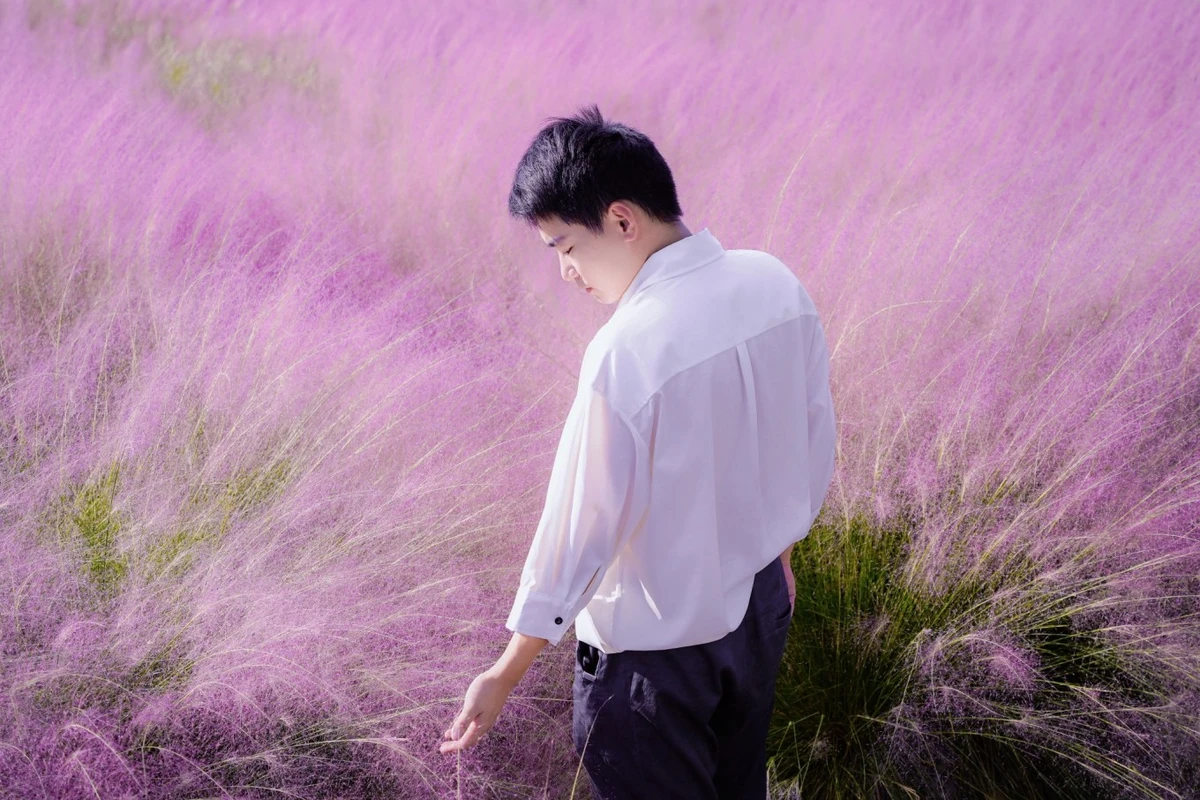
⭐️ The pink muhly grass in early autumn creates a dreamy, romantic pink world.
⭐️ Shijiu Lake in its dry season, without the "mirror of the sky," yet a real-life anime fairy tale world.
⭐️ Lakeside camping, encountering a grand fireworks display that belongs to Nanjing.
⭐️ At the foot of Wuxiang Mountain, experience the bustling National Day water town morning fair.
⭐️ By the shores of Shijiu Lake, encounter breathtaking sunset and twilight.
⭐️ In the mountain orchards, enjoy the joy of hand-picking autumn fruits.
⭐️ What I miss most is that taste of Jiangnan I'm always craving.
At the foot of Wuxiang Mountain lies a Tang-style scenic spot. "Obtain the tranquility of mountains and water without leaving the city walls; enjoy the pleasure of forests and springs while living in the bustling downtown." I've visited many ancient towns and water towns across China, but when I approached Wuxiang Water Town, the overwhelming sense of stepping back in history was the strongest. The glory of the Great Tang Dynasty unfolded before my eyes like a scroll: pavilions, terraces, small bridges over flowing water, winding streams. Being there felt like traveling back to the prosperous Tang era.
Of course, when I sent my drone up into the sky, the well-arranged buildings appeared very orderly, with winding corridors and high, ornate eaves.
As I strolled through Wuxiang Water Town, the pavilions, terraces, and full Tang flavor reminded me of scenes from the movies "Legend of the Demon Cat" and "The Longest Day in Chang'an." That era of peace and prosperity, when the nation thrived and the people flourished—the great Tang. One step and I was transported, dreaming of Tang. Though not in Chang'an, there were lingering traces of Chang'an everywhere, not only in every brick and tile but also in every unexpected corner and glance. A thousand years in a blink; the winds and clouds surged and then vanished in an instant. The former glory and grandeur have faded, leaving only the remnants of that once-prosperous scene.
In early autumn at Wuxiang Water Town, the reed beds still gleamed under the sun, and the goldenrain trees were in full bloom. Bridges, streams, and rippling blue waters.
To the north, it leans on the Qinhuai River system; to the south, it overlooks the scenery of Wuxiang Mountain. A thousand-year-old town with a modern heritage. Lishui City God Temple was first built in the Tang Dynasty and has always been a local cultural landmark and commercial center. The City God venerated in Lishui is Bai Jikang, the uncle of the great poet Bai Juyi, who was a county magistrate here in the Tang Dynasty. Bai Jikang did many good deeds for the people during his tenure and died in office. The people of Lishui missed him and enshrined him as their City God. The old Lishui City God Temple in Nanjing was originally built in 844 during the Tang Dynasty, commonly known as "Ninety-Nine and a Half Bays," and is the largest City God temple in the Jiangnan region.
Now rebuilt in a different location, the temple is nestled against hills and water, with superb scenery—a must-visit spot in Wuxiang Water Town. I happened to come here during the National Day holiday and encountered the "October Pilgrimage" event, with grand blessing and worship ceremonies in the temple. There were lively music and grand rituals, and scholars dressed in Tang dynasty costumes were strolling the grounds, offering an immersive experience of Tang-style splendor.
In the cultural district outside the temple, every step reveals a new scene. The courtyards are orderly and full of antique charm—whether a memorial hall or an exhibition space. Strolling through this district, the deeper I walked, the more profound the feeling became, taking in Lishui's past and distilling the luminous treasures of history and culture from the vast sea of time.
Gazing at Chang'an from the bridge, looking back at Tang in Jinling. Though separated by countless mountains and rivers, the glory of history is always connected.
Unknowingly wandering through the water town, time flew by. When the golden afterglow of sunset shone on the eaves, I suddenly realized how time had passed. The sunset in the evening is the most poetic moment of the day. The warm light draped everything around in a soft golden coat. At dusk, I lazily did nothing but quietly bid farewell to the sun and watch it set.
At sunset, paragliders soared freely in the sky above Wuxiang Water Town. The distant sky was already turning orange, and the Qinhuai River still flowed quietly.
A small boat, a single lamp, drifted peacefully on the water. I happened upon two girls in Hanfu filming a video under the bridge, and I snapped a candid photo of them looking back. Unexpectedly, it looked beautiful. Wuxiang Water Town is truly perfect for classical Chinese Hanfu photography—every spot is photogenic.
As the afternoon heat subsided, more and more locals and tourists came to the water town for leisure. Being here felt like attending a grand Tang-style garden party: children filled with playfulness, curiosity, and anticipation, adults bringing the joy of family outings. Every visit to such a garden party brings warmth and happiness.
As the sun set and the sky darkened, lanterns lit up one by one, illuminating the eaves and outlining the silhouette of the water town. I was grateful that the night lighting here was so restrained. I've seen the night scenes of many ancient water towns, but few appeal to me, because while their daytime scenery resembles refined ladies, at night they turn gaudy, with overly bright lights making all the buildings vulgar. The night view of Wuxiang Water Town, however, is a beauty of clarity and restraint. The soft orange lanterns cast a gentle glow without dimness. The perfectly saturated lighting showed the town's contours and shadows just right, like a scholarly, noble household—gentle yet strong, humble yet dignified.
Near the exit, I saw the pagoda lit up by the Wuxiang Night Light Show, its ever-changing colors echoing the bright moon in the sky.
Before leaving the water town, my hungry stomach was drawn by the aroma of cumin. The Great Tang, too, was a place of earthly delights.
Vol. 2: Autumn in Nanjing Has More Than One Color
When we think of autumn colors, perhaps the first thing that comes to mind is golden yellow—golden sycamore leaves falling, golden ginkgo fluttering. Or in late autumn, when red maples bloom, painting entire valleys in a flush of crimson. But in Nanjing, autumn has more than just one color.
A pink ocean, a romantic paradise. In recent years, the popularity of pink muhly grass has skyrocketed almost overnight, introducing many to this pink sea exclusive to autumn. No one can resist this delicate shade of pink, and Guoxing Manor in Lishui is currently the largest pink muhly grass manor in Nanjing.
The manor is spacious, with planned and neatly arranged pathways for touring and taking photos. No need to worry about trampling the grass while trying to get a good shot.
One side of the manor is a romantic pink muhly flower sea, while the other side is a pastoral idyll with pink muhly and a windmill.
Pink muhly grass takes on different shades of pink depending on the light—sometimes rose pink, sometimes cherry blossom pink. But it's always a light, dreamy color, just like its flower language: 'beautiful waiting.' It's like the flutter of a young girl secretly in love, at that beautiful age of youth. She likes someone but is too shy to confess, hiding this secret crush and quietly striving to become more dazzling, waiting for the day she can appear before him with a better version of herself. This is a memory of youthful pink.
Guoxing Manor also has a vintage-style little train, where you can not only capture artistic, retro photos but also ride through the pink muhly flower sea. Normally, when taking planes or high-speed trains, we just want to go faster and faster, but on this little train, I wished it would slow down, slower and slower, like the old green trains of yesteryear, when wheels rolled by and time was slow.
At the same time, Guoxing Manor is a very comfortable camping spot, with vast lawns and open spaces where you can pitch a tent and enjoy the autumn sun, gentle breeze, and the scent of pink muhly flowers—an autumnal limited-edition romance.
I had originally wanted to see the legendary "Mirror of the Sky" at Shijiu Lake, but because of the dry season this year, the water level dropped sharply, so the grass sea that usually appears only in March and April emerged again this autumn, out of season. If it were just a grass sea, it wouldn't be particularly special, but what makes the Shijiu Lake grass sea unique is its natural textures and directions, which look from afar like waving in the wind, much like the grass sea from the popular anime "My Neighbor Totoro," so this place is also called "Totoro Grass Sea."
Getting here is very simple: just navigate to "Totoro Grass Sea" or "Zhangxu Village." Once you reach the shore of Shijiu Lake, you're not far from the grass sea. The grass sea is vast, and the closer to the water, the lusher the grass and the fewer the bare patches.
Sit casually on the grass to rest, or take close-up portraits. Against the deep green backdrop, skin looks even fairer.
Of course, the best equipment for photos in the grass sea is a drone. Once your little aircraft ascends, you can see the outline and posture of the grass sea in full view. Lying casually in the grass, the photo output rate is very high. If you like Totoro, you can add stickers later to create a real-life anime world.
As we stayed in the Totoro grass sea until evening, we unexpectedly witnessed a spectacular sunset unfolding before our eyes. Perhaps to make up for missing the "Mirror of the Sky" at Shijiu Lake, the heavens showed me the most beautiful sunset of the year right here.
Around 5:30 PM, when I saw the distant grass sea already draped in a golden coat by the setting sun, and the very air seemed tinted with honey, I knew today's sunset would be extraordinary.
A nearby plank bridge looked toward the distant Shijiu Lake Bridge under the orange sky, adding a sense of waiting.
I stumbled upon someone who had set up a canopy and camping chairs in the grass sea, looking incredibly cozy and warm in the orange sunset. The rise of camping has changed people's travel habits; with a canopy and simple camping gear in the car, you can enjoy leisurely outdoor time anytime, anywhere, quietly watching the sunset's changing colors in the grass sea.
When I ran toward the sunset through the grass sea, the orange sun reflected on the surface of Shijiu Lake, casting long shadows. Today's setting sun was especially large, especially dazzling.
When everything was at its best, even the clouds by the setting sun appeared so perfectly timed.
When the sun finally set and dusk gradually gathered, the evening glow and afterglow bid their final farewell. I regretted not seeing the "Mirror of the Sky" I'd hoped for, but I was so lucky to have witnessed this unexpected, beautiful sunset.
On the shore of the Totoro grass sea, there remain relics from the revolutionary era: a watchtower and an arsenal site. The scale isn't large, but after the passage of history and time, it now resembles a weathered old man, filled with a calm and detached outlook on life.
Ivy and tree roots have crept over entire walls, climbing from the earth upward toward the sky. The dust of history has settled, covered by vibrant greenery.
Under the orange sky, the lonely watchtower stands here, keeping watch over Shijiu Lake day and night, through the shifting stars. Like a steadfast guard, or a solitary guardian, it stands silently, day after day, letting time slip by.
Before this, I had forgotten when I last saw fireworks. On this trip to Nanjing, I happened to learn that at Luoshan Fireworks Camping Park by Shijiu Lake, there's a grand fireworks display at 7 PM. Relaxing on the lawn by the lakeside, with a spectacular fireworks show overhead—what a romantic scene!
At 7 PM sharp, the fireworks began on time. Not just a few perfunctory bursts, but a show of sufficient length and grandeur. The fireworks shells shot up into the sky and exploded in the night, turning into dazzling, colorful sparks. Even though the beauty of fireworks is fleeting, their magnificent blooming gives them the greatest meaning.
And the camping ground beneath the fireworks was my ideal camping life. The warm-lit little tents in the night were like cozy havens. Under the canopies outlined by string lights, there was the sweetness of lovers, the laughter of friends, the warmth of family. Strangers shared the same patch of grass, enjoying the same life—somehow a special kind of fate.
The campground also organized a lively bonfire party, playing upbeat music, with everyone dancing hand in hand around the roaring bonfire. Such intimate activities are becoming rare in cities these days, quickly bringing people closer together.
After nightfall, it was very cool by Shijiu Lake. Inside the canopy at Luoshan Fireworks Camping Park, with a camping lamp lit and some food and drinks prepared, you could savor this rare comfort. As the nighttime bustle faded and nature returned to quiet, we lay under the open sky, sleeping in the lakeside scenery, dreaming together.
The autumn breeze brought the harvest season—a perfect time for fruit picking in orchards. In the morning, I set out from my guesthouse, passed Wuxiang Mountain, and arrived at a large mountain forest area full of fruit trees. The fruit-picking industry here is well-developed, and many farms and orchards welcome guests to go directly into the greenhouses and experience the joy of picking fruit by hand. This season is the harvest time for Lishui's Shine Muscat grapes, dragon fruit, kiwi fruit, yellow peaches, and more. On a whim, I drove along and looked for a suitable orchard. Seeing one with quite a few visitors, I decided to go in and have a look.
This farm currently offers red-fleshed dragon fruit and yellow-hearted kiwi fruit for picking. Carrying a small basket, you can head straight to the orchard and greenhouses to pick your favorite fruits. Having grown up in the city, it was my first time seeing how these fruits actually grow.
The dragon fruits were still working on ripening, from flower to fruit to full maturity.
Inside the dragon fruit greenhouse, everything felt novel. I marveled at how such a small vine could produce so many dragon fruits; I'd always thought they grew on trees! I really learned something.
I picked a ripe dragon fruit right there, cut it open, and it was completely red inside. Juicy, plump, and sweet—this must be the freshest fruit possible.
Not far away, the kiwi orchard was laden with fruit. Unlike the green kiwis I'd mostly eaten before, these were yellow-hearted! Though small, they had very thin skins. You could peel them right after picking from the tree. I'd expected such small kiwis to taste a bit astringent, but they turned out to be very moist, with a perfect balance of sweet and sour.
Before leaving, you could buy freshly picked whole boxes of fruit to take home, and the prices were very reasonable. There are many more picking gardens here, varying in size and type; you can find one you like and spend a sweet-and-sour afternoon.
The glory of the Yue Kingdom's garments, the learned family of Zhongshan. Zhujia Village in Hefeng Town, located by Shijiu Lake, is an ancient village with a long history. The Zhu clan alone has over 3,000 people in the Hefeng area. The exact origin of the Zhu lineage is unknown, but judging from the couplet on the gate of the Zhu Ancestral Hall in the north of the village—"The glory of the Yue Kingdom's garments, the learned family of Zhongshan"—it is inferred that the Hefeng Zhu clan likely originated from the Zhejiang area, which was once the ancient Yue Kingdom.
In the past, Zhujia Village was just a small fishing village that depended on the lake, with generations of residents living off fishing in Shijiu Lake. But in recent years, through a series of developments and changes, it has transformed into an artistic tourist ancient village. While preserving the original village character as much as possible, they have made delicate little renovations: 15 old houses scattered around the village have been turned into art galleries, cultural and creative shops, brimming with cultural atmosphere. These once-abandoned old houses have been revitalized with new faces and identities.
Near the village entrance by Shijiu Lake, there is a heart-shaped tree that has magically grown into the shape of a heart.
As a relatively uncommon surname among the hundred family names, the Zhu family has lived and thrived here, preserving their old homes and ancestral halls—the roots of their culture.
And in an artistic little village, coffee and desserts are a must. And of course, they have them here. In a small coffee courtyard, I sipped a warm latte, strolled through the village, felt the breeze from Shijiu Lake, saw ripe pomegranates overhead, and smelled the faint fragrance of osmanthus in the air.
Every time I leave Nanjing, I still miss its cuisine. So on this visit, I checked out several well-reviewed local restaurants to savor the most seasonal flavors of Jinling during the autumn harvest. Duck blood vermicelli soup is a must-eat when in Nanjing—whether for breakfast, a proper meal, or even a comforting bowl of warmth at midnight.
Ham, dried bamboo shoots, and fresh duck were stewed into a nourishing concoction. The savory ham and the wild flavor of the bamboo shoots melded into the broth, and a sprinkle of white pepper warmed the whole body.
Stone pot duck feet, braised until the bones were falling off the meat, were tender enough that a gentle press separated bone from flesh. The duck feet seemed to have been fried first, then braised, making them deeply flavorful.
Seasonal wild rice stems stir-fried with pork liver over high heat delivered the freshest taste of the season.
When in Nanjing's Lishui, you must try the red-braised pork! Many restaurants here feature it as a signature dish. The pork is cut into large chunks, with alternating layers of fat and lean meat, braised until very tender. The red-braised pork here is more on the sweet and saucy side, perfect with rice.
Autumn crabs, small assorted fish, tofu.
For this trip to Nanjing, I chose two distinctive guesthouses. Nowadays I increasingly prefer staying at guesthouses, especially those embedded in local villages or scenic spots, which offer a better travel experience.
Fulinyi is located within Wuxiang Water Town, just a few minutes' walk from the City God Temple. Whether in the early morning or at dusk, you can take in the most beautiful moments of the water town. Designed with the philosophy of "emptiness, meditation, authenticity, nature," it truly creates a "carefree dwelling at the foot of Wuxiang Mountain."
My favorite space is the central courtyard, similar to a traditional siheyuan, where it's really comfortable to sunbathe by the open Chinese-style corridor.
From the balcony outside the room, you can take in the full view of Wuxiang Water Town.
Every detail exudes a strong Tang atmosphere, perfectly complementing the style of the water town.
Situated by the Qinhuai River system, it's like a graceful lady, full of poetry and wisdom, calm and unruffled. The reeds swaying in the autumn breeze carry the scent of the season.
After nightfall, you can set up a canopy and camping chairs on the lawn, enjoying quiet outdoor living.
Since I wanted to explore deeply around Shijiu Lake, I chose to stay overnight at a guesthouse in Zhujia Village. There are quite a few guesthouses there, and this time I picked the relatively newer Huangqi Yujia. At first, I thought it was just a guesthouse, but later I discovered it's a complex integrating dining, lodging, and fishing leisure.
The guesthouse follows the popular modern rustic minimalist style, using large areas of concrete and brick to create a tranquil haven in the ancient village.
Though not large, the guesthouse is very design-conscious, with unexpected corners that are surprisingly photogenic.
There aren't many restaurants in the village, so I had dinner at the guesthouse's own restaurant, ordering seasonal shredded pork with wild rice stems, which was delicious. They also recommended their signature meat slice soup, which had a unique texture.
If you are to write about Nanjing, you cannot write only about Nanjing. Not just the Qinhuai River, the intoxicating Jiangnan, the splendid Jinling scenery, or the sycamores everywhere. On this National Day trip to Nanjing, I discovered another side of Nanjing: at the foot of Wuxiang Mountain, by Shijiu Lake, in the Totoro grass sea, in the fishing village. I wandered through Lishui with a light and expectant heart, greeted by the most beautiful sunset, a grand fireworks display, seasonal sweet-and-sour fruits, and a sense of ease and relaxation beyond the city. If Lishui could write letters, it would surely write to many: To write about Nanjing, you cannot write only about traditional, historical Nanjing. I came here, and so I too have written a memorial and travelogue about Lishui.


