9-Day 8-Night Japan Tour
I went to Japan before the New Year, traveling from Tokyo, Yokohama, Nagoya, Osaka all the way to Sapporo in Hokkaido. Although metropolises like Tokyo are bustling and modern, compared to Shanghai today, their urban appearance seems not much different, so I didn't find them particularly novel. I also visited Tokyo Disneyland; now Shanghai Pudong also has one, but I haven't been there yet. I guess Disneylands around the world are similar—children will surely love them, but as an adult, I wasn't very excited. However, Japan's ancient castles and garden architecture had a unique charm that left a deep impression on me. The entire trip lasted 9 days. Day 1: Fly from Shanghai to Tokyo, visit Shinjuku in the afternoon, Ginza in the evening, stay in Tokyo. Day 2: Visit Senso-ji, the Imperial Palace, and the Tokyo Metropolitan Government Building observation deck, stay in Tokyo. Day 3: Visit Tokyo Disneyland, stay in Tokyo. Day 4: Go to Yokohama, visit Yokohama, then head to Hakone in the afternoon, visit Owakudani, stay in Hakone. Day 5: Visit Hakone Peace Park and Lake Ashi, go to Nagoya in the afternoon, visit Nagoya, stay in Nagoya. Day 6: Go to Kyoto, visit Kinkaku-ji, Heian Shrine, Arashiyama, etc., stay in Kyoto. Day 7: Fly to Sapporo, Hokkaido, visit attractions in Sapporo city, visit Otaru, stay in Sapporo. Day 8: Visit attractions in Hokkaido, fly to Osaka in the evening, stay in Osaka. Day 9: Visit Osaka Castle, etc., return to Shanghai in the evening.
Tokyo: Tokyo is located at the southern end of the Kanto Plain on Honshu Island, Japan. It is the capital and largest city of Japan, as well as the political, economic, cultural, and transportation center. Tokyo was formerly called Edo and has been one of Japan's major cities since the Tokugawa shogunate. After the Meiji Restoration, the capital was moved to Edo and renamed Tokyo, making it the capital of Japan. It gradually developed into a hub for politics, economy, culture, transportation, and many other fields, and is one of the most economically developed and affluent cities in the world.
Senso-ji: Senso-ji is a popular temple in Japan that integrates Buddhism and Shintoism. Although it is a Buddhist temple, it is adjacent to Asakusa Shrine due to the prevalence of Shinto. As a landmark of the Asakusa area, this historic temple offers free admission and holds Buddhist festivals. Senso-ji is the oldest and most popular temple in Tokyo, and the center of Asakusa. It enshrines a statue of Kannon, the goddess of mercy. Built in the 7th century, it has been rebuilt several times due to fires. Legend has it that three fishermen found a small gold Kannon statue (about 5.5 cm tall) while fishing, which led to the construction of the temple. To the southwest of the main hall is a five-story pagoda, the top of which houses relics of Shakyamuni Buddha. The symbol of Senso-ji is the Kaminarimon (Thunder Gate), flanked by the gods of wind and thunder, with a huge red lantern inscribed with the characters "雷門" (Thunder Gate) hanging at the entrance. Behind the gate are two large straw sandals. Senso-ji is the oldest temple in Tokyo, with a history of about 1,400 years. It is a landmark tourist attraction, and the most visited temple for Hatsumode (first shrine visit of the New Year). Compared to other shrines and temples in Tokyo, Senso-ji has one of the highest numbers of worshippers. It is a popular recreational area preserving the "Edo-style" atmosphere. Senso-ji is the oldest and most visited temple in Tokyo. On Nakamise Street, visitors enter from Kaminarimon and join the procession of worshippers. Before entering the main hall, they draw fortunes. Then they enter, clap, toss coins, and pray. Everyone completes this ritual to bid farewell to the past year and welcome the new one. Before leaving, they buy hamaya (demon-destroying arrows). Japanese people, including elementary and junior high school students on summer vacation, participate in Hatsumode en masse.
Tokyo Metropolitan Government Building Observation Deck: The Tokyo Metropolitan Government Building is the government office of Tokyo, located in the bustling Shinjuku district. This twin-tower complex is a landmark of Shinjuku. The 45th floor houses two free observation decks open to the public, offering panoramic views of Tokyo. Built during Japan's bubble economy in the 1990s, the building is grand in scale and location. It is adjacent to Shinjuku Central Park, and the subway station "Tochomae" is directly below. The towers have north and south observation decks with 360-degree views; on clear days, you can see the entire Tokyo skyline. The Tokyo Metropolitan Government Building itself is a skyscraper worth admiring; from the plaza at its base, you can capture the full structure in photos. It is not far from Shinjuku Station, so you can combine a visit with Shinjuku. The observation deck on the 45th floor is free and offers a fantastic view, especially at night. This is where the Tokyo government works; it is called "Tocho" because Tokyo is the capital. Located in Shinjuku, it consists of two towers (First and Second Main Buildings) and ancillary facilities, and is well-known in Tokyo and across Japan. From the 1st floor, a dedicated elevator takes you to the observation deck at over 200 meters above ground in 55 seconds. As a popular free attraction, there is often a queue, especially at night when many come to see the Tokyo nightscape. From the deck, you can see Shinjuku Gyoen, the Imperial Palace, Meiji Jingu, Yoyogi Park, Tokyo Tower, and more. There are detailed guide signs at the windows, and a café where visitors can enjoy coffee while taking in the view.
Imperial Palace: The Imperial Palace is the sixth major attraction in Tokyo. Located in Chiyoda Ward, Tokyo, it was originally Edo Castle. After the Meiji Restoration, when the Tokugawa shogunate ended and Emperor Meiji regained control, Japan had two capitals: Kyoto and Edo (renamed Tokyo). The former Edo Castle became the emperor's residence. From 1888 to 1948, it was officially called the Imperial Palace. Most of the palace is closed to the public, except for the East Garden (Higashi Gyoen). The Imperial Palace is where the Emperor lives and is a large green space in central Tokyo. It was built in 1590 and is close to Tokyo Station. Tokyo became the imperial capital after the Meiji Restoration, partly due to its coastal location. The palace grounds feature traditional Japanese castle architecture and colors. The outer areas are open for walking, but the inner core is not usually accessible for daily visits. The area is surrounded by many trees. The paths are covered with gravel, which crunches underfoot—said to be a design to prevent ninja attacks at night. Outside the Imperial Palace, you can see the famous bronze statue of a mounted samurai and the ancient, dignified castle walls. From the outer garden, you can see the Nijubashi Bridge (double bridge) over the moat. The East Garden is the imperial family's large garden, where you can stroll and admire historic buildings and garden scenery. Nijubashi Bridge has political significance; the Japanese Emperor read the surrender declaration there. Visitors generally tour the outer areas, including the Outer Garden, East Garden, and Kitanomaru Park, separated by the moat. The inner palace is open only twice a year: on the Emperor's Birthday and New Year's Day (January 2). The buildings feature green roof tiles, white walls, and brown copper pillars, surrounded by lush greenery.
Shinjuku: Shinjuku is one of Tokyo's most famous bustling commercial areas, with countless shopping malls and buildings, as well as cherry blossom spots like Shinjuku Gyoen, the artistic Golden Gai, and the Kabukicho entertainment district. Both above and underground, there are dense commercial facilities including brand-name stores, department stores, electronics districts, drugstores, 100-yen shops, discount stores, and fashion boutiques, catering to all budgets.
Ginza: Ginza is Tokyo's most famous commercial district and the most representative bustling area in Japan, known for high-end shopping. It gathers top luxury brand flagship stores, upscale department stores, and various century-old shops, comparable to the Champs-Élysées in Paris and Fifth Avenue in New York. Ginza appears in many film and TV scenes. It is divided into Ginza 1-chome to 8-chome (similar to "blocks"), with Ginza 4-chome and 5-chome separated by Harumi Street. All eight chome are connected by Chuo Dori (central avenue). Ginza has eight main streets, with the intersection at 4-chome being the busiest. On weekends from noon to evening, the main streets become a pedestrian-only zone called "Pedestrian Paradise." The sidewalks are wide, and during weekends, vehicle traffic is prohibited, turning it into a crowded pedestrian mall. Ginza is well-connected by multiple subway lines.
Tokyo Disneyland: Tokyo Disneyland is one of the most successfully operated Disney parks in the world. Entering through the main building "Cinderella Castle," you start a self-forgetful fairy-tale journey! The park is divided into seven areas: World Bazaar, Adventureland, Westernland, Critter Country, Fantasyland, Toontown, and Tomorrowland. Among them, Tomorrowland offers high replay value, with Star Tours based on Star Wars, featuring impressive 3D effects that make you feel immersed, and over 50 randomly generated storylines. Tokyo Disneyland is the third major attraction in Tokyo. Built in 1982 in Urayasu, Chiba Prefecture, east of Tokyo, it was jointly constructed by Walt Disney Company and a Japanese design company. Known as Asia's top amusement park, it is modeled after Disneyland in the U.S. and covers 46 hectares. The seven themed areas host various parades and performances at scheduled times. The park maintains the authentic style of the American original, allowing visitors to experience its "extraordinary" entertainment features. Large-scale parade performances are also held. Crowd levels are comparable to those in Los Angeles and Shanghai, but despite the crowds, the rides and attractions are orderly and suitable for all ages. Space Mountain is an indoor roller coaster that sends you soaring through space, a classic Disney attraction with high popularity. Big Thunder Mountain in Westernland is not extremely thrilling but fun for a ride. In Fantasyland, you can relive childhood. Riding the Peter Pan's Flight cable car makes you feel like you're really flying. The popular "Pooh's Honey Hunt" is also found in Hong Kong, but the Tokyo version is better.
Yokohama: Yokohama is an important city in the Tokyo metropolitan area, one of Japan's three major metropolitan areas. It is located in the southern part of the Kanto region, bordering Tokyo Bay to the east, Yokosuka to the south, and Kawasaki to the north. Yokohama was one of the earliest ports to open in Japan and the most accessible in Tokyo Bay, giving it a unique advantage over time. About 30 km from Tokyo, it is also a major port city, second only to Tokyo in population. Along the Pacific coast, you can enjoy blue skies and sea, with dining facilities. Yokohama has a strong European atmosphere. As an international port city in eastern Kanagawa Prefecture, it is also the prefectural capital. Its port, located on the western shore of Tokyo Bay, is often considered Tokyo's outer port, with extensive port facilities and associated industrial and storage areas. The ocean liner Hikawa Maru is permanently docked at Yokohama Port, between the Osanbashi Pier and Yamashita Park. This historic ship is an important cultural asset of Japan, beautiful and impressive. Built in 1930 at the Mitsubishi Yokohama Shipyard, the Hikawa Maru is a 12,000-ton luxury passenger ship, 163.3 meters long. It crossed the Pacific 254 times over 30 years, carrying 25,000 passengers, earning the nickname "Queen of the Pacific." Since 1961, its renovated dining room, social room, and the suite where Charlie Chaplin once stayed have been open for tours, and it is designated as a tangible cultural property of Yokohama. In the morning, the environment is quiet and comfortable; walking along the seaside feels less hectic than central Tokyo. Nearby are large shopping centers, amusement park rides, a giant Ferris wheel, a seaside park, and the Red Brick Warehouse, each with its own character.
Minato Mirai 21: Its name represents the future dream of Yokohama as a port city facing the 21st century. Formerly a shipbuilding base, it now features first-class hotels, amusement parks, convention centers, art museums, and concert halls. It is beautiful and tranquil. A stroll by the sea in Yokohama is truly pleasant; the modern buildings are quite attractive. Elderly people sit leisurely by the sea, surrounded by large flocks of pigeons. The first thing you see is the giant Ferris wheel by the sea and the surrounding skyscrapers, the most prominent being the Landmark Tower, the tallest building in Japan. Nearby are Hakone, a famous hot spring resort, and Mount Fuji. The Minato Mirai area, besides port facilities, is spacious, orderly, and beautiful, full of vitality and modernity. Yokohama Landmark Tower is a super-tall building in Japan, housing business facilities, event halls, a grand hotel, and a shopping center. The shopping center is a five-story atrium with many long-established, high-end shops from Yokohama. Adjacent are the Yokohama Museum of Art and Yokohama Queen's Square, making it a bustling area. At dusk, the view of the Cosmo World Ferris wheel, skyscrapers, and the Yokohama Bay Bridge reflected in the water is unforgettable and worth visiting. The Pacifico Yokohama convention center is a distinctive building complex shaped like a giant sail facing the wind, very grand. Inside, it is stylish and high-end, with a café and large windows offering sea views. It is connected to the InterContinental Yokohama Grand Hotel and Tokyu Hotel, Queen's Square, the Ferris wheel, and sailing ships. It is also the tallest building in Japan, equipped with one of the world's fastest elevators, reaching the 69th-floor observation deck in about 40 seconds. The 360-degree glass walls offer a view of Minato Mirai from 273 meters above ground. The building has a sky garden, and the observation deck on the 69th floor provides a vast view of Tokyo, Izu Peninsula, and Mount Fuji on clear days. Amateur official bands often play world-renowned music here.
Hakone: Hakone is a renowned hot spring resort in southwestern Kanagawa Prefecture, about 90 km from Tokyo. It was once a volcanic crater long ago. Hakone boasts beautiful scenery with surrounding mountains, babbling streams, and a constant flow of tourists, earning it the nickname "National Park." Although Japan is not large, it has beautiful landscapes. Besides the bustling Tokyo and historic Kyoto, Hakone's natural scenery is particularly enchanting. Along the way, trees are lush, and the famous Mount Fuji can be seen in the distance. About 400,000 years ago, this area was a volcanic crater spewing smoke and lava. Now, it is surrounded by green peaks, flowing streams, and hot springs, creating a stunning landscape. Due to the year-round influx of tourists, Hakone is also known as a "National Park." Hakone is a famous hot spring and health resort in southwestern Kanagawa Prefecture, 90 km from Tokyo. 400,000 years ago, it was a crater with lava; now, it is a scenic area with green peaks, streams, and hot springs. The hot springs of Hakone are renowned, including the "Hakone Seven Hot Springs," seven spa resorts. There are also other historical sites like "Hakone Hachiri," Soun-ji Temple, Senjojiki, Sengokuhara, and Kubotoro Shrine. Hakone-Yumoto Onsen is the largest hot spring town in Hakone, located at the entrance to the scenic area, and the oldest of the seventeen hot springs in Hakone. Its history dates back to the Nara period and flourished as a famous spa and post town during the Edo period. Legend has it that the warlord Hojo Soun soaked his tired feet in the water at what is now "Yuwa Izumi." The hot spring street offers various day-trip bathing facilities. The water quality is simple spring or saline simple spring, with temperatures between 30-80°C, effective for neuralgia, joint pain, and cold constitutions.
Owakudani: Owakudani is another important attraction in Hakone National Park besides Lake Ashi. Also known as "Great Hell Valley," it is a volcanic crater formed by a major eruption over 3,000 years ago and is one of the sources of Hakone's hot springs. Here you can see sulfur steam and hot springs, and on clear days you can view Mount Fuji. You can also taste "Kuro-tamago" (black eggs) boiled in the hot spring water. Because of the high sulfur content, the hot springs here are not suitable for bathing. Owakudani is a representative spot in the Hakone area, like a natural large hot spring. Walking along, you are bathed in sulfur steam. You can hike the mountain trails or take a cable car. At the top, you can try the local specialty black eggs. The last eruption of Owakudani was 3,000 years ago, but throughout the valley, white smoke still rises from vents, indicating the volcano is still active. You can see the overall landscape of Owakudani. After getting off the cable car, you can walk along a path into the valley. Everywhere, white smoke rises from the ground, and the volcano may erupt again at any time. At the smoking vents (Enmadai), you can closely observe the hot steam jets from the rocks and cracks, and watch the process of boiling eggs in the hot spring. Due to high sulfur, direct bathing is not allowed. This is also a viewpoint for Mount Fuji. Near the Kuro-tamago-kan, you can buy black eggs, Owakudani specialty snacks, black egg crafts, Hakone Yosegi Zaiku, and cosmetics unique to Owakudani. The famous black eggs are boiled in the hot spring water, which turns the shells black. At the end of the trail, don't forget to try a black egg.
Peace Park: Hakone's "Peace Park" is called "Heiwa Koen" in Japanese, meaning the same. It belongs to the Fuji-Hakone-Izu National Park, along with Mount Fuji, Lake Ashi, and the ancient volcanic site Owakudani. Hakone is one of Japan's most beautiful tourist destinations, with cherry blossoms in spring, water in summer, warm sun in autumn, and snow in winter. At the park entrance, a torii gate bears a couplet: "祈世界平和,祈国土安稳" (Pray for world peace, pray for national stability), expressing the Japanese people's condemnation of war and desire for peace. Due to the devastation of war, the Japanese have built Peace Parks in many places, including Hiroshima, Nagasaki, Okinawa, and Hakone. Hakone Peace Park is one of these. From a distance, you can see its iconic white pagoda. The park resembles a temple, housing Japan's only pagoda containing relics of Shakyamuni Buddha. The path in front of the white pagoda is lined with stone lions donated by various countries, including majestic Thai bronze lions, pure white Indian lions, and those from Nepal, South Korea, and Taiwan. The core of the park is the Indian-style pagoda containing relics. The white pagoda stands tall on the square, backed by green mountains and surrounded by pines and cypresses. The pagoda has a Thai architectural style, with a strong color contrast. A huge white Indian pagoda enshrines a golden Buddha statue, conveying the profound meaning of opposing war with Buddhist compassion. The snow-white pagoda symbolizes tranquility and peace, standing like a giant Buddhist crown among the dark green mountains. On its east, south, west, and north sides are large shrines with four groups of golden Buddha reliefs. Descending the steps, you approach the pagoda. Outside, there are eight groups of Buddha reliefs, one of which features Dunhuang flying figures. At the base of the pagoda, there are bronze statues of two monks, and a stone tablet with text. Beside the mountain road, there is a bell pavilion with a wooden structure and four corners, housing a "Peace Bell." Visitors can take photos or strike the bell, listening to its solemn sound echoing in nature. On the other side of the path is "Okunoin," with a downhill path leading to "33 Kannon-do." Entering the 33 Kannon Hall, the courtyard is clean and tidy, with lush trees, winding paths, and beautiful scenery. At the exit with a gold Kannon statue, there is a stone stele inscribed with the "Ten-Phrase Kannon Sutra for Prolonging Life." The text reads: "觀世音 南無佛 與佛有因 與佛有緣 佛法僧緣 常樂我淨 朝念觀世音 暮念觀世音 念念從心起 念念不離心." From this sutra, one can see the Japanese monks' wish for peace. The Peace Park is large, a typical Japanese garden-style structure with a clean natural environment, fresh air, and serene elegance. The park is planted with various trees and flowers, beautifully trimmed and harmoniously colored, creating a clean and refined atmosphere. Walking up the gentle slope, the serene and elegant scenery is the park's charm.
Lake Ashi: The sparkling Lake Ashi is a volcanic lake covering 7 square kilometers, with a maximum depth of 45 meters. The water is clear and blue. On sunny days, you can see snow-capped Mount Fuji reflected in the lake, a scene known as "White Fan Hanging Upside Down in the Eastern Sea One Sky," and one of Hakone's wonders. It combines volcanoes, lakes, Japanese atmosphere, fine food, and hot springs. Taking a cruise on Lake Ashi, you can enjoy the tranquil lake, view Mount Fuji, and see the beautiful landscape. The calm lake surface is crossed by pirate ship and swan boats, creating a harmonious scene. Flocks of wild geese and waterfowl frequently land on the water. Water splashes create a misty, dreamlike world. You can feel the droplets on your face. The sightseeing boats, modeled after pirate ships, are very popular, with unique designs and themed interiors. The pirate ship is specially built for the scenic area, with pirate-style appearance and interior. You can see design elements from movie pirate ships. The pirate ship is colorful and large, holding over a hundred people. It has three decks, and many people like to stand on the decks to enjoy the breeze and take photos. The scenery along the way is beautiful. Boarding the boat, you can fully appreciate the scenery on both sides of Lake Ashi. The retro ship sails on the vast lake, with a gentle breeze refreshing your mind and spirit.
Nagoya: Nagoya Castle is a castle in Nagoya, Aichi Prefecture, also known as "Kinshachi Castle" (Golden Castle). Built in the time of Tokugawa Ieyasu, it is one of Japan's three famous castles, along with Osaka Castle and Kumamoto Castle. Nagoya Castle was the birthplace of the shogun Tokugawa Ieyasu; the tenshu (keep) was the residence of the shogunate. Although it was destroyed by fire in World War II, the reconstructed tenshu retains its grandeur. It was the hereditary residence of the Tokugawa clan. After Toyotomi Hideyoshi's death, Tokugawa Ieyasu unified Japan, and Nagoya Castle's tenshu was a stronghold. Every New Year, the tenshu holds a countdown event and a New Year festival. Nagoya has wide streets, typical of Japanese city planning. The city center is commercial, the southwest and north are industrial, and residential areas are on the hills and plateaus of Higashiyama and surrounding terraces. The west bank of the Shonai River and the northeastern Moriyama area are new residential districts, while the old castle area houses administrative offices. Street-side outdoor performances are also common. Nagoya TV Tower, located in Hisaya Odori Park in Naka Ward, Nagoya, Aichi Prefecture, was Japan's first integrated electric wave tower, 180 meters high, and a landmark in central Nagoya. In October 2008, it was chosen as a "Lovers' Sanctuary" and a monument was erected. From the revolving observation deck at 90 meters, you can enjoy a 360-degree view of Nagoya's nightscape. Nagoya Castle is ranked fourth among Japan's 100 famous castles. It consists of several layers, with the central Honmaru area containing the main tenshu on its west side. To the southeast of the tenshu are the ruins of the honmaru palace, and the two corners of the Honmaru area have southwest and southeast turrets.
Kyoto: Kyoto is Japan's traditional cultural capital. It became the capital in 794, known as "Heian-kyo." Kyoto is a world-famous ancient cultural city, with numerous historical sites, elegant architecture, and beautiful gardens. Its long history has endowed it with rich cultural heritage, including architecture, painting, sculpture, gardening, historical relics, folk arts, and architecture. Nearly 15% of Japan's important cultural properties can be found in Kyoto. Its cultural heritage, both in quality and quantity, is the highest in Japan. Kyoto features cobblestone gardens, poets' huts hidden in bamboo groves, vermilion shrine gates, geisha entering traditional inns, and golden temples floating on water.
Kinkaku-ji: When in Kyoto, you must visit Kinkaku-ji, a historic temple and World Heritage site. Its formal name is Rokuon-ji, but it is popularly called Kinkaku-ji (Golden Pavilion) because the exterior of its core building, the Shariden, is covered in gold leaf. Built in 1397, it was originally the villa of shogun Ashikaga Yoshimitsu (the model for the character in the anime "Ikkyu-san"), later converted into a Zen temple. It is said that the garden centered on the pavilion represents the "Pure Land of Paradise," reflecting beautifully in the mirror-like pond in front, especially on sunny days, making it a symbol of Kyoto. The three-story pavilion features different architectural styles on each floor. Although you cannot enter, the front windows on the first floor are usually open, and you can see statues of Shakyamuni and Yoshimitsu across the pond. After viewing the pavilion from across the pond, you can walk to the back, where you can see the golden walls up close. The garden behind the temple retains its original appearance from the Muromachi period. There are other sights, such as the "never-drying" Anminzawa pond and a group of small stone statues where visitors toss coins for good luck. Spring and autumn are the peak tourist seasons, but the scenery is beautiful year-round, with fiery autumn leaves or winter snow complementing the golden pavilion.
Heian Shrine: Built in 1895 to commemorate the 1,100th anniversary of the capital's move to Kyoto, Heian Shrine is relatively young among Kyoto's famous shrines. It enshrines Emperor Kanmu, the first emperor to reign in Kyoto, and Emperor Komei, the last emperor to reign there. The shrine's gate, "Otenmon," is painted vermilion. After purifying hands at the "temizuya," you pass through the gate and see the corridor of the "Daigokuden" hall. The east and west towers are called "Seiryu-ro" and "Byakko-ro" respectively, reconstructed based on careful research of the original Heian period buildings, and designated as important cultural properties of Kyoto. Heian Shrine is a pond-circling style building, with exquisite towers, most notably Byakko-ro and Seiryu-ro. It is a Shinto shrine located in Kyoto, dedicated to the 50th Emperor Kanmu and the 121st Emperor Komei. It was founded on March 15, 1895, to commemorate the 1,100th anniversary of the capital's move. In 1940, to commemorate the 2,600th anniversary of Japan's founding, Emperor Komei was enshrined here. The shrine's architecture is modeled on part of the Heian Palace but is only two-thirds its original size. It includes a large torii, Shinto road, Otenmon gate, Daigokuden hall, and a garden, showing clear Tang Chinese architectural influence. Festivals are held in the spacious grounds, including the "Jidai Matsuri" (Festival of the Ages) on October 22, one of Kyoto's three major festivals, where a procession wearing ancient costumes and horse-drawn carriages reenacts the ancient capital's splendor. In the courtyard, cherry blossoms bloom in front of the main hall, their petals falling in the rain. Small torii under the cherry trees hold prayer plaques written by Japanese visitors, similar to Chinese temples. They write their wishes and family members' names on the plaques, or hang them to pray for divine help. In the shrine, you can draw omikuji (fortunes) for 100 yen. If you draw "daikichi" (great blessing), you should return to the shrine the following year to express gratitude. Inside the garden, vibrant green contrasts with the pink blossoms swaying in the wind and rain, creating an ink-wash painting-like scene. The sight is intoxicating, with green patches like wet ink on paper, without elaborate garden ornaments, accompanied by faint floral fragrance, moist air, and earthy scent.
Arashiyama: Arashiyama is a scenic area on the western outskirts of Kyoto, including both sides of the Togetsukyo Bridge and the Sagano district. It is famous for cherry blossoms and autumn leaves, and the beautiful Sagano Bamboo Grove exudes Kyoto's unique charm. The area also contains many notable temples and shrines. It is an ideal place for mountain and river scenery. Upstream, the Hozugawa River flows through deep gorges with distinctive landscapes; downstream, the 154-meter Togetsukyo Bridge spans the river. Standing on the bridge, you can see the hazy green of Arashiyama and dense pine and cherry trees. The river below ripples with clear water. I first learned about Arashiyama from a poem by Zhou Enlai: "Visiting Arashiyama again in the rain, with green pines on both banks, interspersed with a few cherry trees. At the end, a mountain suddenly appears high, spring water flows out as green as jade, shining on the stones and people. The drizzling rain, the thick fog; a ray of sunlight breaks through the clouds, becoming even more beautiful. The myriad principles of the human world become fuzzier the more you seek; occasionally seeing a light in the blur, you feel all the more beautiful." The mountain temples and shrines have an antique elegance. The bamboo path is shaded by towering bamboo. Arashiyama has many scenic spots, a large area, and fresh, pleasant air that relaxes the mind and body. Located west of central Kyoto, Arashiyama has been the site of many aristocratic villas since the Heian period, often appearing in historical tales and classical literature. The Katsura River banks have extensive wild cherry and maple forests in spring and autumn, making it a popular tourist destination. The center of Arashiyama is the Togetsukyo Bridge over the Katsura River, named after a poem by Emperor Kameyama that compared the moon crossing the bridge. Although it looks like a wooden bridge, it is actually a reinforced concrete structure that can carry cars, with a retro wooden railing to match the surroundings. The section of the Katsura River near the bridge is commonly called the Oi River. The bridge is a landmark of Arashiyama, with its wooden-frame appearance and green mountains behind creating a beautiful landscape painting. Arashiyama Park (comprising Kameyama, Nakanoshima, and Rinsenji areas) on the riverbank has large areas of cherry and maple trees, especially spectacular when in bloom. The area also has many temples and shrines. During the Heian period (roughly China's Tang and Song dynasties), Arashiyama was a gathering place for aristocratic villas, and many remains from that era still exist, such as the Togetsukyo Bridge, said to have been built in the early Heian period.
Hokkaido: Hokkaido is located in northern Japan, covering one-fifth of Japan's land area but with only half the population of Tokyo. Population density is very low, concentrated mainly between Sapporo, Otaru, and Asahikawa. As a result, visitors to Hokkaido often feel a sense of openness and tranquility, quite different from the crowded prosperity of other Japanese cities. Hokkaido is world-famous for its snowy landscapes, making winter the best season to visit.
Sapporo: Sapporo is the capital of Hokkaido and its largest city, but compared to other Japanese metropolises, it has a relaxed atmosphere. Sapporo has beautiful scenery in all seasons: cherry blossoms in spring, beer and rock concerts in summer, markets featuring Hokkaido's local cuisine in autumn, and the White Illumination and Snow Festival in winter creating a fairy-tale world. It is also a hub for gourmet food and shopping! Susukino is the busiest entertainment district in central Sapporo, known as Japan's famous "pleasure quarter" or "Susukino Pleasure Town." It is lined with thousands of bars, clubs, karaoke, ramen shops, izakayas, and other dining and entertainment venues, bustling at night. During the day, Susukino is quiet, with nearby subway stations, underground streets, and department stores. The Former Hokkaido Government Office Building, located in central Sapporo, was originally the highest administrative building in Hokkaido, built in 1888. This red-brick, green-roofed Baroque-style building is a symbol of Hokkaido's pioneer era, locally called "Red Brick Office," and a landmark of Sapporo. Its front garden has flower beds, a pond, and old trees. In summer, flowers are in full bloom, and the red brick wall shines brightly in the sun. On the front of the building, a red five-pointed star ornament represents Hokkaido's pioneering spirit, and a green octagonal tower on the roof reflects the Western-style architecture popular at the time. The current Hokkaido Government Office building stands behind it to the right. Inside, the Hokkaido Prefectural Archives and Historical Gallery are open to the public for free. The interior maintains its historical atmosphere, displaying many materials about Hokkaido's development history. Entering the former building, you can see retro facilities and decorations that inspire imagination. Government office desks and chairs, old clocks, gifts from other countries, and Hokkaido specialty products are worth browsing. Exhibits show the entire history of Hokkaido's development, from a vast agricultural society to a modern prosperous region after the Meiji Restoration.
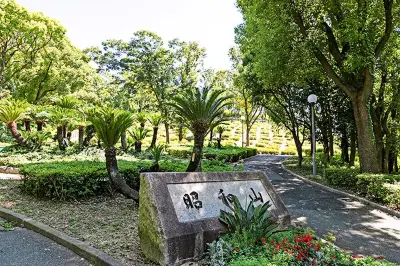
Mount Showa-Shinzan: Mount Showa-Shinzan is a volcano that erupted in the early Showa period (20th century) and is Japan's youngest active volcano. This reddish-brown volcano constantly emits geothermal white smoke from its peak, which cannot be climbed; visitors can only view it from the foot. Originally 270 meters high, it grew due to crustal movements to its current elevation of 402 meters. The base is surrounded by vast green lawns, with only the bare reddish rocks and soil at the summit. You can see it from the Mount Usu ropeway, but climbing is not allowed; you can only view the peak from the base. The top is covered with erupted lava, revealing brownish-red rocks close to the foot, allowing close observation. Though not high, the mountain is very beautiful, with clear streams, chirping birds, fragrant flowers, and fresh air. When the volcano erupted, it was during the Pacific War, and the Japanese government did not pay much attention. However, a local postmaster named Masao Mimatsu witnessed the entire process of the eruption and the rise of the new mountain. He documented the volcanic activity and the mountain's growth in his spare time. In 1946, he used his own funds to purchase the land including the new mountain for research, dedicating his life to studying the volcano. Later, he donated the mountain to the local government. To honor his significant contributions, the "Mimatsu Masao Memorial Hall" was built near Mount Showa-Shinzan, and a bronze statue of him was erected.
Mount Usu: Mount Usu is a frequently active volcano in the world, having erupted four times in the 20th century. Remarkably, each eruption created a new volcano nearby: Meiji-Shinzan in 1910, Showa-Shinzan in 1943, Usu-Shinzan in 1977, and the most recent eruption in 2000. Mount Usu is a double volcano, with four eruptions in a century, making it a well-known frequent volcano worldwide. Halfway up the mountain, there are two observation decks. To the right, the Lake Toya observation deck offers another view of Mount Showa-Shinzan and the surrounding area. Walking up the opposite path leads to the Mount Usu crater observation deck, offering stunning views of the Ginuma crater and Uchiura Bay. Climbing Mount Usu requires some effort. After a few minutes on the ropeway, you reach the top, where long trails wind along the mountain, passing craters emitting white smoke. The trail leads directly into the crater, providing a rare opportunity to closely observe a volcanic crater.
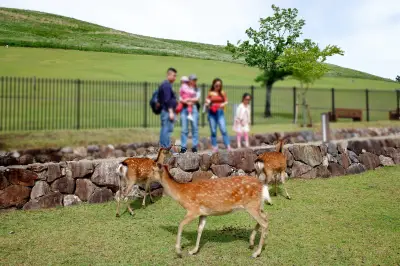
Lake Toya: Lake Toya is a non-freezing lake in northern Japan, remaining ice-free even in winter. Cherry blossoms bloom around the lake in spring, fireworks light up the sky in summer evenings, and autumn colors are stunning. You can take a boat tour, see deer on the island, and soak in open-air hot springs at the many hot spring inns on the south shore. It is a very pleasant experience. Many scenic spots are built around the lake. The white clouds, blue sky, and clear lake water evoke a sense of inner peace. Lake Toya is in southwestern Hokkaido, the ninth largest lake in Japan. It was selected as one of Japan's 100 best scenic spots in 2008. It formed due to frequent volcanic eruptions in the early 20th century. Because it is in a hot spring area, the lake does not freeze in winter. Lake Toya has beautiful scenery in all seasons. There is an observation deck on the mountain offering the best view of the lake. The lake is wide and clear, very beautiful.
Jigokudani (Hell Valley): Jigokudani is a volcanic crater remnant, constantly emitting volcanic gases from gray-yellow rock surfaces, with a strong sulfur smell, resembling a hellish scene. About two hours by car from Sapporo, you arrive at a valley that spews fire and smoke like hell, filled with the smell of sulfur. A short wooden boardwalk takes you through the valley, which is eerie and frightening. The strong sulfur odor is intense up close. The entire valley is beside the road, with a boardwalk leading deeper into it. Walking on the boardwalk, you see valley sides eroded by lava, white steam rising everywhere, and black rocks scorched by magma. The mountain slopes on both sides are barren, with greenery only at the top. A stream flows like lime water, emitting steam. "Iron Spring Pond" is a geyser with water temperatures up to 80°C, periodically changing. Several hot springs and flowing water, sometimes even boiling magma and sulfur solutions, are very impressive.
Bear Park: Near Noboribetsu hot spring street, there is a bear park. Hokkaido's famous slogan "Bear Attention" originates from the Noboribetsu Bear Farm. Visitors can observe brown bears up close through "Bear Kindergarten," "Scholar Bear Performances," and the "Human Cage" surrounded by many brown bears—exciting and educational. The park is on a mountain, accessible by ropeway. The famous phrase "Bears Attention" comes from here. The park consists of First Farm, Second Farm, and Bear Kindergarten, with a museum and souvenir shop. You can buy bear food from vending machines. Entering the park, you can purchase food to feed the bears. The adorable brown bears strike various cute poses to attract your food. There are also bear performances.
Cape Chikyu: Cape Chikyu is a cliff on the Pacific coast with a lighthouse and an earth-shaped sculpture. From here, the horizon of the vast Pacific Ocean appears curved, making you feel that the earth is round. Cape Chikyu is a protruding cliff in Muroran, Hokkaido, offering excellent sea views. Muroran is on the route from Noboribetsu to Lake Toya. Facing the endless ocean, feeling the sea breeze in your hair, the iconic lighthouse stands quietly. The rocks below the lighthouse have very blue water, and you can hear the crashing waves. The blue sea and beautiful Cape Chikyu appear before you in a 280-degree view, magnificent and stunning. Cape Chikyu was ranked first in the "Hokkaido Natural 100 Selection." Facing the Pacific coastline, with endless blue, clear skies, white lighthouse, and unique scenery, it is very relaxing and pleasant. Every New Year's Day, many Japanese people come here to wait for the first sunrise of the year, believing it brings good luck. From Cape Chikyu, you can see a vast expanse of sea to the southeast, and even without going out to sea, you can see the earth's curvature. It is also an excellent spot for sunrise. When I went, it was a sunny day, and the scenery was beautiful. There is also a "Bell of Happiness" at Cape Chikyu. On New Year's Day, residents of Hokkaido climb to Cape Chikyu early in the morning, waiting for the first light and ringing the bell for peace and good fortune.
Osaka: Osaka is Japan's second largest city, located in the Kansai region. It is said that the first Japanese emperor, Emperor Jimmu, came to the Osaka area and, seeing the swift waters, named it "Naniwa," which later became "Namba." Japan has built many capitals, but only the "Three Ancient Capitals" truly flourished: Osaka (Naniwa-kyo), Kyoto (Heian-kyo), and Nara (Heijo-kyo). The name "Osaka" is based on topography and location. To avoid taboos during the Meiji Restoration, the character "坂" was changed to "阪," resulting in the modern name. In Japanese eyes, Osaka is an ancient city, the former Naniwa-kyo. Although it lacks Kyoto's deep cultural heritage, it evokes the spirit of the Warring States period. During cherry blossom season, the pink hues enhance the historic sites, creating a nostalgic atmosphere.
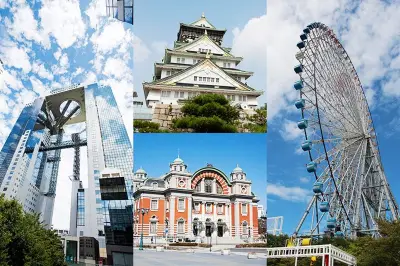
Osaka Castle: Osaka Castle, also called "Kinshachi Castle" or "Jō Castle," is Osaka's most famous tourist attraction and its symbol. It is located within Osaka Castle Park in Chuo Ward, Osaka, and is one of Japan's three famous castles, along with Nagoya Castle and Kumamoto Castle. After Toyotomi Hideyoshi united Japan, he began building Osaka Castle in 1583 to display his power. It was destroyed several times; the current structure was rebuilt in 1931. The castle consists of inner, middle, and outer enclosures (honmaru, ninomaru, sannomaru) with majestic gates, steep walls, and two wide moats, unparalleled among Japanese castles. Osaka Castle Park includes the 600-year-old castle with high walls, deep moats, and the towering tenshu, as well as the surrounding park, particularly beautiful during cherry blossom season in April. The central tenshu is the core building, with white walls and green roof tiles, each flying eave end decorated with gold-leaf tiger and golden shachihoko (fish with dragon head) ornaments, truly magnificent. The tenshu was originally built by Toyotomi Hideyoshi in the Warring States period. The walls are made of huge stones brought from various parts of Japan. Destroyed by fire several times, the current tenshu was rebuilt with public donations after World War II. As a symbol of Osaka, it carries profound historical significance. Nishinomaru Garden was once the residence of Hideyoshi's wife, surrounded by trees, offering views of the tenshu and moat walls. To the south is Toyokuni Shrine dedicated to Hideyoshi; to the west is Nishinomaru Garden, a famous cherry blossom spot; to the east is Osaka's largest plum grove. Thirteen structures, including the Otemon Gate and Sengunyagura, are designated as important cultural properties. The Osaka Museum of Natural History, in the park, is free and features Western-style architecture with a strong cultural ambiance.
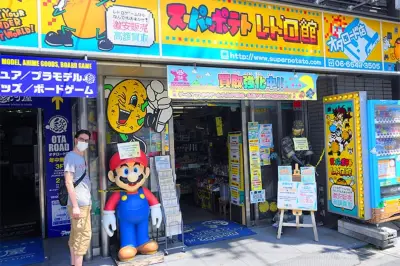
Dotonbori: Dotonbori is a canal in Osaka, Osaka Prefecture, famous for its nearby theaters, commercial, and entertainment districts. It connects to the Kizu River and the Higashi-Yokobori River, about 2.5 km long. Its name has become a ward name in Chuo Ward, Osaka. Dotonbori is a bustling district along the south bank of the Dotonbori Canal. The Japanese saying "Eat until you drop in Osaka" highlights the abundance of restaurants and entertainment facilities here, making it a favorite spot for locals. It is the birthplace of Osaka's "food culture." There are numerous restaurants, the most famous being the "Kani Doraku" crab sign, a landmark of Dotonbori's food street. Shinsaibashi is one of Osaka's busiest commercial districts, gathering flagship stores of world-class brands, high-end department stores, and many unique shops and restaurants. Every visitor to Osaka knows Dotonbori and Shinsaibashi as a paradise for food and shopping, must-visit destinations. Shinsaibashi is the most famous shopping area in southern Osaka, with a history of over 380 years. It has various department stores, clothing, shoes, jewelry, fashion boutiques, and diverse dining options. Famous stores include Daimaru, Uniqlo, Disney, and Hello Kitty specialty shops. Besides department stores, numerous drugstores attract female shoppers. Don Quijote duty-free shop, known as "Kyō no Donki" in Japan, is a famous general store covering electronics, cosmetics, food, daily necessities, etc.
Seaside: Japan has many coastal places like this. Walking along the seaside green space, it is a beautiful coastline. Sitting here to rest and enjoy the view is pleasant. The seaside green space offers a perfect blend of blue sea and sky, white clouds, and blue water. It is an excellent place to relax, lazily watch the sea, listen to the wind, and enjoy the beautiful scenery. The sea is blue, complemented by green grass, creating a beautiful scene. Listening to the waves and feeling the sea breeze is very relaxing and leisurely.