The Once-Disdained Countryside Has Now Become a Hot Commodity. Do You Know Why?
The countryside, once looked down upon, is now a hot commodity. What is the main reason? Follow Shanye Jun to a small village in southern Anhui to find the answer on the spot.
I believe that most people born in the 1980s, and even those in the 1990s, thought of the countryside as poor and backward during their elementary school days, and it was always looked down upon. In recent years, however, the countryside has quietly become a "hot commodity"—a place for the wealthy to live, vacation, and pursue wellness. What is the main reason behind this transformation from being disdained to becoming so sought-after?
The rapid development of the social economy, the accelerated process of urban-rural integration, and the government's efforts in new countryside construction have all contributed to the sudden rise of rural areas. Once worthless mountain products have become hot items, and those dilapidated houses have been torn down to make way for rows of villas. This time, Shanye Jun will take you to a rural area in Ningguo City, a small city nestled among mountains and waters in southern Anhui.
Ge Village, located in the western part of Ningguo City, sits at the first stop of the nationally renowned "Southern Anhui Sichuan-Tibet Line." It serves as an important transitional zone connecting the urban area of Ningguo with an original ecological scenic spot. Thanks to its得天独厚的地理位置, this village has become a key node along this self-driving route, which is also a major reason for its development.
Accelerated industrialization has made cities far less livable than the countryside, leading many young people to prefer staying in rural areas. With more diverse sources of income and less pressure in life, who wouldn't want to live in the countryside?
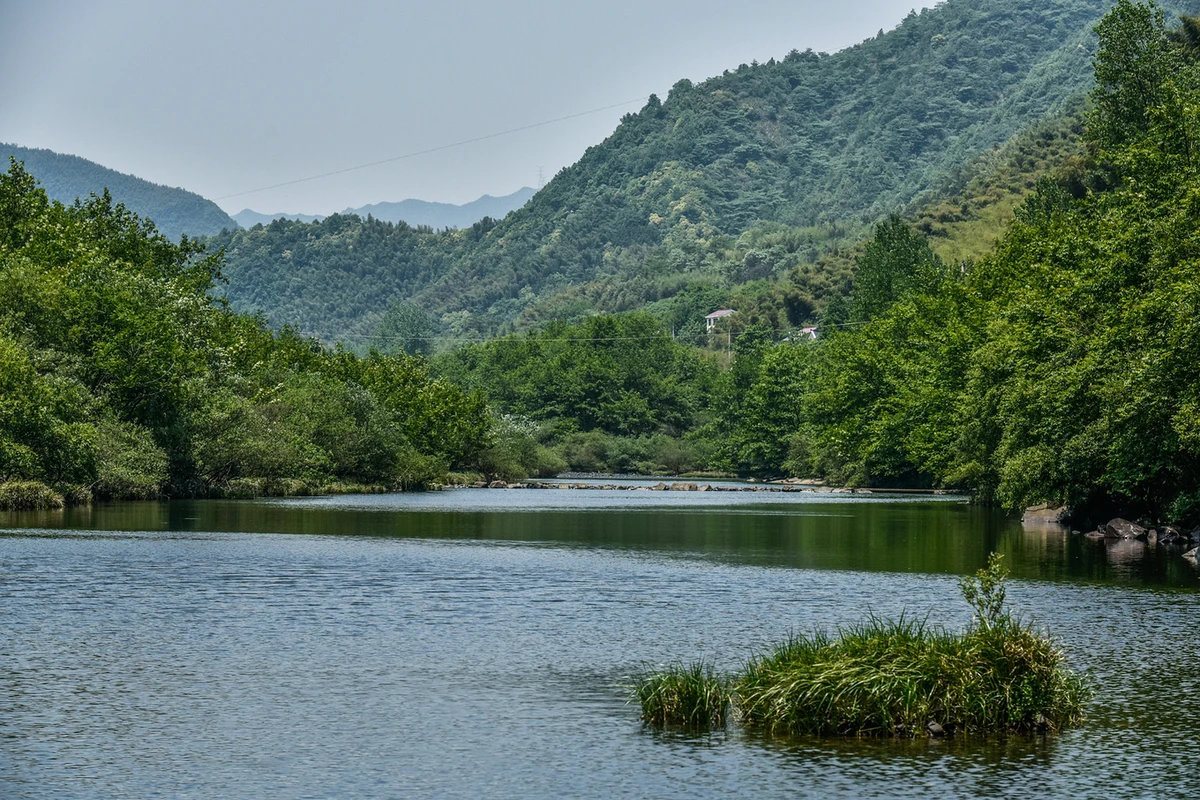
In the past, seeing farmers fishing in the river gave an impression of poverty and backwardness. Today, such scenes are rare and have instead become a fresh sight, instantly turning into a picturesque landscape of farming life that Shanye Jun absolutely adores.
Protecting the natural environment—mountains and waters—can yield both economic and social benefits, because lucid waters and lush mountains are invaluable assets. So, with lucid waters and lush mountains, there will surely be gold and silver mountains. These villages along the Southern Anhui Sichuan-Tibet Line, by basing their development on green ecological rural tourism, have achieved remarkable results in rural tourism. Without lucid waters and lush mountains, how could there be gold and silver mountains?
The countryside also offers mountain products rarely seen in cities—pure, natural, and pollution-free green foods. For urban dwellers plagued by heavy industrial pollution, they are more willing to come to the countryside to taste local home-style dishes. Over time, weekend trips and short getaways to rural areas have become a tourism trend, and the countryside has thus become prosperous.
Having breathed stale city air for so long, such an ecological environment is also hard to find nowadays. In a materially advanced society, this kind of environment and air represent an intangible wealth—a wealth that is enduring. Wealthy people are willing to spend money to come to such rural areas to enjoy green ecological leisure tourism.
Seeing the excellent water quality of Ge Village truly amazed me. The scenery of green mountains and clear waters was once taken for granted, but now it has become a treasure. With such beautiful mountains and waters, how could you not like it?
To sum up, the main reasons why the countryside has gone from being disdained to becoming a hot commodity are several: first, the government's emphasis on rural construction; second, the excellent natural environment of mountains and waters in rural areas; third, rapid economic development that has shifted urban growth toward the countryside. Of course, there are other factors that Shanye Jun cannot fully enumerate here.


