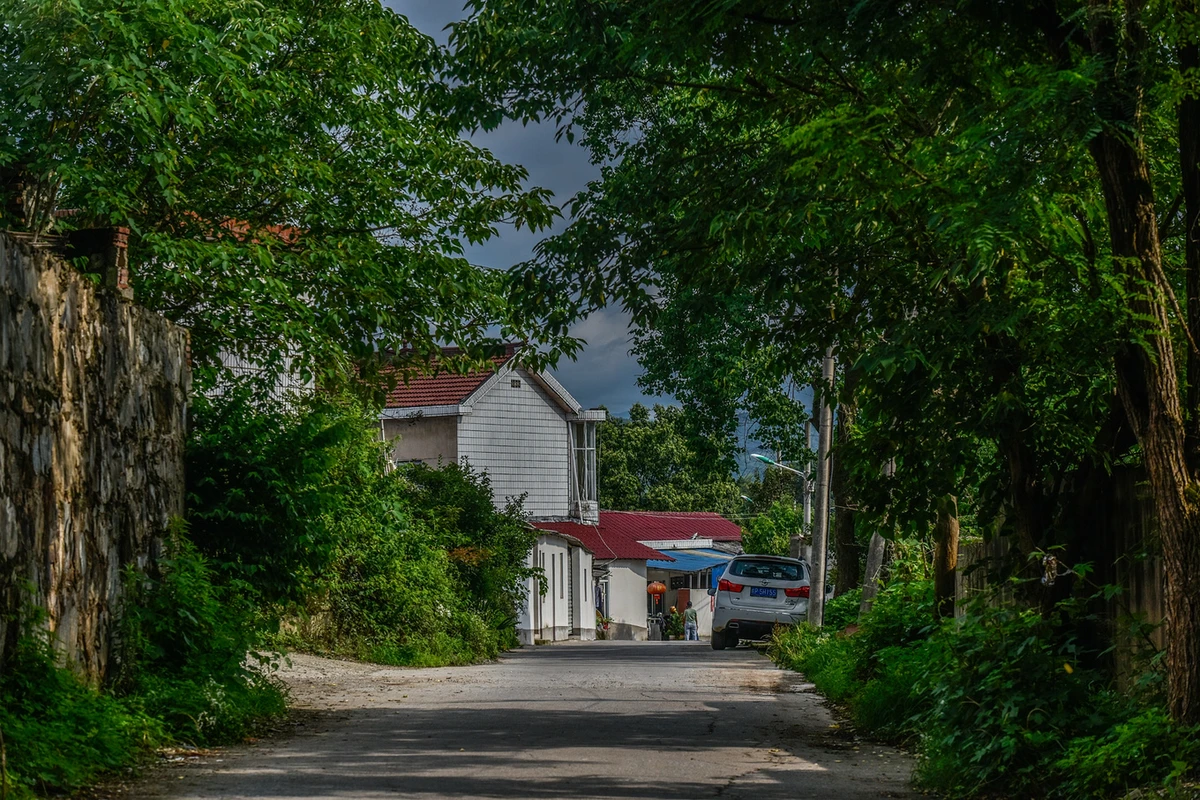
Like first-tier cities in China, small cities also have urban villages. Do you know the real situation?
Urban villages originated in economically developed first-tier cities, such as Shanghai, Beijing, Shenzhen, Guangzhou, Hong Kong, and other metropolises. They are generally small villages near the city border or near the city center, or gathering places for migrant workers. Because the overall atmosphere and environment are similar to rural areas, they are vividly called urban villages. However, in some small cities in China, like first-tier cities, there are also urban villages. But the difference is that the urban villages in small cities are mainly local rural areas, formed due to the contradiction between rapid economic development and development space. This causes places that were originally rural to be incorporated into the urban scope, yet while being in the city, they still have rural household registration. This is the basic situation of urban villages in small cities in China today.
In this issue, Shanye Jun takes you to the urban-rural fringe of Ningguo City, a small mountain city in the southeastern part of Anhui Province, to have a look. These places, because they are administratively under rural jurisdiction but geographically considered part of the city, are vividly called urban villages. Similar to first-tier cities, they are rural areas near the city center or within the urban area. The difference is that the urban villages in small cities are inhabited by local villagers, while those in big cities are generally populated by migrants.
Yangjiaqiao Village, located within Nanshan Street in Ningguo City, is a typical urban village. From the village center to the city center is about 1 kilometer. The village is also adjacent to the national-level economic development zone, so employment is not a problem here. In reality, every alley and lane in Yangjiaqiao Village is filled with private cars, motorcycles, and other modern means of transportation. Judging from this village landscape, the economy of Ningguo's urban villages is relatively developed, and rural income is relatively high.
From the city's commercial and residential buildings to the village entrance center, it's only a few hundred meters. This contrasting rural scene has already illustrated the basic current situation of urban villages in small cities in China today. Developed economy, high living standards for farmers, and a completely new village appearance are the basic conditions of urban villages in small cities today. There are many small cities in China that are more developed than Ningguo City, so Shanye Jun boldly summarizes this way.
In Yangjiaqiao Village, Ningguo, besides experiencing the basic status of urban villages in small cities, one can also find that the impression of urban villages actually exceeds our imagination. Vegetable plots and village houses complement each other everywhere, refreshing the mind. This kind of new rural environment is definitely not inferior to Japan's new rural construction. While visiting Yangjiaqiao, Shanye Jun was intoxicated by this ecologically excellent and environmentally beautiful village scene, and really liked this feeling.
Walking on every path, you can see private cars neatly parked on the roadside. In this urban village, you can see that most of the large areas of village houses have built villas, and almost every household has a private car, making you feel as if you have gone to the wrong place. With villas, private cars, a livable living environment, the natural ecology of the countryside, and the resources of the city, this kind of urban village is enviable. Today's rural areas are really too happy!
The villagers living in this urban village are very happy. The smile on the face of the aunt riding the electric scooter is enough to show that life here is very happy. Yangjiaqiao is a rural area cut through by the Wan-Gan Railway, but its development has not stagnated due to the issue of the railway's westward relocation. To the west of the railway, it integrates with Ningguo's urban-rural development, while to the east of the railway are the farmers' fields. By leveraging strengths, avoiding weaknesses, and combining its own conditions to develop the rural economy, Yangjiaqiao is now almost part of the urban area of Ningguo. With the westward relocation of the Wan-Gan Railway, there will be even greater development here.
To develop urban-rural integration while dealing with issues like the railway's westward relocation, the local government had to carry out small-scale development in Yangjiaqiao Village. So in this urban village, you can see the contrast between high-rise buildings and small houses. If the old railway is demolished, urban planning will further expand, and perhaps this urban village will become even more beautiful and livable. This spot is the closest point in the village to the railway tracks. Continuing forward, you can see the railway.
The Wan-Gan Railway passes through the throat of Ningguo's urban-rural fringe. Due to natural conditions, the westward relocation and capacity expansion of this nearly century-old Wan-Gan Railway line have been搁浅. On one side of the railway, the west side, is the concentration of Yangjiaqiao villagers' houses; on the other side, the east side, is the village's farmland. The villagers here frequently cross this railway every day. For safety reasons, the local government applied to the railway department to build a pedestrian crossing on the railway line from the village entrance to the farmland.
Crossing the railway bridge towards the farmland, you can also see another village, as well as the prominent headquarters building of Anhui Yaxia Group. It seems that Ningguo's urban villages are not only on the west side of the railway but also on the east side. These urban villages look quite well-built, with good village appearance and excellent ecological environment. They are models of urban village construction in small cities in China.


