Zhuwang, a thousand-year-old ancient village in Anhui, is the origin of the idiom 'Well water does not intrude into river water'?
Zhuwang Village in Anhui is located in Caijiaqiao Town, northeast of Jingde County, Xuancheng City.
Zhuwang is a typical traditional Huizhou ancient village. Most visitors come here to see the unique spectacle of 'well water does not intrude into river water'.
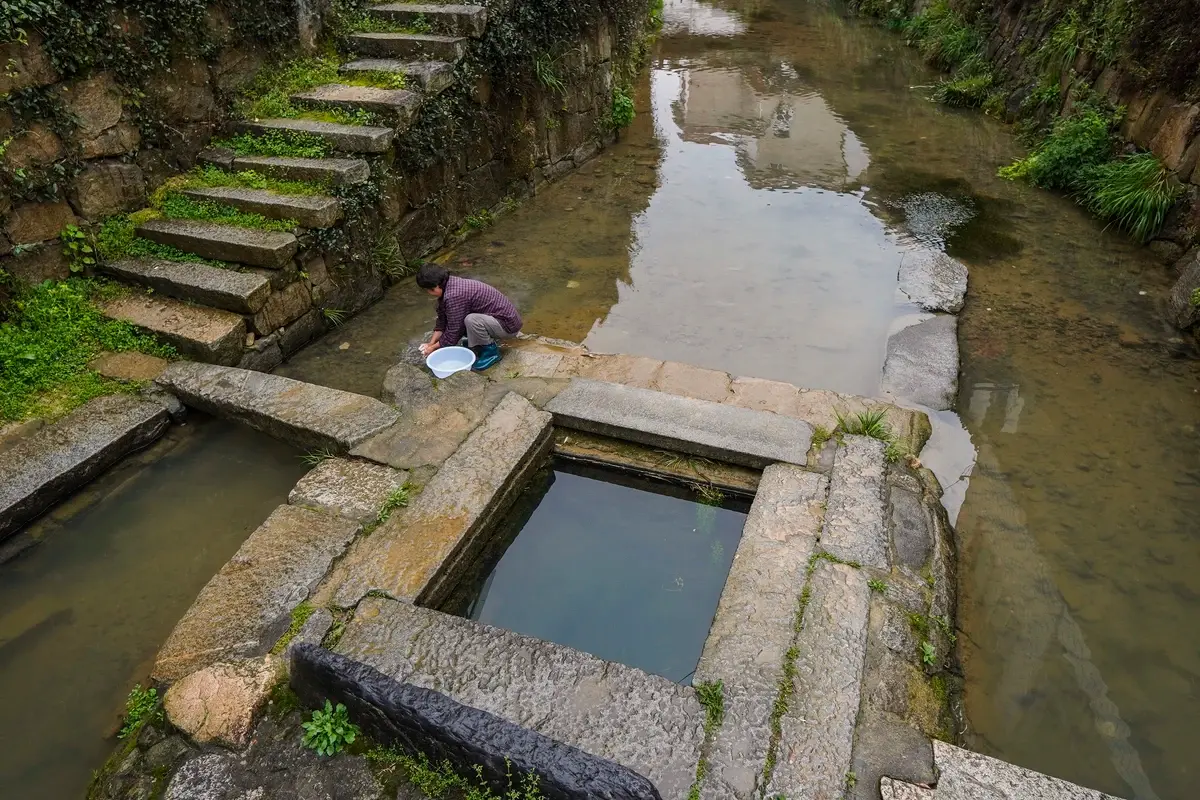
The so-called 'well water does not intrude into river water' spectacle originates from the 'Nine Wells and Thirteen Bridges' in Zhuwang Village.
A Zhuxi River runs through the village, with thirteen stone bridges built from bluestone across the river, and nine wells built in and along the river, hence the name 'Nine Wells and Thirteen Bridges'.
Miraculously, every rainy season, when the Zhuxi River rises and becomes turbulent and muddy, the water in the wells remains still and crystal clear, creating a unique scene where the well water and river water are independent and do not intrude upon each other.
According to legend, the idiom 'well water does not intrude into river water' originated from Zhuwang Village.
Zhuwang Village was founded at the end of the Sui Dynasty and beginning of the Tang Dynasty, with a history of over 1,300 years.
During the Southern Song Dynasty, descendants of the Zhu family migrated here, settled down, and their home prospered. They renamed the place 'Zhuwang Village', meaning 'prosperous land of the Zhu family'.
Compared to the more famous Hongcun and Xidi in the vicinity, Zhuwang Village is exceptionally tranquil. Although it is a national 4A-level scenic area, you feel there are more locals than tourists when walking through the village.
Going upstream and strolling among the small bridges and flowing water, you can clearly hear the babbling sound of the stream, as if stepping into an ink-wash painting of the misty Jiangnan region.
Nine wells of various shapes lie in the river, which can be considered a unique landscape of Zhuwang Village among the ancient villages in southern Anhui.
We all know that 'well water does not intrude into river water' is a metaphor for minding one's own business and not interfering with each other. Literally, it is easy to understand: the underground well water and the aboveground river water do not connect, so naturally they do not infringe upon each other.
Although the 'two waters' landscape in Zhuwang Village almost perfectly matches the literal meaning of 'well water does not intrude into river water', saying that the idiom originated from Zhuwang Village is somewhat of a promotional gimmick.
In fact, 'well water does not intrude into river water' originally did not refer to water on earth but to constellations in the sky.
'Well' originally referred to the 'Well Mansion' (Jingxiu) among the 28 lunar mansions, located in what is now Gemini, also called Eastern Well, near the 'Milky Way'. The 'River' refers to the 'Milky Way'. To the northeast and southeast of Eastern Well, there are two famous constellations named 'Northern River' and 'Southern River', which ancient people regarded as guardians of the Milky Way. If anything unusual happened, disaster would befall the human world.
Therefore, when ancient people said 'well water does not intrude into river water', they referred to the astronomical phenomenon of the three constellations 'Eastern Well', 'Northern River', and 'Southern River' not interfering with each other and coexisting harmoniously, not a scene on earth.
There are many stories about the nine 'wells in the river' in Zhuwang Village.
One says that during the Qing Dynasty, the imperial scholars Zhu Zedan and Zhu Zebo, two brothers, abandoned their official positions due to frustration in the capital, returned home, and built several wells in the river. They used this scene to declare their disheartened and escapist state of mind.
Another says it was to proclaim that Zhuwang Village would produce nine successful imperial candidates (jinshi) and that the Zhu dynasty would rule for thirteen dynasties, leading to the nine wells and thirteen bridges. Whether this is true is unknown, but nine and thirteen were indeed auspicious numbers at the time.
Nowadays, 'well water does not intrude into river water' has become a well-known idiom, but whenever mentioned, it often evokes scenes of severing ties or cutting off relationships, which inevitably carries some negative connotations.
However, the meaning of this phrase is far more than that, embodying the rich traditional culture of China.
'Well water does not intrude into river water' not only reflects the traditional Confucian values of modesty, courtesy, generosity, and benevolence but is also a vivid expression of the Legalist spirit of 'defining roles to stop disputes'.
Today, Zhuwang Village has further borrowed the 'two waters' landscape to give it a modern interpretation of 'each keeping to their role, distinguishing right from wrong, mutual understanding and forbearance, joint governance and shared benefits'.
Walking through Zhuwang Village, you often see 'Villagers' Discussion Points' and 'Two Waters' mediation rooms along the roadside. Local villagers integrate the 'two waters' culture passed down by their ancestors into modern rural social governance, truly making the past serve the present.
Indeed, misunderstandings and conflicts between people are inevitable. Handling things calmly, yielding with courtesy, not hurting feelings, and not lacking gentlemanly conduct—this is probably the 'two waters' spirit that Zhuwang Village conveys to us.
[Geographic Location] Zhuwang Scenic Area, Caijiaqiao Town, Jingde County, Anhui Province
[Transport Tips] Zhuwang Village is 20 minutes from Jingde Bus Station, with shuttle buses every 30 minutes; if driving, take National Highway 205 to Caijiaqiao, then turn onto Caida Highway and go 1 km.
[Ticket Cost] Entrance fee: 50 yuan per person
[Opening Hours] 7:00-18:00
[Notes] Most stone bridges and wells in Zhuwang Village have no railings; pay attention to safety when sightseeing and taking photos to avoid falling.
Travel Diary Contents:
1. The unique spectacle of 'well water does not intrude into river water'
2. Did 'well water does not intrude into river water' really originate here?
3. The 'two waters' culture: making the past serve the present
4. Travel Tips
Tips: Tourism Information, Hotel Index, Tour Guide Index, Flight Index, Website Navigation, Travel Index, Cruise Index, Corporate Travel Index, Franchise Cooperation, Distribution Alliance, Friendship Links, Corporate Gift Card Purchase, Insurance Agency, Agency Cooperation, Hotel Franchise, Destination and Scenic Area Cooperation, More Franchise Cooperation, About Ctrip, About Ctrip, Ctrip Hot Topics, Contact Us, Careers, User Agreement, Privacy Policy, Business License, Security Center, Ctrip Content Center, Intellectual Property, Trip.com Group, Algorithm Disclosure.


