2025 Qingming Spring Outing: Huizhou-Hangzhou Tour
During the three-day Qingming holiday, I planned to hike the Huihang Ancient Road with my baby, wife, and mother, and also visit Jixi.
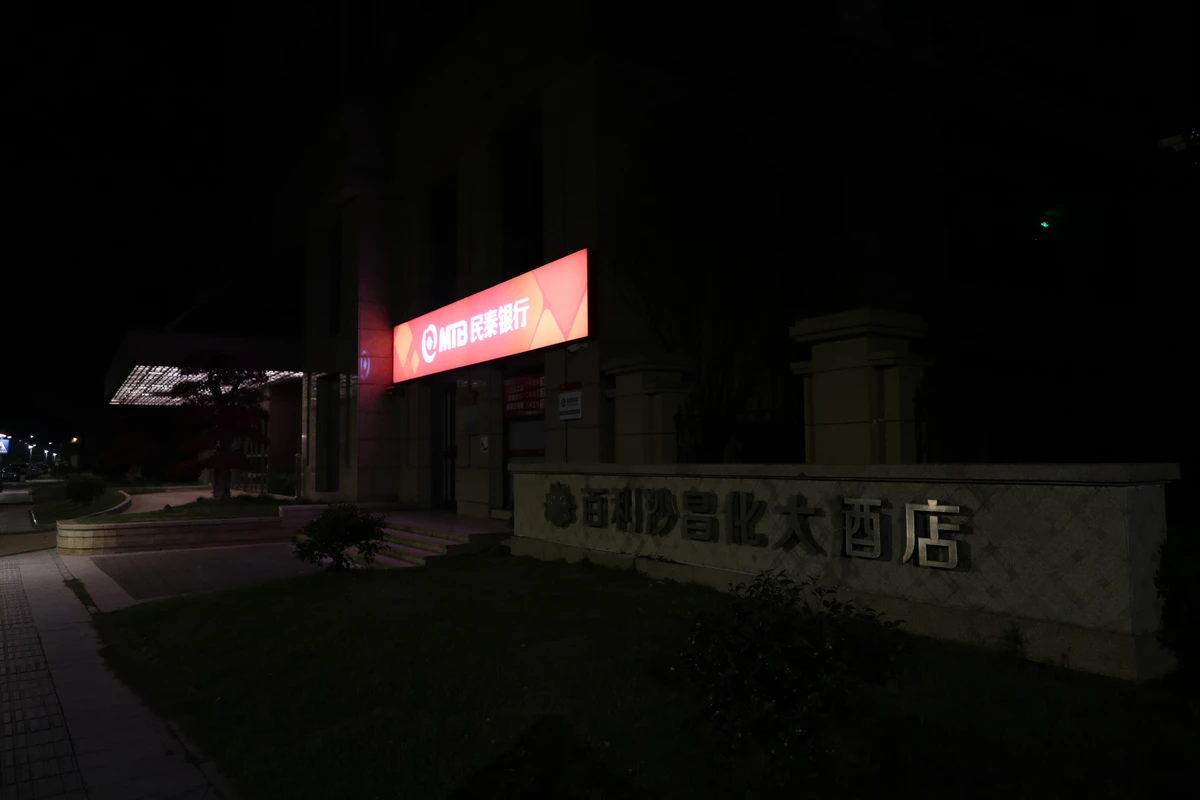
Day 1: The day before Qingming Festival, we set off after work, first arriving at Changhua to stay overnight, ready for the Huihang Ancient Road hike the next day. The road was very congested; we arrived in Changhua smoothly after more than 5 hours and checked into the Bailisha Changhua Hotel by the Changhua River in the dark.
Day 2: The weather was fine in the morning. We took a look at the Changhua River.
I drove my wife and baby to the Zhejiang entrance of the Huihang Ancient Road—Yonglai Village. Actually, this place is already in Jixi, Anhui.
The ticket was 62 yuan. This area is quite a developed scenic spot. After my wife and baby got ready, they started hiking through, while I drove to the Anhui exit at Jiangnan Village in Fuling Town to wait for them. The entire crossing is less than 20 kilometers, with an elevation gain of 400 meters, enjoying the scenery all the way. It was expected to take seven to eight hours. During the short holiday, it was packed with people. There was a supply point every few hundred meters, making it not difficult at all. The Huihang Ancient Road is a National Key Cultural Relics Protection Unit and a National AAAA Scenic Area. It was built in the Tang Dynasty, witnessing the prosperity and hardship of Huizhou merchants. It was precisely because of this ancient road that people from Huizhou left the mountains, creating the saying, 'Without Huizhou, there would be no towns; without Jixi, there would be no streets.' It is known as 'China's First Ancient Road.' The merchant Hu Xueyan set out from the Huihang Ancient Road, developed in Hangzhou, and became famous worldwide; the scholar Hu Shi also traveled the Huihang Ancient Road many times to give lectures in Hangzhou and Shanghai. After dropping off my baby and wife, I drove around the mountain roads with my mother first, taking the Western Zhejiang Heavenly Road to the Anhui-Zhejiang Heavenly Road, passing through Langguang Village, Huaguangtan Village, Jingzhou Township, and arriving at Meiganling.
The Zhexi section offers views of Taizijian, with few people and beautiful scenery. After turning onto the Anhui-Zhejiang Heavenly Road, there were too many people, and traffic jams occurred from time to time, but the scenery was still very beautiful. The traffic jam started from Jingzhou Township on the Anhui-Zhejiang Heavenly Road, moving slowly, with a particularly bad jam near the mountaintop coffee shop, though the view was indeed good. My mother looked around and enjoyed the scenery. I drove slowly all the way, passing Bifeng Peak until the exit at Meiganling. After leaving the Heavenly Road, the rapeseed flowers along the road were beautiful. We arrived smoothly at the Anhui entrance of the Huihang Ancient Road.
I entered the scenic area with my mother, walked to Jiangnan First Pass where my mother rested, and I continued forward. At Shicha Pavilion, I met up with my baby and wife. The baby successfully completed the hike on the Huihang Ancient Road.
At the age of 6, my baby had completed the trek through the Maolan Funnel Forest. This New Year, he completed the Tongariro Crossing in New Zealand. This Huihang Ancient Road was no problem for him.
Exiting the scenic area, we drove to Shangzhuang. There was a bit of a traffic jam near Longchuan Scenic Area. It took more than an hour to drive the dozens of kilometers. That night, we stayed at the Swan Lake Hotel in Shangzhuang, Jixi. At the hotel, we had Hu Shi Yipin Guo and Chou Guiyu.
Day 3: Transportation in Shangzhuang is not very convenient. There is only one main street, County Road 090, and the high-grade road to the Huangshan area has not been completed yet. Along the roadside, there were vendors selling beef, tea, and a special local snack—a filled pancake called Ta Guo, which could serve as breakfast.
Considering the congestion at the entrance of Longchuan Scenic Area the previous day, we gave up on popular attractions and opted for a leisurely tour. After breakfast, we walked along the river, looked at Yanglin Shuikou and Yanglin Bridge, played in the water, and then arrived at Shangzhuang Scenic Area. There were not many people there. The guide, an older gentleman, was a member of Hu Shi's clan and of the same generation. He was very enthusiastic in his explanations. Master Hu Shi was indeed a child prodigy. With my baby, we absorbed the atmosphere of Hu Shi's former residence, learned about the history here, and appreciated the artistic conception of 'I come from the mountains, bringing orchid grass.' We strolled around the village, saw the inheritance of Hu Kaiwen's ink-making and the beauty of the Red Gate Tower. I bought two ink sticks. We had lunch on the main street and then went back to the hotel to rest.
In the afternoon, we drove ten minutes to Shijia Village (Chessboard Village). There were only a few visitors, making it very comfortable. The village was beautiful and clean. At the end of the village, the ancestral hall had a coffee shop called 'Fangkong Coffee.' We had coffee and enjoyed the view, played fishing in the nearby river, and looked at the surrounding rapeseed flowers. It was very pleasant.
On the way back to the hotel, there was a mural of the Taiping army attacking the city. Unfortunately, it was closed, so we just looked through the crack in the door.
Back at the hotel, we ate local dishes again.
Day 4: Fearing traffic jams, we set off early. Before the Shangzhuang Tunnel, there was a viewing platform where we could see the scenery: the ancient town and fields were very beautiful. We took one last look and ended this Qingming spring outing.
The return trip was very smooth, arriving home in four and a half hours without any traffic jams. After arriving home, we found that the road we took became congested in the afternoon, requiring seven and a half hours. How fortunate! This trip covered over 900 kilometers, a comfortable spring outing.


