Journey to the Origins of Yangtze River Civilization (Shou County, Wuhan, Jingzhou, Yichang, Three Gorges, Chongqing)
In early 2024, I set out from Nanjing, at the end of the Yangtze River, traveling upstream to Chongqing to explore the culture of the Chu state and enjoy the scenery along the river!
Day 1 (Jan 23): Nanjing – Shou County (bullet train 8:12-9:46)
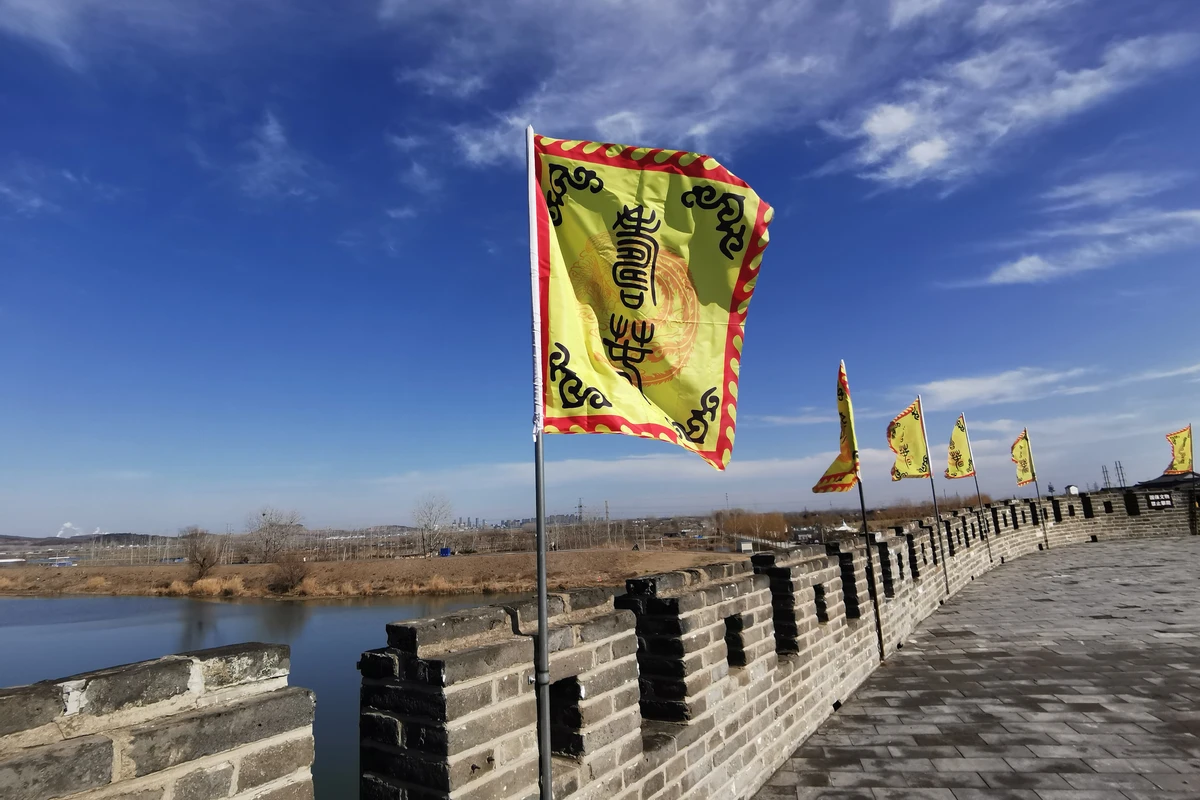
1. Shou County Ancient City: In ancient times called Shouchun, it was the fief of Huang Xie, Lord Chunshen of Chu. Historically a strategic north-south thoroughfare, it was a place contested by military strategists. The rulers of Chu bore the surname Mi and the clan name Xiong. Their ancestors originally lived in Xinzheng, Henan (the Ruins of Zhurong). King Cheng of Zhou (1046 BC) enfeoffed Xiong Yi as a viscount with a territory of 50 li, with its capital at Danyang (Jingzhou). In 278 BC, the Qin general Bai Qi captured Yingdu, burning the tombs of successive Chu kings. King Qingxiang of Chu was forced to move the capital to Chen County. In 241 BC, Chu joined the eastern states in a coalition to attack Qin, but could not withstand Qin's annexation. In the same year, King Kaolie of Chu moved the capital to Shouchun. In 223 BC, the Qin general Wang Jian led 600,000 troops to attack Chu, defeated the Chu army, captured Shouchun, and took King Fuchu of Chu prisoner, marking the complete fall of Chu. Shouchun was the final Ying capital of Chu.
Since King Kaolie of Chu moved the capital here in the 22nd year of his reign (241 BC), it served as a commandery seat ten times and frequently as a prefectural or county seat. The Western Han Huainan Kingdom and the Eastern Han Fuling Kingdom both established their capitals in Shouchun. The Battle of Fei River in 383 AD between the Former Qin and Eastern Jin took place here, giving rise to historical allusions such as "throwing whips to block the river" and "the sound of wind and crane, grass and trees all seem like soldiers." From the Ming and Qing dynasties onward, the city walls were continuously renovated for defense and flood control, making it one of the seven best-preserved ancient city walls in China. Outside the old city, there is a well-preserved Song-dynasty city wall.
The Bao'en Temple, Confucian Temple, and Mosque, though not large, are all in their natural and authentic state.
2. Anhui Chu Culture Museum: This museum, named after "Chu culture" in China, is located in the Shouchun City National Archaeological Site Park in the new district of Shou County, Huainan City, Anhui Province.
It mainly features exhibition halls such as "Chu Capital Relics," "Traces of the Late Cai State," and "Buddhist Light Shines Everywhere." The seven treasures of the museum include the "Sword of King Zhuyu of Yue" (Yuezhe Zhuyu Yuci), Chu gold coins, a Eastern Han gilded silver engraved mythical beast bronze boat, a gold coffin, relics (śarīra), a three-legged sheep-head bronze vessel, a Eastern Han openwork eight-dragon gold belt buckle, and a Eastern Han white jade pendant from the tomb of Liu Yan, Prince Fuling of Eastern Han. These are also fine artifacts from the museum. Each precious artifact silently tells the splendid stories of Chu.
Shou County – Wuhan Hankou Station (bullet train 16:56-20:00). Stay near Hanzheng Street.
Day 2 (Jan 24): Wuhan
1. Hubei Provincial Museum: Gain an in-depth understanding of the 800-year development of the Chu state and experience the brilliant Chu culture.
Hubei is located in the middle reaches of the Yangtze River and belonged to the territory of the Chu state during the Spring and Autumn and Warring States periods.
The Hubei Provincial Museum showcases ancient southern Chinese civilizations different from the Yellow River civilization in the north. Permanent exhibitions include "800 Years of Chu," "Marquis Yi of Zeng," and "The Zeng Clan."
Top ten treasures: The Zeng Hou Yi Bianzhong (bell set) and Zeng Hou Yi Zunpan (ritual vessel set) unearthed from the Tomb of Marquis Yi of Zeng; the Qin bamboo slips from Shuihudi in Yunmeng; the Tiger Seat and Phoenix Bird Frame Drum, etc. The "Sword of Goujian, King of Yue" was too long a queue to see.
2. East Lake Scenic Area: Since ancient times, East Lake has been a scenic destination.
Qu Yuan chanted poems on the shores of East Lake; King Zhuang of Chu beat war drums here (at the site of the Qinghe Bridge); during the Three Kingdoms period, Liu Bei set up an altar to worship heaven on Moshan Mountain; Li Bai wrote poems at Fangyingtai (Eagle Release Platform) on the lake; Mao Zedong loved East Lake all his life and visited it 48 times after the founding of New China, calling it "the place of white clouds and yellow cranes."
Day 3 (Jan 25): Wuhan
1. Yellow Crane Tower: Located on the serpentine mountain ridge on the south bank of the Yangtze River in Wuchang, Wuhan, it was first built during the Three Kingdoms period. It was repeatedly built and destroyed through the ages. It became famous nationwide because of the poem "Yellow Crane Tower" by the Tang poet Cui Hao. The Yellow Crane Tower seen today was rebuilt in 1985. The entire structure has a unique national style and complements the Wuhan Yangtze River Bridge at the foot of Serpentine Mountain. Climbing the tower and looking into the distance, one can take in the panoramic view of the three towns of Wuhan, with the sky of Chu stretching far and wide.
Wuhan Hankou Station – Jingzhou (bullet train 13:26-14:52)
2. Jingzhou Ancient City: In ancient times called Jiangling, this place is where many historical stories occurred. Yu the Great divided the nine provinces starting with Jingzhou. The earliest Ying capital of Chu was in Jingzhou.
Guan Yu lost Jingzhou due to carelessness; Cao Cao conquered Jingzhou and marched down to Jiangling, etc. Two of the three most famous battles of the Three Kingdoms period—the Battle of Red Cliffs and the Battle of Yiling—took place here. The existing city wall was rebuilt in the third year of the Shunzhi reign of the Qing dynasty. It is one of the important birthplaces of Chu culture and Three Kingdoms culture, a great place to reflect on the past!
Zhang Juzheng's Former Residence is located in the eastern corner of Jingzhou city.
Stay near Jingzhou High-Speed Railway Station.
Day 4 (Jan 26): Jingzhou
1. Jingzhou Museum: A great place to learn about Jing-Chu culture. It has a complete range of artifacts including jade, bronze, ceramics, bamboo slips, and lacquerware, with many fine pieces. The cultural creative products are also excellent. It is a treasure museum worth recommending!
It is a national first-class museum, showcasing the development of civilization in the Jingzhou area from the Paleolithic and Neolithic ages through to the Qin and Han dynasties. Treasures of the museum: Warring States painted lacquerwood tiger-seat phoenix-bird hanging drum, Warring States painted lacquerwood toad-seat phoenix-bird feathered man, root carving (bixie), tiger-seat flying bird, double-headed tomb-guarding beast, recumbent deer drum, Western Han phoenix-cloud pattern round plate, Western Han ancient corpse "Wudafu Sui."
Jingzhou – Yichang (bullet train 16:19-16:54). Take a taxi to the cruise passenger center, then take a dedicated bus to the Three Gorges cruise port at Zigui. Zigui is the hometown of Qu Yuan (339-278 BC), a native of Danyang (modern Zigui, Hubei) during the Warring States period, of the Mi surname and Qu clan.
2. Century Legend: The cruise ship features a seven-story full atrium lobby, a multi-functional entertainment hall, an indoor constant-temperature swimming pool leisure area, a tiered HD cinema, as well as public recreational facilities such as a gym, SPA massage room, and children's playroom.
Day 5 (Jan 27): Cruise upstream through the Three Gorges
The Three Gorges of the Yangtze River stretch from Baidi City in Fengjie County, Chongqing in the west, to Nanjin Pass in Yichang, Hubei in the east. Along the way, towering cliffs stand opposite each other. From west to east, they are Qutang Gorge, Wu Gorge, and Xiling Gorge. This route offers spectacular views of the Yangtze River, including gorges, mountains, river surfaces, and cities.
1. Xiling Gorge: Starting from the mouth of the Xiangxi River west of Zigui County, Hubei, and ending at Nanjin Pass in Yichang, it is 76 km long. The waterway is winding, with grotesque rocks. It is the most dangerous gorge of the Three Gorges. The famous Northern Song writer Ouyang Xiu left the timeless phrase "The scenery of Xiling is the best under heaven."
2. Three Gorges Tribe Scenic Area: Located on a tributary of the Yangtze River within Xiling Gorge, it features picturesque landscapes and colorful folk performances, allowing visitors to experience Tujia customs!
Experience the original natural scenery of the Three Gorges from all angles, gaining a deep appreciation of the ancient and mysterious Ba-Chu culture.
3. Three Gorges Dam: It mainly provides three core benefits: flood control, power generation, and navigation. High gorges produce a flat lake, with infinite scenery. Small ships pass through the world's largest ship lift, while large ships pass through the five-stage ship locks—truly a great national project!
Day 6 (Jan 28): Cruise through the Three Gorges
1. Wu Gorge: This is the most beautiful section of the Three Gorges. The gorge area features abrupt peaks, jagged rocks, and steep cliffs that stretch endlessly. It is the most scenic stretch of the Three Gorges. The Twelve Peaks of Wushan appear one after another, like a winding gallery full of poetic charm.
At Goddess Peak, take a small boat to explore Goddess Stream. Among the green hills and clear waters, it is another landscape full of poetry and picturesque charm!
2. Qutang Gorge: Also known as Kuixia Gorge, it is famous for its majesty. The narrowest part of the gorge entrance is less than 100 meters wide. The towering cliffs form a gate-like shape, also called Kuimen, which is the scene on the back of the 10-yuan note.
Main attractions include Baidi City in Fengjie, which has many historical sites and is known as the "City of Poetry." Poems such as "Leaving Baidi in the morning amidst colorful clouds, returning to Jiangling in a single day" come to mind. Baidi City is also where Liu Bei entrusted his son to Zhuge Liang.
Climbing to the top of the ancient city, one can enjoy a panoramic view of the entire Qutang Gorge, making it the best spot to witness "Kuimen's unmatched majesty."
Day 7 (Jan 29): In the morning, watch a movie on the cruise and stroll on the deck to enjoy the beautiful scenery of clouds rolling and unfolding over the Yangtze River.
In the afternoon, visit Fengdu Ghost City to learn about unique Chinese ghost culture.
Cruising through the Three Gorges from Yichang to Chongqing allows one to closely appreciate the charm of the mother river, the Yangtze River. With the completion of the Three Gorges Dam and the improvement of the Yangtze's water quality, the mountains are greener, the water clearer, and the waters broader and calmer. There are numerous natural and cultural attractions along the way, making for a very enjoyable travel experience!
Day 8 (Jan 30): Chongqing
Disembark at Chaotianmen Dock in Chongqing at 08:30, ending the pleasant Three Gorges cruise. First, go to Shibati Scenic Area to check in.
1. After a rest, visit Ciqikou Ancient Town to experience the bustle of the old dock. This lively land and water dock from the past was built in the Song dynasty and is a microcosm and symbol of old Chongqing, known as "Little Chongqing." Walk on the stone slab streets, taste local snacks, and feel the customs and traditions of old Chongqing.
2. Liziba Light Rail Station: Look up to see trains speeding through the building. Every few minutes, a light rail train passes through. The first to fifth floors of the building are commercial areas, the sixth to ninth floors are public light rail areas, and the upper floors are residential. It is a new internet-famous check-in spot.
3. In the afternoon, visit Chongqing's landmark, the People's Liberation Monument (Jiefangbei). Completed in 1941, it is the only monument in China commemorating the victory of the Chinese people's War of Resistance against Japan. Located in the most bustling commercial area of Chongqing, it is a landmark in the hearts of Chongqing people. Jiefangbei Pedestrian Street is the most prosperous commercial area in Chongqing, a great place for shopping and food.
4. In the evening, go to Hongya Cave to see the crowds. The Hongya Cave Folk Custom Area is located on the riverside at the confluence of the Yangtze and Jialing Rivers. The main structures are "stilted buildings" (diaojiaolou) characteristic of Bayu traditional architecture, built along the mountain and river. At night, it is brightly lit, making it a unique scene of the mountain city.
Of course, no trip to Chongqing is complete without an authentic Chongqing hotpot. Constantly going up and down stairs, fully experience the charm of the 8D magical city of Chongqing!
Day 9 (Jan 31): Dazu Rock Carvings One-Day Tour
Dazu Rock Carvings: This is a general term for the Buddhist-themed cliff carvings (grottoes) in Dazu District, Chongqing. First carved in the early Tang dynasty, they continued through the late Tang, Five Dynasties, flourished in the Song dynasty, and extended into the Ming and Qing dynasties, spanning over a thousand years. They are representative works of late Chinese grotto art, together with the Mogao, Yungang, and Longmen grottoes forming a complete history of Chinese grotto art. They are listed as a UNESCO World Heritage Site. The most concentrated clusters are Baodingshan and Beishan rock carvings.
1. Beishan Rock Carvings: First carved by Wei Junjing, the prefect of Changzhou and commander of the four prefectures of Chang, Pu, Yu, and He, in the first year of the Jingfu reign of the Tang dynasty (892 AD). Later, local officials, gentry, commoners, and monks continued to build them. By the end of the Shaoxing reign of the Southern Song (1162 AD), they reached their current scale. The statues are carved along the cliff face, about 300 meters long and 10 meters high, with niches as dense as honeycombs, divided into southern and northern sections. The majority are Guanyin (Avalokiteshvara) and Ksitigarbha, earning it the title "China's Exhibition Hall of Guanyin Statues." The carvings at Beishan are delicate and well-preserved, showcasing grotto art from the late Tang to Song dynasties.
2. Baodingshan Rock Carvings: Carved under the direction of the monk Zhao Zhifeng during the Chunxi to Chunyou reigns of the Southern Song (1174–1252 AD). The Great Buddha Bay is a U-shaped mountain bay, with the carving cliff face about 500 meters long and 8-25 meters high. The carvings are on the east, south, and north cliff faces, making them a model of the nationalization and secularization of Chinese grotto art.
The reverence for Confucian filial piety and the depiction of secular urban life make it an art treasure trove with strong traditional Chinese cultural characteristics, marking the completion of the sinicization of grotto art originating from India.
The Dazu Rock Carvings allow appreciation of well-preserved Tang and Song dynasty stone carving art. The exquisiteness of Beishan and the grandeur of Baodingshan represent the final masterpiece of large-scale stone carvings in China—not to be missed!
Day 10 (Feb 1): Stroll through the traditional area of Shibati to experience the mountain city's alleys. The huge air-raid shelters and mottled stone steps tell the story of the mountain city's past. It is an important district carrying the memories of Chongqing people.
Today, Chongqing is full of internet-famous check-in spots. The bustling crowds bear witness to this city that rose from hardship!
Travel journal directory: 1. Shou County 2. Jingzhou 3. Yichang 4. Three Gorges 5. Chongqing Travel Information, Hotel Index, Guide Index, Ticket Index, Website Navigation, Travel Index, Cruise Index, Corporate Travel Index, Alliance Cooperation, Distribution Alliance, Friendly Links, Enterprise Gift Card Purchase, Insurance Agency, Agency Cooperation, Hotel Franchise, Destination and Scenic Area Cooperation, More Alliance Cooperation, About Ctrip, Ctrip Hot Topics, Contact Us, Careers, User Agreement, Privacy Policy, Business License, Security Center, Ctrip Content Center, Intellectual Property, Trip.com Group, Algorithm Disclosure


