Memory-Japan: Tokyo
Warning: Huge wall of text ahead!
Recalling my trip four years ago through photos, sorting out my feelings at the time.
Due to the passage of time and frequent phone changes, most photos have been lost.
Many of the following are thumbnails from chat records, so the clarity is poor.
In college, I took Japanese as my second foreign language elective.
I scored 77 on the Japanese Language Proficiency Test Level 4. Plus, I watch a lot of anime, so daily conversation in Japanese wasn't a big problem.
Actually, thinking back now, the reason why my experience in Japan was the best among my overseas trips is largely because I communicated in the local language rather than a common foreign language.
This allowed me to meet more people and have deeper conversations with each one.
Spring Airlines Japan—Super mega budget airline.
(Note: "Super" and "mega" are both adverbs modifying "budget".)
At that time, the one-way ticket was about 1500 RMB, with no free checked baggage allowance.
Instant noodles in the Tianjin airport lounge—I was so hungry. I ended up eating two cups.
Japan's administrative divisions: 1 To (Tokyo-to), 1 Dō (Hokkaido), 2 Fu (Kyoto-fu, Osaka-fu), 43 Ken.
They are all on the same level, directly under the central government, and have autonomy. — Baidu Baike.
My flight landed at Narita International Airport in Tokyo.
Although it bears the name Tokyo, it's actually located in Narita City, and you have to go from Tokyo, passing through Chiba. Very far.
Driving distance is 71 km.
One thing to note: taxis in Japan are extremely expensive.
To avoid taking a taxi, Japanese people who miss the last train—shūden (終電) (yes, there's even a specific term for it!)—will often stay overnight at a nearby hotel or internet cafe.
At the time, I was puzzled by the runway. I thought, "Do you Japanese people sprint to catch a plane like it's a race track?"
As for the feel of the runway, hmm, I forget if it was made of rubber.
Airport restaurant, already closed.
2470 yen = 135.47 RMB.
Finally made it into the city in the middle of the night.
Hostel bed, expensive, about 400 yen per night.
The round object below is a portable WiFi device.
Hotel sign taken the next morning.
Seeing the red letters "Permanently Closed"—sigh. Maybe the pandemic did it in.
Hope the pandemic ends soon, so we can return to normal life like before.
The location was decent, very close to JR Ueno Station.
Tokyo National Museum and Sensoji Temple were also within walking distance.
Speaking of which, there's a little anecdote. Last night, when I got off at JR Ueno and headed to Hotel Uno, it was drizzling.
Knowing it wasn't far, I suddenly got the idea to experience the super expensive Japanese taxi.
I didn't know the door opened automatically back then, so it was quite awkward. Haha.
The driver was an elderly man. He couldn't quite read the map I showed him, so he entered the hotel's postal code (〒) into the car's display.
Miraculously, it took me right there, haha.
In the car, I chatted with him in my not-so-fluent Japanese, saying that my Japanese teacher had told me Japanese taxis were super expensive, so I deliberately chose a very short distance to experience it. That made him laugh heartily.
There was a small tray specifically for money between the driver and passenger seats, avoiding the awkwardness of handing cash directly.
But I paid by card—surprise! Haha. I placed the card on the tray and waited for him to process it.
After the payment, I found it wasn't that expensive. I remarked to the driver, and he replied cheerfully in an exaggerated tone, "Because it was really very close!"
Memory of the opposite side of the hostel.
I think I found some place to eat.
I asked a waiter with glasses in Japanese if they had an English menu (actually Chinese menu).
He said, "Ah, you're Chinese?"
What a coincidence, right?
But it turned out he cheated me. He said I had to order a glass of beer with breakfast because it was the restaurant's rule, and pointed to other customers who had chosen beer.
Later, I asked a friend in Tokyo, and there was no such requirement at all.
But the draft beer was really good. After that, I occasionally had a glass of "namabīru" (Japanese pronunciation for draft beer).
Nishisandō is like a food street, very close to Sensoji Temple.
Even though it was raining, I was in a great mood. Straight to Sensoji Temple.
After four years, I can't find the front photo of Sensoji Temple. 555
Found a small video on my social feed.
I remember my mom said they used to play with these when they were kids—in Northeast Chinese dialect it's called "gǎlahā".
I asked her many times how to play, but I still don't understand...
Bro... I'm scared.
Amitabha's influence really is widespread.
Not very good-looking. That face of yours.
Short sword for seppuku, long sword for kaishaku.
Seppuku is an act in Japanese bushido, considered an honorable death. Seppuku is very painful, and in fact that pain is deliberately inflicted.
The person committing seppuku must cut their abdomen with one or more cuts. Since eviscerating oneself is too gruesome, the method was later modified so that the person makes one cut, and then a friend or trusted retainer immediately decapitates them. This assistant is called kaishaku, and being a kaishaku is a great honor. — Baidu Baike.
Have you seen "Let the Bullets Fly"? A uses a short sword to cut his own abdomen. If he gets scared and stops, or if he doesn't die quickly enough, the kaishaku uses a long sword to separate his head from his body, sending A to meet God.
Really too cruel, I must say.
Please use the noun form "arrival", not the adjective + verb "new arrive".
Wait, why am I talking about this! (Facepalm)
Forgot what it tasted like. Probably just average.
Because both extreme deliciousness and the hand of a destroyer leave a deep impression on me.
I kept an eye on my WiFi battery. Didn't find it too troublesome back then, but now I think getting a Japanese SIM card would be better.
Worldwide game: jump rope?
Alright, as long as it's not the Squid Game.
Sorry, I didn't notice my friend while taking the photo...
He's actually really handsome in person.
Escape! On to the next stop.
I must say, it's not even as cute as my little sister's cat, Odai.
No money! Not buying!
Kirito-sama, aishiteru!
Too flashy!
Think big! Open up your mind, ai~
Luffy, you... rubber abs are that strong?
Gintama!!!
Ah! My destined Fate!
Can I come to your place for dinner tonight? Shirou-kun.
This message wall shocked me.
Are you all writing essays on it?
Well, I didn't buy any of these.
Don't ask, just say I don't like them (my wallet doesn't like them, not me).
If it weren't too noisy, I would have tried grabbing some coins too, haha.
My Japanese teacher said that many Japanese people under too much stress would jump in front of the last train (shūden) to meet God.
(They think dying on the last train reduces trouble for others.)
When I actually saw the announcement of a personal accident on the train, I felt a bit shaken.
Later in the trip, I also saw a sign in a beautiful forest that said: "If you want to die, go back to Tokyo!"
It was both sad and funny.
Just now I asked my teacher again: how to say "sad" and "last train".
If you don't use a foreign language, you really forget it.
Then it won't be the last train that's sad, but me...
Alright, time to head back.
In expensive Tokyo, the hostel's small bed is my sanctuary.
Japanese people really have a personality of being reluctant to trouble others.
On the last train, I saw a young person who was completely drunk. To avoid vomiting in the train, they vomited into their own sleeve.
Hmm,
I don't know if that counts as clean or dirty.
Looks like everyone focuses on food.
What I can't forget and often think about from my Tokyo trip is:
The grilled crab shell (crab miso) from Isomaru Suisan that a friend treated me to.
I remember the liquid inside the shell was all green.
(I'm the type who enjoys any season of the year and thinks every season creates wonderful memories, haha.)
1. Your preferred season and scenery:
Summer has scorching heat waves, glaring sunlight, intense memories.
Winter is cold, quiet, slow-paced, covered in silver.
Different seasons, different views. Different times, unique memories.
I think you can't definitively say: "Location X, month Y, attraction Z is the best."
Because every trip brings a different experience.
2. Your own free time:
If you can go now, go now. The more you delay, the more variables arise, making it harder to go, right?
But during the pandemic, everyone should follow national guidelines and take precautions.
It's recommended to check the weather forecast, entry/exit policies, and pandemic control measures before traveling.
For most temperate regions:
If you love hot summers and aren't afraid of the daytime heat, June to August is suitable.
If you hate heat and don't like sunlight burning your skin, spring (March to May) and autumn (September to November) might be good choices.
If you want to see a winter wonderland, then the north in winter is best, right?
I think travel is beautiful because it creates unique memories for everyone.
There's nothing that's a must; it's only about interest and preference.
The so-called lists and must-visit attractions may not suit everyone.
The roads I walked, places I visited, and food I ate in this travelogue—if you like, you can try them.
Every morning, waking up in a different city, seeing a different ceiling—maybe there's no need to rush.
When hungry, go downstairs and find a nice restaurant for breakfast. Come back, wash up, open the map, browse around, and go wherever you want.
Yesterday's god cannot predict today's footsteps.
Sorry, I don't have a habit of keeping accounts. Overseas travel sometimes requires cash.
Credit card statements come later, and less use of WeChat Pay and Alipay makes it harder to calculate total expenses.
Furthermore, as I've said before:
Travel is different for every individual.
Am I eating at a street stall or a high-end restaurant today?
Am I staying at a hostel or a five-star hotel tonight? The cost will be vastly different.
Generally, I travel on a budget. I take photos of all receipts, so you can refer to the prices.
I also recommend keeping receipts and documents in case you need to claim for any issues with goods or services later.
When is the cheapest time to buy plane tickets?
This is a very important question. Feel free to discuss.
I've seen a lot of info about buying domestic tickets X days in advance and international tickets Y days in advance for the best price.
But from my personal experience, cheap tickets are quite random. Sometimes buying a few days before departure is cheaper than a few months before.
Because ticket prices depend on factors like flight occupancy, route adjustments, and even whether there are tour groups.
Plus, each airline has different sales rules.
The discounted tickets I usually buy are close to departure—just a few days left.
I guess the airline is just trying to sell remaining seats, and I'm lucky to snag them. But it doesn't always work.
Also, Ctrip's flight section has a "cheap tickets" module, which I think is decent.
Before the pandemic, I used SkyScanner internationally, but it's not practical now.
Probably just keep an eye out and compare prices across platforms.
If you find a good way to get cheap tickets later, please let me know. Thanks in advance.
Most banks' VISA/MasterCard cards have overseas spending rebates.
Previously, China Construction Bank had a constant 8-12% rebate for Asia.
CITIC even had a crazy 30% rebate at some merchants, meaning almost a 30% discount on most purchases.
During the pandemic, bank promotions change. Let's keep an eye on them together.
If there's new info, let me know and I'll update it in the article to help more travelers save.
I usually prefer homestays because they have more space.
I don't like entering a room and seeing the bed immediately, and the bathroom in plain sight.
(Especially if the bathroom has a glass wall—not frosted—and you can see the toilet from the door. That's even worse.)
On overseas trips, I often choose homestays or private rooms (sharing with the host) because it allows me to interact deeply with locals.
In a short trip, I can learn more about local culture and customs. Also, since I travel alone, it occasionally relieves loneliness.
In expensive cities like Hong Kong and Tokyo, I usually stay in hostels. Nothing else, just to save money!
For hotels, I generally go for low prices. I leave early and come back late, just to sleep. I can tolerate poor conditions.
I've stayed in a few regular five-star hotels for about 400-500 per night. Besides being expensive, they were fine, haha.
Of course, if you have a good budget and want to enjoy full services, luxury hotels are the way to go.
Whether staying at a homestay or hotel, it's recommended to bring a travel bed sheet for hygiene and peace of mind.
I travel alone, mostly using public transportation: subway, train, bus, etc.
Google Maps works great abroad, with clear routes, schedules, and prices. Exact stops.
Following the directions should be fine.
Hmm, I always travel alone. What I focus on is carrying money (foreign currency and cards), passport, and phone (with a local SIM).
Haha, it's just like daily life.
And except for the first two trips abroad, I almost never make local itineraries. I just go with the flow when I arrive. Super spontaneous.
I lack experience traveling with others.
So, what extra precautions do you need for solo travel compared to group travel? I can't really think of any.
If you have more specific questions about this, please let me know. We can discuss.
In my solo travels, I haven't encountered overly awkward, difficult, or dangerous situations.
So I guess if you are sunny and polite to everyone you meet on the road, you'll naturally receive kindness and respect.
If a stranger is polite and asks you a question, how would you treat them?
If they are rude and have a bad attitude, how would you treat them?
I think the reverse is also true.
Every corner of the world has people, just like us.
People are generally kind and warm-hearted more often than malicious and harsh.
Many times, how you are treated depends on how you treat others. Think about it, isn't that true?
Sharing joy and insights through travel memories is a wonderful experience!
If you have more questions or different opinions, don't hesitate to tell me!
Table of Contents:
1. Water Mage Appears!
2. Beginner in Japanese
3. Visa
4. Departing from Tianjin
5. Tokyo-to
6. Sky Liner
7. Hotel Uno - Permanently Closed
8. Japanese Taxis and Postal Codes
9. Downed a Glass of Draft Beer for Breakfast
10. Sensoji Temple
11. Tokyo National Museum
12. Dice? Roll the Dice?
13. Chinese Culture, Oh
14. Seppuku and Kaishaku
15. Let's Eat!
16. Meiji Jingu
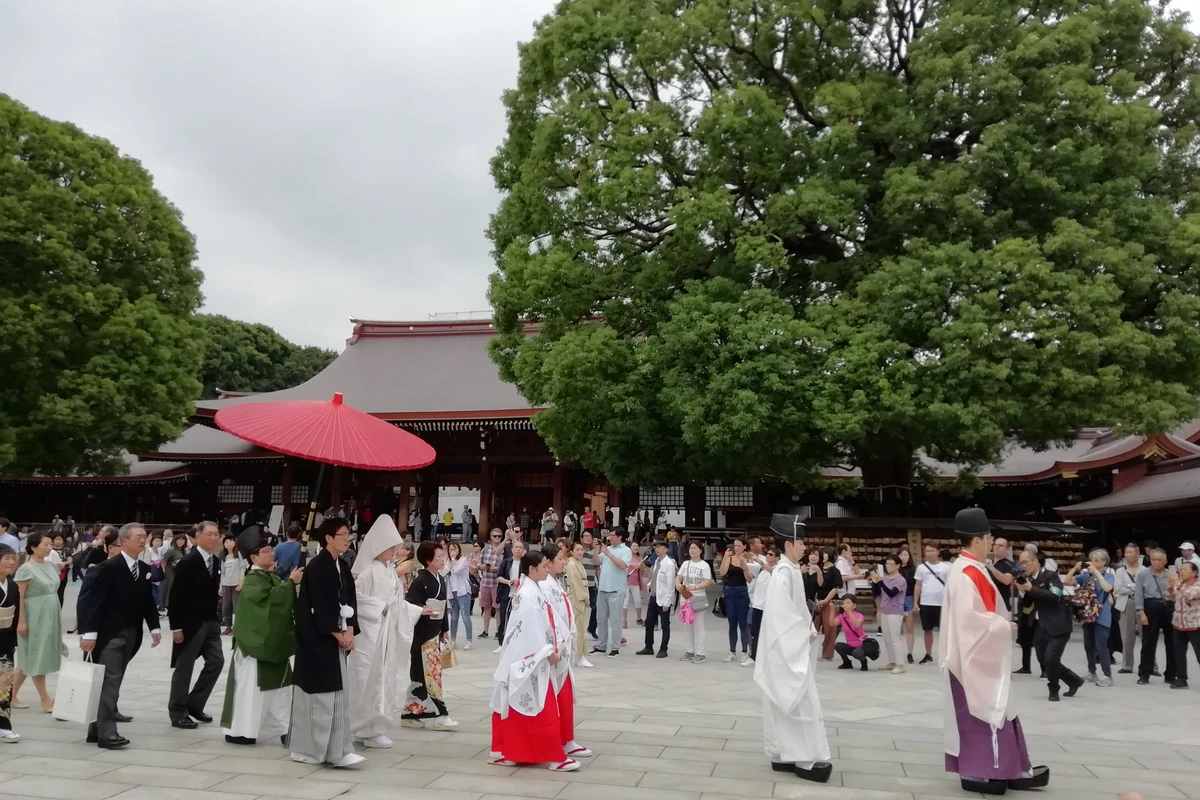
17. Stumbled Upon a Wedding!
18. Lucky!
19. Akihabara
20. You're Not Cute
21. Beware of Consumerism Traps
22. Classmates
23. Sadness and the Last Train
24. That Time, It Will Be Me Who Is Sad
25. Afterword
26. Isomaru Suisan - Grilled Crab Shell (Green)
27. Q&A
28. I. Best Travel Time (Season, Month)
29. II. Must-Visit Attractions, Must-Eat Food
30. III. Costs
31. IV. Money-Saving Tips (Continuously Updated...)
32. V. Accommodation
33. VI. Transportation
34. VII. Solo Travel Precautions
35. VIII. Local Customs & Attitude Towards Tourists
36. FINAL: Travel Info, Hotel Index, Guide Index, Flight Index, Website Navigation, Travel Index, Cruise Index, Corporate Travel Index, Franchise Cooperation, Distribution Alliance, Friendship Links, Corporate Gift Card Purchasing, Insurance Agency, Agency Cooperation, Hotel Franchise, Destination & Attractions Cooperation, More Cooperation, About Ctrip, About Ctrip, Ctrip Hot Topics, Contact Us, Careers, User Agreement, Privacy Policy, Business License, Security Center, Ctrip Content Center, Intellectual Property, Trip.com Group Algorithm Disclosure


