Discovering Nara's Unique Charms and Attractions
In fact, Nara is the oldest ancient capital in Japan, known as #Yamato# in ancient times. It was not until 1887 that the current Nara Prefecture was established. From 710 to 794, it was also one of the seats of Japanese government – after which the emperor and court moved to Kyoto. Nara has some of Japan's oldest and most important temples and shrines, as well as human history and culture. Its traditional industries have a long history, mainly including writing brushes, ink, lacquerware, tea, and flower and tree cultivation. In addition, it established a sister city relationship with Xi'an, China in 1974.
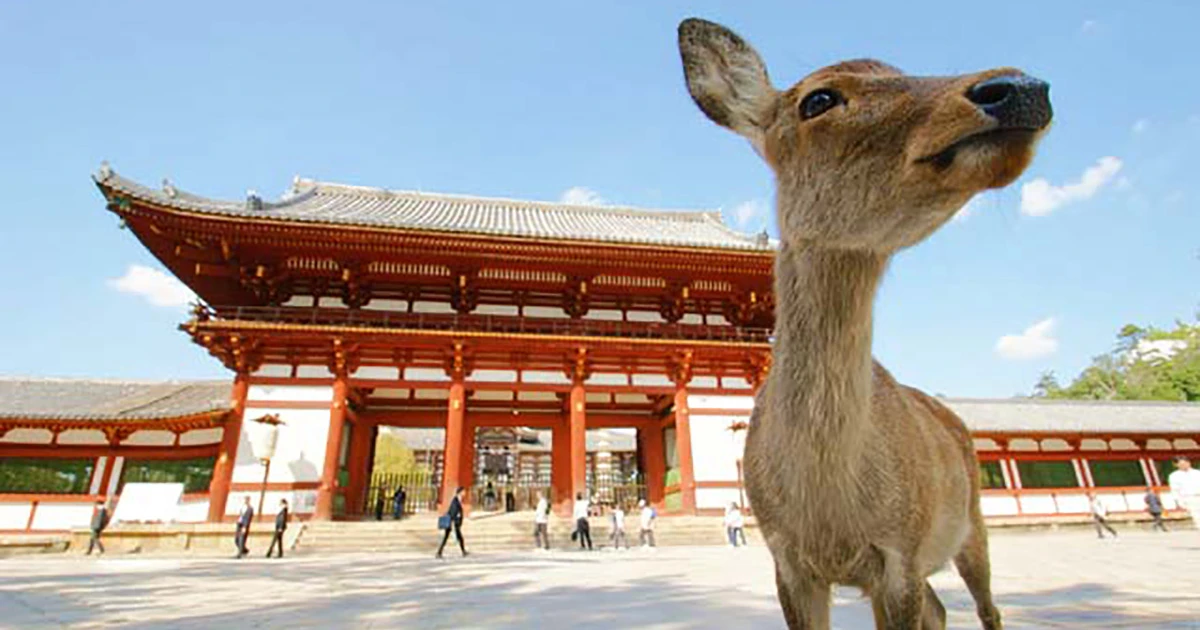
If you are thinking of visiting Nara, besides the must-see Todaiji Temple and the must-feed deer, there are some equally historic charming attractions and foods that you might want to explore and taste.
It houses the oldest Buddhist statue in Japan, located in the famous Asuka Village. There is a 'Asuka Daibutsu' (Shakyamuni Tathagata) that has been enshrined in Asuka-dera Temple for a thousand years. In 1196, the temple was unfortunately burned down in a fire and was not restored until 1826. Although the main Buddha was blackened by smoke, it was not greatly damaged overall, and its position has not changed at all, still facing the legendary birthplace of Prince Shotoku, 'Tachibana-dera Temple'.
2. Toshodaiji Temple
This temple was specially granted to the famous Chinese monk Jianzhen (Ganjin). 'Toshodaiji' means a place for Buddhist practice by the Buddha's side. In the Tang Dynasty, at the invitation of Emperor Shomu of Japan, Jianzhen came to give precepts. It took him twelve years to reach Japan, after several failures but with unwavering determination, and he was blind by the time he arrived in Nara. As soon as he arrived, Jianzhen set up an ordination platform in front of the Great Buddha Hall, and gave precepts to Emperor Shomu and Empress Komyo, as well as many eminent monks. At that time, Japan had already developed a Buddhist state ideology, and Master Jianzhen truly played a finishing touch. His immeasurable influence is now even included in middle school textbooks.
The area centered on the former site of Gango-ji Temple (a World Heritage site). Gango-ji is located in the 'Gekyo' (outer capital) district of Heijokyo. After the streets developed, Naramachi also has a long history. After the capital was moved to Heijokyo, it was first established as a district of temples and shrines. Against various historical backgrounds, present-day Naramachi still retains some aspects of the Edo period, with a nostalgic charm, so you might want to visit.
4. Tamausagi (Jade Rabbit Dumplings) inside Kintetsu Nara Station
A shop that tourists certainly won't know about but is very famous locally, specializing in black honey kinako (roasted soybean flour) dumplings. They only sell one product: black honey kinako dumplings. All dumplings are made fresh daily, with limited quantities, and they close when sold out, so be mindful of the time.
たまうさぎ(玉兔团子)
・Address: Inside Kintetsu Nara Station (exit the ticket gate)
・Business hours: 9:00~18:00
・Regular holiday: Tuesday
5. Nara's specialty 'Kakinoha-zushi' – Shop name: Heiso
'Kakinoha-zushi' is sushi wrapped in persimmon leaves, made with salmon or mackerel. It is a specialty of Nara and Wakayama prefectures, a very rustic Japanese cuisine. Heiso Sushi, a century-old brand with over 150 years of history, is a shop for 'Kakinoha-zushi' and currently has multiple branches in Kansai. If you want to sit down and eat, you can go to the Nara branch by Sarusawa Pond. Besides 'Kakinoha-zushi', they also offer other local dishes such as tea porridge (chagayu) and ayu sushi. Recommendations include: Kakinoha-zushi, sesame tofu, and various Japanese sweets.


