Fukuoka, Saga, Nagasaki Dream Trip | West Kyushu Railway Journey on Shinkansen and Sightseeing Trains
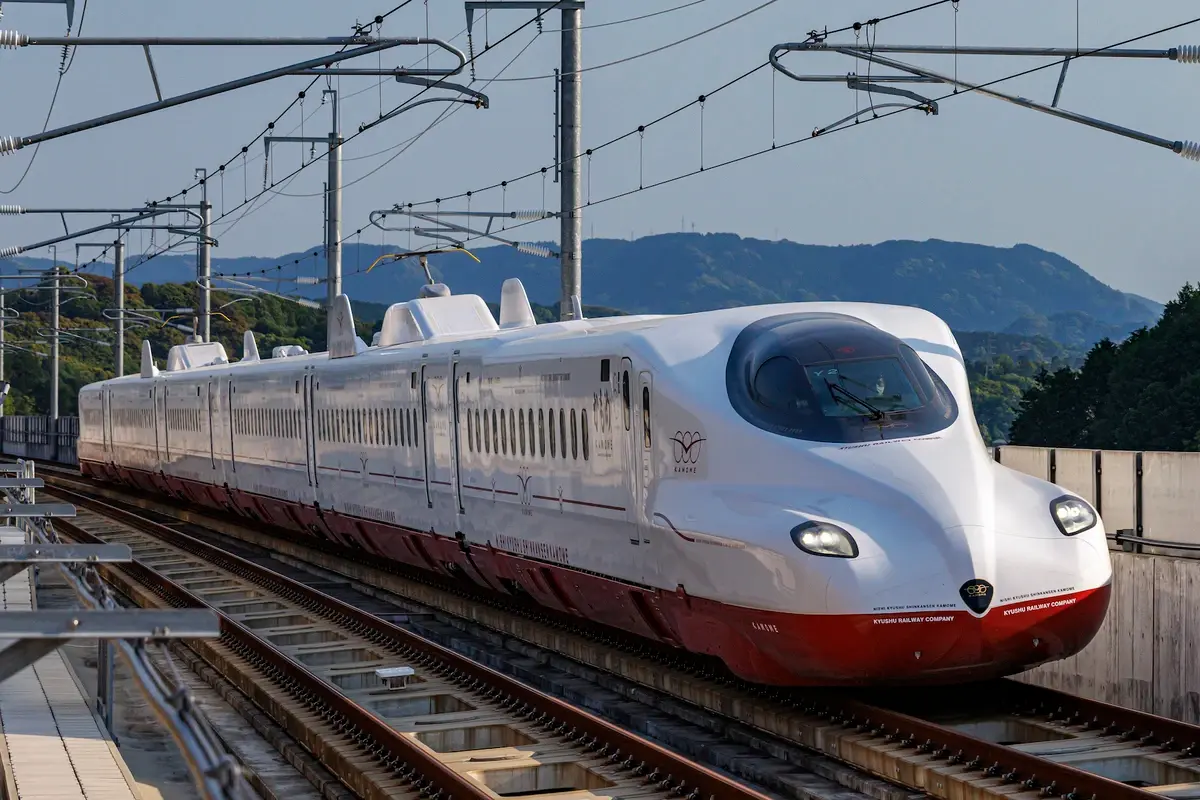
Since September 23, 2022, the West Kyushu Shinkansen "Kamome" and the limited express train "Futaboshi 4047" have officially started operation.
Traveling to Nagasaki has become much easier, and it is now more convenient to visit popular Kyushu spots like Takeo Onsen and Ureshino Onsen.
This Kyushu trip begins in the southern part of Fukuoka Prefecture, visiting Dazaifu, famous for Tenmangu Shrine, and scenic Yanagawa. Then, taking the newly opened West Kyushu Shinkansen "Kamome" and the limited express "Futaboshi 4047", we head to Ureshino Onsen and Takeo Onsen to experience the local culture of West Kyushu.
Travel Route Plan
Day 1: Hakata — Dazaifu (Tenmangu) — Yanagawa — Hakata
Day 2: Hakata — Nagasaki
Day 3: Nagasaki — Ureshino Onsen
Day 4: Ureshino Onsen — Takeo Onsen — Hakata
The public railway network between major cities in Kyushu is well-connected. Train stations usually have tourist information centers and shopping malls, as well as lockers for storing large luggage. It is clear that train stations serve as a base for travelers, and the Kyushu journey is made more convenient and comfortable by the railways.
In addition, for foreign travelers using Japan Railways (JR), the railway authorities have followed the example of the Eurail Pass and specially issue rail passes. With the pass, tourists can travel around Kyushu at a more affordable price. Since this trip is limited to Kyushu, it is recommended to purchase the JR Kyushu Rail Pass.
For city transportation, you can choose buses, taxis, etc. Fukuoka has a subway, while Nagasaki offers city trams for getting around.
Kyushu is centered around Fukuoka, with many shops selling electronics and cosmetics. Stations like Hakata Station and Nagasaki Station also have shopping malls.
Most shops in the station malls accept Chinese payment methods such as UnionPay, WeChat Pay, and Alipay, and also offer tax-free services.
Tourist information centers have been set up at stations with high visitor traffic, providing services such as attraction introductions and coupon sales. If you are unsure where to go in Kyushu or want more sightseeing information, feel free to ask at the tourist information center.
On the first day, visit Dazaifu Tenmangu in the morning, explore the scenic castle town in the afternoon, and return to Hakata in the evening to enjoy dinner at local "yatai" food stalls.
Dazaifu Tenmangu
After arriving at Fukuoka Airport, take the subway to Tenjin Station, then transfer to the Nishitetsu train to Dazaifu Station. The morning itinerary is to visit Dazaifu Tenmangu.
Dazaifu Tenmangu is located in Dazaifu City, Fukuoka Prefecture. Built in 919 AD, it is a shrine dedicated to Sugawara no Michizane, known as the "God of Learning" and "Tenjin." It is the head shrine of all 12,000 Tenmangu shrines across Japan.
Dazaifu Tenmangu is renowned for its efficacy in academics, culture, and the arts, attracting students from all over Japan to pray. It is the most famous shrine in Kyushu.
The shrine features an ancient white plum tree named "Flying Plum" (Tobiume), which is over 1,000 years old and is regarded as a sacred tree of Dazaifu Tenmangu.
In front of Dazaifu Tenmangu, a type of baked confection called "Ume bashirumochi" (plum branch rice cake) is sold. It consists of a thin glutinous rice skin wrapped around red bean paste, stamped with a plum blossom pattern. The fragrant baked cake and sweet bean paste blend together, making it an excellent choice for a tasty little dessert.
From Dazaifu Tenmangu, take the Nishitetsu train at Dazaifu Station to Yanagawa Station.
Yanagawa was ruled by the Tachibana clan, lords of the Yanagawa Domain during the Edo period. Here you can enjoy the beautiful scenery near Yanagawa Castle town and take a boat ride on the castle's moat. Visit the Tachibana Family Museum, which displays treasures and important cultural artifacts of the Tachibana family. After the tour, a local specialty steamed eel rice bowl can refresh you after a day of travel.
Yanagawa Castle town covers an area of about 2 square kilometers, with a 60-kilometer grid of moats forming a water city. You can experience a boat cruise here.
Boat riding in Yanagawa is a tourist activity rich in local flavor. The boatman not only introduces local customs but also sings heartfelt boat songs. The water route is about 4 kilometers long and takes nearly 1 hour and 10 minutes.
Tachibana Family Museum
The Tachibana Family Museum is a historical archive that displays over 400 years of Japanese national treasures and important cultural properties, including nearly 5,000 items such as utensils used by the Tachibana family as feudal lords and documents from the modern count family.
Yanagawa Lord Tachibana's Residence: Ohana
Called "Ohana" by locals, this residence was the villa of the Tachibana clan, serving as an outer castle of Yanagawa Castle. The main hall and Western-style building are open to the public, offering a glimpse into the lifestyle of the Tachibana family about 100 years ago.
After visiting Yanagawa, take the Nishitetsu train from Yanagawa Station to Tenjin Station.
Fukuoka City is one of Japan's designated major cities and the central city of Kyushu. Here you can visit the transport hub Hakata and the shopping district "Tenjin," as well as see the old town area of Hakata. You can also enjoy Fukuoka's specialty cuisine at food stalls called yatai.
Back in Hakata, it's time for yatai (food stalls). It is said that there are nearly 100 stalls just in Fukuoka City, especially concentrated around Tenjin to Nakasu-Kawabata area. At the yatai, beer, shochu, and authentic Fukuoka dishes are your best choices.
In the morning, take a stroll and shop around Hakata Station. After lunch, take the West Kyushu Shinkansen "Kamome" to Nagasaki. Nagasaki has scenic spots like Oura Church and Glover Garden. In the evening, enjoy the night view from Mount Inasa.
Canal City is a large-scale shopping complex combining shopping streets, hotels, business centers, and a cinema. It is a must-visit for shopping in Fukuoka.
As the name suggests, there is indeed a canal flowing through the mall, and events are held almost every day.
Rakusuien Garden is a Japanese garden quietly nestled in a corner of office buildings. In fact, Fukuoka City restores and opens historic villas and inns to the public. Besides the Japanese garden, there is a special tea room where you can taste matcha.
Kushida Shrine is said to have been founded in the 700s. As the guardian deity of Hakata, the shrine hosts events such as the Hakata Gion Yamakasa Festival every July.
Hakata City shopping mall is directly connected to Hakata Station. Here you can buy famous Japanese cosmetics and clothing brands. Tokyu Hands has a branch in the mall.
After shopping, it's recommended to check out the Hakata cuisine floor called "Kuchiku." On this floor, there is a Japanese restaurant named "Maima-ya" that specializes in Kyushu ingredients, emphasizing freshness and health.
West Kyushu Shinkansen
After lunch, before heading to Nagasaki, purchase a JR Kyushu Rail Pass. There are several types of JR Kyushu Rail Passes, such as the All Kyushu Area 5-day pass, Northern Kyushu Area 3-day pass, and Southern Kyushu Area 3-day pass. Since this trip is by rail in northern Kyushu, it is appropriate to buy the Northern Kyushu Area 3-day pass.
To go from Hakata to Nagasaki, take the West Kyushu Shinkansen "Kamome" and the "Relay Kamome."
The "Kamome" connects Takeo Onsen Station and Nagasaki Station. Combined with the "Relay Kamome" from Hakata Station to Takeo Onsen Station, the fastest journey from Hakata Station to Nagasaki Station takes only 1 hour and 20 minutes.
At Takeo Onsen Station, the West Kyushu Shinkansen and the conventional limited express running between Hakata and Takeo Onsen allow for cross-platform transfers, greatly facilitating passenger travel.
Nagasaki, one of Kyushu's seven prefectures, is about 800 km from Shanghai and has long maintained close ties with China. It was the only approved foreign trade port during the Edo period, and the streets exude a fusion of Chinese and Western cultures.
Nagasaki has many sightseeing spots, such as Glover Garden, the Mount Inasa Observatory known as one of Japan's three major night views, and Nagasaki Shinchi Chinatown. Glover Garden was originally the residence of a British merchant named Glover, later purchased by the local government, who relocated several Western-style buildings to form an open park.
Nagasaki City Tram
Nagasaki has four tram lines connecting various city attractions. One-day passes are available daily and can be purchased at the tourist information center at JR Nagasaki Station.
Oura Church, designated a national treasure, is a Catholic church built in 1865. The exterior is white, set against the blue sky; the interior features brilliant stained glass. Some of the stained glass is said to have been made in France, over 150 years old, making it the oldest glass in Japan. Note that photography is strictly prohibited inside the church.
After the opening of Nagasaki port in 1859, British merchant Thomas Glover came to live in Nagasaki. Based on Glover's residence, the city of Nagasaki relocated six Meiji-era historical buildings from around the city to this site, restoring them to form this garden.
The garden is lush with greenery, and strolling through it, one can still vividly imagine the daily lives of foreign merchants who once lived in Nagasaki.
Glover Garden is built on a hill, and visitors take an escalator up to view the Western-style buildings.
First, take the escalator to the top, then walk down to see the full view of Glover Garden.
The garden is filled with Western-style buildings and blooming flowers, offering a glimpse of Western European style from the latter half of the 19th century.
Glover's former residence, built in 1863, is the oldest Western-style building in Japan and is designated as an important cultural property.
Nagasaki Kaido Kamome Market
Dinner is at Nagasaki Kaido Kamome Market. Located under the elevated tracks connecting Nagasaki Station, this market has 54 shops, mostly offering local foods and specialties, bustling with activity. The market is divided into a specialty sales and live demonstration area (the largest in Nagasaki), a yokocho area featuring local sake and cuisine, and a local specialty area showcasing food and food culture popular among residents.
In the local specialty area, visitors can try a local mixed noodle dish called "Sara Udon," with famous varieties like "Nagasaki Chuka" and "Goto Udon."
Mount Inasa Observatory
After dinner, head to Mount Inasa Observatory for the night view. The observatory is located on Mount Inasa, about 15 to 30 minutes by car from Nagasaki Station. You can take a bus, taxi, or ropeway.
Mount Inasa, along with Hong Kong and Monaco, has been named one of the "New Three Major Night Views of the World." From the summit, you can see the entire Nagasaki cityscape.
The night view from Mount Inasa is called the "$10 million night view," brilliant and breathtaking.
Day 3: Nagasaki — Ureshino Onsen
In the morning, explore Nagasaki city. After lunch, transfer to the sightseeing train "Futaboshi 4047" and the West Kyushu Shinkansen to the hot spring resort of Ureshino.
Spectacles Bridge is a stone bridge built in 1634 by the Chinese monk Mokusu Nyotei from Kofuku-ji Temple. It is said to be the oldest existing stone bridge in Japan.
Descending from the side of Spectacles Bridge leads to the riverbank. The ancient bridge offers a picturesque view, a must-visit for photos. Embedded on the riverbank near the bridge is a heart-shaped stone, a locally known "power spot" that is quite popular.
Dejima was an artificial island built during the Edo period. It was the only window for foreign trade between Japan and the outside world, playing an important role in international exchange. During the Showa era, Dejima was reconstructed to recreate its former living conditions.
Today, the buildings on Dejima display the prosperity of Nagasaki's trade and industry during the Edo period. Items such as furniture actually used at that time are also exhibited, allowing us to glimpse daily life on Dejima in history.
Dejima Cuisine: Since Dejima was a trade window with the Netherlands, the display cases feature Dutch cuisine exhibits.
Additionally, Dejima offers kimono-wearing experiences. The experience includes walking inside and outside the island, allowing you to experience the clothing of Edo-era island residents.
Nagasaki Shinchi Chinatown
Nagasaki Shinchi Chinatown, along with Yokohama Chinatown and Kobe Nankinmachi, is known as one of Japan's three major Chinatowns. The plaque reading "Nagasaki Shinchi Chinatown" at the north gate was inscribed by Wang Zhen, honorary president of the China-Japan Friendship Association, during his visit to Japan in 1988.
Sun Yat-sen's Place of Connection (Tsuru Chaya)
Nagasaki has a deep connection with Dr. Sun Yat-sen, who visited Nagasaki nine times in his life. The former office of the "Toyo Nisshin Shinbun" (Eastern Rising Sun Newspaper) here was well-informed about Asian affairs and is said to be a place Sun visited every time he came to Nagasaki.
At the former site of the "Toyo Nisshin Shinbun," a stone monument reading "Sun Yat-sen's Place of Connection" stands.
Nearby, there is a Western-style bar established in 1925, the oldest in Kyushu—"Tsuru Chaya."
On the walls of Tsuru Chaya are photos and documents of Sun Yat-sen, the newspaper founder Suzuki Ten'en, and Soong Ching-ling, telling the long history of Sino-Japanese friendship.
A signature dish at Tsuru Chaya is Turkish rice, which combines pork cutlet, spaghetti, curry, and butter rice on one plate. Although it is a Western European dish, it has a Japanese flavor, and some say it resembles a Macanese dish blending Turkish and Cantonese cuisine.
In addition, the milkshake is a local specialty, with a nostalgic flavor and smooth milk taste that blends perfectly to create a wonderful dessert.
Futaboshi 4047
The sightseeing train "Futaboshi 4047" travels between Nagasaki Station and Takeo Onsen Station, while the West Kyushu Shinkansen "Kamome" runs from Takeo Onsen Station to Ureshino Station.
Futaboshi 4047 is a train that runs along the coastline of the Ariake Sea and Omura Bay, connecting Nagasaki Station and Takeo Onsen Station.
The second car of Futaboshi 4047 is named "Lounge40," which is entirely a common activity area. Sit in the spacious and comfortable sofas or window counter seats, enjoying the passing scenery in leisurely comfort.
At the Lounge40 service counter, specialty foods along the railway line are sold, such as double-star shaved ice made with local ingredients, Ureshino tea, and even sake from Saga and Nagasaki.
Outside the window, the scenery is rich and ever-changing, from the Ariake Sea, known for Japan's largest tidal range, to the calm waters of Omura Bay.
The morning and afternoon routes differ; in the afternoon, the train stops at Senryo Station, which has a strong Showa-era atmosphere, offering a panoramic view of Omura Bay.
Ureshino Onsen has a long history, recorded in ancient books. Along the Ureshino River, there is a famous hot spring street in Kyushu, with nearly 50 inns. The spring water is rich in trace elements like potassium hydrogen carbonate, offering natural skin-beautifying effects. After bathing, the skin feels moisturized, smooth, and soft.
"Onsen Tofu" is a famous dish originating from the Edo period at Ureshino Onsen. The tofu is specially made with Ureshino Onsen water, perfectly blending the tofu's protein into the hot spring broth, accompanied by a thick, soy-milk-colored soup, adding a unique touch to "Ureshino on the tongue."
After visiting the hot spring resort of Ureshino Onsen, on the fourth day of the trip, take the West Kyushu Shinkansen "Kamome" to Takeo Onsen Station. After lunch and enjoying the scenery at Takeo Onsen Station, take the West Kyushu Shinkansen "Relay Kamome" back to Hakata Station.
Ureshino Onsen Tea Tourism
The tea fields around Ureshino Onsen are famous, and tea confections made with local tea are another highlight. Participating in Ureshino Onsen Tea Tourism allows you to experience local life, with options for accommodation, cycling, walking, and more, while tasting fine tea in the atmosphere of Ureshino.
About 15 minutes by car from Ureshino Onsen Street is the Yoshida Saraya district. This area has a history of over 400 years since the Edo period. The region developed due to the strong encouragement of the porcelain industry by the lord Nabeshima Naoshige. Many ancient kiln sites remain, and visitors can buy various exquisite ceramic products.
Todoroki Waterfall Park
The waterfall is about 11 meters high, consisting of three tiers, with walking paths and a park around it. In spring, cherry blossoms bloom; in summer, the area is cool and breezy, attracting many visitors. The waterside is a great spot for a picnic, with ducks playing happily in the water, creating a peaceful and fresh scene.
After finishing the morning tour of Ureshino Onsen, take the West Kyushu Shinkansen "Kamome" back to Takeo Onsen.
Takeo Onsen has a history of 1,200 years. It was once used as a hot spring bath by the Nabeshima clan and has been a hot spring resort since ancient times. Famous swordsman Miyamoto Musashi and other notable figures have also visited, making it a hot spring resort with deep historical significance. The symbolic gate at the entrance of the hot spring street, along with the new building, has been designated as a nationally important cultural property.
Kairo-do
Japanese railway bento boxes are diverse, mostly made with local specialties. Kairo-do's bento, using Saga beef, has won the Kyushu Station Bento Contest for three consecutive years, and Takeo Onsen Station has become famous because of Kairo-do.
The bento features a generous layer of Saga beef over rice, tender and rich in flavor, with a large portion. You can enjoy it right at Takeo Onsen Station.
Takeo Onsen's Tower Gate
Built in 1915, the tower gate of Takeo Onsen is a landmark of the area. It was designed by architect Tsumaki Yorinaka, who also designed Tokyo Station. This unique, balance-style tower gate was built without using a single iron nail.
Mifuneyama Rakuen Garden was built as a villa for the Nabeshima clan by Nabeshima Mochihiro of the Saga domain, at the foot of Mount Mifune (a scenic spot in Takeo). Covering about 50 hectares, it is a scenic spot with flowers blooming in all four seasons. It takes about 10 minutes by bus from Takeo Onsen Station to Mifuneyama Rakuen Garden. The mountain path is steep, so it is recommended to wear comfortable sports shoes and light clothing.
The garden is lush and vast, with flowers to enjoy in different seasons.
Tsukazaki Giant Camphor Tree is the third-largest tree in Saga Prefecture, with an age of 2,000 years, some say 3,000 years, and is designated as a natural monument of Takeo City. Its height is 18 m (southern branch), trunk circumference 13.6 m, and crown extends 18 m east-west and 15 m north-south. In 1963, the tree was struck by lightning, destroying about 9 m of the main trunk, which is a pity. The tree's roots are intricate and deep, reaching 38 m, giving an idea of its former majestic stature.
From Takeo Onsen Station, take the "Relay Kamome" back to Hakata Station.
This trip, using a rail pass, toured Dazaifu, Yanagawa, Nagasaki, Ureshino Onsen, and Takeo Onsen, fully experiencing cultural heritage, hot springs, scenic beauty, and local cuisine.
Kyushu is a popular short-haul destination where both adults and children can have fun. Direct flights from Shanghai take only about 1 hour and 40 minutes, making transportation very convenient.
We look forward to welcoming you to the magical land of Kyushu~
Travelogue Contents
1. Preface
2. Day 1: Hakata — Dazaifu (Tenmangu) — Yanagawa — Hakata
3. Day 2: Hakata — Nagasaki
4. Day 4: Ureshino Onsen — Takeo Onsen — Hakata
Travel Information
Hotel Index
Guide Index
Ticket Index
Website Navigation
Travel Index
Cruise Index
Corporate Travel Index
Affiliate Cooperation
Distribution Alliance
Friendship Links
Corporate Gift Card Purchase
Insurance Agent
Agent Cooperation
Hotel Partnerships
Destination and Attraction Cooperation
More Cooperation
About Ctrip
About Ctrip
Ctrip Hot Topics
Contact Us
Careers
User Agreement
Privacy Policy
Business License
Security Center
Ctrip Content Center
Intellectual Property
Trip.com Group Algorithm Disclosure


