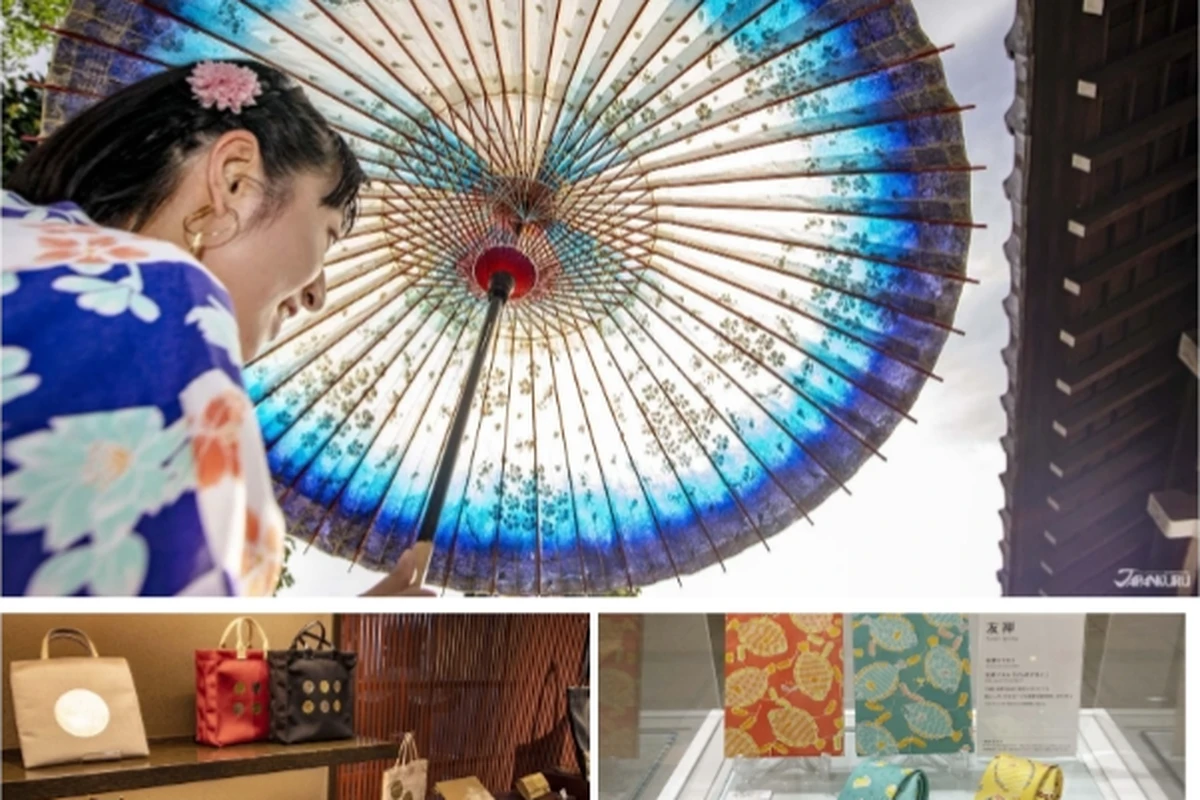
Appreciating the Beauty of Century-Old Crafts, Experiencing Northern Land's Fashion Innovation
Visiting Japan and exploring various traditional crafts is one of the pleasures. In the Hokuriku region of Japan, many exquisite artisan crafts have been preserved from ancient times to the present. The Kaga domain, once a major force in Hokuriku, encompasses Ishikawa Prefecture and Toyama Prefecture, whose deep historical heritage is also reflected in the rich local crafts.
Sightseeing and Art Appreciation: The Fashionable Evolution of Traditional Crafts
Japan's preservation of traditional culture has always been praised by people worldwide and is one of the reasons many foreign tourists fall in love with Japan. The Hokuriku region of Japan has long had many exquisite artisan crafts, which have evolved through generations. Previously, we took you to the Niigata area in the eastern part of Hokuriku and the Echigo-Tsumari Art Field. This time, we shift our focus slightly westward to Ishikawa and Toyama, exploring the diversity of local crafts through travel.
Although, when it comes to the crafts of Ishikawa and Toyama Prefectures, you might think first of the gold leaf crafts ubiquitous in Kanazawa, Kutani ware of Ishikawa, and Kaga Yuzen dyeing, which is as famous as Kyoto Yuzen. However, there are many other splendid crafts in this region, such as Kanazawa's still-operating handmade paper umbrella workshop "Matsuda Kasa-ya," Toyama Prefecture's historical Echizen Washi paper, and Inami wood carving. This time, I want to share two traditional craft brands that have been quite topical in recent years—Kutani ware pottery "Miyasou Pottery" and the cast metal brand "Nousaku" from Takaoka copperware—and how they have innovatively reinterpreted traditional crafts into a modern sense of fashion.
Miyasou Pottery: Kutani Ware Unglazed Porcelain, Minimalist Shapes of Lucky Cat and Other Auspicious Items
Kutani ware in Ishikawa Prefecture is one of Japan's prominent ceramic "schools," a type of porcelain characterized by thickly painted vibrant patterns using the so-called "Kutani Five Colors" (red, yellow, green, purple, and dark blue). It is popular in the international ceramics market, and increasingly cute and fashionable pattern designs are appearing, along with some new styles that challenge the established image of Kutani ware. The unglazed porcelain of Miyasou Pottery is one such example.
Kutani ware artistic creation actually consists of two major parts: making the unglazed porcelain body and painting. Located in Komatsu City, Ishikawa Prefecture, Miyasou Pottery is a workshop with over a century of history specializing in making unglazed porcelain bodies. Founded in the early Taisho era, it experienced the boom of Kutani ware decorative items during the Taisho and Showa periods. Miyasou Pottery accumulated superb techniques in making porcelain figurines and possessed countless molds for exquisite ceramic decorations. Entering the Reiwa era, under the new company name "Miyasou Pottery," they have collaborated with other creators and brands using their own Kutani ware unglazed porcelain bodies, launching minimalist decorative works that bring fresh air to Kutani ware, which has centuries of tradition.
Whether it's the maneki-neko (beckoning cat) or daruma, both are classic auspicious items symbolizing good fortune in Japanese culture. Even though various forms can be seen across Japan, they have established images in people's minds. However, Miyasou Pottery collaborated with Kanazawa gallery "wai/歪" and Room Root, a furniture and miscellaneous goods brand also in Komatsu, to launch the unglazed Kutani ware maneki-neko series and daruma series. These pieces are finished with simple coloring, completely breaking away from the colorful and vibrant image of auspicious figurines, giving them an exceptionally minimalist and fashionable aura. Besides maneki-neko and daruma, there are many exquisite and cute unglazed figurines. Among the products collaborating with Room Root, there is also a minimalist and elegant plant pot that looks especially cute when paired with a similarly plain-colored maneki-neko figurine.
Although the gallery and workshop of Miyasou Pottery are not open to the public, if you like such unique Kutani ware, you can contact them via Instagram or their official website's email.
Address: 82 Yahata Mi, Komatsu, Ishikawa Prefecture
Official website | IG
Nousaku: From Takaoka Casting to Appreciating the Beauty of Hokuriku Utensils
Takaoka casting is one of Toyama's classic traditional crafts, with a history of over 400 years. Initially focused on making agricultural tools and household items like pots and pans, it later expanded to include small items such as Buddhist altar fittings, tea utensils, and miscellaneous goods, as well as large items like Buddha statues and bells. Takaoka is well-known as a metal casting town, and in recent years, the increasingly popular and talked-about casting brand "Nousaku" was born in this town.
Founded in the early Taisho era, Nousaku also started with casting Buddhist altar fittings, tea utensils, and vases. As people's lifestyles changed, they boldly attempted transformation. For example, they combined previously unsold copper bells with tanzaku (short strips of paper) commonly used during Tanabata to create wind chimes, which were well-received. Then, following the trend of people becoming more particular about tableware and food culture, they developed a product line of tin plates and cutlery, riding the wave of the times once again.
Today, Nousaku's high-quality lifestyle goods are quite talked-about both in Japan and overseas. Their headquarters in Takaoka City is not only a casting workshop with a team of skilled artisans and management but also includes a gallery exhibition space, product sales area, hands-on experience space, and a café restaurant. It is a multifunctional artisan workshop with sightseeing appeal, offering reservation-based workshop tours. Here, visitors can comprehensively experience the beauty of Nousaku's cast metal utensils by viewing works, observing artisans at work, trying simple casting by hand, and using Nousaku's tableware in the dining space.
Nousaku Main Factory & Head Office (Nousaku Honsha Kojo)
Address: 8-1 Office Park, Takaoka City, Toyama Prefecture
Business hours: 10:00-18:00 (café last order 17:30)
Closed: Year-end and New Year holidays (Workshop tours closed on Sundays, national holidays, and irregularly on Saturdays)
Access: From JR / AINOKAZE Toyama Railway Takaoka Station, take the World Heritage bus toward Shirakawa-go and get off at "Nousaku-mae" stop, about 28 minutes. From JR Shin-Takaoka Station, take the same bus, about 13 minutes.
Official website | IG | FB
Special: Nousaku x Bed and Craft: Old House Accommodation and Artisan Crafts
Nousaku, evolving with the times, has undertaken many interesting and innovative projects. One of these is a collaboration with Bed and Craft, a distinctive accommodation brand in Inami, a town famous for wood carving in Toyama Prefecture. Together, they offer a refined itinerary that allows deep appreciation of the craftsmanship of Takaoka and Inami. This includes a tour of Nousaku's main workshop, staying in a traditional house rental accommodation in Inami, and savoring delicious local cuisine prepared with ingredients from the area, served on vessels made by local artisans and Nousaku's tin cutlery.
Bed and Craft has several traditional house rental accommodations in Inami, each renovated from an old house and collaborating with a local artisan specializing in wood carving, pottery, lacquerware, etc. If you enjoy slow-paced travel, visiting old houses, and feeling the warmth of the utensils you use, this itinerary by Nousaku and Bed and Craft will surely captivate you.
Bed and Craft
Address: 3-41 Honmachi, Nanto City, Toyama Prefecture (BnC Lounge)
* To stay at Bed and Craft's accommodations, you must check in at BnC Lounge.
Official website | Itinerary reservation
Whether you are visiting Ishikawa or Toyama, whether you prefer train travel or renting a car locally, taking JR trains with Kanazawa as the gateway is a good option. From Tokyo, take the Hokuriku Shinkansen to Kanazawa, about 3 hours. From Shin-Osaka, take the JR Tokaido Line Limited Express Thunderbird, currently about 2.5 hours. It is worth noting that the JR Hokuriku Shinkansen is scheduled to open the section from Kanazawa to Tsuruga in Fukui Prefecture in 2024, which will further shorten travel time from Shin-Osaka to Kanazawa.
For traveling in Hokuriku, you can use the Hokuriku Arch Pass jointly issued by JR East and JR West. An adult ticket costs 25,500 yen, allowing unlimited rides on JR Shinkansen and other JR trains from Tokyo or Kansai (Osaka, Kyoto) to Hokuriku (Kanazawa, Toyama) and other areas, including specified sections of the Noto Railway, IR Ishikawa Railway, and AINOKAZE Toyama Railway.
Additionally, at the tourist information center in JR Kanazawa Station, you can obtain abundant Hokuriku travel information, including sightseeing within Kanazawa City, surrounding areas, and even Ishikawa, Toyama, and Fukui Prefectures. If you encounter any problems arranging your itinerary during your trip, you can seek help there.
Savoring the Refinement of Century-Old Crafts
Travel always brings many impressions to life. Miyasou Pottery, breaking the established image of Kutani ware, and Nousaku, boldly innovating and diversifying, their flexible creativity might momentarily make you forget they have centuries of history—yet, it is precisely the calmness and exquisite craftsmanship honed over the years, combined with the courage to embrace new trends, that allows them to exude a youthful spirit even after a hundred years, winning the favor of new generations.
This may also be true for traditional crafts, and perhaps for people and life as well.
Maintaining a heart willing to try new things is the truth of eternal youth—this might be the biggest takeaway from visiting these two century-old craft workshops.


