Late Summer Italian Getaway (Venice, Milan, Lake Como)
A short holiday at the end of September, autumn has already arrived, but I still felt a bit reluctant to let go of summer, so I planned to head south to see if there was any tail end of summer to catch. My son is not very interested in sightseeing, but it happened that there was a UEFA Champions League match for AC Milan playing at their home stadium. The three big guys in the family immediately got excited. So, with everyone getting what they wanted, we quickly agreed, and the trip to Italy was arranged.
After experiencing the joys of self-driving, there was no other option for travel. Although it was a 9-hour drive from Prague to Italy, with a stretch crossing Austria from north to south in the middle. The Alps roll and undulate in western and southern Austria. It felt like we drove straight into the mountains, constantly weaving through tunnels in one mountain after another, surrounded by lush green mountains in all directions near and far. The roads were very smooth, until we saw clouds below us and realized, 'only in this mountain, deep in the clouds, I know not where.' Just before entering Italy, I thought to check the altitude: 700 meters, already a long way downhill. I wonder how high we had been. The mountains were not steep, so it didn't feel oppressive. There were valleys with lakes, and by the lakes or halfway up the mountains, there were homes, all beautiful little houses, truly stunning. Unfortunately, there was no place to stop on the highway, so I couldn't take pictures. The stretch from Austria to Venice was the most beautiful scenery I have ever seen along a road. I couldn't even bear to take a nap. People praise Switzerland a lot, but after learning a bit, I feel that the entire Alps covering Germany, France, Italy, and Austria all have similar beautiful landscapes.
Cars are not allowed in the water city of Venice, and my younger son had been saying he hadn't been to the beach for a year, so we stayed in the beach resort of Punta Sabbioni, south of Venice. To go to Venice, we took a ferry. The only transportation on the main island is boats, so we bought a day pass for 20 euros per person.
The main island of Venice is not large, with the main attractions concentrated around St. Mark's Square and St. Mark's Basilica. However, rather than visiting sights, I preferred to wander aimlessly through the city. Venice is a city built entirely on water, consisting of over a hundred islands with intricate narrow alleys and tiny canals. Wandering through them felt like playing hide and seek, no wonder it was once named the most romantic city. A beautiful scene cannot be without water, and this city wrapped in water naturally carries its own charm. Venice has a rich variety of architectural styles, the most prominent being Gothic. Many people wonder how the foundations of waterborne buildings are laid; it is said that Gothic architecture allows structures to be built on closely spaced wooden piles. Perhaps due to the water and the difficulty of the terrain, the walls of the water city's buildings generally look somewhat worn, even the storefronts of major international brands.
In terms of history, from a group of refugees who first arrived on the islands to its later development into an important commercial center and even the world's first international financial center, Venice has a long history and a strong cultural and artistic atmosphere. With so many selling points, tourists are always endless.
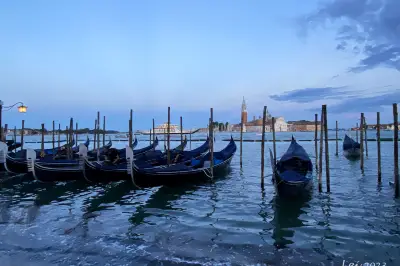
Venice has a symbolic small boat called a gondola, with both ends pointed and upturned, very elegant and ornate. It costs 80 euros for half an hour, but I didn't find it interesting. When I got tired of walking, I preferred to use our day pass for the vaporetto (water bus). There are many routes; we chose line 1, which circles around the city. Sitting at the bow, we could take in all the beautiful sights.
Milan is a big city, but it doesn't have many attractions. Apart from the football match, I didn't have high expectations. Milan has two distinct labels: fashion and football. After a quick tour, I already felt a certain fashionable atmosphere higher than elsewhere. First, there are many shops on both sides of the streets, with brands of all sizes, and the mannequins and displays in the windows were very pleasing to the eye. Second, the clothing taste of ordinary pedestrians on the streets was also commendable; I often felt the urge to photograph some passersby. The pinnacle was the Galleria Vittorio Emanuele II. The splendor of the entire building and the wide array of luxury brands were nothing special, but the people inside were like walking models, representing the forefront of fashion. Some seemed to be shopping, some looked like real models shooting, and some seemed like influencers checking in. Regardless, they were truly pleasant to look at. If you have nothing to do, stopping there to watch these fashionable people is quite enjoyable. By the way, I tried the famous Spontini pizza and Savini ice cream; both tasted good and did not disappoint.
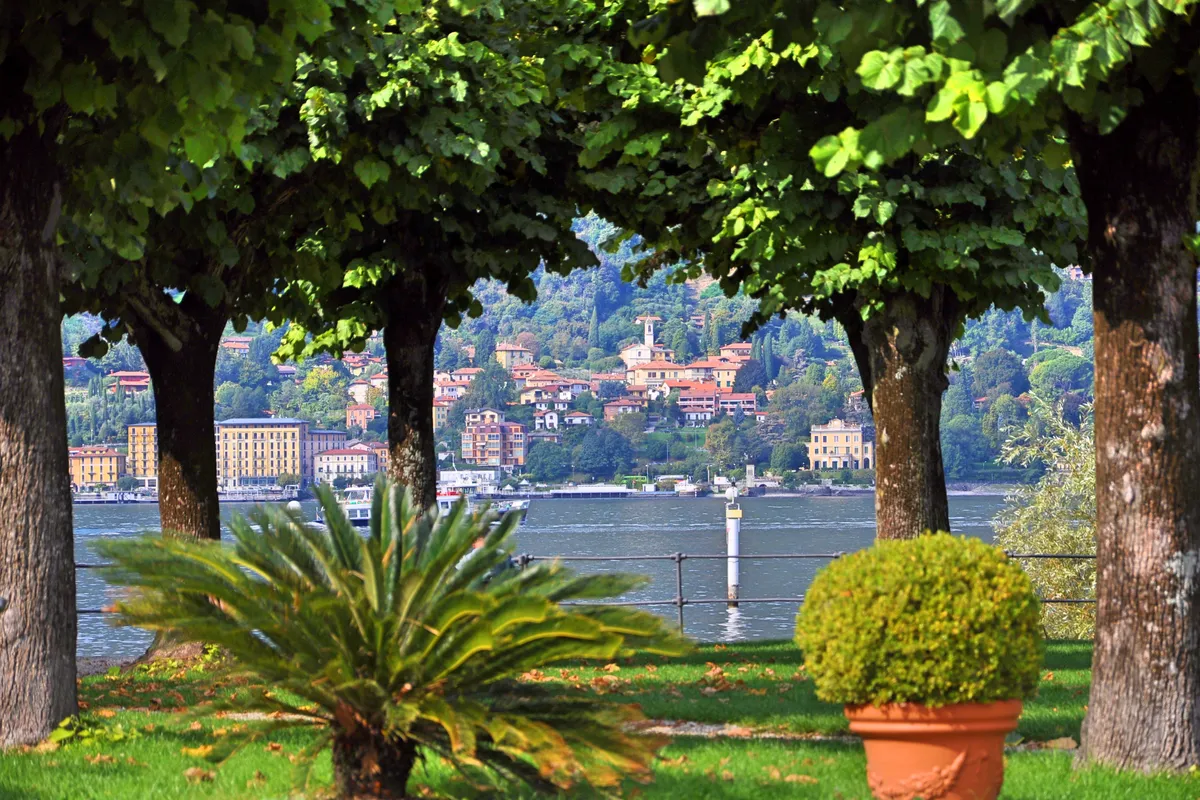
Our next stop was Lake Como, about an hour's drive from Milan. Lake Como is in northern Italy, at the foot of the Alps, bordering Switzerland. The lake covers 146 square kilometers, making it Italy's third-largest lake, with a maximum depth of over 400 meters. A distinctive feature of Lake Como is its 'Y' shape, which creates a shoreline of over 150 kilometers, giving it a narrow and elongated feel. On both sides of the shore, every short distance there is a small town or village, with many houses built on the slopes—some tightly packed ordinary homes, others large and magnificent palaces. So, although the lake is large, it feels lively with people.
We found a B&B on a hillside, with the bedroom, living room, and dining room all facing the lake. Opening every door or window revealed an unobstructed view of the lake. The mountains were layered, some solid, some hazy, covered in lush green trees. The houses were colorful, set against the green lake water, creating a beautiful classic landscape painting. At dusk, as lights came on, the mountains grew more indistinct, leaving only the twinkling lights from the houses on both shores and the moonlight reflected on the lake, like a Milky Way bordered with diamonds. It was another serene scene. No wonder from Roman times, this has been a holiday destination for many nobles and artists. Many of the luxurious houses today were left behind by former celebrities, and many stars still have vacation homes here.
To travel between the towns in the lake area, we either took ferries or drove. The ferry was slower, so we usually drove, but the mountain roads were winding and narrow, like tracks in a racing game. We couldn't drive too slowly either, or we would block the cars behind, so it required good skill. The lake area has many beautiful towns; we chose to visit Bellagio, right in the middle. It was indeed very pretty, and because it sits at the corner of the 'Y' shape, the views were richer and more expansive. Many people online suggested renting a boat to explore the lake. We rented a speedboat, very new and clean. Driving the boat on the lake was really nice; the lake surface was calm, the ride smooth, and looking around, we had a 360-degree view of beauty. It made us realize how big the lake is. We drove at full speed for two hours and only saw about a third of the entire lake. At full speed, the wind was too strong. If I were to recommend, find a day that is neither too hot nor too cold, bring a hearty picnic, and spend six hours on the water—that would probably be very enjoyable.
Italian cuisine is world-renowned. I recently saw a statistic that Italian food is the most popular in the world, with Chinese food in second place. Although our family doesn't really like Western food, we still wanted to try Italian food when visiting Italy. First, my husband's favorite dish: Parma ham with melon. He had it in Italy more than ten years ago and had been craving it ever since. This time he got to eat it again and still loved it. Many people recommend squid ink pasta, which is pasta made with squid ink and mixed with squid meat, similar to the squid ink dumplings we have back home. It tasted good, but it left our mouths and teeth very black. As the birthplace, pizza was very delicious, both thick and thin crusts were good, even the garlic bread was better than elsewhere. The waiter strongly recommended a seafood soup, but we found it rather average. For us Qingdao people, who are used to eating large portions of steamed original-flavor seafood, there isn't much seafood that can impress us. Besides restaurants, we also enjoy exploring supermarkets. We noticed that compared to other countries, many Italian products prominently display '100% Made in Italy' on the packaging. Could it be that Italians are very proud of their domestic products? I looked it up online, and indeed, especially for food and ingredients, consumers prefer to trust domestic products first. Without any particular goal, we just bought a few things randomly: roast chicken and ribs, cookies, frozen pizza, frozen Italian dumplings, ice cream. When we tried them back at the accommodation, they were all delicious. It was like opening so many blind boxes without hitting a single dud—a pleasant surprise. I think the secret to Italian food's deliciousness is their cheese, which is very fragrant and soft, used in many dishes.
On the way back, we didn't have breakfast. While waiting at the airport, we bought pizza and a croissant, and they were surprisingly good. That croissant was the best I've ever had, with a generous amount of rich and creamy chocolate filling. In summary, Italians have a sense of pride in their cuisine. So, whether it's a restaurant at a scenic spot, a small shop in the airport waiting area, frozen products and yogurt in the supermarket, or ice cream from a street vendor, everyone is proud of their country's food. Sellers put their best effort into making it excellent, buyers prioritize buying it, and this dedicated effort results in sales and profits—a wonderful virtuous cycle.
Everywhere I go, I like to observe the local people. Most Italians are relatively slim, their English is not very good, but they can understand common phrases, and they are very kind and warm.