15-Day European Town and Castle Themed Self-Drive Tour During the 2017 Spring Festival
III. Town Highlights
1. Rothenburg (Germany)
2. Neuschwanstein Castle (Germany)
3. Ramsau (Germany)
4. Hallstatt (Austria)
5. Bled (Slovenia)
6. Pisa (Italy)
7. Cinque Terre National Park (Italy)
8. Portofino (Italy)
9. Verona (Italy)
10. Interlaken (Switzerland)
IV. French Châteaux Route
1. Château de Sully
2. Chateau du Clos Lucé
3. Chateau de Chambord
4. Chateau de Cheverny
5. Chateau de Blois
6. Chateau d’Amboise
7. Le Domaine de Chaumont
8. Chateau de Loches
9. Chateau de Langeais
10. Chateau de Villandry
11. Chateau de Chinon
12. Chateau de Brézé
13. Abbaye de Fontevraud
14. Chateau de Saumur
15. Chateau de Brissac
16. Châteaux along the way
V. Musical Journey
1. Vienna Musikverein Golden Hall
2. Mozart's Birthplace (Salzburg)
3. Beethoven's Residence (Vienna)
4. Haydn's Residence (Vienna)
5. Cremona, the City of Violins (Italy)
VI. City Glimpses
1. Würzburg
2. Munich
3. Venice
4. Florence
6. Lucerne
7. Geneva
VII. A Series of Mishaps
1. Car Stalled Midway
2. Parking in a Disabled Spot, Got a Ticket
3. Accidentally Entered a Pedestrian Zone, Got a Ticket
4. Encountered a Terrorist Attack at the Louvre
VIII. Travel Information
Notes on Multi-Country Self-Drive with One Car
3. Tolls
Hallstatt:
Ancient Roman Ruins:
Château de Cheverny:
Château de Saumur:
Ten years ago, I went on a business trip to Europe. From big cities to various small towns, I was captivated by the classical architecture, customs, and culture of Europe. I decided that when the time was right, I would bring my family to drive through Europe on our own.
A decade passed, and we finally arranged this trip during this year's Spring Festival.
At the outset, many friends were not optimistic: "Why go to Europe in winter? It's freezing cold!"
We set off with the intention of fulfilling a wish, without high expectations. However, upon arrival, we were unexpectedly amazed by Europe covered in snow and ice. As someone from southern China who had never seen rime ice, I felt we had hit the jackpot!
The journey allowed us to fully enjoy European towns and castles.
Along the way, we also briefly visited several famous cities.
We attended a performance at the Vienna Musikverein Golden Hall, fulfilling a long-held dream.
Notably, we experienced the thrill of speeding on the German Autobahn — 210 km/h, a memory for a lifetime!
We flew directly from Shenzhen to Frankfurt, picked up the car at the airport, and traveled through Austria, Slovenia, Italy, Switzerland, and entered France, finally returning the car at Paris Charles de Gaulle Airport before heading home.
The entire trip lasted 15 days, covering 5,300 kilometers. It was a whirlwind tour, more of a "been there, seen that" kind of trip.
Highlights of the journey:
1. The Romantic Road in Germany
2. The route along the Golden Pass Line in Switzerland
3. The Châteaux Route in France
Our itinerary was quite wild, involving long drives. The overall schedule for completing 5,300 km in 14 days was as follows:
D1: Frankfurt Airport - Würzburg - Rothenburg
D2: Rothenburg - Neuschwanstein Castle - Steinberg - Munich - Salzburg
D3: Salzburg - Ramsau - Hallstatt - Vienna
D4: Vienna - Bled
D5: Bled - Venice
D6: Venice - Munich - Rome
D7: Rome - Munich - Pisa - La Spezia (Italy)
D8: La Spezia - Cinque Terre National Park - Flüelen, Switzerland
D9: Flüelen, Switzerland - Interlaken
D10: Interlaken - Geneva
D11: Geneva - Blois
D12: Blois - Tours - Angers - Paris
D13: Paris
D14: Paris - Beijing - Shenzhen
We selected various towns along the route.
1. The Romantic Road in Germany:
The Romantic Road stretches about 400 km from Würzburg to the small town of Füssen in the Allgäu region. Along the way, the romantic atmosphere, the fragrance of grapes, and the unique leisure ambiance of the Alps ensure an unforgettable experience.
From the Main River to the Franconian wine kingdom and up to the peaks of the Alps, the route is filled with diverse cultural landscapes. Magnificent palaces, splendid courtyards, and medieval half-timbered buildings present one stunning sight after another. From Würzburg to Füssen, you will enjoy the beautiful scenery of the Tauber Valley, learn about geological changes in the Nördlinger Ries, and discover the exquisite Wieskirche in the Pfaffenwinkel region of Upper Bavaria. Long-distance cycling and hiking trails add to the appeal, with the climax being the royal castle group including Neuschwanstein Castle, set against the spectacular backdrop of the Ammergebirge Nature Reserve, surrounded by four lakes, creating a picturesque scene that sounds the most romantic note.
2. The route along the Golden Pass Line in Switzerland:
The Golden Pass is known as "the world's slowest panoramic train," with a speed of only 35 km/h. Its route showcases the best of Switzerland's landscapes, running from Lake Lucerne in the heart of the country to Lake Geneva, known as the "Swiss Riviera." The line passes through several beautiful lakes and the highest peak in Europe, the Jungfrau, offering such beautiful scenery that visitors are reluctant to leave. It is the only train in Switzerland with VIP seats at the front, giving passengers the same wide view as the driver. It consists of three panoramic trains, allowing travelers to enjoy Switzerland's lakes and mountains to the fullest.
Since we were driving ourselves, taking the train would have required a round trip, so we gave up on that. However, driving along the train route had its own advantages and disadvantages.
3. The French Châteaux Route:
Located in the Loire Valley in central France, the Châteaux Route is the best interpretation of French elegance and the rich accumulation of French history. The area is lush with vegetation, and exquisite medieval castles are scattered along the way. The route passes through five main cities: Orléans, Tours, Chinon, Poitiers, and Bordeaux, covering about 600 km. The Loire Valley is perfect for self-driving; the scenery along the way is beautiful, making it a pleasure to drive through. It is also one of the most popular weekend family destinations for the French.
III. Town Highlights
When mentioning European towns, what comes to mind are medieval churches, winding ancient streets, endless vineyards, rolling farmlands, winding quiet roads, crystal-clear lakes and rivers with swans swimming, and the snow-capped Alps in the distance... Here, there is no noise of cars to disturb your peace.
1. Rothenburg (Germany)
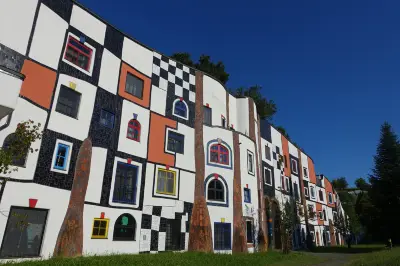
Rothenburg ob der Tauber is located in the early part of the Romantic Road. It is the most famous town in Bavaria, Germany, known as the "Medieval Pearl" and a vital part of the Romantic Road—a must-visit.
Accommodation: Gästehaus am weißen Turm (https://hotels.ctrip.com/international/9045327.html#ctm_ref=www_hp_bs_lst)
2. Neuschwanstein Castle (Germany)
Neuschwanstein Castle (Schloss Neuschwanstein) is a 19th-century building located in southwestern Bavaria, Germany, near the older Hohenschwangau Castle (also known as Old Swan Castle). It is a symbol of Germany and, as the inspiration for Disney's castle, is also called Cinderella Castle.
Construction began in 1869. It was one of the palaces of King Ludwig II of Bavaria. The castle has 360 rooms, but only 14 were completed according to the design; the other 346 remained unfinished due to the king's death in 1886.
It is the most photographed building in Germany and one of the most popular tourist attractions, marking the end of the Romantic Road.
The Old Swan Castle (Hohenschwangau Castle) stands opposite Neuschwanstein:
We only drove half of the Romantic Road, as the scenery along the way felt similar. After leaving Rothenburg, we took a short detour and then hit the highway directly to Neuschwanstein Castle.
The Romantic Road can be traveled in one day or a week, with bus services available. Travelers with enough time should take it slow.
3. Ramsau (Germany)
The small town of Ramsau, located between Munich and Königssee, is a true paradise in Germany. Nestled between mountains, it offers a perfect picture of blue skies, snowy peaks, small bridges, flowing water, and a rustic church, making it a delight for the eyes. In all seasons, it boasts breathtaking scenery, exuding classic Bavarian and Alpine charm.
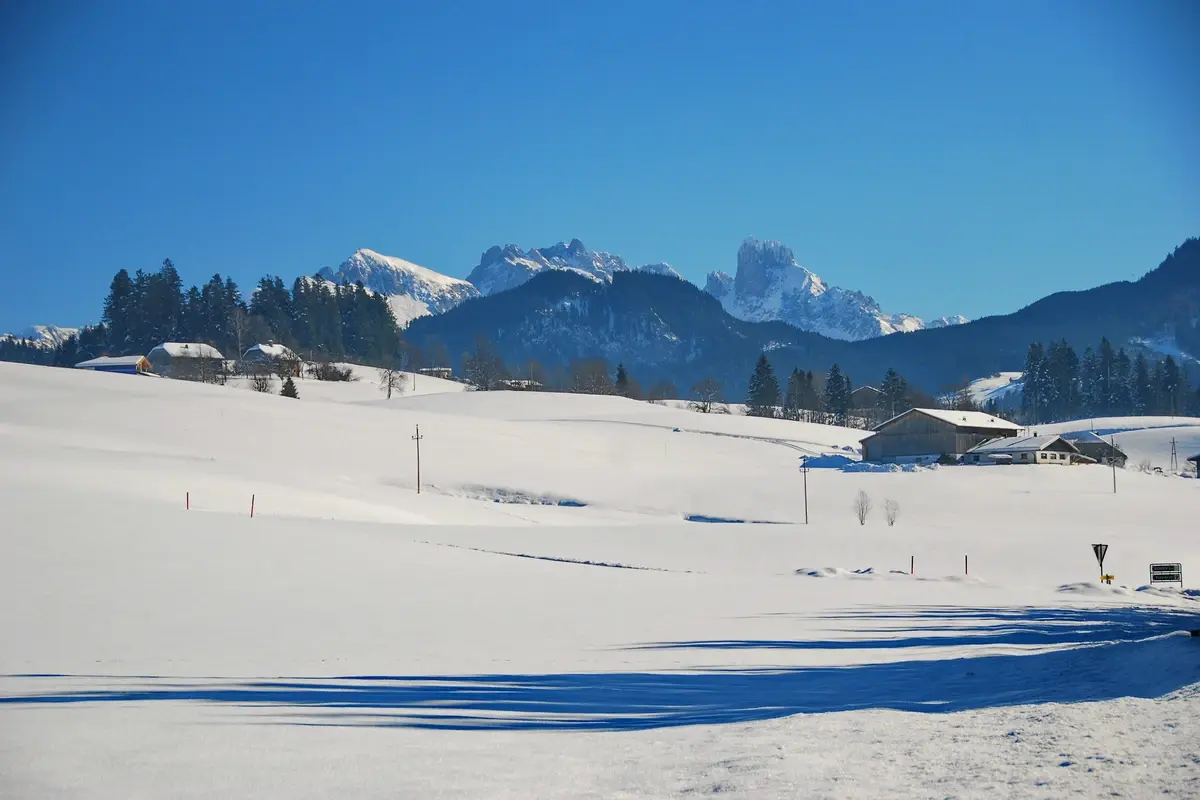
After leaving Salzburg and entering Ramsau, the view suddenly opened up:
Majestic snow-capped mountains accompanied us, instantly reminding me of Daocheng Yading in Sichuan. Although that place is incredibly beautiful, it requires risking one's life and overcoming altitude sickness. Here, it was easy!
Along the slopes, by the lake, and beside the roads and fields, small natural villages and herds were scattered, orderly and lively, peaceful and beautiful.
Near Ramsau is Lake Königssee, which includes a famous attraction—Hitler's tea house, the Kehlsteinhaus (Eagle's Nest). Unfortunately, I only found out about it after returning.
4. Hallstatt (Austria)
Hallstatt is a village in the Salzkammergut region of Upper Austria, located on the shores of Lake Hallstatt at an altitude of 511 meters. As of December 2005, it had 923 inhabitants. The name "Hall" likely comes from the ancient Celtic word for "salt," referring to the salt mines near the village, which historically brought wealth to the area. It is therefore also called "the most beautiful town in the world" or "the oldest salt town in the world."
The town is at the foot of the mountains, so it is only well-lit in the morning. It is better to stay overnight.
Leaving Hallstatt for Vienna, the scenery along the way was stunning:
5. Bled (Slovenia)
Lake Bled is known as Slovenia's icy jade mirror. Dense green forests line the shore, and the quiet lake reflects the misty image of the snow-covered Alps. You cannot ignore this place, just as you cannot ignore the unbearable lightness of being.
The lake was frozen, and for the first time, I tried ice skating on real ice.
There is a castle by the lake offering a panoramic view:
Accommodation: Apartments & Rooms Marija Lesnik (https://hotels.ctrip.com/international/10621357.html#ctm_ref=www_hp_bs_lst)
500 meters from the lake:
6. Pisa (Italy)
The Leaning Tower of Pisa (Italian: Torre pendente di Pisa or Torre di Pisa) is the freestanding bell tower of the Pisa Cathedral, located in Piazza dei Miracoli north of Pisa in Tuscany, Italy.
The large lawn of Piazza dei Miracoli holds a group of religious buildings: the Cathedral (built 1063–13th century), the Baptistery (built 1153–14th century), the Bell Tower (Leaning Tower), and the Camposanto (built 1174). Their exteriors are all made of white marble, each relatively independent but forming a unified Romanesque style. The Leaning Tower stands behind the cathedral.
The tower is 58.36 meters tall from foundation to top, 55 meters from ground to top. The base width is 4.09 meters, narrowing to 2.48 meters at the top. It weighs about 14,453 tons, with its center of gravity 22.6 meters above the foundation. The circular foundation covers 285 square meters, exerting an average pressure of 497 kPa on the ground. Its tilt is about 3.99 degrees, leaning 2.5 meters from the outer edge of the foundation, with the top protruding 4.5 meters. The tilt was first noticed in 1174.
7. Cinque Terre National Park (Italy)
Cinque Terre National Park consists of five picturesque seaside villages built on cliffs: Monterosso al Mare, Vernazza, Corniglia, Manarola, and Riomaggiore. These are collectively known as the five towns perched on cliffs.
The park is located in the province of La Spezia in the Liguria region of Italy, along the coast of the Gulf of Genoa in the Ligurian Sea. The clear blue waters and rugged peaks give these small fishing villages nestled in coastal hollows a poetic and enchanting beauty.
In 1997, Cinque Terre was inscribed as a UNESCO World Heritage Site, and in 1999, Cinque Terre and its surroundings were designated as Cinque Terre National Park.
Accommodation: La Spezia - La Giara del Centro (https://hotels.ctrip.com/international/10062781.html#ctm_ref=www_hp_bs_lst)
La Spezia:
8. Portofino (Italy)
Portofino is a famous tourist seaside harbor town on the eastern Ligurian coast in northwestern Italy. In Italian, Portofino literally means "border small port."
Masterpieces meticulously crafted by architects and skilled artisans have made Portofino world-renowned, attracting many famous political figures, financial magnates, and celebrities. It is a very pleasant city where all the houses are arranged in a picturesque manner, each with at least one window facing the blue bay. Public facilities built by the government are full of character and individuality, using bright and vivid colors to express their love for life.
9. Verona (Italy)
Verona is known as the city of love because of Shakespeare's tragic love story of Romeo and Juliet, which is set here.
Verona is one of the oldest, most beautiful, and most illustrious cities in Italy. Its Latin name means "highly elegant city." Today, Verona has 260,000 inhabitants and is the second largest city in the Veneto region after Venice. Its location is ideal, and the climate is particularly pleasant.
Verona is rich in wine, vegetables, and fruits, as well as the famous Verona marble. Verona is indeed a very elegant city with countless natural beauties: rivers, hills, the nearby Lake Garda. It also boasts many famous historic buildings and unique urban scenery.
We had to cancel this attraction because our car wouldn't start, costing us over two hours on the road.
10. Interlaken (Switzerland)
The Swiss town of Interlaken, located at the foot of the Jungfrau, is famous for its breathtaking scenery all year round. It is a renowned Swiss resort and a starting point for Alpine tourism. It features many medieval buildings (11th–14th century) and a fortress (built 1750). There is a copycat Interlaken in Shenzhen, but this time we saw the real one.
Accommodation: Hotel Alpenblick (https://hotels.ctrip.com/international/2535426.html#ctm_ref=www_hp_bs_lst)
IV. French Châteaux Route
The French Châteaux Route, located in the Loire Valley in central France, is the best interpretation of French elegance and the rich accumulation of French history. The area is lush with vegetation, and exquisite medieval castles are scattered along the way. It passes through five main cities: Orléans, Tours, Chinon, Poitiers, and Bordeaux, covering about 600 km. The Loire Valley is perfect for self-driving; the scenery is beautiful, making it a pleasure to drive through. It is also one of the most popular weekend family destinations for the French.
We selected 15 châteaux, covering about 300 km.
1. Château de Sully
2. Chateau du Clos Lucé
3. Chateau de Chambord
4. Chateau de Cheverny
Luxurious interior:
5. Chateau de Blois
Accommodation: Appart'City Blois (https://hotels.ctrip.com/international/2536168.html#ctm_ref=www_hp_bs_lst)
6. Chateau d’Amboise
The great painter Leonardo da Vinci is buried in the Chapel of Saint-Hubert within the castle walls. Built on the riverbank, the gardens of Château d'Amboise are terraced; ascending step by step reveals the most beautiful views of the Loire Valley.
7. Le Domaine de Chaumont
8. Chateau de Loches
9. Chateau de Langeais
10. Chateau de Villandry
11. Chateau de Chinon
12. Chateau de Brézé
13. Abbaye de Fontevraud
14. Chateau de Saumur
15. Chateau de Brissac
16. Châteaux along the way
Salzburg Castle:
Lucerne Castle:
Bled Castle:
V. Musical Journey
1. Vienna Musikverein Golden Hall
We bought tickets a month in advance, but there were no good seats left.
We saw a performance by the Chicago Symphony Orchestra, and the seats we chose cost 47 euros each.
Golden Hall ticket booking website:
https://www.musikverein.at/en/program#!/%23data_year=2017&data_month=4&data_jwos=&data_ass=true&data_wcay=&data_jcay=&data_jc=true&data_nedcc=0&bbq_ev=&data_year=2017
https://www.musikverein.at
Vienna Musikverein Golden Hall:
Accommodation: The Levante Laudon Hotel (https://hotels.ctrip.com/international/2832350.html#ctm_ref=www_hp_bs_lst)
2. Mozart's Birthplace
Mozart Square and his birthplace in Salzburg:
Accommodation: Kolpinghaus Salzburg (https://hotels.ctrip.com/international/2547067.html#ctm_ref=www_hp_bs_lst)
3. Beethoven's Residence
Beethoven's residence in Vienna:
4. Haydn's Residence
Haydn's residence and Haydn Street in Vienna:
Haydn House Museum:
5. Cremona, the City of Violins (Italy)
Cremona, the world capital of violin making, is a small city on the Po River plain in northern Italy. It has a glorious history of craftsmanship and continues to produce master luthiers, making it a holy site for many instrument makers.
Streets named after masters like Amati and Stradivari are common, whether modern or ancient.
In Piazza Stradivari in the city center, people sit by the statue of the master enjoying wine or ride bikes quietly past.
Walking through the streets, if you listen carefully, you might hear the sound of wood being carved in a violin workshop. If you pay attention, you will find distinctive signs of different workshops. Those exquisite instruments are born behind unassuming courtyard doors in the alleys of Cremona; they are already a part of life here.
A violin made by Cremona master Wilton in 1742 was owned and played by the famous violinist Yehudi Menuhin. After Menuhin's death in 1999, the violin was sold at auction for the highest price ever paid for a violin at that time—$6 million—to the renowned collector David L. Fulton.
Another master, Antonio Stradivari, made an antique violin in 1699. On April 22, 2005, Ms. Tennant purchased it at Christie's in New York for a record $2.03 million.
The most fascinating place in Cremona is a room inside the Town Hall:
It houses nine masterpieces by Amati, Stradivari, and others. In the center is Stradivari's 1715 violin known as "The Cremonese."
Every morning, an elderly musician plays each of these priceless instruments one by one to keep them active.
To maintain quality, the city's violin association even stipulates that its members may produce no more than 15 instruments per year, as it is said that a luthier fully dedicated to his work cannot exceed that number. If a member is found passing off factory-made violins as handmade Cremona violins, the person is immediately expelled.
We had to cancel this attraction due to a car ignition failure, which delayed us for over two hours.
VI. City Glimpses
1. Würzburg
2. Munich
3. Venice
Accommodation: Dorso Duro Apartment (https://hotels.ctrip.com/international/9263183.html#ctm_ref=www_hp_bs_lst)
The hotel is located by the canal:
Spacious hall, the piano is just a decoration, severely damp and unusable:
4. Florence
Piazzale Michelangelo:
Ponte Vecchio (the Old Bridge) where Dante supposedly found his lifelong love but never confessed, keeping it in his heart until she married another and until his own death:
Unique buildings on the Old Bridge:
Ancient Roman ruins:
Piazza Venezia:
Accommodation: Wembacher Palace Fontana Di Trevi Lady (https://hotels.ctrip.com/international/10735466.html#ctm_ref=www_hp_bs_lst)
6. Lucerne
On the way to Lucerne, we passed through a small town where we encountered a celebratory procession beating drums and playing cheerful music, so lively:
We joined in and had a great time:
Pretended a bit:
Talking with them, we learned that there was a party at a hotel on the hillside, and they invited us to join. We said we didn't have time, and they gave me a commemorative badge. I was so happy and grateful:
Accommodation: Hotel Tellsplatte (https://hotels.ctrip.com/international/9023907.html#ctm_ref=www_hp_bs_lst)
We stayed at this lakeside hotel in the small town of Flüelen, just before Lucerne. The view was great!
Looking out from the room:
7. Geneva
Accommodation: Auberge Port Gitana (https://hotels.ctrip.com/international/2550699.html#ctm_ref=www_hp_bs_lst)
Eiffel Tower:
Notre-Dame de Paris:
Centre Pompidou:
Luxurious interior of Versailles:
Immortal murals and paintings:
Accommodation: Hôtel Résidence De Bruxelles (https://hotels.ctrip.com/international/730164.html?isfull=F&cbn=5&ecp=290&ep=134866637&sd=F&Currency=EUR&Exchange=7.9824&MinPriceRoomShadowID=0&ti=110106-b9e6c1b4-5d69-4282-8c71-033fe7639fdf&pi=102102&tt=1602151490&NoShowSearchBox=T&listproductid=730164&listismemberlogin=T&liststarttime=2020-10-27&listendtime=2020-10-29&listhasfilters=false&listdatetime=2020-10-08%2018:04:59&masterhotelid=730164&hcityid=192&isBlackListFromListPage=F#ctm_ref=hi_0_0_0_0_lst_sr_1_df_ls_1_n_hi_0_0_0)
VII. A Series of Mishaps
1. Car Stalled Midway
We learned a lot this time:
Our car was brand new—a 2017 Opel Insignia Sports Tourer (wagon). It had only about 400 km on the odometer when we picked it up, and it was registered in January of that year. The car was in perfect condition!
But after leaving Cinque Terre in Italy, we stopped at a highway rest area. When we tried to leave, the car wouldn't start! We were baffled.
We contacted the manufacturer via the in-car emergency satellite call and also called the rental company by phone. Both said they would arrive at our location within two hours.
The German rental company didn't have GPS tracking; they only asked for our detailed address. Interestingly, no one spoke Italian! Fortunately, a supermarket staff member at the rest area went through a lot of trouble to find someone who could speak English, and we were able to give the exact address.
While waiting for help, we contacted a repair shop in China via WeChat for advice. They gave us a general idea: this car was a diesel model, and newer diesel cars will automatically lock the system if the AdBlue (diesel exhaust fluid) is low! Our situation was likely that.
Later, we checked the car manual and found the warning symbol on the display. It was indeed an AdBlue warning! The symbol had been flashing before, but we didn't understand it, and many people we asked didn't know either. It was our own ignorance!
By then, two hours had passed, and there was still no sign of the rescue team!
Just as we were getting anxious, the rental company called. We told them about our AdBlue guess, and they said it was highly possible. With their permission, we bought AdBlue at the rest area and easily poured it into the car ourselves.
The car started immediately! We then notified the manufacturer and rental company to cancel the rescue.
Because of this incident, we had to skip two attractions along the way: Cremona and Verona. We'll make up for them later.
2. Parking in a Disabled Spot, Got a Ticket
At Mozart Square in Salzburg, after circling and finding no suitable parking, we saw a few neatly marked spaces. We pulled right in.
When we returned after sightseeing, we saw a ticket on the windshield.
A police officer immediately came over and told us it was a disabled parking space. Oh my goodness! In China, I only ever saw that symbol in restrooms, never in parking lots!
We kept apologizing, hoping he would cancel the ticket, but all our efforts failed.
Helpless, we took out money to pay the fine. But he said he couldn't collect it.
I asked, "Then how do we pay the fine? Do we need to inform the rental company?"
He said, "Don't tell the rental company! They will definitely charge you!" — The handsome police officer was a lifesaver!
I asked again, "So how do we pay the fine?"
The officer replied, "Usually, the police in our country would notify the police in your country, and then your police would notify you to pay. But we don't have a liaison mechanism with your country. I don't know how to proceed either!"
Finally, he said, "Don't worry about it. Continue your trip!"
I really wanted to hug him, but I was afraid he might think I had other intentions, so I gave up.
Later, I realized this involved three countries: the car rental company in Germany, the incident in Austria, and the driver from China. Traffic fines aren't linked internationally!
After that, once bitten, twice shy—we kept an eye out for the disabled symbol everywhere!
3. Accidentally Entered a Pedestrian Zone, Got a Ticket
In La Spezia, Italy, we were looking for our hotel. It was already dark, and the nearby streets were full of parked cars with no empty spaces. We slowly drove forward and saw an open area in one block, so we drove in. Immediately, we were stopped by the police. It turned out to be a pedestrian zone. There was a sign at the entrance, but we didn't see it, and it looked different from signs in China.
Then came a rapid-fire of questions, checks of our driver's licenses, certified translation, rental contract, and registration documents. They filled out a violation form and had us sign.
We kept apologizing, very sincerely.
Then we watched the police discuss and make phone calls.
When they finished, I asked if we needed to pay a fine. The handsome officer smiled and said, "YOU ARE OK! YOU CAN GO NOW."
We dodged another bullet, but after that, we were especially careful when parking; it even gave us a bit of a phobia!
When driving abroad, you must be cautious, follow traffic rules, and strive to be a civilized driver.
4. Encountered a Terrorist Attack at the Louvre
When we arrived at the Louvre, it was already closed because of a terrorist attack that morning! Luckily, we missed it:
VIII. Travel Information
Ctrip car rental is good.
Car condition: We booked a medium-sized Volkswagen wagon for 15 days at 6,800 RMB (with full insurance).
When we picked up the car, it was a brand new 2017 Opel Insignia Sports Tourer (wagon) with only about 400 km on the odometer, registered in January of that year. It was said to be the best model in its class.
The car was in perfect condition! We felt we got a great deal!
Mileage limit: Check the details, as each plan has a mileage limit.
Automatic transmission: Also check the details. If you want an automatic but end up with a manual, it can be very inconvenient. I always choose automatic.
Additional driver: In Europe, one driver is usually included. If two people will drive, you need to declare an additional driver and pay extra. If you don't and an unregistered driver is behind the wheel in an accident, insurance may not cover it.
Insurance: It is recommended to buy full insurance.
Notes on Multi-Country Self-Drive with One Car:
* SIM card: When purchasing a SIM card, ensure the signal covers all the countries you will visit. Also check if hotspot sharing is allowed.
* Inform the rental company in advance which countries you will visit. The company has restrictions on which models can cross borders. For example, high-end models are not allowed in Italy and Slovenia due to theft concerns.
We initially wanted to book a Mercedes or BMW, but we were told they could not go to those countries.
Booking online in advance usually costs 40-80 euros. All the hotels we stayed at were clean and tidy.
3. Tolls
Germany: Free.