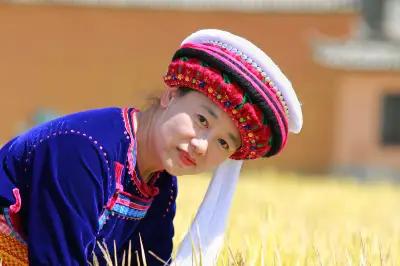
Not for Romance, But for Poetry and the Faraway! When Spring Flowers Bloom, Stroll Through the Colorful Clouds of Yunnan ~
Spring City Kunming | A riot of blossoms, ornate carvings and painted beams—anytime you wish to come is the right time
There are too many tales about Yunnan, some from friends’ anecdotes and online whispers, others from novels and TV dramas. The sheer number of legends can be dizzying, even hardening into stereotypes. Before this trip, my impressions of Dali and Lijiang were all about bars and chance romances, while Kunming was just a convenient “flower market” to pass through.
When I saw a Shenzhen–Kunming flight ticket for only 120 yuan, I immediately planned a trip to properly explore this city I had merely passed through before. Traveling in this unusual period means carefully studying and filling in all kinds of health codes—I’ll add travel tips later. Even once the pandemic has passed, these “travel hassles” will be a unique memory.
Kunming, nicknamed “Spring City,” has an exceptionally pleasant climate—very livable. While booking a guesthouse, I discovered that many local homes don’t even install air conditioners! In fact, most cities in Yunnan see little use of air conditioning. On the plateau, temperatures vary greatly between day and night; you can wear short sleeves during the day but need a thick quilt at night to sleep. Enviably, it feels like spring all year round here, with sunshine almost every day and different flowers blooming in every season. Anytime you wish to come is the right time.
I used to think of Kunming as a modern metropolis managing a complex ethnic minority region, but it’s also a cultural capital with a deep history. As early as 30,000 years ago, humans lived around Dianchi Lake. The Dian Kingdom was established in 278 BC, with a history spanning thousands of years.
Today, Dianchi Lake has become a city park on the outskirts of Kunming. Many locals bring their families here for leisure: feeding pigeons, flying kites, spreading a cloth on the grass, pitching tents, and picnicking with loved ones. Besides the nearly 100-yuan one-hour boat rides and the 20-yuan glass walkway, Haigeng Park along Dianchi Lake offers plenty of fun activities.
Most of the red-billed gulls that fly here from Siberia in winter have already left, but standing by the choppy lake and gazing at the Western Hills is still deeply soothing. There’s a beautiful legend about the lake’s formation:
A young hunter, searching for water, trekked all the way to the East Sea and happened to rescue the Dragon King’s third princess. The Dragon King wanted him as a son-in-law and turned him into a small yellow dragon, but the hunter couldn’t forget his wife back home. He drank enough water from the East Sea and secretly flew back to Kunming. However, his wife had already died of longing and turned into the Sleeping Beauty Mountain. Overwhelmed with grief, the hunter spat out the East Sea water, forming Dianchi Lake, and then crashed into the mountain to his death. From then on, the once-barren Kunming became fertile and beautiful, nourished by the lake.
Ancient cities and civilizations developed around water sources. Kunming’s urban area is crisscrossed by many waterways; the winding Panlong River flows into Dianchi Lake, and the culturally rich Guandu Ancient Town lies nearby. Originally called “Wo Dong,” Guandu was once a fishing village with piles of snail shells. Later, it became a treasured spot where high officials built villas and celebrities lingered.
Thriving since the Tang and Song dynasties, Guandu Ancient Town is a famous historical and cultural landmark in Kunming. On my first visit I noticed many temples: the Tang-era Tuzhu Temple, the Song-era Fading Temple, the Yuan-era Miaozhan Temple—and even a Shaolin Temple! Though the main streets and bar alleys were still quiet, girls in ancient costumes were already taking photos in front of the monuments, and many shops had opened.
Many Kunming delicacies carry the “Guandu” brand logo, showing how deep its influence once was. On a friend’s recommendation, I tried Li’s wheat cake (mai baba) and finally understood what “baba” really tastes like. You’ll also find intangible cultural heritage workshops here, such as “Yunnan Go,” “black copper with silver inlay,” “Guandu erkuai,” and “Yunnan opera lanterns.” A place so rich in culture deserves a leisurely visit—you can learn a great deal.
Beyond the distant Guandu, Kunming has several “old streets” downtown, close to modern commercial strips. Almost every city has at least one historic street. Some have been renovated to look fresh and neat; others have fallen into the “old town cliché”—a mix of bustling bars and coffee shops along with souvenir streets selling virtually the same items.
But strolling along Kunming’s old streets felt wonderful. The buildings aren’t so new that you doubt their history; the worn, mottled look is precisely their beauty. And there are no cookie-cutter mango, barbecue, or French fry stalls. Maybe Yunnan’s local snacks are more than enough! I genuinely feel that Kunming’s artistic flair isn’t put on—it’s etched deep into its bones.
Nanqiang Pedestrian Street is the best-preserved historic block in downtown Kunming. Most buildings are old courtyard homes from the late Qing and early Republic periods. You can find representative architectural styles like “one seal,” “three sections and one screen wall,” “four-horse chariot,” “quadrangle with a central courtyard,” “quadrangle with five courtyards,” and “six harmonies and one spring.” Many artsy boutiques have moved in, giving it the feel of a creative cultural park.
If you don’t want to trek to Dianchi Lake and prefer a city walk, Green Lake Park (Cuihu Park) is an excellent choice! Here you’ll find the same kind of red-billed gulls as at Dianchi, along with trees heavy with blossoms and refreshing bamboo groves. Crowds are fewer than at Dianchi, and there are fewer commercial amusements. A casual wander alone is completely delightful.
What surprised me most was that, though Yunnan is thousands of kilometers from Beijing, the architectural style of its ancient buildings is almost identical. Wandering in Cuihu Park, I felt as if I had stepped into an imperial garden. The exquisite carved beams and painted rafters, the imposing glazed tiles and red brick walls—all speak of this remote southwestern region’s prosperity and its very traditional cultural heritage.
Kunming has produced many notable figures, such as Zheng He, who sailed the western oceans seven times and visited 39 countries, and Nie Er, the people’s musician who composed our national anthem. While valuing education, Yunnan, with its many ethnic minorities and rich folk customs, embraces cultural diversity to a degree rarely seen in other provinces. So don’t be surprised by anything you encounter here. The architectural styles on old streets embrace everything, sometimes traditional, sometimes exotic. The cuisine can be salty or sweet, strong or mild. No matter where you’re from, you’ll find something to your taste.
Before leaving Kunming, I revisited the Jinma Biji Archway, a landmark I’d seen on a previous trip. The unique charm of the famous Jinma Biji Archway lies in a rare optical phenomenon known as “jin bi jiao hui,” when the golden horse and the green rooster appear to meet. Today, however, the “Golden Horse” and “Green Rooster” are no longer what they once were. Surrounded by a forest of steel and concrete, they have become a city square where tourists stop to snap photos.
The “Utopia” for the Unemployed, the “Peach Blossom Land” Written by Jin Yong: Those Stories Are Happening Here
Everyone dreams of “facing the sea, with spring blossoms”
How many people have come to Dali because of Jin Yong’s novels?
Dali’s landscapes, the history of the Nanzhao Kingdom—all shine with a special brilliance in Jin Yong’s writings. I still remember those stories of “Eastern Heretic, Western Poison, Southern Emperor, Northern Beggar.” The world created by martial arts novels is stunning, and the Dali I saw with my own eyes was no less so. Many may think of Dali as just a small city on the southwestern frontier, pushed into the limelight by viral photos, but Dali actually has a long history; it is one of Yunnan’s earliest cultural birthplaces. Since the 4th century AD, the Bai people have lived and thrived here. The Nanzhao Kingdom flourished in the Tang dynasty, and the subsequent Dali Kingdom (which was Duan Yu’s kingdom in the novel) ruled the region for over 300 years.
As a mysterious “utopia” on the border, Dali is also a hot spot for inspiration in fantasy dramas and games—for example, Zhao Ling’er from The Legend of Sword and Fairy, who was the princess of Nanzhao. Looking back at her costume design now, you can see distinct ethnic and exotic elements.
This “frontier city” in the southwest is actually quite prosperous
Because Yunnan produces tea, Dali naturally became an important stop on the Ancient Tea Horse Road. Historically, Dali Ancient Town was very prosperous for a long time. Unlike those “Instagrammable ancient towns” deliberately preserved for tourists, Dali Ancient Town is genuinely the idyllic paradise with mountains, water, and homes found in Qiong Yao’s novels. The Bai people’s traditional houses reflect their wealth. Beyond white walls and gray tiles, gables and roof corners are decorated with ink-wash patterns. Each family’s screen wall, inscribed with ancestral teachings, is more impressive than the next. The main house usually faces east, the rooms are spacious and comfortable, every household has running water and grows flowers. No wonder people say Dali is livable. The Bai people, with their home-loving mentality, have been meticulously cultivating this place for generations, naturally attracting hearts from afar.
Due to the pandemic, the once-bustling ancient town has quieted down, making it easier for travelers from afar to see its true character. While you can find some well-known hipster-brand boutiques, and many bars and cafés along the commercial streets, there are genuinely local residents living here, with hospitals, supermarkets, primary and secondary schools, and kindergartens. Some tourists might find the undeveloped parts of town “a bit boring,” but I personally prefer these corners seldom visited by tourists—after all, this is the real Dali. I hope this living ancient town won’t be over-developed into a scenic spot where visitors merely go to drink and party in a different setting.
A paradise that fulfills the fantasies of the “unemployed”
When planning my Yunnan itinerary the last time, I deliberately skipped Dali because I feared it would be too artsy, full of unrealistic fantasies—afraid it really was that “utopia” detached from worldly life, as described in literary youths’ writings. But once I gathered the courage to go, I realized I had worried too much. Dali is neither that “good” nor that “bad.” It is indeed artsy, but also very down-to-earth. Whether for renewal or escape, it embraces many creative “ambitious youths.” Most come from big cities under immense life and work pressure. When they arrive in Dali, they discover what real life is and fall deeply in love with the Cangshan Mountains and Erhai Lake, unable to tear themselves away. They resolutely quit their jobs to start businesses in Dali.
There are many stories like this. Dali, striving to develop tourism, gives them enough space and opportunities. Led by Tina, I visited a creative cultural park transformed from the old Dali Bed Sheet Factory. I saw ads for X-Travel and a bookstore called “Dolphin Ade Bookstore,” which reminded me of the Seagull Bookstore in Tokyo, Japan. The slogans on the posters are all catchy: “Life can be cooler, start in a different way,” “Everyone holds a dream in their heart”… And the works of artisans—many designs and brands feel very “high-end.” Perhaps Dali’s bright sunshine and fresh air give the so-called “unemployed” endless inspiration for life and creation.
Most of these entrepreneurs in Dali are not pure “businesspeople.” Conversations reveal their inner pride; many invest without counting costs, simply to realize a dream. For instance, my old friend “Princess” and her artist husband sold their house in Xiamen, quit their stable jobs, and have been running a guesthouse in Dali for many years. They have now developed an original brand that is both practical and beautiful.
And a new friend I met this time: the owner of Yueshan Yiju Pastoral Guesthouse. She’s from Guangdong, and during a gap-year trip she met her husband. They now run this guesthouse that blends log cabin style with Bai ethnic characteristics, offering a warm, family-like pastoral stay. Most rooms are suites with living rooms, and outside the unobstructed floor-to-ceiling windows, beyond the green rice paddies and vegetable gardens, stretch the vast Cangshan Mountains and the beauty of the ancient town. They also have a uniquely designed “starry sky room”—at night, you can open the roof curtain and directly gaze at the moon and stars. Though it’s a short distance from the ancient town, it absolutely qualifies as a top-quality guesthouse that gathers Dali’s “wind, flowers, snow, and moon.”
Welcoming and seeing off guests, embracing tea and flowers
Dali exerts such a strong pull on outsiders mainly because of its inclusive “great tolerance.” Many assume that ethnic minority areas resist other cultures, but I was truly amazed by how Dali “almost indiscriminately” absorbs cultures from everywhere. Wandering in the ancient town, I felt inexplicably that Bai houses and the town’s waterways resembled those of Jiangnan’s Huizhou region—the same high-walled courtyards, intricate carvings, and little bridges over flowing streams.
At the “Ru Shi” coffee shop in the ancient town, a sip of “osmanthus fermented rice wine” revealed a wonderfully integrated fusion of East and West. And then there’s the mosque and Catholic church standing prominently on the main street, representing the town’s long-standing openness to and embrace of foreign cultures.
It’s said that whenever guests arrive, hospitable Bai families prepare the “Three Courses of Tea.” Dali’s flowers aren’t just for admiring; many locals use flowers as ingredients to create seasonal delicacies.
Dali’s cuisine mostly uses fresh ingredients from the mountains and fields, with locally inspired creativity. Milk is made into “rushan” (milk fan), the unique local “sea cabbage flower” becomes a dish called “water-like willowweed,” along with seasonal wild mushroom fried rice, beef, and roast duck recipes adjusted to circumstances and guests’ preferences—the taste is fresh, crisp but not greasy. This time, Tina led me into private kitchens hidden in the streets and alleys, where I tasted Dali’s distinctive and unique cuisine.
Happiness is having something to do, someone to love, and hope
It’s a love and reflection on life
Cangshan Light Hiking | Trekking 20 km, Wandering the Heights of Cangshan, Enjoying Wind, Flowers, Snow, and Moon
When in Dali, you must understand the “wind, flowers, snow, and moon”—not the love or chance romance chased from afar, but the actual landscape: Xiaguan’s wind, Shangguan’s flowers, Cangshan’s snow, and Erhai’s moon. I had always heard about Erhai Lake in various tones, all deeply literary, but few ever mentioned hiking Cangshan. In fact, touring Cangshan is no less impressive than cycling around Erhai!
This time I stayed at the Dali Shili Hilton Hotel at the foot of Cangshan. They thoughtfully offered guests a choice of nearby excursions, one of which was a “light hike” on Cangshan. I put that in quotes because, for someone like me who rarely exercises, nearly 20 kilometers of climbing and hiking was a bit tough, but fit people might find it a piece of cake—the vast Cangshan truly welcomes everyone to challenge it. I’ve heard that hiking wild trails is even more exciting!
We started from Gantong Temple near the hotel. The temple has a long history and an excellent location right by the mountain gate. Due to the pandemic, it was temporarily closed to the public, but some pilgrims still reside there, surrounded by blossoms and curling kitchen smoke. Further up is Jizhao Nunnery, whose vegetarian dishes are famous far and wide. Apart from worshipping the village’s local god (benzhu), most local Bai residents are devout Buddhists, so temples and nunneries thrive with incense.
Jin Yong mentioned the “Ingenious Chess Game” in Demi-Gods and Semi-Devils, and such a chessboard truly exists on Cangshan. Although for visual effect it’s changed from Go to Chinese chess, the figures of Qiao Feng, Duan Yu, and Xu Zhu playing against each other still fulfill martial arts fans’ dreams. Unsure if to compensate for the difference, many trees planted by Go masters stand beside the chess game; now that the trees have grown into a forest, they incidentally fulfill Go enthusiasts’ dreams as well. At first I was puzzled, until I saw the Ingenious Chess Game right before me—then it dawned on me instantly. I really haven’t read enough novels…
Cangshan has 19 peaks and 18 streams, meaning where there are two peaks, a stream inevitably cascades down. Being able to drink the pure, clear Cangshan water is a point of pride for Dali locals. And among these streams, Qingbi Stream ranks first; it’s a major attraction along Cangshan’s Jade Belt Road. No entrance fee is required for spots below Qingbi Stream—perhaps to accommodate local pilgrims who come just to worship, which also confirms its importance.
Where streams flow, you’ll see suspension bridges—both the plain, simple “Divine Crossing” bridge and one spanning Qingbi Stream covered with blessing ribbons and love locks. Perhaps because visitor numbers have dropped significantly, an Instagram-famous photo spot that originally had a fee sign was unmonitored, and you could take photos freely! So when traveling, you really need to seize the right moment.
The hotel prepared a nutritious lunch for guests on the light hiking experience, allowing everyone to recharge promptly—very thoughtful! The Dali Shili Hilton Hotel is truly the best Hilton experience I’ve ever had. The hotel is backed by Cangshan, faces Erhai Lake, and is close to the ancient town and Dali University—an excellent location. Rooms feature many distinctive decorative details, are fully equipped, and the bedding is soft and comfortable! In the morning, you can watch a beautiful sunrise right from your balcony.
Given its resort location, the hotel’s leisure offerings are strong. Not only does it organize nearby excursions, but it also provides family experience packages, including cooking classes for Bai specialty snacks and workshops on local handicrafts. Even if you don’t leave the hotel all day, you’ll be delightfully occupied. The restaurant serves a great variety of cuisine, with different “chef’s recommendations” each season, ensuring surprises every visit!
I learned to make “watery bean powder” with the chef—a special snack I had never tasted before. Having a local guide to lead the way is the only way to eat authentically!
With over 300 sunny days a year, Dali’s brilliant sunshine nourishes an abundance of blooming flowers and fascinating plants and animals on Cangshan! As we strolled along the Jade Belt Cloud Tour Road, we finally relaxed and began observing the details around us intently. Our handsome guide Thomas introduced many unusual-looking plants, turning the mountain into a living encyclopedia of flora and fauna. Truly, traveling ten thousand miles is far more memorable than reading ten thousand books.
What’s more, Cangshan is also a geological encyclopedia. Over two billion years of sedimentation have made its landforms diverse, precious, and worthy of study. After all, the “Dali stone” (marble) widely used in decoration and art carving indeed comes from Dali. During the cloud tour, we could overlook panoramic views of the ancient town and the new city. The scenery from above is truly beautiful—it’s just that I really hadn’t hiked so earnestly in a long while…
Actually, Cangshan’s scenic area is rationally designed, offering a choice to climb or not to climb. Several cable cars connect the major attractions, and the Jade Belt Road, which offers expansive views, is at an altitude of 2,600 meters yet completely flat, so you don’t have to endure the “pleasure” of going up and down, making it less tiring. Along the way, pretty pavilions appear at intervals for hikers to rest—very considerate.
Our “light hike” ended at Zhonghe Temple. Unlike Gantong Temple, this is a Taoist temple dedicated to the Jade Emperor. The Zhonghe cable car for descending is very special; it lacks those annoying glass shields that separate you from nature, providing a 360-degree view perfect for photography. It looks a bit thrilling, but the car isn’t too high off the ground, so it’s not that scary in practice. Highly recommended! The fare is not expensive, making it an exceptional value!
Happiness is having mountains, having water, having human habitation
It’s holding your hand, with spring blossoms
Circling Erhai Lake | Set Aside Those Melodramatic Words and Rediscover Erhai
Whenever I see those sentimental pieces that suddenly veer into emotion and dreams, they always feel unreal. People with fragile souls see a fragile world wherever they flee. The same place reveals a thousand different faces. In my eyes, Dali has no heavenly ladders, no rainbow bridges, no glass balls, nor colorful glass bottles or long tables. The real Dali is already rich and interesting enough—no need to embellish.
Dali is a mature travel destination and knows exactly what photo-obsessed tourists like. Instagrammable shooting spots are everywhere, and owners charge a fee for photos. These setups can be found anywhere; as long as you have a river, lake, or sea as a backdrop and good weather, you can take beautiful pictures. Coming all the way to Dali just to use the fairy-like Erhai Lake as a photo background is a total waste.
I’ve always been interested in folklore and religion. Since I was in the Bai Autonomous Prefecture, I wanted to learn about its unique local customs. The Bai people have lived around Erhai Lake since ancient times, and Xizhou Ancient Town preserves many traditional Bai buildings, making it a must-see stop when circling Erhai. We started exploring from Zhengyi Gate. Honestly, if no one said it was a Bai village, at first glance you’d think it was a Jiangnan water town.
At Tina’s urging, I tried Xizhou’s grilled erkuai. Its shape is somewhat similar to rushan, but one is savory and the other sweet—very different. I loved the cute shape of the erkuai puffing up as it grilled. Locals have so many ways to cook rice products like erkuai and ersi that you could eat them for days without repeating.
Xizhou Ancient Town has courtyard compounds of several large families, built by the wealthiest merchants of their time. Among them, the Yan Family Courtyard, constructed in 1907, is now a paid attraction open to visitors. The walls around the central square are covered with black-and-white historical photos—precious memories of the town’s journey from liberation to development.
This once-Instagram-famous spot has become especially tranquil after the pandemic. Only a few shops along the main street were open. Compared with Dali Ancient Town, the shops here have more unique personalities; you won’t find ubiquitous souvenirs but rather many original-design boutiques with no other branches.
One such shop is “Bo Ji Zai,” filled with intangible cultural heritage items like Bai-style jiama prints and wool felt crafts. It has three stores only in Xizhou, with no online shop; they promote experiential business. Drop by to sip tea or coffee, learn to print woodblock prints with a teacher, and make a craft by hand from those jiama prints hidden in Bai villages, brimming with blessings, to take home.
Even though the rapeseed flowers had already gone to seed, the vast fields against distant red walls still formed a beautiful picture. The Pessoa Pastoral Coffee faces lush, boundless fields. With unobstructed front-row views and high-quality drinks, it has become an Instagram-famous coffee shop everyone must visit in Xizhou.
Due to the sharp drop in tourists, what was once an Instagram hotspot where people always had to queue for photos now had nobody, letting you take pictures to your heart’s content. And the flower carriages that roam the alleys apparently had to lower their prices. Though some houses in the ancient town have been converted into guesthouses, many locals still live in Xizhou. Seeing aunties with baskets on their backs, buying and selling vegetables, exudes a strong everyday life vibe.
Many visitors to Dali choose lake-view guesthouses. On online platforms, Shuanglang is the most visible, with plenty of options and gorgeous photos. But when I arrived at Shuanglang Ancient Town, I found a really huge gap between fantasy and reality. Just like some “stories” written by literary youths, when a lie is exquisitely polished, even the teller believes it. The town is densely packed with houses, most of them guesthouses. Space is cramped, and except for a few on the outer edge, the “lake view” in most “lake-view guesthouses” is only visible if you stand on the rooftop and look far into the distance…
If you want to stay by Erhai Lake, there are actually more options. For instance, the Dali International Hotel, located in the urban area just a 10-minute drive from the train station. Though in the heart of the city, it’s secluded and quiet. Through floor-to-ceiling windows in your room, you can enjoy a 180-degree view of Erhai Lake. The suites even provide a telescope. The view is no worse than those “lake-view inns.” The hotel is fully equipped, the overall design understated luxury, predominantly local Bai style, suitable for both business and leisure. Even during the pandemic period, the specially provided meals were sumptuous, brimming with rich Dali ethnic charm.
Today, Erhai Lake puts environmental protection first, and many areas are closed to tourists. But the sections we could access offered beautiful scenery—mostly seamless sea and sky, the water so blue it refreshes the spirit. Children can find shells and catch small fish on the shore. Instruments and facilities for water purification are visible everywhere.
Yang Xing told us about the Third Month Fair, a grand Bai celebration held from the 15th to the 21st of the third lunar month each year. Unfortunately, I couldn’t participate in this big festival this year. But I’ve always been curious about the local Bai people’s beliefs. Seeing Bai grannies (niangniang) take a small boat to Little Putuo Island to worship their village’s god, I wanted to see the gods of different villages.
Thomas took us past South Village, a new socialist countryside covered in hand-painted graffiti. The entire route was full of surprises. Finally, we discovered that their benzhu temple is located inside the village committee. Even the courtyard wall next to the temple was painted with legends about the god. In fact, the Bai people’s benzhu is the protective deity of the village. The temple is much like an ancestral hall, except that besides ancestors, numerous deities are also worshipped there.
Erhai Lake holds many stories—not the trite tales of career setbacks or romantic disappointments, but wonderful legends of the Great Black Heavenly God, the Golden Mushroom Maiden, the Snow Mountain Prince… Those centuries-old blessings help visitors appreciate this optimistic ethnic group more. Learning gratitude and reverence lets you truly understand what a happy life means.
Happiness is wishes, blessings, and love
It’s the image of you praying devoutly for me