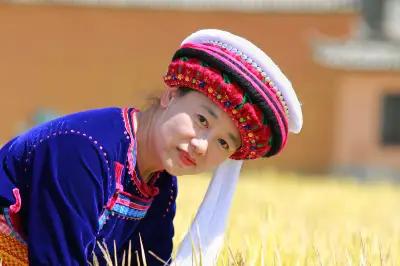
【Yunnan Travel Guide】Yunnan Travel Guide ❤ Yunnan Travel Guide
In the colorful clouds of Yunnan, a 7-day trip to Dali, Lijiang, and Shangri-La: the sky within reach, layers of white clouds, dazzling rainbows, where the warm sun I love so much shines all year round... There is an old tree with twisted roots, surrounded by a flower bed where Naxi elders sit. They sit with a calm demeanor, like meditating. The blade of time has transformed into something intangible on them, like rain falling on mud, moistening the soil, whitening their hair... Summer has arrived, and the whole country has become a big furnace, but there is one place where flowers bloom like spring, the sun shines like summer, yet it's not too hot, and there's no rush. If you happen to have 7 days this summer, why not come here to escape the heat and busyness, and leave behind the most beautiful scenery and memories in the sun, cool and leisurely.
Accommodation: Youth hostels, guesthouses
- Dali: Light of the Journey Women's Theme Youth Hostel (highly recommended, great price, great service, excellent photo tour!)
- Lijiang: Han She Guesthouse (highly recommended! Very affordable and attentive service)
- Shangri-La: Dream Seek · Meet Guesthouse
Equipment:
1. Mobile phone, ID card, wallet (mobile payment is very convenient in Yunnan, no need to carry too much cash), power bank, charging cables
2. Backpack: Reminder: Lijiang Old Town, Lugu Lake, and Shangri-La Old Town are all full of stone slabs. Suitcases are not recommended unless you stay in one guesthouse without moving. I was glad I carried a backpack—all my gear for the 7-day trip fit in a 40L backpack.
3. Clothing: In June, the temperature in Lijiang ranges from 15–28°C, while in Shangri-La's Potatso, it's about 10°C lower. If you only go to Lijiang and Lugu Lake, there's no need for a thick jacket. I brought 7 outfits for the 7 days: 2 short-sleeve T-shirts, 2 medium-sleeve shirts, 1 sun protection jacket, 2 dresses, and 1 windproof and waterproof thick jacket. Short sleeves are just right during the day; in the evening, a thin shirt is enough. The thick jacket was only worn for half a day at Potatso in Shangri-La, and I regretted carrying it along because you can rent warm clothes there. Also, shoes are important: the stone streets in the old town are hard to walk on. If you go to Shangri-La and need to hike Tiger Leaping Gorge and Potatso, it's best to wear sports shoes. I also brought a pair of sandals.
4. Cosmetics and toiletries: small bottles (30ml) of shampoo and body wash, Shiseido sunscreen (essential—UV is strong, must use when outdoors), facial cleanser, makeup remover, primer, loose powder, lip balm—I brought all of them! Is that too much? If you're not fussy, I don't recommend carrying so many cosmetics because they are really heavy. Since staying in guesthouses, I brought 2 towels and 1 quick-dry towel (essential for long hair).
5. Medicine: essential balm, berberine, Claritin. Each medicine was packed separately in a plastic bag for emergencies. I'm prone to allergies, upset stomach, and mosquito bites—what a trouble I am!
6. Umbrella: mainly used to block strong UV rays, occasionally for rain. Rain in Lijiang comes suddenly, with heavy drops.
We had long wanted to travel to Yunnan, but transportation from Nanning to Dali and Lijiang was really inconvenient—either direct flights were too expensive, or the transfer via Kunming to train was too troublesome. However, this year! Dali opened a direct bullet train to Nanning! Over 7 hours across South China straight to Dali! So happy! So we just went for it~~~
Day 1
After getting off the bullet train, we took a Didi ride to the youth hostel. Our Yunnan trip started at Light of the Journey in Dali~~~ After checking in and unpacking, it was already past 5 PM. On the owner's recommendation, we found a very tasty cold chicken rice noodle shop to fill our stomachs, then started exploring the old town.
Dali Old Town
Located at the foot of the beautiful Cangshan Mountain, Dali Old Town was the capital of the ancient Nanzhao Kingdom and Dali Kingdom. It's a place for living: locals rise with the sun and rest with it, spending their free time raising flowers and basking in the sun—very peaceful. Fuxing Road is the most bustling pedestrian street, lined with shops selling marble carvings, ethnic costumes, and local specialties. You can wander through the shops looking for small ethnic items, and when tired or hungry, roadside snack shops offer local delicacies. Or you can walk into an open courtyard of a local house and chat with an elderly Bai woman doing handicrafts. Wuhua Tower, Dali City Museum, and other attractions are also worth visiting.
Old Town Nightlife
At night, you can join the locals gathering around Yangren Street and Renmin Road, where there are countless bars and small cafes, some with live singers or impromptu performances by tourists—very lively.
PS: In recent years, Dali has been undergoing renovations, with sewage pipes being dug up everywhere, so some roads are difficult to walk on, but it doesn't affect travel much.
Day 2
Convertible Jeep tour around Cangshan and Erhai—taking photos all the way~ Yunnan Travel Guide (There are many photo tour packages; we chose the 4-person group, and the other two girls were art students—very pleasant to look at~) PS: Four people per car, the driver also acts as photographer, and you can choose a free dress for photos (or bring your own; there are places along the way to change clothes. Girls who need a dress from the hostel should get up early—many people pick dresses, first come, first served for the fairy dresses~)
When visiting Dali, most people choose to rent a car, carpool, or rent an e-bike to circle Erhai. But the full circle is over 100 kilometers; renting an e-bike is very unsafe, and driving a car prevents you from fully enjoying the scenery. So choosing a carpool photo tour is a good option—convenient, safe, and you get a set of beautiful photos.
That morning, we gathered at 9:00 AM, set off around 9:30 AM, and drove to the group photo spot. The car convoy was super cool~~~ Yunnan Travel Guide Yunnan Travel Guide
We returned to the hostel after 6 PM, very happy. We went out for a hotpot, then listened to songs on Renmin Road. A fulfilling day passed beautifully~
Day 3
Cangshan Mountain
We woke up naturally, and on the recommendation of the hostel guy, we set off for Cangshan. The Snow of Cangshan, one of Dali's four wonders (wind, flowers, snow, moon), is not to be missed. Tickets bought at the old town tourist center are cheaper than at the site, and they include transport—very cost-effective. Taking a taxi costs about 10 yuan. If your health allows, I recommend the Ximatan Grand Cable Car. Transfer at the Seven Dragon Girl Station; it's best to go to Ximatan first because the park decides the closing time of the Ximatan cable car based on weather. On our day, it was announced that morning that the cable car would close at 1 PM. After getting off the cable car, we continued climbing. At an altitude of 3966 meters, the scenery became even more beautiful, with lush vegetation and blue sky—don't forget sunscreen! Climb slowly, rest to regulate breathing, and use oxygen if uncomfortable. We didn't see snow that day, but it was still worthwhile—we saw Ximatan like a mirror, with white clouds reflected on the water, beautiful. After visiting, we took the cable car back to Seven Dragon Girl Station and visited Seven Dragon Girl Ponds, which are also beautiful. Since we had to hike down, we bought an e-tram ticket if tired. It's worth seeing.
After descending, we went to the "most beautiful nunnery in China"—Jizhao Nunnery, recommended by the guy. There were tons of succulents, my best friend's favorite, and we took countless photos. I heard the vegetarian meal is good, but we missed it. If you come early, you can borrow tea sets and have tea there—very pleasant.
Three days passed quickly: we visited the old town several times, enjoyed the beautiful scenery of Erhai and Cangshan, left the best images, ate Xizhou baba, braised meat rice noodles, and chicken hotpot. Now it's time to say goodbye to Dali. Next stop, Lijiang.
Day 4
Lijiang Han She Guesthouse
Lijiang Han She Guesthouse 100+ per night
Lijiang is home to famous attractions like Jade Dragon Snow Mountain and Lashihai. After checking into our guesthouse, we went to the popular attraction—Lashihai Cloud End Club. It includes boating on Lashihai, horse riding on the Ancient Tea Horse Road, eating chicken hotpot, and taking photos at the club.
Lashihai is Yunnan's first nature reserve named "wetland." Although the name contains "sea," it's actually a body of water in Lashiba at the foot of Jade Dragon Snow Mountain. Since Lijiang is inland and has no sea, larger lakes are often called seas. Around Lashihai are many horse farms with wide views, where you can experience riding galloping on the prairie and enjoy the scenery of Jade Dragon Snow Mountain.
Lijiang Dayan Old Town
At night, we strolled through the old town. Lijiang, this city of one-meter sunshine, was once a dream for many travelers. In recent years, it has faced criticism due to commercialization and its reputation as a "city of romance," but it remains beautiful—the scenery is still there; it's just that different people see different things. Standing on the observation deck overlooking the old town at night, I couldn't help but feel emotional, immediately setting aside my prejudice against Lijiang and accepting this beautiful place. I think there are a thousand Lijiangs in a thousand hearts. Lijiang is lively—partying all night with people from different cities, getting drunk and sleeping; Lijiang is gentle—embracing your joys and sorrows, melting away your shackles; Lijiang is quiet—small bridges, flowing water, idling in the old town with sunlight filtering through clouds... Life here is very simple yet very rich...
Day 5
Jade Dragon Snow Mountain
Yunnan Travel Guide
Jade Dragon Snow Mountain, called "Oulu" in Naxi language, is a mountain integrating subtropical, temperate, and cold landscapes. It is said to be the incarnation of the Naxi protector god "Sanduo," so it is regarded as a sacred mountain by the Naxi people. The cable car takes you to an altitude of 4506 meters, and the rest you must climb step by step to the highest point of 4680 meters. From the observation deck, the snow-capped peaks standing in the sky are spectacular. In addition, you can get up close to ice and snow.
Tips:
1. After entering the Jade Dragon Snow Mountain scenic area, take the eco-bus to the big cable car parking lot; to go up the mountain, you must take the big cable car.
2. The entrance fee and the big cable car fee are separate. You must queue early to buy big cable car tickets! It's best to book the big cable car ticket one day in advance; otherwise, queuing may delay your schedule. Choosing a day tour can save a lot of trouble; the next day you can go directly to the cable car line, saving time for sightseeing.
3. There are no dining facilities on the mountain, so bring some dry food for emergencies.
4. If it's November to March with more snow, you can also go to the ski field—this is also the best time to visit Glacier Park.
【Blue Moon Valley】
Blue Moon Valley is a famous love destination, including four lakes: Yuye Lake, Jingtan Lake, Blue Moon Lake, and Tingtao Lake. Looking from a distance, it's like a blue gemstone lying among the mountains. Photos taken here with the scenery and people are super good without any post-processing, plus the surrounding green and yellow layered forests and the snow-capped mountains... The mysterious colors of Blue Moon Valley will leave a lifelong impression.
Tips:
1. From Jade Dragon Snow Mountain, take the eco-bus to Blue Moon Valley. The bus first passes Yunshanping; if you want to visit Yunshanping, plan your time (1–2 hours). If time is tight, go directly to Blue Moon Valley.
2. Within Blue Moon Valley, you can take an electric cart between attractions for an extra 50 yuan. Usually, walking takes about 40 minutes.
3. There are many restaurants in Blue Moon Valley, usually serving hotpot or stir-fry.
Blue Moon Valley was formerly known as "Baishui River," located in the valley north of Ganhaizi and south of Yunshanping at the eastern foot of Jade Dragon Snow Mountain. It originates from melting snow, flowing down cliffs, gathering into streams, and eventually forming a crystal-clear river in the deep valley upstream of Blue Moon Valley. On sunny days, the water is blue, and the valley is crescent-shaped, looking like a blue moon at the foot of Jade Dragon Snow Mountain—hence the name Blue Moon Valley. Due to the terrain, it forms four large water bodies: Yuye Lake, Jingtan Lake, Blue Moon Lake, and Tingtao Lake.
A day is enough to visit Jade Dragon Snow Mountain, costing about 500 yuan total. Prepare cold-proof clothing and oxygen bottles.
After getting off Jade Dragon Snow Mountain, since we had booked a bus ticket to Shangri-La at 5:10 PM, we hurried back to the guesthouse to pick up our luggage and rushed to the bus station. This was the last bus to Shangri-La, a nearly 5-hour journey passing by Tiger Leaping Gorge, with spectacular views.
Day 6
We arrived in Shangri-La very late and started sightseeing the next day. First, we visited Songzanlin Monastery.
Ganden Sumtseling Monastery
Yunnan Travel Guide
Outside the monastery, you can see its golden roof, which looks magnificent. When sunlight shines, it's even more dazzling. The guide told us that the first part of money earned by Tibetans is usually donated to build monasteries, and Tibetans take pride in having family members become monks, so Songzanlin Monastery is well-built. As for taboos when visiting, the guide will remind you. I think listening to the guide's explanation gives you a general understanding of Tibetan Buddhism—it's worth listening to. So, please avoid loud talking and taking photos inside the monastery; listening to the explanation may give you different insights. Even if you're not a believer, respect and understanding are important. If you wish, you can light a butter lamp or burn incense.
At night, we explored Dukezong Old Town, which is quieter and more leisurely than Dali and Lijiang old towns, with a unique Tibetan cultural atmosphere.
Day 7
The next day, our main itinerary was to visit Potatso National Park. We arrived at the Shudu Lake observation deck and enjoyed the lake view.
Potatso National Park
Yunnan Travel Guide
Then we took a bus through the primeval forest and pastures, with the guide narrating along the way and stopping at main attractions for photos. Finally, at Bita Lake, we chose to hike to enjoy the beautiful scenery along the way. Lucky visitors can even feed small squirrels. We felt our stamina was enough. If traveling with elderly people or those with severe altitude sickness, I recommend taking a boat for a short section (50 yuan ticket), which is acceptable.
After visiting Potatso National Park, we concluded all the sights of our two-day Shangri-La trip. Finally, we visited a Tibetan house—those who own such houses are really wealthy. The all-wood structure, huge living room—it must be worth tens of millions of yuan in the city. (Wow, forgive me for being so unsophisticated, haha)
At around 6 PM, we took a bus from Shangri-La to Dali to catch the bullet train back to Nanning. With limited time and not wanting to rush, we had to give up some destinations we also longed for, such as Lugu Lake, and we didn't fully enjoy the grasslands of Shangri-La. These are small regrets, but they also give us a reason to come again! Colorful Yunnan, looking forward to seeing you again~