2020 Dali May Day Holiday Independent Travel Guide
Dali, a beautiful city, with “Xiaguan Wind, Shangguan Flowers, Cangshan Snow, Erhai Moon” drawing countless visitors to savor its beauty. Dali is also crowned by artsy youth as the “Utopia of the East.”
In 2020, the novel coronavirus swept across China. The entire nation united in fighting the epidemic. Now the domestic outbreak is effectively under control; all industries await revival and are gradually resuming work and production in an orderly manner.
This year's “May Day” holiday seems to come a bit sooner than usual. For most people, it arrives shortly after returning to work from the prolonged epidemic break. So here, the editor shares a Dali “May Day” travel plan for your reference.
On May 1 and May 2, the weather is fine, sunny turning to partly cloudy. Daytime temperatures hover around 22°C, nighttime around 12°C. From the 3rd to the 5th, there will be light rain, with daytime temperatures about 22°C and nighttime around 14°C. Before setting out, pack extra warm clothing to prevent catching a chill, and bring rain gear for unexpected showers. When it’s sunny, the UV rays in Dali are strong—sunscreen is a must. The editor has always used Invisible Zinc sunscreen; you can consider it too. Dali boasts many scenic spots, so beautiful photos are a must. Therefore, remember to pack good-looking outfits for photos. The ancient town also sells vintage-style clothing, perfect for capturing shots in Dali Ancient Town.
1. Leisurely afternoon tea, enjoy Dali’s slow-paced life!
Stroll along the bluestone streets, pick a cozy café, order a dessert and a freshly brewed Yunnan small-grain coffee, switch off your phone, and daydream quietly as you watch passersby saunter past. Haven’t you longed for such alone time? Sweet Dessert House on Bo’ai Road, the No.88 Bakery on Upper Renmin Road, and Tangka on Lower Renmin Road are all great cafés.
2. Cycle around Dali, feel the exotic local customs among Bai-style dwellings.
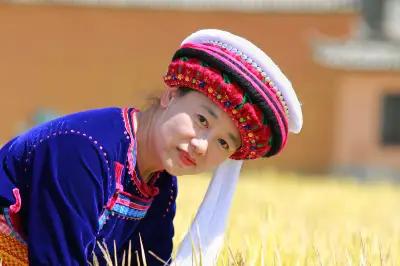
If you’re in good shape, rent a bicycle; if a bit less fit, an electric scooter will do—provided you can ride it safely. Dali is a multi-ethnic city, predominantly Bai. Bai architecture features blue-tiled roofs and white walls. Amid the villages, under blue skies and white clouds, the landscape paintings and calligraphy on Bai screen walls make the scene incredibly picturesque.
3. Face the sea, admire the moonlight and starry sky.
When in Dali, plan one day to experience a lakeside inn by Erhai. With spring flowers in bloom, face Erhai, open a bottle of red wine, and with your loved one, listen to the waves, enjoy the moon and stars, and revel in a romantic “wind, flowers, snow, and moon” moment!
Dali Ancient Town was first built in the 15th year of the Hongwu era of the Ming Dynasty (1382 AD). It is also known as Yeyu City, the Forbidden City, and Zhonghe Town. A moat surrounds the town; inside, the streets follow a classic chessboard layout, and all buildings have uniform blue-tiled roofs, exuding antiquity. Wuhua Tower is the landmark of Dali Ancient Town, with a history tracing back over 1,200 years. Destroyed and rebuilt several times, it has weathered a millennium. The current Wuhua Tower was reconstructed in 1998; standing atop it offers a panoramic view of the town.
Cangshan, west of Erhai, is also called Diancangshan and was historically known as Xiongcangshan or Diancangshan. It is the main peak at the southern end of the Yunling Mountains and is famed for its clouds, snow, springs, and rocks. Cangshan has 19 peaks, running from north to south: Yunnong, Canglang, Wutai, Lianhua, Baiyun, Heyun, Sanyang, Lanfeng, Xueren, Yingle, Guanyin, Zhonghe, Longquan, Yuju, Malong, Shengying, Foding, Ma’er, and Xieyang. The highest, Malong Peak, reaches 4,122 meters. Between each pair of peaks flows a stream, cascading eastward into Erhai—these are the famous 18 Streams of Cangshan. The lower Cangshan area near Xiaguan has been developed into a scenic zone, featuring sights like the Yudaiyunyou Hiking Trail, Gantong Temple, Zhonghe Temple, Qingbi Stream, and the Zhenlong Chess Formation. Other areas remain undeveloped. The Yudaiyunyou Hiking Trail is a popular route among hiking enthusiasts.
1. Cangshan can be seen from around Erhai. For a closer look at its grandeur, take a cable car up to Zhonghe Temple.
2. When visiting Cangshan, there is an entry fee of 40 yuan. You can have a local guide you in for 20 yuan. It’s recommended to take the Gantong Cable Car (one-way) instead of the smaller cable car, then walk along the Yudaiyunyou Hiking Trail to the smaller cable car station and hike down. On the descent, you’ll also spot the Tianlongbabu Film City, and the views are great, with Dali Ancient Town and Erhai visible in the distance.
Erhai was anciently called “Yeyu Water,” also known as “Xi’er River” and “Kunmi Chuan.” It is a highland lake formed by the subsidence of the Xi’er River, shaped like an ear. From above, it looks like a crescent moon, resting quietly between Cangshan and the Dali Basin. Erhai features three islands, four islets, five lakes, and nine bends. Its crystal-clear waters have earned it the age-old reputation as “the flawless jade among mountains.” Boat tours of Erhai are available from Dali Port in Xiaguan Town.
Cost: Erhai cruise 145 yuan/person (includes Nanzhao Customs Island ticket and Bai Three-Course Tea song-and-dance performance).
Getting there: Taxi from Dali Ancient Town to Dali Port costs about 40 yuan.
Xizhou is an important Bai settlement. Historically, it was a military stronghold of the Nanzhao Kingdom and a commercial hub in Yunnan. Xizhou borders Erhai to the east and leans on Cangshan to the west, preserving the largest and best collection of Bai residential architecture, all built in the “three houses and one screen wall” and “four courtyards and five skylights” Bai courtyard style. These dwellings feature carved beams, painted rafters, and layered bracket sets, with vibrant decorative paintings on gate towers, screen walls, and gables. Famous examples include the Yang Pinxiang Residence, Yan Family Courtyard, and Hou Family Courtyard, which blend traditional Bai features with Chinese and Western architectural techniques.
Shuanglang, anciently called “Shuanlang,” lies by Cangshan and Erhai. It enjoys the benefits of fishing and boating, plus the enchanting sights of “wind, flowers, snow, and moon,” earning it the phrase “the best of Cangshan and Erhai is in Shuanglang.” The area includes Yuji Island and Nanzhao Customs Island scenic spots. Yuji Island boasts well-preserved Bai dwellings and attractions such as Yubo Pavilion, the late-Qing peasant uprising leader Du Wenxiu’s naval barracks, the Zhao Clan Ancestral Hall, Yuji Nunnery where Yang Guixian (wife of Dali Kingdom founder Duan Siping) practiced Buddhism, an ethnic cultural square, and a thousand-year-old banyan tree. You’ll also see the unique homes of renowned dancer Yang Liping and young painter Zhao Qing. On Nanzhao Customs Island, you can witness the 17-meter-tall white marble Guanyin worshiping Maitreya Buddha Mountain—a marvelous sight.
Chongsheng Temple faces Erhai to the east and backs onto Cangshan to the west. It symbolizes Dali’s history and testifies to the prevalence of Buddhism there. The temple is famous for its Three Pagodas, also called the “Dali Three Pagodas,” one of China’s renowned pagoda groups. The three—one large, two small—stand in a triangular formation, majestic from afar, a highlight of Cangshan-Erhai scenery.
Address: National Highway 214, Dali City, Dali Prefecture, Yunnan Province
Cost: Combined ticket 97 yuan (includes Dali Three Pagodas Park and Three Pagodas Reflection Park)
Tour Route 1: Take the Gantong Cable Car (45 yuan/person) from Qiliqiao to reach Qingbi Stream. Qingbi Stream is a unique secluded valley between Cangshan and Erhai, considered the most scenic of Cangshan’s 18 Streams, also known as “Green Dragon Pool.” On the cliff by the pool are the large characters “Yu Kong,” flanked by a few fir trees, as if a dragon truly hides in the water. The Zhenlong Chess Formation mentioned in “Demi-Gods and Semi-Devils” is also here. Follow the winding Yudaiyunyou Hiking Trail to take in the grandeur of Cangshan, passing by Qilongnv Pool, Cangshan Guardian, Fengyan Cave, Zhonghe Temple, Biyu Pool, and Huanglong Cave.
Tour Route 2: From Tianlongbabu Film City, take the Cangshan Grand Cable Car straight to the Ximatan Scenic Area at the summit. The majestic Cangshan lies beneath your feet, with a sweeping view. In May, there is still snow on the peak, incredibly beautiful. On the way down, visit Tianlongbabu Film City. The whole trip takes about 3 hours; the combo ticket costs around 280 yuan/person.
The Erhai lakeside scenery is enchanting and is a popular route among young travelers. You can drive yourself or rent a five-seater car, starting from Dali Ancient Town, passing through Haidong and enjoying the natural beauty of Jinsuo Island, then ascending Luoquan Peninsula to see Tianjing Pavilion. Continue north, pause briefly at Xiaoputuo, then head straight to Shuanglang Ancient Town. Stroll through its quiet lanes and savor local farmhouse cuisine. In the afternoon, you’ll pass Butterfly Spring Scenic Area, witness the love story of A Peng and Jin Hua, then go to Zhoucheng to experience traditional Bai indigo tie-dyeing, and finally admire the ancient Bai architecture in Xizhou. At dusk, take beautiful photos in flower fields—various internet-famous photo spots await. Among them, Majiuyi Viewpoint is a good choice.
Dali Wangfu Hotel – a Bai courtyard-style hotel near the bar street in Dali Ancient Town, where you can deeply experience the “three houses and one screen wall, four courtyards and five skylights”;
Dali San Sheng Yi Cheng Boutique Homestay – a refreshing inn with comfortable balconies;
Dali Fengxue Gucheng Art Garden Inn – a youthful, fresh-style homestay loved by young people;
The One Resort Hotel Dali Ancient Town – a niche luxury villa hotel, often frequented by celebrities;
Dali Tinghuatang Seaview Inn – a wildly popular seaview homestay.
Reference price: 300–2,000 yuan.
Dali Duan Gongzi Restaurant
Address: Intersection of Renmin Road and Bo’ai Road, average spend 80 yuan/person;
Dali Xinghui Xiaoxiannü Restaurant
Address: 1 Luyu Road, average spend 80 yuan/person;
Yuanzhi Yuanwei Wild Mushroom Restaurant
Address: 4 Bo’ai Road, average spend 60 yuan/person;
Address: Intersection of Yeyu Road and Renmin Road, average spend 80 yuan/person;
Dali Fangzhou Pangzi Kitchen
Address: 498 Lower Renmin Road, average spend 80 yuan/person;
Cold Chicken Rice Noodles are the star among Dali Ancient Town’s snacks. If you visit Dali, inhale the Shangguan flowers, feel the Xiaguan wind, gaze at Cangshan snow, and admire the Erhai moon, but fail to try this dish, your travel experience is seriously incomplete. Many places in the ancient town serve it; “Zaihuishou” (Once Again) is a well-known local spot.
Erkuai is a traditional delicacy common in the Dali area, made from rice. Grilled erkuai is prepared by toasting round, thin erkuai cakes over charcoal, then spreading with sauces and fillings. Many local stalls sell grilled erkuai, only about 5 yuan each—delicious and affordable.
Xizhou Crispy Baba
Xizhou crispy baba is one of the most popular snacks in Xizhou Town. Available in savory and sweet flavors, it’s made from wheat flour and baked using two layers of charcoal heat, slowly toasting the oil-soaked baba until golden, fragrant, and crispy. The outside is crispy and aromatic; inside, it’s soft and layered. Many small shops sell baba in Xizhou, with Deshenghe being quite famous. You can also find it at some stalls and eateries in Dali Ancient Town.
Dali Main BBQ Officer Skewered Grill
At the night market, the ancient town buzzes with life. Grab some skewers, clink glasses, and reclaim the down-to-earth street life of old—that’s how life should be!
Travelogue Contents 1. Preface 2. “May Day” Weather and Dressing Guide for Dali 3. Special Recommendations 4. Top 6 Must-See Attractions in Dali 5. Cangshan Routes 6. Erhai Routes 7. Accommodation Recommendations 8. Dining Recommendations 9. Must-Try Snacks Travel Info Hotel Index Guide Index Air Ticket Index Website Navigation Travel Index Cruise Index Corporate Travel Index Join & Cooperate Distribution Alliance Friendly Links Corporate Gift Card Procurement Insurance Agent Agent Cooperation Hotel Partnership Destination & Scenic Cooperation More Join & Cooperate About Ctrip About Ctrip Ctrip Hot Topics Contact Us Recruiting Talents User Agreement Privacy Policy Business License Security Center Ctrip Content Center Intellectual Property Trip.com Group Algorithm Publicity