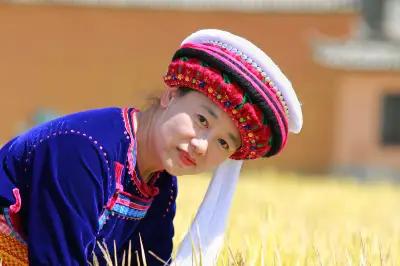
A Handwritten Love Letter to Dali’s Gentle Days
Dali: you are a poetic sanctuary
Milan Kundera once said: life is elsewhere. This phrase has been embraced as a life motto by countless people, and put into practice with wholehearted devotion. Here, the ‘elsewhere’ becomes especially important. It must be a place that calms your soul, stripping away restlessness, and you, as if in an instant, forget everything, just to meet it. A hurried encounter years ago made me fall in love with Dali, and I’ve never stopped thinking about it. In my dreams, I have returned countless times, to the winding mountain roads of the ancient city. There, birds sing and flowers perfume the air, the bustle remains the same, and the sunlight caresses every inch of my skin with infinite tenderness. In the distance stretch vast fields of flowers, and under the azure sky, clouds are like giant puffs of cotton candy. Different people experience Dali in completely different ways. Some see it as just a stopover, less stunning than Lijiang. But my long affection for Dali is a sentiment, an emotion from deep within that’s hard to put into words. From the moment I left, a powerful urge stirred in me, to return here, to the dream homeland of all ‘wanderers’, this poetic sanctuary. Nowhere else gives me such a strong feeling of retreat from the world. Only after you’ve experienced the clamor of the world do you realize how precious this tranquility is. At last I understand: why so many people willingly give up everything in big cities, come here, rebuild their homes, and from then on ignore worldly affairs. From the first meeting to spending a stretch of time here every year, the days here are quiet and simple, never changed. How I yearn to guard these indifferent years. Even sitting by the window quietly watching the clouds, occasionally a few birds fly across the sky, occasionally the breeze musses a strand of hair – it is all a kind of happiness.
Hey, Dali, long time no see – I hope you’re just as I remember! These years, I have measured many places with my footsteps, but like the mountain wind that has blown for a hundred thousand miles, you are still my favorite.
The love I have for you – it never needs ritual. You are my supreme ideal, my poetry and distant horizon.
Spring waters first rise, spring woods first flourish, spring flowers for miles… In truth, not just in spring, but in all four seasons, you are an ocean of blossoms.
You possess the elegance of mountains and sea, the authentic core of life. Right now, ‘facing the vast sea, with spring flowers blooming’ is no longer just a verse, it’s my everyday life.
Memory is like a storyteller, speaking with a voice full of hometown accent, and you are the indispensable part.
Your thousand-year historic tales, the endless slow-paced days of bygone times, have all become the most beautiful memories in my heart.
Ancient town, you are a graceful prose poem. In every brick and tile, a thousand years flow by.
Like lovers reunited after a long separation, Dali welcomes my return with blazing sunshine. Intoxicated by this sudden surprise, my feelings surge ceaselessly within.
For the past few years I have come to Dali once a year. Even with such frequent visits, I still feel the ancient city changes a lot. Many shops in my memory have disappeared, leaving a tinge of sadness.
Yet this thousand-year-old city still holds its special magic. So many people travel from afar just to catch a glimpse of its charm. Walking the streets and lanes of the ancient city, you feel not only the weight of history, but also an incomparable peace.
Old city walls, smooth flagstone paths, shops lined up one after another, shelves brimming with handicrafts, all kinds of street snacks being hawked, and young men and women dressed fashionably with bags slung over shoulders – a vivid scene of earthly bustle.
This is a living ancient city, a place where many dreams begin and hearts settle into home. By day, I wander every secluded alley of the old town, gaze at the grey-tiled dwellings with their mottled walls, then go to a spacious courtyard, order a cup of hot tea or coffee, and quietly savor the passing of time.
When the evening lights come on, I stroll along People’s Road in the ancient city. With the evening breeze gentle, walking on People’s Road at dusk, a happy thought comes to mind.
This street running from east to west is not very long, yet it used to draw backpackers from all over. Walking slowly from Erhai Gate towards Cangshan Gate, you see street stalls selling small knick-knacks everywhere, and from time to time, the sound of songs drifts by.
Now, street vending is no longer allowed on People’s Road, and with few tourists, it feels a bit deserted, stirring up many emotions. Over the years, I have seen its glory and its slump; many days can never return. But this street remains deep in my heart.
Xizhou Ancient Town – I have been here more than once, I think. Unlike other villages in Dali known for their beautiful scenery, Xizhou’s greatest charm lies in its rich humanistic atmosphere.
It is a thousand-year-old town left from the Nanzhao ancient kingdom, facing Erhai to the east, pillowed against Cangshan to the west, majestic yet light and graceful. Even the writer Lao She said this place is a miracle.
The old houses in the town, in culture, architecture, and style, all bear the distinctive, strong characteristics of the Bai ethnic group. Far from the hustle, it has a serene, peaceful atmosphere that I love.
Most residents in Xizhou are elderly, and many set up handcrafts at their doorsteps to sell to tourists. Everything here makes you feel as if you’ve traveled back to a distant past – isn’t this exactly what we call nostalgia?
Walking along Xizhou’s quaint streets, looking at the age-old, mottled clay walls, I seemed to glimpse a long-lost rural life. The Round Tower is the landmark building of Xizhou, and many young people love coming here for photo shoots.
Xizhou is most famous for three things: tie-dye, embroidery, and crispy flatbread. When it comes to tie-dye, one cannot miss Lanshue. This is a place to experience the ancient method of tie-dye, and it was also the filming location for a famous online variety show.
Lanshue is located right in Xizhou Ancient Town. Upon entering you’ll see the experience area, but I suggest going up to the second-floor terrace first to enjoy the pastoral scenery with a cup of tea and rest a bit. The view from up there is superb; you’ll regret it if you miss it.
Tie-dye is not just a craft of the Bai people, but also their way of understanding and living with nature. While sipping tea, the shop manager explained the knowledge behind it, giving me a deeper appreciation of this craft.
After the tie-dye master’s detailed introduction, we decided to try our hand at making one ourselves. The whole process takes about two hours: choosing the fabric, tying it, sending it for dyeing, and then several rinses – and the handkerchief with its fantastical pattern is done.
In fact, tie-dye doesn’t only come in blue. In terms of ingredients, it can be plant dye, fruit dye, or traditional Chinese medicine dye, with colors like red, pink, beige, and so on. Blue is simply the most stable and doesn’t need high-temperature processing, so it’s easiest to spread and learn.
On the second floor there’s a dedicated exhibition area with finished products, clothes, scarves, toys, jewelry, and more – all quite exquisite. If you like them, they have prices and can be taken home as souvenirs.
The manager at Lanshue is a Bai native who has done a great deal to keep the tradition alive. I really love their courtyard, calm and natural. Coming here to hand-make a tie-dye piece you love is a one-of-a-kind travel memento.
TIPS Lanshue Xizhou Pastoral Store
Opening hours: all day
Price: around 120 RMB per person, you can experience traditional tie-dye firsthand
Address: No.118 Courtyard, Xizhou Town
On previous visits to Xizhou, I hadn’t noticed this yellow wall at the Linden Centre, but it has now become an internet-famous photo spot. This time we drove ourselves, with our navigation set to the Lanshue store; the Linden Centre is just a short walk behind it.
The Linden Centre was once called Yang Family Courtyard. An American couple with a ‘China bond’ restored it into an inn. Now, thirteen years on, the Linden Centre has become the most famous hotel brand in Dali. Many foreigners come here and stay for a few days to experience authentic local life.
This field looks different in every season. Against the blue sky and white clouds, the scenery is limitless. No wonder so many visitors want to be part of it and take some beautiful photos.
TIPS Linden Centre Yellow Wall
Opening hours: all day
Price: free
Best time for photos: afternoon
Location: No.5, Chengbei Village, Xizhou Town
Cangshan – if a single cloud is a legend, then the mountain-full of snow is the obsession from which I cannot break free.
Cangshan is not one mountain, but a collective name for nineteen peaks, all above 3,500 meters in altitude. Some retain snow all year round, never melting even in summer. Those snow-capped summits are one of Dali’s iconic sights. At the foot of Cangshan, there are not only estates but also the persistent love for Dali that different people hold in their hearts.
Lisha Estate lies at the foot of Shengying Peak of Cangshan, at an altitude of 2,100 meters. The estate covers a very large area and is home to over a hundred kinds of plants and flowers. Once inside, it’s like stepping into the fairy tale world of The Wizard of Oz.
This country-garden-style estate has a ‘café’ that serves authentic Western-style breakfast, light afternoon tea, imported organic coffee, fresh-squeezed juices, hand-made additive-free baked goods, and more all day.
The owners are a couple who lived in the United States for many years. The husband is down-to-earth, the wife elegant. When they returned from the US to Dali, this hillside was barren. Returning to one’s roots, they loved the irreplaceable mountains, water, and air here, so they designed everything themselves and moved their American country garden life to the foot of Cangshan.
Flowers can be seen everywhere in the estate. We just came for afternoon tea and pastries, but the owner told me they also offer accommodation. It seems that for my next trip to Dali, I’ll have another wonderful place to let my mind have a long holiday.
Over the years I’ve grown used to Dali’s traditional dwellings. For a different experience, Lisha Estate’s American rustic style is a good choice. Regrettably, I couldn’t stay this time; I’ll definitely make up for it next visit.
TIPS Lisha Estate
Opening hours: all day
Price: rooms from 500+ RMB, afternoon tea also available
Location: No.66, Gantong Avenue, Guanyintang, Dali Town
In the scenic, fresh-aired Cangshan area, there is also a stunning hotel. With Cangshan at its back and overlooking Erhai, I stayed there for two days and truly loved it. It’s the Hilton Dali Resort & Spa.
The hotel sits halfway up Foding Peak, one of the nineteen peaks of Cangshan, on the west shore of Erhai. Its design is modern, minimal, and spacious, yet carefully incorporates local Dali features, so you immediately remember you are in Dali.
I arrived in the afternoon, so I deliberately tried the hotel’s newly launched afternoon tea set. Dining amid bird songs and flower fragrances, my mind relaxed, and the holiday atmosphere settled in right away.
The process of enjoying tea was full of ritual. The staff laid out a tablecloth of local tie-dye, served pastries in birdcage-like trays, local fresh fruits, and specialty snacks, paired with black tea. Looking up at the blue sky, watching white clouds stroll gracefully by – it was such a pleasant afternoon.
The hotel is arranged in a fan shape, with the lobby in the central court, strongly flavored with Bai ethnic character. Design motifs inspired by auspicious clouds run throughout the lobby, with a fireplace on each side, creating the warm, hospitable atmosphere of a Bai home.
The staff were very warm, escorting us to the front desk for check-in and serving hot tea during the wait, extremely thoughtful. Our luggage was also delivered directly to our rooms by the concierge.
In the lobby there is a huge floor-to-ceiling window facing Erhai, flooding the room with light. Outside the window is a large terrace with a sweeping view of Erhai – the vista is so beautiful you won’t want to leave once you sit down.
The hotel has three restaurants. The all-day dining Xiang Restaurant serves food from early morning. The seating is antique in style, with beautiful embroidery on the walls. The whole restaurant is brightly colored and relaxed, making your mood jump with joy.
Here we tasted a Dali-style breakfast with rice noodles, as well as Hong Kong-style Chinese dishes. The food was not only exquisite but also delicious; my companions were full of praise.
The journey from the lobby to the room amazed me yet again. The hotel has two wings connected by a sky bridge. The entire guestroom block is not only full of design flair but also dominated by warm yellow tones, making it very cozy.
The corridors have no excessive decoration or color, simple and airy. Two rattan chairs, a panoramic floor-to-ceiling window letting sunshine pour in – no matter which corner you stand in, you see a different view.
The twin room I stayed in felt as cozy as home. Welcome fruits and pastries were provided, and there were also welcome gifts arranged on the bed. The room had a balcony with an Erhai view, so the rolling green mountains and the pure Erhai were fully in sight.
TIPS Hilton Dali Resort & Spa
Price: rooms from 700+ RMB
Location: south of Gantong Road, Qiliqiao, Dali Town
Erhai – where water and sky meet, merging into one expanse, between the real and the illusory, making one lose oneself in a dreamlike fairyland.
Every time I come to Dali, I do one thing: circle the lake. A full loop around Erhai is 130 kilometers, divided into the east and west shores. Usually if you’re staying near the ancient city, you start on the West Erhai Ring Road. Self-driving is the most suitable. The West Ring Road offers stunning pastoral scenery and flower seas that change with the seasons; you’re bound to fall in love with the beauty you meet along the way.
Dali’s beauty lies in its spotless purity, its detachment from the world and transcendent grace. Dali Road is a very beautiful road, but often we hurry along it and miss the time to stop and admire the idyllic, picturesque countryside.
Look – in the rice paddies, the crops are vividly colored. Not far away, the nineteen peaks of Cangshan are hazy and mystical among the clouds. Hidden deep in the white clouds, households are scattered here and there.
This time I arrived just as the wheat was ripening. The golden wheat fields rustled in the breeze, reminding me of the song ‘Wind Blowing the Wheat’. I hurriedly parked the car and walked into the wheat field.
Surrounded by the wheat, the fragrance filled the air. The whole field was like a golden ocean, a truly poetic scene. Perhaps because I grew up in the city, I’ve always yearned for rural life. Not far away, farmers were harvesting the wheat. I stood in the field for a long time, feeling that every blade of grass, every tree, every path was so beautiful.
TIPS Dali Road Wheat Fields
Opening hours: all day
Price: free
Best photo time: afternoon
Location: simply search Dali Road on navigation; you’ll see the wheat fields along the way
Mentioning Caicun, those familiar with it know there are many flower seas here. Different flowers bloom all year round, so coming here truly means being in an ocean of blossoms. For this photo shoot, I chose the Lavender Garden at Caicun.
The Lavender Garden is directly reachable by navigation, easy to find, and the entrance fee for photos is very cheap, just ten yuan per person. I went in the afternoon, and there was nobody else in the whole garden – it felt like I had the whole place to myself. There are not only flowers here but also many settings and props, great for getting good shots.
Ladies can choose a fairy-like long white dress, bring their own flower crown or hair accessory for a flower-fairy vibe, and even buy some dried flower petals online to stick on your face – the photo effect will be even better.
I really love the purple flower sea. Though these verbena plants are artificially planted, such a vast field is rare, very reminiscent of Provence in France. That’s why so many couples come here for wedding photos.
An endless sea of flowers, like a fairyland on earth, with faint fragrance wafting on the breeze. Here, every season has its own colors. Soon the cosmos flowers will also bloom, so you don’t need to time your visit specifically. Just come, and you’re sure to meet a surprise around some corner.
TIPS Caicun Lavender Garden
Opening hours: all day
Price: 10 RMB per person
Best photo time: after 4 p.m.
Location: intersection of Yuehua Road and West Erhai Ring Road, Dali Ancient City
Yunhaifangcao is a thousand-acre flower expo park and also a filming location for Running Man; undoubtedly, there are many flowers here. But my main purpose was to photograph the sky ladder and the bus.
Earlier, there were two photo bases near Xizhou Ancient Town with many Instagram-famous spots, like the sky ladder and the bus – all popular shooting points. By comparison, Yunhaifangcao is much larger and has more settings.
There’s a red sports car, a Hobbit hut, and more. Because the garden is huge, I just picked a few scenes to shoot. If you want to explore everything, it would take about two hours.
After coming to Dali so many times, I always regretted not having photographed the iconic bus. This time, my wish came true. I went at sunset, so there were almost no people in the garden.
The bus can be climbed onto, instantly giving you that artistic look. I’d suggest that if the weather’s nice, come after 4 p.m. when the sunlight isn’t so harsh – it’s much easier to get good shots.
TIPS Yunhaifangcao
Opening hours: all day
Price: 30 RMB per person
Best photo time: after 4 p.m.
Location: Shalimuzhuang Village, Dali-Lijiang Road, Yinqiao Town, Dali City
Majuyi is my favorite spot along the West Erhai Ring Road. This was the village where I stayed on my very first trip to Dali. Later, I came back with close friends and again with family. The beauty of Erhai is interpreted perfectly here.
This time, although we drove ourselves, the journey was a bit difficult. I didn’t know beforehand that this section of West Ring Road was under construction, so many places were blocked and hard to navigate.
Even so, it didn’t stop us from enjoying the scenery. We parked in a safe spot and went looking for beauty on foot. Locals said that to protect Erhai, a viewing boardwalk is being built here. It should be ready next time I come – something to look forward to.
Following a wedding photographer, we found a dead tree by the shore – super beautiful. But we had to wait a long time for them to finish shooting. The wind by Erhai is strong and quite cold.
Finally, they were done, and I hurried over. The afternoon light was strong; I waited until the sun hid behind clouds and told my companion to press the shutter quickly, so the photos wouldn’t be overexposed.
Although the whole process was a bit tough, getting the shots I wanted made it worthwhile. There are quite a few dead trees along this route. If you can’t find one yourself, just follow a wedding photographer – you can’t go wrong.
The road conditions around Majuyi are currently unclear. I wouldn’t recommend electric scooters, and some sections aren’t passable by car either. Because of road works, there’s a lot of windblown dust and sand. If you go, ask locals about the current state, and maybe wait until it’s repaired, or visit selectively.
TIPS Majuyi Dead Tree
Opening hours: all day
Price: free
Best photo time: after 4 p.m.
Location: Majuyi Village, Dali City
If life is a journey, then splendor and loneliness are all just fleeting clouds; what remains is the mood with which you watch the scenery. The East Erhai Ring Road is a great route for self-driving or cycling with wonderful views. Here you’ll find not only Shuanglang, Little Putuo, and Luwo Mountain, but also many guesthouses close to Erhai’s shore, offering gorgeous vistas, making the phrase ‘facing Erhai, with spring flowers blooming’ a reality.
The first time I came to Shuanglang, I was moved by Hao Yun’s song ‘Go to Dali’. This time I was delighted to find Shuanglang cleaner than before. After environmental improvements, the blue, sparkling Erhai has returned.
Shuanglang’s unpretentious streets wind along Erhai’s shoreline, tracing a beautiful arc in the cool sea breeze. Looking out, the blue waves of Erhai stretch endlessly before your eyes.
Boarding a small boat and drifting on Erhai, just sitting at the bow watching the view will likely intoxicate you. Gazing into the distance, the lake is as calm as a mirror, the snow of Cangshan reflected in the water. Under the azure sky, seagulls occasionally skim past, like a natural ink-wash painting – beautiful beyond words.
Many people love boutique guesthouses; I’m no exception. Being constantly on the road, I’ve seen the ‘cookie-cutter’ side of hotels, and over time I grew weary, beginning to cherish the unique atmosphere of a guesthouse.
During my days in Shuanglang, I searched for a long time before finding a guesthouse that truly captivated me. The Moonlight Forest Resort has two properties in Shuanglang. This one is located on Sea Street, the most bustling street in Shuanglang Ancient Town.
The hotel is a quiet retreat amidst the bustle, tucked in an alley. The manager, afraid we couldn’t find it, personally came to the parking lot to meet us, very warm. The first floor houses the check-in lobby and a cozy restaurant. Further in there is a courtyard where you can sit, drink tea, and read – extremely pleasant.
We booked a terrace sea-view king room on the hotel’s top floor, also the largest room. Stepping in, we saw three floor-to-ceiling windows with transparent panels, the beautiful scenery outside sweeping in.
The room’s color palette is dominated by grey-black tones. From the vase arrangement to the tea set, everything exudes a Zen-like quality. With the gentle breeze blowing, close your eyes and let your thoughts drift back to the past, forgetting all worldly noise – this is the way to truly return to authentic living.
Super spacious, with five-star bedding, and green plants and magazines placed by the bedside. I think the owner didn’t just want to open a guesthouse, but more so to express a life attitude, a way of returning to the original.
Outside the room is a wooden open-air balcony with an excellent view, clearly facing Nanzhao Folk Customs Island across the water. In the afternoon, read a book on the recliner; in the evening, enjoy the sea breeze – cool and comfortable.
TIPS Moonlight Forest Sea Street
Address: No.8, Sea Street, Shuanglang
Room rate: from 500+ RMB
Because the first night’s stay was so impressive, the next day we visited their other property right on Erhai’s edge. This hotel is in Dajianpang, Shuanglang Ancient Town, not far from the Sea Street branch. Not only does it border Erhai, but it also looks out to Cangshan. It’s a new branch that just opened in 2019.
‘YAKAMOZ’ means ‘the moon’s reflection in water’ in Turkish, once voted the world’s most beautiful word. It perfectly captures the image of Moonlight Forest on Erhai – the moon rising above the sea.
I’ve always felt that people who run guesthouses are, in a sense, artists. Staying in one, you’re actually dwelling in the lingering sentiment of the owner. Escaping the metropolis, seeking poetry and the distant horizon – this place builds an ideal realm for those of us who live in big cities.
This new hotel is like a secluded haven by Erhai. There’s no obvious sign, and even the entrance door is dark in color. But the moment the door slowly opens, you discover a whole new world.
The entire hotel is like an art exhibition space, with each area given a corresponding name. The front desk area is called ‘Joyful Meeting’. Turning left leads to the ‘Endless Treasure’ art gallery, displaying oil paintings and art collections. Turning right is the full sea-view library area called ‘Unmoored Boat’.
Here you can truly escape the hustle, empty your mind, and stay inside all day. Wake up naturally in the morning, then after breakfast, copy a Heart Sutra in the sea-view book bar. Enjoy an English-style afternoon tea, or recline in the public area reading. A day passes quickly.
I absolutely love the restaurant on the ground floor. It offers a breakfast buffet and an abundant afternoon tea with all sorts of pastries, drinks, and fruits, plus a terrace that leads directly to Erhai. Delicious food and beautiful scenery together – all that’s left is to fully savor every moment.
On the ground floor there’s a waterside terrace. Sit on it and play a folk song you like on the guitar. Here there is not only mellow wine and touching stories, but also the poetry and distant horizon of my dreams.
The hotel has only 12 rooms, each with an ethereal name: Singing Wind, Flying Flower, Azure Mountain, Treading Waves, and so on. The dark color scheme continues into the guest rooms, using locally sourced, rough-textured stone – high-end and elegant.
The panoramic bathtub by Erhai makes bathing a ritual. Rose, aromatherapy, red wine – here you can shoot the stylish photos all the girls want. Also worth mentioning, the hotel’s toiletries come from the Australian brand Grown Alchemist, natural organic skincare products.
Dense Egyptian cotton bedding, soft lighting, coldness and warmth complementing each other, forming a quiet, private space that ensures a sound sleep till daybreak.
In both the rooms and public areas, local Dali stone and modern black steel craftsmanship are harmoniously mixed, with Eastern wabi-sabi and Zen, and the relaxed naturalness of Nordic industrial style. This is undeniably my favorite hotel in Shuanglang.
After dinner, I sat alone on the waterside terrace, watching a full moon slowly rise, its clear reflection appearing on the water. Then, water and sky merged into one, so that between the real and the unreal, I could barely tell which was which. Finally, I lost myself in this moonlit night, in this dreamlike fairyland.
TIPS Moonlight Forest Erhai
Address: Group 1, Dajianpang Village, Shuanglang
Room rate: from 1,000+ RMB
Little Putuo is the smallest of the five islands in Erhai. Surrounded by water on all sides, located on a tiny islet in the center of the lake, it’s just over 200 meters, entirely formed of limestone, its shape much like a circular seal. If Erhai were a painting, Little Putuo would be exactly where the seal is stamped.
Legend has it that when Guanyin created the Dali basin, she tossed a great seal into the eastern part of the Erhai sea to calm the waves. The seal turned into the island, to suppress storms and protect fishermen. So, fishermen built a Guanyin Pavilion on the island to honor the goddess, naming the fishing village east of the island Haiyin Village, the island Little Putuo Hill, and the pavilion Little Putuo, meaning Guanyin’s place of practice.
Every year from November to the following April, you can see seagulls spiraling and flying around Little Putuo – sometimes soaring high with a long cry, sometimes resting on the water, playing and frolicking.
It is said these gulls come from Siberia to winter in Dali. There were none before, but in recent years they have grown more numerous. The seagulls’ arrival brings vitality and energy to Erhai, creating a breathtaking scene of coexistence between man and nature.
Near Little Putuo, there’s a guesthouse I’d been longing to visit for ages, and this time I finally got the chance. Just a ten-minute walk from Little Putuo, it boasts not only a sky garden with sea views but also the internet-famous ‘mirror of the sky’. It’s the Tinghuatang Sea View Garden Inn.
As soon as I arrived, before even glancing at the room, I headed straight up to the rooftop mirror of the sky. This is a photo spot I had yearned for. The weather was perfect, with blue sky and white clouds, so any random snap turned out like a masterpiece.
The hotel thoughtfully prepares all kinds of props, and the transparent chair can also be used creatively. If you’re not good at taking photos yourself, no problem – the in-house photographers can help with shooting, and clothes can be rented, all reasonably priced. Truly considerate service.
Besides the rooftop mirror of the sky, the second-floor sky garden is just as amazing. Countless fresh flowers, a sunken seating area, an infinity pool merging with Erhai – you don’t even need to visit scenic spots; you could easily spend a whole day right here.
The butler service is also very responsive. When I sat in the transparent little boat for a photo, needing assistance, the butler came right over. In the evening, for our moon shots, they even borrowed a photographer’s flash.
Stepping inside, you find the inn’s space is large, bright, and well laid out. The entire lobby is a place where you can just lie down and rest. Walking upstairs feels like chasing light in a daydream – and I am the happy light chaser.
Our room was right next to the sky garden on the second floor, a cozy twin room with high-end bedding and a Bluetooth speaker for music. A terrace opens off the door, facing Erhai, with spectacular sunset and evening glow views.
The toiletries are from Herborist, a brand everyone loves. The bathtub comes with a disposable bath bag – the attention to detail is excellent. And no need to worry about luggage: behind the door there’s a hidden walk-in closet, making it easy to organize and unpack properly.
Every evening after eight, a crescent moon decoration is placed on the rooftop mirror of the sky, free for guests to photograph. Finally, after borrowing the flash, I captured some ethereal shots too – so thrilled.
TIPS Tinghuatang Sea View Garden Inn (Erhai Tiance Branch)
Price: rooms from 400+ RMB
Location: No.3, Chuandao, Haiyin Village, Dali
Wase is a small town mainly inhabited by Bai people. The locals are honest, warm, and there’s no outside commercial development, only the authentic customs and lifestyle, plus many lovely spots to admire Erhai up close and take photos.
The dock at Wase boasts small boats in various colors, little woods growing in the water, the sound of waves pleasing to the ear, and that fresh green color soothing to the eyes. No entrance ticket is needed; basking in the sunlight feels so peaceful.
Find a secluded grove, and instantly you feel like you’re in a Wizard of Oz scene. Almost no one will disturb you; you can shoot however you like. If time allows, definitely don’t miss it.
TIPS Wase Little Forest
Opening hours: all day
Price: free
Location: Wase Town, Dali City. Once in Wase, drive along Erhai and you’ll find it.
Luwo Mountain is a treasure trove, where you can overlook all of Cangshan and Erhai. On earlier visits I didn’t know about it, but this time, with tips from locals, I found this hidden gem of a spot.
Going down from the main road, the path is a bit rough, but once down to the Erhai shore you’ll find the internet-famous cave. Unfortunately, we didn’t bring a wide-angle lens; this cave requires one to capture its full frame.
Around three or four in the afternoon, the light creates breathtaking crepuscular rays. Sitting casually on a seaside rock makes for a stunning shot – definitely not to be missed. Since part of the West Erhai Ring Road is under construction, the East Shore route is currently the best choice for a self-drive.
Our ride this time was a Jeep Renegade. I’m a die-hard Jeep fan; wherever I go, if I drive myself, I rent one. In Tibet it was a Wrangler, in Lijiang I also used a Renegade. The roads in Yunnan are generally good, so the Renegade is fuel-efficient, stylish, can pose with its looks, and the power is decent too.
TIPS Luwo Mountain
Opening hours: all day
Price: free
Location: search for Luwo Mountain by navigation; when you see a semicircular bend, find a platform to park, then walk down to the shore.
This spot with overturned boats on the East Shore is near the Wase little forest. There’s no obvious sign. If you can’t find it, the old trick – follow a wedding photographer; just walk along the Erhai edge and you’ll spot it.
There’s a big area of overturned boats. I arrived in the afternoon just before sunset, so the light was already relatively soft. This is a lesser-known photo spot, not known to many.
TIPS East Shore Overturned Boats
Opening hours: all day
Price: free
Location: near Wase little forest; you can ask local wedding photographers for directions.
On the East Shore, there’s a small town called Ideal Land, a place with flowers, the sea, and a slow, quiet pace. It faces Cangshan across Erhai, consisting of a series of hotels, inns, cultural shops, and holiday apartments.
The town is built on the hillside, with poetic, winding streets and architecture that seems to grow naturally from the land. With its Santorini-like feel, it instantly became the hottest Instagram spot in Dali.
The whole town is quite large; I only explored a small part. The buildings are mainly white and dusty brown. It’s divided into the Aegean Sea themed architectural style zone, a private custom inn area, and the cliffside hotels.
Because the wind was extremely strong that day, I didn’t fly the drone. From a drone’s angle, you’d see the overall layout, the design, and the artistic sense more intuitively.
Walking through it, the freely stretching steps and landscaping walls merge with Cangshan and Erhai under the deep blue sky. The town is still under continuous construction. By my next visit, there should be a wealth of gorgeous inns and shops – really looking forward to it.
TIPS Ideal Land
Opening hours: all day
Price: free for photos
Location: 50 meters north of East Erhai Ring Road, Dali City
1. About transportation
We flew from Nanjing to Kunming, then rented a car at Kunming airport for a self-drive. The road conditions from Kunming to Dali are very good, and renting a car is convenient – pick up and return at the airport. Rental prices are cheap now, and you can choose your favorite model. If you love taking photos, ladies can consider a Jeep Renegade like I did. It’s affordable, comes in several colors, and looks great in pictures.
This trip to Dali was mainly a self-drive around the lake. We first went to Cangshan scenic area, then to Dali Ancient City and Xizhou Ancient Town. After that we followed the West-to-East circuit around the lake. A reminder: the Majuyi section of West Erhai Ring Road is under repair; you can visit selectively. Going to the East Shore in the afternoon is a good choice; there are many hidden gem spots along East Erhai Ring Road.
2. About food
There is a lot of delicious food in Dali. If I listed everything, there would be dozens of items. Here I’ll briefly introduce a few snacks I’ve personally tasted that you can only find locally. Make sure to try them.
Roasted milk fan is a unique Dali snack. Made from milk pressed into sheets and dried, it has a slightly yellow, translucent color and rich milky fragrance. You can buy it on the streets of Dali Ancient City for a few yuan per piece. It’s also called one of the ‘Eighteen Oddities of Yunnan’.
Ersi is a traditional Dali dish, with a smooth and tender texture, fresh and delicious. The broth is made from pork big bones and elbows, seasoned simply with spices. You can add vegetables, scallions, garlic paste, sesame oil, and other condiments to your liking. The meat melts in your mouth, rich but not greasy.
During mushroom season, all of Yunnan is eating mushrooms, and Dali is no exception. I’ve heard various stories about eating mushrooms in Yunnan and have tried mushroom hotpot in Dali Ancient City – super umami, enough to make your mouth water.
For truly authentic local snacks in Dali, bugs are rare, apart from silkworm pupae and grasshoppers. Many ladies might not dare try them, but they are actually very nutritious. Be bold and give them a try!
4. Precautions
Traveling during a special period
1. If you’re traveling to Yunnan from a non-key epidemic area, the airline will present a QR code before boarding; you need to fill out a form to board.
2. Wear a mask throughout the flight; flight attendants will take passengers’ temperatures on the plane.
3. After arriving at the airport, you need to fill out the Yunnan health code again and undergo one-on-one verification before leaving.
4. While in Yunnan, you still need to wear masks when entering public places. Hotels will take guests’ temperatures and disinfect rooms.
5. For personal epidemic prevention: remember to bring extra masks, disinfecting wipes, and hand sanitizer. Cooperate with temperature checks in public places.
Travel tips
1. Sunglasses, hat, sun umbrella, and sun-protective clothing are must-bring items. The local UV radiation is strong, unless you don’t mind getting tanned.
2. Bring an umbrella and raincoat because the weather is unpredictable; sometimes it changes suddenly, so it’s best to have them just in case.
3. The temperature difference between day and night in Dali is noticeable – hot in the daytime, cool at night. Bring outerwear to avoid catching a cold.
4. When self-driving, pay close attention to safety. Currently, parts of the West Erhai Ring Road are under construction; taking the East route is more reliable.
5. Bars in Dali Ancient City have reopened, but there are occasional spot checks. Live music performances are not allowed for now, so many singers set up on the roadside to sing.