Poetry and distant lands are expensive? Only if you haven't found the right place!
Having roamed through Chengdu, a city of gastronomy,
Traveled through the ancient and dignified Xi'an,
Strolled through the picturesque Yangshuo,
Paid homage to the majestic Tibet,
To this day, I have wandered over half of China,
Reached cities and villages big and small,
Experienced villages and ancient towns of various charms,
Yet along the way, those countless scenic spots
Brought me only joy or admiration,
But never a feeling of love at first sight.
Until October last year,
Until I first stepped into this place,
Only then did I truly realize
That the place I had been searching for all along
Is Xiangyun, an auspicious place,
A place that heaven selfishly
Hid away in its private territory.
Just like its name,
For thousands of years, it has brought
Nothing but happiness and good fortune to those living here.
I first heard of Xiangyun when I was very young. My aunt-in-law (my grandfather's cousin's wife), who married far away from home, was from Xiangyun, Dali. She was good-natured, and we kids liked to follow her around because she'd often have snacks. When we sat down to rest, she would frequently talk about her hometown Xiangyun with a dreamy look on her face. I vaguely remember her mentioning the mountains, rivers, and temples of Xiangyun, and how different the weather was from Hunan, not to mention the fairy tales that children love most. From then on, I yearned for Xiangyun.
Childhood dreams are easily forgotten, of course. My childhood dream of becoming a scientist vanished when I chose my college major. I never thought that my longing for Xiangyun would also fade away with the passage of time. It was not until half a month before my departure that I rediscovered this childhood dream from a yellowed photo album. My aunt-in-law had passed away years ago. I felt it was time to fulfill that childhood dream, to go to her homeland with her wish of returning home, to see what kind of place the Xiangyun she spoke of really was.
Taking advantage of the National Day holiday (and adding two days of annual leave for fear of insufficient time), I finally set out on this dream-seeking journey.
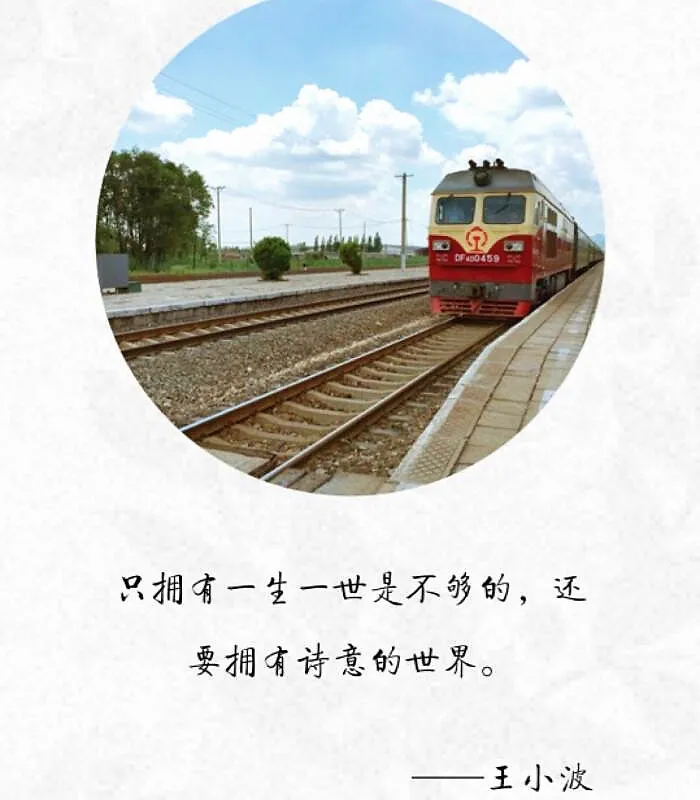
With the help of the high-speed rail, the trip from Changsha to Xiangyun was not as far as I had imagined. By the afternoon, I, the lone traveler, arrived at the auspicious land "Xiangyun" that had haunted my childhood dreams.
Entering the ancient city, I saw towering mountains cradling the old town in their palms. Walking along the once-thriving Ancient Tea Horse Road, I could still feel the rich cultural atmosphere of the ancient city in my every move, as if it had never weathered over 2,000 years of mottled history.
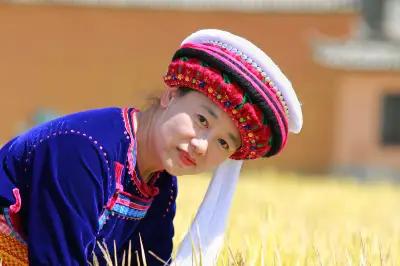
I didn't know the exact location of my aunt-in-law's old home, but I was sure this was the happy land where she had grown up. Everywhere, there were faces with smiles just like hers, women as gentle as water. This must be a unique simplicity nurtured only by a specific time.
For the next few days, I was like a wild horse galloping through streets and alleys, villages and mountain hollows. Everything was novel, yet everywhere was filled with a familiar scent—the scent of home. And yet I was certain this was my first time here. Could I have been a Xiangyun native in a past life? Coming to Xiangyun felt like entering a cool, tranquil, and serene dream!
Of course, besides the simple "unreal" life, Xiangyun is not short of stunning scenery. There are a few places I strongly recommend you visit after my trip. You must find an opportunity to explore them.
Jiuding Mountain (Nine-Ding Mountain) is named for its nine peaks jutting out, looking like clusters of blue lotuses, with high cliffs and often white clouds lingering around them. On the peak in the clouds stands a temple called Jiuding Temple, with two pagodas (south and north) before it, creating a marvelous scene in the sunset or sunrise. Additionally, ancient complexes like Jiuzhe Temple, Miaosheng Pavilion, Bixia Nunnery, and Yufeng Pavilion cling to the cliffs, which is quite astonishing. The morning glow and sunset at Jiuding are most beautiful. At such times, climbing high and looking far, you can take in the entire Xiangyun basin; below, the Xiaoguan Village Reservoir shimmers with rippling light, the waters glistening, the mountains hazy, secluded and elegant.
I hate rain, except for the rain in Luming. The locals said that in Luming, from August onwards, it rains every day. Coincidentally, during my two days in Luming, I was fortunate to experience two completely different rains. One came with roaring thunder, suddenly trapping me in a curtain of rain in a sorry state; the other was a fine, silent rain that moistened everything without sound, turning the distant mountains as gentle as those in Jiangnan. But no matter which type, the rain in Luming always comes and goes as it pleases. After a thorough downpour, flowers along the roadside and in gardens were beaten down, but strangely they didn't look messy, as if deliberately decorating the courtyards and mountain fields of Luming. As the rain stopped, remnants of water droplets still swayed on the power lines like swings, sliding down one after another from high places. Soon the sun would appear, and then the leaves in the woods and fields became even glossier, the disobedient flowers proudly raised their heads, and the rice seedlings in the fields turned a brighter green.
In Luming, not only the daily rain was charming, but the clouds also made you intoxicated. Waking up in the early morning, two thin, ethereal clouds, like blusher on cheeks, symmetrically and lightly veiled the houses halfway up the mountain. In the cool air, the red-roofed houses appeared and disappeared in the mist—a little lighter would be plain, a little darker would be deep blue, wonderfully vivid. Looking again after a while, the two "blushers" had quietly shifted forward, still playfully symmetrical. If it had just rained in the early morning, the mountain forest would be shrouded in thick clouds and fog, heavy layers like cotton candy pressing down on the peaks and treetops, the blue haze bewildering, making it hard to distinguish the boundary between mountain and sky.
Dongshan Yi Ethnic Township is a township in Xiangyun County, with crisscrossing mountain ranges and valleys. Every autumn and winter, the moist mountain village rises in a loose and flowing tide of mist. The mist, as if the mother earth missing her children, quietly emerges to kiss the mountains, like a white fairyland, enchanting.
Immersed in the mountain mist, it felt like falling into a boundless sea of clouds. A few feet away, direction was indistinguishable. Everything in sight was crystal clear silver-white. Sky and earth merged into one; mountains and trees could not see each other; the roadside scenery was like viewing flowers through a fog—a layer always separated. The mist locking the mountains, the mountains locking the mist, the sky connecting with water, the water connecting with sky—this hazy, ethereal feeling, isn't it just like ascending to the fairyland of immortals?
Tianhua Mountain Taoist Temple was first built in the Ming Dynasty. On the cliff, following the mountain and caves, there are three ancient buildings: upper, middle, and lower nunnery. Hidden houses and exposed eaves; on the stone cliff, a stone dragon hangs upside down, like a divine dragon descending from heaven. On the cliff wall are engraved ten large characters: "Yun'er has no equal place, Kuangzhou is the first mountain."
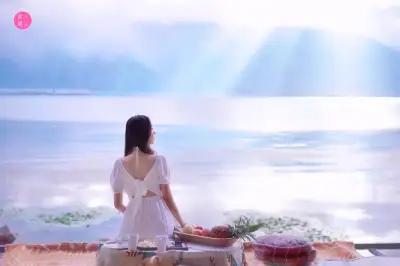
Isn't it strange how Qinghai Lake traveled to Xiangyun in Dali? The first time I heard that Xiangyun also has a Qinghai Lake, my surprise was no less than yours. Qinghai Lake in Qinghai is still there, not moved here, but Xiangyun indeed has a lake with the same name. Xiangyun's Qinghai Lake was called Qinghu (Green Lake) or Qinglong Lake (Azure Dragon Lake) in ancient times. It is a national water scenic area. The lake surface is as smooth as a mirror, with vast blue waves, fishing boats singing in the dusk, and reflections of pastoral beauty. One of the ten scenic wonders of Xiangyun, "Qinghai Moon Trace," is here.
Qinghua Ancient Cave was praised by Xu Xiake as "the first cave in Western Yunnan." It is a karst limestone cave, full of dazzling stalactites, stalagmites, and stone platforms. Ming dynasty literati and neo-Confucian scholars like Li Yuanyang, warlord Guo Songnian, and top scholar Yang Shen left cliffside inscriptions at the cave entrance.
As a national cultural relic protection unit, the imperial Buddhist monastery of the Nanzhao and Dali kingdoms, the world's first site of the descendant-style stupa forest, the first Zen Buddhist temple in Yunnan, and a natural botanical treasure house, it has nine nunneries and eighteen temples built along the mountain. Shuimu Temple, Puxian Temple, Baohua Temple, Beigang Stupa Forest, Si Bao Pagoda, etc., are well preserved. Historical records mention visits by Xu Xiake, Lin Zexu's special visit, Dan Rong's ordination, and Wu Sangui's divination. In the mountain grows a Tang Dynasty lion-head camellia tree over 1,000 years old, praised as "ten thousand flowers on the treetop devour fire together, residual snow burns red half the sky."
With a history of 1,237 years, it is a typical representative of ancient Dian culture, an important post on the Southwest Silk Road, a key military base for the China-Burma-India theater, an air transit station for the Hump Route, and well-preserved relics of the Ancient Tea Horse Road. The world-famous Burma Road passes through here.
Also known as Yusun Peak, commonly called Laojun Mountain, it is a famous Taoist mountain in China and a singing and dancing resort for various ethnic groups. Within the area, there is a well-preserved Ming Dynasty ancient building, Laojun Hall. Every year on the 15th day of the second lunar month, a grand Dongjing music concert and song festival are held here, earning it the title "the first Taoist mountain from the south."
In fact, during this trip to Xiangyun, I can't even clearly remember how many places I went, how many roads I walked, or even which scenic spots I visited. Because there were too many "temptations" along the way—my eyes, mind, and soul couldn't keep up with my body. So, when this epidemic is completely over, Xiangyun! I will come to seek you again. Wait for me!
Xiangyun still has many undeveloped places, everything is in its most pristine form, many so-called scenic spots are not fenced off for ticket sales (everything is free), and most precious of all, this is where my dream began. So, poetry and distant lands are not necessarily expensive; the key is whether you've gone to the right place.