South of the Colorful Clouds, You Are the Xiaofang in My Heart
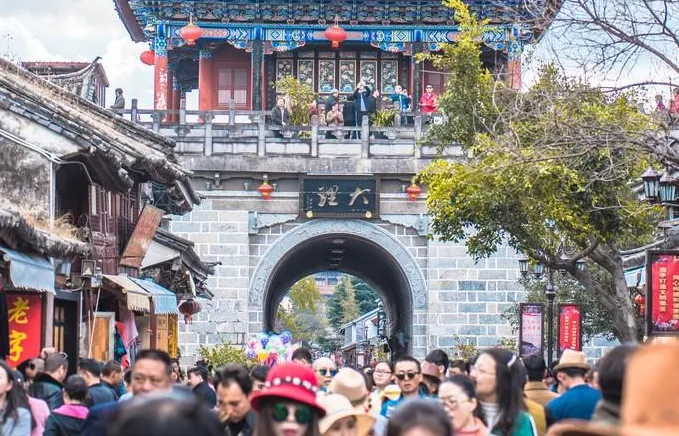
The existing Dali Ancient City was restored on the foundation of Yangjumie City in the early Ming Dynasty. The city is square-shaped, with four gates. City towers were built above, and defensive walls below. Three streams to the north and south serve as natural barriers. The outer walls are made of bricks. Inside the city, five main streets run from south to north, and eight lanes stretch from west to east, creating a chessboard-like layout, known as 'Nine Streets and Eighteen Lanes'. Two restored city towers face each other north and south. A main avenue runs from south to north through the city, with deep streets and quiet alleys crisscrossing from west to east. The entire city features uniform gray-tiled roofs and walls made of cobblestones, exuding an ancient, unique, and elegant charm.
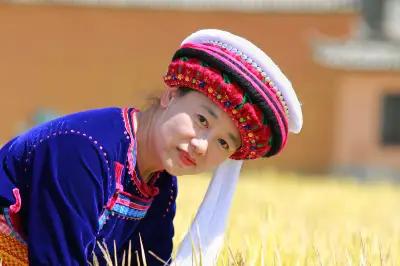
Dali has a long history and is one of the earliest cultural cradles of Yunnan. Its long history is also reflected in the unique architectural features of the ancient city. The Bai people have a habit of growing and loving flowers, which influences the decoration on residential walls. The flowers painted on the white gables look fresh and elegant. Apart from painting, locals often use lime plaster to create three-dimensional shapes, finely carving auspicious patterns. Under the blue sky and white clouds, clusters of bougainvillea sway on slanted branches, always at the corners of eaves. After entering Erhai Gate, it truly presents a different view to us.
There are also many distinctive inns, bars, and restaurants in Dali Ancient City. Just from the outside, this little bar has a lot of atmosphere; it must be vibrant and bustling with neon lights at night.
There, you'll find big banyan trees, gray tiles and white walls, 'four courtyards and five skylights', 'three buildings and one screen wall', winding bluestone paths leading to secluded spots, and the fragrant aroma of posu baba (a local flaky pastry).
Xizhou – a place that captivates you just by its name, making you can't help but go to soak up its joyous atmosphere.
Although the buildings in Dali Ancient City and Xizhou Ancient Town have been renovated later, compared to Dali Ancient City, Xizhou Ancient Town is a historic city and a typical commercial hub of the Bai people. Its architecture is more ancient, presenting an overall black-and-white ink-wash tone, simple and elegant. The worn bricks and tiles on the houses everywhere reveal the ancient town's rustic charm. Xizhou is one of Yunnan's famous hometowns of overseas Chinese and also the birthplace of the movie 'Five Golden Flowers'.
In Xizhou Ancient Town, one notable thing is the unique Bai ethnic craft – tie-dye (zaran).
Tie-dye, anciently called 'jiaoxie', is an ancient textile dyeing technique in China. In Dali, it is called 'geda flower cloth' or 'geda flower'. Since Dali is the main production area and most dyers are Bai people, it is also called Dali tie-dye or Bai tie-dye. Tie-dyed cloths of various colors, patterns, and sizes hang on white walls for visitors to admire and buy. Lingering among the elegant Bai folk houses is also a wonderful pleasure.
A little introduction to Bai folk houses.
The town has over a hundred Bai residential compounds from the Ming, Qing, Republic of China, and contemporary periods. Their styles are generally divided into 'three buildings and one screen wall', 'four courtyards and five skylights', 'one entry with two courtyards', 'one entry with four courtyards', etc., with the first two being the most common.
Erhai Lake, originally a lake, was named 'sea' because of people's love for the sea. It's neither sea nor lake, but has the boundless vastness of the sea and the tranquil, mirror-like reflection of a lake. Two aspects in one scene, both flavors memorable. What's most refreshing is this sense of serene distance and the elegance far from the madding crowd.
Erhai Lake is shaped like a human ear, long north-south and narrow east-west, resembling a crescent moon quietly nestling beside Cangshan Mountain and the Dali Basin. Around the lake are villages and towns like Caicun, Xizhou, Shuanglang, Wase, Haidong, each with its own charm. Dali Prefecture, full name Dali Bai Autonomous Prefecture, is located west-central in Yunnan Province, bordering Chuxiong Prefecture to the east, Pu'er and Lincang to the south, Baoshan and Nujiang to the west, and Lijiang to the north. With a long history, it has long been known as a 'land of literature', and is one of Yunnan's earliest cultural birthplaces. For over 500 years during the Tang and Song dynasties (from the establishment of Nanzhao Kingdom to the fall of Dali Kingdom), Dali was the political, economic, and cultural center of Yunnan. Situated on a low-latitude plateau, it has little seasonal temperature variation, distinct wet and dry seasons, and a mainly low-latitude plateau monsoon climate. The land is fertile, the climate mild year-round. It is famous for its beautiful landscapes and ethnic minority customs. Key scenic spots include Butterfly Spring, Erhai Lake, and the Three Pagodas of Chongsheng Temple. Dali's scenery is so picturesque it is known for 'wind, flowers, snow, and moon' – Xiaguan's wind, Shangguan's flowers, Cangshan's snow, and Erhai's moon.
The clouds in Dali go through a daily cycle: in the early morning, they form with mist over the mountains and slowly rise; in the afternoon, over Cangshan Mountain, they create a 'Tyndall effect' with the afternoon sun. It was then that we saw the legendary crepuscular rays, also called 'Dali Divine Light' by netizens.
Sunrise in Yunnan, just like the slow-paced life here, typically happens after 8 o'clock. Unlike previous trips where we had to get up at 5 or 6 a.m. to watch sunrise, Mr. Ran and I quickly freshened up, rushed to the viewing platform downstairs, set up our equipment, and quietly waited for this sunrise.
I think traveling in Dali doesn't require a planned itinerary rushing to attractions. Even just sitting by the lake, quietly watching a light boat glide by and seabirds skim past, then pressing the shutter to let memories freeze at this moment, is a beautiful way to travel.
Wase, located on the east shore of Erhai Lake, is surrounded by mountains on three sides and faces the lake. It has been a land of fish and rice on the eastern shore since ancient times and is one of the long-standing birthplaces of indigenous Bai culture in the Erhai area.
Besides being more pristine and quieter than Dali Ancient City and Shuanglang, Wase has two biggest advantages: first, every winter, the seagulls flying from Siberia to Erhai Lake for the winter almost all congregate in Wase Town; second, located on the east shore of Erhai, it is the best spot to watch the sunset by Erhai Lake.
Every winter, the seagull sprites travel all the way from far-off Siberia. This seems to be an unwavering pact. They usually arrive in November and leave by March or April of the following year, spending a warm winter at beautiful Erhai Lake. It is their arrival that makes Dali's winter so lively; their graceful figures soar over the Cang-Er landscape, brightening the lovely Dali.
It was already late when we arrived at the inn, and I didn't have time to see what it looked like. When I opened the door this morning, I found it absolutely wonderful. It completely fulfilled all my fantasies about Lijiang inns: a courtyard full of flowers and plants, the guest rooms upstairs and downstairs all made of wood, with floors that creak underfoot. The doors are carved with delicate floral patterns, and the window paper is inscribed with incomprehensible Dongba script. There are many rattan chairs in the courtyard where you can sit and read, bask in the sun, or daydream. The whole Naxi courtyard feels classical and rustic.
Today's itinerary is simple and relaxed – mainly strolling around the ancient city all day. The ancient city does not charge an entrance maintenance fee.
In the morning, the ancient city is still very peaceful, in stark contrast to the noisy, neon-lit city at night, as if you were in two different places. At night, Lijiang presents scenes that defy its traditional ancient city image, truly living up to its reputation as the capital of romantic encounters. However, during the day, the ancient city has a unique antique beauty, as if you can trace the marks of history and follow the shadow of time. The sunlight generously spills over every alley, cleansing the bluestone paths and adorning the entire ancient city.
Far from the hustle and bustle and commercial atmosphere, people leisurely go about their business. Occasionally, a horse-drawn carriage passes through the town. The river flows quietly, nourishing the lush village. It feels as if time has slowed down...
Shuhe Ancient Town's cuisine is not to be missed. We had the small pot rice, which was super delicious – rice cooked with many ingredients, resulting in an incredibly fragrant dish. I absolutely loved it. There was also snow mountain fish, with tender and flaky meat that was so pleasant. The cured ribs were equally amazing, with meat falling off the bone perfectly. It was the most satisfying meal in Yunnan!
Backlit photography on the Walking Marriage Bridge~
By the lakeside, there are no towers, pavilions, arched bridges, or painted boats – only blue sky, clear water, white clouds, and light boats.
Our first stop was the liveliest village, Daluoshui. Daluoshui is the first village when entering Lugu Lake, and a must-visit for most tourists. It has relatively many tour groups. The village's land extends into the center of the lake, offering the widest view. It is the largest and earliest developed Mosuo village around Lugu Lake.
Daluoshui has many such waterside platforms, as well as the white tables and chairs like those at 'Haidi Life' in Shuanglang, making up for the regret of not going to Shuanglang. It turns out this is also a refreshingly charming village!
The mountains around Lugu Lake are covered with a shallow layer of soil on the surface, with typical karst geology underneath. The soil-covered mountains are lush with vegetation and forests. The mountains are rich in produce, with various fungi growing there, including big foot mushrooms, green cap mushrooms, porcini, and the rare and precious matsutake.
The shapes of these mountains look like ridges from the side and peaks from the front. Visitors' feelings vary with personal perspectives. The mountains of Lugu Lake are so magical, sparking endless imagination – what you see is what it is, what you think it is, it resembles.
Rowing on calm waters must be the right way to experience Lugu Lake. Remembering yesterday afternoon's rowing amid wind and rain, I almost doubted I was at the real Lugu Lake.
On sunny days, Lugu Lake is truly exceptionally beautiful. The lake surface sparkles, the water is incredibly blue, and the water and sky merge into one color, so beautiful it seems almost unreal.
Travelogue Contents
1. Dali Ancient City
2. Xizhou
3. Erhai
4. Lijiang Ancient City
5. Shuhe Ancient Town
6. Lugu Lake
Travel Info
Hotel Index
Guide Index
Flight Index
Website Navigation
Travel Index
Cruise Index
Corporate Travel Index
Join Cooperation
Distribution Alliance
Friendship Links
Corporate Gift Card Purchase
Insurance Agent
Agent Cooperation
Hotel Franchise
Destination and Scenic Spot Cooperation
More Joining Cooperation
About Trip.com
Trip.com Highlights
Contact Us
Join Us
User Agreement
Privacy Policy
Business License
Security Center
Trip.com Content Center
Intellectual Property
Trip.com Group Algorithm Disclosure