South of the Clouds: The Longer You Stay, the More You Want to Seclude Yourself (A Three-City Tour of Dali, Lijiang, and Xishuangbanna)
The first time I came to Yunnan was in April 2013. That year I was still a carefree young man who idled away over a month in the ancient town of Dali, planting the first seeds of fascination for Yunnan. The second time was in December 2019, already a lad who had seen the many faces of life, trekking deep in the mountains of Shangri-La's Yubeng village for several days—deepening my understanding of Yunnan. The third time, in August 2020, now a little uncle stepping into his thirties with a touch of equanimity, I wandered the ancient towns of Dali, Lijiang, and Xishuangbanna for nearly two weeks, developing an inexplicable attachment to Yunnan. (For the Shangri-La Yubeng trek journal see: https://you.ctrip.com/travels/xianggelila106/3921865.html?isAuthor=true)
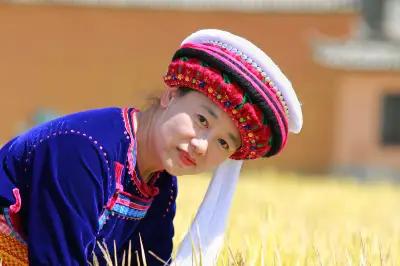
Luckily, the day we went to Xizhou was brilliant and sunny—I wanted to break into a run through the paddy fields.
Xishuangbanna's night market was a must-visit every evening; I absolutely love it.
If you come to Yunnan in the rainy season, you’ve got to take a zen-like attitude toward blue skies and white clouds, so choose your travel time accordingly. The two weeks I spent here, I rarely saw big expanses of blue. Especially during those days in Lijiang, rain fell for days on end, making it hard to go far; I could only wander around the old town. And in Xishuangbanna, just as I was strolling the night market, it suddenly poured, sending me scurrying back.
【Dali Ancient Town】 Pure idling for days
This time, as soon as I reached Dali Ancient Town and passed Erhai Gate, I began to sigh—it has really changed so much, almost unrecognizable. Back in ’13, the area around Erhai Gate was basically empty, very open; now it’s a bustling market, and the surrounding shops are lively, so the easy charm of an after-dinner stroll back then may never be found again.
What does the Erhai Gate market sell? Not much beyond some ethnic clothing, local snacks, and handmade souvenirs. I do have a friend who often visits a small florist. In Dali, having fake flowers at home or in your shop is almost a disservice to the place. With such beautiful natural ecology, lovely flowers are everywhere—as long as you care to arrange them, there’s no need for those lifeless faux blooms.
Walking from Erhai Gate along Renmin Road toward Cangshan has always been my favorite way to explore the ancient town. Renmin Road is the most bustling main street, lined with all kinds of distinctive shops. After not seeing it for a few years, even the originally quieter lower section now buzzes with tourists, and the shops are mostly inns, restaurants, and souvenir stores.
The upper section is as lively as ever; I always hurry through it—it’s where tourists gather most, especially with Yangren Street nearby, which used to be a boisterous bar strip. In fact, there are quite a few bars on both sides of Renmin Road. In the evening, as resident singers begin their sets, the ancient town’s clamorous bustle gains an extra layer of artsy melancholy.
I recall that year in Dali, besides those tie-dyed articles, what you saw everywhere were simple cotton-linen clothes. This time I found those garments had somehow vanished, replaced mostly by tie-dyed apparel ranging from 69 to 399 yuan. Back then I wore those plain clothes with delight, grounded myself by toting a bamboo basket, and cycled around the old town and its outskirts.
Truth be told, Dali Ancient Town is neither big nor small. After walking it enough, you realize there are only so many spots—yet going from Erhai Gate to the north gate can still take ages. Stretching down the alleys, the depths of courtyards may hold many surprises. So if you want to feel a quieter ancient town, just step slightly away from the main streets into a side lane. There you might encounter a favorite café, diner, or guesthouse.
If you ask my selfish reason for staying inside the ancient town: a place where you can quietly watch the clouds swirl over Cangshan. Every day, every moment, the clouds on the mountain are ever-changing, never boring. Rainy season or not, the clouds never really stretch out, and sunbeams through the clouds are rarer still, but it never dampens my mood for this state of being. When your mindset is right, satisfaction follows.
Actually, there’s one place very worth visiting from the old town—but you have to step outside. That is March Street. Dali March Street is a millennium-old ethnic traditional fair, as well as an ancient and prosperous trade market in western Yunnan. I used to love treasure-hunting here for clothes, snacks, souvenirs. It’s even more festive during festivals, though these days it seems gradually overtaken by eateries. The days I was there coincided with the Torch Festival, but due to the pandemic, the activities were cancelled. However, under the archway, many stalls still sold torches.
A bit farther from the old town, Dali University is also worth a visit. During my stay, it was closed due to the pandemic, but it should be open now, with visitors allowed. Outside the campus, though, there’s a rather surprising spot I’d deliberately found online. Since Dali University is right at the foot of Cangshan, it sits on high ground. Outside the campus is a road stretching straight to Erhai Lake with little obstruction, so from the higher point you can see the distant lake. Traffic is sparse on this road, so I could be a bit freely and take photos in the middle.
【Ancient Town Life】Leisure—food and coffee
My days in the ancient town basically went like this: wake up naturally, have brunch, go back to rest or hang out at a coffee shop, then see where I could have dinner, have a little drink—really laid-back.
When choosing accommodation, I said I must find an inn with a rooftop where I could take in the Cangshan scenery. So I booked Jigu Inn. Though the photos of the rooftop table set somewhat deceived me—that spot actually can’t be occupied—there was indeed its own rooftop.
Besides the rooftop, this inn has its own café, and guests get 20% off, so I could sit quietly with a cup of coffee without going far. Being set back from the main streets, it was always quiet. Accompanied by an Akita, a Scottish Fold blue cat, and a farmhouse white cat, my daily life was pure enjoyment.
Waking up naturally in the old town, I wanted a place for brunch and a coffee. I mainly went to two spots; actually, being able to rise naturally isn’t easy—haha, sometimes I really sleep in. Chaimiduo is one of the rare restaurants in the old town with its own standalone courtyard—ideal for dates, breakfast, and afternoon tea.
Chaimiduo actually also has a lifestyle farm, a lifestyle market, a restaurant-inn, etc., advocating a farm-themed way of living, so ingredients come directly from its farm. The atmosphere is cozy, with its own courtyard surrounded by bougainvillea-draped walls, very pleasant under the sun. If it’s too sunny, there are plenty of seats inside and upstairs. Most patrons are families with kids or young couples; try to arrive early, or you’ll have to wait for a table.
Plenty of choices on the menu, mainly healthy dishes. I ordered a farmer’s breakfast. Other recommendations: farm salad, creamy mushroom soup, rosemary steak, vegetable salad, various Western dishes.
Moon Calls the Flying Bird is another highly rated Western-style restaurant in the old town. Though the space is small, portions are generous—a good brunch spot in Dali Ancient Town.
A standalone small building with seats upstairs and down. But the day I went it rained, so the second-floor outdoor seats were closed. The first floor also has outdoor seats, with a somewhat charming café feel. Inside, seating is a tad cramped because the bar and kitchen make the walkways narrow.
Their French-style egg cocotte is recommended! Unfortunately, when I arrived, many people were waiting, and it was sold out. Since waiting was long, I ordered a hamburger, and my friend ordered an American breakfast. Portions were truly substantial, especially my burger—I scarcely knew where to bite first and nearly couldn’t finish. Average per-person: 60 yuan. Address: No. 74 Guangwu Road, Dali Ancient Town, Dali Bai Autonomous Prefecture, Yunnan Province. Tucked in a side lane off the main street, relatively quiet but not hard to find, ideal for quiet enjoyment. Oh, and the restaurant is closed every Wednesday!
Life in the old town basically involved going out mornings and evenings; afternoon sunlight was intense, so I preferred staying in. Though the streets quieted down in the afternoon, if I really wanted to walk around, I’d find a café, sit, play with my phone, and watch passersby. Right across from Chaimiduo is a highly rated little café called Elephant Café. Every time I wandered the town, I passed it. I chose a relatively sunny day to visit; luckily the seats by the door were free, so I sat, sipped coffee, and watched tourists stream by. I noticed the foreigner sitting next to me—I seemed to have seen him sitting there on earlier walks, as if he were a regular.
Next to Elephant Café, during the day you might also chance upon a mobile bike coffee station—very atmospheric.
My irritation came from the old town choosing that month to do maintenance and repairs on some old houses, so the building housing Elephant Café was surrounded by steel bars and draped in green safety nets, slightly spoiling the visual. Another popular café also had its best features marred for the same reason—that’s Da Wandao Café, which draws visitors precisely for its view of Cangshan. But with the repairs, the originally clean window-framed view of Cangshan was abruptly blocked by steel.
Setting aside the view, though, this café features vintage, artsy decor; the whole vibe is very comfortable. The barista’s outfit and image even match the café’s style. Next to the bar, clothes are for sale, mostly for women. Originally one of the more internet-famous cafés in Dali Ancient Town, I was surprised to find hardly any customers in the afternoon—perhaps due to the renovations. This café sits on the fourth floor of a residential building at a crossroad of Renmin Road; if you just pass by, you’d never notice it without looking up.
If you really want a café with a Cangshan view, then Tang · Ka is still the one. Tang · Ka is a coffee-themed inn, nestled deep in a lane off Renmin Road, conveniently located. The entrance on the first floor faces the bar, and the walls are hung with award certificates, showing their coffee expertise. Friends with a palate for coffee should find a favorite blend here.
The second-floor seating is fresh and comfortable, filled with green plants and flowers, and there are window seats facing Cangshan—the most sought-after spots.
But the biggest draw is the open-air rooftop! The sweeping view takes in the ancient town and Cangshan. The setup is like a small garden, cute and exquisite. Too bad the day I went it rained, not suitable for sitting outdoors; I could only take photos to commemorate.
By the way, right downstairs from Da Wandao Café, at the crossroad of Renmin Road, there’s this unassuming yet striking little stall that’s said to be a top-ranked local snack in the old town—xi dou fen (pea jelly). The setup is simple: a cart, a basin, a pot, a small table, a few stools, and the grandmother herself. She sells just this one pot a day and packs up when it’s gone. On fine days with good business, she might finish before 10 a.m. The day I went was rainy; I guessed tourists weren’t out much. Around 11 a.m., I passed by and saw her still there; I couldn’t resist getting a bowl.
Xi dou fen is a summer snack in Yunnan, made by grinding white peas into powder and cooking it into a porridge-like consistency. It’s smooth and refreshing, sweet but not cloying, warm and comforting, topped with lots of fried dough sticks. The best way to eat it is to soak the fried dough in the pea jelly first—utterly glutinous! As I ate, I chatted with the grandmother, who fretted slightly about the rain and finishing her pot. She said she’d been at this stall for 30 years, here since before I was even born, then laughed heartily.
If you want some Yunnan-style local dishes in the old town, I tried a few I thought were pretty good; let me tell you. Though the recommended dishes don’t differ much—things like braised chicken, water-cooked yang flowers, fried eggs, free-range chicken, potatoes, etc. This one is Golden Rooster Restaurant, just in a side lane off Renmin Road, easy to find, well-ranked. The vibe is comfortable, with some scenic seating, but overall not many tables, so expect a short wait at mealtimes. The second floor seems to be a bar, so it gets noisy later.
Another place I found tastier and more authentic: A Wang Private Kitchen. Especially its pork belly—very flavorful and chewy, leaving you wanting more after one plate. The main setup is big tables, suitable for families. However, the location is a bit hard to find, which may explain fewer customers.
After a long stay in the old town, you can get a bit sick of the food. Eventually not knowing what to eat, I picked a Lijiang-style specialty, Granny’s Preserved Pork Ribs. There are several branches inside the old town, with spacious dining rooms and plenty of tourists. It’s a must-try regional delicacy: you can order a rib pot or a mix of ribs, chicken, and trotters.
Then there’s this stone-slab barbecue, which I couldn’t quite figure out—some Bai ethnic cuisine that seemed to spring up god knows when, seen everywhere in Dali! In 2013 I definitely never saw such a restaurant. It’s basically grilled meat, but the grill plate is made from some kind of stone slab. At night, these places are incredibly lively, packed with diners! Out of curiosity, I tried one too, but one person can’t eat much. I chose Laoyujia, with several branches in town, and every evening there’s a long wait. Indoor seating overflows outside with tables. Is it exceptionally delicious? Not really—I didn’t sense a huge difference, since barbecued meat can only differ so much. It’s probably more about the “specialty” and “vibe.”
After a meal, as night falls, the ancient town fills with people. Renmin Road gradually crowds, and those artsy little bars start pulling in business, with resident singers crooning heart-tugging songs. Bars here range from quiet to rowdy; the lively ones often feature a whole band playing rock or pop. Personally I still prefer quieter bars, and they must have outdoor seats.
Sitting outside, sipping a drink, I couldn’t tell if tourists were watching me or I them—anyway, we were all just passersby amusing ourselves. Listening to the girls in the bars sing artsy tunes or viral hits, I’d just get into the mood before being snapped out. But ah… the drinks in these ancient-town bars are really not cheap… they rival prices in first-tier cities! That puzzled me. Some bars have a minimum spend; you need to pay for a drink, so to lure guests, many loudly proclaim “no minimum, free song requests!”
Full and tipsy, listening to the band sing felt pretty good. But if you ask me whether it was for the booze or the music, I’d say the alcohol more. A lot of people in the bars seemed to be long-stayers or residents in Dali; their enthusiasm was more for the singers, interacting eagerly, singing along joyfully—making me feel truly like just a tourist.
【Erhai Lake】 So incredibly calming
This trip around Erhai was rather haphazard—truly spontaneous. Normally, you’d start in Dali Ancient Town and drive clockwise along the lakeside road for one or two days; with more time, you could stay overnight in some village you like. If you rent a car, encircling the lake in a day is very doable. Because I was alone and although I really wanted to rent a flashy pink convertible to cheer myself up, driving alone would mean no one to enjoy the sight—so I let it go. Actually, riding a small electric scooter gives more freedom, because many ancient villages along the western lakeside road are inaccessible by car, and driving along the eastern road is smooth but parking is inconvenient. However, scooters have the limitation of limited range. My itinerary suited a free-spirited lone wanderer; I didn’t complete the full loop, but I was thoroughly content! Route as follows: Dali Airport - Wase Town - Shuanglang - Haidong Town - Dali Ancient Town - Caicun Wharf - Xizhou - Dali Ancient Town. Below, I’ll list the scattered photo stops along the self-driving route and describe other old towns separately. There are tons of online guides for circling the lake, with intuitive attraction maps.
The western lakeside road section really disappointed me this trip. Too many sections were under repair, mostly impassable, and I’ve no idea how long until they’re fixed. Although this allowed me to weave among ruins of old villages, it was far too time-consuming and inconvenient. I’d be better off just hiring a three-wheeler like many do to hit the lakeside spots near the old town. Perhaps they’re repairing it to make it more convenient for self-drive tours in the future; I saw man-made plank paths beside the road. But the western lakeside road encircles many ancient villages, with daily life, fields, etc.
I had hoped to ride along the road straight from the old town to Xizhou. Indeed, I stumbled upon many beautiful scenes on the way. Strangely, none of it reminded me of my cycling trip back then—and that time I was on a bicycle!
Some parts of the western lakeside road worth visiting were invisible due to construction—like Shuangyuan Creek, Majiuyi Village, Corridor Bridge, etc. While searching for passable routes, I chanced upon a few stunning sights. I guess most tourists head directly to Xizhou, because I hardly encountered any along the ride.
I can’t quite recall how long I persisted, but there was a stretch of western road under repair yet still open to traffic, so I could get close to Erhai scenery. Common sights were lakeside dead branches striking their own poses.
To my surprise, I even came upon a couple taking wedding photos.
So compared to the western road, this time I preferred the eastern road. If not starting from the old town, I suggest starting from Shuanglang or, like me, from Wase Town, renting a bike, and going back and forth along the western shore—you won’t be disappointed. Every time I saw the vast Cangshan scenery with thick clouds, the expanse of crisp, fresh blue, and let the breeze mess up my hair, a rush of impulse surged: I want to live in seclusion here! I adore this kind of ease!
Near the eastern road, there are also some ancient villages right by Erhai Lake, some marked by large stone signs, some by Bai-style archways—quite visible.
I never expected to find such a large patch of lotus blossoms by Erhai—no wonder this place is called Lotus Bend. Naturally, I had to stop, though not peak lotus season, many blooms were still visible. Since next to it is an old village, villagers with nothing to do in the afternoon just sit by the lake, under the trees, smoking and chatting.
Feeling thirsty, I bought water from a small shop. Nearby, several Bai grannies were chatting. I leaned in to hear but couldn’t understand. Seeing me, one suddenly pointed to grapes on the fridge and recommended them: homegrown, no pesticide, sweet and tasty. Seeing I didn’t mean to buy, she warmly urged me to try—it’s delicious!
I can’t recall where, but I saw a little house with graffitied walls right by Erhai. There was a path leading down to the lakeside, so I parked to check it out. The joy of a scooter is being able to stop anytime, however long, without worrying about theft. The people here are simple and honest, and your vehicle won’t be coveted—very reassuring. Cars, on the other hand, had few parking spots around, so they could only briefly glance.
Unlike the eastern road, the western road has many cliffside sections, more bends, so ride carefully. A few uphill-downhill stretches felt like I’d fly off—so happy! When mountains, lake, and sky appear in one frame, they gave me a new, deeper appreciation and love for Erhai.
There are many spots by Erhai that bear no official name, but if you look closely you may discover surprising lakeside scenes. That’s why I love circling Erhai on a scooter—slow pace, free and easy play.
【Wase Town】 A great starting point too
This time, arriving in Dali Ancient Town, I headed straight for a lakeside inn in Wase Town, planning to start with a ride along Erhai. Choosing Wase Town as a jumping-off point I found really good. Its surroundings have developed gradually but not yet become as noisy as Shuanglang, the old town, or Caicun Wharf—while still offering full amenities. Plus, renting a vehicle here is extremely convenient; they can deliver to your door! Around Wase, a day’s scooter ride along the eastern road is fulfilling: north to Shuanglang ancient town, south to Luoquan Peninsula—gorgeous Erhai views and plenty of photo-worthy spots.
【Xiaoputuo】 When I first saw the name, I didn’t think it belonged in Dali. Xiaoputuo Islet is a relatively well-known spot on the western side of Erhai. Shaped like a gold seal floating on the water and somewhat resembling Putuo in the South Sea, hence the name. There’s a pavilion on it, which from afar looks very cute, dainty, surrounded by incense smoke amid mountain waters and clouds—truly like a fairyland.
There are boats to the islet, but I think a distant view suffices, no need to land. What I loved besides the islet itself was the whole stretch of shoreline, with a village at the foot of the hills and a promenade built along the lake—walking on it feels wonderful, with mountain and village as backdrop, Xiaoputuo in front, like the distance to deity in folk imagination.
Riding from Wase toward Shuanglang, you’ll pass by an old forest area by the shore, no specific name, but quite a few tourists, couples taking wedding photos, locals resting—definitely worth a pause.
What I liked more was an adjacent meadow filled with abandoned boats. Rusted tin boats, I don’t know why abandoned there, but well preserved—maybe for future reuse.
Not far away is a famous spot. If it’s famous, it’s mainly because travel photography gurus have made it look too good, and it’s gone viral. So not only tourists, but local photo pros like to bring clients here. But the best photo spots are down below by the shore; the road is up high, so you have to park on the roadside and follow others’ paths down the hill. Mind the danger—very rugged! If you’re afraid of missing it, really, you’ll know when you see a bunch of cars stopped for photos. There’s no parking lot, everyone just parks by the road, so it gets messy, especially when it’s crowded.
What’s worth shooting? Under the extended cliff edges are small cave-like hollows; you stand inside the cave and shoot from outside. But honestly, it’s so hard—the “small caves” barely fit one person curled up, and you need an ultra-wide lens to get a good shot! Plus with lines of photographers, it’s too much; I firmly gave up! You see all those people—they’re waiting for photos.
Then there’s this place: an abandoned, partially demolished house left a ruin. Other ruined buildings didn’t matter, but this wall with a hollowed-out window forms a natural picture frame—the scenery is completely natural; you just need to be pretty inside the frame. Hats off to the photographer who discovered this! So here too, it’s packed with people wanting to capture a few magnificent shots. Only one person can go at a time, and some hired photo shoots take extra long. Seeing so many waiting—sorry, I gave up again!
South of Wase Town, on the southeast corner of Erhai, is Luoquan Peninsula. Surrounded on three sides by water with beautiful scenery, it faces Dali Ancient Town across the lake—an excellent spot to admire Erhai and Cangshan. Coincidentally, there’s a dock with boats to and from Caicun Wharf. So getting to the ancient town is another way, though most tourists come from Caicun to check out Luoquan.
Sigh, rainy-season travel truly depends on the sky. I was thankful it wasn’t raining, but then it suddenly rained for a bit, the wind picked up at the dock, and I found temporary shelter to rest.
I didn’t enter the main scenic area, but the cliffside next to it seemed to have an artificial spot to lure visitors—you still had to pay a 20-yuan ticket! However, Lover’s Cliff and these genuinely abandoned boats were quite pretty.
Then something magical happened: Luoquan has its own ticket office, 45 yuan per person. I thought it pricey and didn’t plan to go in. Yet I bought only the dock ticket; after shooting, I just wandered and somehow unknowingly walked into Luoquan’s scenic area. It seemed I passed an unmanned checkpoint at the dock… so I got to see a 45-yuan attraction for 20 yuan. Walking up from the dock, I even passed the main gate checkpoint (already inside), and for a moment worried they’d ask for my ticket since I looked unfamiliar…
Here stand two tall pagodas: Luoquan Pagoda and Tianjing Pavilion. The current Luoquan Pagoda was renovated in 2010, retaining the original “four-sided dense eaves” and “topless” features, with a round base with the meaning of “outer round inner square.” Inside are an elevator and two stairways leading straight to the top. The present Tianjing Pavilion was renovated in 1996, five stories, a galloping-horse-turn-pavilion gable-and-hip roof style, with upturned eaves and bracket sets soaring into the sky. The pavilion is tall and the corridors broad; the view from up high is even wider.
【Xizhou】 I want to run across these green fields
Among the ancient towns circling Erhai, besides Dali Ancient Town, my favorite is still Xizhou! The town itself, though, is somewhat similar to Shuanglang and Dali Ancient Town: mostly specialty goods shops, snacks, and food.
Xizhou is walkable only; if driving, parking is nearby; direct buses or charter cars reach it. Many quaint Bai-style buildings sit in Xizhou, and by the paddy fields stands an old mansion with yellow walls, set off against rice fields and blue sky—stunning! On one wall, they deliberately left black-and-white photos from the town’s past, adding a deeper texture.
If you ask what’s most photo-worthy in Xizhou, everyone will say the rice fields! This huge paddy field in Xizhou is so photogenic! Spring and summer are a sea of vibrant green; autumn turns into golden waves—both are beautiful! In peak season, tourists abound, but luckily there are many pathways through the fields to avoid the crowds.
Also in the old town is the famous Corner Building, originally the former home of Yang Ruxuan from north village. It is the most unique structure and shape among Xizhou’s residential buildings. So photography aficionados gather here in droves, made worse by vehicles passing on the road—a chaotic scene. Better to come at off-peak times.
Of course, in Xizhou you must sample the local snacks! Xizhou broken-crisp cake is a famous specialty, appealing to all senses, and one portion is quite hearty. You can also try cold chicken rice noodles, pea jelly, etc.
【Zhoucheng】 Making my own tie-dyed scarf
About 20-plus km from Dali Ancient Town, a 20-minute ride from Xizhou, lies a hometown of tie-dye called Zhoucheng. Here there’s a Tie-Dye Museum where you can learn the actual process of making tie-dyed fabric, buy tie-dyed tablecloths, scarves, clothes, handkerchiefs, etc., and even create your own piece with the help of Bai grannies. I made myself a tie-dyed scarf. Prices for tie-dyed goods here are a bit high; decide carefully before buying. The experience of making a tie-dyed scarf costs 120 yuan; you can also choose T-shirts, tablecloths, etc.
After paying, the granny first takes you to choose a pattern. Once chosen, a light stencil watermark of the pattern is made on the cloth. Then you thread with her guidance. As a beginner, of course your speed doesn’t match hers; to finish faster, she may help with the other side.
After threading, you knot and bind the patterned areas. I mainly chose an auspicious flower design. Since the scarf was large, the granny proactively tied additional small flowers in the blank spaces for decoration. The grannies are all elderly Bai women; their Mandarin isn’t great. While teaching me, she chatted and complimented my clothes. Busy with needle and thread, she even started humming folk tunes.
After binding comes dyeing; you can choose the shade. I picked a common deep blue. Fresh from the dye vat, it looked so green I thought I’d chosen wrong! After repeated immersions and wringing, when I pulled it out, I was shocked—how did it suddenly become this beautiful blue!
Then comes removing the threads; don’t worry about staining your hands, it washes off easily. The grannies have done tie-dye for decades, hence the faint blue stain. Unraveling was easy; I looked forward eagerly. When all undone and unfolded, every single flower pattern was a delightful surprise—I absolutely loved it!!!
【Shuanglang】 Honestly, I didn’t fall for it
Shuanglang is touted as a must-visit in Dali, with endless online images of sea-view hotels tempting visitors to come snap photos. I remember when I first came in ’13, Shuanglang was just a little-known old town beginning renovations. Over the years, its fame has surged, tourists flock there, yet I felt a bit let down… Riding a scooter from Wase Town along Erhai, the mood was truly pleasant, but nearing the Shuanglang scenic area entrance, a long traffic jam sparked annoyance. Because car rentals are increasingly convenient and popular, more people self-drive around Erhai. Shuanglang’s entrance practically hugs the ring road, which isn’t wide, and small, few parking lots—so whenever it’s crowded, gridlock is inevitable.
Shuanglang Scenic Area—just too many tourists! Because it’s a long, narrow strip, essentially one main road branching to various little spots, many areas are shoulder-to-shoulder, so I dared not imagine, and with little heart to photograph. Only when reaching the wider Ethnic Street did it feel better.
Along the way, all kinds of modern buildings and shops; abruptly seeing a local elder granny felt so oddly out of place…
There’s a Nanzhao Love Island reachable by ferry from the old town. The coastal street here is also commercial, noisy with tourists, making me want to flee in a hurry…
The dominant food in Shuanglang is probably wild mushroom hotpot. Anyone coming to Yunnan must try it at least once; tales of “poisonous” mushrooms abound, and many hope to see little people after eating—haha, but I saved that opportunity for Lijiang. Other common snacks: grilled fan-shaped cheese, fried potatoes, small Yunnan coffee, local fruits. Specialty shops mostly sell silver jewelry, handicrafts, tea leaves… how to say? Nothing caught my eye.
Of course, the real lived-in part is certainly the center of Shuanglang old town, but the scenic area put me off, so I just rode my scooter back to Wase…
【Lakeside Inns】 How to choose Erhai accommodation
Falling in love with Erhai must start with an inn—one where you can quietly zone out facing the lake, photogenic, definitely enhancing your Erhai happiness. When choosing an inn, see if it has these: 1. Sea-view rooms, viewing platforms, or any spot where you can peacefully gaze at the water. Staying by Erhai without a lake view loses much charm. During peak season, popular viewing inns are fully booked, especially rooms where you draw the curtains to a direct, splendid sea view!
2. Internet-famous photo props and complimentary travel photography. Many Erhai inns have their own rooftops and build popular photo spots. All Erhai’s iconic photo elements include sky mirror, glass ball, infinity pool, etc.—great for magnificent shots. So then the comparison goes beyond these props to services. The inns I stayed at all had in-house travel photographers who could take your pictures, though advance booking is needed; at the fastest, you get the raw files the same day. For more shots, you can request additional spots; it just costs extra.
3. Specialty cuisine. Since some inns are in locations where finding a good restaurant nearby isn’t easy, a sea-view room plus a sea-view restaurant with local food is even more tempting! Yunnan specialties like fried eggs, water-cooked yang flowers, and free-range chicken hotpot, often with deals online.
4. Vehicle rental. The best way to enjoy Erhai is renting a car to circle the lake. You can basically rent an electric scooter anywhere, and cute-colored convertible cars if you like. Prices are similar everywhere, and you can book ahead online.
【Lijiang Ancient Town】 Rain-soaked vibe feels nice
During my days in Dali, luckily only one or two days saw rain all day; most days it rained in the morning and cleared in the afternoon—that’s the rainy season in Yunnan. I had hoped the same for Lijiang, but then apart from the first day without rain, it was overcast and rainy continuously, even chilly enough that I felt cold in a jacket. My plan to book a day tour to surrounding areas was doused cold, so this time in Lijiang, I just wandered Dayan Ancient Town for a few days.
Like in Dali, I said I must stay at an inn offering a panoramic view of Lijiang! There are quite a few in the old town. But let me tell you: in Lijiang, be sure to book an inn close to an entrance, or else trudging with your luggage over the cobblestone streets full of slopes will wreck your mood before you even start exploring. Too many ups and downs, and it’s all flagstone paths—a real pain. While wandering, I frequently overheard tourists grumbling as they dragged their bags…
Lijiang’s streets were built along mountains and water, with various sights: Square Street, Mu’s Residence, Five Phoenix Tower, Black Dragon Pool, Wenchang Palace, etc. The old town also boasts colorful ethnic customs and activities: Naxi ancient music, Dongba rituals, divination culture, old-town bars, and the Naxi Torch Festival. Walking around, you often see displays of Dongba script—such pictographic characters are fun and distinctive. It seemed just past Torch Festival; I saw fiery red couplets on doors and windows, inscribed with these Dongba characters.
Comparing the layout of Dali and Lijiang ancient towns, it’s a bit like Beijing versus Shanghai. Lijiang’s architecture reflects ancient Chinese urban achievements, distinct from other Yunnan styles, and is one of China’s distinctive residential types. Square Street area is the busiest section, packed with all manner of shops, bars, and snacks.
The old town indeed has many distinctive souvenir shops, though some coffee, hand-drums, yak jerky, etc., appear elsewhere too. I chanced upon a phone-case shop; I quite liked a slightly flamboyant folk-style case. My own case had shattered in Dali, and I wanted one with local flair. Each pattern was unique; the one I picked seemed another lucky flower, 39 yuan, not expensive.
This Dongba Paper Workshop had several branches in Lijiang. I was drawn in by the hanging lamps—all handmade paper souvenirs. But thinking they weren’t easy to carry, I asked if they had an online store; they said only physical stores, so I had to forgo such lamps.
As for photogenic spots in Lijiang, there are plenty; really, any quaint old building with colorful accessories is attractive. Near Dayan Flower Alley, there’s a street somewhat reminiscent of Spirited Away, and similar to Jiufen Old Street in Taiwan. The hanging lanterns here, all colorful, bear the afore-mentioned Dongba script, adding a Lijiang flavor!
Then there’s this street hung with oil-paper umbrellas in every color and pattern—my favorite street in Lijiang. Shops line both sides, and fewer tourists than on the main streets; you can stroll slowly, take quiet photos. Every hanging umbrella has a unique design; I really wanted to buy one to take home as a souvenir.
At night, Lijiang Old Town transforms. I deliberately started again from this street to seek the town’s own charm. Sure enough, at night, more tourists appeared, as if everyone moved in tacit agreement. Already lively, the old town became even more raucous after dark, with cries of hawkers, laughter of tourists, and bar songs blending together—this is how Lijiang should be.
Lijiang Old Town actually felt a bit cramped; the streets are narrow, and with everyone carrying umbrellas in the rain, they felt even tighter. Finding a place really demands navigation; otherwise you’ll get lost in the maze of old, winding alleys, with scant signage, leaving you disoriented. Only after walking a lot can you grow familiar with some sections.
Actually, long ago, my knowledge of Lijiang came from online reviews; back then it was said to be a place for romantic encounters, because the bars were perfect for meeting someone. Many also said Lijiang was overly commercialized, especially its bar culture made the old town too noisy. Everyone’s take on Lijiang differs.
So experiencing Lijiang in person this time—I really was somewhat startled by the bar culture. Unlike Dali, where most bars are quiet with live singing, in Lijiang near Square Street I encountered a bar street that left me dumbfounded. Many can barely be called bars; they’re practically discos! I thought, so Lijiang is this “trendy”? Terrified, truly not one seemed like somewhere I’d want to go in…
Honestly, I’m not as fond of Lijiang as Dali; sure enough, I still prefer the down-to-earth nature of Cangshan and Erhai. However, there are plenty of places worth visiting around Lijiang, and very beautiful: Jade Dragon Snow Mountain, Lugu Lake, etc. I reckon next time under clear, boundless skies, it’ll be far better—something to look forward to.
During those idle days in the old town, I purposely sought out some local specialties. After combing through all sorts of guides, few really grabbed me; some imported restaurants didn’t interest me, and Yunnan’s local dishes seemed mostly what I’d already eaten… When I checked in, the innkeeper strongly recommended Er Ge Rice Noodles. Searching online, it ranked number one in the old town! I dropped my bags and headed straight over. Actually, by the time I arrived, it was around 1:30 p.m., but the crowd waiting outside shocked me—so many! One online comment was particularly awkward: compared to an empty noodle shop across the way, you then realize how popular Er Ge is! With a number in hand for one, I waited half an hour to be seated.
Order and pay at the counter, then sit. I ordered every house specialty; even eating alone, I insisted on my stubbornness! A crispy pork cake, a bowl of chicken noodle soup, one braised pig trotter—all signature must-tries. The crispy pork cake was rather like a Chinese meat sandwich, but the pastry was both crisp and thick; the braised trotter was truly delicious, melt-in-your-mouth collagen, though a bit salty on its own; the chicken noodle soup was indeed fresh and tasty, better with a dab of local sauce!
Earlier I’d eaten Granny’s Preserved Pork Ribs in Dali, and later in Lijiang I had it several more times—truly not knowing what else to eat. It’s not my favorite category, but definitely a local specialty, and at mealtimes the wait was just as long!
Forgive me for saying only now: when in Yunnan, you must eat mushroom hotpot! It’s everywhere—from Dali Ancient Town to Shuanglang, and I finally had it in Lijiang! Before eating, I fantasized about hallucinating, but since the mushrooms are cultivated, no such effect. Though the flavor is light, it’s genuinely nourishing! Many mushrooms I couldn’t name, some I’d never seen. And this restaurant’s hotpot came in such an original metal pot—quite distinctive.
Later, a friend recommended a local Yunnan-cuisine restaurant; the atmosphere was cozy. I really liked the yak rice crust I ordered, and the oil-sizzling tofu is also a famous snack here.
Because of the rain and not wanting to just stay at the inn, I thought of sitting in a café. So I found N’s Kitchen, mainly attracted by a particularly magical and very cheap coffee—the Korean famous 400-dalgona coffee, highly recommended by the owner. The café’s location is convenient, with a second-floor window seat overlooking the old town.
The 400-dalgona coffee is basically caramel foam coffee. The so-called 400-dalgona refers to the owner’s hand-whipping 400 times. Easy to make: mix instant coffee powder, sugar, and hot water at a 1:1:1 ratio, then whip 400 times until foamy; then you can add it over hot water, milk, or black coffee. Here they just add it over milk. Tasting the coffee foam on its own is a bit bitter-sweet; better stirred into the milk. If you dislike sweet coffee, it’s best to skip.
【Xishuangbanna】 Must-visit this night market every day
Finally, finally, I arrived in Xishuangbanna! This trip to Yunnan, aside from revisiting Dali, was precisely to see the unique ethnic character of Xishuangbanna—apparently this year it got promotion from “Back to Field.” Xishuangbanna itself is a hot travel destination, bordering Laos, Myanmar, and close to Thailand and Vietnam, so it’s truly brimming with exotic charm. Though I mainly just stayed a few days in Jinghong City, I was thoroughly satisfied—especially the night market, which I visited for hours every evening!
In Gaozhuang in Jinghong, there are three connected night markets: Starlight Night Market, Ganbai Street Night Market, and Six Nations Floating Market—enough to shop till you drop! And the markets are right beside the Great Golden Pagoda Temple, looking wonderful against the Buddhist pagoda! As dusk falls, traffic around the temple thickens, tourists flocking in, signaling the start of the night market.
After a long stroll, though, you’ll notice the offerings are pretty much the same: specialty handicrafts, barbecues, coffee, fruit, cold salad dishes, ethnic costumes, folk performances, bars… look at that list, it is quite a lot, haha! You can’t walk a few steps without seeing a stall; barbecue joints especially string together in long rows.
Coffee here is mainly Lao coffee, sweetish, and quirkily served in plastic bags inside paper bags. At 15–18 yuan a bag, you can sip all day—such a bargain!
Guess what flavor this ice cream is! Maotai liquor flavored!
The stall ladies, especially those making Dai-style cold salad, are dressed in ethnic attire—beautiful and unique. Their chopping and mixing always draw a crowd; I didn’t taste any, but items like green papaya salad are undoubtedly a Xishuangbanna snack specialty.
As for the barbecue at the night market, general reviews say… expensive and mediocre… so decide for yourself! If you truly want barbecue, I’d say street stalls outside are better!
Many say once in Xishuangbanna, you can eat fruit till you burst! See this: any box of fruit, just 10 yuan. I bought two big boxes, walked and ate—utterly refreshing!
Beside the Ganbai Night Market, there’s a bridge along the river leading to the Six Nations Floating Market, another exotic, ethnically distinctive bazaar. Some goods overlap with the night market’s, but more are newer, more foreign souvenirs. The vibe is nice, and you can take a boat ride from the dock.
Probably still due to the pandemic, many shops at the floating market were closed; quite a few seemed shuttered, and the liveliness can’t match the night market’s. Ah! If you visit the night market, you’ll see many tourists dressed in Dai costumes around the entrance or inside, taking gorgeous photos! Truly, so many photography shops! I’ve no idea the price, but they were everywhere. I kept wondering why only women—no men wanted to dress up and shoot!
【Xishuangbanna Style】 Dai charm captivates
Actually, our first day in Xishuangbanna, luck was on our side—bright sun, cloudless sky! Though scorching, my mood was bright; after Lijiang’s continuous rain dragging me down, it finally lifted! Big blue skies, white clouds, with Dai-style buildings, I truly felt I’d stepped into Southeast Asia! It had been so long without going abroad; my heart was deeply satisfied. Nearby Jinghong, there are many attractions, but since I’m not much into ecological parks, wild elephants, etc., and the night market I craved only opened in the evening, I wondered how to spend the day.
One thing: the Great Golden Pagoda Temple, which I passed every day on my way to the night market. It somewhat resembles Yangon’s Shwedagon Pagoda, being one of the nine pagodas of Gaozhuang Xishuangjing (meaning “Nine Pagodas, Twelve Cities”). Walking in this spiritually charged pagoda, every step brought Buddhist cultural influence. The square before the pagoda was expansive, with devotees prostrating in devotion; the air was saturated with Buddhist art atmosphere, perhaps incense.
Looking at the smaller temple beside it reminded me of Chiang Mai. Red-brick pagodas adorned with gold, roofs engraved with delicate patterns, and the pagoda itself towering high—looking up gave a holy feeling. The divine dragon statues along the steps were vividly carved, their dragon scales gleaming, each in different styles and colors, exquisitely beautiful.
Before the night market began, few tourists were inside the temple; mostly I encountered visitors in Dai costumes for photos.
When night fell, the pagoda’s lights came on, interplaying with the deep blue sky, adding holiness and mystery.
Another spot I visited in Xishuangbanna was Manting Park. Manting Park showcases three themes: “Dai royal culture, Buddhist culture, and Dai folk culture.” It’s also Xishuangbanna’s oldest park, habitually called “Chunhuan” by the Dai, meaning “Garden of the Soul.” It was once the imperial garden of Xishuangbanna’s Dai king, a place where feudal lords and chieftains came for flowers.
Actually, many come mainly for the evening bonfire gala! It’s an ethnic performance gathering cultures from China, Laos, Myanmar, Thailand, Cambodia, Vietnam—six nations along the Lancang-Mekong—and also features six ethnic minorities indigenous to Xishuangbanna: Dai, Jinuo, Bulang, Lahu, Yao, Hani. The theater’s structure is grand and opulent, to me, an amazing architectural feat in the park!
The park has natural landscapes crafted by nature, and artificially cultivated exotic flowers and gardens. Visitors can both sightsee and feel at ease. You can also boat on the lake, with gentle breezes—very pleasant.
The park also built the holy Manxi Dragon Bamboo Pagoda; this white pagoda, weathered by age, still receives worship from multitudes—a truly beautiful stupa. Nearby, a statue of the Earth Goddess symbolizes stable life, wealth, safety, and wish fulfillment; trickling spring water refreshes visitors.
What I loved most, I think, is Zongfo Temple, the pilgrimage center for Xishuangbanna’s Buddhists. The courtyard spans about 1100 square meters; main structures include the “Wei Han” Great Hall, a Buddhist academy, monk dormitories “Hong Nuan,” and an unfinished “Bo Su” (Lotus-Pinnacle Buddha Pavilion).
Approaching the temple, I felt that solemnity and sanctity; in the center stands a golden Buddha statue flanked by guardians. The temple is brick-and-wood, with three small pagodas on its ridge forming the highest point. Above the door hangs a plaque reading “Xishuangbanna Zongfo Temple.” Visitors may enter to pray and pay respects, but no photos. The hall is floored with mats and carpet; shoes must be removed. Monks chant blessings; you can buy a bracelet for on-site consecration. If you’re a believer, definitely get one blessed on the spot!
There’s also an exquisite octagonal corridor bridge, Jingzhen; beside the park is the Manting Dai village—forming a trio of park, village, and temple for recreation. To attract families, the park offers hands-on experiences making paper, pottery, etc. Further in is an elephant cultural park, where you can see parrots, peacocks, elephants, etc., plus elephant performances; guests can interact with elephants for games or photos.
【Xishuangbanna Cuisine】 Dai-style delicacies, unforgettable
Let me tell you, when you come to Xishuangbanna, you must eat their grilled fish and chicken—everywhere, Dai-style restaurants feature various grilled items! The chicken is fragrant, tender, and crispy; the moment it arrives at the table, the aroma conquers you! Grilled right out of the oven is absolutely delicious! For fish, it’s not just the fresh, tender fish but the right seasoning. Pair with fried eggs, pineapple rice, boletus mushrooms, etc.—truly delicious!
Then across from Manting Park, I found a place for hand-grabbed rice. Strangely, its name on Dianping read “Yan Honghan Dai Elephant Hand-Grabed Rice,” but we searched around and couldn’t find it, even though we were right there. Turns out their sign had gone through multiple makeovers, no longer that name; even the old adhesive glue showed another name… The two-person combo was quite affordable: pineapple rice in the center, surrounded by rice with veggies, cucumber, free-range chicken, shrimp chips, pork belly—but what shocked me was the Houttuynia cordata with wood ear fungus… truly couldn’t swallow!
At the night market, you’ll often see rice noodle rolls sold; they look like chang fen. I saw them freshly made at many stalls. The one we found seemed quite famous near the market, with their own kid as the spokesperson. As soon as we arrived, he kept asking “big bowl or small bowl”—referring to coconut jelly, refreshing and delicious; at the owner’s strong recommendation, we tried it—very good!
Ultimately, what I patronized most in Xishuangbanna was coffee. Local coffee is truly everywhere: night markets, cafés, all selling essentially the same. At first, not knowing, I searched online and found a relatively famous coffee shop called Guixiang · Lao Iced Coffee. The shop is tiny, few indoor seats; four or five tables are outdoors—though it was still hot.
Online deals abounded. Besides coffee, I saw a local dessert called Paoluda; out of curiosity, I ordered it. It’s coconut milk sago topped with bread chunks; dipping the bread into the milk—it really becomes a dessert.
Actually, the two weeks of traveling, the Yunnan food I experienced mainly boiled down to a few representative dishes per place. After a few days, you do get a bit tired of them, wanting something new but not finding anything that truly hits the spot. Desserts and coffee, though, were everywhere each ancient town; the most unique was certainly Xishuangbanna!
【Itinerary Tips】 If you have questions, leave a message~
My actual itinerary as follows; adjust to your plans:
Day1: Shanghai - Dali - Wase Town
Day2: Wase Town - Xiaoputuo - Shuanglang - Luwoshan (eastern Erhai ring road)
Day3: Wase Town - Haidong Town - Luoquan Peninsula
Day4: Wase Town - Dali Ancient Town
Day5-6: Dali Ancient Town
Day7: Dali Ancient Town - Caicun Wharf - western Erhai road - Xizhou - Zhoucheng
Day8: Dali - Lijiang Ancient Town
Day9-10: Lijiang Ancient Town
Day11: Lijiang Ancient Town - Xishuangbanna - Night Market
Day12-13: Xishuangbanna
Day14: Xishuangbanna - Shanghai
Pre-trip tips:
1. Since it’s the rainy season, temperatures are still quite cool when it rains; bring a long-sleeved shirt or hoodie.
2. Yunnan’s UV is intense; apply sunscreen diligently whether sunny or not; when cycling Erhai, best wear a sun jacket or sleeves.
3. When renting a vehicle to circle the lake, be careful; every day I heard of someone driving into the lake…
4. In Xishuangbanna, stay in Gaozhuang, Jinghong; hotels usually have free shuttle to the night market area.
5. Booking tickets or chartered tours through hotels in Xishuangbanna can bring discounts.