A Pure Land, a Heart Sutra, I Pass Through Here, Returning to Your Serenity
—— Yunnan Erhai Lake Trip
Mount Cangshan is a painting without ink, Erhai Lake is a zither without strings.
In early autumn of September, I arrived at Erhai Lake. It was like a new moon, quietly nestled between Mount Cangshan and the Dali Basin, like a deep green gem embedded in the earth. A gentle breeze blew, golden light shimmered on the lake’s surface, creating beautiful ripples. The wind of Xiaguan, the flowers of Shangguan, the snow of Cangshan, and the moon of Erhai—indeed, they captivated me at first sight. This time I embarked on a journey around Erhai Lake.
Shuanglang Ancient Town hugs the rippling Erhai Lake, offering a distant view of the nineteen peaks of Cangshan. It gathers the essence of Cangshan and Erhai scenery, earning the reputation that “Dali's beauty lies in Cangshan and Erhai, and the beauty of Cangshan and Erhai lies in Shuanglang.” The entire Shuanglang is actually not large; it takes about an hour to walk around the ancient town. Along the way are shops and restaurants selling local specialty products. Encircling Erhai, with the lake breeze, bird songs, and floral scents, every spot is a scenic view, utterly carefree.
Boating on the lake, Erhai rippled gently, spreading out with the breeze toward the distance. The clouds in the sky changed endlessly, dreamlike, all reflected in the embrace of Erhai.
If Hangzhou’s West Lake is a well-known elegant lady, then Dali’s West Lake is a delicate maiden raised in a secluded boudoir. Boating on the lake, the villages on both banks, the golden rice fields, and the reeds along the shore formed a stunning ink-wash painting. The occasional leaping fish and cormorants fishing added a touch of vivid color to this still scene.
At this moment, it felt as if I were inside a painting, leisurely enjoying the tranquility of time, free from worries.
Xizhou Ancient Town is located at the foot of the Canglang Peak of Cangshan Mountain. It is the largest Bai ethnic village in Dali, with a population of 8,350. The residential buildings throughout the town preserve the Bai folk houses from the Ming, Qing, and Republic of China periods, featuring the “three rooms and a screen wall” style. Overall, the whitewashed walls and black tiles, along with the deep and quiet alleys, give a sense of ancient elegance and unrestrained freedom.
The center of Xizhou Ancient Town is called Sifang Street, a small square surrounded by shops. On the walls of the houses hang colorful tie-dye crafts of various patterns. The blue-and-white tie-dye cloth embodies the wisdom accumulated over generations of the Bai people, revealing a dynamic interplay of elegance and ingenuity, a simple yet touching authenticity and solidity.
Here, vendors sell Bai ethnic snacks, the most famous being Xizhou baba (flatbread), chewy pea jelly, sweet-and-sour papaya fish, and flavorful roasted milk fan, all available to taste.
Just outside Xizhou Ancient Town stretches a large expanse of oil-green wheat fields. As a breeze passes, the wheat ripples like waves, and a refreshing fragrance wafts over. Whether taking landscape photos or portraits, every shot is full of literary and artistic vibes.
After a day of wandering, we dragged our tired bodies to the pre-booked listening flower hall petal sea homestay. It is located midway between Xizhou Ancient Town and Taoyuan Dock. The flower wall in front and the faint fragrance that hit us invigorated our spirits. Petal Sea—as its name suggests—the entire scene inside the homestay was like Alice in Wonderland, planted with all kinds of flowers. The overall architectural style of the homestay is modern, with almost every room having large floor-to-ceiling windows, allowing views of Erhai Lake’s beautiful scenery from inside the room.
Entering the lobby, we were greeted by a stone wall. The overall interior style is a rustic and natural ethnic style, with creative small details everywhere, full of taste and texture. The front desk staff were very warm and quickly checked us in.
Entering our reserved room, the entire space was clean and artistically arranged. Ethnic-style cushions, wall hangings, and a rattan cabinet created a cozy and bright atmosphere. Despite the modest size, there was a small sofa, and most precious of all, a large balcony. Sitting on the balcony, sipping hot tea while enjoying the view of Erhai—the sight was excellent.
Moreover, the thoughtful details in the room were considerate: a table with free snacks and fruit, bathroom amenities that were very good for this price range, and a mattress of moderate softness and hardness. I fell asleep quickly.
I want a room,
with a window opening to the sea and sunrise,
love spreading between you and me,
that is happiness.
When the first rays of morning light slipped through the curtain gap into the room, I opened my eyes and stretched lazily. That was the first poem that came to mind.
After a quick wash, I went to the spacious dining area on the first floor for breakfast. The breakfast was very abundant, catering to different tastes. The homestay owner was extremely hospitable, and the lunch and dinner they offered were also local specialties with authentic flavors.
There is also a swimming pool at the homestay entrance. The blue sky and white clouds were reflected in the clear water, uniting water and sky—a perfect spot for posing. In short, this homestay was full of surprises and made me want to linger.
Since our stay was so romantic, the next day’s itinerary started romantically. Our first stop was Dali Bedsheet Factory Art District.
A must-visit for literary youth, Dali Bedsheet Factory Art District is hidden within Dali Ancient Town. Follow the winding paths to the end, and you’ll find it. It was once an abandoned bedsheet factory, later transformed by artists’ imagination into a modern art complex, while preserving the old factory buildings from the 1990s, giving a retro-modern feel.
At the entrance, a rusty iron plate bears the names of shops in the district. In this small area, there are many unique little shops—galleries, cafes, small theaters, original art stores, photography studios, and more. You can find one-of-a-kind treasures from some unknown shop. Various painting exhibitions, photography shows, and music festivals are held here from time to time. If you are a fan, come here.
A reminder: the Bedsheet Factory Art District is open from 10:00 AM to 5:30 PM. Plan your visit accordingly.
As one of the first 24 historical and cultural cities in China, Dali Ancient Town had long fascinated me. It has three main north-south streets and five or six east-west alleys. Most of the houses inside the town are civil structures with timber frames, preserving the original flavor of history intact.
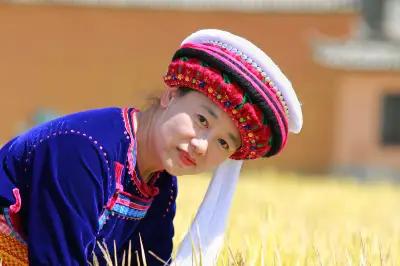
Walking on the bluestone-paved paths, enjoying the scenery of flowing streams along the streets and flowers in every household, and visiting spots like Jianggong Shrine, the Catholic Church, and the Three Pagodas of Dali, I felt the flow of time and a strong cultural atmosphere. For literary youth, time in Dali Ancient Town is slow and leisurely. Delving into the Bai folk houses with “three rooms and a screen wall,” seeking the everyday charm in the streets and alleys, passing by locals carrying bamboo baskets and Bai people in traditional costumes—it’s like a dream come true, making poetry and the distant reachable.
Strolling through the streets and alleys of the ancient town, there is endless charm to explore.
Leisurely time is always short. Away from the hustle and bustle of the city, my trip to Dali was coming to an end before I knew it. Sitting in a corner, flipping through the photos taken these days, my heart was full of the blue sky, clear water, and white clouds around Mount Cangshan and Erhai Lake.
Dali is indeed a place where one can calm down—serene and tranquil, ancient and elegant, as if the air is filled with the comfort of “long trapped in a cage, returning to nature.”
The time I spent in Dali cannot flow back, but the beautiful memories are permanently frozen in my heart. I have felt the prosperity and silence of Dali, the ancient passage of time, and the vividness and passion of life.
A pure land, a heart sutra, I pass through here, and you happen to be here too…
Dali, how could I not miss you.
Friendly reminder: Dali’s climate is spring-like all year round, but the temperature difference is large, so it’s best to bring a thick jacket. Also, note that the UV rays are strong during the day, and the climate is dry, so ladies should not forget face masks and sunscreen.