Dali & Lijiang: Thin Air and Utopian Living
Memories of Dali and Lijiang: my first true high‑altitude trip began with altitude sickness at Lugu Lake. Because of a cold, I had to give up Shangri‑La, so I made my way to Lijiang, the city of romance, where I fell in love all the way to Dali. That was probably my first impression of the plateau, my very first encounter with Dali and Lijiang.
At first glance, the names Dali and Lijiang already ooze romance. So many interesting people have passed through or settled here, giving these two cities layers of meaning. I’ve always loved the snowy highlands, but the altitudes of Dali and Lijiang are comfortable—you’re unlikely to get altitude sickness, yet blue skies and white clouds are in endless supply. How could you not love them?
In 2012, my first year of backpacking, I hoisted a 60L hiking pack and took a hard sleeper from Chengdu all the way to Xichang, just for a glimpse of Lugu Lake. In the golden autumn, Lugu Lake was breathtakingly beautiful. It was also my first real day of hiking on the plateau.
Perhaps I didn’t pay enough attention to keeping warm, and later I caught a slight cold, turning it into my first altitude sickness experience. I had originally been determined to see Meili Snow Mountain in Shangri‑La, but gave up due to my health. Yet in the following year or two, I came to Feilai Temple several times, just to catch a glimpse of the Thirteen Peaks of the Prince.
Sometimes people have obsessions—when you think of something you didn’t accomplish, it gets stuck in your heart. You still need to fulfill that wish to feel at peace. Luckily, I later went to Lijiang and Dali, visiting Shuhe Ancient Town, Baisha Village, Wenhai, Yuhu Village, Lashihai, and more. I even went to Dali just for that iconic white table and chairs in Shuanglang. But what left the deepest impression was the early morning mist over the Heihui River in Shaxi Ancient Town.
For some reason, many years passed, and though I traveled to many Tibetan regions, I never returned to Lijiang and Dali. Perhaps I didn’t want to ruin that initial beauty, so I found it hard to set foot in this lovely place again.
But this time, I happened to find several really great guesthouses in Lijiang. The timing was perfect—it was November, the same month I first came, with Lugu Lake’s autumn colors at their peak. In 2017, I came back to Lijiang.
It feels like after all these years, Lijiang still only has these few places to play. But maybe because I’ve been on the road for so long, I see things differently. Traveling now is about taking it slow—I no longer want to visit many places in one go, as that would be too tiring.
I gave Lijiang seven days, didn’t even go to Dali, just flew in and out. For instance, I wanted to see the sunset again at the Walking Marriage Bridge at Lugu Lake. I wanted to spend an afternoon strolling around Shuhe Ancient Town, sipping coffee. And I still wanted to visit those ancient towns and villages at the foot of Jade Dragon Snow Mountain—and I did all of them.
Coming back to Lashihai after years, it had changed. I guess it no longer scams tourists like before, and recreational facilities had improved. This trip was really nice. The biggest change was the road from Lijiang to Lugu Lake—from 7 hours to just 3 now, such a blessing.
So time moved on to 2019. An old friend opened an inn in Dali, and I figured it was about to open. I had promised to come when it did, so that wish brought me to Dali once more.
I really like to stay a few days in a place—that feels like traveling to me. Rushing through with a quick smile is just passing by, meaningless. In Dali, I spent five days. The deepest impression was one day when I rode from Erhai Lake to Dali Ancient City. The sun was just right, and we sat drinking in the sun at the Four Seasons Market. It was noon, and we kept drinking until ten at night, moving to several places without ever stopping, except for more drinking.
How to enjoy Dali? Just settle in peacefully, sleep during the day when you want, wake up to see Cangshan’s snow and Erhai’s moon, eat what you crave, drink what you like, and the day drifts by. That trip was deeply memorable. Naonao arranged a little electric scooter for me, letting me freely roam between the ancient city, Cangshan, and Erhai. She even had someone pick me up from the airport, so I had nothing to worry about.
All I did was eat till full, sleep till satisfied, and then go out to admire the sea views and take beautiful photos. Besides the craft beer that I still crave, Yunnan grows lots of small‑bean coffee. In Dali, just walk into any interesting‑looking café and the pour‑over coffee is never bad.
The highlands are beautiful, but Dali is even more suited for a utopian life. It has the plateau’s signature blue skies, white clouds, snowy mountains, and lakes, yet an altitude that rarely causes altitude sickness and gentler UV rays. That’s probably why so many people quit their jobs to settle in Dali.
Ever since I met Fan Kaikai, we’ve traveled together every year, but this year we hadn’t yet. Coincidentally, we were both free, so we agreed to meet in Dali. What matters isn’t what there is to do in a place, but the people you’re with.
That said, Kaikai and I have been to quite a few places. It started with a month‑long road trip in Xinjiang, then Chengdu, Chongqing, Taiwan—he’s long been a great travel companion. We’re in the same city, and at first we could call each other anytime. Now we’ve become like brothers, more casual. I remember often drinking Wusu beer on the rooftop, deciding where to go next, whether a spontaneous trip or one long planned. Enming had just finished a trip to Bipenggou and took an early‑morning flight to Dali to join us. So the three of us rented a car and started a short trip in Dali.
I realized you don’t need rapeseed flowers for golden seas—when the wheat ripens, Dali’s countryside is utterly charming. To fulfill my wish to revisit Shuanglang, we headed there first. It was still the ancient town with endless steps up and down, but I no longer had the mood to hunt for that white table and chairs at Seaview Life. Now, I mostly wanted to sit in a guesthouse or café and gaze at the sea.
Over the days, we ate Yunnan food many times. As the saying goes, when in Rome… it grew on us. For instance, the famous Duan Gongzi Restaurant has creative dishes, and Jinhua Amei across the street is also good. There’s also a century‑old courtyard, Jinshan Bainian, where the owner is a born‑and‑bred Dali Ancient City local. Their homemade plum wine was superb.
Coincidentally, my next destination was easier to fly from Lijiang, so we went together. No other reason, just to re‑experience the ancient town. I’d thought with the pandemic, tourists might be fewer, but I underestimated it—this was probably the most crowded scenic spot I saw all year.
Dali Ancient City is a must for every visitor. The city dates to the Ming Dynasty and is one of China’s first batch of 24 historically and culturally famous cities. The traveler’s four‑word motto: ‘Since you’re here’—how could you skip the ancient city?
When I arrived at Dali Station, the bus I wanted was about to depart. Never mind my hunger—I got on first. Kaikai and I stayed at Jijian Nanguo Homestay on the edge of the ancient city, just a ten‑minute walk away. I ordered takeout on an app while on the way, so dinner was ready as soon as we arrived. Things are so convenient now—rain or shine, someone can run errands for you.
We sat down and brewed tea. In Yunnan, drinking pu’er is normal. Before I set off, Kaikai had hurriedly asked me to bring some green tea. As Fujianese, Tieguanyin still holds a certain place in our tea habits. After a brief rest, we turned in early, having spent the whole day on planes and high‑speed trains.
The next morning, I opened the window to distinct Bai‑style architecture. Over the years, I’ve forgotten what it’s like to feel a strange bed; I often wake and squint, trying to recall which city I’m in. Sometimes I think turning this ‘fun’ thing called travel into a ‘work’ thing is actually quite nice.
I had just woken when Enming arrived from Sichuan to join us at the homestay. Because of the pandemic, airlines launched ‘fly at will’ passes, and people with money and time picked the one that suited them, starting to fly around the country at set times to tick off their destinations. Dali is just that kind of fun place—all kinds of people come, fall in love with it, and stay to run small businesses as best they can.
Dali has four main gates, one in each cardinal direction. Walking from our homestay, we passed Erhai Gate. You can see the city wall’s outer surface is brick, and the gate tower roof is a double‑eave hip‑and‑gable style, a high‑grade design in Chinese palatial architecture. In fact, the oldest surviving buildings in Dali ancient city are probably only a little over a hundred years old. Due to historical reasons, they’ve been damaged to varying degrees over time, so few truly ancient structures remain. Most buildings have been restored to their original appearance.
Everywhere in the ancient city you see all kinds of shops. I recalled a line I saw today. There are local specialties like cured spare ribs and stone‑grilled dishes, as well as trendy new shops, cafés, and milk‑tea joints.
After dinner, wandering the ancient city at night, you still see many drifters setting up street stalls to earn travel money. Maybe they even have a civil service job in Dali, yet they still want a fun life and come to set up a stall.
This is probably my most vivid memory of Li Jian’s song: ‘In the distance, beneath the blue sky, golden wheat waves surge, right there was the place you and I once loved.’ – ‘Wind Blowing Wheat Waves’. Late September, just early autumn in Dali, the wheat fields had turned yellow. Endless golden fields lined the road from Dali Ancient City to Shuanglang—pastoral scenery all the way.
Before coming, I had done a lot of research. I didn’t just want to circle Erhai Lake and check off spots like cliffside views or certain groves that look dreamy in photos. I also wanted to visit lesser‑known temples like Gantong Temple, Jizhao Nunnery, Wuwu Temple, etc. But reality got the better of laziness. Like, the night before we drank too much and couldn’t get up, or we’d arrive at a destination and the three of us would end up sleeping in the car all morning—but that’s another story. In short, we barely checked off anything, just went wherever.
Dali’s weather is fickle. One moment it looks like rain, the next the typical ‘Jesus light’ (crepuscular rays) appears over Cangshan. We parked by a village lane and got out to admire the golden wheat fields. In the distance, grey‑tiled white‑walled Bai houses—iconic Dali, an image etched into my mind.
My drone took me over wheat fields, past houses, gazing toward Erhai. The weather had turned clearer than in the morning, and my mood lifted with it. Traveling with fellow photography enthusiasts is fun; no one waits, everyone knows when you’re done you’ll say stop. If not, we each do our own thing. I love that.
This time in Dali, Naonao wasn’t with us, which was a pity. But I met a net‑friend, Maonu, whom I’d added long ago but never met. This girl bought a Wuling Hongguang minivan, converted it into a coffee van, and spent a year touring China, selling coffee as she traveled. Last year she came to Quanzhou and stayed at Suqingmen Hostel, but I was off flying somewhere and we missed each other. Now she’s temporarily settled in Dali, selling coffee at various markets every weekend!
We visited her rented little house in Dali, with its own entrance, a two‑story loft. Upstairs was living space, downstairs a studio and coffee bar, but actually it’s a private booking venue, not normally open to the public.
Every person who lives earnestly the life they want deserves respect. She drove her self‑built coffee van to many places and finally chose to stay in Dali for now. The pandemic has changed so many lives; in such a difficult year, still chasing the life you want—it’s not easy.
Maonu keeps two cats and a golden retriever in her little house; she doesn’t look lonely at all. The place is simple, but the warm yellow lighting makes it charming. There’s a backyard shared with the landlord. But you can never truly know someone else’s life—only she does.
From the outside, she really seems to be living the life most of us dream of but dare not. It’s a bit cool. I regretted not waiting until market day to have a coffee from her van.
The Wuling van can be so girly—lake‑blue exterior. Open the rear door and it’s a coffee bar; side door opens to a table and chair for sipping coffee and reading. When traveling solo, if you want to sleep in the van, you can lower the table, flatten the storage cabinet into a simple bed. It’s like an RV and coffee van combined.
Enming kept saying how great it is to live like Maonu. Dali truly is a fine place, a livable city—just watching the sunrise and sunset over Cangshan and Erhai every day is happiness enough. In the end, we bummed a few drip‑bag coffees from Maonu before reluctantly leaving her van.
I first came to Shuanglang in 2012, and it was my main reason for visiting Dali—for that iconic image, not a building but the white table and chairs at Seaview Life. When I was young, it was like poetry and distant places.
After so many years, this was only my second visit. Shuanglang lies on the northeast shore of Erhai, with Jizu Mountain to the east, the famous photography spot Wase Pier to the south, and Erhai right to the west. It’s the best place to watch the sunset over Erhai.
When I first came, Shuanglang was like a construction site, guesthouses springing up everywhere. A few years ago, Erhai underwent a major renovation, and many lakeside inns suffered. It’s probably only in recent years that things have begun to return to normal.
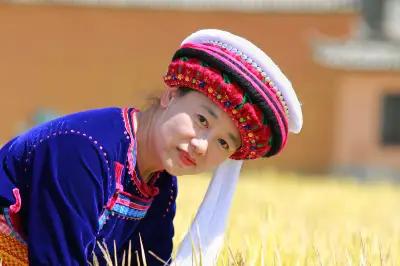
Getting out of the car, we strolled from the roadside to the seaside, past markets, small shops, and countless steps. Bai aunties in local dress were buying and selling vegetables—so full of local life. Shuanglang is a town built against mountains and facing the sea; dragging a suitcase to find a guesthouse could be a hassle.
In Shuanglang, besides exploring the village, checking out guesthouses is a pleasure. We picked a seaside inn, ordered their signature durian pizza with some tea, and had a perfect afternoon tea.
I flew my drone from the inn’s rooftop. Ever since I got one, it feels like many views are incomplete without it. Up there, watching Erhai and Shuanglang at sunset, I couldn’t care less about time slipping away—only the scenery matters now.
If you really want to enjoy Shuanglang, I suggest staying overnight. Watch a sunset, fall asleep to the sea breeze, wake naturally to blue Erhai through the window. What more could you ask for?
Without a car, Shuanglang is a bit inconvenient, but luckily ride‑sharing apps work. If not, taxis are easy. Driving from Dali Ancient City to Shuanglang takes about an hour; there are also several buses daily.
“Shuanglang’s seaside is beautiful, but there’s too much construction around the village—dust and noise everywhere. Most heavy labor is done by women. Along the way, Mosuo, Naxi, and Bai societies are matriarchal, so women toil especially hard. The blue sky against the blue sea, snap, every shot is a picture.”
That was my earliest impression of Shuanglang. Now, it’s almost only the drone that shows me the world. I’m so lazy, unwilling to walk even a few extra steps—I’d rather find a seaside afternoon tea and soak up the sun all day. Perfection.
Here’s a funny story. The night before, we three agreed to sleep early and set off early the next morning to visit lots of places, clearly planned. We did get up early, leaving the hotel at 8 am. Never mind that we’d drunk a lot and stayed up late shooting the stars—we all gathered on time. But someone hadn’t done their research well; we drove to Haishe Park only to find it was closed.
Result: the three of us… slept in the car all morning. When we woke, it was nearly lunchtime. I want to ask: Was the guesthouse bed not soft or fragrant enough?
At times like this, I’m grateful for my drone. When we couldn’t enter, this winged gadget flew in for us. Haishe is originally a spit of greenery jutting into Erhai, and from above it looked even more vivid.
This oasis was truly beautiful. It reminded me of the time I came alone, riding an electric scooter with a tripod, taking many self‑portraits.
In Xizhou Ancient Town, there’s Xilinyuan, and beside it a beautiful paddy field—now a popular photo spot. My first time, I was alone and didn’t take a single photo. The second time was with Sister Hua and others, just before our 45‑day Tibet road trip. We drove nonstop from Guangzhou to Dali in two days. Early September still felt rainy, with three days of drizzle. We didn’t even set foot by Erhai, just visited Xizhou’s old houses and glanced at the rice fields.
Xizhou has become a place I visit every time I’m in Dali. Strolling through the ancient town feels wonderful. The wealthy are in Xizhou—many of Dali’s business‑savvy people come from here. So Xizhou has many well‑preserved Bai residences, like Yan’s Courtyard by Square Street, as well as Dong’s, Yang’s, and others. Anyone interested in Bai architecture shouldn’t miss Xizhou.
We goofed around in the golden rice fields, just to add fun memories. Enming kept posing: toothache, stomachache, headache—different poses. Fan Kaikai, though—both using a7r3, how did you manage to miss focus on every shot? Whatever, that flowery dress I bought last night was a waste.
Don’t miss the ‘public phone’ in Xizhou—at a crossroads, many people take photos there. Pass the rounded corner building, walk a bit further, and you’ll reach Xilinyuan’s rice fields.
Just at that moment, I realized you were by my side. Just at that moment, I realized I’d lost your face. I can forget everything, but not your face. Whatever changes, please let me see you once more. – ‘In That Moment’ Since Lijiang Xiaoqian released this song in 2011, a decade has passed. Walking through the bustling or quiet lanes of Lijiang Ancient City, you still hear that familiar hand‑drum beat.
Think about Lijiang and Dali—how many people dream of coming here. Early folk singers all emerged from these southwestern regions, and the utopian days came from these places of blue skies, white clouds, and snowy mountains. It’s been four years since I last seriously explored Lijiang. Life slips between missed chances and mistakes, time fleeting. Kaikai and I took a ride‑share from Dali to Lijiang, about two hours. We stayed at Shiheyuan, right at the edge of the ancient city, quite convenient.
If you stay near Sifang Street, dragging a suitcase over cobblestones is a nightmare. I thought with the pandemic, the ancient town would be less crowded. As a famous destination, Lijiang’s tourist flow is constant. Turns out I was naive—walking from Shiheyuan along Wuyi Street to Sifang Street, it was packed.
My favorite time in an ancient town is when darkness just falls, the sky turns deep blue, and the lights come on—so beautiful. Having been to Lijiang many times, I didn’t feel like checking off spots. Kaikai and I just brewed tea on the inn’s third‑floor terrace, overlooking the whole old town, feeling utterly content.
Bougainvillea bursts everywhere in the ancient city, as if free. It gives lively color to the antique buildings. I envy Yunnan’s climate—succulents and all kinds of flowers thrive so well. You can see blossoms year‑round in Lijiang, what a blessing.
Another reason for this Yunnan trip was to try a few Yunnan restaurants. Yunnan cuisine varies by region; Dali and Lijiang mainly feature northwest Yunnan food. Dali leans toward Bai specialties, while Lijiang, as a key Tea Horse Road stop en route to Lhasa, has slightly more highland influences. The biggest feature of Yunnan cuisine is its mushroom kingdom—visiting Yunnan means eating lots of wild edible mushrooms. Recommended restaurants: 1. Dali Duan Gongzi (Dali Ancient Kingdom Cultural Experience Store) Actually, the Tianlong Babu themed store was closer to our inn, but when we passed Erhai Gate ready to eat, we were told the place was booked for a private event at lunch, with dishes taking an hour.
We figured forget it, walked on, and ended up passing McDonald’s. I recalled my last trip with Naonao, staying at Wuxiang Xunyou nearby, and there seemed to be a Duan Gongzi there too. Sure enough, the popular spot’s charm held—at mealtime, the entrance was packed.
Duan Gongzi claims to be Dali people’s own brand, so mostly Yunnan dishes. Most diners seem to be tourists. Their presentation is thoughtful—like the numbing chicken comes on a sword‑shaped plate, reminiscent of Duan Gongzi from ‘The Demi‑Gods and Semi‑Devils’.
The ‘Wind, Flower, Snow, Moon’ fish was the best dish I had at Duan Gongzi. Served with dry ice beneath, it looks like floating on clouds. The appetizing fish soup has a slight kick, and the fish is tender and smooth.
Cangshan wild mushrooms—of course, my first meal in Dali had to sample Yunnan’s mushrooms. Very fresh, stir‑fried with several types.
The house special numbing chicken: marinated, fried golden and crispy, with Yunnan erkuai (rice cakes) as a side. Green Sichuan peppercorns with white erkuai and yellow chicken—visually appetizing and tasty.
That said, it’s a themed Dali specialty restaurant, so the ambiance goes without saying. Dining here feels like ancient Dali Kingdom; even the servers wear period costumes. Many photo spots inside and out. If you want to make memories and eat decent local food, Duan Gongzi is a good choice. 📍 Address: Intersection of Shangduan Renmin Road and Bo’ai Road, Dali Ancient City. 🚗 Transport: Near Cangshan Gate, walkable. 🕙 Hours: 11:30–22:30. 💰 Per person: 100 yuan.
2. Dali: Jinshan Bainian Guru Courtyard Restaurant This one is a must‑recommend, right on Renmin Road. It’s easy to miss—the entrance is covered in flowers and plants, very girly. Once inside, the courtyard overflows with blooms.
The owner says theirs is probably the only shop on Renmin Road still run by the family that owns the house. The century‑old residence has been preserved, and the people living there breathe new life into it.
After a wander, we decided to eat here. Genuine Bai people cooking Bai food—where else? The owner personally took our order, recommending the famous wild mushroom and free‑range chicken soup, and unique corn leaf‑wrapped corn cakes.
We emptied the chicken soup pot—just too delicious! The rich chicken broth paired with mushroom freshness, a mouthful of bamboo fungus and porcini, nothing more satisfying.
The passion‑fruit sour‑and‑spicy fish is both a Bai specialty and their original creation, with the fruit’s fragrance.
The water‑hyacinth (Shuixing Yanghua), Yunnan’s most authentic wild vegetable, was stir‑fried with mushrooms, wonderfully refreshing. I couldn’t stop eating it all evening.
Finally, praise the owner’s homemade plum wine. So good I packed a bottle to sip back at the guesthouse. 📍 Address: 99 Renmin Road Middle Section, Dali Ancient City. 🚗 Transport: Explore the ancient city on foot. 🕙 Hours: 10:00–23:00. 💰 Per person: 80 yuan.
3. Dali: Jinhua Amei Specialty Cuisine Five Golden Flowers—probably a story many hear before coming to Dali. From an old movie, a romantic tale that lingers. “March in Dali is beautiful, by Butterfly Spring she combs her hair…” “Seek Golden Flower at the foot of Cangshan, Golden Flower is a girl…”
Sometimes we can’t meet the perfect match in our own lives, but we can still treat ourselves. My third Dali food recommendation is Jinhua Xiao’amei (Little Amei), right opposite Duan Gongzi—a Five Golden Flowers‑themed Yunnan restaurant.
Inside, servers wear Bai costumes like the movie’s Golden Flowers. The walls are decorated with hand‑drawn art and old photos telling the story. Started with a cold shredded chicken and red rice noodle salad—very Yunnan, sour and cool, appetizing.
We sat by the window, the server was gentle, introducing specialties. While asking how to get to Shuanglang, they even gave us a Dali guidebook, so warm.
Enming loves bamboo fungus, so we ordered another wild mushroom soup. A trip to Yunnan must have its mushrooms. The presentation was grand—a large platter with five or six varieties, a freshness you only get in Yunnan.
Amei’s baotao tofu (bagged tofu) deserves high praise. Looks plain, but crispy outside, silky inside, perfectly soft with a great sauce. So good I’d order it again at any Yunnan restaurant, but this one remains the best. 📍 Address: Intersection of Renmin Road and Bo’ai Road, Dali Ancient City, opposite Duan Gongzi. 🚗 Transport: On foot in the ancient city. 🕙 Hours: 10:00–23:00. 💰 Per person: 90 yuan.
4. Lijiang: Dianxi Wangzi We took a ride‑share to Shiheyuan Inn, right on Wenming Lane near the main road—no need to drag luggage over cobblestones, such a relief. After dropping bags, we were starving and headed out.
The restaurant’s wall paintings are old‑style, with costumed Golden Flowers, torch festival and water‑splashing festival scenes. One window dedicated to “Southwest Authentic Steam Pot Chicken”—a specialty, so we ordered it.
The righteous steam pot chicken portion is modest, perfect for two or three, still loaded with wild mushrooms. A bowl of soup before the meal, so gentle on the stomach.
I had to have water‑hyacinth again, still craving its texture after Dali. Ordered another plate.
Lijiang cured ribs: on the side, a salad to cut the richness. Crispy and fragrant, a famous dish, this updated version likely pleases more people. Looks great, generous portion.
Ethnic bamboo‑tube snow‑mountain fish—every Yunnan restaurant seems to have a snow‑mountain fish and a wild‑mushroom chicken soup. The bamboo tube presentation is unique, with a pleasant sour‑spicy taste. 📍 Address: Intersection of Wuyi Street and Wenming Village, Lijiang Ancient City. 🚗 Transport: In the northeast of the ancient city, on foot. 🕙 Hours: 11:00–22:00. 💰 Per person: 100 yuan.
5. Lijiang: Dianyuan Sichu The entrance is tiny, but inside there’s a courtyard, right near Sifang Street, very central. I love Yunnan’s private courtyards—sunny spots full of flowers, so warm.
The server greeted us warmly and checked if the food suited our tastes—attentive. Two dining floors; a window seat upstairs lets you watch the passers‑by.
Their baotao tofu also gets lots of recommendations. Inside it’s like Japanese tofu, silky, while the outside is crispy, with a non‑spicy sauce, great with rice.
Stir‑fried beef mince and tea‑tree mushroom rice—grains separate, the mushroom’s aroma intense, very satisfying.
After days of chicken soup, we chose the Dianyuan stir‑fried wild mushrooms instead. Super appetizing, tender and fragrant, with a light glaze—I ate two extra bowls of rice. 📍 Address: Between Dashíqiao and Xiaoshíqiao on Wuyi Street, Lijiang Ancient City. 🚗 Transport: On foot, right near Sifang Street, central and easy to find. 🕙 Hours: 11:00–23:00. 💰 Per person: 90 yuan.
Food, lodging, and transport are always the core travel concerns. This trip I stayed at three places in Dali and Lijiang—good value and location. 1. Dali Ancient City: Jijian·Nanguo Boutique Inn The inn is on the edge of the ancient city, in an area called Miwan Town. From Dali Station, take bus 8 and walk a few steps. Staying in the ancient city is lively, but if you also want quiet at night, Jijian Nanguo is a good choice—five minutes’ walk to the old town, yet stepping out you’re in a peaceful neighborhood.
Jijian Nanguo also houses the Dingyin Management Academy. Kaikai knows them well, and over the years I’ve been involved in homestay and travel stuff. That evening we talked late about homestay concepts.
The rooms are good. Across Yunnan, most homestays are affordable and well‑equipped. Waking up, I opened the window to Bai architecture—had I traveled back to the Kingdom of Dali?
I had a tatami king room with a long work desk, separate wet‑dry bathroom, and plenty of space. One noon I even joined for a meal—the aunty’s cooking was amazing.
2. Dali Cangshan: Jijian·Canghai Jisu After two nights by the ancient city, it was time to play near Cangshan. Conveniently, another place from the same group, Jijian Canghai Jisu, sits at the foot of Cangshan, inside San Ta Bei Road’s Cangshan Golf Star Village, with the golf course right behind.
With a rental car, it’s easy to reach following navigation. The villa’s hillside location overlooks Chongsheng Three Pagodas and Erhai, and late at night you can even capture stars and the lake.
The style is Chinese, and the bedding comfortable. Though on a hill, food delivery still reaches, and a taxi to the ancient city is just the starting fare. Breakfast is simple but good—rice noodles, with milk and eggs on the side.
3. Lijiang Ancient City: Shiheyuan Inn Shiheyuan’s location is excellent, close to the main road, on Wenming Lane off Wuyi Street, just a stroll to Sifang Street. At check‑in, they mentioned the third‑floor terrace overlooks the old city. We didn’t think much of it until just before leaving, with time to spare, we went up.
I fell in love with the terrace—tatami seating, prepared pu’er tea, fruit from the inn. We sipped tea and chatted, every journey ends, but a beautiful ending means a new beginning.
The rooms are also full of old‑world charm, with a large tea table for tea and writing. I prefer coffee; brewing a cup, stepping outside into the layered courtyard. Considering value and location, Shiheyuan is a solid choice.
This trip’s itinerary: Day1 Dali – Dali Ancient City – Dali countryside – Maonu’s coffee van – Shuanglang. Day2 Dali Ancient City – Haishe Park – Xizhou Ancient Town. Day3 Dali – Lijiang. Day4 Lijiang Ancient City. Transport: Kunming, Dali, Lijiang all have airports, and high‑speed trains are super convenient, with many daily trains. So you can fly into whichever is cheapest, just book ahead. Dali to Lijiang has frequent buses or ride‑shares—about 100 yuan if sharing, 150 if not, a bit over two hours, quite acceptable. A few tips: 1. Dali: Circling Erhai is 120 km, split into west and east sides. A full‑day drive around the lake is needed. The west route, near Dali Ancient City, includes Cai Village, Xizhou, Haishe Park—good for sunrise. The east route includes Shuanglang, Wase, Xiaoputuo, Haidong Town—best for sunset over Cangshan and Erhai. 2. Renting a car is easy; many rental shops near Dali Ancient City offer colorful Jeeps for photos. For safety, using well‑known apps might be better. We rented for two days/one night in mid‑September, fuel included, around 500+. 3. Dali stays: Both from Jijian series—one by the ancient city, Jijian Nanguo; one on Cangshan for starry skies, Jijian Canghai Jisu. Both okay. 4. Dali food: Duan Gongzi, Jinhua Amei, Jinshan Bainian Guru Courtyard. 5. Lijiang: For transport, apps are safer. 6. Since Lijiang is a mega tourist city, if not driving or hiring a car, book trips through licensed agencies; avoid suspiciously cheap tours. 7. Lijiang stays: Countless options in the ancient city and Shuhe; budget is key. Shiheyuan offers good value. I’ve also stayed at pricier but wonderful places like Arokampa in Shuhe. 8. Lijiang food: To avoid generic tourist fare, stick to Yunnan cuisine—Dianxi Wangzi and Dianyuan Sichu in the ancient city have authentic Lijiang flavors. 9. Lugu Lake: Local shared‑van tours can be dodgy; best to drive yourself. Failing that, hire a private car. Shared rides are tiring and you never know your companions.