Seeking Winter Sunshine in Lijiang and Dali, Finding a Blooming Scenic Spot
In my view, there are two kinds of beauty in the world: the coolness of midsummer and the warm sun of winter.
As early winter approaches with shivering steps, under the invasion of cold air, I become especially greedy for warmth.
With that in mind, without any hesitation, I booked tickets, packed my bags, and set off—all in one go.
Once again, I headed to Yunnan, this paradise on earth with spring-like weather all year round, chasing that unique winter sunshine of my own.
Day 1: Arrive in Dali, check into Jijian·Canghai Suji Homestay—Dali Ancient Town
Day 2: Around Erhai Lake: Xizhou Ancient Town—Haishe Park—Shuanglang Ancient Town—Back to Ancient Town—Four Seasons Market
Day 3: Caicun Pier—Yang Liping Grand Theatre—Shaxi Ancient Town
Day 4: Weishan Ancient Town
Day 5: Lijiang Ancient Town—Shuhe Ancient Town
Day 6: Baisha Ancient Town—Jade Dragon Snow Mountain—Return trip
How many people have been drawn to Dali by the song "Going to Dali"? Coming to Dali, I feel the wind, flowers, snow, and moon described in the lyrics.
Dali is synonymous with all things beautiful, and this time, it's my third visit.
Every time I come to Dali, it feels different—like meeting an old friend after a long separation, both familiar and full of new surprises.
Before arriving, I booked the inn online: Jijian·Canghai Suji. I admit I was attracted by the name, and it turned out to be a good choice. As soon as I got off the plane, I took a car heading to the ancient town. The trip from the airport to the inn took about 50 minutes.
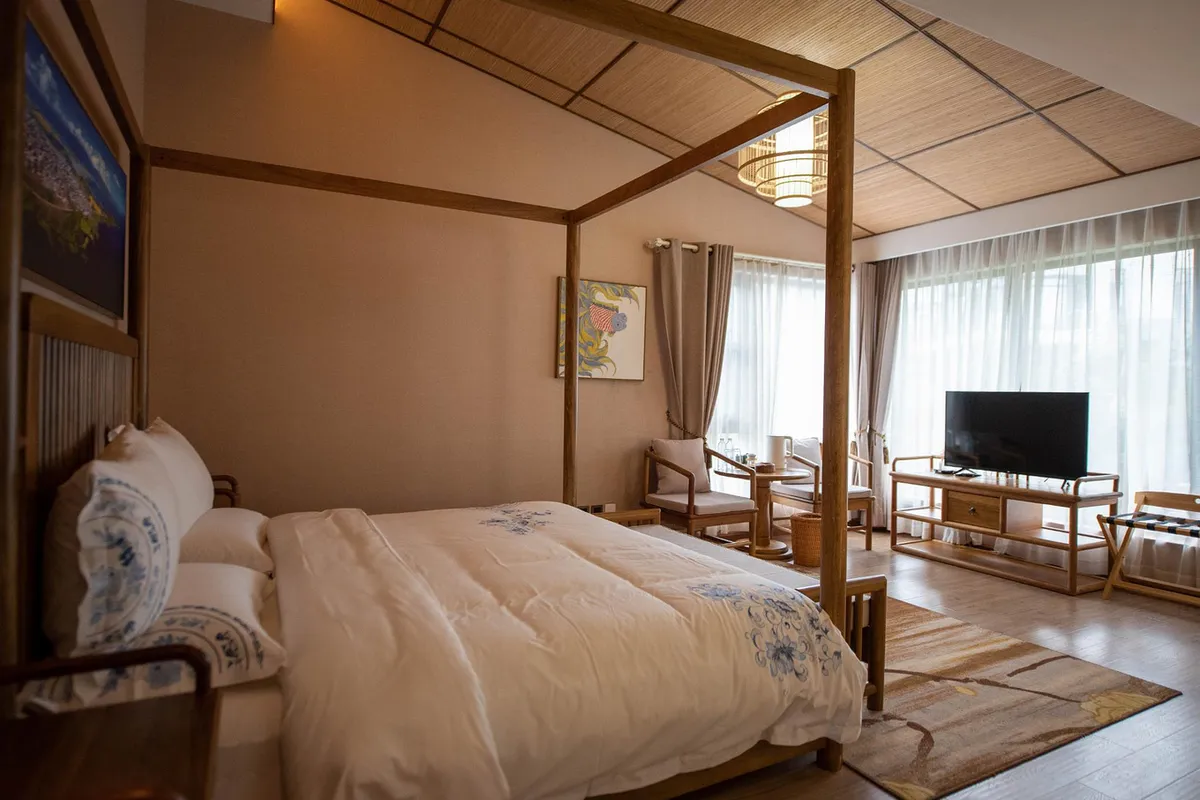
The hotel is located in the Dali Canghai Golf International Community, at the foot of Cangshan Mountain and by the shore of Erhai Lake, about a 10-minute drive from Dali Ancient Town. Upon arrival, the exterior of the hotel came into view: a simple, modern European-style building with two wings on the left and right, connected in the middle by the lobby, restaurant, and other common areas. I booked a double bed room with an excellent view. Standing on the balcony, I could see vast lawns of the golf course in the distance, perfect for photos. The room style was also to my liking, with plenty of natural wood-colored furniture giving a warm, fresh feel.
There's a tea table in the courtyard for guests to relax. Even if you don't visit any attractions, sitting here in this blooming garden with a cup of tea, doing nothing, you could spend an entire day. Because at some point, daydreaming has become a luxury for people.
Although the hotel is a bit far from Dali Ancient Town, it's not a problem since we rented a car—it only takes ten minutes to reach the ancient town. Being far away has its advantages; being close to the ancient town surely means more noise. Gain and loss are the norm.
The mottled ancient city wall, weathered by time, occasionally sprouts a few weeds; on both sides of the street, snowmelt water from Cangshan Mountain flows quietly along the ditches; shops stand in rows, and while strolling, you can't help but find some interesting little items. Climb up the city wall, and you can see the entire layout of the ancient town. Jin Yong once said that Dali is the place that preserves Chinese cultural heritage most thoroughly, and every time I visit, I deeply agree.
Whether it's the gray bricks, black tiles, and white walls of the folk houses or the bustling commercial streets, everything blends well here. Tourists don't feel disgusted by the commercialization; on the contrary, they visit with a very tolerant attitude. This might be the unique purifying magic of Dali.
The Dali Ancient Town in books, the Cangshan and Erhai in songs, and the romance in wine—all become within reach here.
When tired from walking, I found a specialty restaurant in Dali to satisfy my hunger. The Jinshan Bainian Guyuan Restaurant pleasantly surprised me. I never imagined that in an old courtyard house, there would be such a culinary gem. With 120 years of vicissitudes, this courtyard is truly old—dark red wooden doors, thick wooden beams, and traces of time visible in every detail.
This is the owner's private courtyard, transformed into a restaurant. After welcoming guests, the old courtyard has taken on new vitality. Every blade of grass, every tree, every table and chair shows the owner's care.
The environment is beautiful, and the dishes are excellent. My favorite was the passion fruit sour-spicy fish: the sour and spicy fish slices kept me eating one after another without stopping. The sour and spicy fish soup with rice was also amazing—I couldn't help eating two bowls. Bai-style tile-roasted pork: the excess fat of the pork belly was completely rendered out, leaving only the crispy, fragrant meat without any greasiness. Spring rolls were deep-fried and dipped in a special sauce, very tasty. The owner said their braised chicken and water spinach were also signature dishes; I'll have to come back next time to enjoy them.
Erhai Lake is not a sea, but it's more beautiful than any sea. Starting from Dali Ancient Town, I rented an electric scooter and rode leisurely along the road, feeling the breeze on my face and the vast sky—truly the most stress-relieving way.
The cycling route passed through Xizhou Ancient Town, Haishe Park, and Shuanglang Ancient Town. The innkeeper told me that the daily market in Xizhou Ancient Town was very lively, showing the authentic life of local Dali people. So I got up early and went to Xizhou Ancient Town to experience it.
When I first arrived at Xizhou Market, there weren't many people, so it was indeed a bit early. But soon the market became bustling; vendors came out one after another to set up their stalls, and the originally quiet and spacious street turned lively and noisy.
This is a Bai ethnic ancient town with a thousand-year history. Like Dali Ancient Town, it has rich ethnic customs and a strong sense of history and culture. But unlike Dali Ancient Town, it is more primitive and simple, without excessive commercial development; the residents are mostly locals.
Bai folk houses are the original residences of Xizhou. Times have changed, history has shifted, but time seems to have stopped here; traditional folk houses and customs are well preserved.
If you want to experience an authentic Bai ancient town, Xizhou is the place.
The specialty of Xizhou Ancient Town is Xizhou baba (flatbread), and here you can taste the most authentic one. Freshly baked, crispy and fragrant Xizhou baba is perfect for breakfast. There are two flavors: savory and sweet. I am a loyal fan of the savory one.
Experiencing the local life during travel is also very interesting.
Haishe Park is not far from Xizhou Ancient Town.
Because it's a peninsula extending into Erhai Lake, it's called Haishe Park (Tongue Park). Compared to traditional parks, it's more like an untouched secret realm. In winter, Haishe Park is fresher; blue sky and white clouds are reflected in the lake, making it hard to tell if it's the blue of the sky or the water.
In the park, there is a couple tree—two trees growing side by side, tightly leaning on each other. With the earth as a matchmaker and the sky as a witness, even plants have love. If there is a next life, I want to be a tree, standing eternally.
In winter, many seagulls appear on Erhai Lake. These seagulls fly from afar to Dali for winter. At Haishe Park, with blue sky, white clouds, clear Erhai water, and seagulls occasionally swooping low, every frame is beautiful without any filter. I long for this kind of pure tranquility, as if only found in fairy tales.
In early winter, Haishe Park is picturesque; the lake breeze is gentle and comfortable. In this land, even time flows exceptionally slowly. While strolling, I saw some couples taking wedding photos. With such a beautiful backdrop, their photos must overflow with happiness. That's why Haishe Park has become one of Dali's popular photo spots.
Shuanglang Ancient Town, adjacent to Xizhou Ancient Town, was also my destination.
Everyone says that time in Shuanglang is slow, but only when you truly come here can you experience that peaceful leisure.
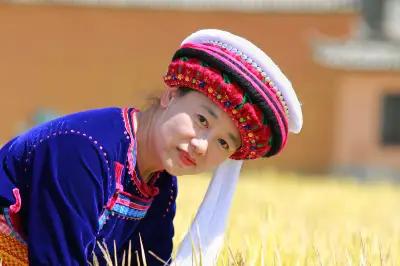
I wonder if it happened to be market day; I saw many elderly ladies carrying baskets picking goods at stalls, speaking local dialects, probably bargaining—full of the flavor of daily life. The older generation still wears traditional ethnic costumes, content in their corner, living a simple and comfortable life.
When we were young, happiness was simple; after growing up, simplicity is happiness.
In Shuanglang, there is a place called Yuji Island. Though not large, it has its own charm. There are many spots on the island to overlook Erhai Lake, even a telescope to see the scenery on the opposite shore. Wandering around the island, I passed by Yuji Nunnery, which gave the island its name.
The island is quiet and simple. Yang Liping's Sun Palace and Moon Palace are also built here. Moon Palace is Yang Liping's residence, while Sun Palace is a hotel open to the public. As long as you consume at the hotel, you can enter. Such an ethereal dancer and such a fairyland seem meant to be connected.
Returning to Dali Ancient Town, it was almost evening, time for dinner. I chose a well-known popular restaurant in Dali—Jinhua Amei Restaurant. One reason I've visited Yunnan so many times, besides the unforgettable scenery, is the Yunnan cuisine. For some reason, I am almost obsessed with Yunnan food, so every formal meal must be at a proper Yunnan restaurant.
Jinhua Amei, in Yunnan dialect, means a kind and simple woman. Upon entering, I was attracted by the decoration full of Dali Bai ethnic features. I ordered a mushroom soup, stuffed tofu, Pu'er tea-scented beef, and Jinhua's secret sweet-scented osmanthus papaya fish.
The mushroom soup was very fresh, instantly awakening my taste buds. The stuffed tofu was very flavorful—crispy on the outside and incredibly tender inside. The papaya fish also didn't disappoint; the fish was not fishy at all, very tender. The beef was generous, and this flavor of beef was something I had never tasted before.
This meal made me think that even if I came to Dali specifically for the food next time, it would be worth it.
Dining in such an antique environment is also a pleasure. I saw many tourists taking photos here.
After dinner, while strolling on Renmin Road, I found a bar. At first glance, it looked no different from other bars in Dali, but inside it was a different world. The bar was transformed from a traditional Dali courtyard. The first floor is open as a bar, while the second floor is protected as a cultural relic. Several different singers performed that night, from folk songs to pop. Sitting quietly here with a drink, emptying my mind for the evening, was indescribably pleasant.
It is said that Dali never lacks artistic youth, and the Four Seasons Market can be called a gathering place for them.
In Dali, there is a Four Seasons Market every Saturday, starting from 2 PM until night. The rise of the market has little to do with local customs. Many "big drifters" who fled Beijing, Shanghai, and Guangzhou to live in Dali gather here. Various handmade crafts, food, toys, and daily necessities find suitable buyers, and there are live performances by artists, reminiscent of ancient martial arts heroes.
Folk music, rock, or experimental music are performed here irregularly, while interesting cultural creations, antiques, handmade accessories, and vintage items make the market down-to-earth. Bai traditional jia ma (paper horse prints), wool felt, and indigo dye express the collision and fusion of ethnicity and the world. Old things and new things grow freely here.
Sellers casually display their goods on stalls or spread them on the grass, then leisurely bask in the sun. If someone is interested, they buy; if no one asks, it doesn't matter. Such an uninhibited style is truly enviable.
Many dogs are also taken out for a walk by their owners on the grass. Kids who don't go to kindergarten also join the fun. Accompanied by rhythmic music, watching the clouds and listening to the wind, everyone is immersed in their own world. The charm of Dali lies not only in its picturesque scenery but also in its inclusiveness. Diverse cultures converge and intertwine here. No matter where you come from, you can find your value and meaning here.
If you happen to be in Dali on a Saturday, you must come to this Four Seasons Market, which has no barriers and charges no entrance fee, to communicate with these interesting people.
Perhaps they are living out stories that are also happening to you, or perhaps your current life is the dream they tirelessly pursue.
Caicun Pier is a very niche spot in Dali, but its scenery is not diminished by its obscurity. Located in a village east of Dali Ancient Town, backed by Cangshan Mountain and facing Erhai Lake, standing on the pier, you can see the high sky and light clouds in the distance, and the rippling waves nearby. Where the water meets the fields, there is only a line of blue. Beautiful scenery always lifts the mood.
Walking along the shore, I sat on the steps of the pier to rest when tired. A gentle wind blew from the sea, willow branches swayed, birds circled, the sun was warm, and Jay Chou's "Sunny Day" happened to play in my earphones—everything was just right. Sitting quietly here, enjoying the peaceful time that is rare in daily life, emptying my mind, not caring about the passage of time, not scrolling through boring phone, I listened to the voice deep inside.
Occasionally a boat drifted by, occasionally two or three friends passed by laughing, occasionally a couple walked by sweetly. The peaceful and harmonious atmosphere was truly addictive.
Not far away, there were large wetlands; branches and meadows emerged from the water, mixed with various unknown flowers and plants or water birds, adding more spirituality and rustic charm to the village. Tourists and birds did not disturb each other, complementing each other's beauty.
Of course, you can buy a ticket and take a small boat to drift on Erhai Lake, bend down to play with water, look up to enjoy the clouds—another wonderful experience.
I envy the residents living here; after dinner, they can go to the lake to enjoy the breeze, watch the colorful sunset, walk along the newly built western ring road around Erhai, breathe fresh air—the pastoral life always makes one yearn.
Near Caicun, the Yang Liping Grand Theatre, completed only in the first half of this year, has become a must-visit popular spot in Dali. Located on the northeast side of Dali Ancient Town, north of Caicun Tourist Road, between Cheyi Village and Caicun, it can be easily found on Amap and Baidu Maps.
Upon arriving at the theatre, the scene before my eyes was stunning. The brilliant sunlight poured down, and the unique blue sky seen only in Dali was breathtaking. Walking around the theatre, different angles showed different beauty. Under the blue sky and white clouds, the green Cangshan Mountain, blue Erhai Lake, quiet villages, and vast fields unfolded like the most typical Dali painting. Admiring this unique artistic building, besides "stunning" and "beautiful," I couldn't think of other words.
Inside the theatre, the overall shape is curvilinear. Looking up, you see the blue sky and white clouds—it looks like a scene only in anime.
Standing in the distance, the theatre almost perfectly merges with the Cangshan peaks behind it. The strong visual impact makes you feel this trip is totally worth it. Lift your camera and snap a picture—a masterpiece comes naturally. Here, you never feel that this building is out of place; it seems it should stand here, look like this, blending harmoniously with the scenery of Dali's Cangshan and Erhai. Therefore, humans and nature are not irreconcilable opposites; with enough care, they can coexist harmoniously.
After returning from Caicun to the ancient town, it was almost dinner time.
Jin Yong's "The Semi-Devils and the Dragon" set in the Dali Kingdom adds a touch of martial arts to Dali. Dali Duangongzi Restaurant is especially eye-catching. The love story of Duan Yu and Wang Yuyan, even after many years, is still vivid in my memory. With such a restaurant name, it would be unreasonable for martial arts fans not to come and eat. This restaurant has two branches in Dali: one is the Tianlong Babu themed experience store, and the other is the Dali Ancient Kingdom culture experience store. I went to the latter.
Wooden signboard, antique storefront, and the interior decoration was no different from ancient inns. The interior design also fit the culture of the Dali Ancient Kingdom. Beautiful murals on the walls depicted the history of the Dali Kingdom, allowing a close look at Dali's customs. The throne of the Dali king was also resplendent and majestic.
I must mention that the tableware here was the most creative I've ever seen: bamboo tubes, swords, bamboo baskets—truly impressive and worth taking photos.
The dishes were also very Yunnan-style. We ordered several specialties. Pineapple rice was sweet and tangy; the specialty Sichuan pepper chicken was numbing and spicy, very satisfying; the lemongrass spareribs were flavorful, and gnawing on the big ribs felt great. Overall, I was very satisfied. The waiting time was worth it, though of course it would be better without waiting.
Weishan Ancient Town is very unfamiliar to many first-time visitors to Dali, but that very fact has preserved its original tranquility. Compared to Dali Ancient Town, Weishan Ancient Town can both satisfy tourists' needs and retain its authentic lifestyle, which shocked me as soon as I arrived. Weishan Ancient Town is the birthplace of the Nanzhao Kingdom, so the ancient town is quite large.
Starting from Dali Ancient Town, it takes just over an hour to reach Weishan County, and Weishan Ancient Town is embedded within the county, merging with the surrounding mountains. The people of Weishan live with the ancient town, and the town gains vitality from their lives.
This ancient town had villages as early as the early Tang Dynasty. During the Yuan Dynasty, the Duan family began building earthen walls, and it was formally built as a city in the Ming Dynasty. The entire county town is still relatively intact. The overall pattern of the ancient town retains the checkerboard layout from over 600 years ago: a square city with 25 streets and 18 alleys, distributed in a standard well-shaped structure, with large and small Ming and Qing buildings scattered from the center outward. Walking in such an ancient town, if you don't prepare a guide in advance, you can easily get lost.
Completely different from other highly commercialized ancient towns, Weishan Ancient Town exudes a stronger sense of daily life. Although there are tourists, they are few. On the streets, the vendors are mostly locals.
Entering the old cobblestone streets, I strolled slowly. The old courtyards on both sides have been dyed with the color of time. They lean on each other, experiencing the baptism of time together, listening to history and telling stories amid people's laughter and chatter.
Here, you can find the historical heritage of the Nanzhao Kingdom. Gongchen Tower is majestic, matching Star Gong Tower in the distance, standing quietly under the blue sky, with pigeons flying across the air—very charming, like the Bell and Drum Towers in Beijing. Here, you can also find the most worldly fireworks: the alleys of the food market, warm sunlight spilling on the ground, drinking a large bowl of tea at a tea stall, eating a bowl of braised pork rice noodle at a noodle shop. Moreover, in barbershops, orchid gardens, inns, harness shops, and inscription shops, you can constantly encounter smiles and warmth.
Leaving Weishan Ancient Town, I felt fully satisfied.
The next planned destination was Shaxi Ancient Town, a two-hour drive from Dali Ancient Town. It is often called "Dali Ancient Town of twenty years ago."
I had never been to Dali Ancient Town twenty years ago, so I didn't know what it looked like. But after arriving at Shaxi Ancient Town, I truly understood what "Dali Ancient Town of twenty years ago" means.
This Shaxi Ancient Town, hidden in the mountains of Yunnan, exudes a quiet and simple atmosphere. It is the place closest to the ideal rural life in China. Before entering the town, you see vast fields and romantic lavender fields, with crisscrossing paths, scattered houses, groups of ducks waddling into the pond—a leisurely and comfortable pastoral scene.
The residents of Shaxi and the tourists who come here jointly create this beautiful picture of Shaxi. On Sideng Street, elderly people walking with canes stroll leisurely. If you're lucky, you can witness a traditional Bai music performance and feel the ethnic atmosphere. The ancient town is not big; you can walk through it in half a day. The slow pace is perfect for friends or couples to walk hand in hand on the cobblestone road.
Find a quiet café, order a cup of coffee, and spend a lazy afternoon. These are signs of the revival of this ancient city. There is no noise from bars or music, only the tranquility of cafés and bookstores.
Speaking of bookstores, I must mention the Frontier Bookstore in this ancient town. Located in Beilong Village of Shaxi Ancient Town, the exterior walls made of mud and stones look like old houses from the 1920s and 1930s. This used to be a granary, and it is still a granary, but now it stores spiritual and intellectual food instead of physical food.
Warm yellow light shines through the windows, revealing a glimpse of the splendid scene inside. Entering, solid wood bookshelves are filled with densely packed books—bestsellers and niche ones alike; anyone can find their favorite. Climbing up the book steps, as in this bookstore, I, a stranger on this earth, once again step into poems and literature that once illuminated and warmed me, drinking a cup of coffee with the flavor of Adonis, Rimbaud, and Szymborska.
Pick up a book of your choice, put on earphones, and immerse yourself in the ocean of knowledge. With a book in hand, smelling the faint scent of ink, feeling the texture of paper under your fingers—it's truly a blessing.
Taking Shaxi Ancient Town as the last stop in Dali, the cycle of time was perfectly rounded.
In my heart, Dali is a graceful girl from the upper half, and after her smile, there is attachment, longing, and watching for a thousand years.
This trip to Dali gave me a deeper understanding of its variability, its leisure, its naturalness and simplicity. Erhai, Shuanglang, Xizhou... each place is worth remembering.
I really like this slow, in-depth travel style, allowing me to freely savor the life I yearn for.
Some say the meaning of travel is that when you tell your story to others, it's not just about your small patch of land and trivial matters.
From Dali to Lijiang, a two-hour drive scattered with beauty all the way. At 7 PM, my feet were already on Lijiang's soil. After the journey, I didn't have much energy to explore the ancient town; after settling into the hotel, I just walked around nearby.
My first impression of Lijiang came from Da Bing's "Be Good, Pat Your Head." The book depicted a Lijiang full of brotherhood and freedom, and I have always yearned for it. This was not my first visit; each time brings new encounters and surprises.
In a narrow sense, Lijiang refers only to Lijiang Ancient Town (Dayan Ancient Town). In a broad sense, it also includes Shuhe Ancient Town and Baisha Ancient Town. These three ancient towns are representative of Naxi culture and are important towns on the Ancient Tea Horse Road.
Lijiang Ancient Town is a changeable lady, capable of satisfying everyone's fantasies. It had been a long time since I woke up so early, just to have a hearty breakfast and then fully explore Lijiang in the morning.
Walking in the quiet, deep alleys in the morning, watching the thin mist and early sunlight, the ancient town was enveloped in a dreamlike atmosphere. At this hour, Lijiang is most flavorful—half asleep, half awake, with a kind of naive beauty. Most importantly, there are fewer people and it's quieter.
Inside the town, there are small curved bridges, winding water, and low eaves—like a delicate beauty from Jiangnan; outside the town, the sky is high and the clouds are light, snow-capped mountains tower, and the wind is gentle—like a highland landscape far from the world.
The winding cobblestone roads extend in all directions, full of the smoke and fire of daily life. The inns, each with its own style, are uniformly beautiful. The courtyards are full of blooming flowers; some climb over the walls, inadvertently attracting you to stop—a sign of the owners' careful care. I could somewhat understand the original intention of those who quit their jobs to run inns in Lijiang. It's not just to provide a stable place for tourists to stay, but also to give themselves a shelter from the wind and rain.
Wandering in the ancient town, I visited the tea room of Da Bing's character Dou'er, and also checked out Da Bing's Cabin. Accompanied by the gurgling stream from the snow mountain, the crisp sound of copper bells under the eaves, encountering flowers, willows, bridges, and breeze... a picture of simplicity, elegance, and tranquility.
Both nature and time have been too generous to this ancient town. Umbrella Alley on Sifang Street gives a splendid color impact; the big waterwheel at the North Gate creaks as it turns, letting you feel the marks of old times; the shouts of vendors at Zhongyi Market let you deeply experience the flavor of life in this ancient town.
In Lijiang Ancient Town, whether it's the noisy bar nights, or the cats basking in the sun during the day, whether it's the drifters chasing dreams and leaving troubles behind, or the recluses seeking peace and steadiness, they all share a simple wish: to find their truest self.
Lijiang is both a destination and a journey.
For lunch, I chose a popular restaurant in the ancient town, Dianyuan Private Kitchen. The location is very easy to find—near the central square of the ancient town, so you can find it while wandering. The restaurant has a traditional Lijiang architectural style. From the outside, the entrance looks modest, but once inside, it opens up. A two-story building with a courtyard, and the tables were all full. The traditional Naxi decoration and well-placed greenery and flowers make it very suitable for taking photos. Even if you don't dine here, just sitting in the shop is very comfortable.
I saw online that this restaurant focuses on Lijiang specialty dishes, so I ordered some following recommendations. The Dian-style secret sweet-scented osmanthus snow mountain fish broke conventional methods; the fish was tender and smooth, with no fishy smell at all. The secret dry-fragrant Baoshan pepper beef was firm and chewy, becoming more flavorful with each bite.
Yunnan rice noodles are famous far and wide. In addition to the traditional cross-bridge rice noodles, I also tried the Hani terraced chicken shreds red rice noodles at this restaurant—super delicious and flavorful. Every dish not only looked good, but the tableware was also unique; none of them disappointed.
From the expressions of the surrounding diners, it was clear that everyone enjoyed the meal thoroughly.
In the afternoon, I went to Shuhe Ancient Town. The feeling of Shuhe Ancient Town is quite different from Lijiang Ancient Town. Although Shuhe has also begun to commercialize, with many houses along the street converted into shops, bars, and inns, because there are not many tourists and the degree of commercialization is not heavy, everything remains lazy, simple, and natural.
Walking on the cobblestone road, crossing the millennium-old Tea Horse Road, the sound of horse hooves is still melodious. Time seems to stand still here; you can glimpse the prosperity of the past, with people coming and going in an endless stream. The Tea Horse Road Museum is also in Shuhe; if you are interested in this history, you can go inside to deeply experience the culture of the Tea Horse Road.
The tourists walking in the ancient town did not disrupt the lives of the residents. They continued their own pace leisurely. Under Qinglong Bridge, the stream gurgles; on the bridge, people come and go.
Jiuding Pond is the most concentrated area of beautiful scenery in Shuhe. Surrounded by green trees and red flowers, it feels like a paradise. Naxi women washing clothes by the river, simple elderly people carrying firewood in the alleys—from them, you can perceive a leisurely contentment.
Shuhe also has a Sifang Street, but compared to the bustling one in Lijiang, it is much quieter. This quietness, in my view, is a great rarity. If reality allowed, I would like to live here permanently, put aside worldly troubles, spend more time soberly alone, reading, chatting, daydreaming, and dreaming—wouldn't that be wonderful?
Baisha Ancient Town can be considered the most primitive ancient town in Lijiang. After visiting Shuhe, I came here next, and it didn't disappoint. Compared to Lijiang and Shuhe, Baisha is more natural and more fascinating.
Rough, unpolished stone roads, Dongba pictographs everywhere, the rhythm of life rising and resting with the sun—here you can experience the most original Naxi heritage.
Here, you can change your identity, experience a different life, live a different life. Life needs the smoke of daily life, but also quiet beauty. At a café on Baisha Street, order a cup of coffee, sit under the awning, occasionally take a sip—it's comfortable and carefree.
Look up to see the clearly visible Jade Dragon Snow Mountain; an old grandmother sits on a rocking chair basking in the sun; residents carry baskets on their backs heading home; the blue sky is close at hand; children play and laugh on the street; dogs chase each other at the end of the alley—what a beautiful picture.
Humans are really complicated sometimes; we have overflowing desires, yet we are easily moved by simple, pure things. After many experiences, I have come to understand that we don't need to deliberately cater to anything; interesting people and lovely things will cater to each other.
Returning from Baisha to Lijiang Ancient Town at night, although I had eaten many snacks along the way, my stomach was still demanding dinner. I quickly searched for dinner and chose Dianxi Prince Restaurant. To be honest, Yunnan cuisine never gets boring. Dianxi Prince is also very popular online, so there was still a wait. The most painful time in the world is waiting for a seat. Once inside, I found the decoration very characteristic of Lijiang: big waterwheels, Tea Horse Road, Naxi elements everywhere. The menu was made in the shape of an imperial edict scroll, full of ancient charm.
Ethnic bamboo tube snow mountain fish, Miao-style secret sour soup beef, Yunnan Naxi preserved pork ribs—every dish perfectly suited my taste; I couldn't stop eating. The serving dishes were extremely beautiful and creative, and such exquisite plating added to the deliciousness.
The food photos taken in the restaurant instantly got tons of likes on my social media; I have to admit my vanity was greatly satisfied.
After dinner, I returned to the hotel and had a good night's sleep.
In the past, when I came to Lijiang, I only gazed at Jade Dragon Snow Mountain from afar. This time, I wanted to climb up and enjoy its splendor. This season, the snow mountain had already seen its first snow. I wondered what encounters I would have on this snow-covered sacred mountain.
The next morning, I got up early, wrapped myself in thick clothes, and set off for Jade Dragon Snow Mountain.
The closer I got to this sacred mountain in the eyes of the Naxi people, the more my heart surged. Upon arriving at the scenic area, I was not surprised to see the long queue of people. It seemed that many tourists had the same idea. Following the routine, I bought a ticket and stood in line.
After getting on the cable car, it swayed and rose higher and higher, with snow getting heavier. As someone afraid of heights, I didn't dare look down, but I didn't want to miss the scenery either. With this conflicting feeling, I reached the summit. Stepping off the cable car, I was stunned by the vast white landscape, speechless.
Clouds rose, cloud seas rolled, and steep peaks were covered with white snow. Although a bit short of oxygen, I couldn't help but raise my camera and take photos. I felt little retouching was needed because the scenery was already absolutely beautiful.
The Jade Dragon Mountain, lightly adorned, presents a crystalline beauty in the snow. There are countless snowy peaks and high mountains in nature, but I think few are as pure and beautiful as Jade Dragon Snow Mountain. Blue sky, white clouds, snow mountain—untouched by the dust of the mundane world, so healing.
At the summit, there were restaurants and rest areas where you could eat and drink hot tea to warm up. Then it was time to take the cable car down. Compared to the 4,680-meter-high Jade Dragon Snow Mountain, what moved me more was the Blue Moon Valley at its foot. Because the water is rich in copper ions, it appears blue, and its shape resembles the moon, hence the name.
Perhaps a touch of blue from the Heavenly Jade Pond accidentally fell under the sky, chose the colorful Yunnan, and spread into a watercolor painting. I once heard a quote that suits this scenery perfectly: 'Everyone wishes you happiness, but I love that you have traveled through mountains and rivers and found life worth living.'
Natural snowmelt forms lakes as blue as sapphires, crystal clear. Under the sunlight, the water sparkles. The shadows of trees, sky, and clouds can all be found on the water's surface, like a fairyland on earth.
Shallow riverbeds white, deep valleys distant, mountain winds cold. This place is as beautiful as a painting.
The four seasons cycle, time flows, experiencing the gentleness of spring, the passion of summer, and the quiet beauty of autumn leaves. Everything settles in winter. I couldn't help but stop and touch the lake water—it was chillingly cool, refreshing my mind.
After leaving Blue Moon Valley, I prepared for the return journey. One mountain after another, one stretch of water after another, walking all the way, recollecting all the way. I came in a hurry, and when it's time to leave, I'm reluctant. Yearning for freedom, awe of the endless sky, encountering beauty—Blue Moon Valley will forever be engraved in my heart.
Everything I encountered in Dali and Lijiang is a treasure I cherish. When feeling depressed, I can't help but open the box of memories, take out these treasures, savor them carefully, and they have the power to heal everything.
I have seen the clouds of Cangshan and the rain of Erhai.
I have seen the early winter snow covering Jade Dragon Snow Mountain, and the lush greenery at its foot.
In this quiet place far from the noise, I let the breeze caress my face and the water ripple.
I see the spring breeze, eight miles, ten miles, bringing flowers on my sleeves.
Whenever I recall them, they are life's joys, warming my heart.